Monthly Archives: July 2016

Free to Roam: The History of Open Worlds

Though finding prominence in the late 90s, the origins of open worlds in video games can be traced as far as the latter stages of the second generation of video gaming, shortly before the industry crash of 1983. In 1981, Richard Garriot of Origin Systems developed Ultima I: The First Age of Darkness, which was also one of the first commercially successful and most influential RPGs ever developed. However, the concept of open worlds would not be expanded on by Garriot until the release of the third game in the series; Ultima III: Exodus. Ultima II: The Revenge of the Enchantress was a much more linear game than both its predecessor and successor, and interestingly, was also the first game to include a cloth map on the box; possibly inspiring Bethesda to do the same for the collector’s edition of Skyrim, which I proudly have a copy of.

Ultima III, however, expanded on the idea of open worlds in video games by including several alternative modes of transportation, including boats and horses; elements, which have become prominent and continue to remain prominent in sandbox games. Following the release of Ultima III in 1983, two undergraduates of Jesus College in Cambridge, David Braben and Ian Bell, developed a space simulator game called Elite in 1984, which is often cited as further pioneering the open world concept. It was also one of the first games to use wire-frame 3D graphics with hidden line removal, pioneering even more gaming standards for the time. But aside from Elite, there were several other games that fell into the category of open-world; unusually many of them were racing games, such as New York City, Miami Vice, Turbo Espirit and APB in 1987.

Many of these games have been cited as major influences on the likes of Grand Theft Auto. But in 1986, the original Legend of Zelda was released, which contributed to Nintendo’s rise to power throughout the third generation, and has since been established as one of their flagship franchises.

The concept of open world games was further developed on when Interplay, who would release the first games of the Fallout series, released Wasteland back in 1988. Wasteland also featured choice mechanics, which have become stable elements of many different modern gaming series’, such as Fable, Mass Effect and InFamous. But more important than that, it featured non-linear gameplay, giving players the options to explore the world at will without the worry of having to make conventional progress, and complete side quests in any order they choose; each quest featuring different possible solutions. Another early example of sandbox gameplay Wasteland demonstrated was the inclusion of tools to progress throughout certain areas of the game.

However, it was eight years later in the fifth generation of gaming when the open genre would be brought to true video gaming prominence, when Super Mario 64 was released in 1996, and in many ways, took the gaming world by storm. With features such as the use of the analogue stick for navigation and more diverse camera control, it is seen by many gamers as being the forefather of 3D platformers, and a major pioneer of the open world genre. Many games of the kind were to follow on the Nintendo 64, such as The Legend of Zelda: Ocarina of Time, The Legend of Zelda: Majora’s Mask, Banjo-Kazooie, Banjo Tooie, Donkey Kong 64 and Diddy Kong Racing. The PlayStation also featured a number of open world titles, such as Final Fantasies VII, VIII & IX. But around the same time, Sega had similar ambitions.

Following the development and subsequent cancellation of the Sega Saturn title, Sonic Xtreme, Sega had released their last console, the Dreamcast, and had the desire to release an open world game of their own. Shenmue was released in 1999, and is, in many ways, considered one of the best games for the system; if not, the best. Considered the originator of the modern “open city” sub genre, it coined the term FREE, standing for Full Reactive Eyes Entertainment. The game offered a level of freedom unlike anything seen prior, featuring elements such as weather and day to night transitions, and fully-voiced non-playable characters. The amount of depth in gameplay and extra curricular activities is seem as being comparable to Grand Theft Auto III, which was released two years later in 2001. But most Grand Theft Auto fans nowadays see Rockstar’s 2004 effort, Grand Theft Auto: San Andreas, as being an even greater pioneer of the modern day open world genre.

Throughout the 21st century, open world games have prominently featured on system of the industry’s three main competitors; Nintendo, Sony and Microsoft. Nintendo continue to pioneer it with the likes of No more Heroes and the Legend of Zelda, which has received critical acclaim following the release of instalments such as The Wind Waker, Twilight Princess, Skyward Sword and A Link Between Worlds. Rareware’s last home console game developed for Nintendo was also an open world effort; Star Fox Adventures.

Sony and Microsoft have also enjoyed success with the publishing of several open world games, such as Fallout 3, Mass Effect, Fable, InFamous, Sly Cooper, Jak & Daxter, Ratchet & Clank, Oblivion, Skyrim, the Batman Arkham trilogy, Borderlands and the Just Cause series to name but a few.

The Elder Scrolls series in particular has since gone on to set new standards in the open world genre, featuring massive and diverse worlds, offering potentially hundreds of hours of gameplay. It’s actually games like those in the Elder Scrolls and the Final Fantasy series, which make me believe that there are many games in the open world genre that suffer from far too short lifespan, having nowhere near as much to do. My hope is that more games like Skyrim and Oblivion, but with the future release of games such as No Man’s Sky and Horizon: Zero Dawn, I also believe that I won’t be disappointed.


Final Fantasy VII: Nintendo or Sony?

(Written as of 2014)

Final Fantasy VII is one of the most critically acclaimed and commercially successful RPGs of all time. Without taking in the merchandise, the spin-off games or the spin-off films, the game discs alone have made over half a billion pounds, which is nothing short of phenomenal.

Before I address the subject matter of the article, there was actually dispute as to why the series is named Final Fantasy at all for some time. When I was growing up, one of the most prevailing theories was that the word final was an alternative to the word ultimate; and that to call the game Final Fantasy was to imply that the games contained the ultimate fantasy. But the fact of the matter is that the series’ creator, Hironobu Sakaguchi, named it Final Fantasy as a dark joke. Squaresoft, the series’ developers, were in financial dire straits at the time of the release of the original Final Fantasy game, due to the company spending the majority of their money on a game called Holy Sword Legend: The Emergence of Excalibur. In scope, it was ambitious to the point where it became impossible to finish, and thus Hironobu Sakaguchi named his next game Final Fantasy, since he believed that it would be that last game he would ever work on.

Final Fantasies I through VI were all released on Nintendo consoles, such as the original NES and the Super Nintendo. So when Final Fantasy VII was released on the PlayStation back in 1997, it threw a lot of people for a loop, as they expected that it would have been released on the Nintendo 64 instead. Squaresoft were more lukewarm to the idea of the next game in the series being released in CD format as opposed to cartridge format, since CDs allowed for a greater amount of memory storage as well as improve audio quality. But there’s actually a widespread urban legend as to how it all happened.

According to this legend, Squaresoft acquired development kits for the Nintendo 64, and began work on developing Final Fantasy VII for the console, even creating a demo displaying what the game’s engine would look like. The alleged demo of Final Fantasy VII for the Nintendo 64, which has found its way online via a series of videos, featured 3D character sprites in battle with various creatures of the game, with some unimaginative people calling the demo Final Fantasy 64. People believed that Squaresoft had actually continued to work with the Nintendo 64’s hardware for quite some time, but became increasingly frustrated with the limitations that came with developing the game on cartridge format, and subsequently scrapped the project, and began developing the game for Sony’s first foray into the video gaming market; the PlayStation.

Though it’s all very much believable, since Square did indeed plan to develop the game for the Nintendo 64, the fact of the matter is the story doesn’t hold up to closer inspection. The dead giveaway is that the demo doesn’t feature new characters, but rather, it contains characters from Final Fantasy VI, such as Locke and Terra. The only reason people took exception to this is because they’d heard that Final Fantasy VII was planned to be a direct sequel to VI, which also isn’t true. But most of the confusion surrounding it all had to do with the timing, since the demo was created before Squaresoft could have possibly had access to the Nintendo 64’s hardware or any development kits for the console. The demo was actually running on Microsoft Windows.

What really happened is that Squaresoft waited around for some time, hoping that they would indeed be able to make Final Fantasy VII for the Nintendo 64, since they thought it would have certainly made the game much more marketable. But even before development kits were sent to Squaresoft, and right when Nintendo announced that the Nintendo 64’s games would be on cartridge format, that’s when they started looking at the PlayStation.

The truth behind the demo dubbed Final Fantasy 64 is that it’s actually a fully playable game, developed to demonstrate the effectiveness of RPG gameplay on a PC. But it didn’t pan out into a finished product, and it turned out that the Final Fantasy VI characters included in it are nothing more than placeholders; Squaresoft wanting to use familiar and identifiable characters in order to try out something new. The demo’s official name if Final Fantasy SGI Demo. To me, it all represents an example of how in some cases; fact can be stranger than fiction.


Fighting Talk: The Legends of Ermac & Sheng Long

(Written as of 2016)

Practical jokes and false information are nothing new to the gaming industry. In particular, there are two massive examples of rumors in fighting games becoming so widespread and believed by so many people to be true, that already popular games end up becoming a much bigger part of gaming history overall.

The first of these urban legends have to do with the first Mortal Kombat game, and the character, which initially started out as an elaborate hoax; Ermac.

Any fan of Mortal Kombat would recognize Ermac, but for readers who aren’t familiar with the series, I’ll give a brief rundown. Ermac first officially appeared in Ultimate Mortal Kombat 3 as the red ninja character, but for some time, it was rumored that Ermac was actually an unlockable character in the original Mortal Kombat game.

It all began when somebody took a look at the debug menu for a Mortal Kombat arcade cabinet, which listed such stats as highest battle reached and number of characters picked. But the last listed stat was Ermacs, and no one knew what that truly meant, causing people to believe that he was an unlockable character, since it appears under the stat of Reptile battles; relating to the number of times players were able to unlock the secret fight against the character Reptile. Subsequently in October of 1993, the popular gaming magazine EGM (Electronic Gaming Monthly) published an article written by a reader named Tony Casey. Casey claimed in it that through a series of events, he was suddenly challenged by a red ninja called Ermac whilst playing Mortal Kombat. The character supposedly said “I’m Ermac. You will never defeat me”, and Casey was posthumously beaten by him. He also said that he didn’t know exactly how he’d caused Ermac to challenge him, and he apologized for the poor quality of the photo accompanying the article, claiming that it was due to it being a hastily taken snapshot in a poorly lit arcade.

At first, Midway took the stance that Ermac never existed by including an anagram among the cryptic messages in Mortal Kombat II. The message was “Ceamr Odse Nto Exits”, which transposed, reads “Ermac Does Not Exist”. But subsequently, their stance seemed to soften, as Mortal Kombat co-creator, Ed Boon, then said in an interview that “No one has found Ermac in Mortal Kombat One yet”, which got everyone trying to look for him again. But in reality, Ermac wasn’t at all in the first Mortal Kombat, and wouldn’t appear in the series until Ultimate Mortal Kombat 3, in which he was given a brief ending story, saying that he was elusive, that he won the Mortal Kombat tournament to prove that he existed and that he would return for Mortal Kombat 4, although he didn’t.

But there is one huge giveaway that Ermac never existed in the first Mortal Kombat. If people were to again look at the photo accompanying the EGM article, they’ll find that not only what is supposedly Ermac is red, but also, the flags behind him in the stage are red too; and if players are familiar with the stage, they’ll know that the flags aren’t really red, but yellow. So the image is simply of Scorpion, but with the yellow color shifted to red, and with the “Ermac wins” graphic faked onto it. It also transpired that Midway themselves had purposefully put the Ermacs stat in the debug menu to spark the rumor, and thus, increase the popularity of the game. But it’s even more interesting to think of where Midway got this idea. And this brings me to the next, and much bigger urban legend concerning hidden characters in fighting games; the legend of Sheng Long.

Just like Ermac, it all began with an element of the game that players didn’t fully understand. Back then; gamers weren’t at the point of recognizing seemingly nonsensical dialogue in video games as simple mistranslations. In the game Street Fighter II, when players won a fight using the character Ryu, a win quote would appear on-screen saying, “You must defeat Sheng Long to stand a chance.” At first, no one knew what it meant, since Sheng Long was neither an initially selectable character, nor was he an unlockable one; or so everyone thought until EGM blew the entire thing out of proportion.

In April 1992, EGM published an article detailing how payers could presumably battle against Sheng Long in Street Fighter II; incidentally printed along with details of an April Fools contest. The method of doing this was to select Ryu from the roster, and reach the last fight against M. Bison, and not either deal any damage, or take any damage, and let the countdown timer expire, letting the match end in a draw. This apparently had to be done ten times. After which, the eleventh round would see a muscular white-haired man called Sheng Long enter the fight, defeat M. Bison himself, and challenge the player to a fight. Screenshots in the article showed Sheng Long throwing M. Bison out of the arena and Sheng Long using a variation of the dragon punch attack, whereby his fist was engulfed in flames. Shockingly enough, people fell for it, and the popularity of Street Fighter II soared to new heights. It’s especially surprising that people believed it, as it wasn’t EGM’s first printed April Fools joke. They’d previously detailed how to play as Simon Belmont in Teenage Mutant Ninja Turtles 2 on the NES.

But the thing is even a cursory examination of the article would reveal how blatantly untrue it is. The person who supposedly uncovered this was called W.A. Stokins, which coincidentally sounds slot like “Waste Tokens”, who was presumably from Fuldigen, Hawaii, or “Fooled Again, HA”.

But aside from that, the supposed criteria that had to be fulfilled to make this happen is a joke in itself. It’s ridiculous to think that Capcom would not only expect players to be able to face M. Bison without dealing or taking damage, but to be able to repeat this ten times; especially since a  game allows for no more than four rounds in a single battle. Still, none of this stopped gamers from all around the world wanting to experience this for themselves, and making an already popular game into one of the most historically significant games in history; all because of an April Fools joke born from a simple translation error. If translated properly, the winning quote that I mentioned earlier should say, “You must overcome the rising dragon punch to stand a chance”, referring to both Ryu and Ken’s iconic attack, which the western world knows best by its Japanese name, ironically; the Shoryuken.

Due to this article greatly increasing the status of Street Fighter II, Capcom would pay homage to it in a variety of different ways. Street Fighter II would go on to be re-released a staggering amount of times, effectively making it its own series; with the latest installment being Super Street Fighter II Turbo: HD Remix for the PlayStation Network and Xbox Live Arcade. One such homage to the article was in Super Street Fighter II: The New Challengers, which features Ken’s fist being engulfed in flames whilst performing his version of the Shoryuken; just like Sheng Long. Another came with the release of Super Street Fighter II Turbo, which introduced a character inspired by Sheng Long. If players met certain criteria prior to the final battle against M. Bison, a new character would appear called Akuma, who would defeat M. Bison and challenge the player. If the player defeats Akuma, he will become a playable character.

Finally, in Street Fighter IV, there’s another tribute paid, whereby Akuma’s brother, Gouken, featured as an unlockable character in the home port of the game. That all stemmed from when EGM tried to pull the Sheng Long trick again, by detailing how the character could be unlocked in Street Fighter III. They also explained that Gouken is Sheng Long’s alias; but that time, no one fell for it.


Caught in the Crosshair: The History of First Person Shooters

First person shooting games have been around for a considerably long time now. As a matter of fact, 2014 marked the 40th anniversary of the genre, as it dates back all the way to the first generation of gaming. It all began with the development of the two earliest examples of which; two games called Maze War and Spasim. Development of Space War started in 1973, although an exact release date is unknown. Both games debuted the following year, 1974, amidst the arcade gaming era. Spasim was a space flight simulator, featuring a first person perspective, distinctive from modern-day FPS games in that players could only move from square to square and merely turn 90 degrees at a time. It led to the development of more detailed combat flight simulators as well as a tank simulator game; though none of these types of games were ever released to the general public until Battlezone in 1980.

The genre would not be properly worked on again until the mid-stages of the third generation of gaming in 1987, when MIDI Maze was released for the Atari ST home computer console. Like Maze Wars before it, it featured maze-based gameplay and Pac-Man-reminiscent character designs, but displayed in a first person perspective like Spasim. The game was later ported to both the Super Nintendo and the Game Boy under the alternative title, Faceball 2000, whilst also even featured network multiplayer deathmatches; a trope which would become synonymous to the genre in the future. Faceball 2000 is often considered by critics as being the first multiplayer 3D shooter to be released on a mainstream console. However, it would be during the fourth generation of gaming whereby the genre would rise to true prominence.

Id Software developed Wolfenstein 3D and released it to retail back in 1992. The game was a massive success, having even been attributed to the proper invention of the first person shooting genre. It implemented ray-casting technology, which had been used in earlier games before, and is still the basis for modern first person shooters today. But Wolfenstein also garnished a lot of controversy upon its release, due to the game’s inclusion of Nazi symbolism and excessive violence. It was prominently banned in Germany, and when it came time to port the game to the Super Nintendo, the Japanese gaming giants, being at their most draconian in terms of censorship at the time, even had id Software change the attack dogs into giant rats; as Nintendo were not comfortable with publishing a game, which involved shooting dogs. The original publishers of Wolfenstein 3D, Apogee Software, tried to capitalize on the success of id Software’s game with Blake Stone: Aliens of Gold back in 1993, but sales figures for that game made for progressively disappointing reading, as Doom was released by id Software a mere week later.

Doom is considered by many people across the world to be the most important and iconic first person shooter of all time. Not only was it instrumental in popularising the genre for years to come, but it has also had a massive impact on the video gaming industry in general, and has been made for almost every single video game platform ever since. Doom and Mortal Kombat have also been attributed to the establishment of both PEGI (Pan European Games Information) and the ESRB (Electronics Software Rating Board), establishing the system of telling people what video games were appropriate and what wasn’t appropriate for different age groups.

Meanwhile, on the Macintosh, Bungie Software released Marathon in 1994 and following it, subsequent sequels. The series established the inclusion of several new features in the genre including vertical aiming, freelock, dual-wielding and dual-function weapons, different multiplayer modes, friendly NPCs and further emphasis on story. However, the game that would be considered as the last great sprite-based shooter, would be Duke Nukem 3D, released by Apogee (then called 3D Realms) in 1996 and met with huge success. But like Wolfenstein 3D, Duke Nukem 3D and it’s titular character garnished a lot of controversy, due to Duke’s derogatory and tasteless attitude towards women, and how women themselves were portrayed in the game.

Shortly after the release of Duke Nukem 3D, however, and following the release of the game Doom II: Hell on Earth as well as several spin-offs, id Software released the highly anticipated game Quake. As iconic, intense and gory as Doom, Quake centred more around online multiplayer play, and was the first shooter to have a following of player clans, and would later inspire the creation of the long-running annual LAN event QuakeCon. It was after this when Nintendo prominently and affectively capitalized on the success of the genre with the release of Rare’s Goldeneye 007, which went on to become the best selling Nintendo 64 game in America. The first landmark console-exclusive first person shooter, it was universally acclaimed for its single-player levels and its multiplayer levels as well as its inclusion of sniper rifles, elements of stealth and players being able to execute headshots; effectively pioneering the tactical first person shooting sub-genre.

Coming up to the mid-stages of the fifth generation of gaming, Half-Life was released in 1998, heavily based on Quake’s graphical technology. The same gaming engine was employed by 3D Realms, for a time, to assist in the development of Duke Nukem Forever, but this, as well as several other major factors resulted in a 15-year development cycle, and the game was eventually released as late as 2011, and panned with universal criticism. However, whilst previous shooters focused on visceral gameplay and had weak plots, Half-Life had one of the more standout narratives of any game in general, whilst featuring no cutscenes and staying in the first-person perspective. The game was met with an overwhelming response from both gamers and critics alike, and would become one of the most popular series’ in video game history.

The genre would be taken to even greater heights than before, despite many people eagerly anticipating the release of Duke Nukem Forever, at the beginning of the sixth generation of gaming. At E3 1999, Bungie Software, who had previously developed the Marathon series, unveiled Halo, which was originally to be a real-time strategy game. However, when Microsoft bought the company in 2000, it was later re-developed as a first person shooter, and released as a launch title for the original Xbox. Considered a modern-day premier first person shooter, and like Half-Life, it featured a deep and meaningful story, which had been missing from the genre prior. But unlike Half-Life, there was heavy use of cutscenes involved. The game was a runaway commercial success, and its sequel, Halo 2, would further help to popularise the online multiplayer genre as well as Xbox Live. In the same decade, a number of shooters were released for many different platforms, including Crysis, Deus Ex, PlanetSide, Far Cry & Far Cry 2 and Doom 3. A theatrical adaptation of Doom was even released in 2005 due to its immense popularity and cultural impact. There was also Metroid Prime released for the GameCube back in 2002, but whilst it was met with commercial acclaim, and indeed, I consider it to be one of the best games of all time, Nintendo don’t officially classify it as being a first person shooter; instead having taken to calling it a first person action-adventure game, as it does play out less like a first person shooter and more like a Metroid game.

However, the back end of the decade and the first half of this one, whilst it has seen the genre been taken to even greater heights than ever before, has also seen, in my opinion, a decline in its artistic value. The Call of Duty and Battlefield series’ have both taken the world by storm, regularly featuring on prominent sales charts and loved by so many people around the world. Though I whistle in the wind, I am disappointed of the lack of variety and creativity involved in the development of these games, and I don’t think I’ll be able to fully understand why they have had the impact they’ve had on the community. However, there have been a few decent standout games in the genre amidst all that, such as Borderlands, Fallout 3, Rage and Halo: Reach; so I don’t consider it to have completely declined artistically.

My hope for the future of the first person shooting genre is that more imaginative titles like Tower of Guns are released as opposed to the generic ones, which unjustifiably take interest away from a lot of excellent games in other genres during the Christmas rush. Indeed, the likes of Dishonored, Enslaved and Disney’s Epic Mickey have all fell through the cracks amidst the sales of Black Ops and Ops II, and to me, it’s pretty disdainful to think about.

Any Name But That: The History of Sucker Punch Productions

(Written as of 2014)

The history of Sucker Punch all began back in 1997, when co-founders Brian Fleming and Chris Zimmerman had been working for Microsoft. According to the company website, they worked in a variety of productivity and software development applications. They shared a love and passion for video games, despite the fact that they’d only had one video game development experience. It was later on in 1997 that they decided to leave Microsoft to become an independent games developer.

To pick the name of their outfit, they used a list of names that they had comprised, which they wouldn’t have been able to use during their time at Microsoft, due to their company policies. It was finalized after Chris Zimmerman showed the list of roughly ten names to his wife, who suggested that any of the names on the list would be fine; just as long it wasn’t Sucker Punch. They both decided that the opinion of a middle-aged woman would be completely contrary to that of their target audience; and so they went with Sucker Punch. Chris Zimmerman stated in a 2009 interview that after twelve years, he still couldn’t believe that his wife had forgiven him.

The company’s first game was a Nintendo 64 title released in 1999 called Rocket: Robot on Wheels, which is a challenging 3D platformer, but not quite as typical as what was being released by Nintendo at the time. It also had elements of games such as Rollercoaster Tycoon with the facility to build rides to solve puzzles, and there was even further emphasis on puzzle solving than in other 3D platformers released for the Nintendo 64. Although the game didn’t receive an overwhelming amount of commercial success at the time, it is still held in high regard by critics and fans alike, with the game even being listed as the 18th best Nintendo 64 game of all time by Nintendo Power.

Crucially, the game got Sucker Punch noticed by Sony, who saw potential in the upcoming outfit, and Sucker Punch subsequently signed a deal with them in 2000, and began work on their next video game series, Sly Cooper. Sucker Punch wanted the character of Sly Cooper and the world around him to look illustrated, as cel-shaded visuals were becoming very popular at the time. The first game in the Sly Cooper series was Sly Cooper and the Thievius Raccoonus, which was very well-received by critics, but once again, were met with initially disappointing sales figures. Although it did go on to sell over 400,000 copies in its first fiscal year, many critics and fans still consider it to be one of the most underrated games of all time.

Then came two sequels; Sly 2: Band of Thieves and Sly 3: Honour Among Thieves. Again, both games were extremely well received by critics and their players, but the series overall continued to be marred down by low sales. However, it would be Sucker Punch’s next franchise that would see them find a new level of success.

Following on from the style of gameplay found in both Sly 2 and 3, Sucker Punch decided that for their next game, they wanted something more brazen and loud. They decided to develop it in the direction of a superhero game, due to their fascination with the comic book motif. Brian Fleming stated that they knew they had to develop this new game for the PlayStation 3 due to its much slower development time compared with Sly Cooper, and that he wanted it to compliment their previous series, similar to what Shigeru Miyamoto achieved with how the Legend of Zelda contrasts to Mario.

To create the game, Brian Fleming and Nate Fox drew influences mostly from DC comics and films, such as No Man’s Lands, DMZ and Batman Begins. Grand Theft Auto III was cited as an influence on gameplay, as the developers could see themselves as superheroes in the open world of Liberty City. The lead character, Cole MacGrath, was designed to be a kind of everyman, so that it would as easy as possible for players to put themselves in Cole’s frame of mind, and to be able to make the many important moral decisions found in the game. The decision to include morality mechanics stemmed from the development team wanting to include judicious use of power within the game. Fox stated that they wanted to lead players along a path of performing hard tasks believing that their actions were the right thing to do. They wanted the citizens of Empire City to initially turn on the main character in order for them to actually think about how they would want to be. Good or evil.

These changes in gameplay and more realistic visuals than in either Sly Cooper or Rocket: Robot on Wheels, led to InFamous garnishing outstanding sales figures as well overwhelming critical acclaim. In the game’s opening week, it had sold over 175,000 copies in the US alone, and became the 10th highest selling game of June 2009. As of the end of that year, it had sold over 1.2 million copies worldwide.

Capitalizing on their newfound commercial success, Sucker Punch went on to develop and release InFamous 2 in 2011, as well as a HD collection of the original Sly Cooper trilogy in 2010. InFamous 2 garnished even more critical acclaim as well as even better sales figures than it’s predecessor, selling over 360,000 copies in the first month in the US, and went on to stay in top ten sales lists in Europe for a few weeks, as well as selling particularly well in Japan, where it sold over 30,000 copies on its opening week there. Sucker Punch did go on to develop a spin-off game to InFamous 2 called InFamous: Festival of Blood, which went on to become the second most downloaded PlayStation Network title of 2011. But after that, they decided that the time was right to introduce a new character and setting to the InFamous universe.

Along with the PlayStation 4 back in February 2013, Sony also announced the upcoming game, InFamous: Second Son. At first it seemed that the main character, Delsin Rowe, only had the ability to control smoke, but once Sucker Punch announced that Delsin would have a much wider array of powers, boasting increased gameplay variety, it got a lot more excited for its release. On March 8th, it was announced that Second Son had even surpassed pre-order sales of The Last of Us in the UK, and after it’s release in the country, it was announced that sales of the PlayStation 4 had doubled. I won’t give away anything that happens at the end of the game, but after having played through it, I believe that the number of different directions that Sucker Punch can now take with this franchise is nothing short of immense. I think that after the release of an exceptional game like InFamous: Second Son, and being followed up by the successful prequel, InFamous: First Light, the future looks extremely bright for Sucker Punch, and I cant wait to see what they do next.

About Time: The History of the Triforce

(Written as of 2016)

In the Legend of Zelda series, the Triforce is an ancient relic comprised of three golden equilateral triangles joined together, with the outline of an inverted triangle in the middle. Three golden goddesses, Din, Nayru and Farore, descended upon a chaotic land and from it, created the realm of Hyrule. The goddesses left behind the Triforce as they completed their labours and departed for the heavens. The relic has the power to grant its finder a single wish. A wish of one with good intentions will lead Hyrule into an age of prosperity, and a wish of one with evil intentions will lead to the destruction of the land. The three individual triangles that comprise the Triforce represent the essence of the three goddesses; the Triforce of Power representing Din, the Triforce of Wisdom representing Nayru and the Triforce of Courage representing Farore respectively. Throughout the Zelda series, the three main characters have all had a part of the Triforce; Ganon has the Triforce of power, Zelda has the Triforce of Wisdom and Link has the Triforce of courage. But only when the Triforce is assembled can it’s sole possessor be granted their wish.

Though the symbol has become synonymous with video gaming and the Legend of Zelda series for over 30 years, it’s true history can actually be traced back over 1000 years ago, and since time has played a major factor in the Zelda series, it was only fitting that Nintendo settled on this ancient symbol. Originally, the series’ creator, Shigeru Miyamoto, wanted this relic to be something very different; computer chips. Since the original game was to be set in both the past and the future, an element, which would be saved for other games in the franchise, he thought the idea of the relics being an element from our own world would be fitting, and that the main character would be the link between both these time periods; hence the name of the main character was chosen as Link. But it was eventually decided that the relic would be in the form of the Triforce.

In the Western world, the symbol of the three triangles itself is fairly obscure outside of gaming, but in Japan, it has been a very different story for centuries. In the 12th century, there existed a family called the Hōjō Clan. The family controlled the title of shikken; a regent of the Kamakura Shogunate, a feudal Japanese military government. Holding power over government, often times dictatorial, they rose to power as a major force in Japanese politics within both the 12th and 13th centuries, subsequently fading out quite quickly. But their legacy lives; mostly thanks to the Japanese energy corporation Mitsuuroko, who use the symbol as their company logo.

The symbol itself represents the three dragon scales synonymous with the legend of the Hōjō Clan passed down over the centuries. The legend claims that Tokimasa Hojo entered a cave on an island south of Tokyo called Enoshima, and prayed for the prosperity of his descendants. The dragon god who dwelt within the cave granted Tokimasa his wish, and left behind three of his scales before departing; which, in a lot of ways, reflects on the fictional legend of how the Triforce came to be, and also explains plot threads asociated with it in various different Zelda games. Examples of which include the three dragons in Skyward Sword, and the rite of passage for the inhabitants of Dragon Roost Island in Wind Waker.

Over the years, Nintendo have included a plethora of references to many different world cultures throughout their games, but the origins of the Triforce is to me, especially fascinating. As The Legend of Zelda is one of my favourite video game series of all time, it’s always interesting to learn about and to understand the inspirations behind it, and how they have managed to inspire a multitude of different franchises to subtly use the same symbol throughout different games, and to be inspired to draw influences from many different cultures and traditions, therefore making the medium of video games as diverse and as fascinating as it can possibly be.


A New Dimension: The History of 3D Platforming

(Written as of 2014)

Ever since the beginning of the fifth generation of gaming, the 3D platforming genre has been an integral part of the industry and has spawned a library of commercially successful and critically acclaimed video games, and even amidst the re-popularisation of the previously dominant 2D and 2.5D platform genres that the industry was synonymous with before the transition of video games from 2D to 3D. But it wasn’t exactly an easy road to go down. For many game companies and developers, there were some particularly awkward complications that came with this transition; dissatisfactory games released from the start and of course, a worry that interest in the industry could decline as a result. This article is a look back into the history of 3D platforming; how it all started, which games fell short critically, and which games helped to innovate and ultimately bring the genre to an unprecedented level of popularity.


It all began to escalate at the end of the fourth generation of console gaming, or the 16-bit era, as it’s also known. Towards the end, there were quite a few critically acclaimed 2D platform games released, emulating the level of quality that came with many games of its king released prior. There were Sonic & Knuckles released for the Sega Mega Drive (or Genesis as it was known in America) as well Super NES games such as Donkey Kong Country, Super Metroid & Super Mario Bros 2: Yoshi’s Island. But despite the release of these excellent games, the fact of the matter was that the fifth generation of console gaming, or the 32-bit era, was just around the corner, causing players to gradually shift away from traditional 2D platform games, and showing more interest in the prospects of 3D gaming. The three consoles released at this time were the Nintendo 64, the Sony PlayStation, and the Sega Saturn.


However, staying true to an already loyal fan base and not forgetting their routes, many 2D platform games were released on the next batch of consoles for gamers who may have been so lukewarm to the idea of switching from 2D to 3D so quickly. A hugely successful 2D platforming game throughout the 32-bit era was the original Rayman. There was also renewed interest in Mega Man, with games such as Mega Man 8 and Mega Man X4, and the Castlevania series was also taken in a very different direction with the release of another critically acclaimed 2D side-scroller for the PlayStation; Castlevania: Symphony of the Night. There was also the release of the Oddworld series to keep the genre alive, in addition to a game called Heart of Darkness released somewhat early in the 32-bit era.


But looking to branch off into a different and possibly more exciting direction entirely, Nintendo released the fewest number of 2D platform games for their newest console, the Nintendo 64, than any other console on the market. The only two they had released being Yoshi’s Story and Mischief Makers, which weren’t very well received by critics at the time anyway. High development costs and complications, which came with adapting the platforming genre into the third dimension compelled some developers to compromise by pairing visuals aspects of 3D gaming with the more familiar 2D gaming formula, inventing an entirely new sub-genre in the process, known as 2.5D gaming. The first game released in this new category was Clockwork Knight for the Sega Saturn in 1994. The game was developed in a manner similar to Donkey Kong Country, featuring 3D-rendered levels and boss characters, but retaining 2D gameplay. The sequel to Clockwork Knight featured new camera panning techniques and 3D effects switching between the foreground and background of the game. The formula survives to this day. Games such as Pandemonium, Klonoa 1 & 2, and the Viewtiful Joe series have all helped to popularise this genre.


Some of the earliest attempts to bring video games fully into the third dimension actually used 2D graphics and an isometric perspective. This was practiced as early as the 80s, with the first of its kind being Congo Bongo released in 1983. It was around the same time that an early example of a 3D platform game was released by Konami; Antarctic Adventure released originally for the MSX and subsequently ported to several other systems in 1984. The sequel, Penguin Adventure, was released two years later, and featured many different gaming elements, such as action game elements, massive variety in level design, RPG elements, and even multiple endings, having been developed by Hideo Kojima, now of Metal Gear Solid fame. There was also 3-D WorldRunner developed by Final Fantasy creator, Hironobu Sakaguchi, and Nasir Gibelli; a 3D third-person platforming game with a forward scrolling effect similar to the arcade game Space Harrier. After that, an Estonian development company, Bluemoon, released a game called Kosmonaut in 1990; the game being a forwards scrolling driving/adventure game.


In the same year, gamers got their first taste of what a true 3D platforming game is, with the release of a French game called Alpha Waves for the Atari ST, Amiga, and PC; developed by Christophe de Dineshin and published by Infogrames Entertainment. It was the first game to use full-screen 3D visuals, true 3D movement, and a moveable camera. The environments were uniquely designed, and gameplay was simple, involving jumping from platform to platform, in lieu of the genre’s tradition. It was later released in North America under the name Continuum. Despite all the obvious innovations that came with this game, it’s actually not regarded as influential as people may think; probably due to marketing, as it was simply billed as a platforming game, and nothing else.


Other later games would implement elements of Alpha waves later on, such as Geograph Seal, Jumping Flash, and Bug. Much like Clockwork Knight, Bug used pre-rendered character sprites but offered a more conservative approach to true 3D platforming. The game was a moderate commercial success and spawned the sequel Bug Too.


The first attempt at bringing an already popular game franchise to the third dimension came in the form of a sequel to Delphine Software’s Flashback, entitled Fade to Black. The problem was that whilst the game garnished moderate critical success and featured many of the already popular aspects of Flashback, Fade to Black ultimately did not meet the criteria required to classify the game as a 3D platform game and was instead marketed as an action-adventure game, having been made using a somewhat inflexible engine similar to Wolfenstein 3D. However, Fade to Black would set the stage for the re-imagining of other big-name franchises, such as Metroid and Duke Nukem.


At this time, the pressure was mounting on Sega, Sony, and Nintendo to release a mascot platforming game before the holiday period of 1996. Especially Sony. The problem with the PlayStation being that the original controller was not exactly tailored to match the requirements of playing a 3D platforming game, with games such as Bubsy 3D and even the original Tomb Raider, in my opinion, suffering as a result. Later would come games such as Blasto and Croc: Legend of the Gobbos having similar issues with controls. However, they did manage to get a 2.5D out in the form of the original Crash Bandicoot within their time crunch and it was released to massive critical success, even beating the Nintendo 64 to market in North America.


Sega, however, fared considerably worse than their competitors, with the cancellation of the much anticipated Sega Saturn game, Sonic Xtreme; the fabled 3D Sonic game that never was. To this day, I and many other gamers, think it’s a shame that Sonic Xtreme was canceled because it does look like an excellent game for the time; people even having drawn comparisons to Super Mario Galaxy. But because of conflicts with Sega of Japan and a rushed schedule, the game never saw the light of day. As for Nintendo, their take on the new 3D platforming genre would something quite spectacular, to say the least.


Back in 1994, Nintendo employee Shigeru Miyamoto had the idea of releasing a 3D Mario game whilst working on the original Star Fox. The original title was apparently intended to be Super Mario FX. The game was at its conceptual stage during the 16-bit era. The first idea was to use the Super FX chip (hence the name) and release it for the SNES. But due to the console’s technical limitations, Miyamoto decided to instead develop the game for their newer system, the Nintendo 64, and thus it was renamed Super Mario 64.


Before it was released back in mid-1996, there had been no established idea by any other games company to start making the transition from 2D to 3D, which inevitably gave Nintendo a significant competitive edge. Super Mario 64 was unlike any game anyone had ever seen. It took platforming elements found in previous attempts at 3D platforming games such as moving cameras and exploration, and added several other ideas, including that of offering more freedom within the game, a wide variety in level design, and perhaps most significantly, the use of an analog stick in the game’s control scheme, which had become an industry standard of console gaming ever since. Unlike games, which abided by the early control scheme of the PlayStation, a lot more free and fluent movement was possible with 3D Nintendo 64 games, and the importance of which was for all to see. Not only that, but a few of the boss fights also presented elements of traditional platforming too.


Rather than giving gamers the objective of reaching point A to point B, an emblematic element of 2D platforming, Super Mario 64 presented a new kind of objective; item collecting. Something, which has been emulated in-game after the game since. In every aspect, rather than a significantly intricate storyline, Super Mario 64’s impact on the industry and the standards the game set is nothing short of legendary.


Into the 21st century, Nintendo’s competitors tried mercilessly to imitate the same level of success they had with Super Mario 64. Many games released in the new genre were released all to great success, but due possibly to a diversified market, 3D platforming was never able to match the success of 2D platforming, with many gamers preferring to play great RPGs of the time such as the 3D Final Fantasy series, or games in the action-adventure genre, such as Legend of Zelda: Ocarina of Time. Despite this, however, many of the industry’s best-selling games included the likes of Tomb Raider, Crash Bandicoot, and Spyro the Dragon; Nintendo also had their share of success with the likes of Donkey Kong 64 and Banjo Kazooie.


However, by the time the sixth generation of consoles came about, platforming games, in general, entered a state of decline. They were no longer seen as the games that most gamers wanted to play. Sony’s PlayStation 2, Nintendo’s GameCube, Sega’s Dreamcast, and Microsoft’s Xbox, marking the newest major competitor at that time to enter the home console market, were all about action-adventure, first-person shooters, and sandbox games. Whilst the limelight was taken by the likes of Grand Theft Auto III and Metal Gear Solid 2, and when the foundations were being laid for the tiresome powerhouse that is the Call of Duty series, a significantly smaller amount of platforming games were released; but most games in the genre that were released proved to be of great quality; games such as Jak & Daxter, Ratchet & Clank and Psychonauts. But although platforming games still seemed to be regarded as an important genre, they were at the height of their popularity during the previous generation of gaming and were never truly able to retain much of it, with platforming games holding 15% of shares in the gaming market back in 1998, and dropping to a mere 2% in 2002.


Recent years have not seen a significant rise in the popularity of 3D platformers, but rather a rise in the popularity of 2.5D platformers; the genre established back in the earliest days of the fifth generation of gaming. Franchises such as the New Super Mario Bros franchise and Little Big Planet have taken the industry by storm; New Super Mario Bros on the DS, in particular, being the fourth best-selling non-bundled game of all time as of 2014. Other games in the genre continue to be released, such as the Trine series and even the Sonic the Hedgehog series has even adopted this artistic direction, and ran with about as fast as their blue hedgehog mascot. Recently, there has been a small influx of 3D platformers, including Knack, Contrast, and Super Mario 3D World, but at the moment, it seems the dominating genres are still both first-person shooters and action-adventure games. I think that if 3D platforming is to make some kind of comeback, more has to be done with the genre overall than what has been done with it recently. More elements need to be added into the gameplay as well as more objectives for players to do to make them last longer so that they might be able to compete with that dominant genre in the industry. Maybe one day there might be a bigger name 3D platform game, but the eighth generation of gaming is still relatively young, and who knows what games are on the horizon?


Q&A With Warren Davis

Back at the 2015 Play Expo in Manchester, I was fortunate enough to secure the first exclusive interview of my career with Warren Davis. After being initially hired by the company Gottlieb to work on the game Protector,  he, along with the character’s designer, Jeff Lee, created the 80s arcade sensation Q*Bert. As well as other beloved classics of the time. Such as Joust 2: Survival of the Fittest and Terminator 2: Judgement Day.

Following the development of the ambitious title Us Vs Them, Warren Davis also went on to work on other big-name games throughout subsequent generations of gaming. Such as Cruis’n USA, WWF Wrestlemania, and Spyro: Enter the Dragonfly. After giving a presentation on the history of Q*Bert and how the video game character became a cultural phenomenon in America in the 80s, on par with the likes of Pac-Man and Donkey Kong. With the recent resurgence of the franchise with the release of Q*Bert Rebooted and the character’s recent appearance in the Adam Sandler film Pixels. I conducted my own interview with him. Regarding his retrospective thoughts on his career, his experiences as a developer during the Atari boom of the 80s, the subsequent video game crash, and what he believes the future held for gaming at the time. Here’s our interview:

Q&A With Dean Noakes

I have conducted yet another Q&A with fellow games blogger, Dean Noakes. Dean has been blogging and making YouTube videos since 2012, and has most recently been reviewing a plethora of different indie games, so I wanted to get his own personal take on the importance and impact of what indie games are currently having on the industry, as well as a couple of trivial questions thrown in for good measure.

How have you found blogging, and how happy have you been with the reception that you and your website have received?

Blogging has been quite fun. However, I have not been able to give it the attention I have wanted to, due to my “real” full-time job. I have been stunned and overwhelmed at times by the reaction I have received. However, I still have a long way to go to truly realize my desire to do this full-time.

Where do you see the gaming industry in five to ten years?

The gaming industry is always growing and developing. In five years, I guess that VR will be more affordable and that we, as gamers, will have more control over the games we are playing. This is already the case in some cases, with the growth of Kickstarter games and feedback-driven development, focus games like Final Fantasy XV have been undertaken recently.

How important do you think the indie gaming scene will prove to be in later years?

The indie gaming scene has never been not important. This is where the new lifeblood of the gaming industry comes from. In some way or another, every person in the gaming industry has been involved in an indie project at one point or another. I just see indie becoming its own force and genre, even though this isn’t what the word has meant to the larger part of the community. I, for one, see another group of developers splitting away from “indie” at that time, and calling themselves 2true indie”, or something similar.

What are you playing at the moment?

I am currently playing Tri: Of Friendship and Madness, Dust: An Elysian Tail, and Standpoint.

What games are you most looking forward to in 2015?

I am looking forward to I Want to be a Human, Volume and Super Rude Bear Resurrection, to name but a few.

Do you think there is a danger of mainstream developers concentrating more on making games as much of a cinematic experience as possible, as opposed to putting gameplay above all else?

The mainstream developers will do exactly what the market wants them to do. This is why indie is growing, because an indie developer will make a game they want to play, whereas a mainstream team will make a game based on the games you bought before. Why else are there so many recycled games like Call of Duty or Grand Theft Auto?

What is your position on Virtual Reality gaming?

I think there are pros and cons to everything in the gaming industry. I think it is all about how the technology is being used and if it is being used correctly. Take Esper by Coatsink; this game is a great example of using VR technology correctly. However, there is still a large number of other games that give you the choice and allow you to use VR tech if you want. Until more games are released for VR and VR becomes more affordable, I’m not 100% sure where I sit with it still.

What has been among the most exciting video game expos you have attended?

I get excited about all the events I go to. EGX, Rezzed, Insomnia; they’re all great.

What do you love most about video games?

An impossible question to answer without being cliché; let’s just say, I love it.

I would like to take this opportunity to thank Dean for submitting his answers for this week’s unique article, and would also like to wish him a very happy birthday, and hope he enjoys himself. If any readers want to visit Dean’s blogging site, go to:

http://noaksey.com/

You can also follow him through social media via:

Facebook – https://www.facebook.com/NoakseyV1

Twitter – https://twitter.com/noakseyv1

Chronicles of a Dark Lord

Q&A With Kisareth Studios

I have conducted a very special Q&A. For the first time, with a video games developer and CEO of Kisareth Studios, Tanya Lee Botelho. She very kindly agreed to answer some questions about Kisareth Studios, the development process of both Chronicles of a Dark Lord I and II, and about their franchise in general, as well as a few questions about video games in general and her own experiences with them. I had a plethora of questions for her. As she and Kisareth Studios have, and continue to enjoy a lot of success with the CoaDL series, and have a lot of plans for the future. Her answers were as follows:
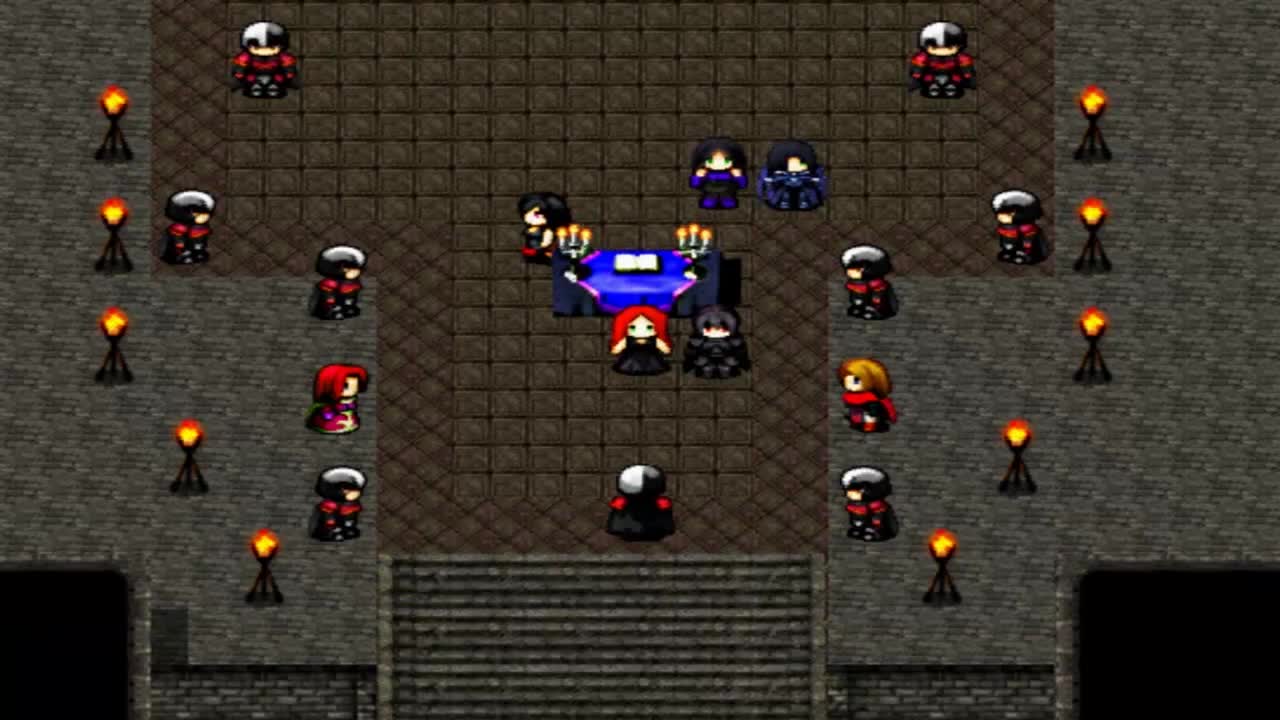
Chronicles of a Dark Lord 1

How have players reacted to the sequel to Chronicles of a Dark Lord so far?

We’ve been getting a lot of comments such as “Wow, the detail level in this is unbelievable”, and “they’re pulling out all the stops in this one”. Mostly positive, thus far. There have been a few of our fans taken aback a bit at the sweeping changes in graphics going from Episode 1 to Episode 2. Such as the face portraits, for example. In Episode 1, we used an in-engine tool to make the face portraits. In Episode 2, they were all hand-drawn.

What was the most exciting thing for you and the team about developing CoaDL 2?

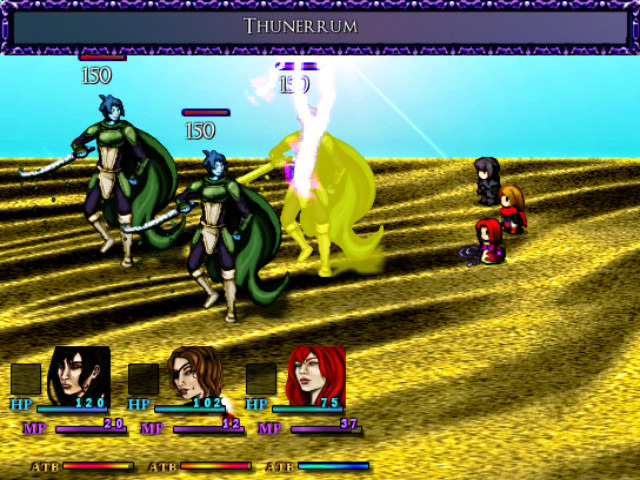
Honestly, I can’t pinpoint just one thing, as going through the entire production cycle, there were so many exciting aspects in developing this title. I would point out, for me personally, that using a new engine (RMVX Ace), I had fewer limitations to work with. And therefore was able to really push the engine to its limits. In terms of what I wanted to do with it. There are quite a few scenes in the game that I think will stand out on their own as being special. Not just in terms of what’s going on, but in the technical area of how they were done and what the engine is capable of.

What kind of lasting impression do you both think and hope that the sequel will leave players with?

I think when the credits start to roll after they’ve experienced the ending, they’ll be eager for Episode III to come out, considering what they’re left knowing. My most fervent hope, in terms of the overall impression the game leaves with them, is that they’ll get that we’re trying to evolve the genre into something that feels new. That gives them that intangible feeling that we felt when we were kids sucked into a great game.

Also, the tropes often seen in turn-based RPGs can be effectively evolved into something different or even used in an entirely new manner. Most of all, I just hope that players will get that we’re coming at this from a different perspective. It offers all sorts of exciting opportunities in the future to explore. Or, you know, that they’ll say something along the lines of, “Dragon Quest IV and Final Fantasy VI had a baby.”
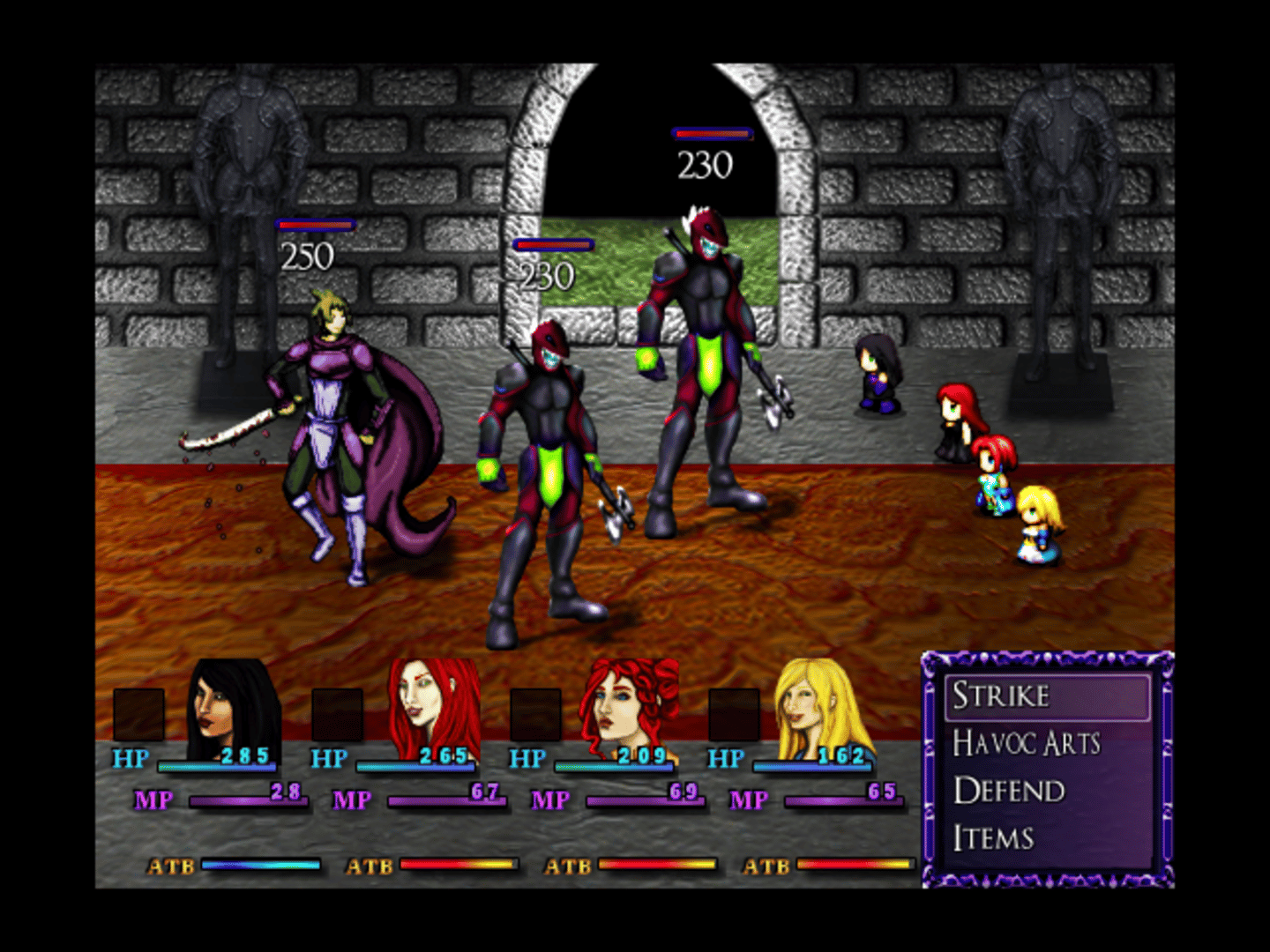
Chronicles of a Dark Lord 2

How challenging was it to improve on aspects seen in the first game?

Actually, I have our awesome fans to thank for being able to know what they really liked and what could have been improved on from the first game. I read as many of their comments and emails as I could. So, going into production, I kept in mind what our fans of the first game loved and expanded those things into greater depth and detail. Things that they felt could have been improved on, I have to say, we definitely improved on those things and then some. We do listen to our fans. And if we’re doing something they love, we’re going to make it even better.

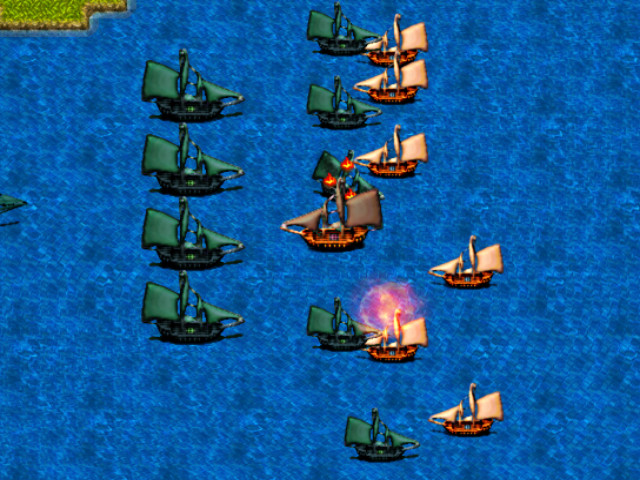
I will say this, regarding the challenge of this title’s development, was that if at all possible, I wanted to have gameplay replace some of the larger cut-scenes in the game. To give a mostly spoiler-free example, there is a battle that takes place between the enemy naval fleet and your characters’ fleet. And it would have been a lot simpler to just make a cut-scene out of it. However, I thought our fans would have tons more fun playing that battle out, instead of just watching it. It ended up becoming one of the most fun scenes in the game. And it was well worth the time to make it happen. Despite various technical difficulties that we had to overcome.

How does it feel to know that the Chronicles of a Dark Lord franchise has built up a cult following among indie gamers over the last few years?

Indie gamers are awesome, just wanted to note that. Sincerely, I appreciate every player who has chosen to spend their hard-earned money and time with our games. It’s the best feeling in the world to know that there are folks out there who enjoy what you create and what you’re passionate about. I’ll never take any of our players for granted. And you can bet I’ll be listening to their feedback as we get to work on future projects.

What were the key inspirations behind Chronicles of a Dark Lord?

It all comes back to where it all started for me…AOL text-based role-playing. Just about two decades of fleshing out the characters and their stories, personalities, etc. Of course, there were other inspirations as well from classic RPGs like Final Fantasy IV, Chrono Trigger, Final Fantasy VI, the Dragon Quest series, the Lufia Series, and the Lunar Series, to name just a few.
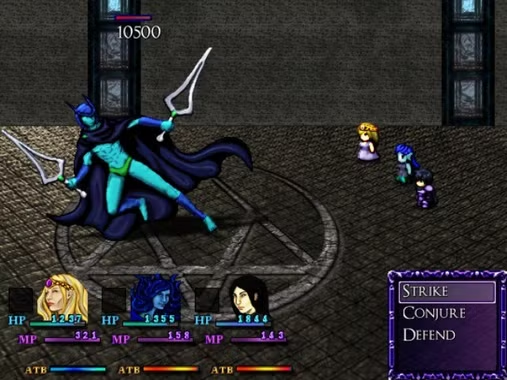
Chronicles of a Dark Lord 3

What aspects of the first CoaDL have had the most interesting responses?

We’ve had some very interesting responses to the three-way relationship between Gelina, Magus, and Xiria, and of how it’s perceived by others. We also have had some pretty great responses to how Magus ‘handles’ certain NPCs in the game, and of the choices involved with those situations. Many reviewers and bloggers also like to note that you’re not controlling a party filled with angsty teenagers. But with mature adults who are married and even divorced from one another. I’d also be remiss if I didn’t briefly mention the huge fan response regarding Xiria Lee. She’s become a fan favorite.

Where can you see the CoaDL franchise going in the distant future?

The current plan is to have nine main installments or three trilogies. We already have plans to create spin-offs and even new IPs based within the universe of the CoaDL series.

What sources of inspiration do you and the development team take whilst developing video games in general?

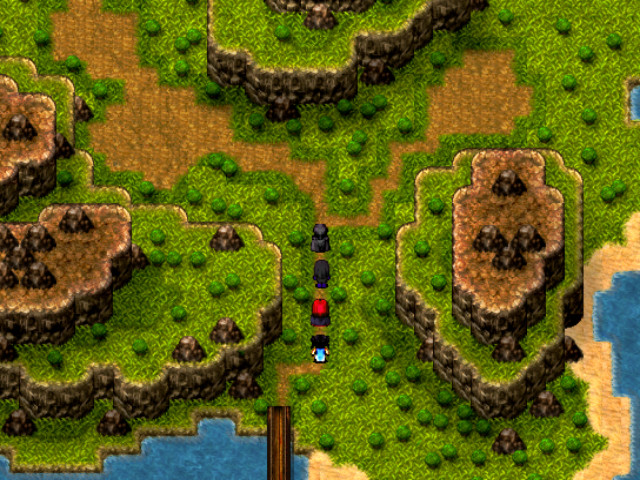
Sometimes, while we’re deep in development, what we’ll do is take a day and just do some gaming. Whether it’s an RPG, FPS, a Platformer, or so on, we’ll do some gaming. And often, ideas will come to us during that time. I can’t tell you how many times I’ve been playing an RPG. And suddenly I’ll put it down and jot down a few notes for CoaDL. Because something just occurred to me that would be cool to do. Sometimes we’ll get ideas for future projects while we game as well. For me, often I’ll be listening to metal (thrash, death, gothic, etc.) and VGM (video game music). And getting into it while I’m deep in production. It certainly has inspired several scenes for me.
Chronicles of a Dark Lord 4

What is it that you and the team love most about gaming and developing games?

I mentioned it earlier, but being so engrossed in a game and being absorbed into its world is what we love most about gaming in general. Creating that feeling, of having such a detailed atmosphere and lore that you can’t help but follow everything going on in that world your character(s) inhabit, is the kind of feeling you want when you’re gaming or developing a game. When you can make a connection to the game you’re playing in some fashion or form. Or even become emotionally invested in the characters, is when you get that intangible feeling that never goes away. That signals a great game. And it’s what we strive for and what we want out of our games.

What has been the most challenging thing about making video games?

Having a very strict budget with which to work in terms of obtaining resources and assets for each game. That, and being limited at times due to the constraints of the engine. We had to get very creative to work around some inherent limitations of the engine. And it paid off big in the final result.

How do you think the recent heightened interest in indie gaming has impacted the company?

Greatly. I was commenting the other day with my President, John Sierra, about this very thing. I referred to it as the “Golden Age of Indie Gaming”. Considering the truly awesome indie games that have come out within the last few years and those coming out now and due out shortly. It has heavily impacted how people view independent developers.

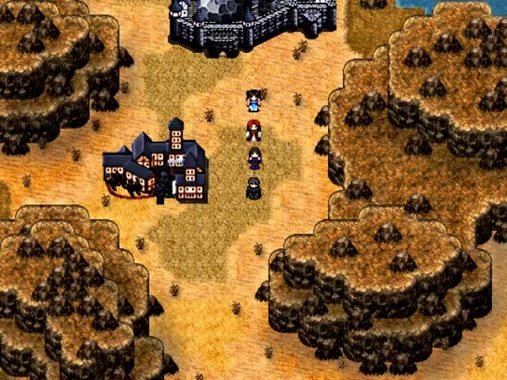
As a company, we’re able to take risks that Triple-A companies can’t afford to. And the general gaming public, I think, is aware of that. Our company’s business model, and I’m sure many other indie developers as well, is vastly different from that of Triple-A developers. And it’s all due to the explosion of awesomeness that Indie Gaming has become.
Chronicles of a Dark Lord 5

Aside from RPGs and 2D side scrollers like Unusually Usual, are there any other game genres that you and the team have considered dabbling in?

RTS (Real-Time Strategy) for sure, there’s a game concept we’ve got going on right now that will address how we intend to impact that genre. Another genre would be a Tactical RPG like Final Fantasy: Tactics and Tactics Ogre. That particular genre is near and dear to me and quite a few others on my team. I’d also have to say a 3rd-Person Action game, like Devil May Cry or God of War. Without giving too much away, we are in the conceptual stages of a “Metroidvania/Ys-hybrid” of a game that we think is going to blow away people’s minds.

Chronicles of Dark Lord certainly speaks of Kisareth’s internal company philosophy of quality over quantity. What kind of fresh perspectives do you and the team plan to bring in the future?

Well, our approach to making RPGs is basically, “take the genre and its tropes and evolve it, or turn it on its head.” That is pretty much our mantra now when it comes to development in other genres as well. We’re going to do things you wouldn’t normally, if ever, see in an RPG, Tactical-RPG, RTS, Platformer, etc. We’re not going to play by the same rules that you’ve seen in other games of a genre. When we release a game, it’s going to be “our answer” to something. Like in the case of Chronicles of a Dark Lord: Episode II, that game is our answer to Final Fantasy VI and Dragon Quest IV.

What’s next for Kisareth Studios?

We’ve got our upcoming, first truly 8-Bit RPG called Shenandor’ah: Zero Chronicle. Think Game Boy Color in terms of the styling we’re going for. The game is a distant prequel to Episode 1. When I say distant, I mean that it took place over a thousand years ago. We’re also working on Chronicles of a Dark Lord: Episode 1 Tides of Fate HD, utilizing the Unity Engine. There are other projects, but I can’t comment on them at this point.
Chronicles of a Dark Lord 6

What is your earliest gaming memory?

I remember playing this Octopus game for the Atari 5200. I can recall this black blob of pixels coming after my block of pixels. And to me, that was the most fun thing in existence at that point.

I noticed on your Facebook page a while back that you wrote about a particularly complex dream you’d recently had. Have ideas for CoaDL ever been based on any elements from your dreams, and do you think they could ever potentially have any influence on future games you and the team design?

Sometimes, when I have a complex dream like that, I’ll jot down notes and ideas for possible game concepts. I can say that a few dreams have impacted the development of Episode 1 and Episode 2. To give a recent example (minor spoiler ahead), the rather epic naval battle cut-scene in Episode II came from a dream. As for future games, absolutely. Even my darkest nightmares have their place and can affect a particular game’s storyline or a feature. It’s not often that this all happens, but when it does, I count it as something deep within my mind trying to tell my conscious self something.

Do you have any advice for aspiring developers?

You’re going to encounter someone, or a few people, telling you that you can’t do it. That there’s no money in it. That having game design as a career is impractical. And you won’t amount to anything. In my case, those sentiments were also peppered with misogyny as well. You need to tell yourself that none of what they say matters a damn to you. Make sure you’ve got tough skin, and just do what you love and make a game that you would want to play and enjoy.

If you’re in it for the money, then you’re in it for the wrong reasons. If this is what you’ve always wanted to do, where your passion is, then do it. I’d also say to aspiring developers to do their research. Not just in programming, or which engine to use. But in as many areas of game development as possible, even if an area is not your best area of expertise. Learn all you can about the actual design, graphics, sound, and programming areas, then learn as much as you can about the business end of it.

Also, don’t rush into making decisions. Think every decision through, and make sure it’s what you think is best for your game. Lastly, there will be times when you have to make concessions to the overall image you have of the game. Whether it’s due to programming, engine limitations, graphical limitations, glitches, and so on. When it happens, and it will happen, be flexible about it. Think outside the box you have in your head for the game, and the answers will come to you.
Chronicles of a Dark Lord 7

Do you have anything else to add?

I just want it known that upside-down bagels are inherently evil. That, and I give the most sincere thank you to all our fans and supporters over the years. I hope that we do you proud with every game we release.

I would also like to take this opportunity to thank Tanya for taking the time to answer my questions. And making for a very exciting feature on my blog. As well as the staff at Kisareth Studios for all their rigorous efforts in making the Chronicles of Dark Lord games as overwhelmingly excellent and enjoyable as they are. And I can’t wait to see what plans they have for the future. And what fantastic games they plan on releasing.