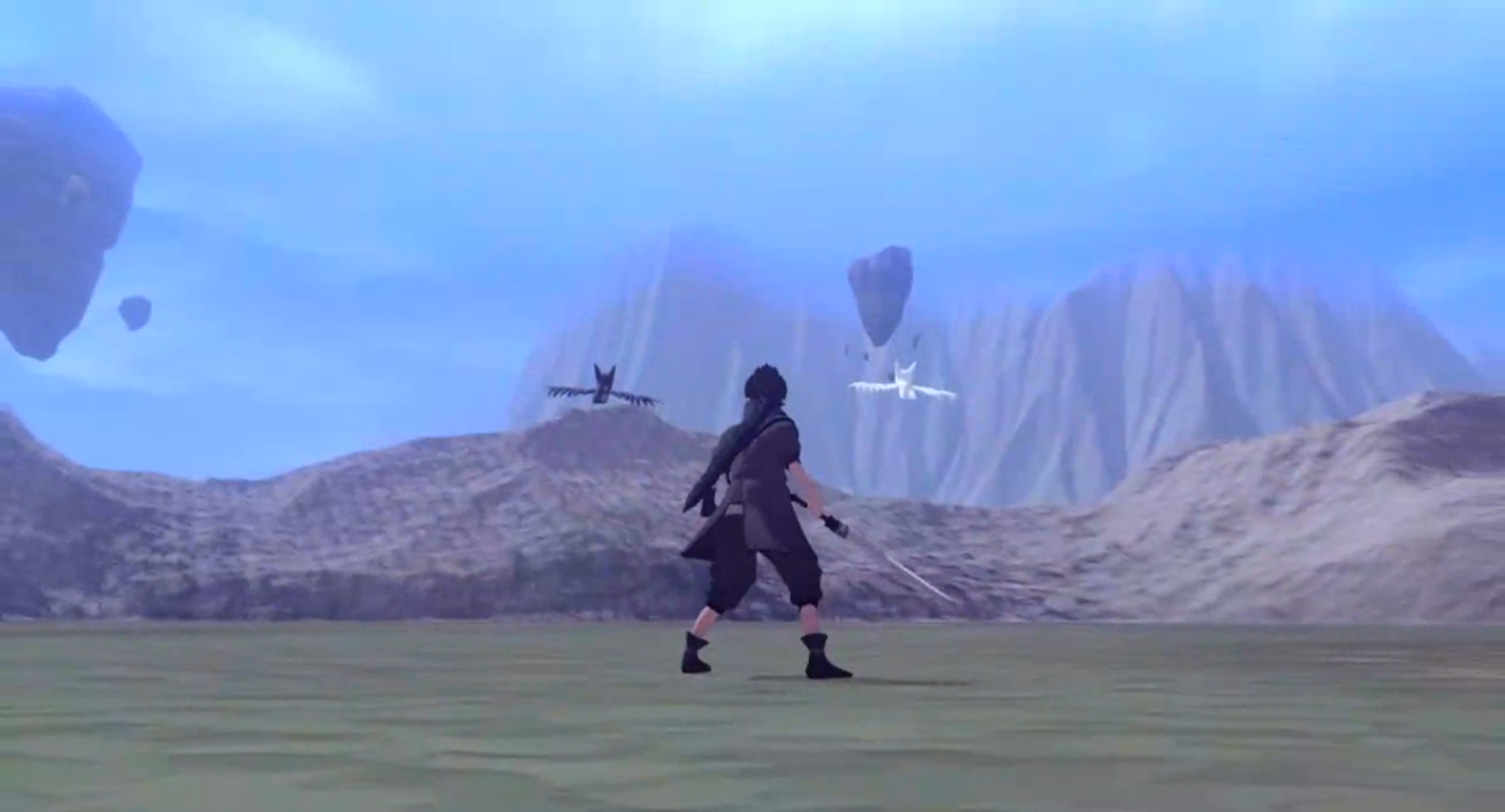
Monthly Archives: July 2017

Questions for Veronica Nizama

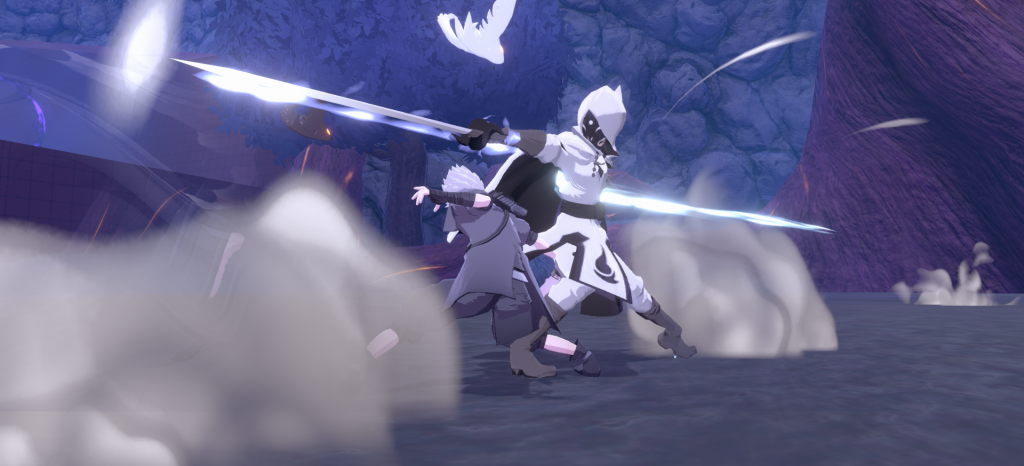
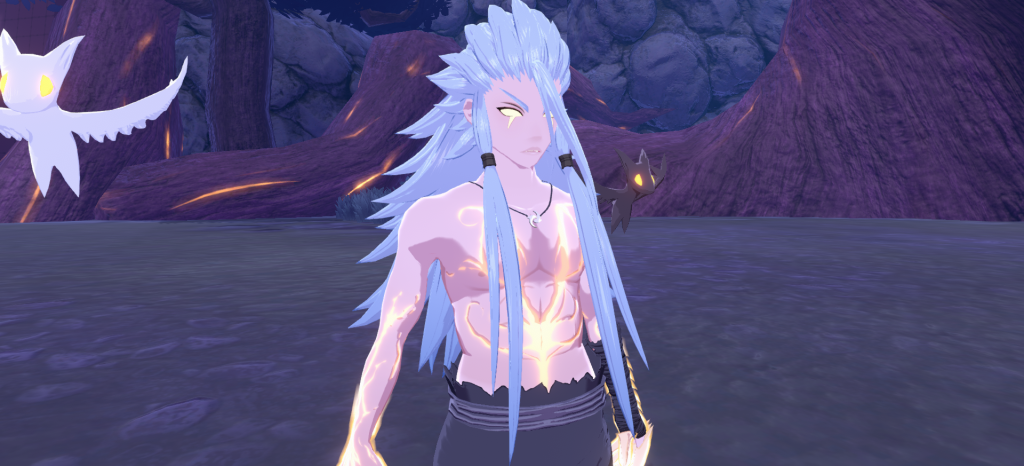
Sol Bound is an open-world science fiction RPG currently being developed by Crowquetica Games, headed by indie developers Veronica Nizama and her husband Sergio, and operating out of New York. The game blends RPG combat with puzzle-solving mechanics and intense combat and will feature a massive open world inspired heavily by Latin culture. Eager to know more about this intriguing-looking game, I recently got in touch with Vernonica Nizama to ask a few questions about the game. And get more of an insight into what players can expect with this title. Here are her answers:

What were the influences behind your game? 

Growing up, I played a ton of Zelda, Final Fantasy, and other games with strong narratives, strategy, and beautiful visuals. It was no surprise to me that when I first came up with a loose story idea for Sol Bound over a decade ago, I’d somehow find myself revisiting Tierrania when I decided to become a game developer and make my own action-adventure game. I knew I’d be doing a disservice to my otaku teenage self if I hadn’t! 

As far as our style goes, we were definitely influenced by classic Super Nintendo games. However, our culture probably had the biggest visual impact on the game. We’ve infused our rich Latin-American culture into our game in a way that may be relatable to Latinos living in America. As well as provide a fresh new experience for those not familiar with our customs, foods, and culture. Some of these are subtle, like our NPCs ‘ names, diverse racial cast, building architecture, plant life, and tropical, bright colors.

It not only influenced the look of the game but the universe as well. A more prominent way we’ve infused our culture is by making our in-game food power-ups based on actual Latin dishes. Like Cuban Vaca Frita, Peruvian Lucuma Ice Cream, and Puerto Rican Mofongo! I think it’ll be a fresh, unforgettable new experience for any gamer. 

What has the developmental process been like?

It’s been pretty hectic, but I guess that’s the case when you don’t have any funding. I’ve been in a studio environment for most of my professional career. So working from home, balancing a passion project while working enough on the side to pay bills, has been very challenging in comparison to what I’ve been used to. I enjoy working as a team with my husband, though. We’re best friends, and this is our baby. It’s definitely a labor of love!

How close are we to seeing the finished product? 

Unfortunately, not very close. Pretty much everything you’ve seen so far was created in the past four months, mostly by two people – my husband and me. Because we were running dangerously low on personal funds, we reached out to a few talented friends to help prep our Kickstarter campaign a month and a half before launch. Unfortunately, game development can take quite some time – especially when it comes to a game like ours. Which will be vast in size and populated by hundreds of NPCs. We’re hoping we can reach our stretch goal of 160k-200k so we can hire our entire team and get the game done sooner. 

What has been the most exciting aspect of development? 

Just seeing everything come together! If you’ve never had the opportunity of working on a big project with multiple people before, it’s an extremely satisfying feeling. You’re able to accomplish amazing things that you wouldn’t have been able to do on your own. It’s pretty empowering!

What has been the most challenging aspect of development? 

Time management. But isn’t that the case for most developers? As with any passion project, it’s hard to tell yourself that you’ve already invested enough time into a certain asset, shader, animation, etc. And to move along to the next task. Being the president of a company. Though it has forced me to really work on this. Aside from the importance of time being money, we now have our backers to consider! We certainly don’t want to let them down with a late release.

How exactly does combat work?

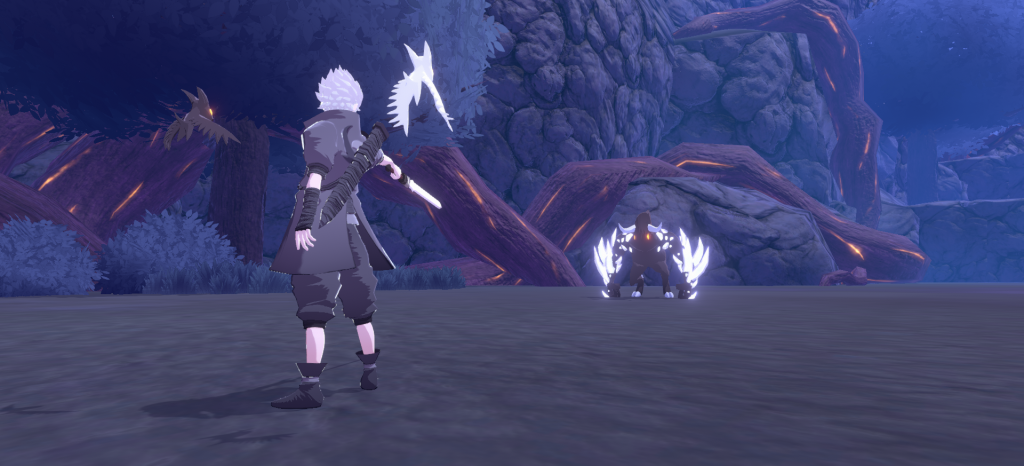
Players will encounter monsters, which we call Desvario, throughout Tierrania. Desvario will range in size, behavior, and have unique abilities. For example, some Desvario travel in packs and can swarm the player. Other Desvario may have special attack and defense patterns. Which the player needs to memorize this to defeat them.

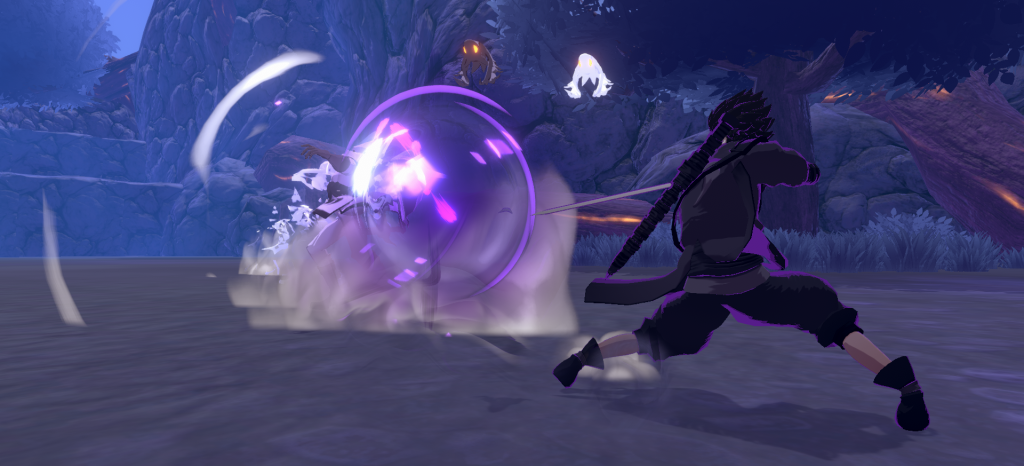
As Sol binds Danny, you’re able to use a short-ranged physical attack, a longer-ranged and more powerful electrical, a jump ability to land on or escape from Desvario, and, of course, our special Sol binding ability. Sol binding allows the player to possess any organic creature. Allowing the player to access unique Desvario or Animal-specific abilities. Some of these may be helpful for puzzle solving, some may also be helpful in combat by fighting larger Desvario with an equally large sol-bound Desvario. 

Throughout the game, players may use food items to temporarily boost stats. They can also collect corrupted Sol cores from defeated Desvario to trade in for weapon upgrades.  

How well has the game been received so far? 

So far we’ve had REALLY positive feedback from people! It’s been really rewarding hearing such encouraging words from total strangers! While we’ve been getting a lot of excitement over having a Latin-inspired game, a POC lead, etc, we haven’t been reaching a lot of people, though. Our biggest hurdle is that our marketing budget is non-existent. Heck, our development budget is non-existent! We’d love to hear from a broader audience, so thanks for putting Sol Bound out there!

In the last 7 years of your developmental experiences, what projects had you previously worked on? Were there any in particular that influenced the development of Sol Bound?

Yes! While I’ve been very fortunate to work at smaller studios and pick up the skills to create pixel art, tiled games, etc, the last major project my husband and I worked on, Hiveswap, is what really set us on our course. Originally, we had planned on creating our game on Game Maker after one of our co-workers, Toby Fox, created his game Undertale using the same engine. It seemed like the fastest way to get a game done, and we were only two people.

Unfortunately, after a few months of light production, we realized Unity would be a much better option. Not only were we using Unity at work and becoming more and more familiar with it every day, but being that it was a small team, many of us had multiple hats to wear. I had to learn how to do lighting and set dressing. And much more on Unity, while Sergio was promoted to work specifically on making Unity tools. Through What Pumpkin Studios, we were also able to connect with tons of local Unity developers and find out about Unity events, making the engine the most attractive and safe choice for our game, and possibly future projects at our studio. 

What platforms are you looking to bring the game to?

Currently, we only have a planned PC/Mac/Linux release, but we’ve built the game on Unity, allowing us to more easily release the game on other platforms if the opportunity arises.

Sol Bound seems to have quite an in-depth story, but what are the core themes of it?

The core themes in the game are teamwork and survival! Whether it be Sri Sol binding with other animals to solve a puzzle or fellow Radioactive creating tools you need to continue on your journey, Danny will need to rely heavily on his team. Survival is also one of the biggest motivations for our Sol Bound cast, as players will come to see how unforgivable Tierrania is. Like many action-adventure games, Sol Bound will have an expansive world with a similarly deep storyline touching upon many themes, so players can expect to laugh, cry, and fall in love with our cast, too.  

Do you have any advice for aspiring developers who may be reading this? 

If you love making games, don’t ever give up on your dream! I’ve been working in games for about 7 years, I’ve been laid off along with entire teams at least 3 times, have had to always work a second job to pay the bills. And don’t even get me started on crunch time! I can’t begin to tell you how many times I’d be at the office until 3-4 AM with no paid overtime. I know I’ve been underpaid and taken advantage of in the past. Unless you know someone, that’s the path of pretty much any developer starting. Still, with all that heartache, I don’t think I’d be happy doing anything else.   

For my fellow lady-devs, stay strong, girls! On more than one occasion, I’ve been the only woman on an entirely male team, and in the past, this has led to me being harassed and bullied. It was certainly disheartening, but not surprising, being a long-term MMO player – I received this sort of hateful attention all the time without a warrant. Even though there are some bad apples, most male developers are really supportive. So focus on creating strong bonds with respectful teammates. And luckily, if you have an HR person, you can report and help prevent situations like the ones I experienced. Game development is definitely still a male-dominated industry. But we all know that diversity makes for better games. So if you love games, follow your dreams!

Where on the Internet can people find you?

www.sol-bound.com


I would like to thank Veronica for speaking to me about the game. And to wish all the best with Sol Bound. If anyone would like to back this game on Kickstarter, it can be done via the link below:

https://www.kickstarter.com/projects/sol-bound/sol-bound?ref=category

Game on,

Scouse Gamer 88
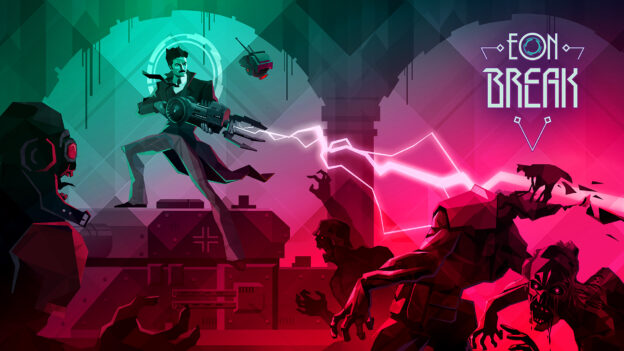
 

Eon Break

Q&A With Gladrock Games

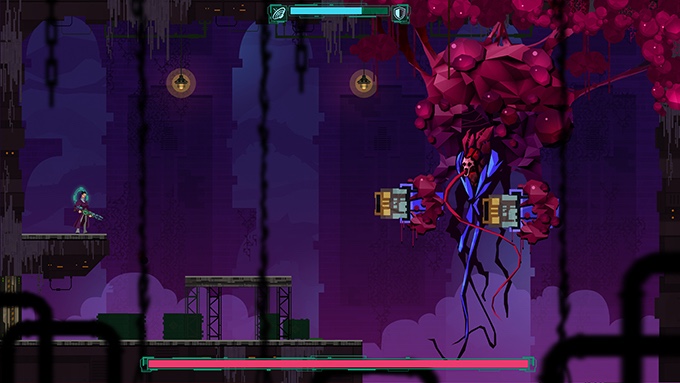
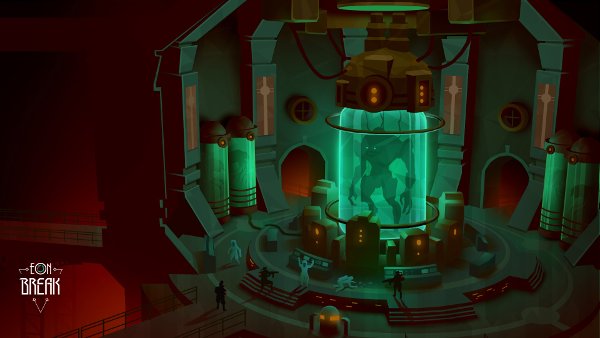
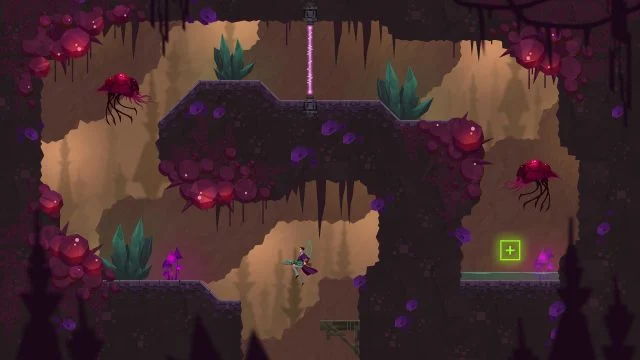
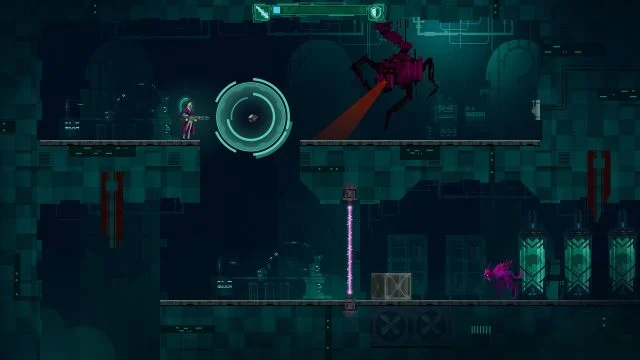
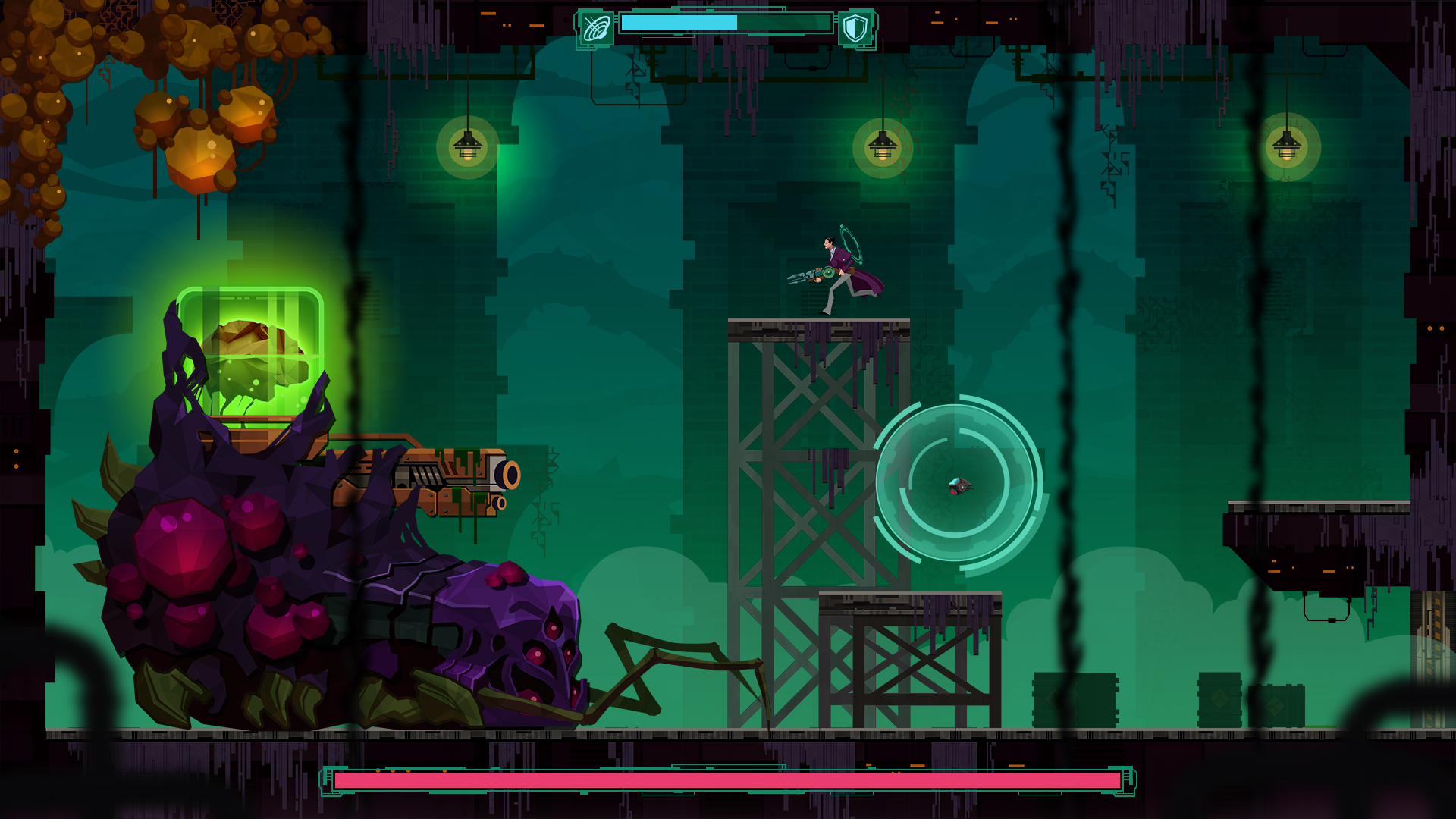
Eon Break is a 2D Metroidvania game that appeared on Kickstarter, having been greenlit by the Steam community in merely 6 days. Relying on traditional Metroidvania elements such as combat and puzzle-solving, as well as an emphasis on intense platforming, the game tells a fictional account of electricity pioneer Nikola Tesla and his exploits across an alternative take on World War II.

Eager to learn more, I approached the developers, Gladrock Games, based in Minsk, Belarus, and asked programmer Ayrton Vorobyov a few questions about this outlandish-looking title. These were his answers:

Eon Break 1

What were the influences behind your game?

It’s hard to name all of them. Obviously, Super Metroid is one of the main inspirations for the structure of the game. We played all kinds of Metroidvanias and platformers, some of them influenced more, some less. In the end, we want to create a game that feels familiar, but plays differently – an old-school action adventure with modern and unique mechanics.


What has the developmental process been like?

We’re a small team, and everyone can talk to everyone. But still, we have some processes and fields of responsibility. For core game aspects (overall art direction, mechanics design, the plot, level editor, etc.), we have an agreement on who makes the final decision in case of disagreement. Global questions are discussed by the entire team, and we’re voting. As a rule, we’re coordinating our plans on regular Skype calls. Thus, we share work status, present ideas, define priorities, assign tasks, and discuss deadlines.

Regarding ideas, we discuss the potential positive outcomes and measure the cost. If the outcome isn’t clear, then we create a small prototype to try it out. If the team agrees that the outcome is worth the effort, we convert the idea into tasks and implement it.


How close are we to seeing the finished product?

Right now, the game is half ready. We plan early access on Steam at the end of 2017 and full release sometime next year. Though timelines strongly depend on the success of the Kickstarter campaign. If we have enough funds to hire the missing team members, then we’ll hit the deadline.

Eon Break 2

What has been the most exciting aspect of development?

Working with totally new game mechanics was really exciting. In the beginning, we prototyped a lot of crazy ideas, but all of them were variations of some existing features. The real fun began when we decided to do something bigger – that resulted in features like the ability to consume locations or the possibility to create and switch alternative timelines.


What has been the most challenging aspect of development?

Most parts of the game come along nicely pretty fast, but the art style was a different case. We’ve spent quite a time searching for the art style that will look awesome, fit the game style, and, together with that, be easy to create (there’s only one artist in the team and thus we can’t afford to create very complex assets). In the very beginning, we defined a range of requirements for the art, including slicing principles, that allowed us to build complex locations without creating a huge amount of assets. Then Alex (our artist) spent several months creating sketches that fitted all the requirements – that was the hardest part. Every sketch felt like not quite what we expected. Until one day, he did what we called PolyVector – a 2D location sketch in a vector style that looked like it consisted of 3D polygons.


Which science fiction franchises inspired the creation of Eon Break?

Books, movies, comics – we were inspired by a lot of things! Many things came from the works of Ridley Scott and George Orwell. You can also find some parallels with such works as Jin-Roh, The Last of Us, and even The Butterfly Effect.

Eon Break 3

Which Metroidvania games did you and the developers play that served as inspiration for the game?

We’ve tried all the Metroids and Castlevania titles and almost every other Metroidvania out there, not only to understand what’s working in these games and what’s not, but mostly because we’re huge fans of the genre.

The main inspiration for us is Super Metroid, but mostly in terms of world structure. Regarding core mechanics, we tried to do them differently. We wanted to make familiar gameplay with a new modern twist, as Guacamelee did by adding fighting mechanics to the formula.


How well has the game been received so far?

We’ve received a lot of really positive feedback. In fact, we’ve received almost no negative comments at all! Community support was pretty strong, and we’ve passed Steam Greenlight in just 6 days. So, we’re pretty confident that a lot of players are waiting for Eon Break. Also, we have a large community on Twitter, Instagram, and Facebook. Everybody can join us there to receive the latest news and share feedback.

Eon Break 4

What platforms are you looking to bring the game to?

Initially, we’ll launch for PC, Mac, and Linux. If everything goes well, then we’re going to port the game to all major consoles. Also, we consider an option to make an Android TV port. The game is being developed with Unity, so porting is totally possible.


Do you have any advice for aspiring developers who may be reading this?

If you have an idea for a game, then start by answering one question: why will players play my game? And the answer shouldn’t just tell WHAT players will do in the game. Neither should it say HOW they will play your game. It should be clear to you WHY your project should be picked from the thousands of others.


Where on the Internet can people find you?

Our website: http://gladrock.com

Twitter: https://twitter.com/eonbreak

Instagram: https://www.instagram.com/eonbreakgame

Facebook: https://www.facebook.com/EonBreak

Do you have anything else to add?

Take a look at Eon Break – the game is really worth a minute of your time – and let us know what you think about it and what you would like to see in the game.

Thank you!

Eon Break 5

I’d also like to thank Ayrtom for answering my question and to wish him and Gladrock Games the best of luck with Eon Break. I’ve come across many Metroidvania games whilst scouting for new indie prospects, but this game certainly stands out as one of the most original-looking titles I’ve seen in a long time.

Game On,

Scouse Gamer 88

Oh… Sir! The Hollywood Roast (PC)

Oh Sir The Hollywood Roast

Developer(s) – Vile Monarch

Publisher(s) – Gambitious Digital Entertainment

Rating – N/A (Discretion advised)

Following on from Vile Monarch’s previous indie title, Oh… Sir! The Insult Simulator, The Holly Roast, takes the franchise into the Hollywood movie industry and delivers the same level of quirky humor and the same interesting twist on both turn-based and traditional fighting game combat, and builds on what the first game perpetuated to deliver a greater experience. I first saw this game at EGX Rezzed 2017, and was immediately smitten with it; it drove me to play the original game, but by comparison, the second is even better in my opinion.

Graphics – 7.5/10

The graphics in the series have undergone a significant overhaul compared to the original game, and the characters and setting look even better. There are more varied character and level designs than in The Insult Simulator, deviating away from the Monty Python themes of the first game, and it features a much greater level of detail. It also opens up possibilities in terms of future games in the series, and how they could be based on a wide variety of different subjects.

Gameplay – 7/10

The gameplay of the Hollywood Roast is almost identical to that of The Insult Simulator, but this time around, the developers have added a few new mechanics to the combat system, most notably the comeback ability. Players now have the option to add a comeback to the end of their insults for bonus points. New comebacks can also be unlocked for each character as the game progresses. But the biggest and best new addition to the series is the modding system. Players now have the ability to create new characters and stages within the game, which definitely gives the game an even greater level of variety than what I personally thought to be possible after having played the demo.

Controls – 10/10

Just like the original game, there are no issues with the controls whatsoever, with it being a simple point-and-click game typical of most games that run best on PC.

Originality – 9/10

The Insult Simulator was an original game on its own, but The Hollywood Roast still maintains that same level of uniqueness; the difference between the two of them is that there is far more to play for in the second game. The original demonstrated an entirely new way to play a fighting game, but this title has perfected this new style of play.

Happii

Overall, Oh… Sir! The Hollywood Roast is a more than welcome addition to one of the most unique indie gaming series I’ve ever come across. It’s fun to play, can last even longer than the original with modding possibilities, and I can’t recommend it enough.

Score

33.5/40

8/10 (Good)

Curses N’ Chaos (PlayStation 4, PlayStation Vita & PC)

Curses N Chaos

Developer(s) Tribute Games

PEGI – 7

Released back in 2015, Curses N’ Chaos is an independently developed love letter to NES classics of the late 80s, featuring simplistic, yet addicting gameplay. As well as an expertly crafted 8-BIT style of graphics. Over the years, indie games have continued to impress me. And Curses N’ Chaos is no exception.

Graphics – 8/10

Although the game looks as great as any 8-BIT classic, the aspect in which this game’s visuals truly stand out is its diversity in conceptual design. The game is set across several different stages representing different parts of the game’s universe. Including forests, castles, graveyards, docks, villages, and even a ninja’s dojo. And the variety in level design also appropriates the variety in enemy and boss design in turn. There are enemies exclusive to most stages in the game, which keeps it interesting to look at throughout. As well as keeping players on their toes and strategizing accordingly. The game’s soundtrack is also exceptionally gripping and extremely catchy. Especially where the first stage is concerned.

Gameplay – 8/10

Curses N’ Chaos is a 2D beat ‘em up set across timed stages, whereby the objective is to clear all enemies on the screen until the timer runs out. Each stage yields 10 waves of enemies before the player is then pitted against the stage’s boss. The reason why the variety in enemy design keeps players on their toes is that certain enemy types each take different amounts of damage before they are killed.

And many require different strategies to take down, which provides the game with a very stern level of challenge reminiscent of many NES classics. Such as Castlevania and Mega Man. The boss fights the most and also demands the same level of adaptability to take down. And some are among the best boss fights I’ve seen in a long time. Such as the chimera in Stage 2 and the robot in Stage 6.

Controls – 9.5/10

For the most part, the controls are pretty much perfect in this game, which is needed in a game like this. It relies heavily on player skill to finish and is quite demanding in this respect. But players must be careful when they are pressing down in order to make the player dance while idle, in order to gain more points with no enemies on-screen. Sometimes, the player can start walking after some time. Even with the down button held. At first, I thought this might have been a problem with my PS4 controller, but the same thing happened to me when I played the PS Vita version as well.

Lifespan – 8/10

For a stage-based game, this title can be made to last for an exceptionally long time. At least 15-20 hours, depending on the player’s ability to adapt to each challenge. It goes to show me that the lifespan of an indie game cannot necessarily be down to budget. But down to the developer’s imagination. Aside from the stages, the player can also mix together items and weapons found during the battle to create better weapons or items. This also adds to the game’s longevity to an extent.

Storyline – 6.5/10

Again, reminiscent of the NES days, the game’s story is quite simplistic. Gamers have to consult other sources for further details. Back then, we relied on instruction manuals, but more details can actually be found on the game’s website. The story follows two fighters named Leo and Lea. They are daring to fight back against the monsters commanded by Algarr, the Wizard King. Disdained by the duo’s efforts, Algarr places upon them a curse. Whereby the Grim Reaper follows them everywhere they go.

And with the possibility of death constantly looming over them, with a swarm of monsters also stalking them. The pair then consults a rogue alchemist named Allison, who explains that the curse can only be lifted by creating the Elixir of Life, which Leo and Lea must get the ingredients for by killing monsters. Though it may not be the most intriguing story in gaming history, it’s the game’s mythology that helps it to stand out to at least a certain extent. And although it may be simplistic, it’s much less preferable to me personally to have the focus taken away from the story and put into gameplay. And this is most certainly the case with this title.

Originality – 8/10

Though the conceptual design of the game is, for the most part, based on pre-existing mythologies and cultures, where this game truly stands out is in its simple yet addictive style of play. As well as everything that can be done in-between stages to create better weapons and items. It gives the game a lot of variety in terms of gameplay. And because of that, it is one of the most invigorating indie experiences I’ve played all year. It’s an ideal springboard for people looking to experience the days of gaming simplicity. As well as older gamers who may be looking for a strong sense of nostalgia. But at the same time want to try something new.

Happii

Overall, Curses N’ Chaos is a solid throwback to the NES era. As well as one of the most invigorating and challenging indie experiences on current PlayStation platforms. Those who can brave the challenges will feel an overwhelming sense of satisfaction afterward, and after experiencing it for myself, I can’t recommend it enough.

Score

48/60

7.5/10 (Good)

Arbiter

Q&A With Jordan Scott

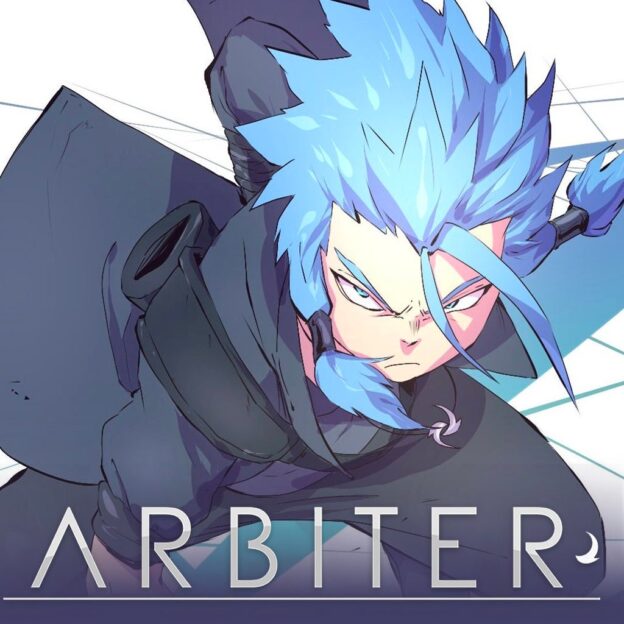
Recently beginning its Kickstarter campaign, Arbiter is a third-person action-adventure game with a heavy emphasis on varied combat and character transformation. Inspired by the likes of Zelda, Kingdom Hearts, and Dark Souls, the main character has the ability to transform into either a light spirit (ether) or a dark spirit (umbra) in order to defeat enemies and absorb them in order to gain new abilities over time.

I was interested in knowing more about this game, so I reached out to the game’s creator, Jordan Scott, for a question-and-answer session amidst the game’s Kickstarter campaign. Here were Jordan’s Answers:

Arbiter 1

What were the influences behind your game?

I’d say the biggest inspirations are Ikaruga, Kingdom Hearts, and Dark Souls. Mega-Man, too, since the game will allow you to complete the levels in whichever order you wish. The biggest takeaway from those games, though, is the transformation mechanic and the challenging, fast-paced combat.


What has the developmental process been like?

 I’ve been working solo on the game for about five months now, and I’ve tried to keep the scope of the project small so that I can feasibly finish it on my own. As a result, development’s been going pretty well.


How close are we to seeing the finished product?

I’m hoping to release the game in late 2018, based on how the Kickstarter does. It’ll be a shorter game at around five hours or so, so I think I’ll be able to finish on time. But as game development usually tends to go, the final release date is unpredictable.

Arbiter 2

What has been the most exciting aspect of development?

The most exciting aspect has been designing enemies. The game is inherently fast-paced, so I’ve been trying to create enemies that set the pace of the fight rather than the player. This kinda results in players having to learn to “keep up” with their enemies, which is a play-style I enjoy.


What has been the most challenging aspect of development?

The development’s been going pretty well. I certainly feel like I could go faster, but I’ve kept the project’s scope small enough that I’ve been able to hit my deadlines pretty consistently. The harder part has been preparing for things like the Kickstarter and RTX booth since I’ve never done them before. Since the game’s an original IP too, its audience is being built from the ground up, which is very intimidating.


Were there any anime series in particular that inspired the creation of Arbiter?

Dragon Ball, Naruto, and Hunter x Hunter have probably been the most influential.


If the game is open-world, how expansive do you plan on making it?

The game will be split into multiple levels that players can choose to complete in whichever order they wish.

Arbiter 3

In relation to the contrast of light and darkness that the main character seems to embody, will there also be morality mechanics available within the game?

The morality conflicts will have more to do with the story rather than the mechanics. But that being said, there will be multiple endings tied to how players choose to pursue the enemies they’re hunting. I’d say the overall point of the game is more that the world isn’t as black and white as it appears.


How well has the game been received so far?

People seem to like how polished it is and how well it plays. There have been some complaints about the difficulty since I kind of amped it up so people know that “this is supposed to be a challenging game”, but overall, I think it’s been pretty well received. 


Arbiter 4

What platforms are you looking to bring the game to?

I’m looking to release the full game on Steam (PC) and Mac/Linux. I’d like to port the game to consoles as well, but that will be entirely dependent on how the crowdfunding goes.


Do you have any advice for aspiring developers who may be reading this?

I’d say learn as much as you can on your own so you can better understand development as a whole. It will also help you to kinda manage expectations for what you can expect from your teammates.


Where on the Internet can people find you?

I’m on Twitter @jordy_j_s, and you can find more information about the game at https://arbitergame.ca/!


Do you have anything else to add?

I’ve been funding Arbiter’s development through my personal savings, so Kickstarter’s success would help a lot with padding out development costs. I’d also like to hire additional artists to make the game as good as it can be. If you’re interested in Arbiter, please consider backing it to help make the full game a reality!


Arbiter 5

I want to take this opportunity to thank Jordan for taking part in our question and answer session, and to wish him the best of luck with the game. If anyone is interested in backing Arbiter, here is a link to their Kickstarter page:

https://www.kickstarter.com/projects/427189558/arbiter-0?token=c732018c

A free demo of the game can also be downloaded from the Arbiter website under the Press Kit section:

Press Kit

Game on,

Scouse Gamer 88