This month marked the seventh anniversary of Replay Event’s Play Expo at the Norbreck Castle Hotel in Blackpool. Eager to see what Replay Events had in store, I made my way to Blackpool for the third time to see what indie games, guest talks and throwbacks to classic gaming were being showcased at the expo; and I wasn’t disappointed. Following on from last year’s proceedings, a lot of classic games were back, as well as one of last year’s guest speakers, and a few more gaming veterans, along with some more new up and coming developers showing off their latest video game projects; and here’s what Play Blackpool 2017 had to offer.
Bloody Zombies

The first indie game I encountered was a Streets of Rage style beat up set in a post-apocalyptic world entitled Bloody Zombies. Aside from up to four players having to hash it out with zombies along 2D side scrolling environments, one player also wears a VR headset in order to uncover secrets that may be hidden within each stage, and to help the accompanying three players to seek out hidden items for additional points and stronger weapons. A combo system is also incorporated similar to classic fighting games in order for players to compete among one another to see who can earn the highest score at the end of each stage.
The hand-drawn 2D visuals of the game mixed with cel-shaded graphics gives the game diversity in technical design, and although it is generally speaking quite difficult to make a story centred around zombies stand out from a conceptual point of view, the developers of Bloody Zombies, nDreams, have so far done a pretty decent job of it, with things like character and boss designs doing pretty well to stand out. The VR aspect of the game also makes it stand out further, giving it a level of diversity in gameplay never before seen in a 2D beat ‘em up.
Mao Mao Castle

Having first laid eyes on this game at Play Manchester last year, Asobi Tech were back to showcase further adjustments made to their on-rail 8-BIT obstacle game Mao Mao Castle. In it, the player controls a ginger cat, be that with a mouse or touchscreen, (or as was showcased at the expo, a motion sensor), the player must guide the cat through obstacles that come towards the player at increasingly high speeds and to survive the constant onslaught for as long as possible. Since the game was showed off in Manchester, new game mechanics have been added; most notably, the inclusion of a power-up that makes the cat temporarily increase in size and bypass ever obstacle effortlessly.
In my opinion, the new mechanics added to the game add a great deal of depth to it, and it also makes it a lot more accessible for entry-level players too, which is needed since it whilst it’s easy to get competitive playing it, speaking from experience, it could be seen as somewhat inaccessible before. But this issue has been fixed with the introduction of the newly implemented gaming features, and I can’t wait to see what the final product has to offer.
All Contact Lost
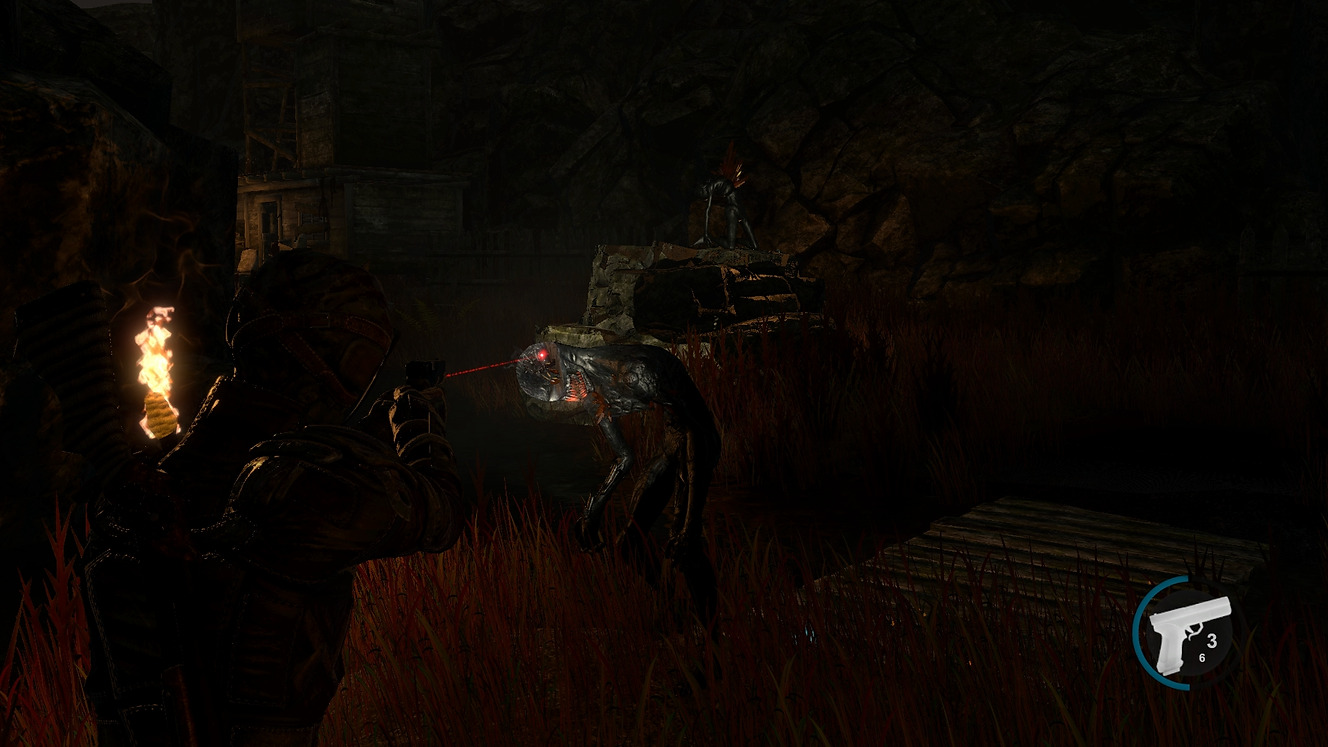
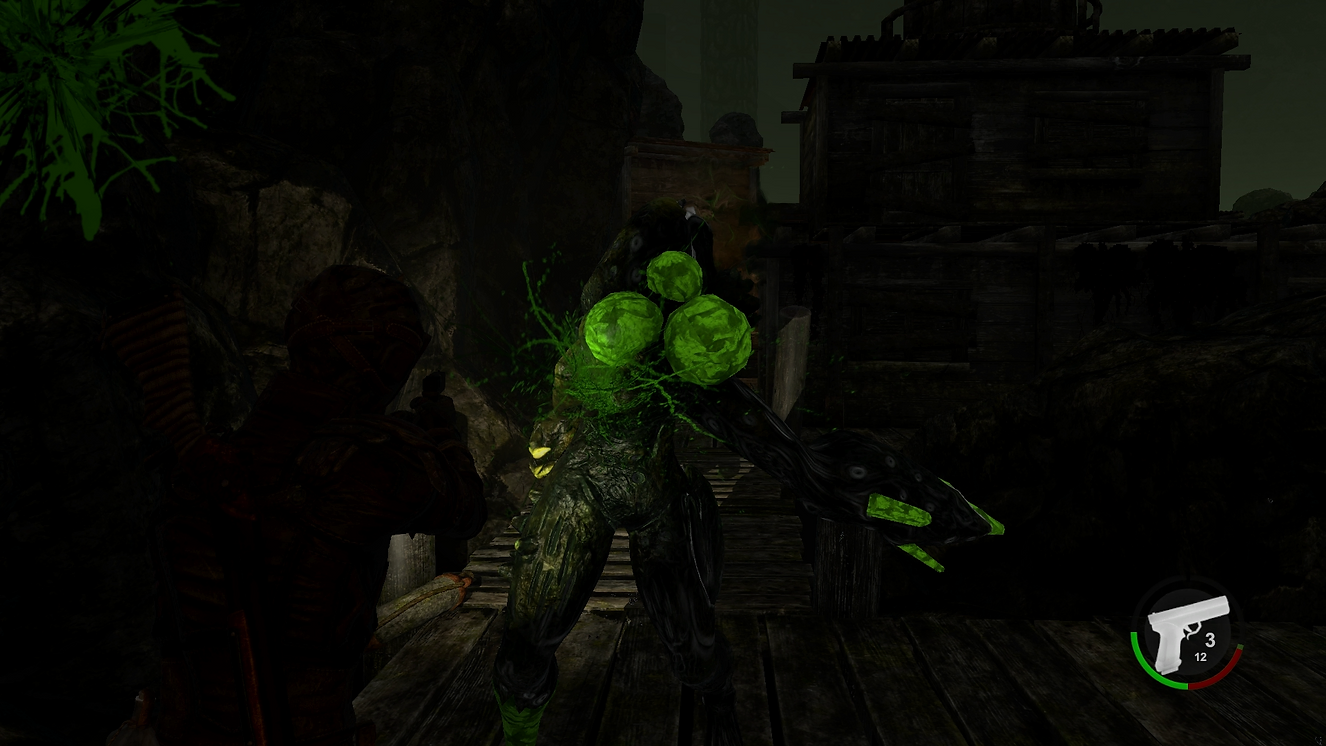
Speaking of challenging games, the next game I tried out at the event was an FPS called All Contact Lost. The object of the game is not too dissimilar to the Mad Moxxi’s Underdome Riot add-on for the original Borderlands game, whereby players must defend themselves against hoards of oncoming enemies in order to survive for as long as possible and attain the highest score possible. Players have limited time between each round to organise and heal themselves before the next wave is introduced, which get exponentially bigger and harder to deal with in turn.
Amidst a massive influx of FPS games to have hit the gaming industry within the last 20 years, it’s interesting to see how new developers are coming up with new ways to modify the formula and to make playing first-person shooters as enjoyable and as challenging as it ever has been. Where All Contact Lost is concerned, it’s developers, 1st Impact Games, have done a decent job showcasing what could be a potentially insanely addicting game. They told me that their next objective is to add more enemies into the game, which can potentially give it more cause for players to have to adapt to different situations within the game, but it will be interesting to see how 1st Impact implement that.
Medieval Steve

Next, I tried A 2.5D side scrolling game called Medieval Steve developed by jForth Designs. The game was in the early stages of development, but it centred around having to complete various different tasks throughout each level, including collecting hidden items throughout, and even time trials; similar to many features found in modern Super Mario games.
As the game is only in a very early stage of development, there is much more to be added in. But from what I played of the game, I really enjoyed. The time aspect of it was extremely unique compared to many other games to implement similar mechanics like New Super Mario Bros U and Super Smash Bros Melee’s story mode, and with the right amount of attention and further development, it could become a really enjoyable game when its released. If a decent story concept is also added, it could make for a very interesting franchise in years to come too in my opinion.
Space Toads Mayhem

Space Toads Mayhem was the next game I tried, developed by programmer Lukasz Snopkiewicz. It’s an arcade style bullet hell top-down rail shooter that it insanely addictive, yet gruellingly challenging at the same time. Whilst progressing, players are periodically given a choice between to power-ups, which can either help or hinder the player accordingly dependent on choice the player makes.
In my opinion, this aspect gives the game Roguelike quality to it, which I’ve struggled to find in an arcade game amidst the influx of indie games out there. I’ve seen in other genres with the like of Rogue Legacy and Tower of Guns, but the only other arcade Roguelike I’ve played recently is Don’t Die, Mr Robot. Lukasz was quite surprised to me hear use the word Roguelike to describe his game, but he was intrigued at the same time. It could possibly provide him scope to develop the game later on dependent on when he plans to release it by.
Hyper Sentinel

The last indie game I tried at Play Blackpool this year was a game I’ve grown particularly fond of since I first saw it; Hyper Sentinel created by Huey games under the supervision of Robert Hewson. Combining elements of arcade classics such as Uridium and Bosconian, it involves the player carrying out an assault on different spaceships and taking out it’s weapons and subsidiary ships before having to take on a boss fight at the end.
The game I tried in Blackpool was exactly as how I remember it from the first time I saw it; it was addicting without it being too inaccessible, and it provides a welcome combination of old 8-BIT style visuals with a few modern-day graphical effects thrown in for good measure, such as dynamic lighting. After an overwhelmingly successful Kickstarter campaign, the game is edging closer to release, and I personally cant wait to try out the finished product. To read my Q&A with Robert Hewson published during the Kickstarter campaign, follow the link below:
http://scousegamer88.com/2017/03/09/qa-with-huey-games/
David Pleasance

Guest speakers were also present at the event with stories of their time in industry, and what impact it had on them personally, and how their actions and successes changed gaming forever. One such speaker was the former marketing director of Commodore, David Pleasance, (Accompanied by Mark Cale of System 3 Software and Gary Bracey of Ocean Software), whose influence went on to make the Commodore 64 one of the highest selling home computer consoles of the 80s in Europe and beyond following the video game crash of 1983. Following a successful Kickstarter campaign, David will be releasing a new book towards the end of the year detailing in greater depth his time with Commodore and the great highs and great lows of his career. Throughout the talk, he discussed his role in the overwhelming sales of the Batman pack for the Amiga 500, and the events that led to the success and downfall of Commodore through the company’s long and storied existence.
With most Play Expos I go to, most often at least one talk given by legends of the industry, and how their influence and actions helped the industry become what it is today, and I always found them to be fascinating as a gamer myself; and David’s talk was no exception. Though I was born towards the end of the third generation of gaming, it’s always enthralling to hear from industry veterans their inside stories and how they shaped the industry into what it is today.
Jim Bagley

As well as home computer consoles having a great impact on gamers during the earlier games of gaming, their influence still continues to impact the current market in a similar way; the subject of the next talk was a case in point. Jim Bagley, a Liverpudlian developer who was at Play Blackpool 2016 detailing his long career developing games for a wide variety of consoles from the ZX80 to the PlayStation 4, was back again this year to discuss another console he has had the pleasure of developing for over the last year; the new ZX Spectrum Next. Announced exclusively last year by the console’s creators at Play Blackpool 2016, Jim Bagley was at the same talk, and immediately asked the team where he could pick up a dev kit. Ever since, he has been programming a number of games intended for released on the system for when the console sees its full release. He also announced his plans to create a series of YouTube videos whereby he will educate viewers how to program video games, whether they have experience or not.
After seeing the ZX Spectrum Next unveiled at last year’s Play Blackpool, I was intrigued to see how after all years, people are still dedicated to developing new games for retro consoles, and how the legacy of the ZX Spectrum has carried on to the current generation of gaming. This year, I found out that many more big-name developers than I first realized have signed up to develop games for the ZX Spectrum next for when it releases, and at the moment, I’m extremely tempted to buy one when it comes out. I never got to play the Spectrum during the console’s heyday, but after having sampled it and other consoles of the same era at many Play expos over the last three years, I’m seriously thinking about starting once the Spectrum Next is released, and I was also very interested in the prospect of learning from Jim Bagley of how to create games at entry level.
Big Boy Barry

The final talk of the expo was with Alex Verrey, AKA Big Boy Barry of the Games World TV program that aired throughout the 90s. Alex gave an extensive account of his time within the gaming industry, his experiences as a presenter, and his thoughts of how the gaming industry has evolved since the fifth generation, as well as his plans for the future. As well as that, he was also hosting tournaments at the expo, as well as taking part in other activities on the main stage.
As a kid, I used to watch Games World a lot of the time, and to meet Big Boy Barry in person was an amazing experience. As an aspiring journalist myself, I took home a great deal of inspiration and advice from Alex’s own experiences of reviewing and discussing video games on a professional level, and that it also reaffirmed my opinion that it’s always about keeping ideas fresh, and to not focus on one thing for too long a time to the point where it becomes stale. The success of the industry and people like Alex has always revolved around introducing new things and keeping a great sense of originality. It’s the same with every successful video game franchise, and it’s also the same with every other success within the industry, just like Alex himself.
In summation, Play Blackpool was a fantastic experience as always, and I’m very much looking forward to next year’s proceedings in light of it. The indie games I got to try and critique were outstanding this year, and as I said before, it’s always a pleasure to meet and mingle with so many industry veterans, and to expand my own knowledge of the history of the industry that I love. I will also be attending Play Manchester this year too, but in the meantime, there will be more articles and reviews to come in the preceding weeks.
Game on,
Scouse Gamer 88