Monthly Archives: October 2020

Momodora: Reverie Under the Moonlight (PC, PlayStation 4, Xbox One & Switch)

Momodora Reverie Under the Moonlight

Developer(s) – Bombservice

Publisher(s) – Playism 

PEGI – 7

Developed by Brazilian indie outlet Bombservice Games and released on multiple platforms since 2016, Reverie Under the Moonlight is the fourth title in the relatively obscure Momodora series of Metroidvanias. Since the release of the third and fourth titles on Steam, the series began to gain much more momentum after being confined to the itch.io platform, and it’s not hard to see why. I was taken aback by just how good this game is, and it has made me want to try out the rest of the series. Out of all the Metroidvania games I’ve played, this is one like no other. 

Graphics – 9/10

Making use of traditional 8-BIT graphics and inspired by the medium of Japanese anime, the game’s conceptual design is without a doubt its most wonderful and unique feature. It plays host to several unusual creatures scattered across the in-game world. It takes place over a contrast of beautiful and horrifying locations. But it’s the latter that takes precedent. The amount of wonderfully dark and atmospheric locations in this game certainly makes it one of the grittiest Metroidvania games I’ve ever played. Most definitely the scariest. Even scarier than any game in the Castlevania series by some distance. The game’s accompanying soundtrack also adds to the already wonderfully grim atmosphere of this title. Unlike most 8-BIT games, it makes no use of chiptune and relies heavily on traditional orchestral music. And the extremely effective use of realistic background sound effects, such as running water. 

Gameplay – 8/10

The fourth Momodora plays out like a standard Metroidvania experience, with players having to discover new abilities to access different areas throughout and uncover hidden secrets to enhance the strength of the player character Kaho. It’s also quite heavily combat-oriented, though combat options are slightly more limited compared to other games in the genre. The difficulty of the boss fights also ranges from easy to hard throughout. But the basic structure of each boss fight is very well handled.

And again, some make for very memorable moments within the entire genre. There are also two different endings to unlock depending on the actions of the player. Similar to Castlevania: Symphony of the Night. It starts as fairly challenging. But as the player gains new abilities, the difficulty decreases considerably. But better for it to play out like that than having it be too inaccessible. It’s an enjoyable gaming experience with a lot to uncover throughout.

Controls – 10/10

Especially as the developers had had extensive experience in developing this series before the fourth installment, there are no issues with the controls whatsoever. There’s not a great deal you could call unique about the game’s control scheme since it plays out typically of a Metroidvania game. But again, better to do that than take unnecessary risks. The shape-shifting mechanic was quite enjoyable for me, as Kaho gains the ability to turn into a cat to reach narrow passageways. I love cats, so it worked for me on a personal level. 

Lifespan – 4/10

The aspect in which the fourth Momodora game didn’t work so well for me, however, was how short the game lasts. To complete it, even to 100%, can be done within 4 hours. And for a Metroidvania game, that’s criminally short. Although the developers would have inevitably been operating on a budget whilst making this game, I’ve played and reviewed longer Metroidvanias made by other indie developers, with them having been their first title. And with graphics comparable to this on the technical level. A game as wonderfully unique as this one deserved to last considerably longer, in my opinion. 

Storyline – 8/10

The story of the fourth Momodora game involves a young priestess named Kaho hailing from the village of Lun. She has come to Karst City seeking a queen to request protection for her home village. But things take a dark turn for the worse as Kaho ventures across the world to discover what has happened to Karst City and its queen. Throughout the game, players will come across several tortured characters with much depth to them. This is another reason why this game deserved to last longer. If it did, there would’ve been far more time to further develop these individual characters and elaborate on their stories and fates.

Even the boss characters have layers to them, which could’ve been explored more. Although the game’s end boss is obviously the last trial the player must undertake, to me, the last boss isn’t even the most compelling villain. By far, that honor would go to Lubella, the witch of decay. The concept art for the game doesn’t really do her character justice. She’s portrayed as being a size proportionate to every other character. But in the game, she’s a giant with a lot of power. Which makes her much more menacing. She most definitely steals the show as the game’s best villain. 

Originality – 9/10

As I said before, the game’s conceptual design makes this title much different from any other Metroidvania game I’ve played. Even amongst the many other indie Metroidvanias I’ve played, such as the Ori games, the Alwa games, Dust: an Elysian Tail, and Cathedral. The series’ mythology has been expanded upon with the original trilogy before this. So this fourth title does make me want to explore the series in much more depth. But this is my first experience with this series, and I was taken aback by just how unique a game this was. 

Happii

Overall, Momodora: Reverie Under the Moonlight is certainly worth at least one playthrough. I was disappointed with how short a time it lasts, and I felt it could have easily been made to last far longer than it does, but for the time it does last, it’s an enjoyable game with a wonderfully morbid atmosphere and a lot of emotionally charged moments that players will not soon forget. 

Score

48/60

8/10 (Verdict)
A Matter of Time

Q&A With Haywire Studios Volume 2

Yesterday, I had the pleasure of playing and reviewing the game A Matter of Time created by Australian developers Haywire Game Studios. An action-oriented top-down 8-BIT RPG tells the story of a 12th-century warrior named James, who, after an intense battle, is transported by a mysterious organization 1100 years into the future to combat an evil entity known as the Dark Atomos, which is ravaging time and space. I’d been following this project closely since the success of its Kickstarter campaign back in 2018, and after having played the finished product, I was pretty impressed with how the game turned out, despite numerous different changes to the project throughout its development.

After having previously interviewed the game’s principal designer, Cameron “CamCog” Coggins, I got in touch with him again ahead of the game’s full release on Steam later on this month to ask a few more questions about the game and how the developmental plans had changed dramatically since the launch of the Kickstarter campaign. Here’s what Cameron had to say about the developmental process behind creating A Matter of Time:

A Matter of Time 1

What other RPG series inspired the creation of this game besides Undertale?

Large inspirations for A Matter of Time were RPG games such as The Legend of Zelda, Hyper Light Drifter, and Fallout (apparent within the Wasteland setting).

How well has the game been received by the community ahead of its release?

The game is yet to be shared with the community on a large scale. However, the Kickstarter backers and those who have tested/reviewed it have seemed to receive it well.

The last time we spoke, there were a lot of things planned for this game in terms of the inclusion of more abilities for the paradox cape, such as hypnotizing enemies, which ultimately didn’t make it in. How did the developmental process change throughout the game’s development cycle?

Due to time constraints, I decided not to implement these abilities within the game. I didn’t feel as if these mechanics were a priority, and they would have been extremely time-consuming to create.

A Matter of Time 2

Which were the historic battles that inspired the creation of A Matter of Time?

The Battle of Hattin is the inspiration for the game’s initial setting.

How are you and the development team feeling ahead of the game’s release?

Mainly relieved that the game has finally reached completion. Furthermore, I am very much looking forward to sharing this three-year-long project with the world.

What’s next for Haywire Studios?

Nothing has been planned as of now. There may be a hiatus with developments due to other commitments, but I’m sure Haywire Studios will eventually return!

A Matter of Time 3

What would you say about the game development scene in Australia right now?

I haven’t exactly noticed anything significant. However, there is certainly a lot more time for indie developers to code due to COVID-19. 

In my review, I mentioned that there is scope for expansion on the game’s mythology. Are you looking to revisit this series in the future?

Depending on how this pilot game is received by the community, the AMOT series may be revisited. However, there aren’t currently any plans in place for a sequel.

If you and the team were allowed to develop a big-name video game series, which would you pick and why?

I believe it would be very enjoyable to develop for the Fallout series. It is a familiar genre (RPG), and there are so many elements, features, and storylines that I would like to see implemented within the series in future games.

A Matter of Time 4

Do you have any further advice for aspiring developers who may be reading this? 

When working on a long-term project, budgeting and time management are paramount in keeping organized. If you fail to do both of these, you may end up either spending too much or falling far behind in development. 

Do you have anything else to add?

Thanks to ScouseGamer for the review and Q&A opportunity!

A Matter of Time 5

I would also like to take the opportunity to thank Cameron for allowing me to appraise the game before its release and for both Q&As conducted over the last few years ahead of the release of this game. You can download A Matter of Time upon release via the link below:

https://store.steampowered.com/app/974310/A_Matter_of_Time/

It’s an enjoyable title with a variety of combat options and potentially extensive mythology behind it, and I wish Cameron and Haywire Studios the best of luck with this title.

Game on,

Scouse Gamer 88

A Matter of Time (PC)

A Matter of Time

Developer(s) – Haywire Studios

Publisher(s) – Haywire Studios

Programmer – Cameron Coggins

Developed by Australian indie outlet Haywire Studios following a successful Kickstarter campaign and released in October 2020:

https://store.steampowered.com/app/974310/A_Matter_of_Time/

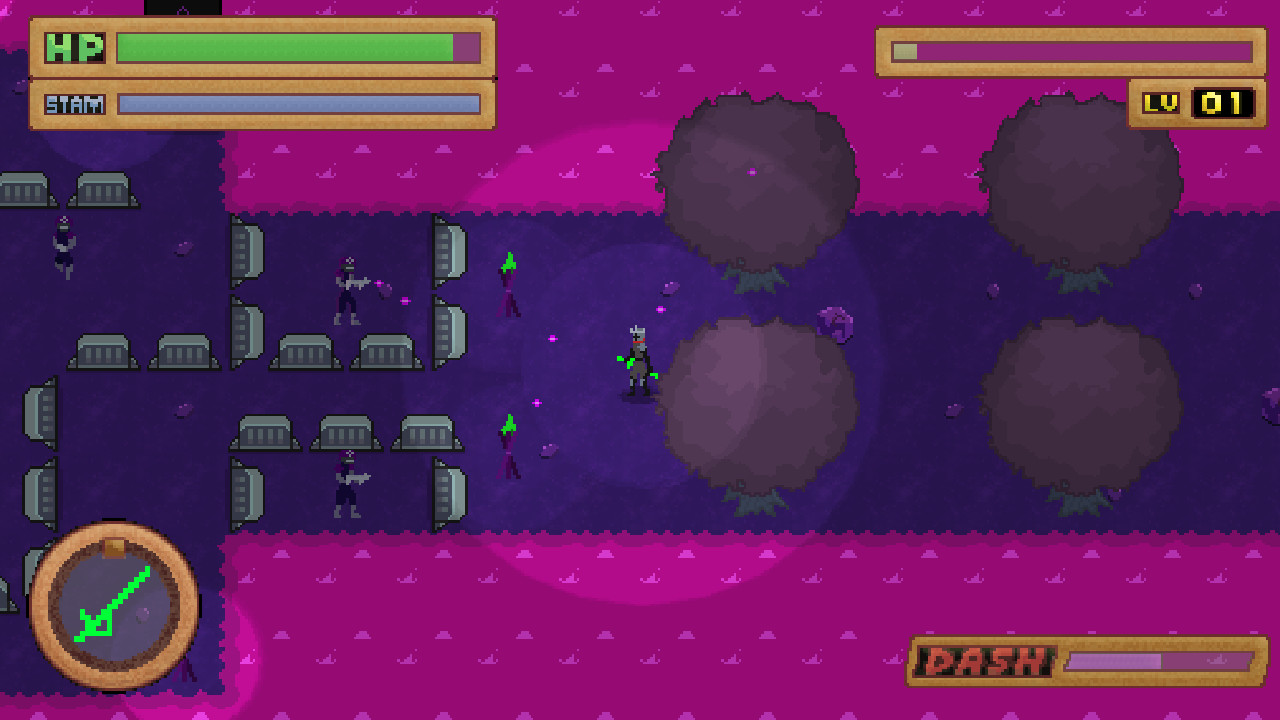
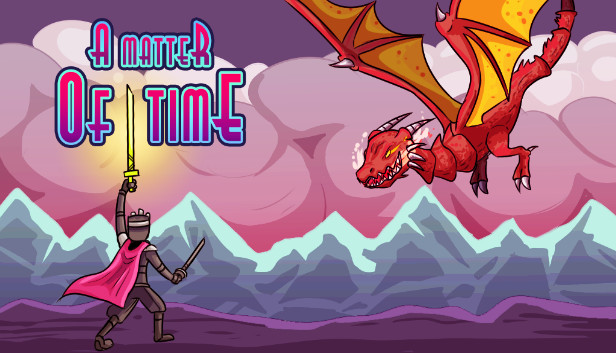
A Matter of Time is a top-down combat-focused RPG, telling the story of James, a hero sent to a different timeline to combat a great evil plaguing the land. Turning out massively different from what the game looked like in its early stages of development at the time when I first interviewed Cameron Coggins, the game turned out to be quite enjoyable with a fair bit to offer in terms of combat options. And telling a pretty different story from anything else seen in gaming. 

Graphics – 8/10

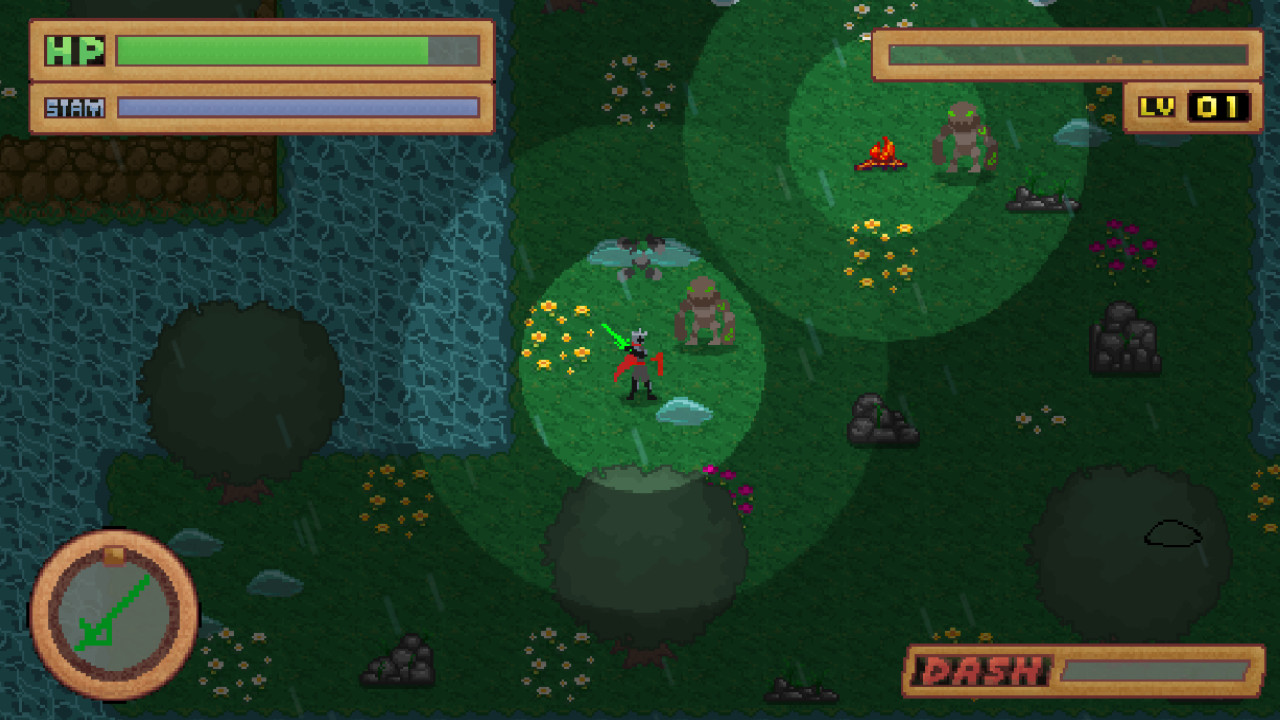
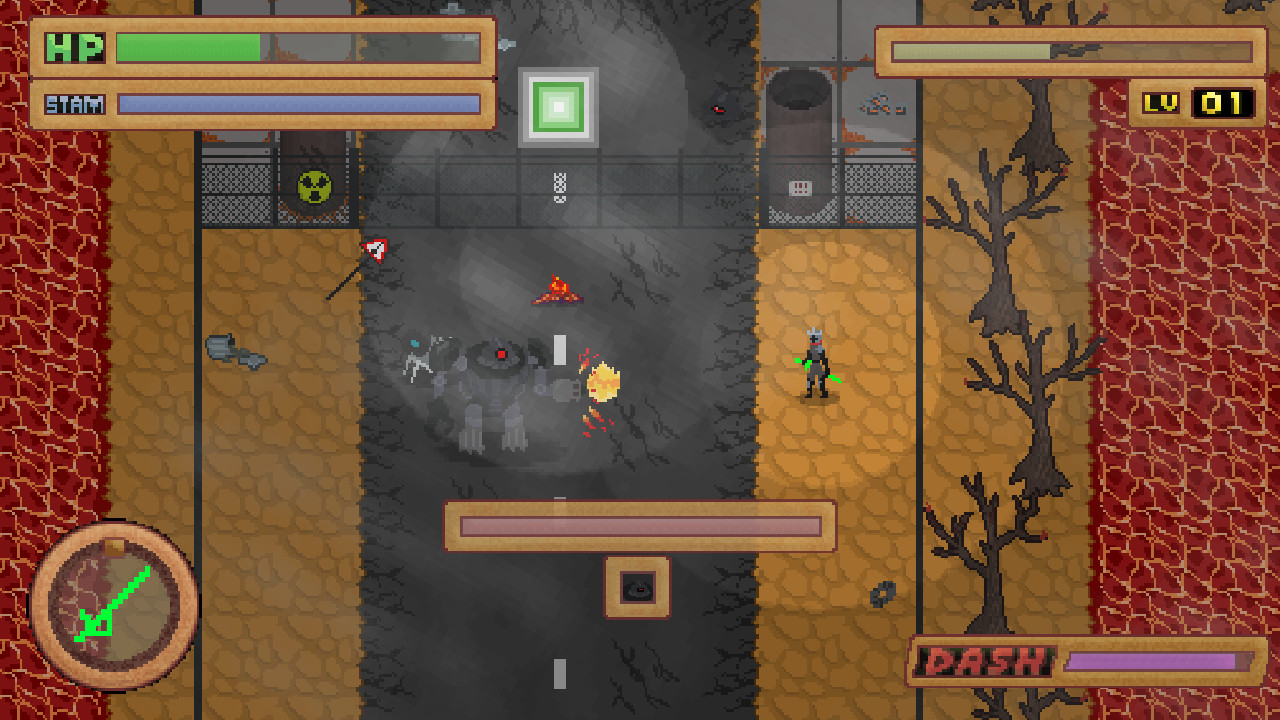
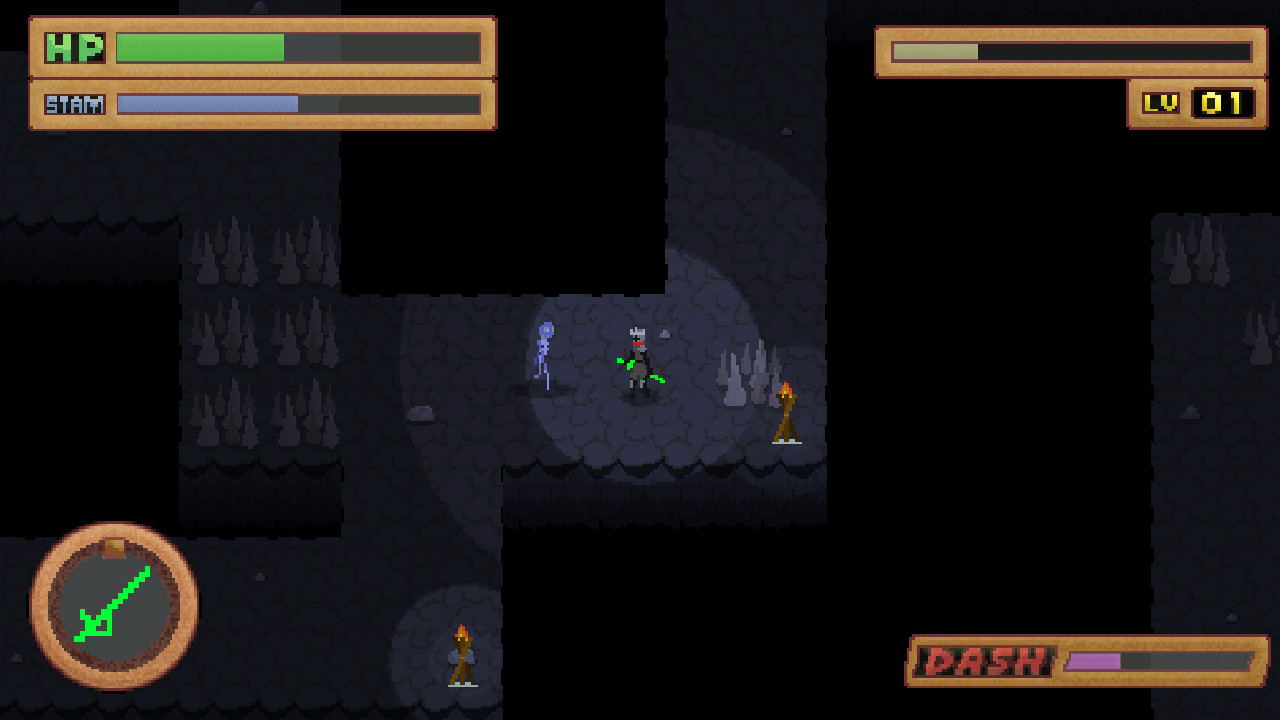
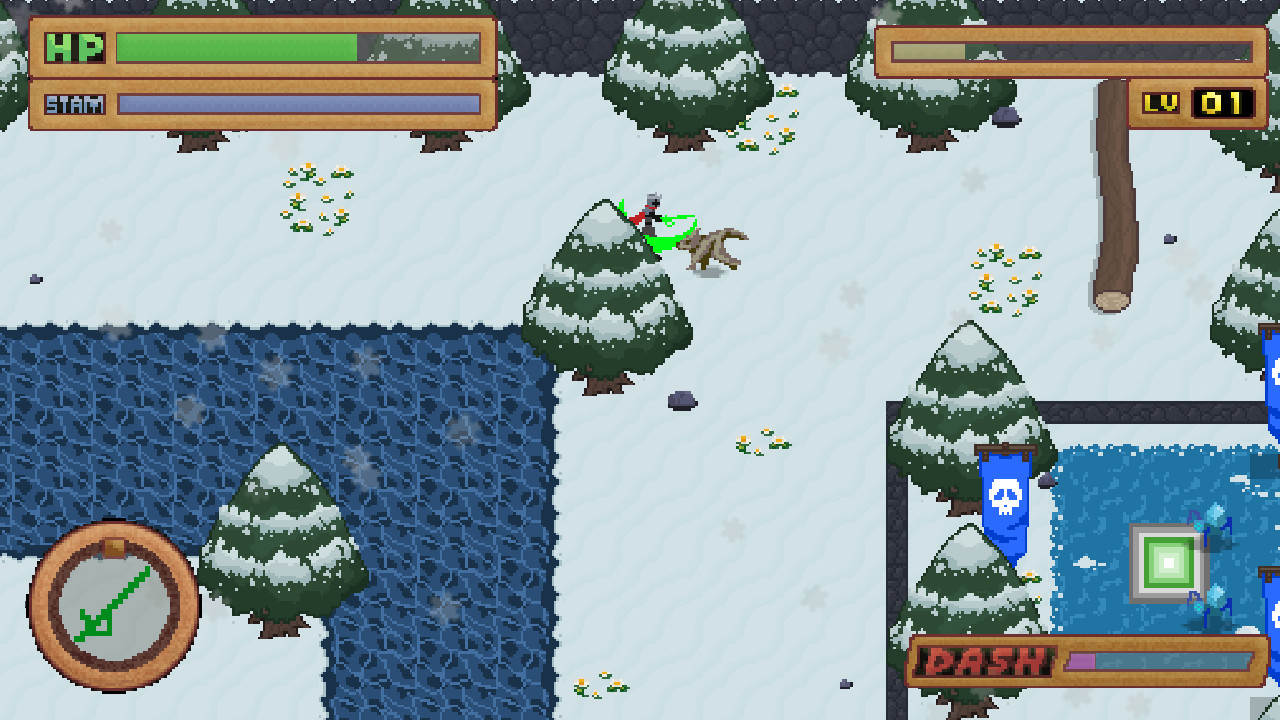
The game makes use of traditional 8-BIT graphics to present a diversely designed world with each location being more wonderfully outlandish than the last. Taking place in lush forests, dark caves, otherworldly dimensions, and even a post-apocalyptic city, the game’s visuals are the best aspect of the title. There is also a wide range of different enemies the player must contend with in each new area. Some are reminiscent of classic video game enemies, such as the slimes from Dragon Quest. 

Gameplay – 7/10

A top-down RPG with a linear progression, the game is very heavily combat-oriented with light RPG elements such as levelling up to increase health and enhance the magical abilities the player can take advantage of to maintain an edge in combat, such as a dash ability and the ability to stop time temporarily to defeat multiple enemies simultaneously. The combat aspect is quite well put together and quite satisfying to undertake; though a lot of enemies use similar attack patterns, the difficulty is ramped up considerably towards the end. Requiring the player to strategize accordingly. 

Controls – 10/10

The game’s control scheme is not only easy to get to grips with. But it also does something rather unique; when the player uses the dash attack to take out multiple enemies, the player must use the mouse to indicate which enemies they need to attack. At first glance, this seemed to become more of a hindrance than a help. But ample time is given to players to make that decision. Even when the ability hasn’t yet been upgraded. It reminded me somewhat of the original Metroid Prime. It takes a little time to adjust, but once adjusted to, it’s no problem. 

Lifespan – 4/10

The game’s longevity is most definitely the worst thing about it. The game can be finished in less than 2 hours. Which, for an RPG even with light elements, is a pretty short time to last. That being said, if the game is played through, players will find that there is most definitely scope for expansion to this world’s mythology. Be that through either a sequel or DLC. The series does potentially have a bright future ahead of it. But a game of this magnitude deserves to last far longer than it does. 

Storyline – 6/10

The story of the game follows a 12th-century barbarian named James, who is taken to an alternative time by a mysterious organization that enlists his help to defeat an evil known as the Dark Atomos. Which is wreaking havoc across time and space. James is also in search of his daughter, whom he claims to be the last thing he has left. It’s an emotionally charged story with a few twists and turns before the end. And it makes it stand out somewhat among the circle of indie RPGs released since the start of the eighth generation.  

Originality – 7/10

All these elements combined within the game make it a fairly unique experience, one worth playing through at least once. There are these elements of it that show that the game was a labour of love undertaken over a period of many years. And as there is a lot of room for expansion in most aspects. There is definitely scope for there being extensive mythology to be attached to this series. But overall, this game is a decent start to all that. 

Happii

In summation, A Matter of Time, whilst having a couple of issues here and there, is a respectable game worth at least one playthrough and a solid start for this up-and-coming development team. It has an emotionally charged story, decent gameplay, unique controls, and some extremely well-crafted visuals. And it has a lot of potential to expand into a great series down the line. 

Score

42/60

7/10 (Fair)