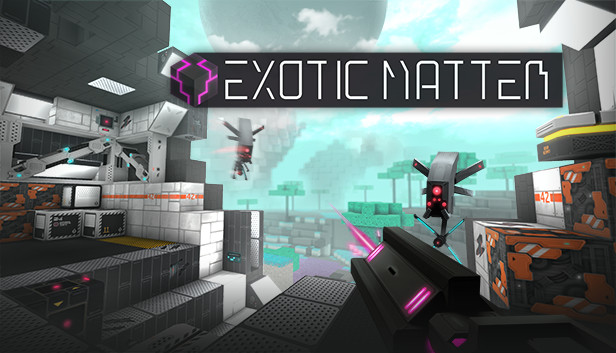
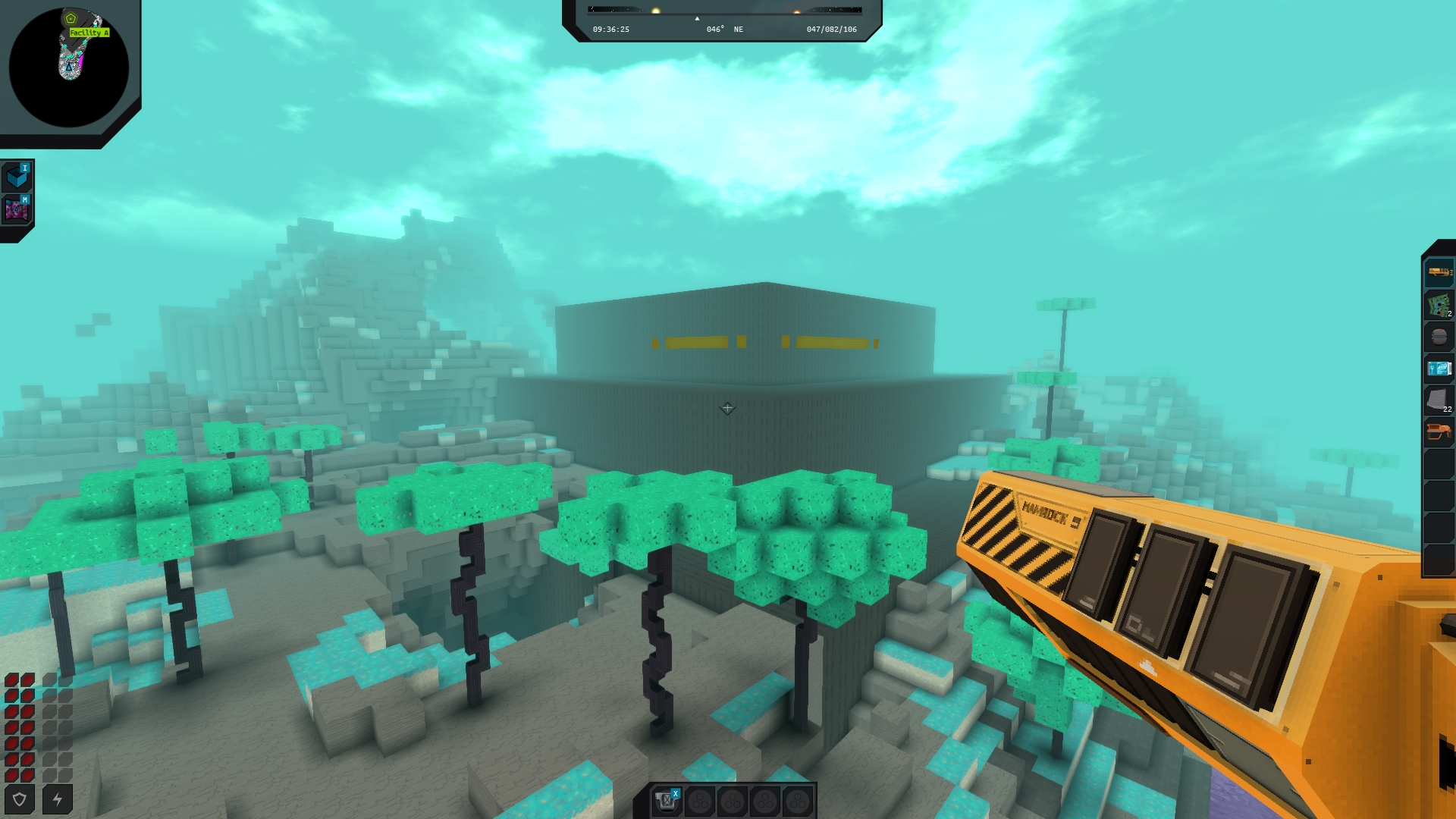
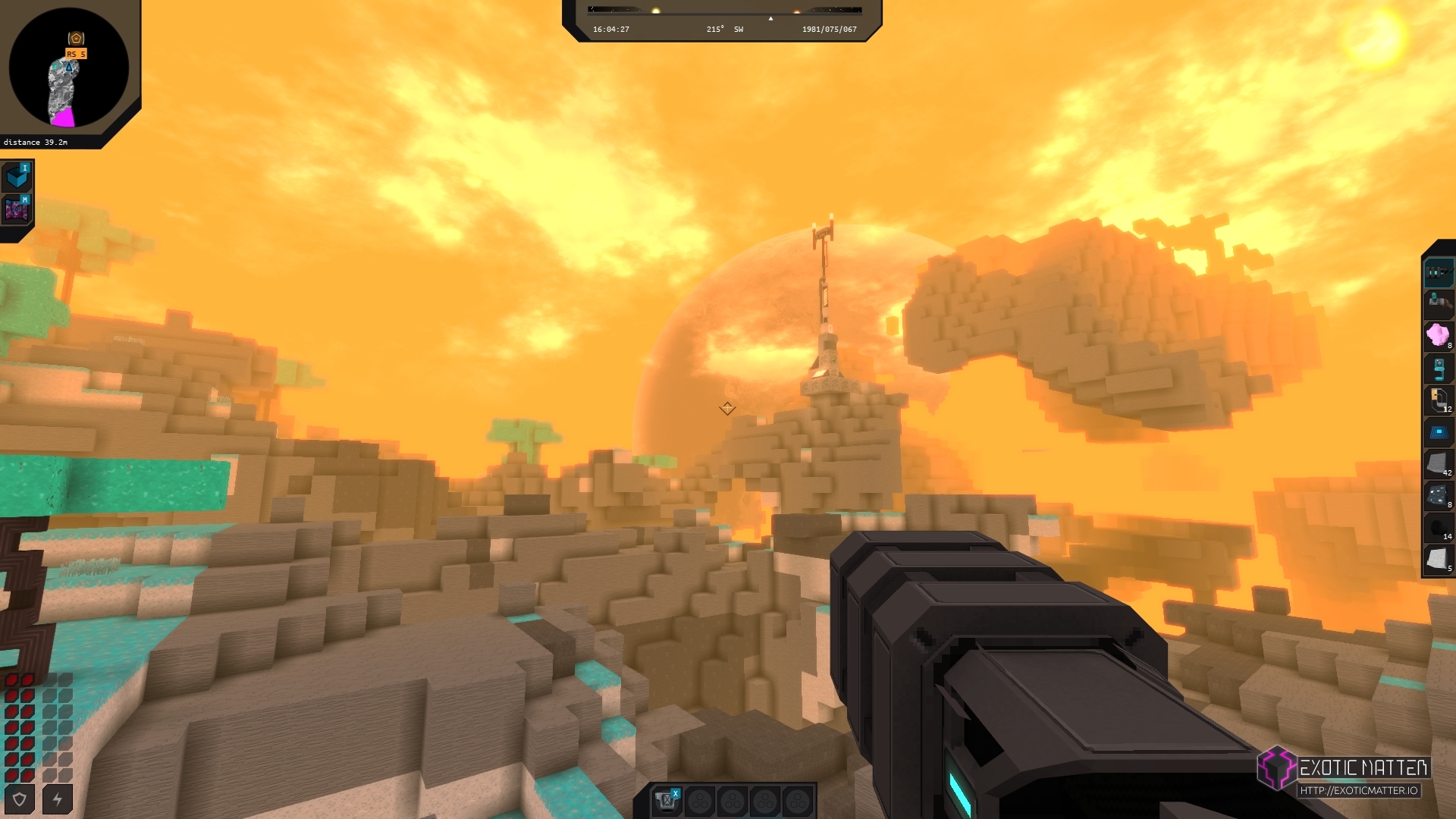
Searching once again for up-and-coming indie games, I recently came across a procedurally generated sci-fi survival game named Exotic Matter. Developed by Moebius Games, operating out of Munich, Germany. Exotic Matter is inspired by numerous works of science fiction and exploration games, similar to Minecraft. It has players crafting, building, and solving puzzles to survive within the vast in-game world that surrounds them. Whilst at the same also offering players a very story-driven experience in addition. Curious to learn more, I approached the game’s designer, Florian Frankenberger, to ask a few questions about the game, which was released on Steam Early Access. And these were the answers:
What were the influences behind your game?
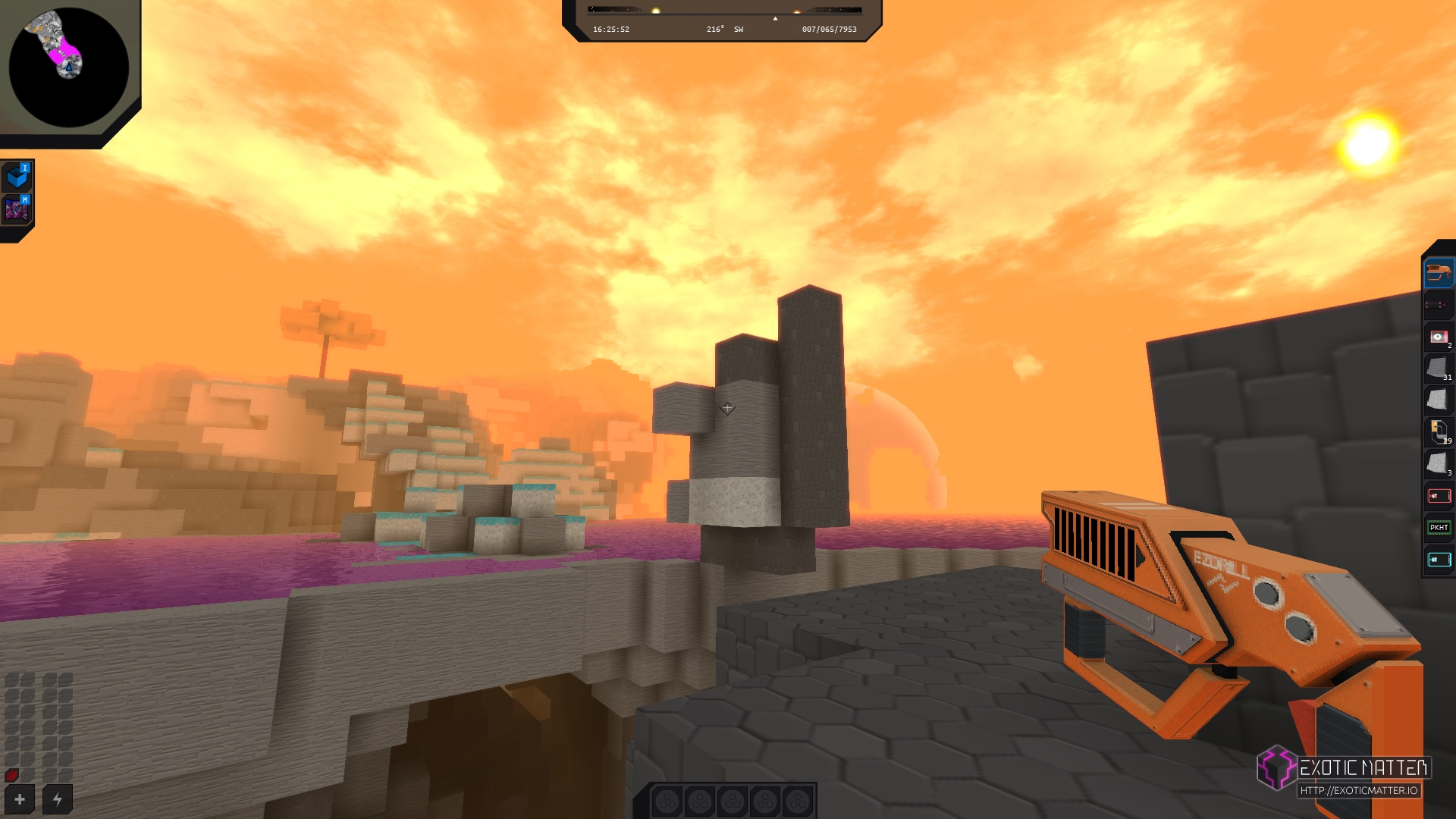
I always loved voxel games, but most of them sadly get boring after playing them for some time. But why is that? Mainly because most of those games are sandboxes – they allow you to do all sorts of cool things. But what they lack is a mission, something to accomplish. Sure, you can level up all your gear and build fortresses. But there is no set goal. So I thought one day that I should create my own game that actually gives the player a mission. And with that came the idea to go the Metroidvania approach. As some regions are accessible only after you have a certain gear. This gives the game a story but doesn’t force it upon the player.
What has the developmental process been like?
Hard, I’d say, but also a lot of fun. I mean, when I started, I hadn’t developed a single game for some time. And the games that I created when I was younger were all 2D. So I had to learn all the fancy OpenGL stuff, matrix calculus, quaternions, and shaders. And because I wanted not only to create a game but rather an engine for voxel games, it took even longer to bring it to a releasable state.
What has been the most exciting aspect of development?
I think game development in general is quite exciting. If you compare it to what I did before. Writing boring software that runs on servers, it is just so much more rewarding if you hit “run” and you can instantly see the changes you just made.
What has been the most challenging aspect of development?
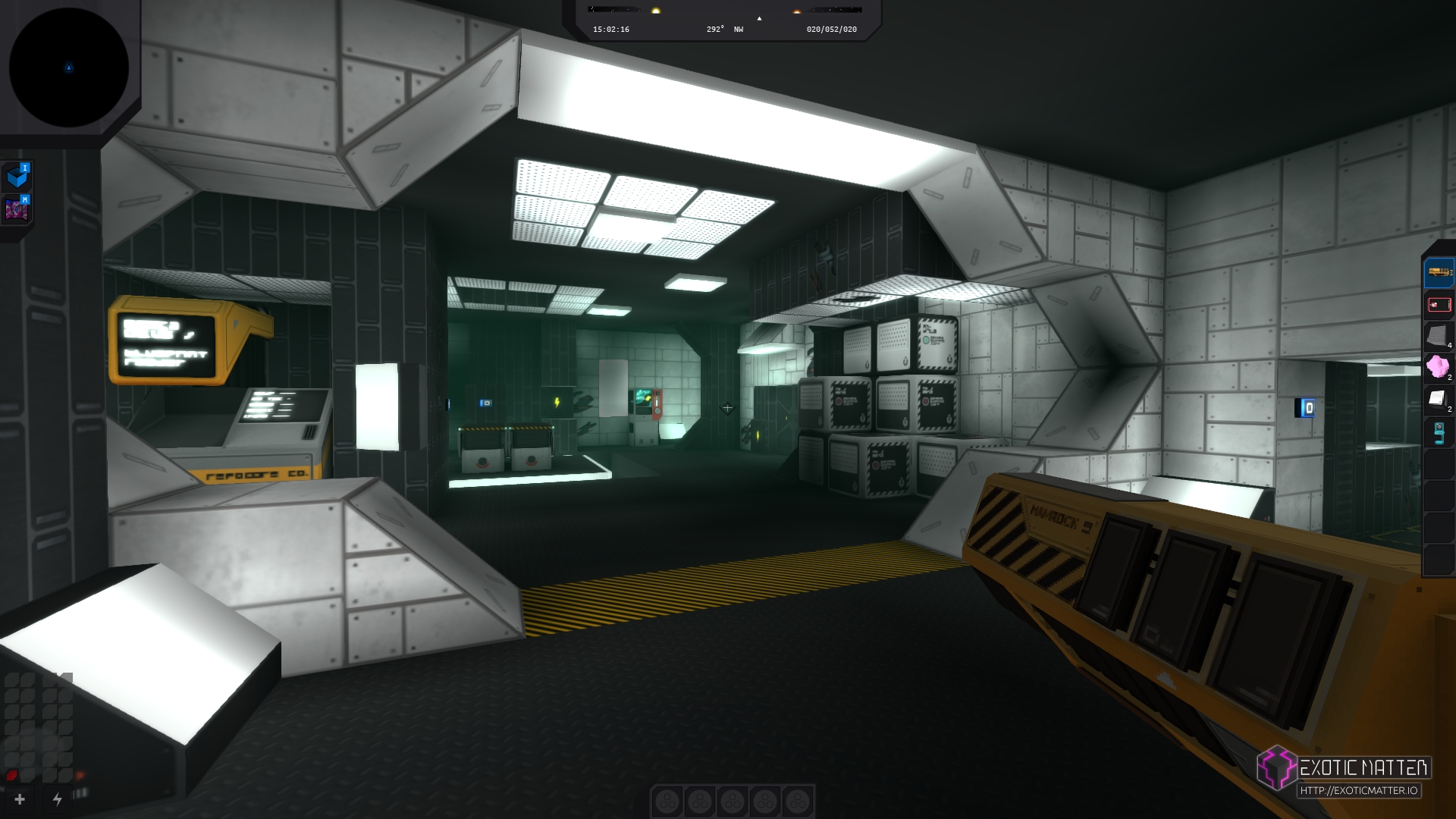
The most challenging has been to create the modding interface for the engine. The problem is that everything I wanna do in the game also needs to be available for modders later on. So that the game itself is a mod for the engine. For example, if I wanted to have a new block type that would do something when the player gets close to it, I would have to create a new block trait that would also then be usable in all current block types and all block types that modders might add later on. You see, there are a lot of things you need to consider and to think about when adding something like that.
That sometimes makes adding new things more complex than you’d think. But it will help later on when you combine different traits to form completely new types of blocks without ever changing the engine again.
What’s next for Moebius Games?
Although I already have a few ideas in my head for new games, the most important thing now is to add more content to Exotic Matter and remove all the bugs that most likely are still in there. I’m looking forward to seeing what the game will become and also to seeing what worlds people will create once we open up the modding via Steam Workshop in one of the updates that will come in the next few months.
What sci-fi books, films, or games were most influential in the development of Exotic Matter?
One of my all-time favorite books was a big inspiration for Exotic Matter: Stanislaw Lem’s Solaris. Even though the story of our game is not anywhere close to the book, the visuals are heavily inspired by it. For example, the purple color, as one of the key colors for the game, comes from the fact that in Solaris, the planet has two suns, one red and one blue, which tints the planet in violet light.
How well has the game been received so far?
I’d say that although there are still some issues in the game, most people who played it so far liked it. But some argue that getting into the game is not as easy as it should be. And we’re currently working on ways to help that by showing more hints and making sure players are not able to lose important items.
How excited were you to have David Levy on board to compose the game’s soundtrack, and what was the primary aspect that his music added to the game?
It is a great honor to have someone like David on the team. When I first discovered the work he had done before, I was stunned. I knew that this was the kind of music I wanted to have for Exotic Matter. And I think the music he created for the game just so perfectly fits the mysteriousness of the planet you are stranded on and the excitement of exploring it.
Do you have any advice for aspiring developers who may be reading this?
Hmm … If there is one thing I’ve learned, then it is that while writing your engine is a lot of fun, today it’s more important to have portability. So if I were to start all over again with Exotic Matter, I’d use one of the big engines like Unity or Unreal Engine so that bringing the game to consoles is a much easier task.
Where on the Internet can people find you?
People can find us at https://exoticmatter.io or on Steam, just search for Exotic Matter 🙂
Do you have anything else to add?
I just wanna thank you for allowing me to give people this small insight into our game 🙂
I would also like to thank Florian for answering my questions about Exotic Matter. And wish him and Moebius the best of luck with this extremely promising title. Anyone who may want to download Exotic Matter on Early Access can check it out via the link below:
https://store.steampowered.com/app/459760/Exotic_Matter/
I will also be posting a review of the game very soon.
Game on,
Scouse Gamer 88