Monthly Archives: June 2018

Omensight (PC & PlayStation 4)

Omensight

Developer(s) – Spearhead Games

PEGI – 12

Developed by Spearhead Games, the same team behind the critically acclaimed indie title Stories: Path of Destinies, Omensight is a hack-and-slash adventure murder mystery game. It plays out, unlike many other games of its kind. Heavily relying on a combination of both combats to progress through hordes of enemies at a time. And lateral thinking to determine how best to proceed throughout the course of the story. And to figure out what paths to take as events unfold. Though not without its flaws, I can safely say this is one of the best murder mystery games I’ve ever played. Easily outclassing the likes of LA Noire and Heavy Rain. The gameplay is a lot more engaging than either of the former titles.

Graphics – 7/10

Inspired by numerous comic strips and Japanese manga series, the conceptual design reminded me of the game Dust: An Elysian Tail. A universe populated by anthropomorphic animals with cartoon-style visuals. But in this case, in-game graphics are cel-shaded, which contributes to the game’s vibrancy in color and variety in environmental design. As well as character design. Architectural and structural features are also varied in that they are designed by different races of people throughout the game’s world. It adds even more to the game’s diversity in visual design.

Gameplay – 7/10

The game plays out very much like a combination of God of War, Majora’s Mask, and Heavy Rain. With players having to fight their way through hordes of enemies. Whilst all the while attempting to gather clues from characters to solve an intricate murder mystery by constantly reliving the last day before the world’s apocalypse through the perspectives of four different characters, to influence their actions. And gather information on each of them in order to piece together the events of what happened.

With so many different paths to go down through the perspectives of each of the four different characters. And having a lot of combat to deal with along the way, I really enjoyed this game. It’s a nice blend of action and drama. They come together to bring gamers something pretty exceptional. Especially for an independently developed effort.

Controls – 9/10

The game’s controls are almost perfect. Bar the fact that even when special abilities were fully charged. The game would sometimes take unusually long to respond to commands that I would try to register. And to execute special abilities such as slowing time or dashing. Otherwise, the game’s controls and movement mechanics during battle sequences are completely fluent. The game itself also provides a stern challenge. And in games like this, acceptable controls are a must. And the controls are more than good enough in this respect.

Lifespan – 7/10

Dependent on the actions the player chooses to take, the game can take around 8 to 12 hours to complete. Which, for a game that has multiple paths but is essentially non-linear, is fairly impressive. Especially for a murder mystery game. It’s another reason for me why it is far better than Heavy Rain, since, regardless of the different paths that can be taken in Heavy Rain, that game can only be made to last around 6 hours with each playthrough. So for Spearhead Games to have made a longer-lasting game on a lower budget is really quite remarkable.

Storyline – 7/10

The game’s story follows an entity known as The Harbinger. It has been called upon after the final day of the war-torn world of Urralia to save it from the different battling factions, as well as solve the mystery of the murder of the priestess Vera. And therefore also saving the land from the impending doom being brought upon by an omnipotent beast named Voden. The game’s plot, in and of itself, is extremely well written. Each aspect of the character’s stories, in conjunction with the mystery at hand, all fall into place like perfectly lined-up dominoes. Each of the four sub-characters has heaps of backstory. And they all play their own important part in the grander scheme of things.

The only thing that stops this game from getting a higher rating in terms of story is the voice acting. Whilst it was easy to take the ploy seriously, I thought the voice actors involved could’ve done better. For example, the actor who plays the character of Ludomir seems to swap between a traditional English accent and a Cockney accent. And I found myself really frustrated by this, given how well the story is written.

Also, Patricia Summersett, who played Zelda in Breath of the Wild, also has a bit part in the game, playing the character of Vera, and essentially recycles the same voice she uses in the former game. Which again seems to be a mix of British and North American accents. And it can be hard to take seriously. On the other hand, the voice actors who played the characters of Indrik and Ratika did a pretty good job. So the voice acting isn’t completely terrible.

Originality – 8/10

Though this game may essentially be a collection of different pre-existing video game ideas, they all come together to make one of the best murder mystery games I’ve played in an extraordinarily long time. Though many murder mystery games have a story before gameplay in an attempt to relay the mystique of the game better, the fact of the matter is that this game proves that the best way to do that is through the gameplay itself. The best way to convey mystery through the story is with a film, in my opinion. Which I think the likes of Heavy Rain and Fahrenheit would’ve worked better. But the developers hit the nail on the head with this game in its attempt to convey the mystery primarily through gameplay instead.

Happii

Overall, Omensight is a solid gaming experience in every aspect, and I would highly recommend any hack-and-slash or murder mystery fan to try it. The action is intense, and the game’s story is almost masterful. With many different ways to play throughout, it keeps it fresh and will have gamers on the edge of their seats.
Score

45.5/60

7.5/10 (Good)

Shape of the World (PC, PlayStation 4, Switch & Xbox One)

Shape of the World

Developer(s) – Hollow Tree Games

PEGI – 3

Developed by Hollow Tree Games and inspired by the landscape and wilderness of the developer’s base in Vancouver, Shape of the World is a procedurally generated first-person exploration game. The object is for the player to walk around, uncovering new facets of the world around them. And to lightly interact with environmental elements such as trees. After first previewing this game, I expected much more out of it than what was on offer. And after playing it for less than an hour, I became quite bored with it.

Graphics – 6/10

The one aspect I can give this game some praise for, at least, is its conceptual design. The environments are made to look like something from a different world entirely. With vibrant uses of color and outlandish scenery design. The soundtrack also does well to add to the sense of serenity. Which the developers were trying to achieve. There are no graphical glitches to be found. But the problem with the visuals is that they can start to feel incredibly repetitive after a while. And unless players are solely in this game for the sense of calmness, it can get very old very fast.

Gameplay – 1/10

The objective of the game is to travel the world and uncover as many objects hidden within the environment as possible, and proceed in accordance with what paths are discovered. Short of that, there’s really nothing else to do, which, to me, was incredibly disappointing. As a gamer, when I hear the terms “open-world” and “procedurally generated”, my first reaction is to assume that these elements are there for more reasons than simply setting out to make developers feel relaxed. I expect there to be things to do within the game beyond simple and bland environmental interactions. Frankly, I haven’t been this disappointed to play an open-world game since I played Proteus.

Controls – 9/10

With basic first-person mechanics, the game’s controls do what they are supposed to do, but my main gripe with the control scheme was that the movement was far too slow. This may have been the desired effect to add to the game’s sense of peacefulness, but to me, it was simply another frustration I had with it.

Lifespan – 3/10

Though the game may be procedurally generated, the game’s lifespan will only last as long as the gamer can hold their own interest in it. Which if you’re a gamer looking for a traditional gaming experience, you will be extremely disappointed. Personally, as I said, I got bored after less than an hour of playing this game. And I commend anyone not looking for the developer’s desired intent who can manage to get further than that.

Storyline – 0/10

As there is no narrative, I suppose the only positive thing I could theoretically say about this aspect of the game is that it could possibly encourage a gamer’s imagination to think of their own story as they go. Kind of a throwback to how video games used to be seen back in the days of the Atari. But otherwise, there is nothing in terms of a pre-written story; there is nothing. Which, again, to me, was just another frustration to add to the long line of which, when it came to playing this.

Originality – 0/10

Though a game may be able to argue the fact that the concept of this game being made for a purpose different from a traditional gaming experience is original in and of itself, it’s not the first time a game like this has been made, and a distinct fear of mine is that it won’t be the last either. To me, the uniqueness of video games is how they look and play out differently from how other great games do. And in this game, there is nothing unique about how it plays out. With minimal mechanics and objectives, it is something far less than any other FPS game ever developed. And it’s simply not worth the asking price when they are bigger and better. And most likely cheaper FPS games out there.

Angrii

Overall, Shape of the World will be a massively disappointing game to anyone who may be looking for an immersive video game experience. If there are gamers who are looking to waste a few hours wandering around a procedurally generated limbo for the purposes of relaxation, then this may be up your street. But to me, this was ironically one massive frustration of an experience.

Score

19/60

3/10 (Bad)

Accessible Early

Q&A With Michael N. Briscoe

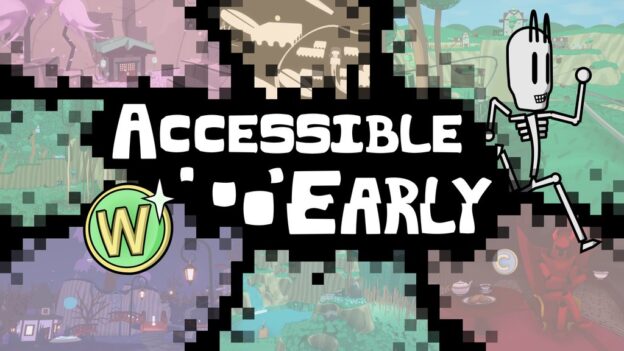
After being away from Kickstarter for a while, I decided to explore the platform again for indie game creators looking for funding for their latest developmental ventures. One such project that stood out was a 3D platformer named Accessible Early. A throwback to the early days of 3D platforming, but boasting a much more stern challenge than many other games of its Kind, Accessible Early is a game conceptually influenced by a range of different world cultures, similar to most modern Mario games, but most evidently to me, Mexican culture, most evidenced by its character design similar to Grim Fandango. Intrigued, I sent over a few questions to one of the game’s programmers, Michael N. Briscoe, who had some interesting things to say about Accessible Early. Here are his answers:

What were the influences behind your game?

Primary influences have been the 3D platformers developed by Rare in the past. Games like Banjo-Kazooie and Banjo-Tooie, as well as Super Mario 64 and Super Mario Sunshine. The humor in Accessible Early has also been inspired by the writing in Undertale.

What has the developmental process been like?

Extremely laborious. As a solo indie developer, I have to do everything myself. This means working 60 hours a week on average and working extremely efficiently at that.

How close are we to seeing the finished product?

If the Kickstarter campaign is successful, I estimate the final game to be released in 2020.

What has been the most exciting aspect of development?

How challenging it’s been. I enjoy all the different problems that pop up in everything from coding to design. Creating a video game is very stimulating, both mentally and creatively.

In what respects will the game differ from other 3D platformers?

Accessible Early will focus on platforming far more than any other 3D platformer, will have more impactful characters and storylines, and will be more challenging than anything out there. Most video games these days seem to hold the player’s hand, and platformers are no exception. I’m not creating the Dark Souls of 3D platformers or anything, but I am developing a game that respects the player’s ability to learn and overcome challenges.


What has been the most challenging aspect of development?

Marketing. It’s the one thing that you can’t overcome by working hard and creating something of quality. People like to say that quality products float to the top, that if you make something good, then it will become popular, but sadly, this isn’t true. There’s a reason why the AAA industry pumps absurd amounts of money into marketing campaigns. Trying to get the word out about Accessible Early while on a shoestring indie budget has been more difficult than everything else combined because it seems that successful marketing requires a lot of money or a lot of luck.

How well has the game been received so far?

Accessible Early has garnered a lot of positive feedback so far. Pretty much every person who’s touched the demo has loved it. In particular, people seem to really enjoy the music, which is especially reassuring to me since I’m just an amateur composer!

What games did you play, and how did this impact the development of Accessible Early?

Banjo-Kazooie, Banjo-Tooie, and Yooka-Laylee have impacted general 3D platforming features, Super Mario 64, Sunshine, and Galaxy for platforming design (in particular for designs that offer the player learning experiences; Nintendo is very good at teaching people how to play their games), and Undertale and A Hat in Time have impacted the comical tone of Accessible Early.

What platforms are you looking to bring the game to?

Accessible Early will be available on PC initially, followed by a Mac release and then a push for a Nintendo Switch port.

Do you have any advice for aspiring developers who may be reading this?

If you’d like to be an independent developer, then you will have to work hard. Harder than you’ve ever had to work before. But if you’re excited about your project, then the work will be fun. And whatever you do, make sure to start marketing immediately. I’ve read that a lot of people start sharing their projects too late. So I started early. It was still too late. Share as much as you can, as often as you can. Independent developers can’t rely on ad campaigns or brand recognition to sell their games, so they need to rely on fan communities that grow very, very slowly.

Where on the Internet can people find you?

The Kickstarter campaign and I can be found here:

https://www.kickstarter.com/projects/1105728559/accessible-early-a-new-3d-platformer-collectathon

For social media, I’m more active on Twitter than anywhere else:

https://twitter.com/AccessibleEarly

People can send a message directly through the Accessible Early website:

https://www.accessibleearly.com/

And I welcome people to email me directly at the following address:

info@accessibleearly.com

Do you have anything else to add?

I’d encourage anyone who’d like to make a video game to give it a shot. All of my favorite titles these days have been made by independent developers, and I’m looking forward to seeing what people create in the coming years!

I’d like to thank Michael for taking the time to answer my questions on Accessible Early and to wish him the best of luck with the project. I’m certainly looking forward to the release of the game; I hope all my readers are too. For any fans of 3D platforming games, this title looks particularly promising.

Game on,

Scouse Gamer 88

Moonlighter

Moonlighter (PC, PlayStation 4, Xbox One & Switch)

Developer(s) – Digital Sun Studios & 11 BIT Studios

PEGI – 7

A joint venture between Digital Sun Studios & 11-BIT Studios, Moonlighter is a top-down action RPG Rogue-lite with community simulation elements. Similar to games like Stardew Valley or Animal Crossing. Picking this game up for the first few times, I was pleasantly surprised by the amount of depth and replayability this game has to offer, and I enjoyed it a great deal.

Graphics – 8/10

Rendered in an 8-BIT visual style similar to classic adventure games such as The Legend of Zelda and Ys, the game takes place in the village of Rynoka with dangerous caves on its outskirts/ Containing a plethora of intricately designed creatures, each with their own unique individual looks and concepts. The variety in conceptual design is unprecedented. And the scenery is just as wonderful to look at throughout the entire game. There is also a series of cutscenes rendered in 8-BIT at the start of the game. Which is fantastically well presented. It does extremely well to set the premise of the game.

Gameplay – 9/10

The game requires the player to delve into a series of dungeons, battling against dangerous enemies to gather as much loot as possible in every venture. And then to sell what loot is acquired at a shop in Rynoka named Moonlighter for prices that can be adjusted by the player in accordance with what customers deem acceptable. Each dungeon is procedurally generated. So each venture in the dungeons offers a new challenge to the player and different loot with every playthrough. Including weapons, enemy components, and armor, among many other things. The game has an overwhelming amount of replayability. And whilst it is a challenging game from the start, it does get exponentially harder as time goes on. Whilst remaining thankfully accessible to players. Much like Rogue Legacy, but on a much grander scale in terms of gameplay value.

Controls – 10/10

I say this many times with a lot of games I review, but as Moonlighter’s gameplay follows a formula that has been tried and tested many times, it’s reasonable to expect that there should be no problems with the controls. And so there aren’t. What makes this game stand out from the likes of The Legend of Zelda, however, is the additional mechanics, such as rolling around to avoid enemy attacks. It’s similar to Titan Souls. But a lot less simplistic in basic design. As there is arguably more strategy required in Moonlighter to defeat a greater number of enemies.

Lifespan – 8.5/10

The game’s replay value can make for hours upon hours of entertainment, which is always fantastic to experience. Especially in an indie game. A lot of indie developers tend to make games that are much shorter for various reasons. But games like this just go to show that limitations can only exist in the imagination and that smaller budgets don’t necessarily mean indie games have to last only a few hours each. But with Moonlighter, it can be played for far, far longer. And whilst some gamers may think that lifespan isn’t as important, I’m firmly in the belief that the longer a game can be made to last, the better it is; and that’s certainly the case with this title.

Storyline – 6/10

The story primarily focuses on a basic premise as opposed to a progressive narrative. It follows a man named Will, who is the owner of a shop in the village of Rynoka named Moonlighter. Who has aspirations to become a great adventurer in addition? There are hints of an ongoing narrative with various clues that the player can find throughout each dungeon to progress through the game. But it can be quite difficult to present a story in that way. And to keep it emotionally charged in a game. Especially if it’s heavily text-based like Moonlighter is. If, however, players have the patience to discover the depth of the story in this way, then the game’s story isn’t terrible by any stretch of the imagination.

Originality – 8/10

Though this game is not without its influences, each element comes together to form something particularly special and unique. I said earlier that developer limitations can only exist in the imagination, but after playing this game, it became obvious to me that the developers of Moonlighter certainly have an abundance of imagination in most aspects that players can hope to find evidence of it in. The way the game looks, the length that it lasts, and the manner in which it plays out make it unlike many other games I’ve played, and it earned every bit of the popularity it has through its community of players.

Happii

In summation, Moonlighter is a fantastic game that I would greatly recommend to any fan of either RPGs or simulator games who may also be looking for a stern challenge in gameplay. It looks great, plays great, and stands out more than many other indie titles I’ve played over the years.

Score

50/60

8/10 (Very Good)