Tag Archives: Arcade

Punch-Out!! (Arcade)

Punch-Out

Developer(s) – Nintendo IRD & Nintendo R&D1

Publisher(s) – Nintendo

Producer – Genyo Takeda

ESRB – E10+

The original Punch-Out was one of the first franchises established by Nintendo, even before the release of Super Mario, and was met with positive reviews worldwide after its international release in 1984. The project was worked on by many now-famous Nintendo employees, such as Genyo Takeda and Shigeru Miyamoto, and is notable for being the first Nintendo game to have the soundtrack composed by the esteemed Koji Kondo, who would go on to compose some of Nintendo’s most familiar musical scores. To me, it is one of the most memorable arcade games of the 1980s, and I’m glad Nintendo chose to build upon the franchise over many of the others they had even back then.

Graphics – 6/10

The visuals have a fair bit of graphical detail for the time, and I’ve always been wise to how intelligent a move it was on Nintendo’s part to represent the playable character as a wireframe to get around many technical limitations of the time. The biggest problem that many people have had with this game, however, is the fact that almost every character is either hopelessly generic or an overblown racial stereotype, even though it was Shigeru Miyamoto who designed them. For example, there’s an Italian boxer named Pizza Pasta, and a wimpy French boxer named Glass Joe. Though personality would come into play more as the series progressed, despite the fact that racist caricatures of the characters would become even more pronounced, it all started quite primitively, especially since this was only an arcade game.

Gameplay – 7/10

The way the game plays out is actually particularly interesting. The player would use the bottom screen to fight, and the top screen would portray the stats and character portraits of the fighters. It also worked well as it was ported to the Game & Watch, and is also in turn seen as a precursor to the idea of the DS, interestingly enough. It also becomes a lot more challenging as it progresses, but the difficulty does mercifully come down after beating the game thrice, so it’s not too inaccessible.

Controls – 10/10

The general control scheme of Punch-Out is rather simple, and getting to grips with it will be self-explanatory for any gamer of today looking to try it out. The direct sequel would introduce some particularly strange mechanics, but still, players can pretty much jump from the first to the second without missing a beat. It was that straightforward, even back then.

Originality – 9/10

Though at the time the game seemed particularly simple in scope, it would go on to become instrumental in inspiring many of Nintendo’s future works, and consequently, this game is actually a very important piece of gaming history. Not only that, but it would also go on to inspire the creation of the licensed boxing video game sub-genre, especially as Mike Tyson lent his own name and likeness to a later installment of the series for the original Nintendo Entertainment System.

Happii

Overall, Punch-Out is a much more important game than most people probably realize. It would go on to serve as inspiration for a plethora of games and even consoles, and at the same time, managed to entertain a lot of people in the process, and is essential for any fan of retro gaming.
Score

33/40

8/10 (Very Good)

Pix the Cat (PlayStation 4, Xbox One & Switch)

Pix The Cat

Developer(s) – Pasta Games

PEGI – 3

Seemingly developed as a love letter to fans of the second-generation classic Pac-Man and the early mobile phone game Snake, Pix the Cat combines gameplay elements of both titles. It offers a gaming experience, unlike anything I’ve ever seen before. Although I found it to have its flaws, I ended up really enjoying this title for what it was. And how much fun there is to be had whilst playing.

Graphics – 6/10

The visuals in the game are loud and imposing, which for an arcade game is infinitely unusual. Although a similar style has been seen before in the championship edition of Pac-Man, Pix the Cat takes it to a whole new level. The exaggerated perpetuation of early second-generation titles relied on a wide array of colors to stand out. Making Pix the Cat look captivating.

But that being said, I feel that there is a danger of the visual style coming across as too distracting. And deviating players away from the gameplay. Another con is that the stage layout can be confusing at times. The objective of the game involves entering stages from stages. They appear smaller on the current stage being played on, making them difficult to spot at times. Though some would argue that this is part of the game’s level of challenge, I see it as an unnecessary complication.

Gameplay – 6/10

However, regardless of unnecessary complications, the game is still pretty addictive and enjoyable to play. It revolves around the player character collecting several eggs on the screen, which hatch into ducks. And bringing them to several circles, often found on the other side of the screen, until all the eggs are brought to all the circles. Thus allowing the player to advance to the next screen until the timer runs out.

Players can maintain a combo chain by consistently collecting all the eggs on the screen. And taking them to all the circles on the screen in single fell swoops without going back and collecting eggs twice in a single screen. But the gameplay mechanics are nowhere near as complicated as I’m perhaps making them out to be. Pix the Cat represents the epitome of gaming simplicity, synonymous with the generations it has been inspired by.

The problem I personally found with the gameplay was that I felt the compulsion to try to maintain combos for the entire time limit. Whenever I accidentally broke my combo, I felt the need to start again. Which in turn, eliminated any sense of fluency within the game. But I wouldn’t count that as being too much of a bad element. It’s simply an easy game to learn, but hard to master.

Controls – 9/10

In the beginning, I did find the controls to be a little bit stiff, but otherwise, there are no problems. Since this game represents the epitome of gaming simplicity, this is also reflected in the game’s control scheme, which is by no means a bad thing. Many games have come and gone. And have incorporated control schemes designed to be innovative. But have ended up coming up with a whole new series of complications, so I never tend to slate a game that purposefully doesn’t try to be innovative with its control scheme.

Lifespan – 10/10

As an obvious throwback to 70s arcade titles, such as Asteroids and Pac-Man, replay value. In turn, the game’s lifespan only lasts as long as an individual player’s interest in the game, which I can guarantee will be a particularly long time. There are several game modes to keep things interesting. But the game follows the age-old formula of players simply trying to reach a high score as its main objective. And again, there’s nothing wrong with that. Provided the game is satisfying and engrossing enough, which in this case, it is.

Storyline – N/A (10/10)

The game’s basic premise simply revolves around the titular character hatching duck eggs and taking them in circles. In lieu of arcade game tradition, Pix the Cat is extremely light on story. And in my opinion, shouldn’t lose marks for not having that, which it doesn’t need. Though it may be viewed as a nice touch for an arcade game in this day and age to include some form of narrative, I think there was too much of a high risk of adding a story to the first installment of a game that already includes so many outlandish elements. And it may have ruined the overall gaming experience. But thankfully, this title has been kept simple enough for this problem not to occur.

Originality – 7/10

Though this title clearly has its influences, like many indie titles I’ve reviewed this year, both gameplay concepts have been handled nicely, and the result is something fairly unique. Gameplay elements of second-generation titles were inherently similar to one another, but the best ones, such as Dig Dug and Yars’ Revenge, always had certain characteristics and properties that made them stand out, and this is no exception.

Happii

Overall, though flawed, Pix the Cat is still a particularly enjoyable game to play, and I would recommend it to anybody wishing to experience gaming simplicity or to players seeking to experience a sense of nostalgia within the current generation. It gives testament to the fact that although this style of play may be yesterday’s news in terms of mainstream gaming, it does have its loyal fan base, and it’s not been completely fazed out within the industry.

Score

48/60

8/10 (Very Good)

Moondust (Commodore 64)

Moondust

Designer – Jaron Lanier

Publisher(s) – Creative Software

Rating – N/A

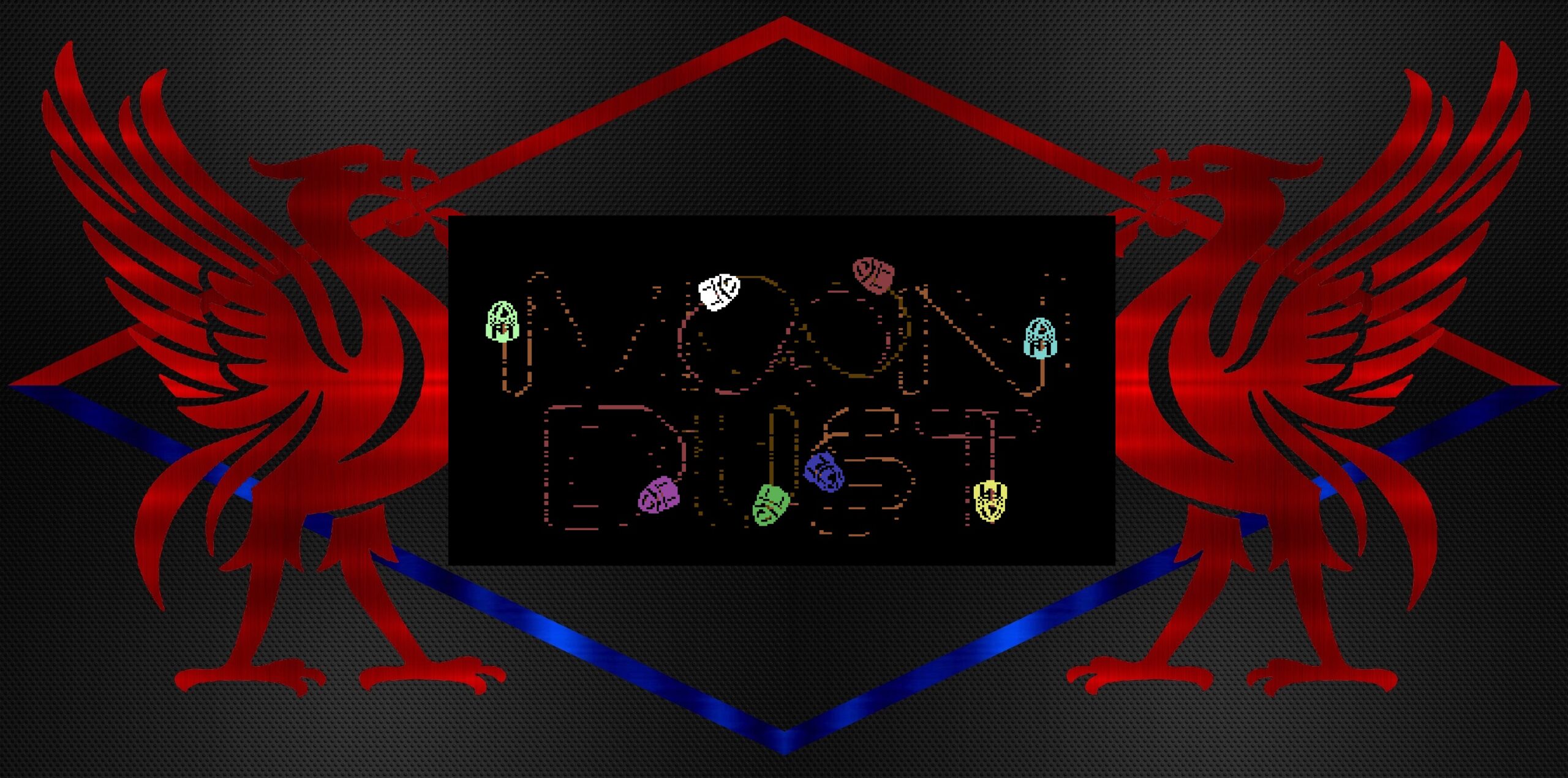
Moondust is not only an art game. But it’s also one of the first examples of a music game. With music being rendered randomly by the Commodore 64 further and further, the game progresses. Though the gameplay can be quite enjoyable once players get the hang of it, it does take a while to get into, and many other players may simply be left perplexed by how surreal and off-the-wall it is, and were for the time.

Graphics – 7/10

Since video gaming technology was extremely limited at this point, compared to what it would become in the future, a lot of what games relied on at the time was a wide variety of different colors and as many varying character sprites as could be rendered. In this game, there’s certainly no shortage of color. As many of them are displayed across the screen at the same time. The music can get pretty irritating after a while of playing. But the visual aspect was captivating enough. It seems less distracting the more players get used to the game’s general mechanics.

Gameplay – 7/10

The objective of the game is to guide the character across a bullseye at the center of the screen and land as much of the residue he generates behind him as possible into the bullseye. Whilst trying to avoid four additional spaceships on the screen. I think I would best describe this game as Pac-Man in space since the objective is somewhat similar. And the number of enemies is also identical. Although I would make the assumption that the enemies don’t have the same level of artificial intelligence as the ghosts in Pac-Man.

Controls – 7/10

The controls can be pretty awkward to start with. And it does take an unusual amount of time to adjust to them after playing so many other conventional games of the second generation myself. I imagine that it must also be especially difficult playing on a system akin to a home PC, since I’ve always personally found directional buttons to be much more difficult to cope with than a D-pad or even an arcade stick. However, once players have gotten the hang of it, no other complications will arise.

Originality – 9/10

Although I have been able to vaguely compare Moondust with another successful second-generation title, the fact is that there were no other, and still very few other games like this. This game has also been inducted into video game museums and exhibitions. And to my knowledge, there aren’t many games of the era that can say something like that. It has gone on to be the basis of many different mainstream titles to this day, and any game that can go on to influence that wide a variety of games must be considered unique.

Happii

In summation, Moondust may have its flaws, but there is no denying its historical importance. Without games like this surviving, especially during the Video Game Crash of 1983, the story in video games would simply be considered to be an impossibility, and the industry would be significantly less close to establishing the medium as a valid art form.

Score

30/40

7.5/10 (Good)

The House of the Dead 2 (Arcade, PC, Dreamcast & Wii)

House of the Dead 2

Developer(s) – Wow Entertainment

Publisher(s) – Sega

PEGI – 16

Released three years after the original game, House of the Dead 2 received a mostly positive reception from critics. Most seemingly in agreement that it made significant improvements on the first titles in the series. Personally, I do have to say I spent a lot of time playing this game when I was younger. But looking back at it now, I realize many of its core faults with it.

Graphics – 7/10

Despite several glitches here and there, the visuals were very much ahead of their time. Since it was ported to the Sega Dreamcast as well as arcade cabinets. And the Dreamcast was capable of rendering much more advanced visuals than both the Nintendo 64 and the original PlayStation. The conceptual design was fairly well handled for the most part. The game is set in Venice, Italy. But the game also takes the player to different locations as it progresses. Such as a colosseum in Rome, and a once-thriving modern city. Those levels are set in broad daylight, however. Because of that, the game loses much more of its horror factor towards the end, the way I see it.

Gameplay – 7/10

Despite the many faults House of the Dead 2 has, the one aspect that was enjoyable at the time and is still enjoyable to this day is the gameplay. In a first-person rail shooter, the objective is simply to kill every zombie or monster that may block the player’s path in order to progress through each level. And defeat the various bosses waiting for them. When I was growing up, I was always lukewarm to rail-shooting games. But after the likes of Halo and Half-Life came to home consoles, they blew games like this out of the water. Since there was much more to them. Nevertheless, it’s only in terms of gameplay that I feel this title does hold up to a small extent.

Controls – 10/10

The control schemes in rail shooters are much simpler and more self-explanatory than even a first-person shooter. So consequently, there are no issues that will arise in this respect whilst playing it. The only functions players must grow accustomed to are simply aiming, shooting, and reloading.

Lifespan – 3/10

In lieu of the tradition of the genre, one playthrough of this game will only last an average of forty minutes. But what longevity there is in playing this game comes from the fact that it was designed to be played a multitude of times. Especially since there are a few alternative endings to unlock. Depending on certain circumstances throughout the game. I do feel, however, that much more could have been added to make it last at least twice as long. Or even an endless mode could have been added to the home console versions of the game.

Storyline – 2/10

The worst thing about this game is undoubtedly the storyline. Even though the industry was still in the process of getting out of the mindset that video games didn’t necessarily have to tell a story in order to be good, there were many different factors making this story especially bad. It follows AMS agents James and Gary trying to get to the bottom of a zombie epidemic that has broken out in Venice and is threatening to spread across the planet. Aside from the plot being extremely typical of most zombie films that have been released prior, the voice acting is particularly poor and embarrassing.

Anyone who may have thought the original Resident Evil had bad voice acting hasn’t heard anything yet until they experience what this game has to offer. It also now seems pretty stupid that the developers chose to keep the name The House of the Dead attached to the project. Since the setting contradicts the name greatly, as it’s no longer set in a house. Personally, I would have given it a more relevant name. And just stuck with the same text font, so that people would have recognized that it was from the same series of games. But alas, the developers settled on what they did.

Originality – 4/10

Aside from the story being very unoriginal, the gameplay, whilst enjoyable, didn’t really bring anything new to the genre; essentially playing out like a carbon copy of the first game. As well as other games in the genre, such as Time Crisis or Virtua Cop. Although the reload mechanism is much more accessible than in Time Crisis, there wasn’t anything beyond that that made it stand out from any other rail shooting title.

Angrii

Overall, House of the Dead 2 was a decent game, maybe 15 years ago. But now, it seems like a much less enjoyable experience for those many reasons. With so many zombie-based shooters finding their way into mainstream gaming these days, it would be hard for Sega to make another game in the series. Unless they do something drastic with the story as well as the gameplay.

Score

33/60

5.5/10 (Below Average)

Final Fight (Arcade & Various Consoles)

Final Fight

Developer(s) – Capcom

Publisher(s) – Capcom, Ubisoft & US Gold Ltd

Producer – Yoshiki Okamoto

Designer(s) – Akira Nishitani & Akira Yasuda

PEGI – 12

Originally intended to be a sequel to the first Street Fighter game, but later switched from a fighting game to a beat ‘em up, Final Fight is a game made in the same vein as Double Dragon and the future classic Streets of Rage. Whilst I found it to be an overall mediocre gaming experience, it does have a different kind of value to it.

Graphics – 7/10

First of all, there is some basis in visual diversity, since the level designs are pretty varied and somewhat unique for the time. But the main issue I have with it is that most of the characters present are hopelessly generic. All but one. The character Poison actually has an interesting piece of history behind her.

When it came time to release Final Fight on the Super Nintendo, Nintendo took umbrage with the idea of players having to fight women in order to progress. Since their censorship policies were at their most draconian at the time. Capcom tried to get around it by saying that Poison wasn’t, in fact, a woman, but a man. Although Nintendo told Capcom that they had to change it anyway, Capcom has stuck with the idea of Poison being a man ever since. Making for the inclusion of one of the first transgender video game characters in history.

Gameplay – 6/10

A retro 2D side-scrolling beat ‘em up, I found the gameplay to be repetitive and lacking in incentive. There is some basis in variety in gameplay with the number of weapons that can be picked up throughout. But in all honesty, that’s about as far as it goes, and it’s not really enough to keep things overly interesting. The only game of its kind that I have spent an extended amount of time with is Streets of Rage. And I think Final Fight pales in comparison.

Controls – 6/10

The main reason why I have taken umbrage with this kind of game is the control scheme. Because the player has to be on a fairly precise angle with enemies they need to fight to progress, to me, it makes the hit detection particularly sketchy. And by that token, it’s very easy to mess up. Which makes games like this a somewhat uneven challenge.

Lifespan – 1/10

Like most arcade games, Final Fight was primarily designed to be played multiple times in quick succession. So, the lifespan of one playthrough is hopelessly short. Taking an average of merely half an hour to complete, I think it’s just as well that it lasts so short a time, since there is little basis of variety in gameplay to warrant it lasting any longer than it does.

Storyline – 6/10

The game’s story involves three playable characters, Cody, Guy, and Mayor Mike Haggar resolving to rescue the mayor’s daughter, who is also Cody’s girlfriend, from the infamous Mad Gear gang. It’s a story extremely typical of what was being released at the time. A story made in the same vein as Super Mario Bros, which had come some years before this game. Since there wasn’t a great deal of emphasis put on the story at the time, the characters are forgettable at best. And Poison is the only standout element of the entire title for me.

Originality – 7/10

Although I have gone into depth about how extremely generic I think Final Fight is overall, with its repetitive and tedious gameplay, short lifespan, and lack of story, Capcom made it a unique game, as well as a unique series, for pioneering equal rights in video gaming, and there are have been only a handful of games to do so, such as Metroid, which helped to pioneer the female protagonist and the Sly Cooper series also helped to pioneer wheelchair-bound characters in video games.

Angrii

In summation, although Final Fight has indeed served as a fairly important piece of video gaming history, I didn’t personally get much enjoyment out of playing it, unfortunately. Streets of Rage would go on to become the only 2D side-scrolling beat ‘em up game I would vaguely enjoy. But there wasn’t much else apart from Poison to make Final Fight stand out to any great extent for me.

Score

32/60

5/10 Far Below Average

Dead Nation (PlayStation 3, PlayStation 4 & PlayStation Vita)

Dead Nation

Developer(s) – Housemarque & Climax Studios

Publisher(s) – Sony Computer Entertainment

Director – Harri Tikkanen

PEGI – 18

Dead Nation is an arcade shoot ‘em up developed by Housemarque, similar to their PlayStation 4 launch title, Resogun. But with a much different twist on gameplay. Having received many positive reviews. And peaking at number 12 in IGN’s top 25 PlayStation Network games in 2013, it was last week ported to the PlayStation 4, where an overwhelming number of people continue to play the game on a rather regular basis. As shown in the world rankings tables. The way I see it, although Dead Nation presents the opposite imbalance of gameplay coming before the horror, I nonetheless found this to be a moderately enjoyable title. But I do want to address my concerns over it.

Graphics – 7/10

I think that even if I’d first played this game on the PlayStation 3, where it was originally ported, I wouldn’t have been overly impressed by its graphics. However, what I do like about the visuals is the clever technique that went into their development. This technique involves having the camera a fair distance away from gameplay. Thus making everything look less pixelated and thus sharper. I first found this trope to be used in another one of my all-time favorite games.

Baldur’s Gate: Dark Alliance. I remember at the time being dramatically impressed by it. Unfortunately, the difference between Dark Alliance and Dead Nation is in their conceptual styles. Although the still paintings in the cutscenes of Dead Nation may look very stylized and that they add to the game’s atmosphere, the settings of Baldur’s Gate Dark Alliance are a lot more diverse than those of Dead Nation, which can become extremely repetitive after a while. And I did end up finding a few graphical glitches here and there in addition. However, I think the visual effect that adds most to the game’s feel of horror is its extremely effective use of lighting, which was very well done.

Gameplay – 8/10

Most importantly, this was a pretty enjoyable game to play. For a linear shooting game, it also has a very impressive amount of replay value to it as well. Of course, there’s the challenge of trying to post as high a score as possible in the world rankings. But there’s also one side quest present, as well as the small RPG element of being able to upgrade weapons and armour. Which, to me at least, seems wonderfully unique for an arcade game. Also, despite this being instead of arcade game tradition, the game also presents quite a lot of variety in different modes to play.

Including a story mode and an endless mode. It makes me wish that there’d been an endless mode in Resogun, to be quite honest. And as I said, since this is survival horror, it’s an excellent amount of substance in gameplay that seems to me more unexpected. And this seemed like more of a treat. Not only that, but the game also presents a fair amount of challenge. As there is quite a few strategies that can be employed in order to get the highest score possible. And whilst it’s not self-explanatory either, it’s all there for players to use their initiative and figure out. Of course, the game lays out the basics at the beginning of the story mode. But after a short time, it’s up to the player and their individual level of skill.

Controls – 10/10

As yet another one of these long-since-perfected gameplay formulas, there should never have been a problem with the game’s control scheme. And so there isn’t. Whilst I remember the player character having to stand still to attack with projectile weaponry in Baldur’s Gate: Dark Alliance, Housemarque seems to have improved on that aspect of the control scheme in Dead Nation. Giving the players the ability to aim with the right analogue stick whilst moving around with the left.

Lifespan – 10/10

The main story will last about 3 to 4 hours, which is OK for an arcade game. And the one-sided quest adds that element of replay value to it as well. However, like with most games of its kind, this is a game that will only last as long as the player’s interest. The endless mode is, in my opinion, even more enjoyable to play than the main story mode.

Storyline – 3/10

As I said before, Dead Nation represents an imbalance of gameplay over scare tactics. And as a result, the overall plot of the story has suffered pretty badly. The player has a choice of two characters: Jack McCready and Scarlett Blake. Basically, the story involves either one of these two characters fighting for survival amidst a zombie apocalypse. It does develop into something slightly more than that, but nothing overly exciting or engrossing. The plot is pretty stereotypical of any generic zombie film, and in this respect, at least, the game does lack that level of flair or substance. The voice acting is all right for the most part, but there were some lines I had trouble taking seriously. There’s not much I can say about the story other than this, but I guess at least it’s not as much of a catastrophe as House of the Dead 2 was.

Originality – 6/10

I think that although this game has a fair level of uniqueness in terms of both gameplay and controls, it’s pretty unoriginal in both the scare tactics that are employed throughout, involving mostly cheap jump scares and buckets of blood, and its lack of innovation in effective storytelling. I think it would have been better to ultimately scrap any trace of a story, but the fact of the matter is that there is a story, and it’s just unfortunately not very good, the way I see it.

Happii

To sum Dead Nation up, it’s enjoyable to play, as well as having a surprising amount of replay value, but I felt as if it could have been done with a bit of an extra push. But I think if Housemarque continues to improve like they seemingly have done, they could potentially go much further as a development company. The prospects are certainly there.

Score

44/60

7/10 (Fair)

Bosconian (Arcade & Various Consoles)

Bosconian

Developer(s) – Namco

Publisher(s) – Namco & Midway

Rating – N/A

Bosconian is a multi-directional, multi-scrolling, and free-roaming arcade shooter. And for me, it stands out as one of the best retro arcade shooters I’ve ever played. Over the years, I’ve been very much used to playing linear shooters like Space Invaders and Galaxian. But I’ve rarely played arcade shooters, which require players to do some exploring. And the way I see it, players at the time must have looked at this game as a breath of fresh air. A very positive change from the norm.

Graphics – 6/10

Though laughable by today’s ever-increasing standards in visuals, the graphics in Bosconian are fairly well done for the time. And they still hold up moderately well, too, in terms of concept. A lot of the enemy and ship designs stand out to me, including the green bases. Which must be cleared from every stage to advance further. Though very similar to Asteroids in terms of gameplay, there’s much more to look at in this title.

Gameplay – 8/10

In lieu of arcade gaming tradition, Bosconian provides a very high level of challenge and addiction. The objective is to destroy the green bases to progress. Whilst shooting down as many additional spaceships as possible for the highest possible score. But what I like most about this game is that, to an extent, it encourages exploration. The green bases can be spread out into several different places on the in-game map. I think any arcade game that can encourage exploration from these earlier gaming generations has to be commended, since linearity was one of the biggest constants back then.

Controls – 10/10

As the game’s general formula had already been developed with games such as Asteroids, there should never have been a problem with the control scheme. And nor is there one in Bosconian, I’m happy to point out.

Lifespan – N/A (10/10)

As with all the greats of the era, Bosconian is a game that can simply be picked up and played by anyone, as and when, and doesn’t have a fixed lifespan. Though there was no system in place at the time telling consumers what was good and what was bad, one of the few things they could rest assured of was that it was up to them how long a game lasted.

Storyline – N/A (10/10)

Another thing gamers of the time could rest assured of was that they could play a game without having to worry too much about story progression. Though the story in video games has become a pivotal factor in the industry by today’s standards, back then, stories in video games were unheard of; long before they were ever considered by the consensus to be a valid art form. As with Space Invaders and Titan Attacks, the basic premise is to stop an alien invasion. Otherwise, there was and is very little need for any further development in terms of story.

Originality – 6/10

Though ultimately a modification of two already existing ideas at the time, this game takes elements from both Asteroids and Galaxian and presents players with a very different experience entirely. Credit is due to the developers of this game, as originality seemed to be such a difficult thing to attain in the first and second generations of gaming. Especially given such things as limited graphics and the then generally primitive nature of the industry.

Happii

Overall, Bosconian is an extremely good arcade game that I regret not ever trying out beforehand. Amidst the library of games released at the time, I’d say this one stands out and definitely would have offered things to many gamers at the time, as well as being able to provide something infinitely different to modern gamers compared with other arcade titles.

Score

50/60

8/10 (Very Good)

Asteroids (Arcade & Various Consoles)

Asteroids

Developer(s) – Atari Inc.

Publisher(s) – Atari Inc.

Designer(s) – Lyle Rains & Ed Logg

Rating – N/A

Being one of the standout titles of the second generation of gaming, Asteroids became an instant success, garnering unit sales of over $150,000,000 and $500,000,000 in coin drops at arcades. It is still re-released on many different home consoles to this day and remains a very strong cult classic among fans with an appreciation for their routes, and newer gamers looking to experience the previous generation of gaming. Though I was born during the third generation of gaming, I have recently made more of an effort to delve into earlier gaming generations, and so far, Asteroids has been one of my favourite games of the second generation, up there with the likes of Bosconian, Pac-Man, and Yars’ Revenge.

Graphics – 6/10

The visuals depend largely on what version of the game one may be playing. The arcade cabinet version of the game was simply black and white, and the home console version had a black background with coloured asteroids since home consoles relied heavily on the use of different colours. In this instance, I am going by the home console version, since in my opinion, it’s the superior version of the two. I think that, although the game’s sprites are pretty basic, the developers did incorporate a very effective use of colour compared to many other games at the time. I also think they did have the facility to add a little more design to the ship, and they didn’t.

Gameplay – 9/10

The concept of Asteroids is simple: move around the screen shooting as many asteroids as possible before losing all lives. The more asteroids destroyed, the higher the player’s score. Insanely addictive and enjoyable to play, Asteroids embodies the pinnacle of what a great video game could have ever expected to be at the time, and still largely holds up to this day, in my opinion.

Controls – 10/10

There are no issues with the controls whatsoever. How well the game plays out depends entirely on the player’s skill and attention to what is going on in the game, which was fairly difficult to do at the time, since I have found some issues concerning things like hit detection and general movement in a fair few games of the era.

Originality – 7/10

There were many different shooting games around at the time, and even more games revolving around racking up the highest score possible. But very few games were laid out as this one was, or as addictive or engrossing as this.

Happii

In Summation, Asteroids to me is a timeless classic; a shining example of exceptional video game design during the late 70s and early 80s. Truly, a wonderful and immersive early gaming experience.

Score

32/40

8/10 (Very Good)