Monthly Archives: July 2016

Micro Machines (PlayStation 2)

Micro Machines

Developer(s) – Infogrames Sheffield House

Publisher(s) – Atari

Designer – Sean Millard

Producer – Sean Millard

Rating – N/A

Released in 2002 and heavily based on the same mechanics as the earlier games in the franchise for the Super Nintendo and Sega Mega Drive, Micro Machines went on to receive mostly negative reviews from critics. Most notably, IGN, which gave it a mere 4.0. However, speaking as a fan of the classic fourth-generation games based on the license, I didn’t find a great deal wrong with this installment, and I would recommend it to any fan of the isometric racing genre, as well as the art racing genre, for several reasons.

Graphics – 7/10

Firstly, the visuals are pretty impressive for an early PlayStation 2 game. I struggled to find very many glitches, and the conceptual design is fairly diverse, as well as being very reminiscent of the classic games. Taking place across a wide array of different kinds of tracks to fit in with what vehicles the player may be using at that time, be that an off-road truck, a speedboat, or a sports car, to me, it doesn’t fail to impress in this respect. The character roster is also as quirky and interesting in this game as in any other game in the series.

Gameplay – 6.5/10

Like in previous installments, the gameplay is also fairly varied, containing multiple different modes, such as championship mode, practice mode, time trial mode, and an exhibition mode. There is about as much substance in this title as an early Mario Kart game, but it would have inevitably had a hard time competing against the competition back in the day, since there were many other kart games around at that time to overshadow it. I think it could have done with a little more substance in order to make it stand out more than it did, but still, there is enough to do in it to keep players entertained for a fair bit of time.

Controls – 9/10

As some who played the classic games, and has grown accustomed to the isometric racing formula, it didn’t personally take me a great deal of time to get into it; however, there will inevitably be a camp of people who may be wanting to try this game out that may not be so patient with it, since there hasn’t been a lot of isometric racing games released since.

And there weren’t even that many released in the interim between this game and the Micro Machines games released before it on the original PlayStation. Another grip I had with the controls was the fact that the camera angle can change from the third person to isometric depending on which mode the player is playing, which perpetuates a level of inconsistency on the developer’s part. Otherwise, however, I found the game’s control scheme to offer more of a legitimate challenge than an unnecessary annoyance.

Originality – 7/10

Although the isometric racing formula was nothing new to the industry at the time of this game’s release, few developers had implemented it in racing games, with the majority of them favoring the more commercially acceptable third-person view instead. I think that, whilst that is totally understandable, I can’t think of a reason why this formula wouldn’t be built upon more than what has been done since it still provides a fair level of both challenge and entertainment. As long as players have enough patience, I think they would get just as much enjoyment out of a game like this as I did, and perhaps it wouldn’t be so easily overlooked in the future.

Happii

Overall, Micro Machines is a very well-developed game that is most definitely worthy of more attention than it was given both at that time and what it is given today. It plays out just as well as the classic fourth-generation games in the series, and the problems that it does have aren’t enough to make this as bad a gaming experience as many other critics have seen fit to label it as, in my opinion.
Score

29.5/40

7/10 (Fair)

Mercenary Kings (PC, PlayStation 4 & PlayStation Vita)

Mercenary Kings

Developer(s) – Tribute Games

Publisher(s) – Tribute Games

Artist – Paul Robertson

PEGI – 16

Being described as a mash-up between Metal Slug and Monster Hunter, Mercenary Kings is an indie 2D side-scrolling shoot ‘em up. It has a mild RPG element to it. In the form of collecting items to upgrade weapons and equipment. Out of all the indie games released on PlayStation 4, this is one that I would highly recommend above many others.

Graphics – 8/10

Hearkening back to the 16-bit era of consoles like the Super Nintendo and the Mega Drive, the game also takes place in a setting very reminiscent of the hormone-charged action films of the 1980s. Such as Rambo and Predator. Conceptually, it also stands out quite a lot thanks to the many wonderfully weird. And at times, downright amusing enemy designs are present. Such as that of flying pig heads and hostile radishes. One of the bosses is also extremely reminiscent of the mech that Ripley uses to take out the queen in another 80s film. Aliens.

Gameplay – 7/10

The objective of Mercenary Kings is relatively simple. But with a pretty interesting twist, complete set missions throughout Metroidvania-style environments. Whilst also collecting resources and items with which to periodically improve your equipment. Whilst earning money from completing missions for even more new gear. It is as addictive as it sounds. And whilst people have compared this game to Monster Hunter, it’s a lot more accessible. And by proxy, better, in my opinion.

Controls – 10/10

As yet another 2D side scroller, a common gameplay formula among indie developers, there should have been no excuse for this game to have had any issues. Since the formula has been long since perfect, and so there isn’t, thankfully. Even for veteran fans of the genre, it’s actually quite challenging to master the various enemy patterns and progress accordingly.

Lifespan – 4/10

I found that the biggest drawback to this game, however, is that the main storyline only clocks up about 3 to 4 hours. Which, for what is essentially a Metroidvania game, is pretty disappointing. Rogue Legacy, for example, could be made to last considerably longer. Given how long it would take to acquire each upgrade and unlockable. And how much of a legitimate challenge it was up to the third playthrough. But I think the same could have been done with this title as well, but alas, it hadn’t been.

Storyline – 6/10

The story follows King, the most skilled mercenary on Earth, who is sent to Mandragora Island to rescue engineer Dr. James Neil, who has been taken hostage by a villain named Claw and his gang of terrorists, and thereby also save Neil’s research into how mandrakes can be used as a means of bio-regeneration. As far as stories go, it’s about as cliché as any other story associated with the likes of Rambo and The Expendables trilogy, but in my opinion, it is able to hold the player’s interest for its duration.

Originality – 7/10

Like Valiant Hearts, this is yet another title to have been released to defy the tropes and conventions associated with most army-based video games. Though it clearly has been influenced by the Contra series, it’s been a while since a game like this has been released, and given how engaging and different it is compared with many other 2D side scrollers, I believe a sequel is in order.

Happii

In summation, Mercenary Kings is by far one of the best army-based video games I’ve ever played. It may be wanting in terms of story and many tropes seen in many other video games and films prior, but the focus has been primarily put into where it truly matters: the gameplay.

Score

42/60

7/10 (Fair)

Menace Beach (Nintendo Entertainment System)

Menace Beach

Developer(s) – Color Dreams

Publisher(s) – Color Dreams & Hacker International

Programmer – Vance Kozik

Rating – N/A

Like many games of its kind, the most interesting thing about this game is its history. Back in the days of the NES, Nintendo included the 10-NES lockout chip inside the console to prevent developers from releasing unlicensed games for it. Regardless, there were several unlicensed games released for the NES. As development companies found a way of circumventing the 10-NES chip. Perhaps the company that did this more than any other was Color Dreams. Amongst their NES repertoire was Menace Beach.

One of their most well-known games is known for its level of violence and mature content. But when Nintendo threatened to stop doing business with retailers who carried unlicensed NES games, Color Dreams renamed itself Wisdom Tree. And then took to re-developing their games and selling them in Christian bookstores instead. Menace Beach was redeveloped and renamed Sunday Funday, and toned down considerably. Though there was a strong level of violence. But in my opinion, Menace Beach stands out more as being one of the first genuinely mature games on the NES.

Graphics – 7/10

The visuals are, by some distance, the best element that I can attribute to this game. Since they were fairly advanced for the time. For example, the characters have black outlines for the most part, which effectively separates them from the scenery. Which though may have been pioneered by Capcom with the Mega Man series, it still makes the game stand out somewhat from many others. There is also an unprecedented amount of variety in level design. As the last level, in particular, is set in Hell, and the last boss is a demon.

Gameplay – 5.5/10

As for the gameplay, however, I found it extremely typical for what was being released for the NES at the time. As well as being typical of the type of game that Color Dreams would release back then. It’s a 2D side scroller, whereby the player must simply get from A to B without dying. And even then, there’s not a great amount of variety in it compared with many other Nintendo-licensed titles. Such as Mario or Zelda. Plus, the fact that the main character rides around on a skateboard doesn’t have as much bearing on gameplay. As it might sound as if the idea was presented on paper.

Controls – 10/10

I am happy, however, to say that there aren’t any issues with the game’s control scheme. Which, at the time, at least, did seem fairly difficult for developers to execute. Many 2D platformers had some issues with controls, such as Castlevania and Mega Man. Though riding on a skateboard doesn’t really make any kind of difference, the point is that the formula was done as well as it could have been. And the game is due credit for that, at least.

Lifespan – 6/10

Menace Beach can be made to last for just under half an hour. Which was about the average lifespan for an NES game. Though it doesn’t last any longer than a game like Super Mario Bros or Mega Man, there’s nothing in gameplay that would suggest to me that it would or could be made to last any longer without players becoming bored with it, so to me, it’s just as well that it lasted as long as it did.

Storyline – 5.5/10

Also adding to the game’s typicality is its storyline. The main character is an unnamed skateboarder who must rescue his girlfriend Bunny, who has been kidnapped by a gang led by a villain called Demon Dan. The standout story element is the series of cutscenes played in between each level, whereby Bunny is tied to a table demeaning her boyfriend for not rescuing her faster, whilst her clothes are gradually falling off until she is left in her underwear. I think the inclusion of that element, similar to Killer is Dead, which I reviewed earlier this year, was a particularly cheap way to get players to continue with it, and can only be seen nowadays as being much less believable, since Menace has long since been graphically outdated.

Originality – 4/10

Although this game stands out for how violent it is for the time, as well as including other mature elements and fairly advanced graphics, there’s not much else to distinguish it from others. It is a very typical NES game, which has the misfortune of not having the official Nintendo seal of quality.

Niiutral

Overall, I think Menace Beach is worth one playthrough, but not really worth bothering with for an extended amount of time. Though Color Dreams did release quite a few 2D platformers for the NES, none of them really stand out in terms of gameplay to any great extent, and Menace Beach is no different.

Score

37.5/60

6/10 (Average)

Mega Man (Nintendo Entertainment System)

Mega Man

Developer(s) – Capcom

Publisher(s) – Capcom

Director – Akira Kitamura

Designer – Akira Kitamura

PEGI – 7

Before I played Mega Man for the first time, I had a pretty decent idea of what I would be getting. But I wasn’t prepared for its relentless level of difficulty. For how innovative and groundbreaking it was for the time, I couldn’t help but think that like the original Castlevania, it would’ve done better if it had appealed to the more casual gamer. As well as gamers looking for a challenge. But regardless, this game had become a cult classic, and I decided to judge for myself.

Graphics – 9/10

The visuals not only hold up in comparison to indie 8-bit games developed today. But for the time, they were revolutionary. The most notable technique Capcom used was to give the character sprites black outlines. Which was something rarely seen on the NES prior. A problem with the original Nintendo was that it had a limited color palette. And game developers had to compromise accordingly; but with Mega Man, Capcom simply realized that colors could be made much more distinctive from one another. By merely separating them with thin lines of black between the scenery and the character sprites. And it worked flawlessly. Not only that, but the diversity in level design was also top-notch. The game takes place in locations like futuristic laboratories and vast, rocky canyons.

Gameplay – 5/10

This aspect is where the game posthumously fell short on in my opinion. My feelings towards it are too mixed. On one hand, this game incorporates so many innovations that would go on to become industry standards. Such as non-linearity, giving players the choice of which order they complete levels in. And variety in the array of different abilities that the player can acquire throughout the course of the game. But on the other hand, the game is notoriously hard. And for the most part, I just felt marred by its level of difficulty. It’s because of that, I found it too hard to enjoy. And in turn, hurts its replayability overall. I think part of the problem has to do with that back in the time of its release, video gaming was a much more casual interest in America and Europe than it was in Japan.

And the Western world wasn’t used to such challenges in video games. But there were a few of these games, like Mega Man and Castlevania, that were met with decent reception. And so they worked for many players, but not for all. This is part of the reason why Nintendo was apprehensive about releasing the original Super Mario Bros 2 in the Western world. So they took another game they previously developed called Doki Doki Panic. And re-imagined that game as our version of Super Mario Bros 2. And the original Japanese take was re-released as part of Super Mario All-Stars. Where it was called Super Mario Bros: The Lost Levels. Although there is much more to the story than that, the fact of the matter remains that Mega Man was just far too hard for me to enjoy overall.

Controls – 9/10

Like Donkey Kong Country: Tropical Freeze, I did sometimes find the controls to be somewhat unresponsive. Which made it hard to time jumps properly and not fall from platforms and lose lives. However, for the most part, it is down to the player’s own individual skill. And my advice to anyone looking to try this game out is to be prepared and be patient because players will inevitably die over and over again.

Lifespan – 5/10

As I alluded to before, past linear 2D side scrollers don’t tend to last for overly long periods of time. And Mega Man is no exception. I think experienced players are able to complete this game in about four hours, but for inexperienced players, most time will be spent dying. And as I said before, the game’s level of difficulty will inevitably hinder its replayability for many players. Also, as Mega Man is not exactly a linear 2D side scroller, giving players the choice of what path to take, I think the game’s short lifespan is made that little more intolerable as a result.

Storyline – 7/10

For a time when there was considerably less emphasis put on a story in video games, Mega Man’s storyline is actually fairly well done. What made it different is that there is a little bit more back-story in Mega Man than there was in other games at the time. It follows a humanoid robot called Mega Man. He is deployed by his co-creator, Dr. Light, to stop his former assistant Dr. Wily. The two scientists created Mega Man and six other humanoid robots for industrial labor.

But Dr. Wily chose to use the other six humanoid robots in a bid to take over the world. And Mega Man must prevent this from happening. An interesting fact about the story is that Mega Man was originally going to be called Rock Man to fit in with the other six humanoid robots. But also as a reference to rock music. But the problem was that the developers were afraid of the name Rock Man being mistaken for a reference to drugs, so it was changed. This is also why Mega Man’s sister is called Roll. As it would have been Rock and Roll if the name change hadn’t happened.

Originality – 7/10

Although I found the game too difficult to enjoy playing, the fact of the matter is that a lot of innovations were made in this game that would become stable elements of video games to this very day, and I have to at least respect it for that. For me, it loses marks for the fact that the more difficult games back in the time appealed to a lesser demographic overall, and therefore the game was different, but in a more negative way. I can’t help but feel that if they’d toned down the difficulty for the Western release of the game, then it would have done better at the time.

Happii

In summation, whilst it’s not a terrible game, it is only open to specific kinds of gamers; the kind who don’t mind the challenge of playing through such a hard game. But for a lot of other people, it will just become nothing but frustrating to play. But with its outstanding visuals for the time, and groundbreaking gameplay features, it most definitely earned its place in video gaming history.

Score

42/60

7/10 (Fair)

Max Payne (PC, PlayStation 2, Xbox & Game Boy Advance)

Max Payne

Developer(s) – Remedy Entertainment

Publisher(s) – Rockstar Games

Director – Sami Vanhatalo

Producer(s) – Scott Miller & George Broussard

PEGI – 18

Inspired by the success of the likes of games such as Loaded and Tomb Raider, Rockstar decided to put out their own third-person shooting game. One of the better games of its kind during the sixth generation. Max Payne combines moderately well-handled gameplay with a pretty intense story throughout.

Graphics – 6.5/10

I believe the best things about the game’s visuals are the maintenance of how dark and gritty the game’s atmosphere is. And how lighting comes into play very prominently. From a graphical standpoint, however, the techniques used to render the facial expressions of character sprites are very reminiscent of how Rareware handled the same thing in games like GoldenEye 007 and Perfect Dark. They may have looked extremely realistic at the time. But it was considerably less powerful hardware. So by that token, the visuals actually look outdated in my opinion. To me, it’s shocking how superior the graphics of Max Payne 2 are to those of its predecessor. Especially considering that they were released only two years apart from one another.

Gameplay – 6/10

As I said earlier, the gameplay of this title was fairly well handled. But there was definitely room for dramatic improvement. What I enjoy most about playing this game, which I’m sure a lot of people would agree with, is the facility to slow down time during combat, allowing players to pull off very stylish and cinematic displays of gunplay. It was a pretty good novelty and gave the game a great bulk of its charm. However, even for a linear game, there is a considerable lack of substance; even for a linear sixth-generation title. There are absolutely no side quests and no cause for any kind of exploration whatsoever, with players simply having to get from point A to point B, and nothing more.

Controls – 8/10

Though the control scheme in most third-person shooters was flawed in one way or another, the control scheme in this game is at least much easier to cope with. Of course, the slow-motion mechanics make combat a lot more bearable than it would have been without them, but regardless, I think they can also feel a bit stiff at times, too, in that moving the character can seem like a chore after a while.

Lifespan – 7/10

Regardless of how little substance there is in gameplay, the game is still exceptionally long under the circumstances. Max Payne can actually take about 20-25 hours to finish. I think it is one of those games whereby its lifespan outlasts its level of gameplay value, but for those who are more lukewarm to this game, it will last them a fair amount of time, at least. I would most certainly have been more disappointed if it lasted about half as long as that.

Storyline – 9/10

Instead of what would become an uncomfortable tradition in the seventh generation of gaming, the best thing about Max Payne is the story. A private detective, Max Payne, is living a very stable and full life reminiscent of the classic American dream until his wife and infant daughter are tragically murdered by a group of drug addicts high on a new kind of drug, which Max subsequently investigates upon his transfer to the DEA. But it turns out that the entire drug operation runs much deeper than Max previously thought, and events unfold into something much darker and convoluted. There are plenty of unexpected twists and turns throughout, which, to me, make for more than enough to keep players engaged for at least one playthrough.

Originality – 7/10

Though there were quite a few third-person shooters during the sixth generation, Max Payne was one of the first, and one of the few, in my opinion, to present a control scheme and style of play that gamers could get to grip with well enough. It’s also interesting to know about the history behind slow-motion mechanics. At the same time as the release of this game, the film The Matrix was the biggest thing around, and a sequel and spin-off game were just around the corner.

Inevitably, gamers started comparing the slow-motion mechanics to the cinematic techniques used in The Matrix and suggested it influenced the game profusely. But in fact, Max Payne had been in development before the original Matrix film, and the slow-motion mechanics had been considered since the very beginning of the game’s development. The slow-motion mechanics featured in the spin-off game Enter the Matrix would have actually been inspired by Max Payne.

Happii

So to summarize, Max Payne, though lacking in gameplay substance and not having the best control scheme, does have its charms in the form of the slow-motion mechanics, differentiating it from any other game at the time, and, of course, has an exceptional story. It made for a fairly standout sixth-generation experience, but I just wish there could have been side quests or two thrown in for good measure.

Score

42.5/60

7/10 (Fair)

Mark of the Ninja (PC & Xbox 360)

Mark of the Ninja

Developer(s) – Klei Entertainment

Publisher(s) – Microsoft Studios

PEGI – 16

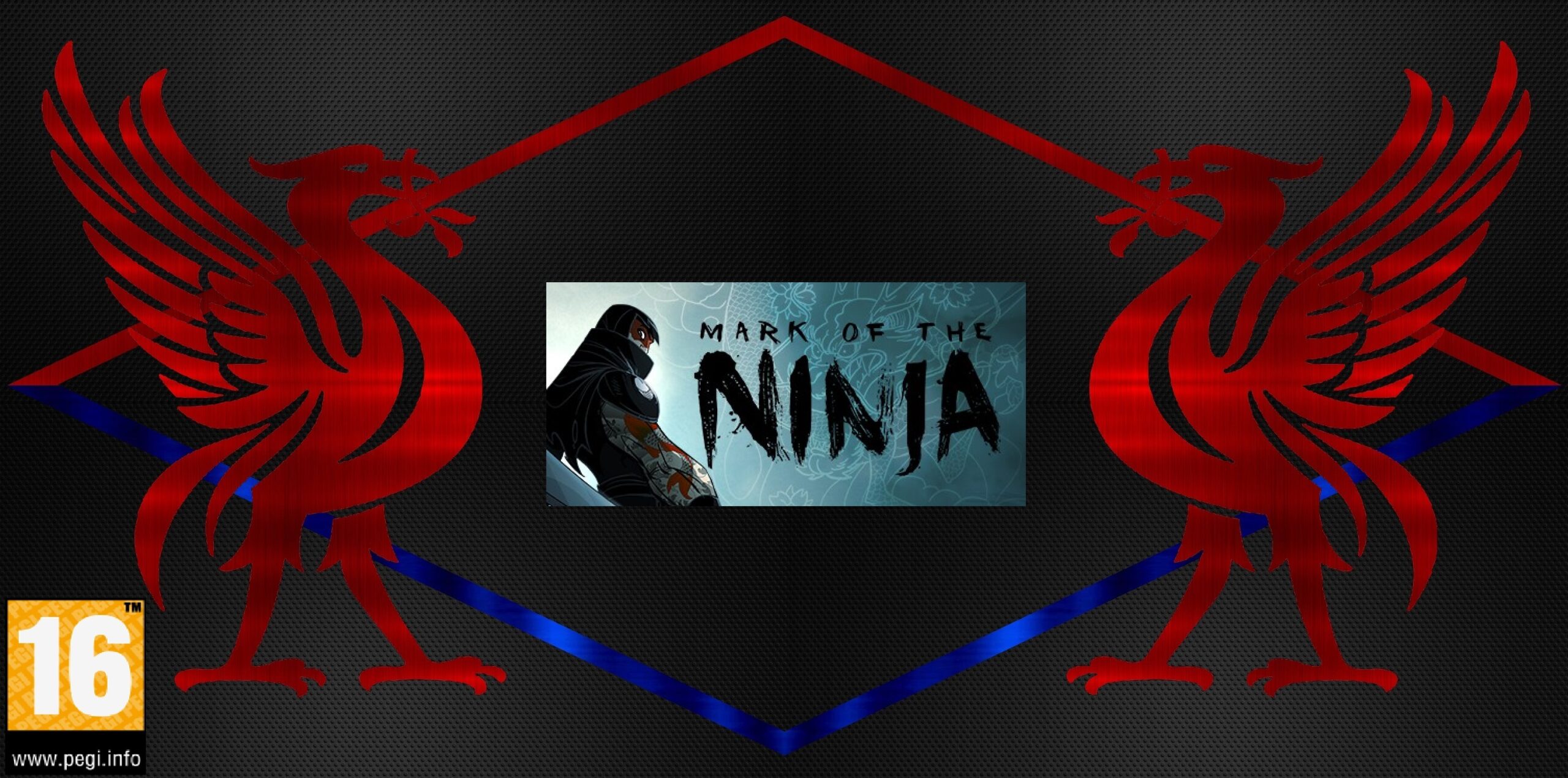
Mark of the Ninja is an indie 2D platformer with a strong element of stealth. And using weapons and equipment to keep the player hidden from the enemy. As opposed to attacking them head-on. This game is an incredibly unique experience for many reasons. And to me, one of the most standout indie titles to have been developed before the recent influx of them throughout the eighth generation.

Graphics – 9/10

Very much like in their later game, Don’t Starve, the game’s visuals seem to be based on a pre-existing artistic style. In this case, that of Genndy Tartakovsky, who worked on the creation of such cartoon series as Dexter’s Laboratory, and most significantly, Samurai Jack. The whole thing looks like something out of Cartoon Network. But only with a much darker and grittier atmosphere. The sound effects throughout are also put to good use to maintain that atmosphere. As they are also integral to the structure of gameplay.

Gameplay – 8/10

I would best describe this game as Splinter Cell with a hint of Feudal Japan. The objective is to sneak past enemies. Using various tools, weapons, environmental shortcuts, and hiding places to get around. Points are awarded for remaining undetected and going through levels without killing enemies. And hiding bodies if the player decides to kill. Light and sound sources can be used to manipulate enemy behavior to the player’s advantage. And attacking them head-on is very ill-advised. It provides a very different take on games, including ninjas. It makes for an incredibly immersive 2D side-scrolling experience.

Controls – 10/10

In terms of controls, although there should never have been any real issues, the control scheme has been handled quite well. Movement is very smooth, and there is a multitude of different features that players can use to get around. Several things that are unusual for a game of its kind.

Lifespan – 4/10

Clocking up at about 5 hours, it, unfortunately, lasts about as long as the average modern-day 2D side scroller. And I can’t help but think that if this had been a Metroidvania game, then it would have lasted a greater amount of time longer. There was certainly more room for a greater number of side quests in the game anyway. And I believe it’s criminal for such a unique experience to also be a very fleeting one. Klei Entertainment would go on to address this issue in Don’t Starve. But if a sequel ever does happen, then I think it would be easy to expand upon what they achieved with this game.

Storyline – 8/10

The story of Mark of the Ninja follows an unnamed ninja. After waking from an extensive irezumi tattoo, he realizes his clan is under attack and manages to save his sensei, Azai, with the help of his ally, Ora. He learns that the tattoo he has acquired affords him heightened sensory abilities. But it will ultimately drive him progressively deeper into madness. The Ninjas resolve to take their revenge against the organization responsible for the attack on their clan. After the ninja vows to commit seppuku, the madness starts to take hold of him.

As far as the ninja archetype goes, the developers hit the nail on the head. The main character’s name is never revealed, he never speaks, he keeps his face hidden, wears navy blue attire, uses his tools for things other than attacking enemies, and he does his best to preserve his stealth and not go kill-crazy. But as far as the main story goes, it’s also very engrossing and has a good few twists and turns before the end.

Originality – 10/10

Especially in this day and age, it’s particularly difficult to create an original game in the 2D side-scrolling genre, since the formula has long been perfected and worked on by a multitude of big-name developers over the last 30 years. This game is perhaps one of the most unique side scrollers I’ve seen for many years now, since gameplay elements are taken from newer genres, adding a great deal to the 2D platforming formula, making it go leaps and bounds against many other games released in the genre today.

Happii

Overall, Mark of the Ninja is an exceptional indie game, and I would highly recommend it to anyone who owns an Xbox 360. It could have been made to last longer, but I’m hoping that’s where a possible sequel may come in.

Score

49/60

8/10 (Very Good)

Heart of Darkness (PlayStation)

Heart of Darkness

Developer – Amazing Studio

Publisher(s) – Infogrames Entertainment (Europe) & Interplay Entertainment (North America)

Designer(s) – Eric Chahi, Frederic Savoir, Fabrice Visserot & Daniel Morais

Producer – Bruce Broughton

ELSPA – 11+

Heart of Darkness was released for the PlayStation in mid-1998. So, just looking at the year, most gamers would know that it will have been up against some of the sternest competition the industry has ever seen. Competing against games such as Ocarina of Time and Banjo-Kazooie, which was released a day before. But having played this game, it’s not much of a surprise that it made as little of a commercial impact as it did. In my opinion, it’s about average. The most surprising element of this game for me was what age rating it got at the time. In both America and Europe, the ESRB (Electronic Software Rating Board) and ELSPA (European Leisure Software Publishing Association) rated this game as being suitable for all ages.

Despite the fact that there are numerous horrible ways in which the in-game character can be killed. Including him getting burnt to death, being eaten by carnivorous plants, being crushed, and being torn apart by enemies. And even falling from mountainsides. The Wikipedia article for the game says that it was rated 11+ by ELSPA. But according to the back of the box, it was also deemed suitable for children of 3-10 years as well as 11-14. But regardless, after playing this game and researching its background, I get the feeling that Eric Chahli was focusing more on the story than on the gameplay. He tried to emulate the success he garnered with the game Another World. But, in my opinion, it ended up thoroughly backfiring on him.

Graphics – 8/10

The best aspect of this game, and seemingly what the majority of the seven years it took to develop the game was spent on, is the visuals. The transition from the normal world into the Darklands was very intriguing. And it only gets even more so as the game progresses. The game’s settings and conceptual design actually somewhat remind me of the film Labyrinth. With the mountains and marshlands found around the beginning of the game. The gripe I have with the visuals is that the enemies are pretty generic. And it didn’t seem to me that a lot of thought was put into anything else other than the environmental design.

Gameplay – 7/10

I like it when games are challenging. And Heart of Darkness does indeed present a good few challenges throughout the game. Making it one of the hardest 2D side-scrollers I’ve ever played. But there are instances where the game is marred by its level of difficulty. One thing is guaranteed. Whether players are experienced 2D side-scrolling game players or not, they are guaranteed to die over and over and over again.

It can be particularly frustrating at times. And I don’t like games where difficulty can make them infuriating enough to just not play them past a certain point. This is the problem I had with the original Castlevania and Mega Man games. Although they are considered to be classics by many gamers, I just found both of them too hard and found myself dying too many times. Heart of Darkness, whilst it was instrumental in keeping the 2D side-scrolling genre alive in the midst of the transition into 3D, is certainly not without its off-putting difficulty, in my opinion.

Controls – 8/10

Another complication with this game is that the controls can be somewhat difficult to get to grips with at times. In a game, which may already seem too difficult for many gamers, including me, less-than-satisfactory controls can only add to any frustration. But for the most part, it is down to the player’s level of skill. And the core concept of the control scheme can be gotten to grips with after a while.

Lifespan – 3/10

On average, it can take experienced players to complete this game in about two and a half hours, which, for a PlayStation game, is unacceptable. Believe it or not, the game is also on two discs. Despite lasting such an intolerable amount of time. It’s hard to understand why people hold this game in such high regard today. Especially for the time that it was released. When there were so many other greater games for both the Nintendo 64 and PlayStation. In my opinion, like Tunguska, which I previously reviewed, I think it’s a good thing that this game remained so obscure. Although Heart of Darkness is nowhere near as bad a game as Tunguska.

Storyline – 5/10

Although the game’s story also reminded me of Labyrinth to a certain extent, it was still pretty average and certainly contained its flaws. The game’s story involves a boy named Andy. He is having problems with authority in school and is not doing very well. After getting in trouble, he runs away and meets his dog Whiskey in a park, where Whiskey is then subsequently sucked into a strange eclipse. And transported to another dimension, obligating Andy to get him back.

Luckily, Andy happens to be a genius inventor who specializes in inter-dimensional travel. Despite doing poorly at school, he finally finds a use for a ship he has coincidentally made in his treehouse to embark on an adventure to get his dog back. A lot of the story’s flaws come from how many plot details are so abruptly sprung on players trying to follow it. I’ve heard of things like this happening in games, films, etc. But they are much more elaborated on than this. And it just makes the story simply look like a collection of different things being randomly put together.

Originality – 8/10

Although the story is pretty far-fetched, it’s also unique to a certain extent. But most of the originality found in this game is through its settings and conceptual design. But as I said earlier, Eric Chahi focused originality and effort mostly on the story and scenery. And strayed too far from the gameplay aspect, in my opinion. Eric Chahi had previously designed another game called Another World, which is seen nowadays as a game best known for setting standards in video game storytelling. But with Heart of Darkness, it just seems to me that he simply banked on making a game just like Another World. And hoped that it would have the same impact on people. But it ended up not going in his favor this time around.

Niiutral

In summation, Heart of Darkness is a good-looking game, but that’s about it. It can be unfairly difficult at times, in my opinion at least. And it is far too short-lived for a late 90s video game. Whilst also having a pretty weak story to accompany it.

Score

36/60

6/10 (Average)

Legacy of Kain: Defiance (Xbox, PlayStation 2 & PC)

Legacy of Kain Defiance

Developer(s) – Crystal Dynamics & Nixxes Software

Publisher(s) – Eidos Interactive

Director – Amy Hennig

Producer – Rosaura Sandoval

PEGI – 16

Developed at the back end of the sixth generation of gaming, and the last game in the series to be released following the cancellation of both the MOBA Nosgoth and Legacy of Kain: Dead Sun, Legacy of Kain: Defiance offered a pretty different take on gameplay compared to the rest of the series. Whereby the player would assume control of both the central characters of the series, as opposed to them being alternated between games. To me, although it is the worst game of the series, that isn’t to say that it’s bad. Not by a long shot.

Graphics – 8/10

The visuals are about as extremely varied and as wonderfully disturbing as any other game in the series. Taking place across multiple time frames, like Soul Reaver 2, it portrays the land of Nosgoth from a multitude of different perspectives. From the time before the pillars collapsed to the time before Moebius would revive the Sarafan order and proceed to extinguish the vampires. The game also still maintains the dark and morbid atmosphere associated with the prior four games. As well as a feeling of isolation and helplessness. Adding a great deal of tension to the overall experience.

Gameplay – 6/10

Though three of the five games are generally linear in their style of play, Defiance took this to a whole other level. Largely to my disappointment. The combat is still quite varied, and there exists a very strong puzzle element reminiscent of the other games in the series. But there is considerably less to do than in the likes of the original Blood Omen or Soul Reaver. From a gameplay perspective, it is indeed the least enjoyable in the franchise. But in retrospect, the basic premise does have its strong points. And it is certainly worth at least one playthrough.

Controls – 7/10

The biggest problem I had with the game’s control scheme is that the camera angles can make playing the game needlessly complicated in some instances. Oftentimes, I found that the camera can be zoomed out a little bit too much. Making it hard for players to see what they are doing with the character. This becomes an especially big problem if they are trying to overcome certain platforming sequences that can be found throughout the game.

Lifespan – 7/10

Lasting about as long as either Blood Omen 2 or Soul Reaver 2, gamers can clock in around 15 to 20 hours. Which, whilst it isn’t a terrible lifespan, doesn’t go above and beyond anything that had already been released within the series at that point. The developers started with a game that lasted an exceptionally long time. And the lifespan of each game gradually became shorter and shorter. Which is an issue I have with the series in general. But Defiance clocks in as the shortest game from my experience.

Storyline – 10/10

A key difference between this game garnishing a 7 instead of a 6 for me, however, is that it has a fantastic storyline. Developed in a time when vampires could be considered cool. And before Robert Pattinson and Kristen Stewart spent five films staring at each other, Legacy of Kain: Defiance presents the latest chapter, portraying two vampires worth investing time into. The former ruler of Nosgoth, Kain, and his former lieutenant, Raziel.

Kain is in search of Raziel in order to deliver a warning to him. This will prevent any further catastrophe from happening within the land of Nosgoth. And to fulfill his own destiny as the fabled scion of balance. And Raziel, meanwhile, escapes from the underworld and his captor, the Elder God. To return to the physical world and find answers regarding his own purpose, and to realize his own free will. My brief synopsis really doesn’t do the story justice, in honesty. And it is worth playing the game to simply find out what happens. Something that I personally rarely advocate in my reviews.

Originality – 7/10

In terms of its narrative, the entire Legacy of Kain series easily has the best story ever told in a video game, in my own personal opinion. It went leaps and bounds ahead of any other video game story. And presented players with something reminiscent of classic literature and epic fantasy. From a gameplay perspective, however, there have been many different games like this, but with even greater variety. And Defiance doesn’t really stand out in that respect. Though it is fairly enjoyable to play through, there was most definitely room for improvement as well in terms of gameplay.

Happii

Overall, Legacy of Kain: Defiance is the worst game in the series, but it is nevertheless a joy to play through. If only for the story. Even so, the Issues I encountered with gameplay don’t make the title unplayable by any stretch of the imagination. And there’s plenty of addictive combat and puzzle-solving to keep players relatively busy throughout.

Score

45/60

7.5/10 (Good)

Mario Paint (Super Nintendo)

Mario Paint

Developer(s) – Nintendo R&D1 & Intelligent Systems

Publisher(s) – Nintendo

Director – Hirofumi Matsuoka

Producer – Gunpei Yokoi

PEGI – 3

Released on the Super Nintendo in 1992, and making use of the SNES mouse peripheral, Mario Paint allowed players to create their own personalized artwork within a video game. It was extremely well received by critics. AllGame even stated that it was  “perhaps the most ingenious and inspired idea Nintendo ever came up with for a product”. Although I personally wouldn’t label it as such, nor even give it a perfect score as they did, I do need to state, as a prerequisite, that I spent a lot of time playing this game. And I still think it holds up for various reasons.

Graphics – 6/10

Though many people may argue that Nintendo didn’t include much within the game to give players a rough idea of what possibilities lay before them. And the general layout of the games looks extremely empty; that was the point. The game was all about players having to use their own imagination to create whatever they saw fit. Though Nintendo had failed to put out a decent educational game before this, it was successful due to the fact that it would encourage creativity. Eventually, even led to schools contemplating using the same method. This game was also one of the first to include the famed Totaka’s song. This would become synonymous with many other big-name Nintendo releases.

Gameplay – 6.5/10

As well as creating pictures, the game also offers a variety of different activities. Including composing music pieces, animations, and even a hidden mini-game called Gnat Attack. Whereby players must swat various insects flying across the screen in a somewhat Galaga-esque fashion. Though the picture-drawing aspect may have been rendered redundant over the years, the game still retains a fair bit of replay value in these other activities. And whilst not deserving of a perfect high score, it does provide quite a bit of entertainment.

Controls – 10/10

Since this game primarily relied on the use of a mouse and pad, there were never going to be any problems. Especially at this point. Since home computers were well on their way to becoming something more than only used to play video games to a household necessity.

Originality – 9/10

Even though many of the ideas this game perpetuated have since been fazed out by PCs and laptops, the fact of the matter remains that there was no game like it at the time of its release. Many video games at the time may have spoken of creativity in their own ways. Despite the lack of technology compared to what is available now. But his game encouraged it in its players. As well as presenting them with a retro arcade gaming experience in the process.

Happii

Overall, Mario Paint stands out as one of the most unique gaming experiences on the Super Nintendo. It isn’t one of the greatest games to have ever been developed and hasn’t held up well with the times like many other games of the era have. But many gamers will still be able to find a use for it.

Score

31.5/40

7.5/10 (Good)

Mario Kart: Super Circuit (Game Boy Advance)

Mario Kart Super Circuit

Developer(s) – Intelligent Systems

Publisher(s) – Nintendo

Director(s) – Takashi Ando & Yukio Morimoto

Producer(s) – Shigeru Miyamoto & Kenji Miki

PEGI – 3

Handing over the development of the series to Intelligent Systems, Mario Kart: Super Circuit marked the first time that the series appeared on a handheld console. It was well-received by critics upon release. Going on to become the fourth best-selling game on the system behind Pokémon Ruby & Sapphire, Pokémon Fire Red & Leaf Green, and Pokémon Emerald. Speaking as a long-time fan of the series, the contenders for the worst game, in my opinion, were this and Mario Kart: Double Dash!! But after having replayed both of them in recent years, I’ve come to the conclusion that Super Circuit is indeed the worst game in the series. But still, this is not to say that it’s a bad game. It’s just the worst of an excellent series.

Graphics – 5/10

One of the worst things about it is most definitely the conceptual design. The track-by-track ranges from good to barely passable. A lot of the ideas Nintendo tried for new track designs outside the usual tropes of the series are pretty poorly designed. Such as Cheese Land and Riverside Park. But at the same time, many tracks go along with the motifs of the series. Such as Peach Circuit and Mario Circuit, are also quite poorly designed. The best kinds of tracks in the game are those following the themes of Bowser’s Castle and the haunted house courses. The uniquely themed tracks also get fractionally better as the game progresses. But the best in conceptual design throughout the series would be yet to come.

Gameplay – 7/10

The game plays out like a mixture of both Super Mario Kart and Mario Kart 64. And for the most part, the courses do provide a fair level of challenge. But again, some courses can be criticized in this respect, too. Mario Circuit is a prominent example since it was placed in the Flower Cup. Yet I personally found it easier to win than Peach Circuit in the Mushroom Cup, which goes against not only the tradition of Mario Kart but that of gaming in general. Since games are supposed to get harder as they progress. Otherwise, it plays out just as well as any other game in the series.

Controls – 10/10

By proxy, there are also no issues with the controls. Both the prior games in the series had been largely a test of trial and error since they were drastically different from each other (with both of them passing that test). But somehow, the controls feel a lot smoother than Super Mario Kart, with elements of the control scheme of Mario Kart 64 thrown in. It seems easier to make narrow turns and easier to accurately aim weapons than in the original game.

Lifespan – 8/10

If players don’t have another gamer to partake in multiplayer with (which would make the game last for as long as their own interest in it), it can take fractionally longer than the original two games to complete. Since it has five tournaments as opposed to the traditional four. There are also additional game modes to add to the title’s longevity in the battle mode, quick run, and time trial modes. So fans of the series will have more than enough to do throughout.

Storyline – N/A (10/10)

The Mario Kart series has never had a story attached to it, and it never should, I don’t think. At this point, especially, I believe that trying to add a story to a Mario Kart game would be a pretty bad move on Nintendo’s part unless they can do it in such a way that it does nothing to hinder gameplay to any kind of extent. It worked particularly well in Diddy Kong Racing. So if Mario Kart were to ever become an open-world kart game, a story may work.

Originality – 2/10

The Mario Kart series would later become quite innovative. Including several new features with each installment. But in Super Circuit, there is next to no innovation. As it was indeed largely influenced by the two prior games. Nintendo tried to create a game that was more evolutionary rather than revolutionary, but due to the mixed quality of track design, I didn’t find it to be the evolutionary experience that Nintendo intended it to be.

Happii

However, much as I’ve complained about Mario Kart: Super Circuit, it remains a solid gaming experience, and much better than any generic racing game that was either out at the time or what had been released prior, or even that has been released since. To me, it’s acceptable since it plays out as any Mario Kart game should, but other games in the series have since gone above and beyond what was on offer here.

Score

42/60

7/10 (Fair)