Monthly Archives: May 2020

Alien Scumbags: First Impressions

Currently under development and set for future release on Steam, as well as being available on the team’s GameJolt page, Alien Scumbags is an upcoming 2D side-scrolling 8-BIT sci-fi shooter survival horror developed by Monster Finger Games; the team behind various titles released on the OUYA such as Mr. Monocle’s Travels and Super Renegade Response. Taking influence from the likes of Doom and Duke Nukem, the player must traverse through an abandoned spaceship called the Nostrami, combat an alien horde that has plagued the ship and uncover what happened aboard the vessel leading up to present events. Impressed by what previews of the game I had seen, I picked up a copy of the game in its current state and decided to give my first impressions of it before it’s full release. Here’s what I thought of Alien Scumbags:

Graphics

The game makes use of 8-BIT graphics and is set on an abandoned station out in the middle of space called the Nostrami. The game’s visual style does well to perpetuate the horrific atmosphere of the spaceship as there is superb use of lighting (or lack of) to induce feelings of tension and suspense throughout. In many respects, although the developers trace their influences for the game to the likes of Doom and Duke Nukem, and these influences are apparent (even more so as the game progresses), I was reminded more of Dead Space than most other games, as, like the former, the game does pretty well to build tension, with not only it’s visual style, but also through its soundtrack, which is the kind of technique used in top-notch horror films. The sound effects that have been used for the enemies add an even more heightened sense of horror; despite the fact that it’s interspersed with dialogue from the main character that includes a number of humorous cultural references. 

Gameplay

Whenever I sit down to play a survival horror or a game that perpetuates elements of survival horror at least, my first hope is that the efforts to make the game as scary as possible don’t work to outweigh the amount of gameplay to enjoy, which is what I’ve found to be the case with many other mainstream survival horror series’ such as Silent Hill or Outlast. But in Alien Scumbags, there is a nice balance; the player must kill all enemies between them and the next level and there are sidequests to be completed, such as collecting audiotapes recorded by various Nostrami crew members, as well as there being a number of unlockables to collect throughout the game, such as different characters. The game also requires somewhat of a strategic approach unusual for a survival horror game, as different enemies perpetuate the use of different guns and it can be easy to run out of ammo for specific weapons. I’m impressed by what this game has to offer in its current state but the developers are planning to add even more to it, which will inevitably only serve to heighten the gameplay experience even more.

Controls

The game’s controls are also easy enough to get to grips with. The developers have created a game with a simple control scheme attached to it with no unnecessary complication; it’s a nice and traditional 2D side-scroller that has players blasting through each level in order to progress to the next. The developers haven’t exactly reinvented the wheel in respect of the game’s controls, but with a game like this, it wouldn’t really be necessary. 

Lifespan

As it stands, the game boasts a total of 12 levels; a tutorial level, 9 main levels, a boss fight, and a bonus level. The estimated lifespan as things are at the moment is up to 10 hours taking what replay value there is to be had in replaying the game with different characters. However, the developers are also planning to add another 8 to 9 levels with an additional boss fight and bonus level, which would most likely accelerate the lifespan to 20 hours plus, which for an independently developed 2D side-scroller would be quite impressive.

Storyline

The storyline perpetuates a blend of horror, comedy, and references to old and modern culture. It follows the player character uncovering the events of what happened to the derelict spaceship, the Nostrami, which has been overrun by murderous alien creatures. Again, I found it as funny as I did horrifying with jokes thrown into the background, such as an advertisement for something called The Uranus Probe and items on the cafeteria menu alluding to the film Alien. But at the same time, learning about the Nostrami’s backstory is a particularly harrowing experience making for something as tense as many other survival horror games. The game’s use of full voice acting also makes for a further element of horror that no player will expect to find in an 8-BIT game. 

Originality

Although the game does conform to a lot of tropes associated with the traditional 2D side-scrolling style of play, it has elements to it that make it stand out among many others. It makes me think that this game is what would be developed if id Software decided to make Doom 3 in this style. I was attracted to this game on the basis that it’s a survival horror with not too much emphasis on horror and as much emphasis on gameplay as possible, which, in and of itself, would make it unique among many games in the horror category and I wasn’t disappointed with it; even in it’s unfinished state. 

Overall, I’d recommend old-school gamers, and fans of the survival horror genre for that matter, to check this title out for themselves before it’s full release. You can find it on their GameJolt page at the moment via the link below: 

https://gamejolt.com/games/alienscumbags/312460#video-81040

I will also be conducting a Q&A with one of the game’s principal designers James Ross soon on the blog, so keep a lookout for that. In the meantime, I hope you guys enjoy Alien Scumbags and I hope you’re looking forward to the follow-up Q&a.

Game on,

Scouse Gamer 88
Ato (PC)

Ato

Developer(s) – Tiny Warrior Games

Publisher(s) – Tiny Warrior Games

Designer – Brandon Song

PEGI – Not rated (some mature content)

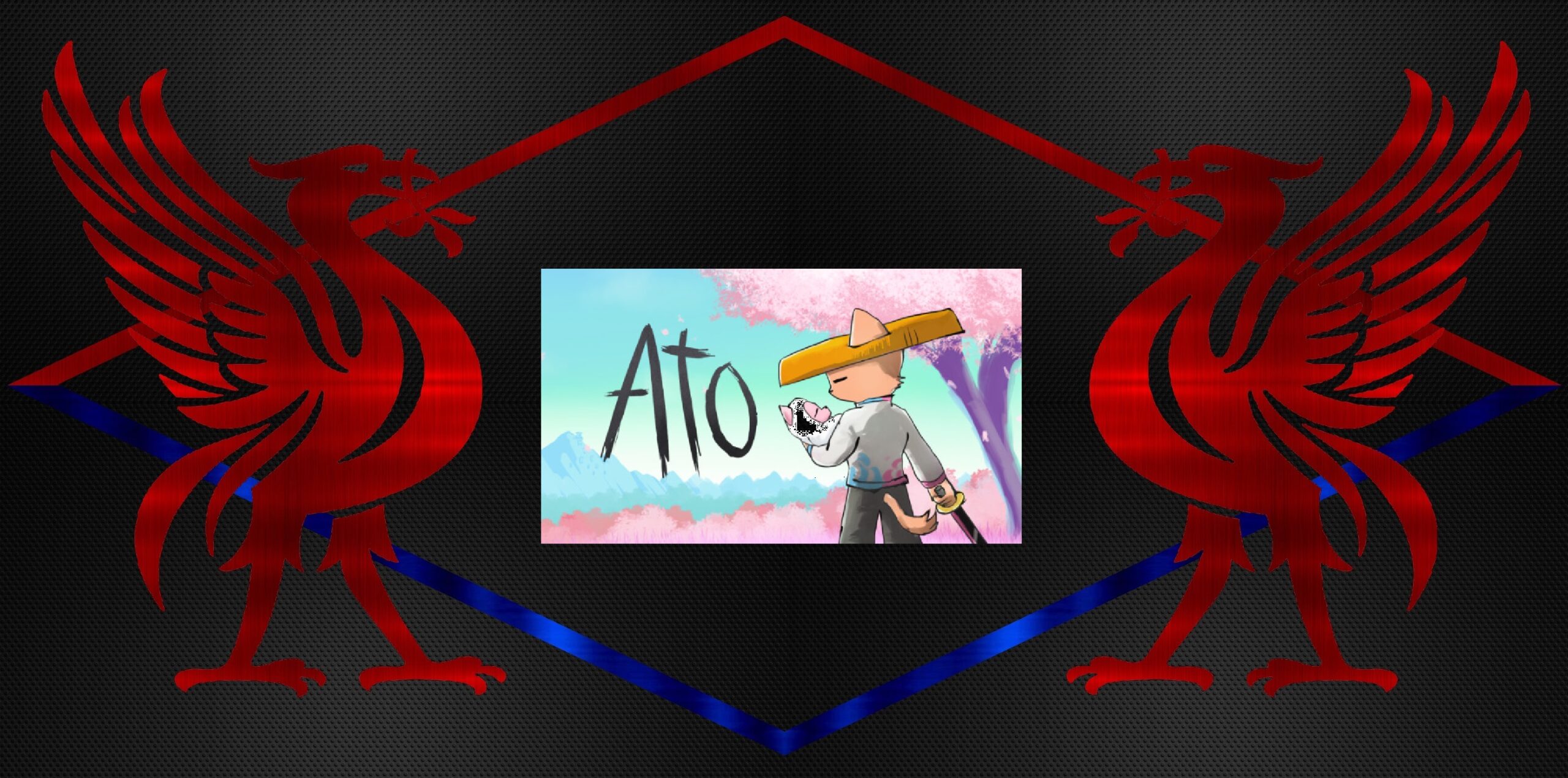
Released on Steam following a successful IndieGoGo campaign, Ato is an atmospheric Metroidvania game set in Feudal Japan, whereby players take on the role of an anthropomorphic samurai fox who sets out on an adventure to rescue his abducted child from a cult of deadly ninjas. Personally, I was pleasantly surprised by how solid a game this was compared to other indie Metroidvania games. It stands as a shining example of how a satisfying and immersive gaming experience can be developed on a budget.

Graphics – 8/10

The game makes use of 8-BIT style graphics with characters and settings inspired by Feudal Japan, and the diversity in environmental design is quite staggering. Ranging from cherry blossom forests to sunset mountainsides to snowy tundras. The game’s environmental design is most definitely the standout feature in this game from a visual standpoint. They also do exceptionally well to add to the game’s overall atmosphere in conjunction with the situation the player character is in at any one given time. The only minor issue I had with the visuals was that at one or two points, there was a small amount of slowdown. But overall, it does little to hamper the experience. 

Gameplay – 9/10

The title also incorporates the use of a wide range of gameplay elements. Like many other Metroidvania games, the objective is to explore as much of the world map as possible and uncover as many items as possible. Over time, new abilities are introduced in order for players to explore other inaccessible areas throughout the game. As well as there being secret items to be found in order to either increase the player’s health or coins to progress further. But in my opinion, the most impressive gameplay element found in this title is the combat system. 

Players also gain different weapons and abilities to use in combat. Ranging from a poisoned sword, dash attacks, a spiked shield, and later on in the game, even magic abilities. It’s quite similar to Dust: An Elysian Tail in its approach to combat. The wide range of boss fights is also quite impressive. There are a few starter boss fights in quick succession earlier on in the game to give players a feel for the combat system in general. But after that, they become even more varied in design. This amount of diversity in gameplay perpetuates the standard to be found in any great Metroidvania title; it’s satisfying to play and a genuine pleasure to explore.  

Controls – 10/10

The control scheme of the game is also simple enough to get to grips with. Which was impressive given the amount of variety there is in combat. It was yet another means for me to draw comparisons with Dust: An Elysian Tail. Though it may not have a combo system like the former, there would’ve been no need to include one in each battle. Being that with bosses or general enemies is still as satisfying as it is challenging, especially on the harder difficulty settings. 

Lifespan – 5/10

The only real downside to this title is that it can only be made to last for a maximum of 4 hours. Which, whilst it doesn’t do a game like this justice. I suppose such is the reality of the situation when a game is developed with a limited amount of funds. It lasts considerably less time than an average Metroidvania game. But it lasts slightly longer than a lot of other independently developed titles in the genre. Such as The Swapper and Xeodrifter. Compared to those two titles, this game blows both of them out of the water as far as I’m concerned. So the average runtime of Ato was enough to justify a hard 5 as opposed to a soft 4. 

Storyline – 8/10

The story of Ato follows a father caring for his wife and infant child. But suddenly, the family is devastated when a group of masked ninja steals the infant child from its parents. The father then sets off on a quest to bring their child home. It sounds simple enough on the face of it. But the plot later unfolds into something a lot darker and deeper than what the player will first imagine. And things also escalate abnormally quickly. 

Although there’s either no spoken or written dialogue throughout the game, the characters’ emotions and hardships are wonderfully portrayed to convey the events of the story. Considering that this is an 8-BIT game, it’s even more impressive. Also, the game’s environmental design works exceedingly well to add the game’s atmosphere throughout with elements such as day-to-night transitions used to change the mood at specific times and rainstorms to add further tension to already exceedingly intense situations. 

Originality – 8/10

Between everything that this game does as well as it does, from the combat system to the environmental design to the manner in which the story is told, Ato also makes for a rather unique experience. In a gaming mainstream that relies heavily on cutting-edge graphics and motion capture to effectively tell an emotionally charged story, very few 8-BIT games I have played have portrayed themes and emotions as well as this one does. Also, keeping the general focus on gameplay is welcome in a market saturated with games putting story ahead of gameplay. Such as The Last of Us and the Telltale games. 

Happii

In summation, Ato is a wonderful title that excels in almost every aspect. And I can recommend it to any Metroidvania fans out there reading this review. It’s a well-crafted blend offering great gameplay and an enthralling story. Which had me taken aback by just how good it is. 

Score

48/60

8/10 (Very Good)

Russian Subway Dogs (PC, PlayStation 4, PlayStation Vita & Xbox One)

Russian Subway Dogs

Developer(s) – Spooky Squid Games

Publisher(s) – Spooky Squid Games

PEGI – 12

Developed by Canadian independent outfit Spooky Squid Games and inspired by the real-life international phenomenon of Moscow’s metro stations, Russian Subway Dogs is an arcade game. The objective is to rack up as many points as possible by stealing food from passing commuters. To me, it’s one of those wonderful gaming ideas that was inspired by an unlikely source. But at the same time made for a whole load of fun to be enjoyed in-game form. 

Graphics – 7/10

The game is wonderfully varied in terms of graphics. Not only are there different types of gods to unlock throughout the game, but players can also use them as alternative skins. But there are also different variations of Russian subways with their own unique designs and color palettes. Variety only becomes more apparent as time goes on since new and more challenging enemies are introduced with each stage. At first, I was pretty curious as to what would inspire the developers to make a game based on this whole visual concept. But after I did my research and found out that it’s all actually based on a very real and very prominent aspect of Russian culture. So much so that street dogs in Moscow have become pretty much a national symbol. I found myself wondering how no one had picked up on this idea before this game. 

Gameplay – 7/10

The gameplay revolves around the player controlling a street dog and barking to startle passers-by so that they drop their food, allowing the dog to steal and eat it. That’s the basic gist, but there will soon come other obstacles for the player to have to contend with. Such as rival dogs who steal food first if the player misses out on it. As well as certain commuters who attack the dogs with huge fish.

Players can also startle people carrying bottles of vodka that act like Molotov cocktails that can be used to eliminate rival dogs. Or even attack commuters so that the food they carry is cooked by the attack, making the food dropped worth more points. Later on, throughout the game, there are other unique commuters whose food offers special abilities that the player can take advantage of to rack up more points or one-up the rival dogs on the stage. As well as contending with bigger animals that are later introduced, such as bears.

As well as there is an unprecedented amount of variety in graphic design, there’s also an unprecedented amount of variety in gameplay. Just as much as any other respectable arcade franchise, like Pac-Man or Dig-Dug. A lot of indie developers have attempted to rehash old arcade classics by adding new features to them. Like what Puppy Games did with both Ultratron and Titan Attacks. But it’s arcade games like this and Pix The Cat that really do better to catch the attention of arcade game fans by offering something new. And this game certainly does not disappoint in that aspect. 

Controls – 10/10

The control scheme also poses no problems to the player. In fact, it’s quite innovative for an arcade game, along with the general gameplay concept. Again, it’s yet another reason why this arcade game is able to stand out better than many other arcade titles developed across the indie gaming community. Many of them, including the likes of Pix the Cat, Curses ‘N’ Chaos, and Hyper Sentinel, are based on the control schemes of many ‘80s classics such as Defender and Pac-Man.

Originality – 7/10

I’ve already pointed out on numerous occasions that this game does well to stand out among not only newer arcade games made by indie developers but also among the arcade classics of the late ‘70s and those throughout the ‘80s. It’s one of those ideas that, if looked at on paper, you’d think it may be rejected immediately. But when designed for use on console and PC, it makes for something particularly special. Something that players can potentially invest a great deal of time in. 

Happii

To summarize, Russian Subway Dogs is an enjoyable arcade title that offers virtually unlimited replay value. Since there is not only a general story mode but an endless mode as well. It’s a charming, addictive game that is worth investing in, and I highly recommend it. 

Score

32/40

8/10 (Very Good)

Himno (PC, PlayStation 4, Xbox One, Nintendo Switch)

Developer(s) – Ratalaika Games

Publisher(s) – GrabTheGames, Ratalaika & Electronicsgames LLC

This article is not so much a review as it is the first impression of a game that is yet to be released. The reason why I say that is because I had a hard time knowing what to think going into it since there was an unusually large amount of things to take into consideration with this game. Himno is a 2D semi-open world side-scroller available on multiple platforms, which simply involves the player traversing through multiple stages in an endless loop and collecting as many experience points as possible without dying. There is not much else to do within the game besides which, something that normally would have caused me to give a game like this an overwhelmingly negative assessment, as, without anything to do beyond that, it would simply compel me to pick up another game that I’d otherwise know would have more to it. 

However, I found myself making an exception to this game for a number of reasons. Firstly, it does what the developers set out to do with it, which was to provide a relaxing platforming experience as opposed to more intense action-oriented titles of its kind like Symphony of the Night or Rogue Legacy. Secondly, I picked it up for free on Steam, which is what I would recommend anyone else do if they’re thinking about giving it a try, since the console version is £4.99 and I don’t know about anyone else who may be reading this article, but I personally would’ve felt suckered if I’d bought the console version given what kind of a game it is. Thirdly, and the most important reason, in my opinion, is that the developers are currently working on a sequel to the game called Himno: The Silent Melody, which is actually more or less the same game, but with combat elements thrown in for a more immersing experience. 

So the way I see it, Himno is not so much a full-fledged game as it is a demo of the sequel, which caused me to approach it in a much different way than I normally would otherwise. It’s a nice, atmospheric, relaxing title that does deviate away from the norms of a typical game of it’s kind and there is a certain amount of enjoyment to be had from it.


Graphics

The game’s visuals seem to take influence primarily from medieval England judging by the architectural style of the structures the players must traverse across in order to progress through each level. But in addition, the player character seems to have a more futuristic look about him, wearing attire similar to that of Tekken 2 variation of Yoshimitsu, looking almost robotic and wielding a green glowing sword. Besides the basic structures to traverse, there is only a black background along with rain effects at certain levels, which further adds to the atmosphere ostensibly. The game’s soundtrack is also appropriately relaxing; it’s slow-paced and easy to listen to, as the game itself is slow-paced and easy to play. It does give the game a certain ambiance to be enjoyed throughout for players who simply want to switch off for an hour or so and immerse themselves into something much simpler than the average action-adventure title. 


Gameplay

The game is a simple 2D side-scroller that relies most on idle exploration. Players can collect experience points to level up their character as much as possible (though there is no real incentive for doing so) and along the way, can also gain certain power-ups, depending on what level they’re at, to gain temporary abilities such as higher jumping, softer landings and being able to find the other side of a level quicker. As I said, I would’ve been particularly annoyed if I’d spent any amount of money on this game, as certainly the asking price for the console versions of £4.99 is still too much in my opinion, but having spent nothing on it, it was far easier to appreciate the game for what it is and what it sets out to do. If anyone is looking for a much more relaxing gaming experience without the urgency of having to progress through such as with other titles, then I can recommend the free version. But for anyone looking for a more action-packed title and the satisfaction that comes with it, then you will be disappointed. 


Controls

The game’s control is also simple enough to get to grips with; be that either through using a keyboard or a controller and mercifully with the PC version, both those options are available; I personally prefer to use a controller whilst playing a game like this. There are a number of additional mechanics that can be used, which give the game some variety in that respect, but it’s definitely much more evolutionary than it is revolutionary. 


Originality

As this is a game that goes on forever and that there’s no attached story, I’m jumping straight into how unique a game it is, which I guess for many players, the fact that there is no story or any further incentive to play the game or any prolonged period of time may be either another reason to either get it or avoid it dependent on what way they may look at that. But also depending on what way you may look at it, the fact that there’s nothing to do in the games besides what I’ve already described may be cause enough to decide against playing it for long; as indeed was the case where I was concerned. After watching the trailer for Himno: The Silent Melody, there looks like there will be a number of unique combat elements introduced, which is one reason why I’m very much looking forward to playing it, but where the original Himno is concerned, there are certainly more unique titles out there that offer players a plethora of more unique features than what this has to offer.

Hesiitant

To summarize, buy Himno on Steam if you’re thinking of playing it, otherwise, particularly where the more action-driven gamer is concerned, there will be a disappointment to be felt. But if the intention of the developer was to release this game effectively as a demo to Himno: The Silent Melody all along, then it would seem like a stroke of genius, as releasing this game for free would give players a taste of what’s to come.

88 Heroes (PC, PlayStation 4, Xbox One & Nintendo Switch)

88 Heroes

Developer(s) – Bitmap Bureau

Publisher(s) – Rising Star Games

PEGI – 7

Developed by Bitmap Bureau and released in March 2017, 88 Heroes is a 2D side-scroller whereby the player assumes control of 88 pointless superheroes to defeat the evil Dr. H8, who plans to destroy the Earth in 88 minutes. I first played this whilst on display at Play Expo Manchester 2015, along with Coffin Dodgers and Kaiju Panic. I first viewed it as a potentially addictive title with a great deal of replayability. The finished product is a respectable title, whilst not as addictive as I thought, it does have replay value. 


Graphics – 7/10

The game takes place in 4 different worlds for the player to progress across a total of 88 levels. Each world has its unique look, ranging from office buildings to dungeons to space stations. The variety in design is pretty impressive, but it can get somewhat repetitive across a total of 22 levels. The majority of the game’s visual variety is represented through character design. 99 in total, counting the characters featured in the physical release of the game. 


Gameplay – 6/10

The character design in 88 Heroes is the basis of variety in gameplay. Each hero has their unique abilities and limitations, making each playthrough different in both variety and challenge. Playing this, I was as challenged as I was amused by how both wonderful and terrible each hero is; the game being nigh-on impossible to get through with certain heroes like Captain Colossus and El Delayo. On the flip side, some heroes can be used to either pass levels with ease or bypass most obstacles altogether, such as Mighty Mite, Bat Bot, and Tech Tank. Overall, I’d describe it as a fair challenge. Traversing through levels can get a little repetitive in terms of gameplay as well as visual design, and the boss fights are somewhat repetitive as well, but it played out well enough to have held my interest for a fair few playthroughs.


Controls – 7/10

The control scheme is hit-and-miss depending on which hero the player has control of. Some are easier to handle than others, which can either help or hinder the gameplay accordingly. I’ve already mentioned this hero, but the one that did cause me the most problems was El Delayo, as his actions are delayed after the player registers them through the controller, which, whilst I can appreciate, is part of the challenge, and can start to get pretty frustrating at times. Others, like Gonan and Tommy the Gun, are also not able to move and attack at the same time. And again, helps or hinders the game depending on whatever way the player looks at it. 


Lifespan – 7/10

A single playthrough can take there around an hour or two, dependent, of course, on the player’s skill. But if players are looking for a stern challenge each time, there is replay value to be had playing through the game multiple times. Heroes are picked at random every time a hero dies, posing a different challenge every time. It gives the game a Roguelike feel to it, albeit with the levels laid out the same as opposed to being randomly generated. It could be an idea to do that with a potential sequel, though they would have to make the heroes fractionally less useless. Otherwise, the game would be practically impossible to complete. 


Storyline – 6/10

The basic premise is simple: 88 pointless superheroes are called in to stop an invasion of Earth carried out by the evil alien Dr. H8. I enjoyed the sense of humour that was infused into this title, with the sheer variety of terrible, terrible superheroes and how their abilities were more of a hindrance than a help. If you’ve seen films like The Mystery Men or Kick-Ass, you can appreciate the humour in 88 Heroes. 


Originality – 7/10

Overall, despite lacking originality in environmental design, no 2D side-scroller like this has ever come about. And it’s a pretty creative title in terms of gameplay because of that. Despite the game’s flaws, I think its creators did a good job taking the old way of playing games and making something new from them. There aren’t many 2D side-scrollers with as much replay value as there is in this title.

Niiutral

In summation, whilst lacking in areas, 88 Heroes is a fairly enjoyable title and definitely worth more than one playthrough. It provides challenge and humour, outweighing the frustration of playing with certain heroes and accomplishing what the developers intended. 

Score

41/60

6.5/10 (Above Average)

Mothergunship (PC, PlayStation 4 & Xbox One)

FMothergunship

Developer(s) – Grip Digital Games & Terrible Posture Games

Publisher(s) – Grip Digital Games

PEGI – 7

Jointly developed and released by Terrible Posture Games and Grip Digital, and released at the midpoint of 2018, Mothergunship is a spiritual successor to the indie shooter Tower of Guns. Featuring much of the same gameplay elements but offering a great deal more than the latter, with an improved number of gameplay features, whilst also boasting better graphics on a technical level. And a slightly more immersive story, complete with all the humor of Joe Mirabello’s previous game. When I first played and reviewed Tower of Guns, I was immediately taken aback by just how unexpectedly fantastic a game it is.

But I also pointed out several flaws that, although they marred the game down to a small extent, didn’t stop it from being the best indie game of the eighth generation that I had played up to that point. However, Mothergunship not only addresses these flaws but offers players all the immersion that can be had with Tower of Guns and then some. I was again taken aback by how this game hadn’t equaled the quality of its spiritual predecessor but surpassed it to a monumental extent. 

Graphics – 9/10

The first thing I noticed whilst playing this game was the significant improvements made to the game’s visuals on a technical level. Abandoning the cel-shaded style synonymous with Tower of Guns, the developers went for a much more realistic-looking sci-fi setting with more varied environmental features. As well as a wider range of enemy types. A vast majority of the enemies (as well as a few of the boss fights) were largely recycled from Tower of Guns. But to counteract that, more enemy types were added to not only make the game more diverse on the conceptual level but to add new types of challenges for players to contend with. Among the most notable are the robotic dogs that run toward players in certain phases of the game. 

I was extremely impressed with the visuals from the get-go. Most impressive were the very realistic-looking vistas of open space towards the start of the game. And those that can be seen during the sequences, whereby players must jump between gravity pads to reach another ship. But as well as that, each room is randomly generated. And as such, the scenery can become very repetitive very quickly. It’s not as much of a problem in Mothergunship as it is in Tower of Guns. Each room feels much more unique than the last. The dice rooms in particular offer more diversity in scenery design. They present different challenges found in typical rooms. 

Gameplay – 10/10

Mothergunship keeps to the same basic premise as Tower of Guns for the most part. A first-person shooting Roguelike with randomly generated content. But as alluded to before, new gameplay features have been implemented with this title. Such as an RPG aspect, in that players can level up their character to gain new perks. Such as increased health, an increased number of jumps, increased melee power, etc. It also has a much less linear progression than the latter. With players being able to undertake sidequests for better loot.

But speaking of the loot, that’s where the game’s most impressive feature comes in. Players also have the facility to make weapons from the ground up. Using various parts that are collected throughout the game. A player can modify a single gun to have multiple barrels and multiple modifications for perks. Such as increased fire rate, attack power, and abilities such as ricocheting bullets and stunning enemies. The level of customization the players can indulge in is actually ridiculous. To the extent that the guns can look like they couldn’t possibly be handled by a human being in the real world. 

But regardless, it makes for one of the most enjoyable features I’ve seen in any FPS game. It feels incredibly satisfying to step into a room with an unreasonably big gun (or two for that matter. Since dual-wielding is also an option) and blast through everything in sight. It’s equally satisfying to try and get by on a minimal amount of equipment throughout the beginning of each mission. And then rely on your ability to strategize in accordance with what loadout a player starts with, and then subsequently buys in each shop.

Controls – 10/10

Although the game in terms of its controls functions like most other first-person shooter games, most fans of the genre will be able to pick up the controller and play through it fluently, success also relies on a certain extent of strategy. It’s just as important to move as it is to shoot with so many potential enemies on-screen at any one given moment. People who may have played Tower of Guns can go from that game to this without skipping a beat. Especially if, like me, they’ve had the practice of playing the latter game to death. But for other fans of the genre who may not have played Tower of Guns before, they will be forced to modify their tactics somewhat to stand any chance of success. 

Lifespan – 10/10

To complete one playthrough to 100% with most likely take around 20 hours. But the thing with this game is that, like Tower of Guns before it, everything is randomly generated from the rooms to the loot; each playthrough presents a completely different challenge every time. Giving it a virtually infinite amount of replay value. It has a linear progression ultimately. But the possibilities for each playthrough are endless and will only last as long as the player’s interest. Which given the number of things to do in this game, it is potentially a long time. 

Storyline – 7/10

The basic premise of the game is simple: the player is a recruit of Earth’s governing body tasked with repelling an impending invasion carried out by a robotic race known as the Archivists. The player character must stop this invasion by taking out the Archivist fleet. And along with it, its flagship spacecraft, the Mothergunship. Though the game’s story is pretty basic and overall bears next to no thinking about it for the most part, it’s kept somewhat fresh throughout with a steady supply of humor. The element of comedy is rife in Tower of Guns as well. But because there’s full voice acting in Mothergunship, it’s much easier to indulge in. In particular, Dave Pettitt puts in a hilarious performance as the Colonel. It’s quite reminiscent of Jim Ward’s performances as Captain Qwark in the Ratchet & Clank games. 

Originality – 9/10

In my review of Tower of Guns, I commented on how hard it must be for developers to make a unique first-person shooter experience. Given how saturated the industry has become, the genre has taken precedence throughout recent gaming generations. Despite that, Tower of Guns felt like a fairly unique game. However, with the sheer amount of new and exciting gameplay features implemented in Mothergunship, this game works even better to stand out in an oversaturated gaming genre. Making it, to me, not only one of the most memorable FPS games in recent years, but also one of the most unique gaming experiences of the eighth generation. 

Happii

Overall, Mothergunship is one of the best first-person shooter games I have ever played. It’s an immersive gameplay experience offering pretty much endless replay value with exceptional graphics. And an obscene level of customization that will have players indulging in it for hours upon hours. I loved Tower of Guns. But for lack of a better term, this game quite literally blows its spiritual predecessor out of the water. 

Score

53/60

8.5/10 (Great)