Category Archives: Developer Interview

Lucy Dreaming

Q&A With Tall Story Games

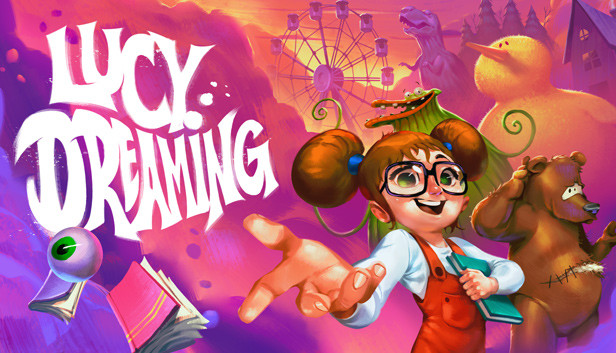
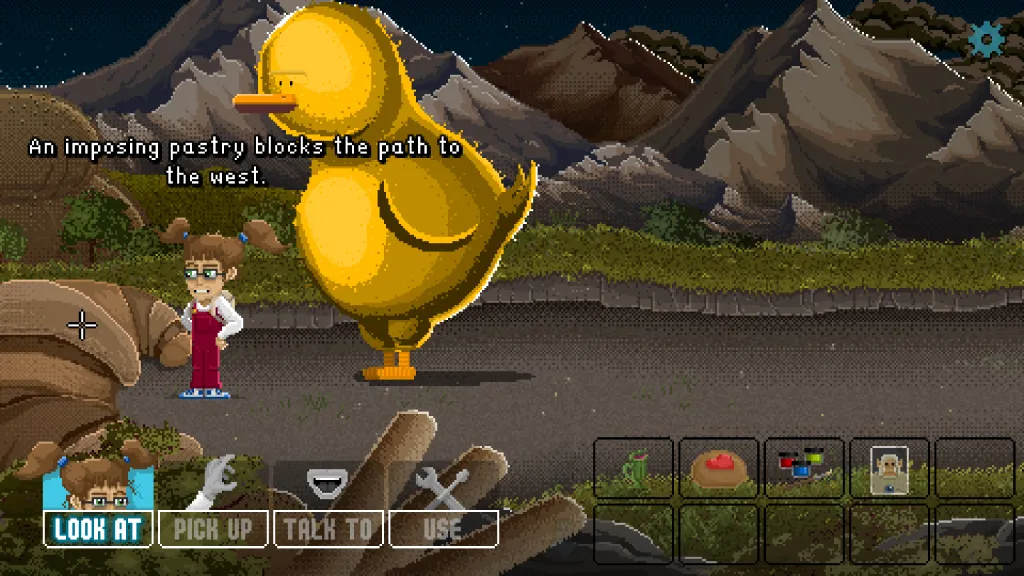
Whilst once again scouring Kickstarter for more new video game prospects. I came across a couple of games in a genre that, generally speaking, I don’t spend enough time covering. But this game captured my attention in a way that few others do. Lucy Dreaming is a point-and-click adventure game made as a love letter to the works of LucasArts. Including Day of the Tentacle, the Monkey Island series, and Full Throttle.

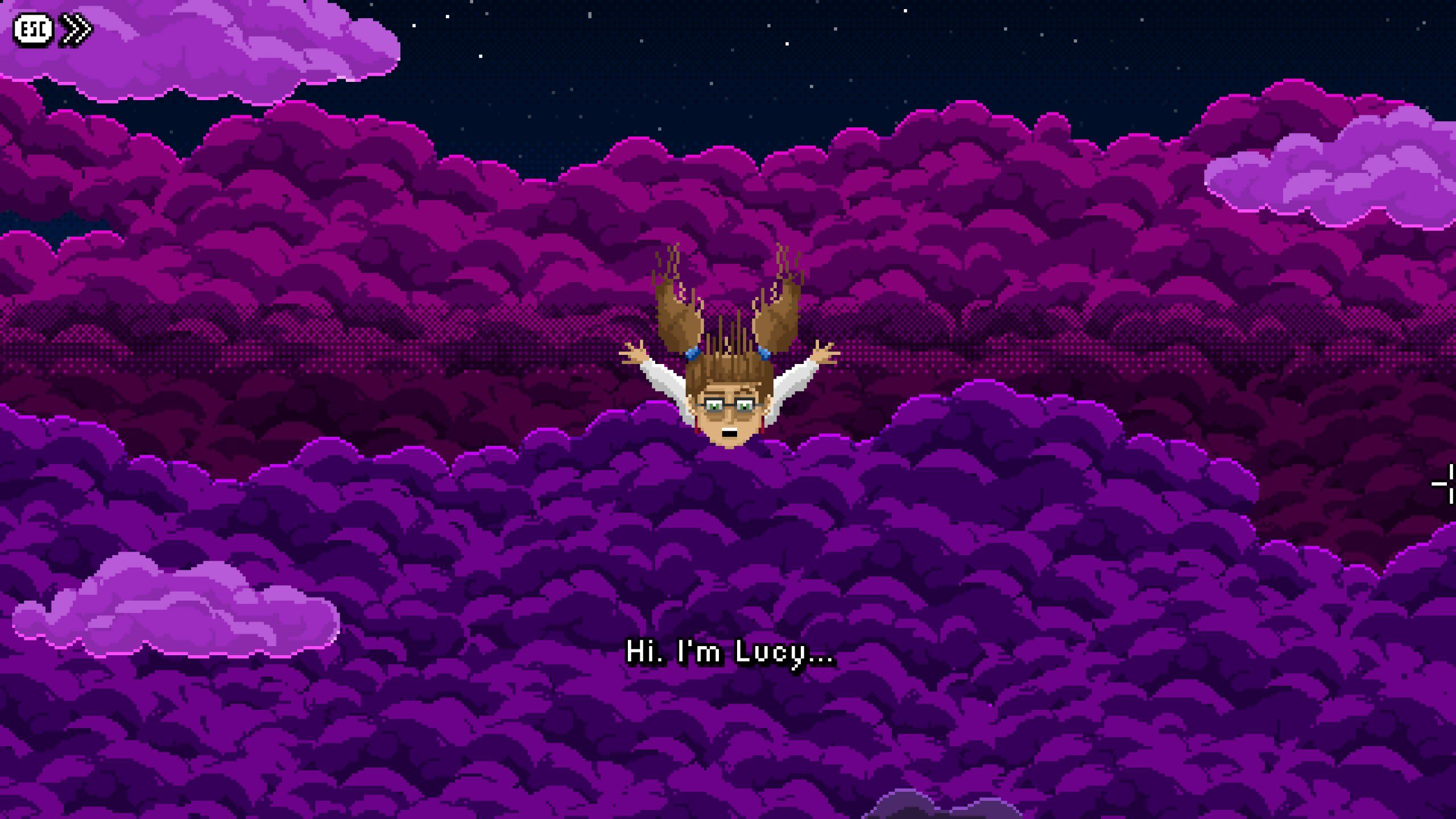
Developed by Tall Story Games, based in the English West Midlands, it centers around a young girl named Lucy. She must travel between dreams and reality to discover a disturbing truth about Lucy’s subconscious. Eager to know more, I contacted the game’s lead developer, Ton Hardwidge, to pose some questions in regards to not only the game but also in regards to the point-and-click adventure genre itself. I was curious to get an indie developer’s perspective regarding how well the genre is represented compared to the likes of the 2D Side Scroller, Metroidvania, or 3D platforming genres. So that being said, here’s what Tom Hardwidge of Tall Story Games had to say about Lucy Dreaming:
Lucy Dreaming 2

What were the influences behind your game?

It’s fairly obvious to anyone looking at the pixel artwork or user interface of Lucy Dreaming that the LucasArts adventure classics from the 1990s are a huge inspiration for the game. I’ve made no effort to hide this fact. And I am proud to call it a love letter to all of the titles that gave me so much joy growing up. Monkey Island and Day of the Tentacle made a huge impression on me. And I never, even in my wildest dreams, thought it would be possible to create my own point-and-click adventure games.

The initial concept for the game came from the fact that our house is littered with children’s books. We have a six-year-old son who loves reading and often dreams about characters and scenarios in his books. I was already trying to think of a concept that would provide flexibility in terms of scenes, characters, and artwork. And dreams were the perfect candidate. I won’t divulge too much about the mechanics of the full game. But books play an important part.

What has the developmental process been like?

This is our first full-length title, so we knew it was going to need a bit more planning than some of our previous, shorter games. That said, a lot of the puzzle development in the game is organic. Having a narrative plan mapped out, which contains all of the important milestones and plot points along the way. But in terms of the puzzles themselves, a lot of them are created in situ. I will design a scene and start cramming it with random objects.

I hate large areas of space, so I always want to put a picture on the wall or stuff the shelves to help add interest to the scene and support the wider story of the game. Once I have filled up a scene with bits of random crap, I then look at the task in hand and think to myself, “If I were in this scene, what would I do next?” or “I wonder what’s in that cupboard over there.” As I oversee the story, artwork, and development, I can change anything on a whim if I think I can make it work better. Or there’s an opportunity for a gag.

How close are we to seeing the finished product?

We’re aiming to have a finished game within 12 months of the Kickstarter campaign ending. I tend to get carried away and over-deliver. So, although we have proposed 8-10 hours of playtime, it may well be a bit over that. The version of the demo available to play on Steam and Itch.io is actually the second one that we’ve produced. The first one was finished at the end of 2020. When tested, it had an average playtime of over two hours. We felt this gave away a bit too much of the full game’s mechanics and story, so we decided to “bank” it as the first two hours of the full game instead and create an entirely new demo prequel that had unique puzzles not found in the full game.

For anyone backing the game on Kickstarter, we will be involving them in discussions about the game on our VIP Discord channel, too. So they can help to shape the game they have supported.
Lucy Dreaming 3

What has been the most exciting aspect of development?

As I’m doing the whole lot, it’s very hard to separate them into different aspects. It’s all a single, intertwined process. If I had to pick one element, it would probably be the puzzle design itself. It involves a little bit of everything. Sometimes a puzzle will be purely visual,

sometimes it relies heavily on the dialogue and other little clues. Honing a puzzle so that it’s just the right level of difficulty is so much fun. I’ll watch testers and streamers play through a puzzle and try to spot where they get frustrated, bored, or delighted. I can then tweak the whole experience to make it as smooth as possible without handing them the answer on a plate.

What has been the most challenging aspect of development?

Without a doubt, it’s been the publishing of the game to the various app platforms (namely, Steam and the Google Play Store). As a first-timer to the process, I can honestly say that it’s been one of the most confusing and frustrating things I’ve had to deal with. It’s like a badly designed adventure game puzzle in itself. The clues are poorly signposted, and the dialogue is unhelpful. But, as an adventure game puzzle, there is immense satisfaction in finally figuring it out on your own.

How well has the game been received so far?

So far, it’s been received well, and anything that has been picked up in terms of bugs or potential improvements to the puzzles has been sorted in subsequent releases. I’ve watched a lot of gamers playing the demo since it launched, and so far, it seems to have been universally enjoyed. A few people find a northern British accent inherently annoying, but they are vastly outweighed by the number of players who love Lucy and the voice actor’s sassy northern lilt (which is just as well, because it’s my wife and business partner, Emma!)

There’s nothing more satisfying than watching people laugh out loud at the jokes. And there are hundreds in there if you like exploring. The demo alone contains over 1,100 unique responses and dialogue. If you want to suffer an onslaught of bad puns and “dad jokes,” try talking to all the objects in each scene. You might discover a few hidden references and Easter eggs, too.
Lucy Dreaming 4

What platforms are you looking to bring the game to?

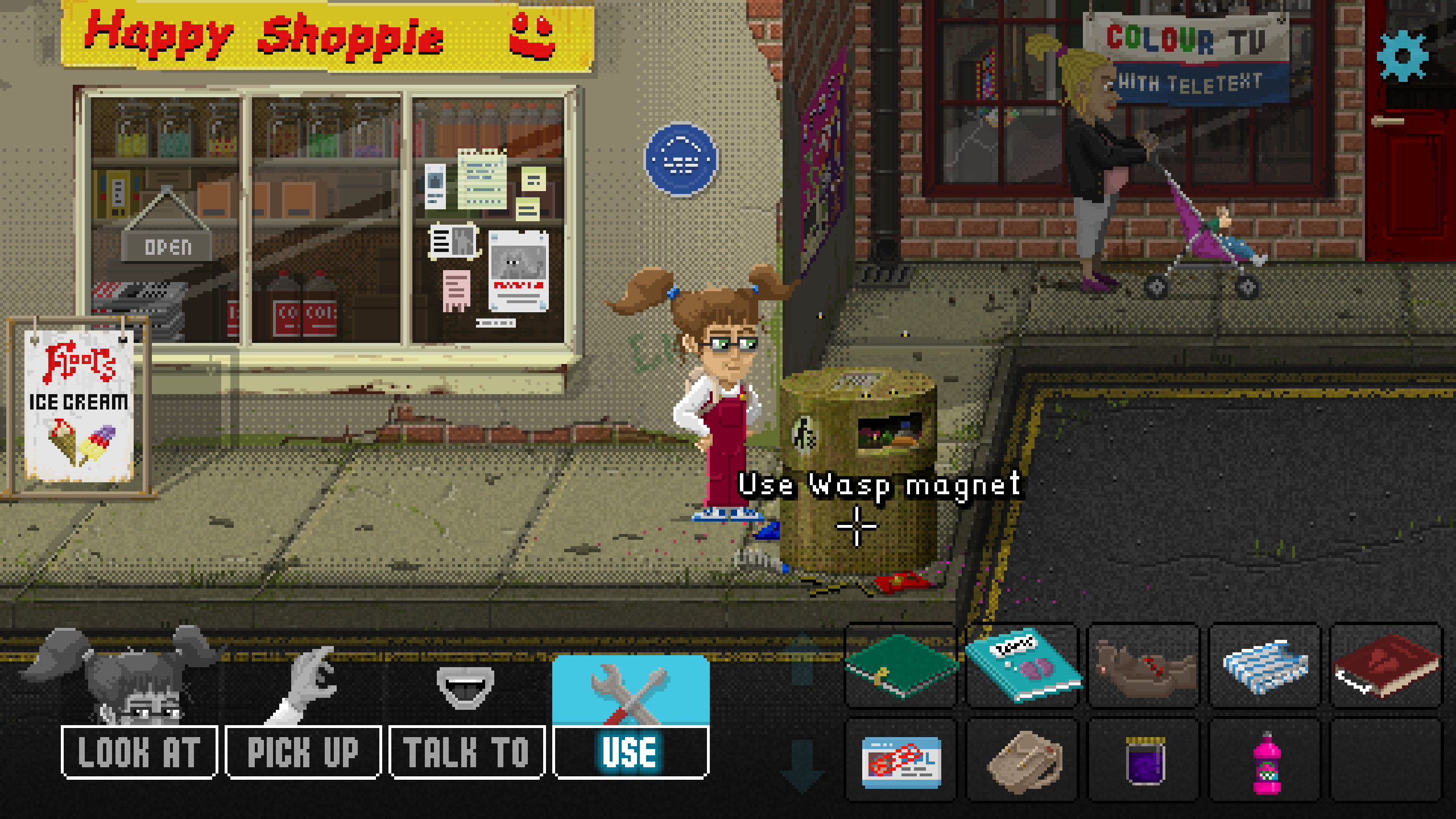
The game engine that I’m using is called Visionaire Studio, it’s purpose-built for point-and-click adventure games and supports a huge number of platforms. For the basic level of funding on Kickstarter, I am promising releases for Windows, macOS, and Linux. But there’s also a stretch goal for iOS and Android (the demo is already available to download from the Google Play Store). Point-and-click games with a traditional SCUMM-style interface lend themselves to touchscreens. I would love to release Lucy Dreaming on Nintendo Switch, too. But publishing a game for Nintendo is a bit of an unknown for me, even though the game engine supports it from a technical point of view.

Can you tell us anything about the pending stretch goals planned for the Kickstarter campaign?

Since the campaign launched, a lot of people have reached out to me to ask about support for different platforms and languages. So in the name of transparency, I have actually made the decision to publish the initial plan for stretch goals. At the time of writing, we haven’t fully funded. Although we did manage to reach 50% of our goal in the first 11 hours of the campaign, and were handpicked as a Kickstarter “Project We Love”, so we’re hopeful!

Have there been any ideas at this stage of development that have since been scrapped or reworked?

Probably more than I think! If I got back and checked my original notes, there would undoubtedly be things that I’ve forgotten or moved away from since I started this project 12 months ago. The main thing that has changed is the name of the game itself. We originally called the game “Lucid Adventure”. Subsequently, we had to scrap a couple of months into the project. I had failed to do my research properly and completely missed the fact that there was already a game with the same name. After a quick brainstorming session with other indie developers and game industry professionals, we settled on “Lucy Dreaming,” which is a play on “Lucid Dreaming”, the key concept behind the full game.
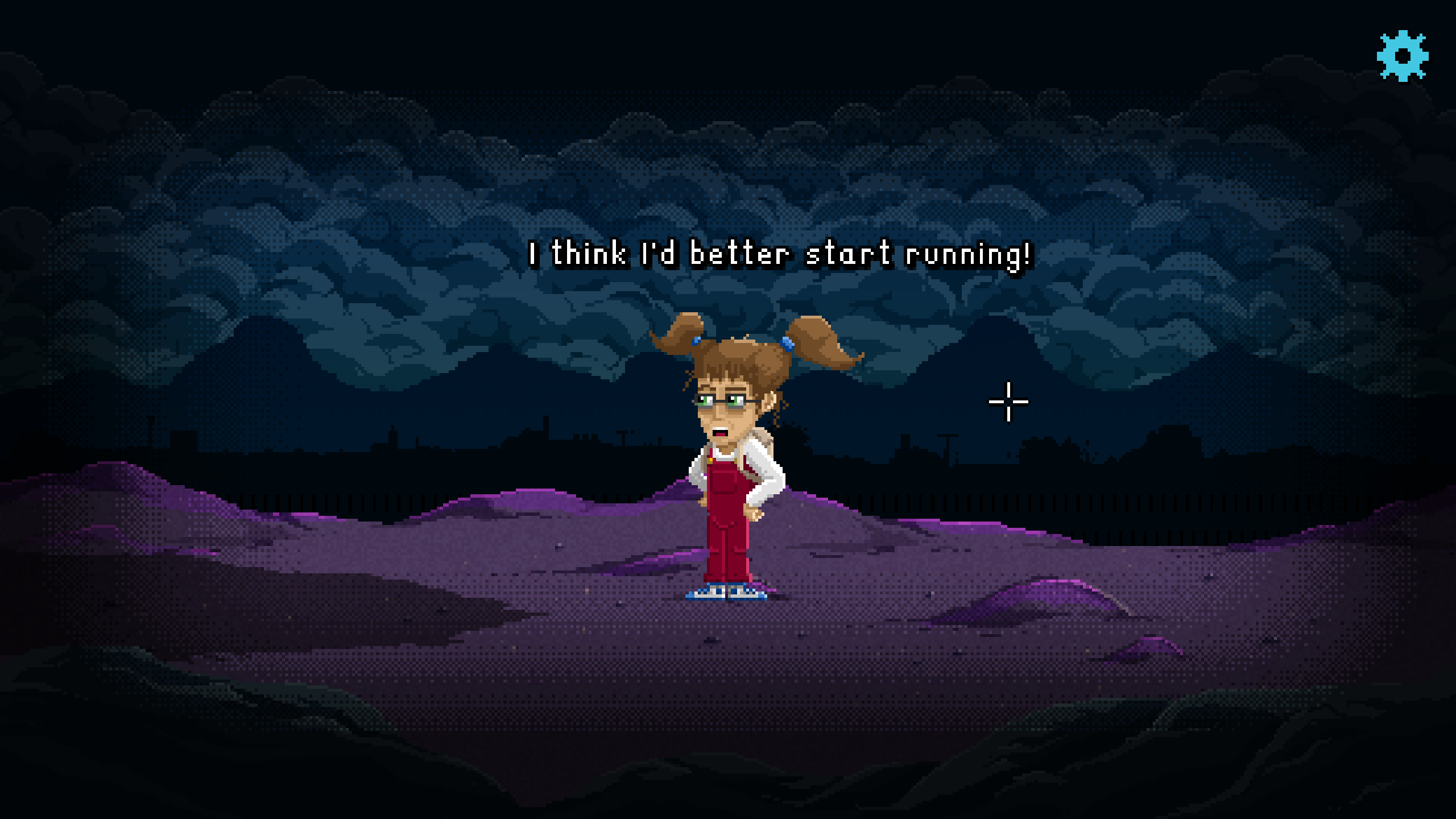
Lucy Dreaming 5

Do you believe the point-and-click adventure genre has been adequately represented throughout the indie community?

Absolutely, the indie game community is keeping the genre alive, and some spectacular new titles are being produced all the time.

I am relatively new to the whole indie game dev scene. Starting by making a browser-based point-and-click adventure for The Roman Baths in 2019, programming the whole thing from scratch in HTML, CSS, and JavaScript. Then, a year later, I used the same “engine” to build another game to raise money for charity Women’s Aid during the first UK lockdown. After this was well-received by adventure game fans online, I looked into game development in more detail and discovered a whole world of professional game engines. And the most welcoming, creative, and supportive community it’s ever been my pleasure to be a part of. A year later, here I am, constantly rubbing my eyes in disbelief and immensely proud to call them my friends.

How instrumental has player feedback been in terms of shaping the course of the project?

Feedback from players, other devs, publishers, friends, and everyone around me is a huge factor when producing a game like this. There’s no room for arrogance. If players falter and don’t have a smooth, enjoyable experience, it’s my fault.

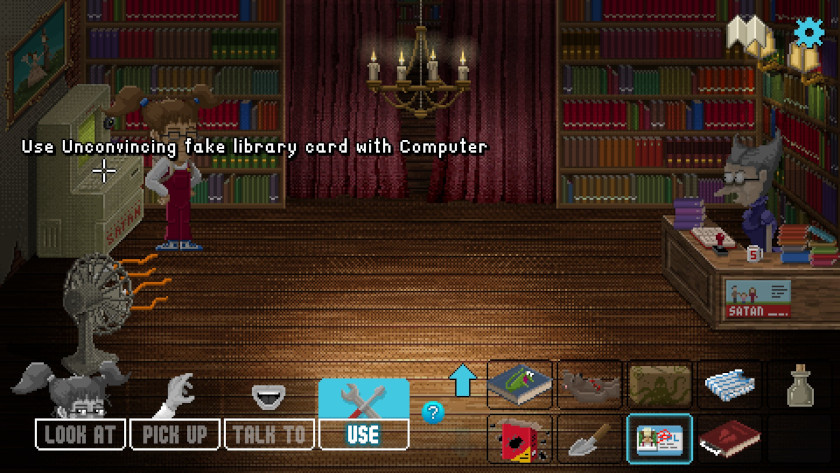
At the beginning of the project, I went back and forth for a long time just working out which verbs to include in my SCUMM UI, there are strong opinions in both the “I want all of Ron Gilbert’s original verbs” and “No verbs, just a left, and right-click!” camps. And I wanted to strike a balance between the two.

It seemed like a huge deal in the early stages of the development, but now that the demo has been honed and polished, no one playing the game has had any cause to complain or even mention the UI. That, for me, is the greatest compliment. As it means it is doing its job perfectly. I still welcome feedback on all platforms and on all subjects. I am new to this industry. And if I don’t listen to my peers and my audience, I’m going to fall at the first hurdle.
Lucy Dreaming 6

Do you find that taking such a self-reflective approach to making this game through your own blog posts has improved your personal developmental skills?

I think it’s helped me retain my humility. I don’t plan my blog posts. Rather, I just open up a blank screen and let my brain spew out all over it. It’s hugely cathartic. And the blogging process has helped me to understand how I feel at each stage in the process. If I’m happy, frustrated, or confused, I let it all out. And it somehow solidifies into something I can reflect on. I’ll read them back and think “Oh, so THAT’s why I’m so annoyed.” Or “Tom, you’re being a nob, just listen to your critics.” It’s also great to have a record of all my transient thoughts and feelings throughout the project. I’m sure if I read some of my early posts now, I would have forgotten nearly everything I wrote at the time.

If you had the opportunity to develop a game with any company or for any franchise, which would it be, and why?

Ooh, that’s a tricky one. I’ve been running my own design agency for over a decade, and I’m not used to being told what to do. I’m also not very good at managing other people. So if I were going to develop something for another company, it would probably have to be a client/agency relationship as opposed to working within a larger games studio.

Under these circumstances, I think I’d probably like to work on a point-and-click adventure for a book like Luke Pearson’s Hilda. The characters and settings are an absolute wonder. And if I had similar freedom to expand and build on the world he’s created. As Netflix has done, that would be truly magical. Of course, it would need to be a pixel-art interpretation, which is probably sacrilege, hey, this is my fantasy!

It’s also mentioned on the Kickstarter page that your young son, Robin, has made unintentional contributions to the game, too. Do you see a lot of your own creative side in your son from an early age, and would you like him to possibly follow in your footsteps as a developer?

I will be delighted with whatever he decides to do as long as he’s happy. At the moment, I love collaborating with him as we walk over a mile to school every morning. We play a game called “puzzles” where we take turns to make up a puzzle that needs solving, then look around us and solve it with whatever comes to hand. This has created some incredible ideas that I would have never thought of. And I write them all down. From a penny-farthing skateboard to a woodpecker-on-a-stick for digging holes. The little chap is a veritable goldmine!

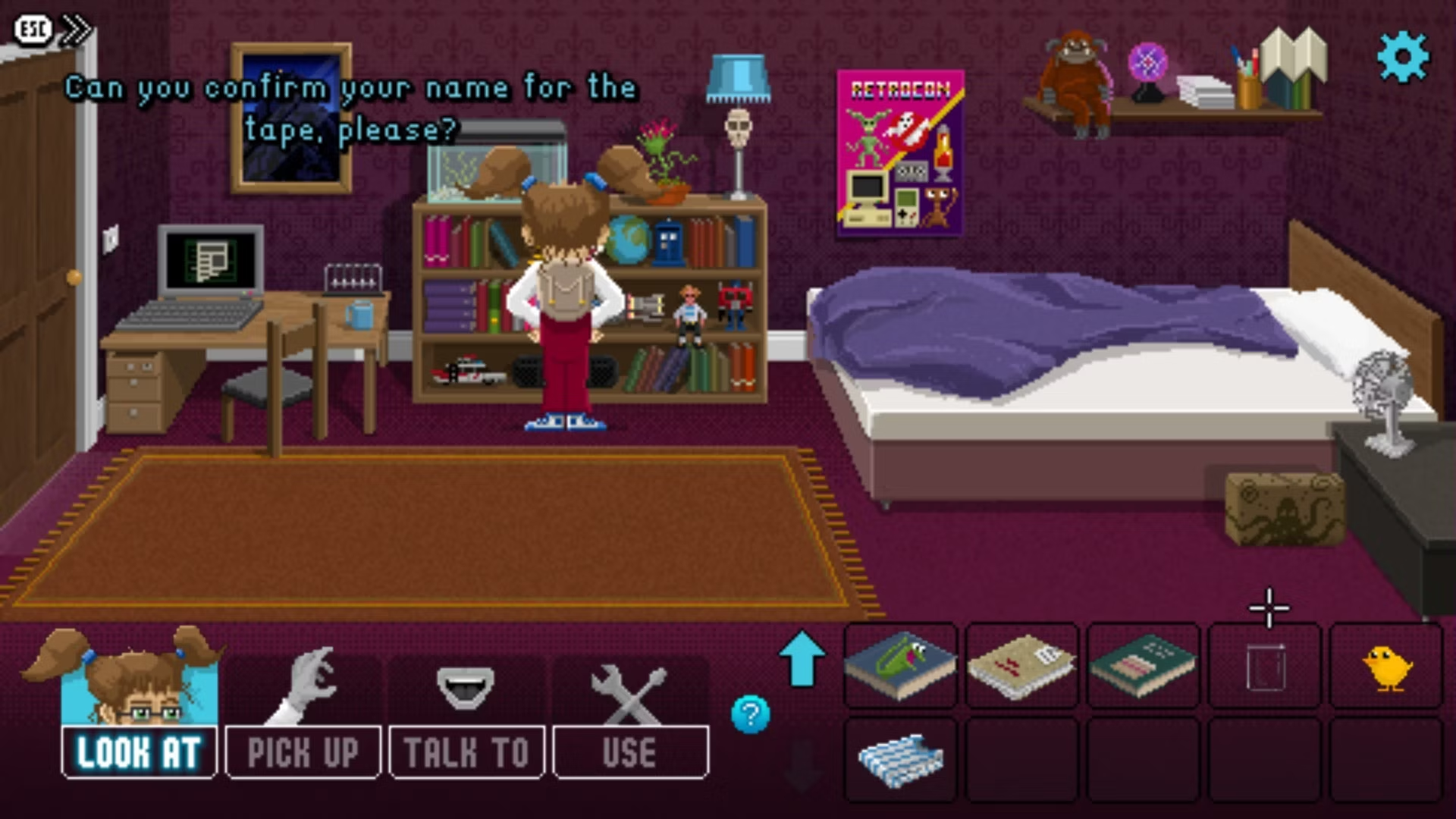
He also draws and writes a lot! I have a whole stack of Lucy Dreaming “fan art” on my desk, created by Robin. And I hope that his delight in creativity stays with him.
Lucy Dreaming 7

Do you have any advice for aspiring developers who may be reading this?

Get involved in the indie dev community. Anything and everything can be learned from the best and nicest people in the industry. Don’t be daunted by the prospect either. You’ll assume that everyone knows more than you do, but your thoughts and feelings are valid too. Have confidence in your own ability and don’t forget to have fun. I mean, that’s why you’re doing it, right? Getting involved in a wider community gives you a sounding board for ideas, collaborators for the future, and constructive criticism when you don’t think you need it. And tremendous support when you do.

Where on the Internet can people find you?

I’m on Twitter mainly, but we also have spots in all the usual haunts. Facebook, Discord, Instagram, Steam, YouTube, Itch.io, our website … take your pick!

https://twitter.com/tallstorygames

https://www.facebook.com/tallstorygames

https://www.instagram.com/tallstorygames/

https://lucy-dreaming.com/

https://discord.gg/aExm5ZhtdE

https://www.youtube.com/channel/UCByVD7k0-JiLw5Cv80mS8kA

https://store.steampowered.com/search/?publisher=Tall%20Story%20Games

https://tallstorygames.itch.io/

Do you have anything else to add?

I love what I am doing and am always happy to talk (at length) about it. So if anyone has any questions or just wants to say “hello,” you know where to find me!

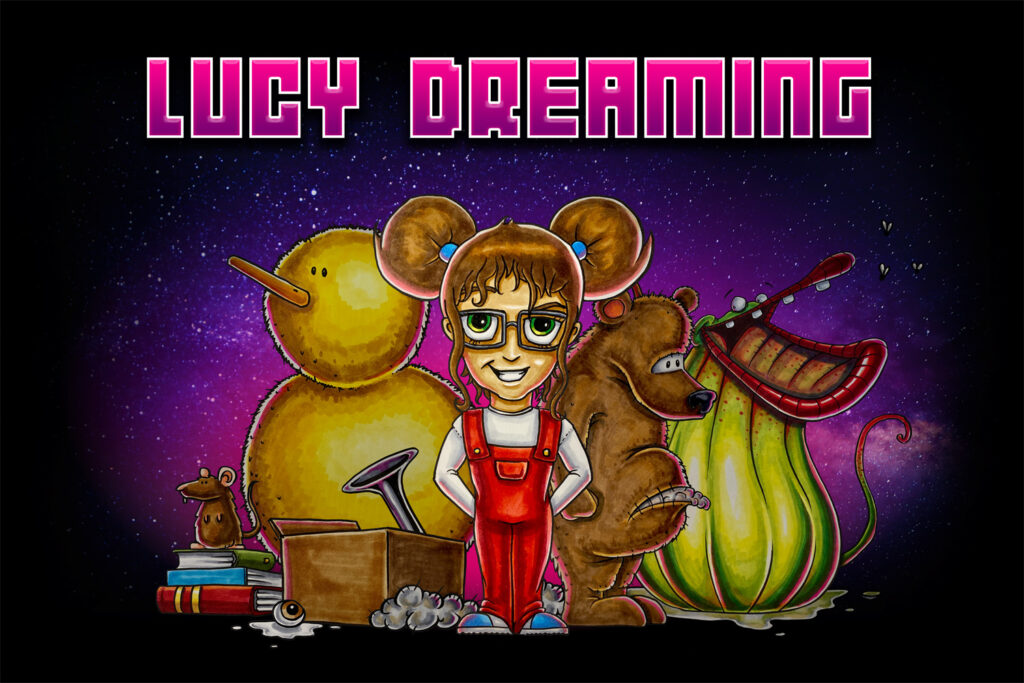
Oh, and back Lucy Dreaming on Kickstarter now!
Lucy Dreaming 8

I’d just like to thank Tom for taking the time out of development to answer my questions regarding this exciting title. It was quite interesting to get his take on this game. As well as the point-and-click adventure game in general. It looks like the genre has a brighter future than I’d realized. And I’m looking forward to this title. As well as any more upcoming games within it that may be coming out soon, in addition. If you like the look of Lucy Dreaming and want to see the project brought to life, you can back the Kickstarter campaign via this link:

Kickstarter Page

But in the meantime, I hope you’re looking forward to this game and enjoyed learning more about it from Tom as much as I did.

Game on,

Scouse Gamer 88

Hamsterdamm

Q&A With Nerdy Bear Studio

Last week on Twitter, I was contacted by another up-and-coming developer looking to bring to my attention a video game they have been working on for some time. And it is starting to come to fruition. Hamsterdamm is a 2D perspective infinite runner title created by Nerdy Bear Studio originating from Atlanta, Georgia, in the United States. In development since 2018, the studio has recently been releasing concept art for the game as well as screenshots of its progress. Although there is scarce information about the game as it stands now, what information can be found about it is on the development studio’s website. Indeed, if you subscribe to the site via email, you can pick up a small ebook of concept art of where the developers are with it:

Nerdy Bear Website

Regardless, I was intrigued by what this game had to offer, and reached out to the founders of Nerdy Bear Studio, Lionel and Chanell, to ask a few questions about it. And to hopefully learn more about what players can come to expect from the final product. So here’s what Nerdy Bear Studio had to say about Hamsterdamm:

What has the developmental process been like?

As with anything you do for the first time, it’s been touch-and-go. We are learning as we go along, but this aspect of it has made it fun (and ensured that we are picking up skills that we can use even beyond Hamsterdamm). First, when we started in 2018, I made it a point to learn as much as I could. First, I started learning about game development timelines. I began looking at how other developers ran their game dev workflows. I watched a ton of documentaries and testimonials about game developers. So I knew what to expect going in. One of the most impactful people I learned from—and still look at—is Thomas Brush.

His YouTube videos provided a wealth of knowledge about what I should know and what I should expect to be going on. Between 2018 and 2020, we went through some life changes that delayed development. Finally, last year, we made the decision that we wanted to start with Hamsterdamm. In October 2020, we began to put together a more solid marketing strategy and put together game documents. Fast forward to now, and we now have a Discord chat running where we are working with a programmer and composer to establish the structure of Amsterdam. There’s been a lot of Google Docs and spreadsheets to outline milestones for moving forward. 


How close are we to seeing the finished product?

Right now, we are developing a prototype. Our programmer is now building out the structure (game mechanics, physics, and reward systems). Once that is complete, a pixel artist and I will step in to add the “visual flavor.” We also now have a composer working on the music side of Hamsterdamm (which is integral to the gameplay). At our current rate, we are expecting to have a demo ready by early to mid-June and a fully playable game by the end of this year.

While there have been a few hiccups in the process (and we know there will likely be more shortly), things are finally moving smoothly as we now have game documents and a timeline to move forward with. Again, we are still learning as we go. We are currently making sure we are matching up all the critical pieces of development. So everyone has what they need to do their part (whether it be mechanics, art, music, or even marketing). So, fitting all the workflows together so that they work in parallel is the current point we are at. 

What has been the most exciting aspect of development?

Not to sound cheesy, but it’s honestly been the process of watching a vision you had come to life. The contractors we are working with are incredibly innovative and creative. And they have been vocal about believing in what we are trying to do with Hamsterdamm. Additionally, my wife and I are always excited about learning new things. Whether it be creating sprites or graphic design concepts (for those swanky Instagram posts lol). It’s been fun to combine our love of learning with something we are passionate about. 


What has been the most challenging aspect of development?    

That answer kind of changes depending on where we are in the process. However, I can say that managing all the workflows has been a challenging part of development currently. While the game itself is a project, each contractor is working on separate parts of the game. Additionally, there are times when they will have to collaborate on various components of their own workflow. 

Part of the challenge is thinking about where these intersections will happen and helping contractors to allow for them in their milestone timelines. There are also the parts of game development that people don’t think about. Much of the day isn’t dedicated to actual coding and development. There are tasks related to accounting, PR, HR, general admin, and legal areas that also need to be done. So, numerous workflows are running at once. And it’s critical to take these into account when planning. Nevertheless, we wouldn’t trade the experience for the world. 😀 


How well has the game been received so far?

We were excited about the concept of Hamsterdamm (a 2D pixelated and perspective-shifting infinite runner), but we weren’t sure how people would feel about it. However, we’ve been surprised at how excited people seem to be when they hear what we are doing. From family and friends to people who reach out to us on Twitter, some people have expressed that they are excited to play the game. We even connected with our composer after he reached out to us. After hearing about our game and feeling drawn to it. We hope the excitement and momentum continue!

How instrumental has community feedback been in shaping the course of development at this early stage?

Right now, because we are still pretty unknown, we haven’t had much community feedback and involvement up to this point. However, community input is definitely something we will be seeking once we release the demo. We will include surveys that ask players about their experience and any suggestions they have. 

As you guys asked me over Discord, I wish to ask you guys the same thing. What are your favorite indie games, and have they had any impact on development as well?

Excellent question! One of our favorites is Speed Limit, which has directly impacted the infinite runner and perspective-shifting aspects of Hamsterdamm. We are also really loving Songbird Symphony and Sayanora Wild Hearts. Both have some elements that could influence what we do with Hamsterdamm. 

What platforms are you looking to bring the game to?

It will likely be released on PC first, and then we are eyeing a release on mobile, Nintendo Switch, PS5, and the Xbox Series X. 

I also found on your site several other games listed there; In the 90s, Animal Planet, Games for Black Girls, and Connectivity. What more can you tell us about them?

Yes! Those are our other planned releases. Right now, the focus is on Hamsterdamm. But we are constantly thinking of story and game mechanic ideas for the other upcoming titles. We actually have a spreadsheet for each game. And as we think of ideas (that we know we can’t pursue right now because of Hamsterdamm), we will dump them in there to address later. Each one will share a connection with the others. And after Hamsterdamm, in the 90s, it will likely be on deck for development next. 


Have there been any ideas at this stage of development that have since been scrapped or reworked?

Great question! Yes, there was an aspect of gameplay that we tweaked. The original idea was to make Hamsterdamm into a pixelated platformer that had infinite runner elements. We want to keep what it was changed to as a bit of a surprise. But the change definitely resulted in a shift in development. Fortunately, we were not far in development before we decided to make this shift. The programmer’s insights gave us a pretty good look at how things would change, and we were able to move from there. 


If you had the opportunity to develop a game with any company or for any franchise, which would it be, and why?

Oh man, Excellent question. If I could develop with anyone, I would have to say either Nintendo or Square-Enix. The first reason is that their games have had the most impact on my life. Both Mario games and Final Fantasy games have been a long-running staple in my world. The second is that being part of either family means that the NBS universe could potentially end up in a Smash Bros. game, or even better! When we branch into animation and a shared universe, it could lead to an amazing story. Konami would be an extremely close 3rd. 

Do you have any advice for aspiring developers who may be reading this?

Yes! Learn as much as you can! While this applies to general dev skills, we would advise you to make sure you take some time to learn about the ins and outs of game project management. You cannot do it all (and believe us, you won’t want to). If you are a developer who wants to own your own studio, you will likely be a business owner. This means you will have to manage contractors, handle finances, figure out marketing, and deal with any other general admin tasks that come up. 

You need to have a plan for how you will manage all these different aspects and workflows (whether it be outsourcing or hiring part-time or full-time help). We’ve seen a lot of other indie devs try to do it all, and this mostly leads to burnout. So, pace yourself. Check out indie dev studios you are inspired by and see how they did it. Search our indie dev processes on YouTube. You will get a realistic view of what to expect so you can plan for it. 

Where on the Internet can people find you?

You can check us out at www.nerdybearstudio.com, and also follow us on 

Twitter: @NerdyBearStudio

Instagram: @nerdybearstudiosYou can also sign up for our email list here if you want to stay up-to-date on the progress of Hamsterdamm and our future projects.

I’d like to thank both Lionel and Chanell for taking the time to talk to me about Hamsterdamm, and to wish them the best of luck with the development of the game. Via the website, you can also find links to Nerdy Bear’s social media pages. Where you won’t miss a single developmental update. Hamsterdamm sounds like it may make waves upon release, and it will be very interesting to see how the game turns out when development is completed. But in the meantime, I hope you guys keep up with Nerdy Bear, and I hope you enjoyed learning about this ambitious title.

,

Game on,

Scouse Gamer 88

Soviet Jump Game

Q&A With Thom Glunt

Recently, one of the many indie games that I have been playing and enjoying is the Steam Early Access title Soviet Jump Game:

https://www.youtube.com/watch?v=e6xb8KDYOHM&t=943s

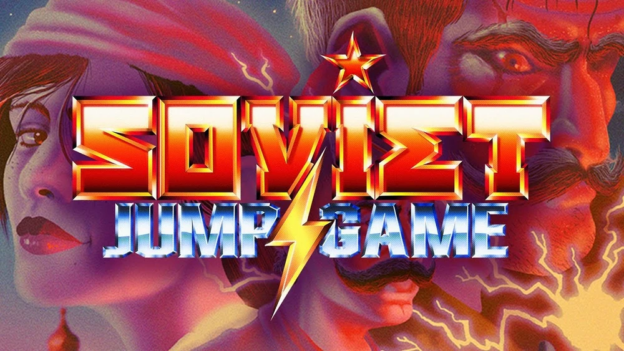
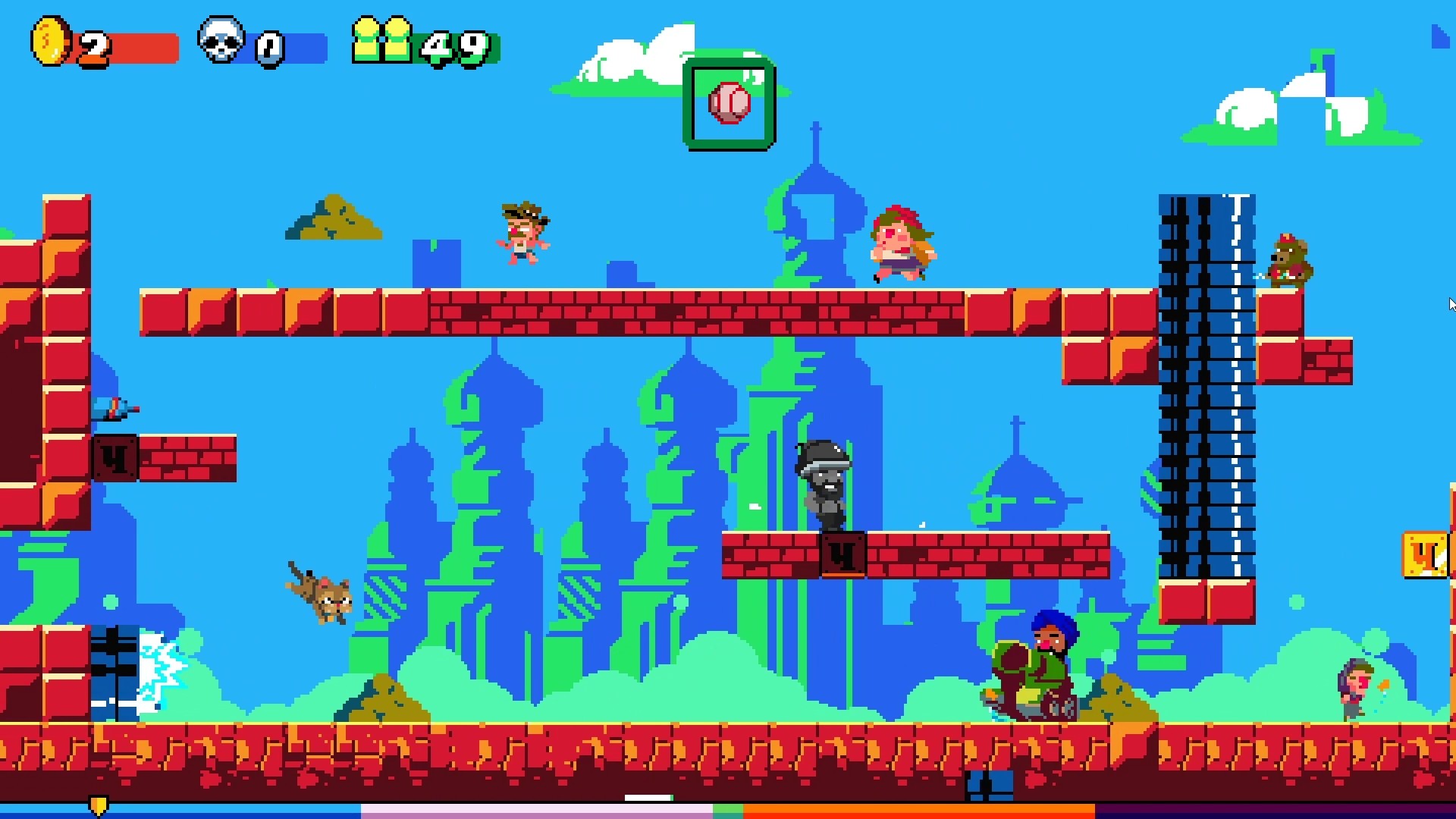
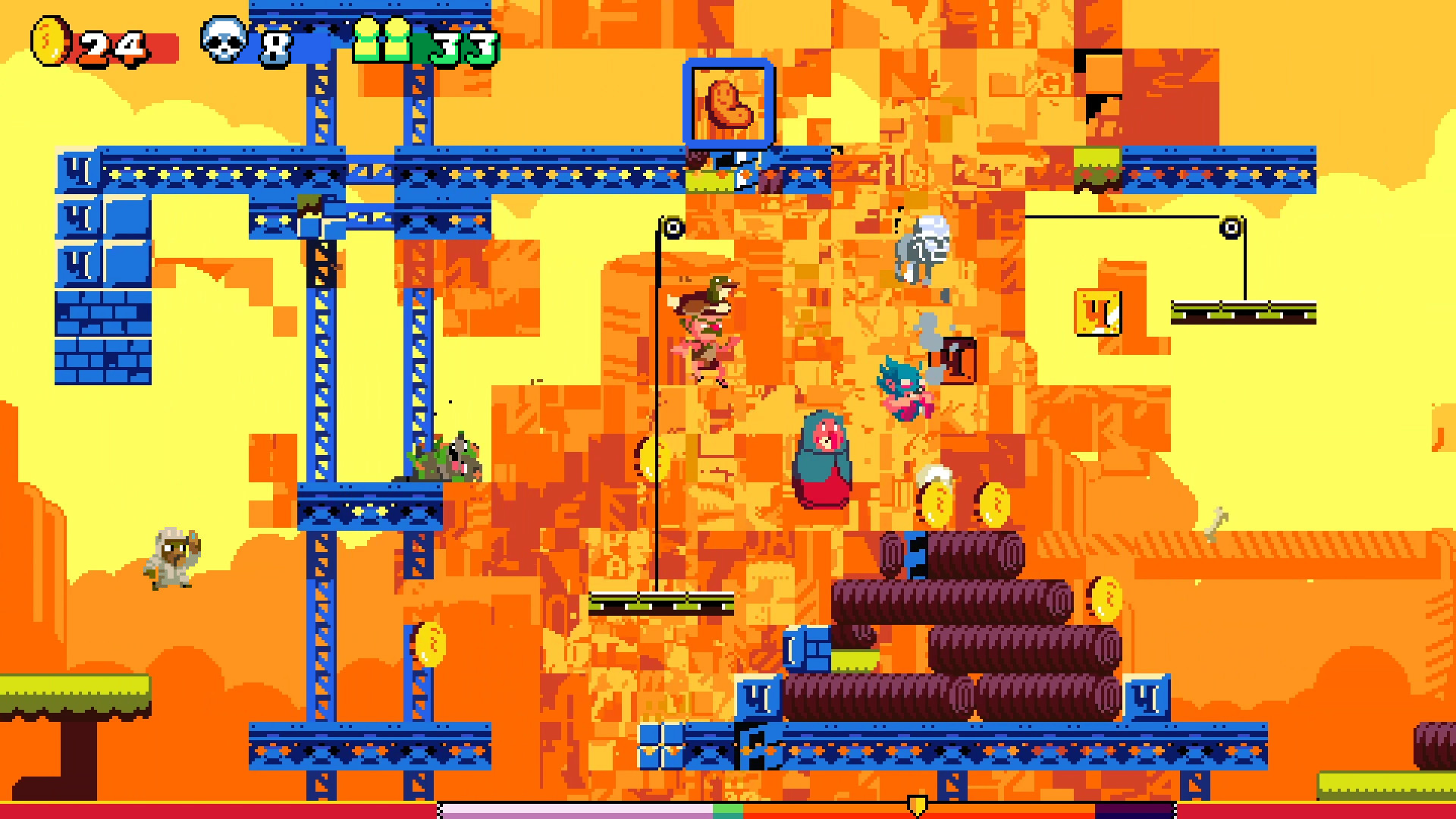
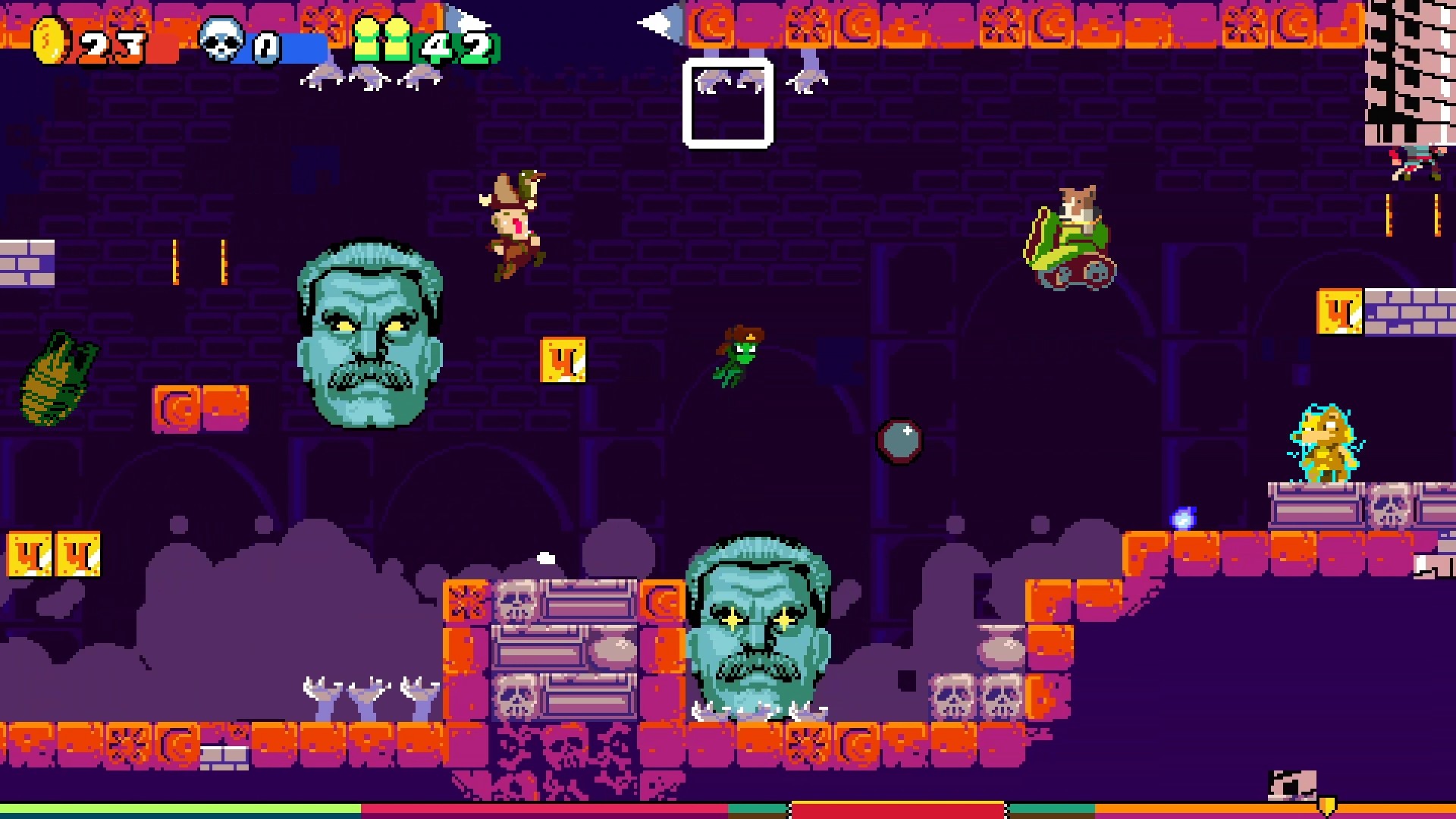
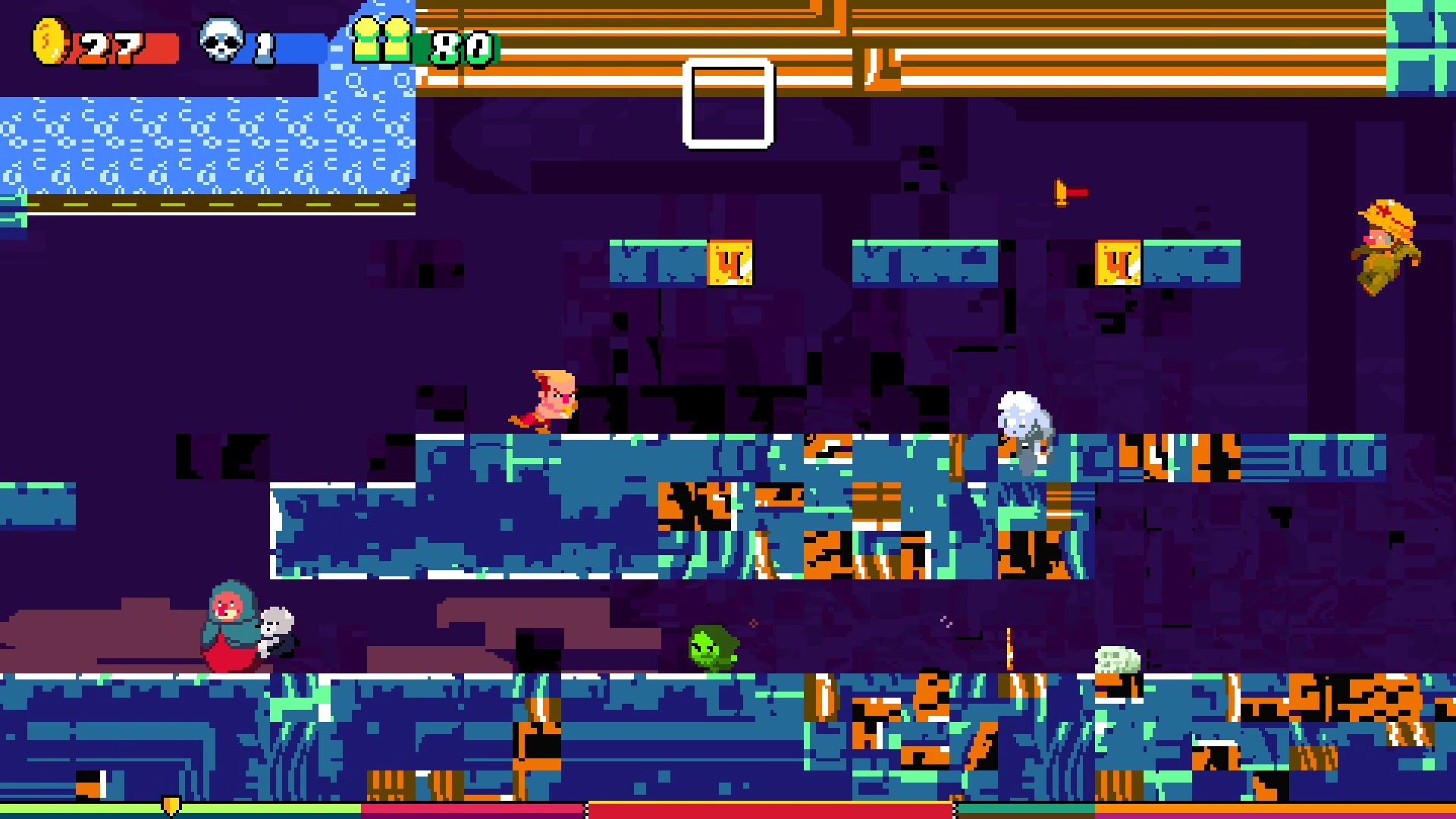
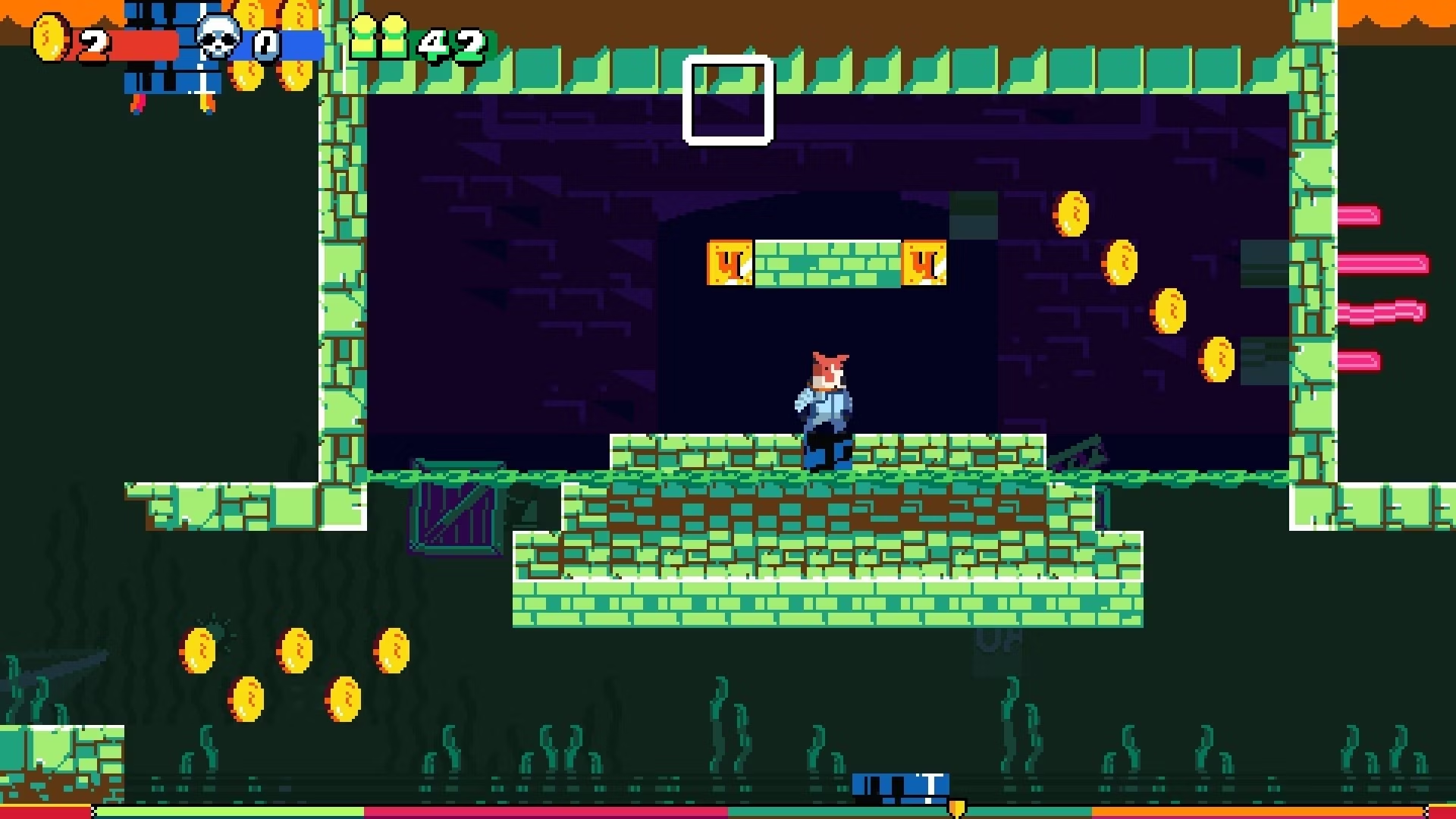
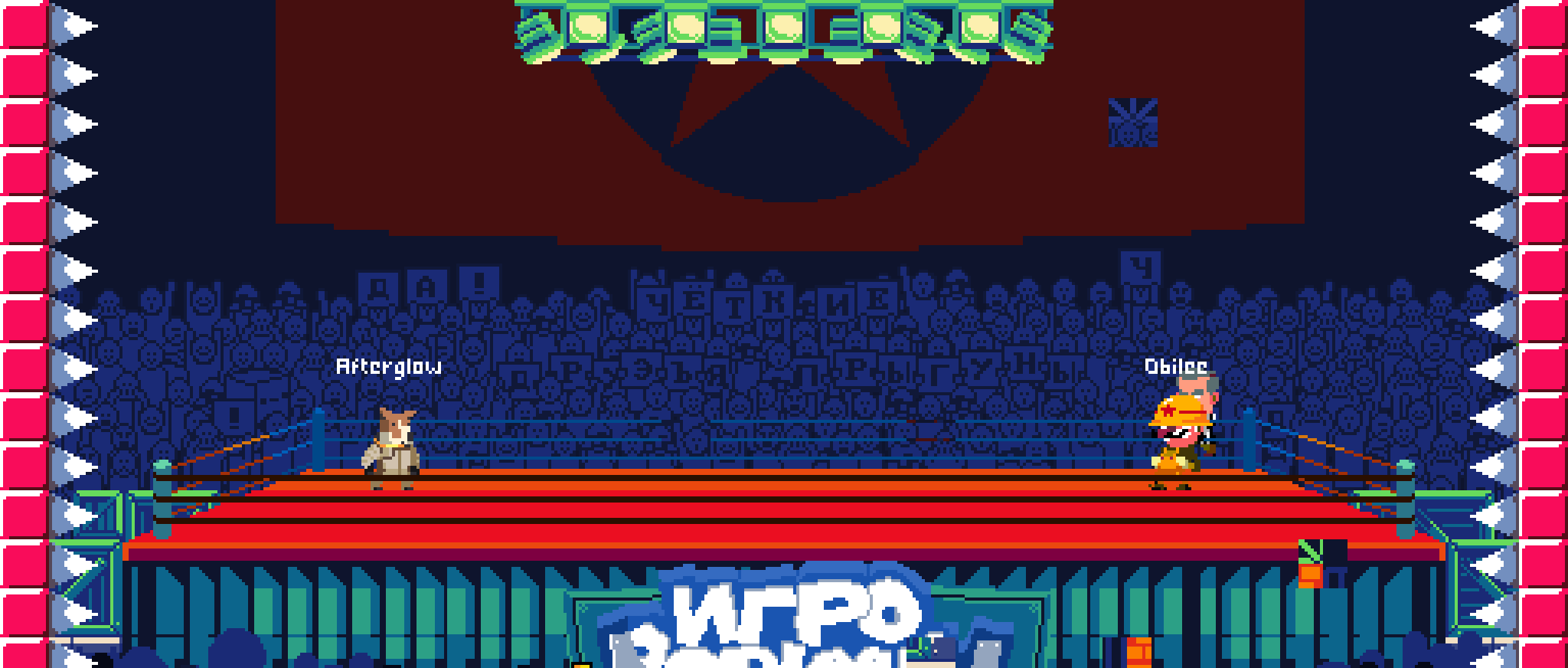
I began playing it for myself, and since then, I’ve hardly been able to put it down. Soviet Jump Game is a 2D side-scrolling battle royale whereby players compete against each other in a last-man-standing battle by either stomping on each other or using various power-ups acquired across a game map with several different biomes inspired by the culture and history of the USSR. After playing the game for some time, I then wrote a first impressions article. But I also decided to reach out to the game’s principal designer, Thom Glunt of Fantastic Passion, based in California.

I had a lot of questions about this game for Thom ahead of its full release. As I’ve not been as excited about an upcoming indie game as I have been about Soviet Jump Game for a long time. And I wanted to find out as much information about it as possible. Thom got back to me with the answers recently. And here’s what he had to say about Soviet Jump Game:


Soviet Jump Game 1


How did the general concept of the game first come about?

By late 2018, it felt like Battle Royale had pervaded every genre of video game. And I thought it would be funny if someone made a BR as a classic side scroller. Then I realized that I would really like to play that, so I talked to Game Grumps, and they were psyched on it too.   


How has it been to experience such an influx of interest surrounding your game and the huge fanbase it has already garnered even before its full release?

I just hope it brings people some joy.


How did your association with Game Grumps and their publishing of Soviet Jump Game come about?

It’s a boring story. 


Soviet Jump Game 2


Would you like the relationship between you and Game Grumps to continue in the future?

I have nothing but good things to say about them. They’ve been a great partner and have trusted us to make the game. I’ve approached them a few times for input and ideas. And between Arin, Vernon, Greg, and Brent (and others), I’ve always left a good idea or new perspective on something. 


Is there anything you can share regarding any possible new content to be added to the game before its full release?

I think with the Daily civic duties and party feature, we are going to hold off on adding major new features until release. We’ve been focusing on Bug fixes, network optimization, polish. And a bit of future content for the time being. 


What’s next for you and Fantastic Passion?

Right now, we’re just focused on making SJG and giving it the attention it deserves. When that’s finished, I plan on climbing some mountains while I figure out if the next game will be a Fantastic Passion game or another game with my friend Stephen as Pixel Titans. 


Soviet Jump Game 3

What other genres of gaming would you and the rest of Fantastic Passion like to develop in the future?

I want Fantastic Passion’s focus to be on smaller, fun games that we can develop in a year and a half on average. That way, we can play with some unique ideas and try to keep things fun.


To me, Soviet Jump Game has one of the catchiest video game soundtracks I’ve heard in a long time. What was it about Alex Yoder’s music style that led you to choose him to compose for the game?

First off, Alex is a beast! It was his amazing soundtrack for CRAWL (Check it out!) and a recommendation from Barney Cumming, and that was all I needed to reach out. I am pretty picky when it comes to what I look for in music for my games. I was lucky to work with Amos Roddy (ToyTree) on my first game (STRAFE®). And he set a high bar. Receiving a new track from Alex is like Christmas. I get psyched and have to share it with the team. We may have some new tracks coming soon.  


What are your and the development team’s characters of choice whilst playing?

My opinion changes weekly, but right now I like Lil Jojo, Harrison seems to main Spots, Nick likes Artem, and that’s all I can remember off the top of my head.


Soviet Jump Game 5


Do you and Fantastic Passion see Soviet Jump Game developing into a series of games further down the line?

To be honest, I have no idea, I’m just taking it as it comes. 


If you had the chance to develop for any mainstream development company or work on any gaming series, which one would it be?

 I’d love to make a demake of Rage with ID Software. Since it was their only current IP to not exist in the 90’s, I would like to make that game if Rage had been made in 1998 after Quake 2. 


Would you be in favor of the idea of the Soviet Jump Game being open to modding?

I don’t think it’s a good idea for this one. But I like the idea of modding in general. 


Do you have any advice to give to any aspiring developers who may be reading this?

If you love video games and truly love them and want to make them, I trust that you’ll find a way. Inspiration is infectious. If you are psyched about making a game and can get some momentum, other people will want a ride. Also, luck and privilege are factors; unfortunately, it’s rarely easy.


I’ve won 88 out of 191 games so far, having racked up 628 kills, 10540 coins, and dealt 1241 damage at level 26. Could I be considered a loyal servant of the state?

Yes.


Is there anything else you would like to add?

Thanks to everyone who’s played the game or shared it with a friend! We hope you’ll like what we have in store. Stay safe and healthy out there. 


Soviet Jump Game 7

I’d also like to take this opportunity to thank Thom for taking the time to answer the questions I had about the game, especially since the developers seem to have been hard at work recently. As the game has undergone a lot of graphical changes compared to the previous build. If anyone reading wishes to check this title out, it’s free to play via the link below:

https://store.steampowered.com/app/1072710/Soviet_Jump_Game/

If anyone also wants to check out Alex Yoder’s website and his various works, here’s the link:

http://www.alexyoder.net/

I’ve been playing this game a lot over the last few weeks, and I cannot wait for what the final build of the game will have to offer, as can everyone else who has played this exciting upcoming title. I hope you guys enjoyed reading this Q&A as much as I enjoyed writing it. And I’ll be back soon with my next article.

Game on,

Scouse Gamer 88
 

Exotic Matter

Q&A With Moebius Games

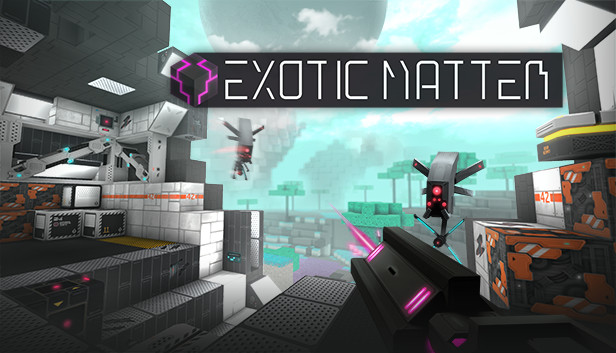
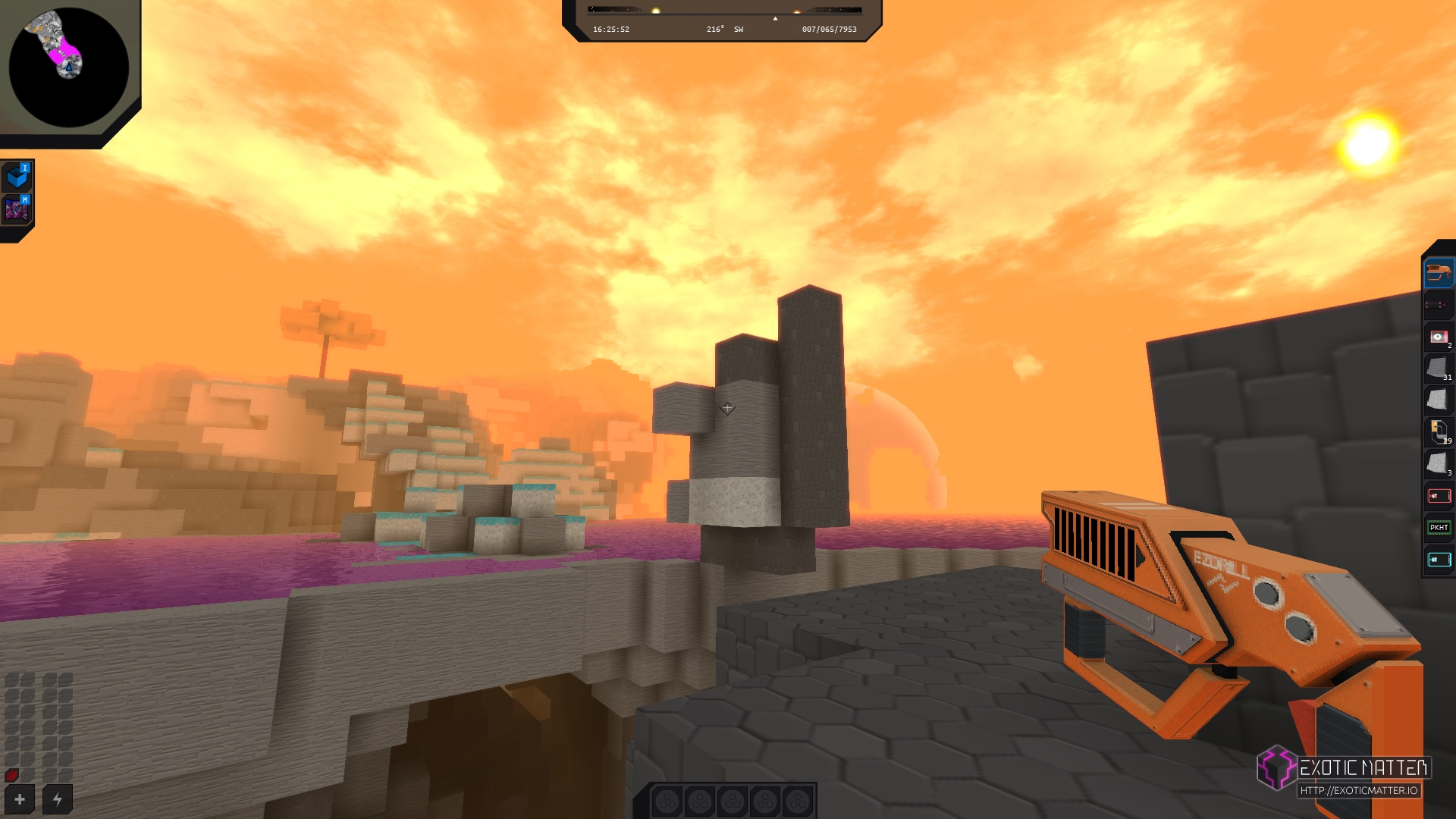
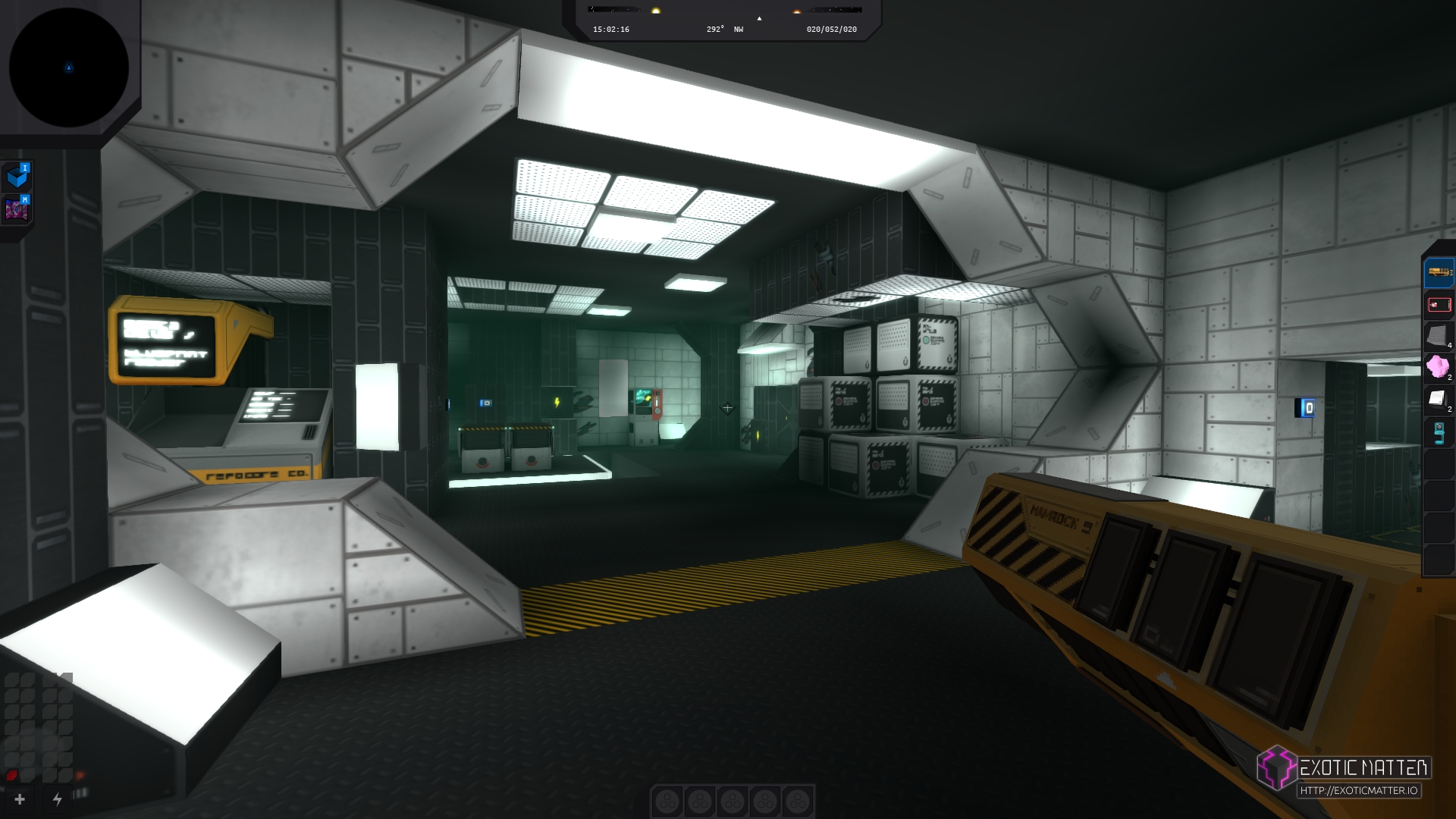
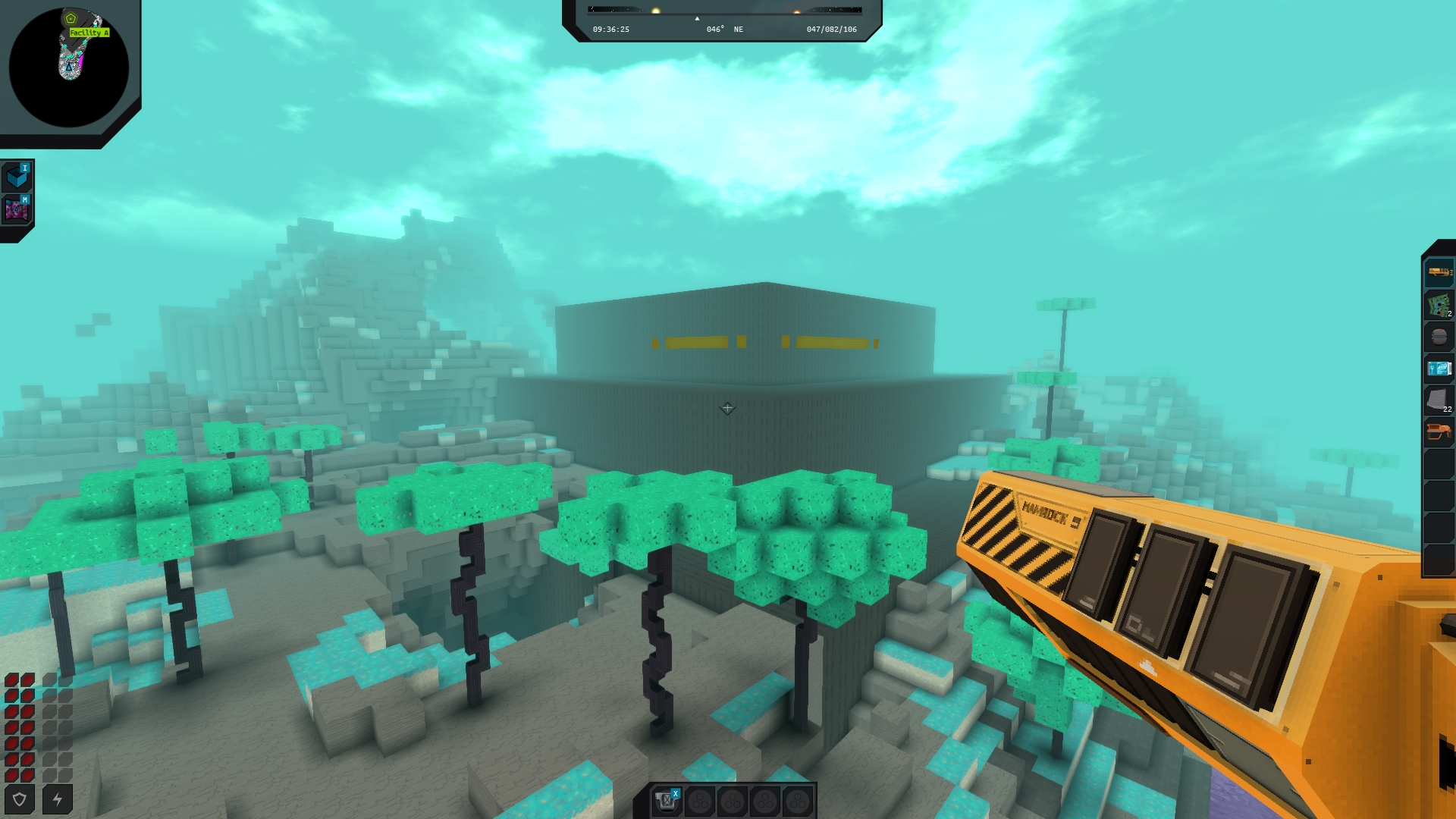
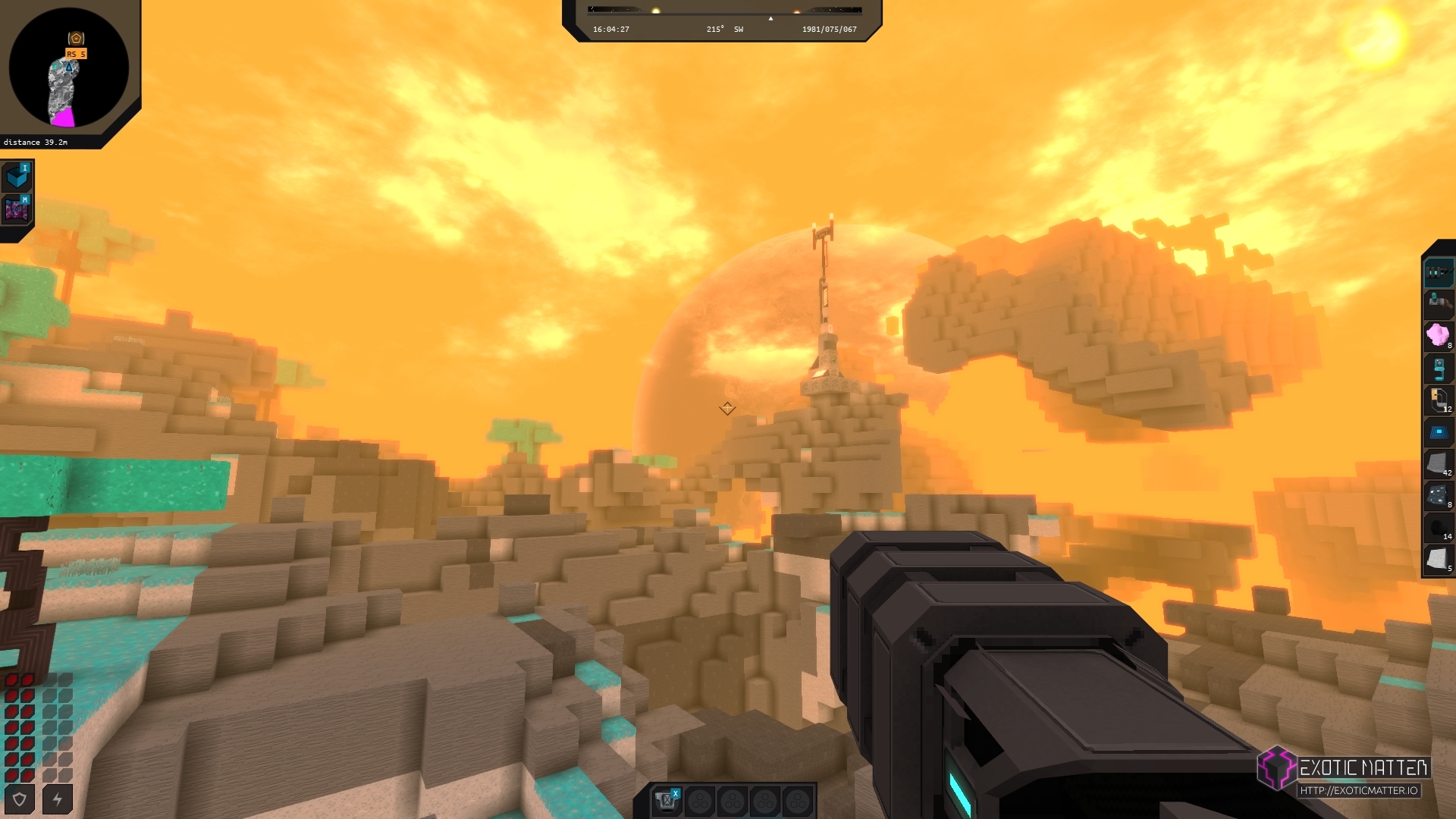
Searching once again for up-and-coming indie games, I recently came across a procedurally generated sci-fi survival game named Exotic Matter. Developed by Moebius Games, operating out of Munich, Germany. Exotic Matter is inspired by numerous works of science fiction and exploration games, similar to Minecraft. It has players crafting, building, and solving puzzles to survive within the vast in-game world that surrounds them. Whilst at the same also offering players a very story-driven experience in addition. Curious to learn more, I approached the game’s designer, Florian Frankenberger, to ask a few questions about the game, which was released on Steam Early Access. And these were the answers:

Exotic Matter 1

What were the influences behind your game?

I always loved voxel games, but most of them sadly get boring after playing them for some time. But why is that? Mainly because most of those games are sandboxes – they allow you to do all sorts of cool things. But what they lack is a mission, something to accomplish. Sure, you can level up all your gear and build fortresses. But there is no set goal. So I thought one day that I should create my own game that actually gives the player a mission. And with that came the idea to go the Metroidvania approach. As some regions are accessible only after you have a certain gear. This gives the game a story but doesn’t force it upon the player.

What has the developmental process been like?

Hard, I’d say, but also a lot of fun. I mean, when I started, I hadn’t developed a single game for some time. And the games that I created when I was younger were all 2D. So I had to learn all the fancy OpenGL stuff, matrix calculus, quaternions, and shaders. And because I wanted not only to create a game but rather an engine for voxel games, it took even longer to bring it to a releasable state.


What has been the most exciting aspect of development?

I think game development in general is quite exciting. If you compare it to what I did before. Writing boring software that runs on servers, it is just so much more rewarding if you hit “run” and you can instantly see the changes you just made.

Exotic Matter 2

What has been the most challenging aspect of development?                          

The most challenging has been to create the modding interface for the engine. The problem is that everything I wanna do in the game also needs to be available for modders later on. So that the game itself is a mod for the engine. For example, if I wanted to have a new block type that would do something when the player gets close to it, I would have to create a new block trait that would also then be usable in all current block types and all block types that modders might add later on. You see, there are a lot of things you need to consider and to think about when adding something like that.

That sometimes makes adding new things more complex than you’d think. But it will help later on when you combine different traits to form completely new types of blocks without ever changing the engine again.


What’s next for Moebius Games?

Although I already have a few ideas in my head for new games, the most important thing now is to add more content to Exotic Matter and remove all the bugs that most likely are still in there. I’m looking forward to seeing what the game will become and also to seeing what worlds people will create once we open up the modding via Steam Workshop in one of the updates that will come in the next few months.


Exotic Matter 3

What sci-fi books, films, or games were most influential in the development of Exotic Matter?

One of my all-time favorite books was a big inspiration for Exotic Matter: Stanislaw Lem’s Solaris. Even though the story of our game is not anywhere close to the book, the visuals are heavily inspired by it. For example, the purple color, as one of the key colors for the game, comes from the fact that in Solaris, the planet has two suns, one red and one blue, which tints the planet in violet light.


How well has the game been received so far?

I’d say that although there are still some issues in the game, most people who played it so far liked it. But some argue that getting into the game is not as easy as it should be. And we’re currently working on ways to help that by showing more hints and making sure players are not able to lose important items.

Exotic Matter 4

How excited were you to have David Levy on board to compose the game’s soundtrack, and what was the primary aspect that his music added to the game?

It is a great honor to have someone like David on the team. When I first discovered the work he had done before, I was stunned. I knew that this was the kind of music I wanted to have for Exotic Matter. And I think the music he created for the game just so perfectly fits the mysteriousness of the planet you are stranded on and the excitement of exploring it.

Do you have any advice for aspiring developers who may be reading this?

Hmm … If there is one thing I’ve learned, then it is that while writing your engine is a lot of fun, today it’s more important to have portability. So if I were to start all over again with Exotic Matter, I’d use one of the big engines like Unity or Unreal Engine so that bringing the game to consoles is a much easier task.


Where on the Internet can people find you?

People can find us at https://exoticmatter.io or on Steam, just search for Exotic Matter 🙂


Do you have anything else to add?

I just wanna thank you for allowing me to give people this small insight into our game 🙂

Exotic Matter 5

I would also like to thank Florian for answering my questions about Exotic Matter. And wish him and Moebius the best of luck with this extremely promising title. Anyone who may want to download Exotic Matter on Early Access can check it out via the link below:

https://store.steampowered.com/app/459760/Exotic_Matter/

I will also be posting a review of the game very soon.

Game on,

Scouse Gamer 88
Anew The Distant Light

Q&A With Resonator

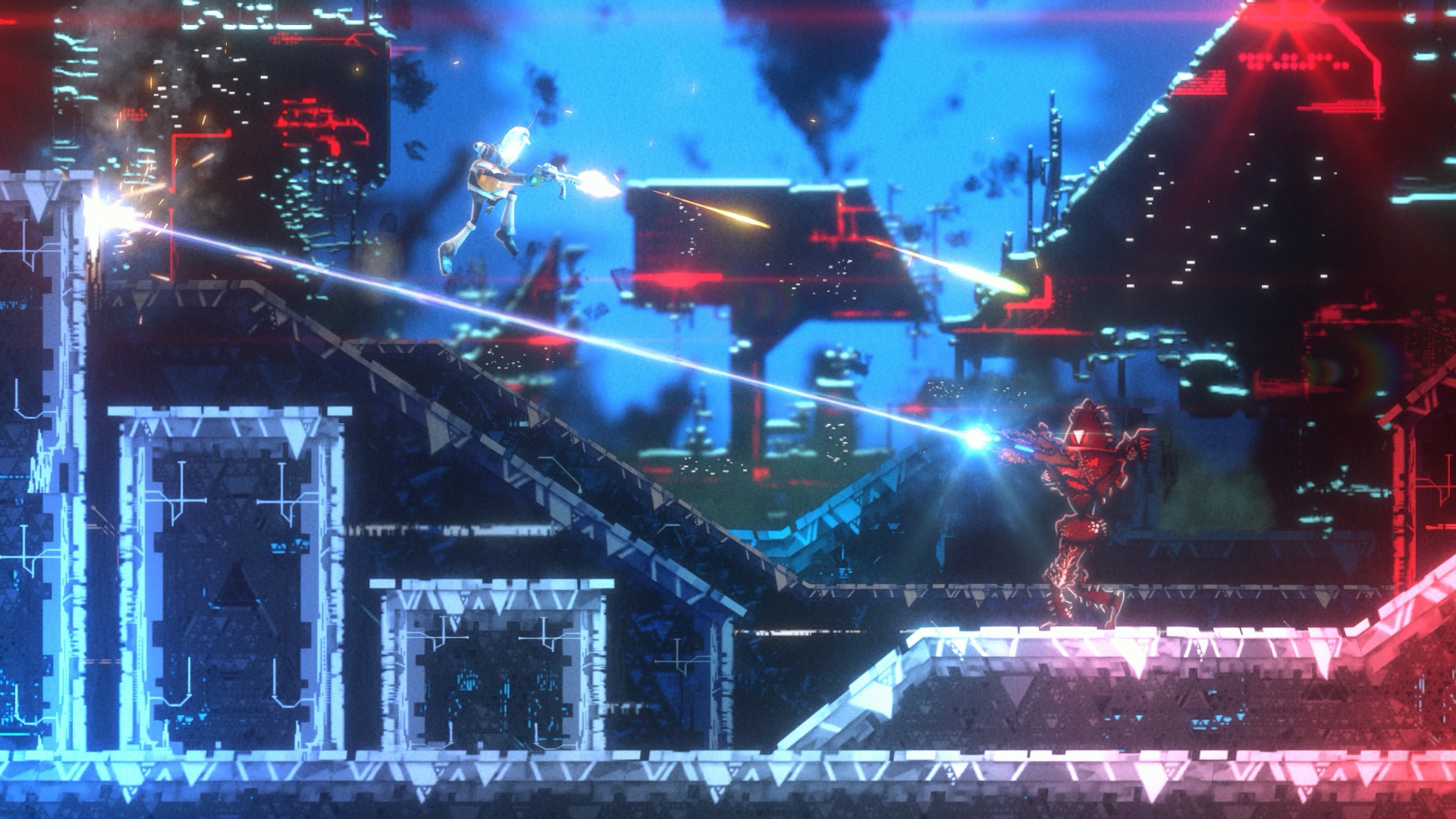
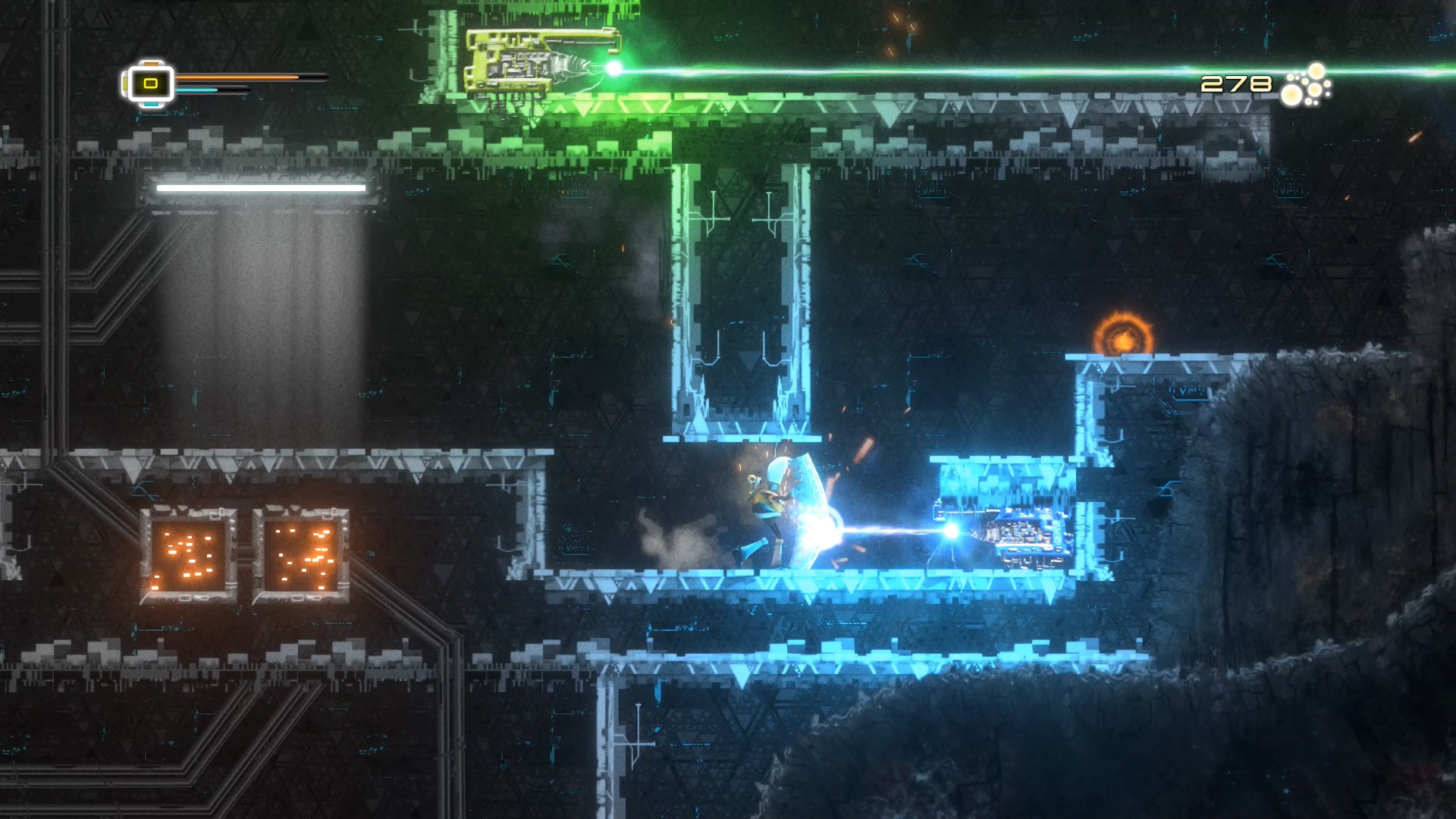
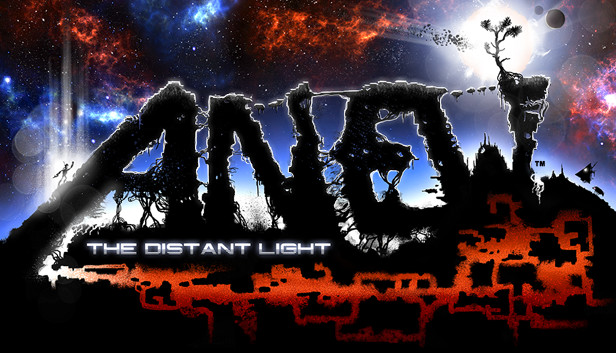
In my ongoing bid to cover and expose as many different independently developed games and indie studios as possible, I discovered a game currently up on Kickstarter entitled Anew: The Distant Light. An action-adventure Metroidvania title, there is a heavy emphasis on combat and exploration. As well as a vibrant science fiction setting that contrasts the beauty and devastation of an endangered futuristic world.

Creating the game are two veteran AAA developers: game director and programmer Steve Copeland, and art director and sound designer Jeff Spoonhower. Collectively known as Resonator. Between then, Steve and Jeff worked on a multitude of major gaming releases over fifteen years, including BioShock 2, Lord of the Rings: Battle for Middle-earth, Borderlands 2, Command & Conquer, and Uncharted: Golden Abyss, to name but a few. After reaching out to Resonator, both Steve and Jeff agreed to answer some questions I had about their upcoming game, their Kickstarter program, and their past and present developmental experiences. Here’s what they had to say:

Anew: The Distant Light 1

What were the influences behind your game?

SC: For me, the classic Metroid games were a big inspiration.  After all, there is a reason our game’s genre is named after it.  You can probably also spot influences from Ori and the Blind Forest, Dark Souls, and Mario Galaxy.  We’re constantly looking for ways to fit fun game mechanics from other genres into Anew: The Distant Light.

JS: I am a big fan of platformers as well. I grew up playing the Mega Man, Mario, and Contra games, so in addition to the non-linear Metroid-style exploration elements, I am excited about including lots of fun platforming elements in Anew.

What has the developmental process been like?

JS: Steve and I have been working on the game full-time for several years now. It’s been hugely challenging and rewarding. We spent a lot of time upfront working on gameplay systems, player mechanics, development tools, and pipelines. And we’ve also built a pretty big section of the game world itself. A lot of the struggles up front were the unknowns – “things we didn’t know we didn’t know about” situations. These were mainly technical, so it was tough to anticipate how long it would take to solve them. We’re happy to say we’ve largely moved through that phase of production and are concentrating on creating content and filling out the game world.

How close are we to seeing the finished product?

SC: A lot of that will depend on how funding goes.  We’re expecting to complete the PC version in about a year. But if we have to stop work to look for investors or a publisher, it will tend to slow things down quite a bit.

Anew: The Distant Light 2

What has been the most exciting aspect of development?

JS: For me, several things. For one, overcoming difficult technical and artistic challenges, and learning a lot. And growing as an artist and designer has been tremendously rewarding. I am also very proud of the world we are creating. We hope that players will find it not only fun to play in, but also visually interesting and enticing to explore and discover. It’s been awesome to be able to tell people that just two people have built the game from the ground up.

What has been the most challenging aspect of development?

SC: With just two people making the game, it can be exhausting to cover all of the needed roles in development and business.  If we could afford to, we’d hire some help.

JS: The number of “hats” Steve and I wear, as far as the roles we are playing in production, is pretty overwhelming. We are each doing the work of 5-10 employees in a traditional studio production! It’s been tiring and oftentimes stressful to have to rapidly switch between these roles on a daily or weekly basis.

Anew: The Distant Light 3

How well has the game been received so far?

SC: Feedback has been very positive on all fronts and in all contexts, especially so when demoing in person at trade shows. Where players can feel the agility and depth built into Anew.  We’re proud to have received the Audience Choice Award at Comicon Phoenix. And I think Jeff sleeps with the golden controller under his pillow.]

JS: Haha, yeah, the golden sheen is starting to wear off. In all seriousness, we are thrilled with the response Anew has received so far. On a personal level, I am so happy that people have responded positively to the look and feel of the game. It’s been my goal to design a world that looks and sounds truly alien and unfamiliar. Those two words have come up repeatedly in press articles we’ve received, so I feel like I’m doing something right.

What platforms are you looking to bring the game to?

SC: We’re leading with PC, including Steam and at least one non-DRM platform for PC.  If our Kickstarter succeeds, we’re also committing to PlayStation 4 and Xbox One.  We also have a stretch goal that will fund research for porting to Nintendo Switch.

Anew: The Distant Light 4

How have your past developmental experiences influenced Anew: The Distant Light?

JS: Our prior AAA studio experience has directly impacted the development of Anew. Steve and I learned a tremendous amount working on games over the past 15-plus years. That includes not only the nitty-gritty of the crafts we practice on a day-to-day basis (modeling, texturing, animating, lighting, programming, designing, tools development, marketing, etc) but also how to set realistic goals and achieve them. We were both senior/lead developers on projects. So we know how important it is to properly schedule a project and avoid common development pitfalls like feature creep and over-scoping. We try to bring everything we’ve learned on these big studio projects to the production of our indie game.

Outside of indie development, what would you say are your and Steve’s favorite projects to have worked on throughout the years?

SC: It was cool to get to work on games related to Star Wars and The Lord of the Rings.  I’m proud of having had a small influence on Command & Conquer: Generals Zero Hour. RTS fans still talk about it nostalgically.  Many of those projects required crushing amounts of hours worked in a week, so it’s hard to call one a favorite in light of that.

JS: I’m really proud of all the games I’ve worked on. Making games is a huge struggle, so I feel like shipping each one has been quite an accomplishment. As a personal fan of the BioShock and Uncharted series, I really got a kick out of working on BioShock 2 and Uncharted: Golden Abyss.

Anew: The Distant Light 5

Has having creative freedom made working on Anew: The Distant Light feel like a better experience than any other?

SC: On the creative freedom front, yes, it’s been the best game development experience I’ve had.

JS: Yes, the creative freedom of making our own game has been very liberating. That freedom comes at a high cost, though. We have taken on a great deal of financial risk. And we are pretty much working on the game all the time! It’s a big commitment. And we have sacrificed a great deal in our personal and professional lives to make it a reality.

Do you have any advice for aspiring developers who may be reading this?

SC: I’d advise them to make and complete things with a very small scope before getting super ambitious.

JS: Agreed. Try to find the one or two things you enjoy doing (be it art or programming), and then really dive headfirst into practicing those crafts. It requires a lot of patience and persistence to get good at this stuff. Ultimately, if you want to get a job in games, you’ll need to show a potential employer that your work is of extremely high quality and would fit into the type of games they are making.

Anew: The Distant Light 6

Where on the Internet can people find you?

JS: We are currently on Kickstarter through March 19th, 11:59 pm

SC: https://www.kickstarter.com/projects/1799572177/anew-the-distant-light. Our official website is www.anewthegame.com. We are also on Facebook and Twitter at @anewthegame.

Do you have anything else to add?

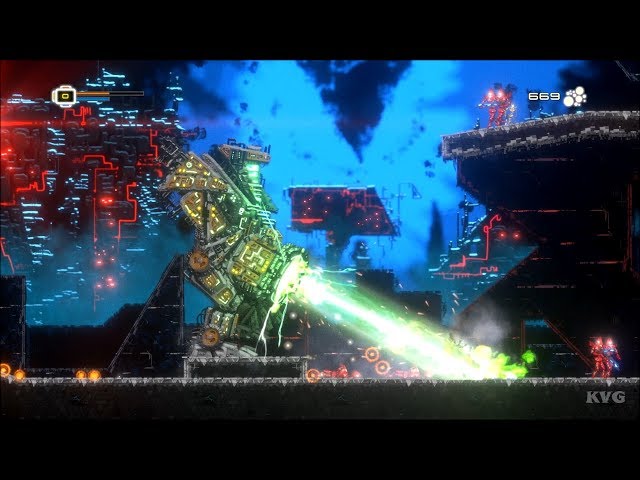
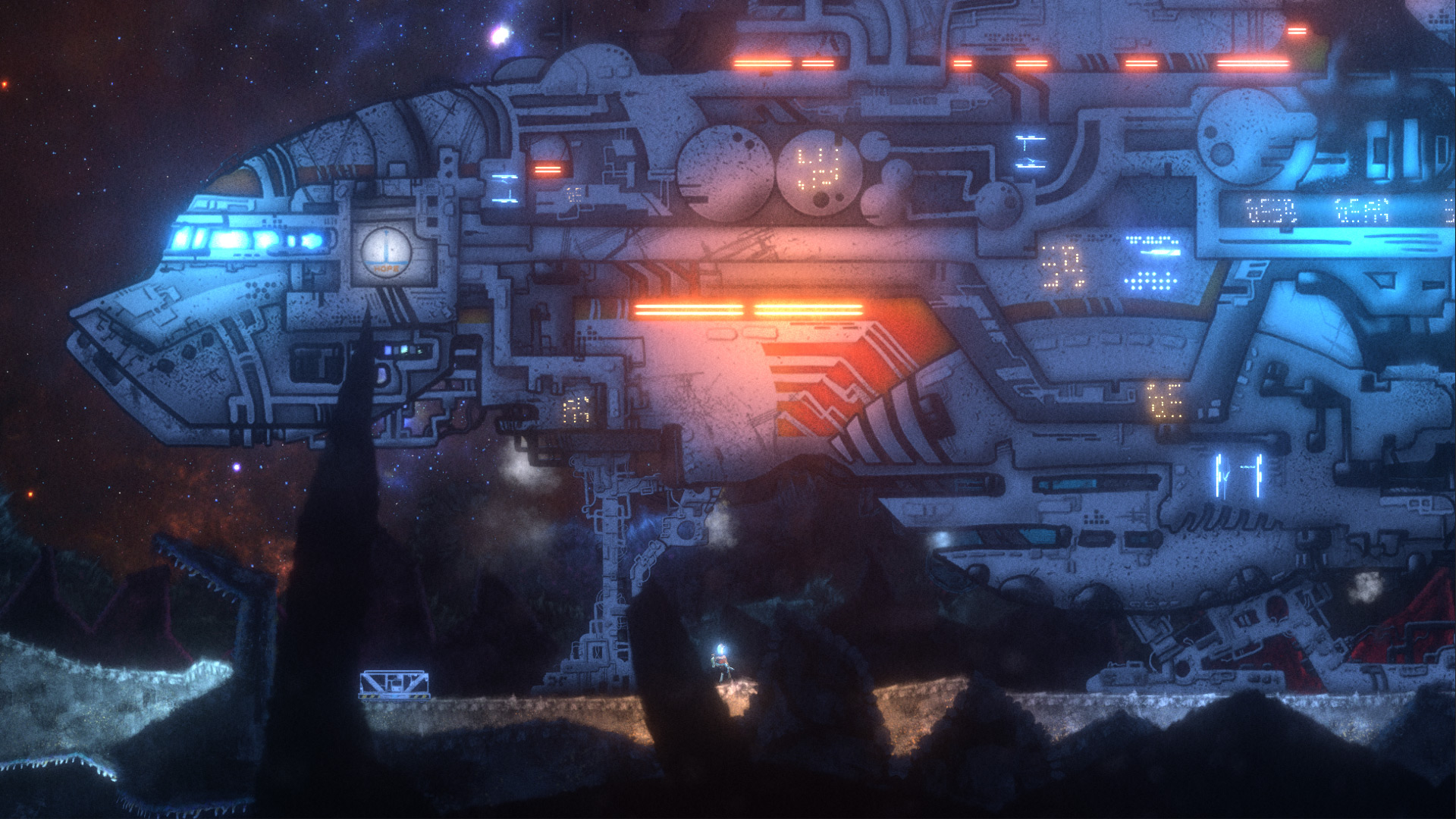
SC: Please check out our Kickstarter!  If you like games with action and exploration, mystery, and a high-skill cap, you’ll find a lot to like about Anew: The Distant Light.  We’re making a game that will scratch the itch for Metroidvania fans. It is also bringing some fresh gameplay to the genre with giant mechs and other vehicles that you can pilot. An upgradable home ship and diverse environments that play quite differently from each other.

Anew: The Distant Light 6

Lastly, I would like to thank both Steve and Jeff for agreeing to answer my questions and to wish them the best of luck with Anew: The Distant Light. I would highly recommend that any gamer who may be looking for an upcoming Metroidvania title check out their Kickstarter page and back the project. Looking at the early footage of it, I myself am extremely excited for the game’s release, and cannot wait to play the finished game.

Q&A With Warren Davis

Back at the 2015 Play Expo in Manchester, I was fortunate enough to secure the first exclusive interview of my career with Warren Davis. After being initially hired by the company Gottlieb to work on the game Protector,  he, along with the character’s designer, Jeff Lee, created the 80s arcade sensation Q*Bert. As well as other beloved classics of the time. Such as Joust 2: Survival of the Fittest and Terminator 2: Judgement Day.

Following the development of the ambitious title Us Vs Them, Warren Davis also went on to work on other big-name games throughout subsequent generations of gaming. Such as Cruis’n USA, WWF Wrestlemania, and Spyro: Enter the Dragonfly. After giving a presentation on the history of Q*Bert and how the video game character became a cultural phenomenon in America in the 80s, on par with the likes of Pac-Man and Donkey Kong. With the recent resurgence of the franchise with the release of Q*Bert Rebooted and the character’s recent appearance in the Adam Sandler film Pixels. I conducted my own interview with him. Regarding his retrospective thoughts on his career, his experiences as a developer during the Atari boom of the 80s, the subsequent video game crash, and what he believes the future held for gaming at the time. Here’s our interview:

Chronicles of a Dark Lord

Q&A With Kisareth Studios

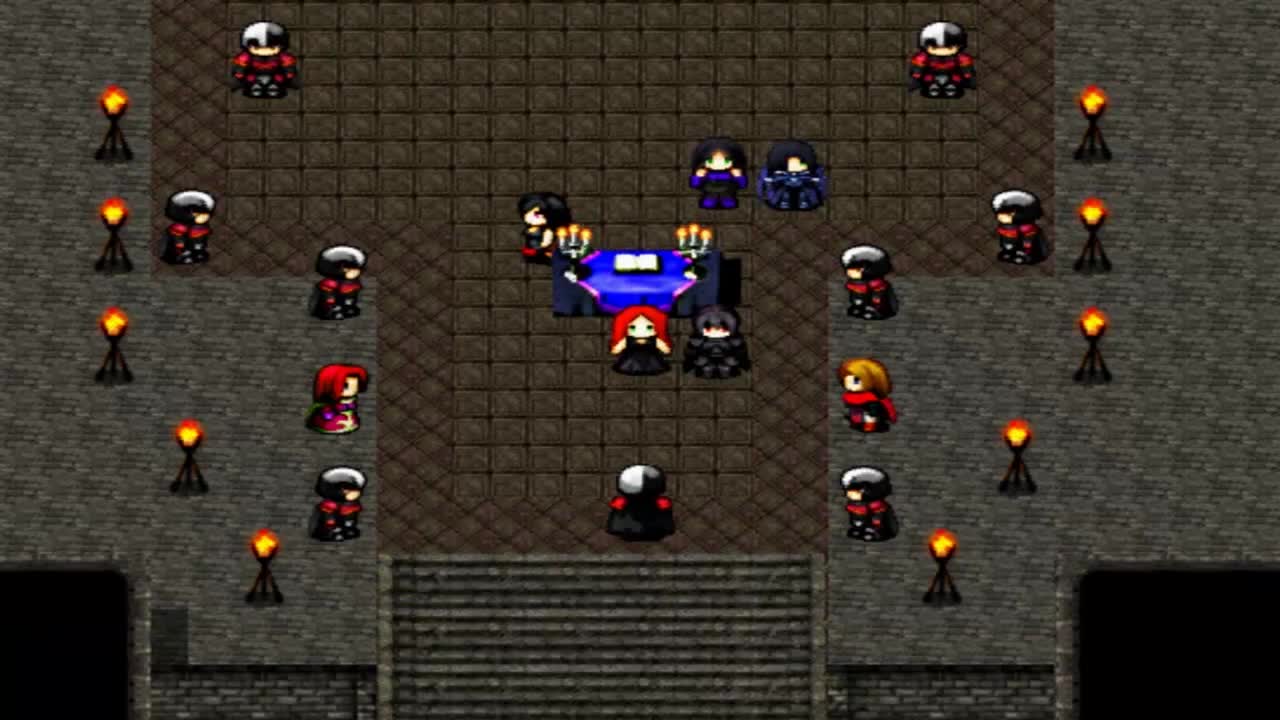
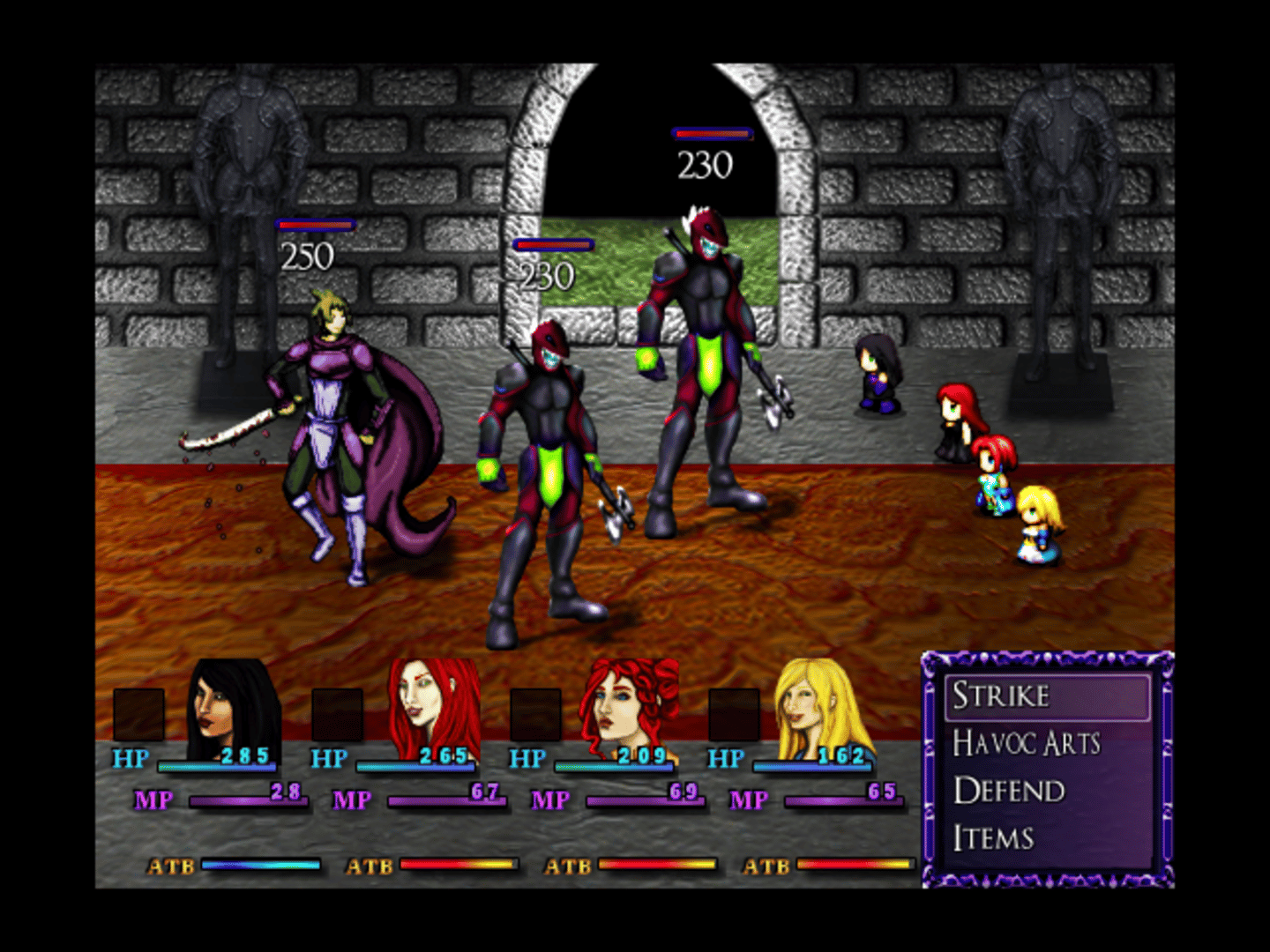
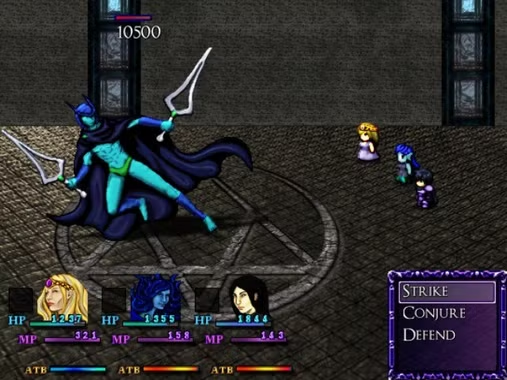
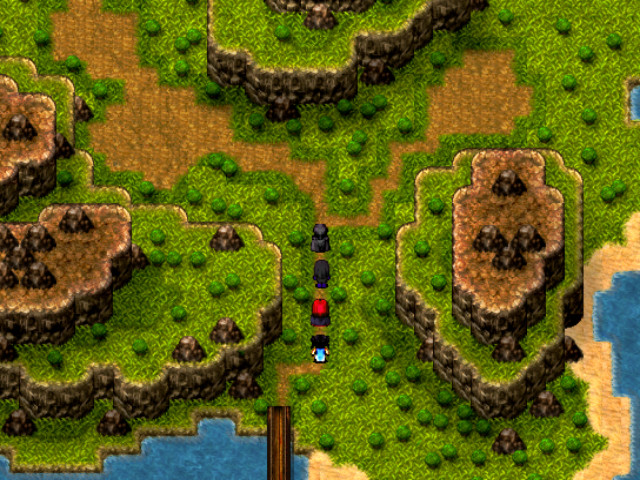
I have conducted a very special Q&A. For the first time, with a video games developer and CEO of Kisareth Studios, Tanya Lee Botelho. She very kindly agreed to answer some questions about Kisareth Studios, the development process of both Chronicles of a Dark Lord I and II, and about their franchise in general, as well as a few questions about video games in general and her own experiences with them. I had a plethora of questions for her. As she and Kisareth Studios have, and continue to enjoy a lot of success with the CoaDL series, and have a lot of plans for the future. Her answers were as follows:

Chronicles of a Dark Lord 1

How have players reacted to the sequel to Chronicles of a Dark Lord so far?

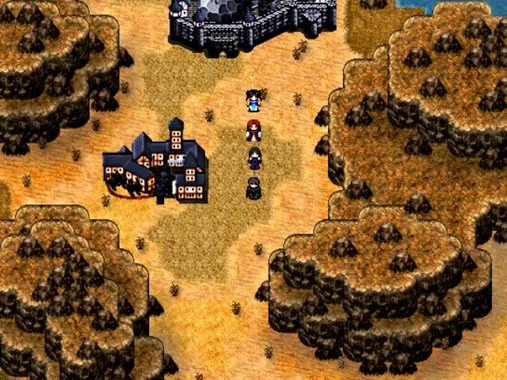
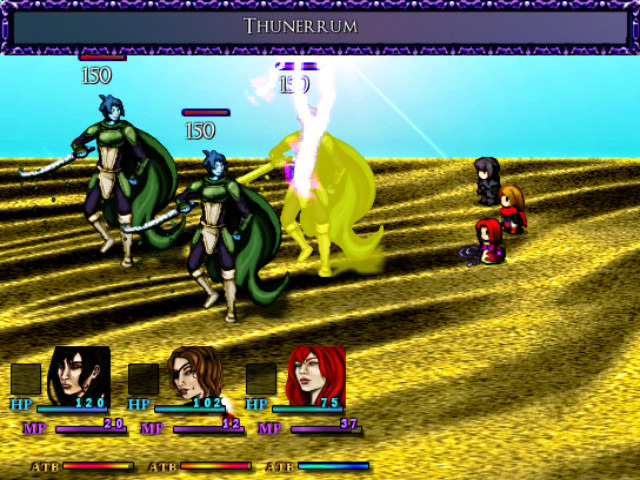
We’ve been getting a lot of comments such as “Wow, the detail level in this is unbelievable”, and “they’re pulling out all the stops in this one”. Mostly positive, thus far. There have been a few of our fans taken aback a bit at the sweeping changes in graphics going from Episode 1 to Episode 2. Such as the face portraits, for example. In Episode 1, we used an in-engine tool to make the face portraits. In Episode 2, they were all hand-drawn.

What was the most exciting thing for you and the team about developing CoaDL 2?

Honestly, I can’t pinpoint just one thing, as going through the entire production cycle, there were so many exciting aspects in developing this title. I would point out, for me personally, that using a new engine (RMVX Ace), I had fewer limitations to work with. And therefore was able to really push the engine to its limits. In terms of what I wanted to do with it. There are quite a few scenes in the game that I think will stand out on their own as being special. Not just in terms of what’s going on, but in the technical area of how they were done and what the engine is capable of.

What kind of lasting impression do you both think and hope that the sequel will leave players with?

I think when the credits start to roll after they’ve experienced the ending, they’ll be eager for Episode III to come out, considering what they’re left knowing. My most fervent hope, in terms of the overall impression the game leaves with them, is that they’ll get that we’re trying to evolve the genre into something that feels new. That gives them that intangible feeling that we felt when we were kids sucked into a great game.

Also, the tropes often seen in turn-based RPGs can be effectively evolved into something different or even used in an entirely new manner. Most of all, I just hope that players will get that we’re coming at this from a different perspective. It offers all sorts of exciting opportunities in the future to explore. Or, you know, that they’ll say something along the lines of, “Dragon Quest IV and Final Fantasy VI had a baby.”

Chronicles of a Dark Lord 2

How challenging was it to improve on aspects seen in the first game?

Actually, I have our awesome fans to thank for being able to know what they really liked and what could have been improved on from the first game. I read as many of their comments and emails as I could. So, going into production, I kept in mind what our fans of the first game loved and expanded those things into greater depth and detail. Things that they felt could have been improved on, I have to say, we definitely improved on those things and then some. We do listen to our fans. And if we’re doing something they love, we’re going to make it even better.

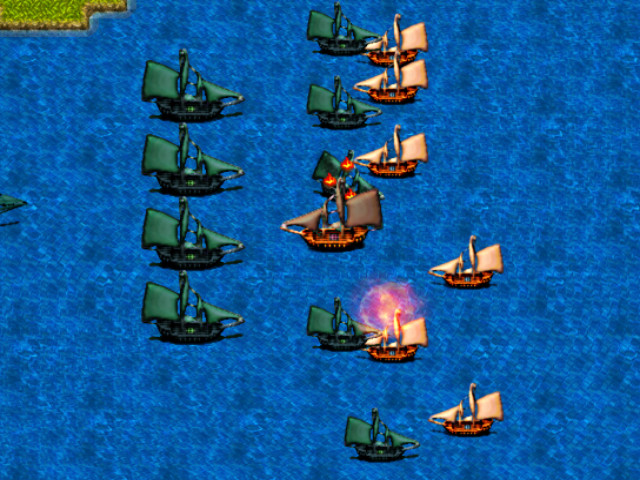
I will say this, regarding the challenge of this title’s development, was that if at all possible, I wanted to have gameplay replace some of the larger cut-scenes in the game. To give a mostly spoiler-free example, there is a battle that takes place between the enemy naval fleet and your characters’ fleet. And it would have been a lot simpler to just make a cut-scene out of it. However, I thought our fans would have tons more fun playing that battle out, instead of just watching it. It ended up becoming one of the most fun scenes in the game. And it was well worth the time to make it happen. Despite various technical difficulties that we had to overcome.

How does it feel to know that the Chronicles of a Dark Lord franchise has built up a cult following among indie gamers over the last few years?

Indie gamers are awesome, just wanted to note that. Sincerely, I appreciate every player who has chosen to spend their hard-earned money and time with our games. It’s the best feeling in the world to know that there are folks out there who enjoy what you create and what you’re passionate about. I’ll never take any of our players for granted. And you can bet I’ll be listening to their feedback as we get to work on future projects.

What were the key inspirations behind Chronicles of a Dark Lord?

It all comes back to where it all started for me…AOL text-based role-playing. Just about two decades of fleshing out the characters and their stories, personalities, etc. Of course, there were other inspirations as well from classic RPGs like Final Fantasy IV, Chrono Trigger, Final Fantasy VI, the Dragon Quest series, the Lufia Series, and the Lunar Series, to name just a few.

Chronicles of a Dark Lord 3

What aspects of the first CoaDL have had the most interesting responses?

We’ve had some very interesting responses to the three-way relationship between Gelina, Magus, and Xiria, and of how it’s perceived by others. We also have had some pretty great responses to how Magus ‘handles’ certain NPCs in the game, and of the choices involved with those situations. Many reviewers and bloggers also like to note that you’re not controlling a party filled with angsty teenagers. But with mature adults who are married and even divorced from one another. I’d also be remiss if I didn’t briefly mention the huge fan response regarding Xiria Lee. She’s become a fan favorite.

Where can you see the CoaDL franchise going in the distant future?

The current plan is to have nine main installments or three trilogies. We already have plans to create spin-offs and even new IPs based within the universe of the CoaDL series.

What sources of inspiration do you and the development team take whilst developing video games in general?

Sometimes, while we’re deep in development, what we’ll do is take a day and just do some gaming. Whether it’s an RPG, FPS, a Platformer, or so on, we’ll do some gaming. And often, ideas will come to us during that time. I can’t tell you how many times I’ve been playing an RPG. And suddenly I’ll put it down and jot down a few notes for CoaDL. Because something just occurred to me that would be cool to do. Sometimes we’ll get ideas for future projects while we game as well. For me, often I’ll be listening to metal (thrash, death, gothic, etc.) and VGM (video game music). And getting into it while I’m deep in production. It certainly has inspired several scenes for me.

Chronicles of a Dark Lord 4

What is it that you and the team love most about gaming and developing games?

I mentioned it earlier, but being so engrossed in a game and being absorbed into its world is what we love most about gaming in general. Creating that feeling, of having such a detailed atmosphere and lore that you can’t help but follow everything going on in that world your character(s) inhabit, is the kind of feeling you want when you’re gaming or developing a game. When you can make a connection to the game you’re playing in some fashion or form. Or even become emotionally invested in the characters, is when you get that intangible feeling that never goes away. That signals a great game. And it’s what we strive for and what we want out of our games.

What has been the most challenging thing about making video games?

Having a very strict budget with which to work in terms of obtaining resources and assets for each game. That, and being limited at times due to the constraints of the engine. We had to get very creative to work around some inherent limitations of the engine. And it paid off big in the final result.

How do you think the recent heightened interest in indie gaming has impacted the company?

Greatly. I was commenting the other day with my President, John Sierra, about this very thing. I referred to it as the “Golden Age of Indie Gaming”. Considering the truly awesome indie games that have come out within the last few years and those coming out now and due out shortly. It has heavily impacted how people view independent developers.

As a company, we’re able to take risks that Triple-A companies can’t afford to. And the general gaming public, I think, is aware of that. Our company’s business model, and I’m sure many other indie developers as well, is vastly different from that of Triple-A developers. And it’s all due to the explosion of awesomeness that Indie Gaming has become.

Chronicles of a Dark Lord 5

Aside from RPGs and 2D side scrollers like Unusually Usual, are there any other game genres that you and the team have considered dabbling in?

RTS (Real-Time Strategy) for sure, there’s a game concept we’ve got going on right now that will address how we intend to impact that genre. Another genre would be a Tactical RPG like Final Fantasy: Tactics and Tactics Ogre. That particular genre is near and dear to me and quite a few others on my team. I’d also have to say a 3rd-Person Action game, like Devil May Cry or God of War. Without giving too much away, we are in the conceptual stages of a “Metroidvania/Ys-hybrid” of a game that we think is going to blow away people’s minds.

Chronicles of Dark Lord certainly speaks of Kisareth’s internal company philosophy of quality over quantity. What kind of fresh perspectives do you and the team plan to bring in the future?

Well, our approach to making RPGs is basically, “take the genre and its tropes and evolve it, or turn it on its head.” That is pretty much our mantra now when it comes to development in other genres as well. We’re going to do things you wouldn’t normally, if ever, see in an RPG, Tactical-RPG, RTS, Platformer, etc. We’re not going to play by the same rules that you’ve seen in other games of a genre. When we release a game, it’s going to be “our answer” to something. Like in the case of Chronicles of a Dark Lord: Episode II, that game is our answer to Final Fantasy VI and Dragon Quest IV.

What’s next for Kisareth Studios?

We’ve got our upcoming, first truly 8-Bit RPG called Shenandor’ah: Zero Chronicle. Think Game Boy Color in terms of the styling we’re going for. The game is a distant prequel to Episode 1. When I say distant, I mean that it took place over a thousand years ago. We’re also working on Chronicles of a Dark Lord: Episode 1 Tides of Fate HD, utilizing the Unity Engine. There are other projects, but I can’t comment on them at this point.

Chronicles of a Dark Lord 6

What is your earliest gaming memory?

I remember playing this Octopus game for the Atari 5200. I can recall this black blob of pixels coming after my block of pixels. And to me, that was the most fun thing in existence at that point.

I noticed on your Facebook page a while back that you wrote about a particularly complex dream you’d recently had. Have ideas for CoaDL ever been based on any elements from your dreams, and do you think they could ever potentially have any influence on future games you and the team design?

Sometimes, when I have a complex dream like that, I’ll jot down notes and ideas for possible game concepts. I can say that a few dreams have impacted the development of Episode 1 and Episode 2. To give a recent example (minor spoiler ahead), the rather epic naval battle cut-scene in Episode II came from a dream. As for future games, absolutely. Even my darkest nightmares have their place and can affect a particular game’s storyline or a feature. It’s not often that this all happens, but when it does, I count it as something deep within my mind trying to tell my conscious self something.

Do you have any advice for aspiring developers?

You’re going to encounter someone, or a few people, telling you that you can’t do it. That there’s no money in it. That having game design as a career is impractical. And you won’t amount to anything. In my case, those sentiments were also peppered with misogyny as well. You need to tell yourself that none of what they say matters a damn to you. Make sure you’ve got tough skin, and just do what you love and make a game that you would want to play and enjoy.

If you’re in it for the money, then you’re in it for the wrong reasons. If this is what you’ve always wanted to do, where your passion is, then do it. I’d also say to aspiring developers to do their research. Not just in programming, or which engine to use. But in as many areas of game development as possible, even if an area is not your best area of expertise. Learn all you can about the actual design, graphics, sound, and programming areas, then learn as much as you can about the business end of it.

Also, don’t rush into making decisions. Think every decision through, and make sure it’s what you think is best for your game. Lastly, there will be times when you have to make concessions to the overall image you have of the game. Whether it’s due to programming, engine limitations, graphical limitations, glitches, and so on. When it happens, and it will happen, be flexible about it. Think outside the box you have in your head for the game, and the answers will come to you.

Chronicles of a Dark Lord 7

Do you have anything else to add?

I just want it known that upside-down bagels are inherently evil. That, and I give the most sincere thank you to all our fans and supporters over the years. I hope that we do you proud with every game we release.

I would also like to take this opportunity to thank Tanya for taking the time to answer my questions. And making for a very exciting feature on my blog. As well as the staff at Kisareth Studios for all their rigorous efforts in making the Chronicles of Dark Lord games as overwhelmingly excellent and enjoyable as they are. And I can’t wait to see what plans they have for the future. And what fantastic games they plan on releasing.

NecroVMX

Q&A With NecroVMX

This week, I posed some questions to John Sierra. Known best by his YouTube alias, NecroVMX. NecroVMX has been on YouTube for many years now. Giving viewers a lot of great video game-related shows. Such as Urban Legends of Video Gaming, The VMX Show, The Gamer’s Encyclopedia, and my personal favorite, Clearing Confusion. As well as recording video game playthroughs and critiquing films, in addition.

Since joining YouTube in March 2006, his channel now has over 16,500 subscribers and has garnered almost 12,000,000 views. I’ve been subscribed to his channel for almost a year now. And it was only natural that I would want to involve as many video game-oriented YouTube users of that caliber as possible in the blog to keep it exciting. So I asked him if he would answer a few questions I had for him about the general state of video gaming and his opinions on the future of the industry. And thankfully, he responded and answered my questions. Here are the questions and answers:

What was your opinion on 2013 in video games, and the 7th generation overall?

“2013 was a pretty strong year, to me it started right off with games like Fire Emblem: Awakening and BioShock Infinite. And ended with a future classic in The Legend of Zelda: A Link Between Worlds. I didn’t have much to complain about, really. As for the 7th generation, it felt a lot like the 4th, with the Super NES and the Genesis and whatnot. It just went on and on and gave us a lot of classics. I think the current generation will talk about games like Skyrim, Dark Souls, or Black Ops the way my generation talks about Chrono Trigger, Mega Man X, and Doom. Also, due to the lack of time, I have to sit on the couch and play video games, I’ve become increasingly more of a handheld guy, so the 3DS and Vita are huge for me.”

As I said in a previous article, I’d only found a few standout titles from last year. But indeed, A Link Between Worlds turned out to be a very good game, I thought. And although I never got around to finishing BioShock Infinite, the small amount of what I played made it seem like a very decent game. But I still think I need to dig deeper to find some more good games. The way I see it, many titles seemed to be substandard, like The Last of Us. I think what Necro said will only further encourage me personally to keep looking into 2013. As well as keep up with 2014 in video gaming.

What do you think the future holds for the industry?

“I think the console market will face a collapse, but not in the “doom and gloom” sort of way that most people predict. I think it’s going to be replaced by something bigger and better. And I think we’re seeing the PC and Console market sort of coming together into one thing. The Steam Machine is the first part of this happening. We’re not going to see generations, launch titles, console wars, or exclusives anymore. It’s going to be a lot simpler.”

Reverting back to the news of the gaming industry soon generating an annual worth of $100,000,000,000, I personally think that it will come down to how game companies invest the greater amount of money being attached to the industry. But if this does indeed happen as Necro predicts, it will certainly make things a lot easier for not only consumers but for developers as well. Not only would it more effectively prevent a repeat of the happenings of the video game crash when there were too many consoles on the market, but the level of corporate competition would also be decreased. Thus, alleviating a lot of pressure on game companies. Concerning which system to release their games on. And how to align their games with different types of software.

Apart from Civilization and Breath of Fire, what games are you playing at the moment, if any?

“Mortal Kombat (mostly online matches), Breath of Fire IV (Yes, I’m playing 2 of them at the same time), and Rise of the Triad.”

Out of all those aforementioned titles, Breath of Fire IV is definitely one I am going to review for the blog in the future. I haven’t yet found time to play it, and it’s been sitting on my shelf ever since I bought it. I actually first heard about the Breath of Fire series after watching Necro’s Gamer’s Encyclopaedia series. And the account he gave of the fourth installment, in particular, seemed rather interesting to me.

What are your thoughts on the new generation of gaming?

“I’m happy for Sony. They were in a bad position, and they managed to pull through and come out stronger. The Xbox brand is in trouble, which is really a shame, as I liked the 360. I think Valve is ready to step in and change the way we think of generations.”

It is indeed good to see Sony back on top in my opinion, as they have visibly made a greater effort with the PlayStation 4 than with previous consoles. And their usual pattern of starting slowly at first and picking up the pace later on seems to have changed dramatically to maintaining a massive level of popularity. Possibly throughout an entire generation.

Although the Xbox brand does indeed currently face falling behind the PlayStation 4 consistently in terms of sales. Unless they release better games than what has been released already, I just hope that Nintendo can stay in the competition. I guess as long as the 3DS continues to sell well and if they keep putting as much effort into the Wii U as possible, they will probably stand a chance. But it would be even more interesting to see Valve, another company that has had its fair share of struggles over the years, change the face of gaming forever. I think that, despite the continued success of the industry, change does need to happen to keep it fresh.

What do you think about the influx of indie games in recent years?

“As an indie game developer, I’m obviously all for it. I think aside from the console collapse, we’ll be seeing another one, the AAA collapse. AAA games are defined by their cost. They cost huge amounts of money to make. And even the big hits are not all that profitable. A perfect example is Square Enix’s Tomb Raider.

They reinvented a franchise, gave us a genuinely good game, and sold millions of copies. And then it’s like “Oh, sorry, it didn’t hit our sales expectations.” The budgets are so high that even after they sell millions, they’re disappointed with the returns they’re getting. Indie games don’t face this problem. And in a less strong economy, people are going to say, I can pay 60 dollars for a big game that I may or may not like. Or I could spin the wheel and get a bunch of cheaper indie titles. The indie market is only going to get stronger.”

I absolutely agree with Necro that the indie gaming market is going to get stronger. As long as indie developers can continue to put out a wide selection of very decent games, people will indeed begin to choose them over the more big-name games that are released every year. I think the problem with a lot of AAA games may be their level of linearity in many cases. An audience of gamers may expect big-budget titles to have open worlds and side quests rather than being treated to games where the main objective is essentially to get from point A to point B.

Cont…

But I guess that’s fundamentally a matter of taste. Although Tomb Raider wasn’t that much of a standout title from my point of view, the fact is that it was from many other people’s. And it still ended up garnishing an unsatisfactory level of profit from the point of view of Square Enix. Whereas, with indie games, a lot of them are either open-world games or games that can be picked up and played at any time. Such as Minecraft or Don’t Starve. Those types of games for me are what make them more appealing than some linear big-name titles. They offer more depth in gameplay. The way I see it, as long as games like that are put out in great abundance. Then the indie scene will continue to grow in popularity.

What would you most like to see happen in the 8th generation? Are there any games you’re looking forward to, in particular?

“I’m excited about Final Fantasy XV and the next thing from Monolith Soft. Other than that, I’ve only seen some interesting ideas, not anything that is making me rush out to buy the new consoles.”

The one big-name title that has so far attracted me to get the PlayStation 4 has been InFamous: Second Son. But apart from that, I just hope now that future PlayStation 4 releases in 2014 don’t end up being wastes of both time and money. Games like Wolfenstein: The New Order and The Order 1886 all look interesting. But indeed, looks aren’t everything. It all comes down to how the games play out at the end of the day.

What do you love most about video games?

“The immersion, losing yourself in the experience.”

I think because of that, playing video games is much more engrossing than watching any film or listening to any album. I think the best thing about video games is the sense of being part of the experience. Like it’s the players themselves who are saving princesses or shooting aliens, etc. However, if done right, the experience that gamers can lose themselves in is indeed nothing short of spectacular.

Reading Necro’s responses to my questions certainly gave me a very interesting insight into the current state of the industry. And how things will most likely change in the future. I Also want to take the opportunity to personally thank NecroVMX for taking the time out from uploading several YouTube videos this week to answer my questions. And that I hope he enjoys reading them as much as I enjoyed writing them. I’d also like to wish him good luck with his channel and hope he has a great amount of success in 2014 and beyond. I’ve definitely enjoyed watching his videos over the past few months. And for anyone interested, there’s a link to his channel below. Series 8 of the VMX Show has not long started. And the second series of the Gamer’s Encyclopedia is planned for release afterward.
http://www.youtube.com/user/NecroVMX

That also goes for everyone else reading my articles as well. I hope you enjoy reading this as much as I enjoyed writing it.

Sumer

Q&A With Studio Wumpus

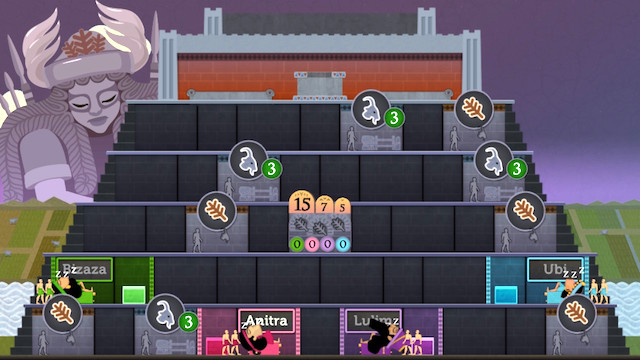
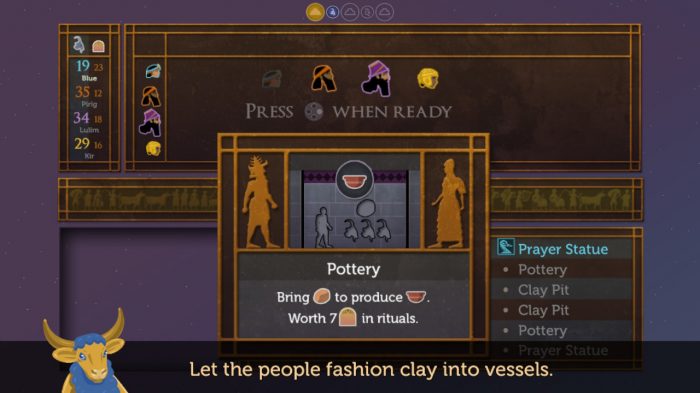
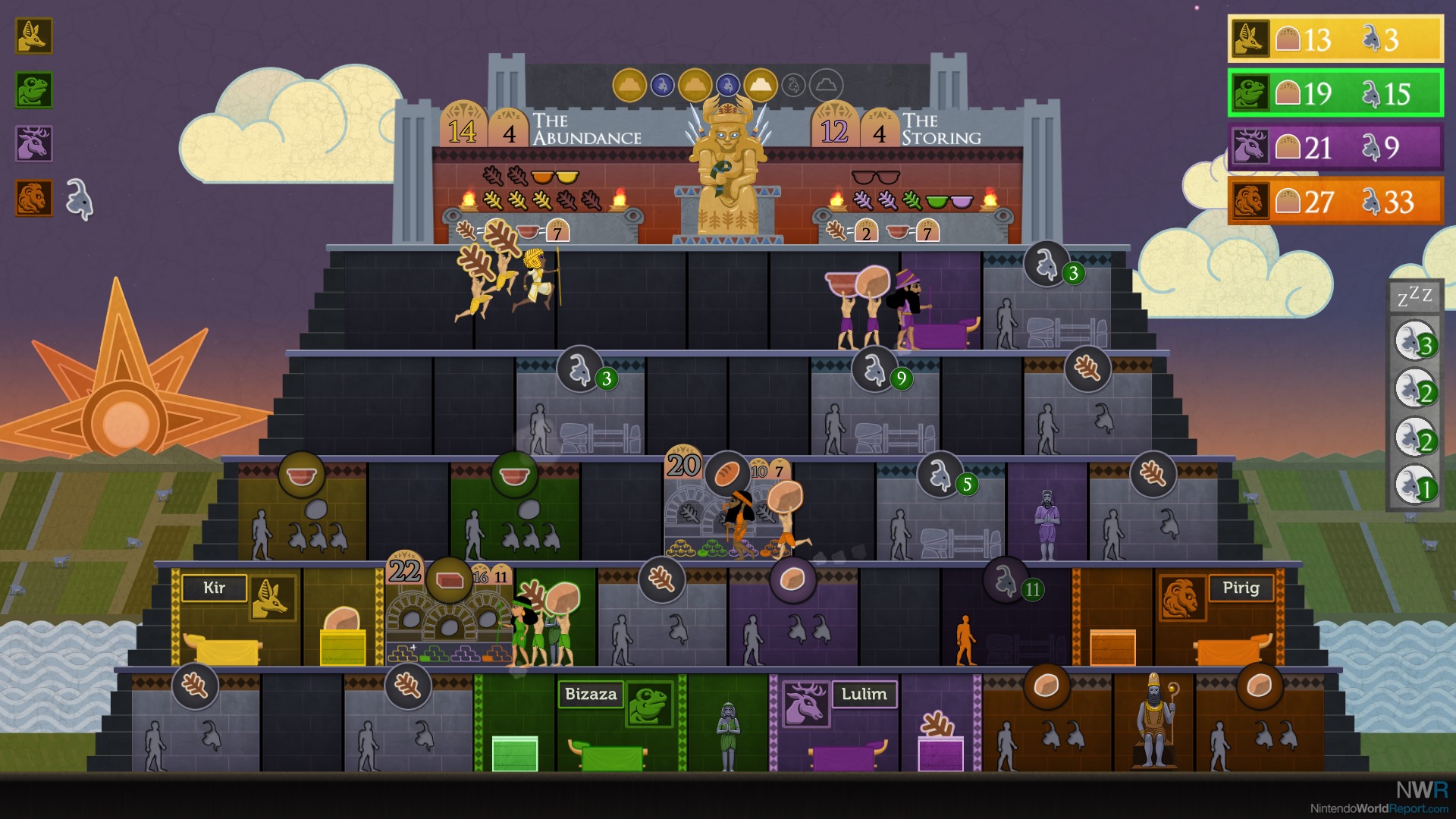
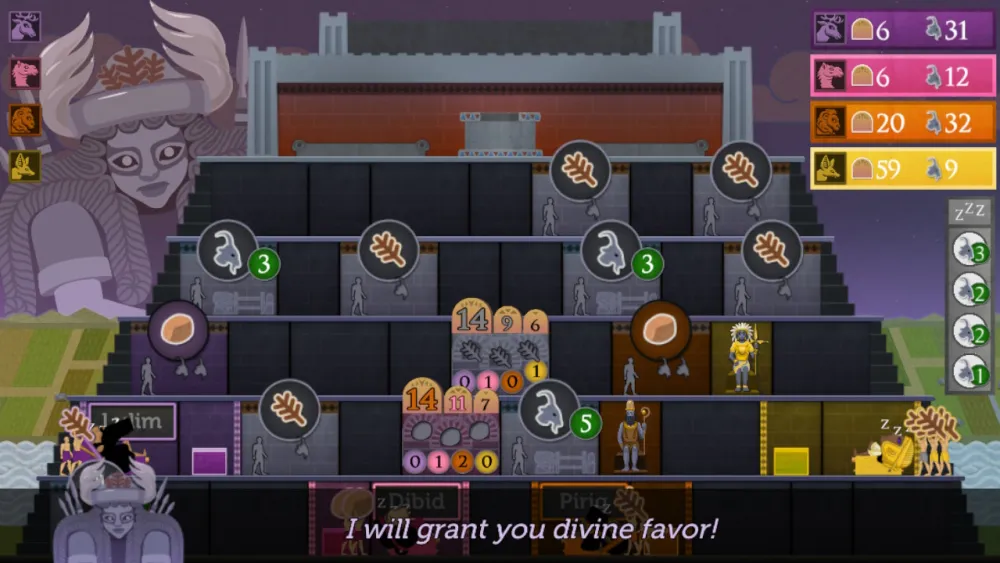
Another game seeking financial backing on Kickstarter that caught my attention this week was a title influenced by board games called Sumer. Developed by Studio Wumpus operating from New York City, Sumer has a look to it similar to the Metroidvania game Apotheon, but plays out much differently than the former, adopting a style of play combining the elements of god games and real-time strategy, but heavily influenced by a game named M.U.L.E, which also had a massive impact on Sid Meier’s Civilization series. I approached the studio, and core game designer Sig Gunnarsson agreed to answer the questions I had about this extremely unique-looking title. These were his answers:

Sumer 1

What were the influences behind your game?

Board games and local multiplayer games are the main inspirations behind Sumer. We really wanted to explore the space between board games and video games. Having played a lot of games like Towerfall and Samurai Gun at the time, but then, when we played the Yawhg, we saw that local games could be more than just action.

We decided to use our experience in board game design to create a game that felt like a board game but was built from the ground up to be a video game. Big board game inspirations for us were games like Troyes, Caylus, and Lords of Waterdeep. Our biggest inspiration has to be M.U.L.E., a game from 1983 made by legendary game designer Dani Berry. M.U.L.E. is an amazing local multiplayer economic strategy game that is incredibly original and fun, but no one has really done anything like it since. It was even based on board games like Sumer.

What has the developmental process been like?

It has been really fun and interesting. We started designing the game while we were MFA students at the NYU Game Center. We had a strong support system and a lot of repeat playtesters. After we graduated, we were accepted into the NYU Game Center Incubator, where we got further support in development. At that point, we had a balanced, playable game, but it just wasn’t polished enough to sell. Jet Landis joined the project, and with her help, we developed the visual style we have today. We have been self-funded since September last year, and every week the game gets a little better.

Sumer 2

How close are we to seeing the finished product?

If the Kickstarter succeeds, we’ll be on Steam Early Access this summer! So it’s not long at all until people will be able to play the game. The game is balanced, playable, and works. We’ll continue to polish it and improve it, and the full release will be when our online mode is ready.

What has been the most exciting aspect of development?

The most exciting part of the process is that no one has done something quite like this in recent years. We started by making paper prototypes, but quickly translated them into digital prototypes. We were treading new ground. Another exciting aspect was building the community. New York is a great place to do that. There are a lot of events that are good for local multiplayer games in or near New York, and people were excited to play Sumer.

What has been the most challenging aspect of development?

The fact that the game was so novel was both a blessing and a curse. It meant that there weren’t many games that we could look for solutions to problems about UI, experience, and design. This meant we had to do more iterations and find more of our own solutions to test. We initially thought that making a digital board game would let us make a more complicated game. The opposite proved to be true! Because everyone has to have access to all information at the same time on the same screen and doing it in real-time, everything had to be streamlined.

Sumer 3

How well has the game been received so far?

People often don’t know quite what to expect when they hear about and see our game. But as soon as they try it, they seem to fall in love with the mechanics and novelty. I’d say we’ve had a great reception so far!

What platforms are you looking to bring the game to?

Currently, the game is set to come out on Steam for Mac and Windows. Who knows what we’ll be able to do in the future?

Do you have any advice for aspiring developers who may be reading this?

The biggest advice I can give is to test. Just test and test and test. Do it earlier than you think, and keep doing it after you think you don’t need to test anymore. When testing initially, don’t be afraid to kill your darlings. You’ll always get new and better ideas. Be nice when taking criticism, listen to the playtester’s problem, and figure out the correct solution to it.

Where on the Internet can people find you?

Find Sumer on www.sumergame.com and me on Twitter @SigGunnarsson. Don’t be afraid to ask me any questions you might have about the game or its design.

Do you have anything else to add?

Be sure to check out our Kickstarter!

Sumer 4

I would also like to take this opportunity to thank Sig Gunnarsson and Studio Wumpus for agreeing to our Q&A and to wish the team the best of luck with the game and the backing process. For anyone interested in this title, the Kickstarter page is accessible via the link below:

https://www.kickstarter.com/projects/studiowumpus/sumer-a-game-of-divine-strategy

Thanks for reading.


Q&A With Team V

In my ongoing efforts to discover new video gaming talent to bring to the attention of the gaming community, I recently came across a game called Stardrop on Kickstarter, a first-person science-fiction story-driven game set in space developed by indie outfit Team V, and lead designer Joure Visser. I recently got in touch with Joure, who agreed to answer a few questions I had about the game and what the developmental process has been like thus far. These were his answers:


Stardrop 1

What were the influences behind Stardrop?

I have played a whole lot of games in my time, and I take inspiration from all my experiences up until now. The Metal Gear Solid and Half-Life series have been huge inspirations, as well as Alien Isolation, which I mentioned. Then there is the Portal series, which had brilliant writing. Mass Effect, Resident Evil, Life is Strange, and so many more.

On top of that, I love movies and Gravity, which is another big inspiration. And lastly, but probably most importantly, are my wife and daughter. I’ve contemplated various subjects throughout my lifetime, things that I find important, and I am merely trying to add a little bit of what I’ve learned and what is important to me through some of the themes that I’ll cover during the game, but mostly just positive things. Ideas and thoughts that reinforce a more positive state of mind while reflecting on some of the bad things as well.


What has the developmental process been like?

Well, I’m not done, of course, but so far it’s been very organic. I prefer letting my projects flow naturally. This way, I can tweak and/or change things relatively easily. I have a group of individuals I could ask for, and everyone has been incredibly supportive and involved. This project means a whole lot to me, but it’s good to know I’m not alone.


How close are we to seeing the finished product?

Not too close. I have yet to start on the Dropship and then the STARDROP itself, which is quite a large ship. Luckily, I have most of the core mechanics in place, and we mainly have to expand on these. It makes working on the rest of the game a lot easier, and we expect to be able to finish the game within the year. But I wouldn’t want to promise this as a fact. Anything can happen during development. The demo was made within 8 months, and 6 out of those were primarily prototyping game mechanics.


Stardrop 2

What has been the most exciting aspect of development?

Seeing Robert Ducat and Aryn Rozelle bring the two main characters to life. On top of that, seeing the game take shape must have been one of the most exciting aspects. I guess how the game has been received by my friends and people, in general, caught me off guard, and I did not expect that.


What has been the most challenging aspect of development?

Working full-time with very, very little funds, or basically none. I have put all that I could spare into this. My computer is breaking down, my mouse button is starting to not register clicks, my GPU is running on one of its two fans, oh, and my monitor recently started to show scan lines. These things make it hard to work on the game.


How well has the game been received so far?

The worst I’ve gotten so far has still been positive. I’ve yet to receive a fully negative review of the demo; mostly, reviewers end up nitpicking or looking at minor flaws, which is totally fine. Even when we’re done with the game, I’m sure there will be imperfect things.


Stardrop 3

What platforms are you looking to bring the game to?

We’re planning to bring the game to the PC, Linux, and Mac. Unreal Engine 4 has made it incredibly easy to port the game over to these platforms. We hope to end up on consoles as well, but that mostly depends on whether we can get a partnership with either Sony or Microsoft, as we need dev kits to be able to port the game properly.


Were there any specific science fiction series that inspired the creation of Stardrop?

I would say that Alien Isolation was the game that finally kicked me into gear and brought together a bunch of thoughts and ideas that made me decide on a theme and genre.


Do you have any advice for aspiring developers who may be reading this?

Don’t give up and work hard; very, very hard. Interact with your community and with other Indie developers out there. Support each other and make sure that even during all the hardships, you are still having fun. Your love and dedication towards the game will get noticed. I truly believe that, and I believe that’s why STARDROP is well-received in general.


Stardrop 4

Where on the Internet can people find you?

Www.stardropgame.com

http://jourev.wix.com/joure2015

And I’m always open to receiving an email:

joure.v@gmail.com


Do you have anything else to add?

I’ll be honest, and the Kickstarter campaign seems to be stalling. Thanks to everyone who backed us, and whatever happens, I will keep working on the game until my PC finally breaks down. But the game will be made, one way or another.

Thank you for this interview

Joure

I would also like to take this opportunity to personally thank Joure for agreeing to our question and answer session for the blog, and to wish him the very best of luck with Stardrop. If you like the look of the game, you can back it on Kickstarter here :

Stardrop Kickstarter Page

Thanks for reading.