Tag Archives: Scouse Gamer 88

Elden Pixels

Q&A With Elden Pixels

With Metroidvania titles being one of the most prominent genres developed for among the ever-growing indie development community, one series of games I’ve been following closely over the last three years is the Alwa series. Created by Swedish indie outfit Elden Pixels under principal designer and former developer at Zoink Games, Mikael Forslind, the series began with the release of Alwa’s Awakening in 2017. And most recently in 2020, with Alwa’s Legacy.

Both titles were initially launched on Steam, with Awakening seeing releases on multiple platforms, and Legacy set for a release on the Nintendo Switch. In three short years, the series has gained popularity among fans of the Metroidvania genre and among gamers in general, and with the sequel possibly set to make it on multiple platforms in addition, the series’ popularity is set to increase further. Wanting to find out more about the conception of Alwa, as well as the future of this exciting new series of games, I posed a few questions to Mikael of Elden Pixels to find out more. Here’s what he had to say about Alwa and the future of Elden Pixels:
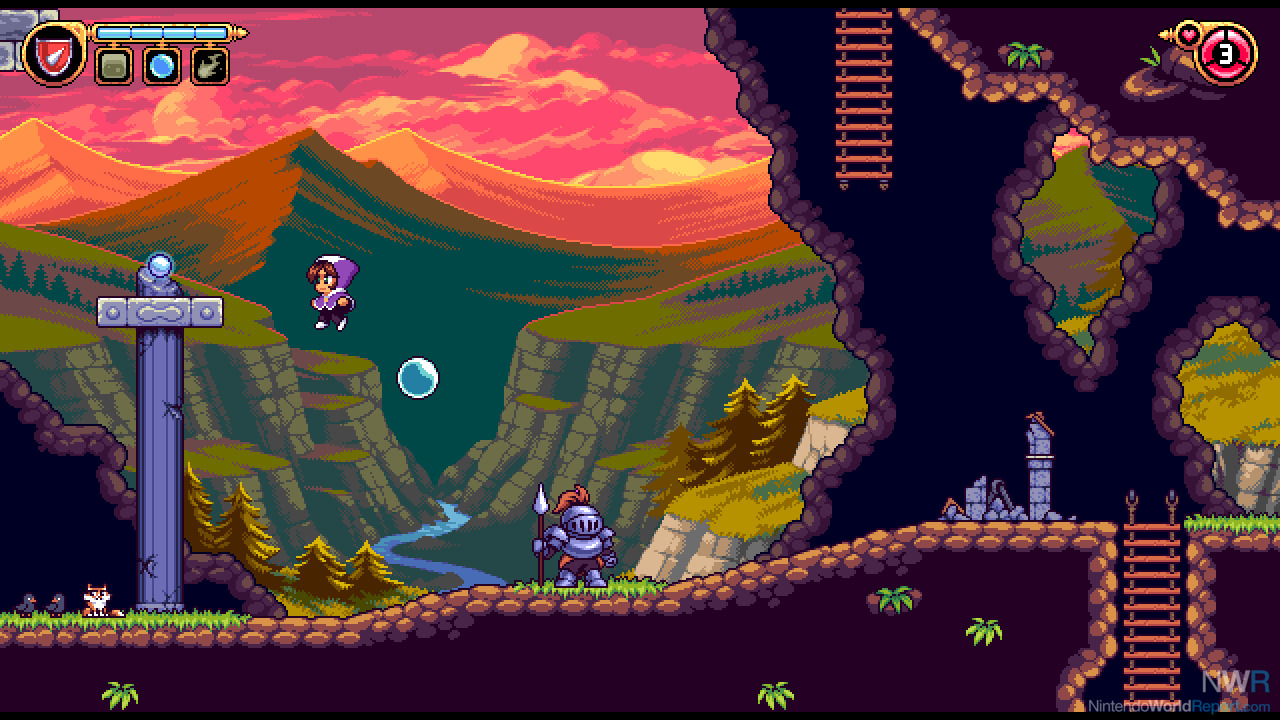
Elden Pixels 1

How has it been to experience such an influx of interest surrounding the Alwa series and the fanbase it has already garnered?

Amazing! Every time someone reaches out to us, talking about how they enjoyed our games, it feels great. We were proud of how well Alwa’s Awakening was received. But we felt we could add more to the formula, so the design for Alwa’s Legacy came to us quite easily, and we were able to improve on everything that the first game offered. And this, of course, led to more and more people discovering both games.

What were the influences behind the world of the Alwa series?

It was a mix between the fast gameplay of Battle Kid and the more puzzle-platforming style of Trine that was the main inspiration for the first game. After a long night of playing these two games, I blurted out to my friends, “Let’s make a game. How hard can it be?” And here we are, a couple of years later.

What has been the most exciting aspect of developing Alwa’s Legacy?

To me, the best part of making games is actually looking back at a released game and thinking – “Damn, we made it. It’s out there.” I’m not one of those developers who spend years and years on one game. I think a maximum of two years is perfect for a game. And I’m proud that both our games took about that time to finish.

But seeing a game come together is always nice, and the way we built Alwa’s Legacy was that very early in the process, we had all the rooms in place. But they were basically empty and stayed empty for the longest time. But once all design was locked down, all art was done, and all sprites were done, we basically filled the entire world with content in a 3-4 month period. All of a sudden, it went from looking empty to being shippable. That’s a great feeling.
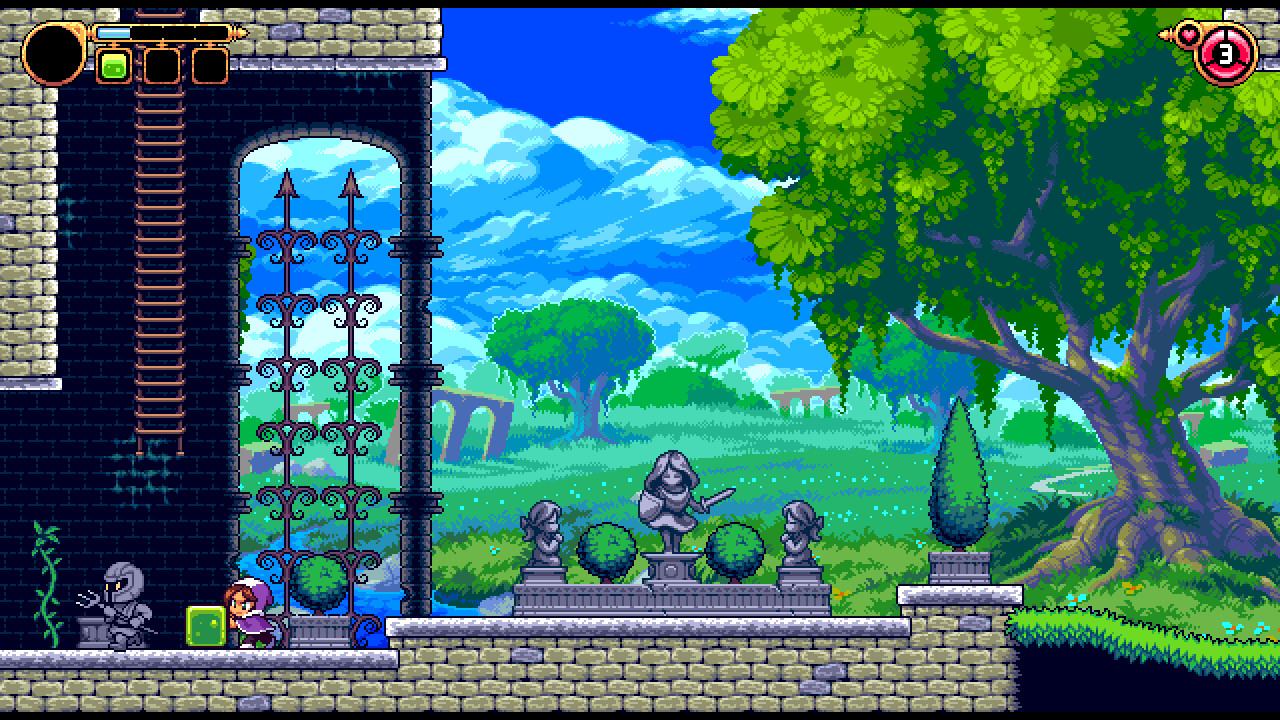
Elden Pixels 2

What has been the most challenging aspect of developing Alwa’s Legacy?

Wow, where do I start? I actually wanted to delve into this subject for a long blog post sometime in the future. But I’ll try to keep it short here. Basically, these things were the major headaches during our development. Cancer scare, anxiety, personal finances, IVF treatment, potential pr disaster using Kickstarter, political heatwave during launch, and the constant scare of bankruptcy. I’m just happy we were able to overcome all obstacles with our sanity and health intact, and we’re all still good friends. And we managed to release a game that everyone seems to really like! That’s a major accomplishment.

What’s next for Elden Pixels?

We’re not really sure. We’ve made enough money to breathe for a month or two. But nowhere near enough money to fund the next game. So right now we’re just exploring what, if anything, we can start as a new project. But we’d love to take a stab at porting our first game to the NES 8-bit. So we’re going to put out a job ad for that very shortly. We might have found some cash to fund this project, so we’re very excited. Especially since it was already made with the 8-bit restrictions in mind.

How important has fan feedback been throughout the development of Alwa’s Legacy?

Since Alwa’s Legacy is a standalone sequel to our first game, Alwa’s Awakening, we kind of knew what we were doing during the development. So we took more notes on what we didn’t like with the first game to build our second game. But community involvement is very important, and we had a lot of feedback from our Kickstarter backers. And we did a huge semi-open beta where we built this custom tool so any player could directly report feedback into our project management tool. I love building games with the community involved. And it’s definitely something that I want to consider doing in the future.
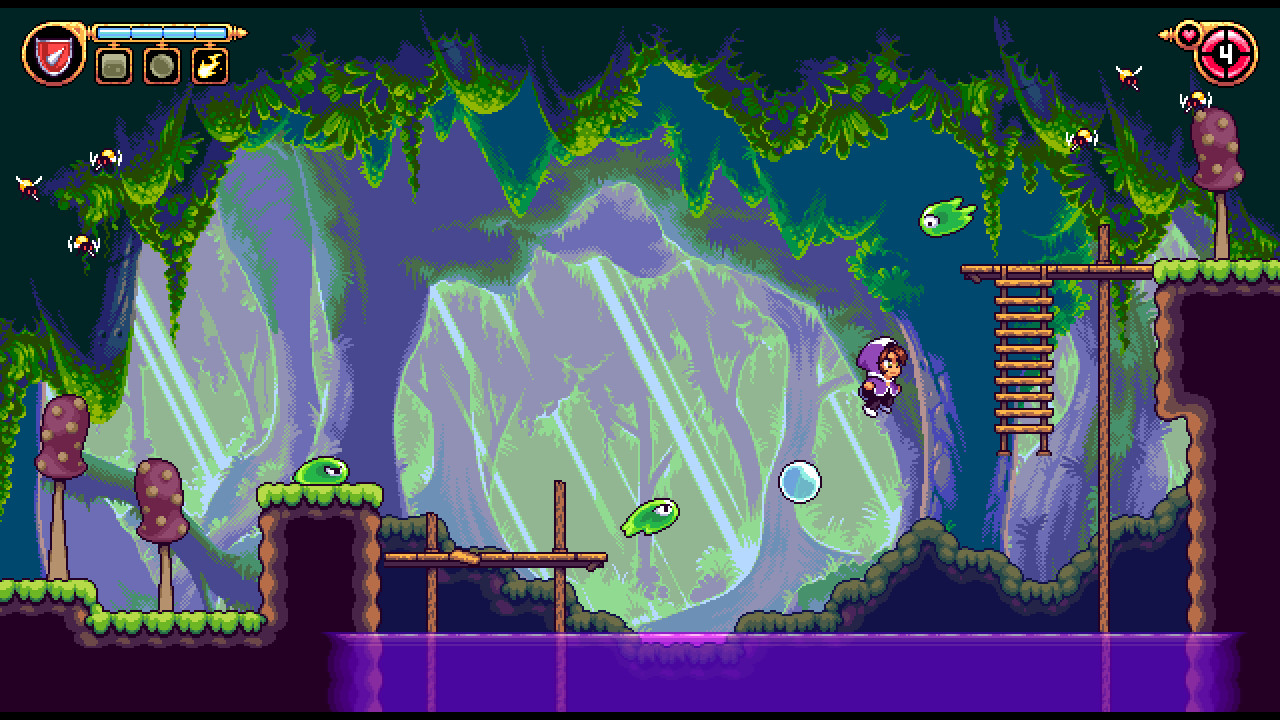
Elden Pixels 3

Have any of the guys at Image & Form or Zoink had any input into the game, or any advice to offer you?

Yeah, I worked at those companies for about four years, so I made a lot of friends, and they’re all beautiful people. A few of them do consulting work. So we actually ended up working with Pelle Cahndlerby with the script, Joel Bille did the sound effects, and Julius Guldbog did our trailer; all of them are from those companies.

Now and then, I also get a chance to grab some lunch with Brjann Sigurgeirsson, who’s the head honcho at Thunderful, the owner of Image & Form and Zoink Games. And I cherish those lunches because I get so much valuable information and tips from him. He’s such a nice guy. I also get free lunch!

If you had the chance to develop for any mainstream development company or work on any gaming series, which one would it be?

I don’t know how much it would be considered mainstream. But our first game, Alwa’s Awakening, was heavily inspired by an NES game called Battle Kid. And I would LOVE to develop a game in that series. I think in the hands of Elden Pixels and the original creator, we’d be able to make a really cool and fun game. I can easily think of a bunch of cool and creative ideas for a potential sequel.

The progression of the series is obviously reminiscent of the transitions between past generations of gaming, i.e., 8-BIT to 16-BIT. Do you see the Alwa series making the transition from 2D to 3D in the future?

If someone asked me to design a 3D game, I wouldn’t know how to even approach it. I’d probably have as much luck as I would if I decided to take up opera singing. So I don’t see that happening in the near future. But who knows, if we find a talented 3D designer somewhere in the future, it might happen. Right now, we’re exploring ideas that aren’t based in the Alwa universe.
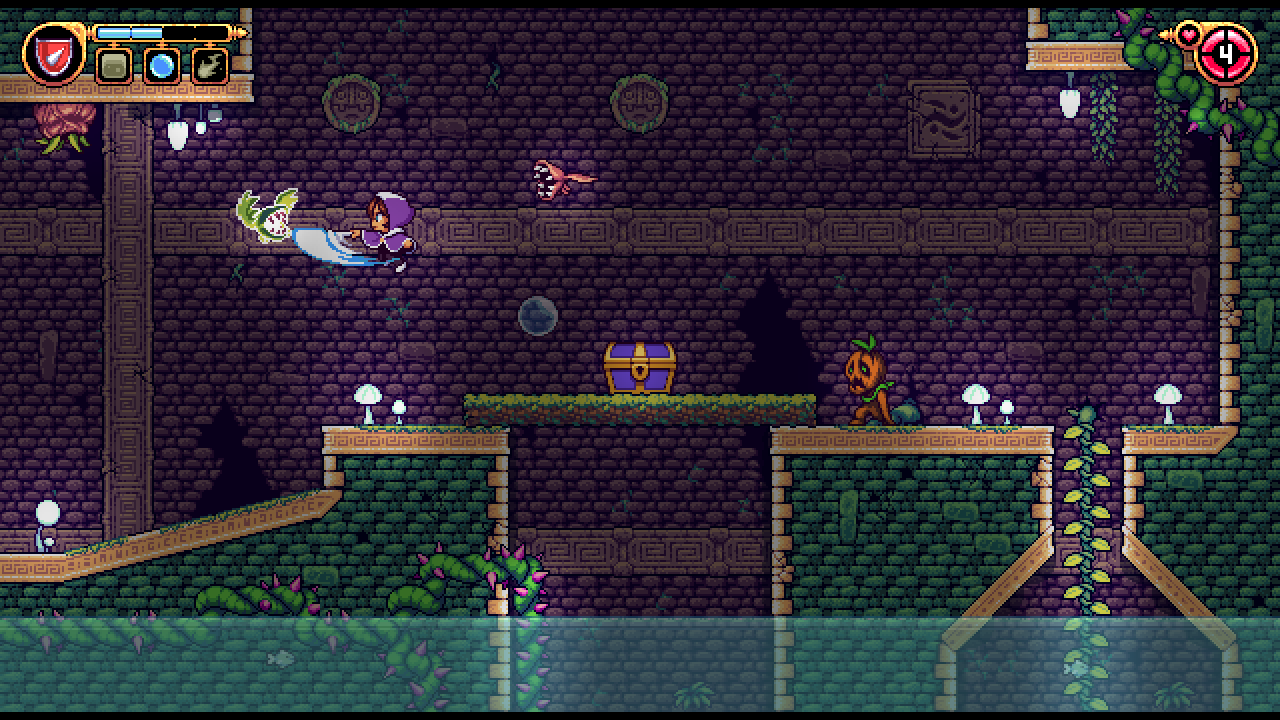
Elden Pixels 4

What platforms are you looking to bring the game to?

Right now, the game is out on Steam and GOG, and we’re releasing it on Switch soon. We want to take it to Microsoft and Sony as well and ask them for a release on their platforms, but we haven’t yet. We’re such a small team. So we have to think carefully about each decision, making sure we don’t take on too much work, and releasing on a new platform is a lot of work.

Do you have any advice to give to any aspiring developers who may be reading this?

Don’t go into indie development thinking you’ll make money. If you want to make money, get a job in the IT business or something. For me, making indie games is like playing in a small rock band. You don’t get to play at the big arenas right away. You probably never will. And it can take years before anyone even notices you. Don’t expect to make that one indie game and make it Shovel Knight style. Sure, it can happen, but most likely not. But if you’re dedicated, make cool stuff that people want to enjoy and stay at it, maybe in a few years, you’ll be able to make a living from it. I’m confident that Elden Pixels will eventually be something I can live off full-time. We probably need a game or two more out before we can do that. But we’ll get there.

Is there anything else you would like to add?

Yes, if you take 3 deciliters of water, add 2 deciliters of sugar, 1 deciliter of vinegar essence, 15 small peppercorns, and 2 bay leaves. Boil for a few minutes and then let it cool off; you’ll have an awesome brine for pickled herring. A Swedish classic!
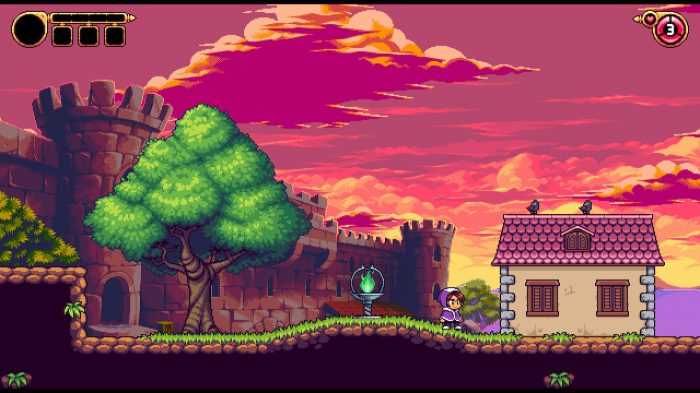
Elden Pixels 5

I’d like to take the opportunity to thank Mikael for sharing everything he had about the Alwa series and Elden Pixels. And to wish them the best of luck with what the next title they develop may be. Both Alwa’s Awakening and Alwa’s Legacy are available on Steam. And I would highly recommend anyone reading who hasn’t played either title that they check them out. I’ve played and reviewed both games, and they’re definitely worth playing through at least once. Thanks for reading this Q&A, and I hope you enjoyed reading it as much as I did putting it together.

Game on,

Scouse Gamer 88

Alien Scumbags (PC)

Alien Scumbags

Developer(s) – Monster Finger Games

Designer – James Ross

PEGI – Not Rated (mature content)

The first title from Southampton-based studio Monster Finger Games, Alien Scumbags, is an 8-BIT sci-fi side-scrolling shoot ’em-up survival horror game with light RPG elements. It presents a very balanced mixture of horror and comedy, littered with references to classic games. I’d been following this title for some months before its release, having drafted up a first impressions article and interviewed the game’s principal designer, James Ross:

https://scousegamer88.com/2020/05/09/alien-scumbags-first-impressions/

https://scousegamer88.com/2020/05/10/qa-with-monster-finger-games/

I’d been excited for the release of this game for quite some time, and when it finally made the jump from its original platform on Game Jolt to Steam, I wasn’t disappointed.

Graphics – 8/10

The game is set on a spaceship gone dark named the Nostrami, which is infested with hostile alien lifeforms. The best way I can describe the overall feel of the game is that it’s like an 8-bit version of Dead Space. Like the game Lone Survivor, it makes use of lighting despite its retro 8-BIT visual style. But in my opinion, this game makes better use of lighting than the former, as there is lighting from more sources, therefore making it look much more detailed, and there is much more atmosphere. 

The scenery design is also unprecedentedly varied for a game set in one location. There are references to other games scattered all over the place. And also references to popular horror movies like Alien and It. The game’s soundtrack also accompanies the horrific atmosphere of the Nostrami particularly well, in addition to making use of otherworldly synthesized tunes and sound effects designed to emulate the human heartbeat present in the first level. 

Gameplay – 8/10

With a gameplay structure similar to Doom, players are tasked with blasting their way through hordes of alien enemies and uncovering secrets throughout each level, such as hidden areas, additional perks, and easter eggs. There are also multiple characters to unlock (again, modelled after iconic video game characters), with their own unique abilities, giving the game replay value since each character offers a new experience with every playthrough. It’s a survival horror with the vast majority of focus being on gameplay, which, unlike many in mainstream survival horror series, does pretty well. 

Controls – 10/10

The side-scrolling genre has been redefined and reinvented over many decades in gaming. Therefore, the control scheme presents no issues in this title. It’s a very bread-and-butter style of play that both fans of retro gaming and newer generation players alike can appreciate. They will be able to pick up and enjoy it very easily without having to worry about the controls. 

Lifespan – 8/10

The game’s lifespan consists of around 20 hours of gameplay, which goes above and beyond many classic side-scrolling titles that gained popularity throughout the NES era, but there is also new content being planned for the game in addition, as the game is still being tweaked by the developers. In the future, depending on the game’s final lifespan when all content is released, the game’s score may have to be updated, but even in its current state, 20 hours is an exceptional amount of time for a game of its ilk to last. 

Storyline – 7/10

The basic premise of the game is extremely simple. Board the Nostrami and take the ship back from the horde of aliens that have killed the crew and invaded. There’s a comedic intro at the beginning, giving the player the rundown of the situation. But where the game’s story lies is in its backstory, which is discovered by the player as the game progresses. Provided they can find the crew recordings scattered across each level. It adds a real layer of horror that players may not necessarily expect going into it. It provides that unique balance of scares and laughs that’s quite frankly unusual for a survival horror title. 

Originality – 7/10

Although the game is one giant easter egg of references to gaming and popular culture, its unique balance of comedy and horror certainly helps it stand out among many survival horror series to have been released throughout the years. All the while keeping the emphasis on what truly matters, which is the gameplay. I’ve been frustrated by games like The Last of Us, Journey, and Everybody’s Gone to the Rapture. They’ve shown promise and not delivered on what was expected of them as games. But with this title, you know exactly what you’re getting from the get-go. And what it delivers is what players want. 

Happii

Overall, Alien Scumbags is an extremely enjoyable title. A labour of love that gamers old and new will not be disappointed with. It’s a scary, funny, and intense experience throughout, and I can’t recommend it enough. 

Score

48/60

8/10 (Very Good)

Alwa’s Legacy (PC, PlayStation 4, Xbox One & Switch)

Alwas Legacy

Developer – Elden Pixels

Director – Mikael Forslind

PEGI – 7

Following on from the Success of Elden Pixels’ breakout indie game Alwa’s Awakening, Alwa’s Legacy continues the series, introducing several new gameplay mechanics and challenges, as well as making use of graphics more reminiscent of the 16-BIT era, which was hinted at with the end of the original game. Having been impressed with the first game when I played through it, I was fully expecting yet another immersive gaming experience with the sequel, and to say the least, I was not disappointed. 

Graphics – 9/10

The game makes use of a 16-BIT art style similar to that of Super NES classics such as Super Castlevania IV and Secret of Mana. There is a wide range of beautifully vibrant and eerily dark locations throughout the newly designed world of Alwa. Which looks far better than what even the small glimpse at the end of the first game seemed to touch upon. The environments are each wonderfully designed, and despite there being a few locations being recycled from the original game, the areas that have been recycled have been drastically improved upon compared to Awakening. The game’s soundtrack is also stellar. Some of the tracks used for many of the dungeons specifically gave the game more of a Castlevania feel to it than the last game; atmospheric, foreboding, and catchy as all hell.

Gameplay – 9/10

Keeping to the same principle formula of the first game, Alwa’s Legacy is a traditional Metroidvania game with light RPG elements, with players being able to learn new abilities and unlock new areas with each new ability acquired. But it also has the very strong feeling of a dungeon crawler to it, like a traditional Legend of Zelda game, with players having to traverse a stronghold by solving puzzles and going up against a boss. 

Overall, there have been significant improvements made to gameplay as well as visuals. The player has a lot more to play for and to discover than in the previous game. The boss fights, in particular, are also a lot more creative than in Awakening, in both appearances and in the required strategy to beat them. The additional abilities make it so that players can strategize in their own ways in accordance with what boss they’re up against, giving the game a pleasant amount of variety.

Controls – 10/10

Even taking into account the introduction of new mechanics such as the shield boots and the ability to temporarily slow down time, Legacy plays out pretty much identically to Awakening, and as such, the control scheme presents no issues. Also, new controls have been introduced. Most notably, the anti-gravity sequences, whereby players have to walk on ceilings to solve puzzles. Much like Mega Man 5’s Gravity Man stage. Although the visuals were taken from 16-BIT classics, there are a lot of nods to the 8-BIT era. This served as the inspiration for the original game in the series. 

Lifespan – 7/10

Another aspect in which this game is an improvement on the original. Albeit to a lesser extent than the graphics and gameplay, it is in its longevity. On average, the game can take around 8 to 10 hours to complete to 100%. It’s still short for a Metroidvania. But it certainly answers for the short amount of time it takes to complete Alwa’s Awakening, and it’s a step in the direction of possibly making the third game in the series last even longer, if Elden decides to make a third game.

Storyline – 7/10

Essentially, the story of Alwa’s Legacy is pretty much a carbon copy of that of Awakening. Zoe awakes in the land of Alwa. And by traversing the land and honing her abilities as a powerful sorcerer, she must save the land from the villain, Vicar. Vicar plots to invade Alwa. There are a couple of differences and certain plot threads that help to advance the story in a different way. So I can’t bash it too much for being unoriginal. It’s an epic odyssey with plenty of twists and turns along the way and plenty of quirky characters to meet. It would be hypocritical of me, as a fan of a lot of games that tell virtually the same story with each instalment, such as Mario and Zelda, to criticize the Alwa games for doing the same thing. 

Originality – 7/10

Taking into account the many similarities that this game has with not only its predecessor but also many other Metroidvania games that served as the basis for it. It still has its own unique brand of gameplay and visual design. And a story structure that makes it stand out among many Metroidvania titles. Despite the greatly increased output of games in the genre in recent years. Such as Ori & the Blind Forest, Dust: An Elysian Tail, and Guacamelee. Legacy greatly expands on Awakening and delivers a challenging and satisfying experience that should not be overlooked.

Happii

In summation, Alwa’s Legacy is certainly a must-have for Metroidvania fans. If you’re a fan of 2D exploration, dungeon crawling, 16-BIT graphics, and epic 8-BIT music, I can’t recommend this title enough. 

Score

49/60

8/10 (Very Good)

Review as seen in the trailer: https://www.youtube.com/watch?v=ghMdj8Y500M

Ori and the Will of the Wisps

Ori & The Will of the Wisps (PC & Xbox One)

Developer – Moon Studios

Publisher – Xbox Game Studios

Director – Thomas Mahler

Producer – Blazej Zywicyriski

PEGI – 7

Following on from the success of Austrian developer Moon Studios’ debut title Ori & The Blind Forest, Ori & The Will of the Wisps is another expansive Metroidvania title making use of wonderfully crafted hand-drawn visuals. And adding new gameplay elements, building on the concept perpetuated by the first game. Personally, I was hooked on this game from start to finish. And whilst I have my nitpicks to address, I was far from disappointed with it. 

Graphics – 10/10

The visual style of the game once again makes use of a hand-drawn art style. Taking place in new forests separate from those of the first game, called Niwen. Like the last game, it has a variety of different land biomes. Including snowy mountains, barren deserts, and dark spider-infested caves. It once again also makes use of a traditional orchestral soundtrack. Albeit each track does better than Blind Forest to suit the tableau of each different area. 

The game, in terms of visual style, is certainly a lot more varied than the first. As Blind Forest’s individual areas were mainly different sections of forest, with some exceptions. Such as Mount Horu. But in Ori & The Will Of The Wisps, there are areas like Luma Pool, Baur’s Reach, and Windswept Wastes that perpetuate far more of a sense of variety than in the original game.

Gameplay – 10/10

Another area where variety is a lot more prevalent than in the first game is in the gameplay. The combat system has been given a massive overhaul, with Ori being given far more combat options than in Blind Forest. Including a sword for fast-paced combat and a hammer for players preferring power over speed. A lot of the older abilities acquired in the first game are also added for good measure. But they’re acquired earlier on to reacquaint players with classical mechanics in preparation for the introduction of new mechanics throughout the rest of the game. 

Another very welcome addition to the series with the second game is the inclusion of boss fights throughout. They present a level of challenge that wasn’t seen with Blind Forest and add even more depth to the gameplay that is more prevalent. And reminiscent of other Metroidvania titles such as Castlevania: Symphony of the Night and Guacamelee. There are also various sidequests to be undertaken throughout. This is something else that was desperately needed for improvement over the first game. It all makes it even more enjoyable to play than Blind Forest and less of a criminally fleeting experience. 

Controls – 10/10

Players will be able to move from the first game to the second without skipping a beat; the core mechanics are the same as what they were in Blind Forest. But even with the introduction of a plethora of new mechanics, the game’s control scheme presents no issues. In this game, it was even more vital for the developers to have gotten the control scheme right with the introduction of time trial sequences involving a lot of intricate platforming. And the developers did a flawless job of getting the controls right. 

Lifespan – 6/10

To complete the game 100% takes slightly longer than its predecessor. Clocking in at just over 15 hours of gameplay. Although there is the inclusion of so many new gameplay features, I think more of the same could have been added to pad out the game even further. But again, my biggest criticism of this game, as it was with Blind Forest, is that it doesn’t last anywhere near as long as it had the potential to do. Although it’s less of a fleeting experience than the first game, it’s still not long enough of an experience in my opinion. 

Storyline – 7.5/10

Picking up where the last game left off, Ori, Naru, and Gumo are now caring for Ku. The baby owl that hatched from Kuro’s last egg at the end of Blind Forest. After repairing Ku’s damaged wing with one of Kuro’s stray feathers, Ku flies with Ori on her back, and the pair crash-lands into the forest of Niwen. Ori then becomes embroiled in a quest to restore balance to the forest of Niwel by seeking out forest spirits called wisps. Whilst also confronting new threats, including a deformed and hateful owl named Shriek.

The story of Ori & The Will of the Wisps draws a great deal of comparison to that of its predecessor. Ori basically has to do the same thing as she did in Blind Forest. Just within another forest. Although the themes of loss and tragedy are present and are presented in different ways from the original, there are other elements that are a lot more straightforward than they are in the first game. There’s not much moral ambiguity involved in the second game, like in Blind Forest; the player will know who the hero is and who the villain is. Where Kuro was a much more sympathetic villain, Shriek, whilst having underlying reasons for being the way she is, is a lot harder to empathize with.

However, there are certain plot threads throughout the story. Especially around the mid-way point, which contributes to the narrative in extremely positive ways. And whilst not being anywhere near as unique as the first. Certainly make for an enjoyable story overall. 

Originality – 7.5/10

The game’s originality was probably the hardest aspect of it for me to cover. In certain areas, it does stand out from other Metroidvania titles, such as its combat system and inclusion of sidequests. But in other aspects, it fell short of those in which the first game excelled. Most notably, the story. Overall, it was a fairly unique game. But I can’t help but feel that there is still a lot more untapped potential for this series overall. Without spoiling any details in regard to the ending, all the signs seem to point to there being a third game sometime in the future. And I think that there is still room for improvement in both the first and second games. 

Happii

In summation, however, regardless of the amount of criticism I’ve given Ori & The Will Of The Wisps, I still think that it is fractionally better than Ori & The Blind Forest. The one aspect that it excels in compared to its predecessor is the gameplay, which is, after all, the most important aspect of any game. Its story is unoriginal compared to Blind Forest, and its relatively short lifespan can still leave players wanting more at the end of it. But that’s not to say that it isn’t worth playing through from beginning to end. It certainly is. 

Score

50/60

8/10 (Very Good)

Isle of Spirits

Q&A With Silver Bullet Games

Last month, I came across another great-looking indie game in development called Isle of Spirits and gave an account of my first impressions of it:

https://scousegamer88.com/2020/05/12/isle-of-spirits-first-impressions/

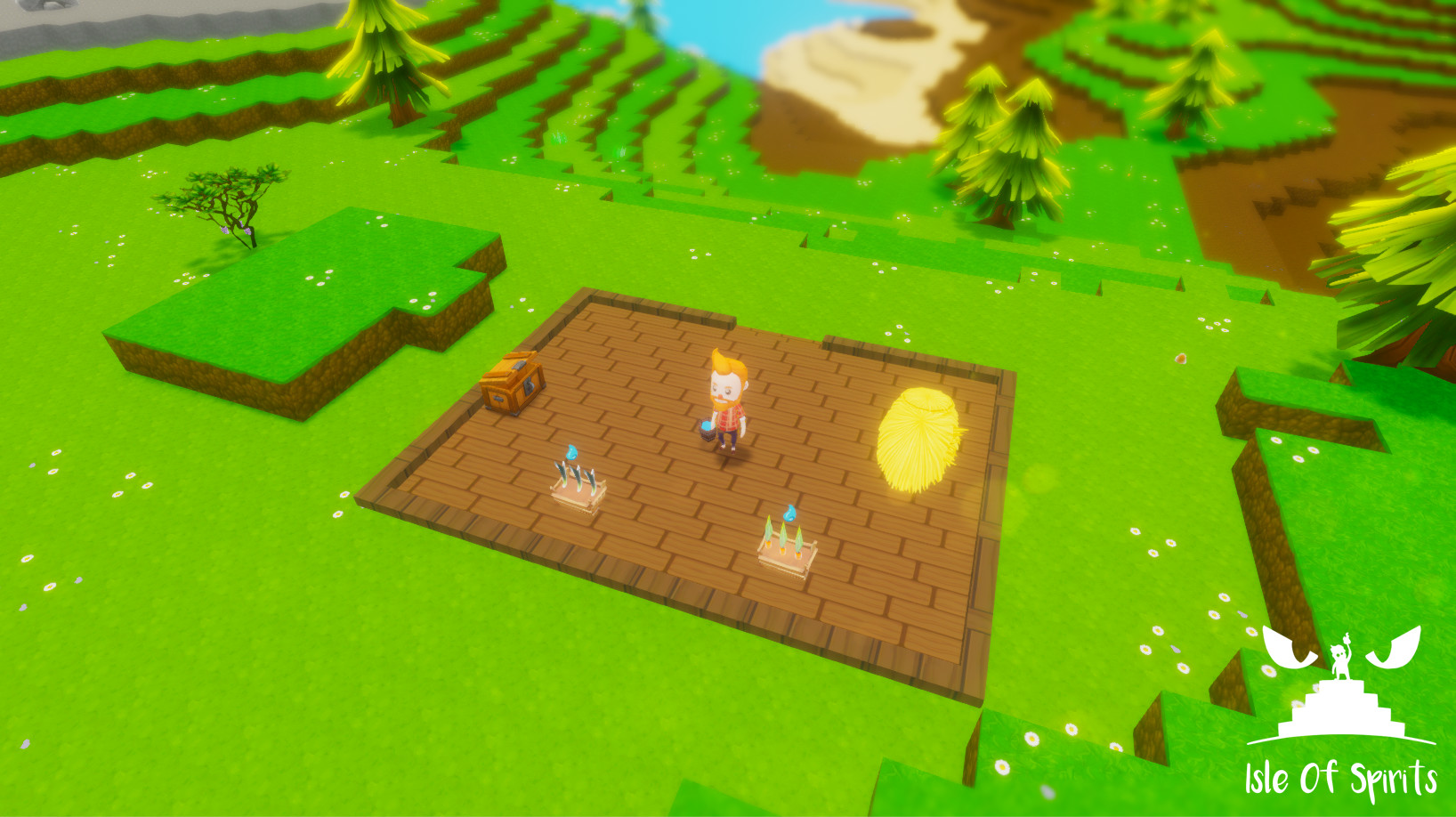
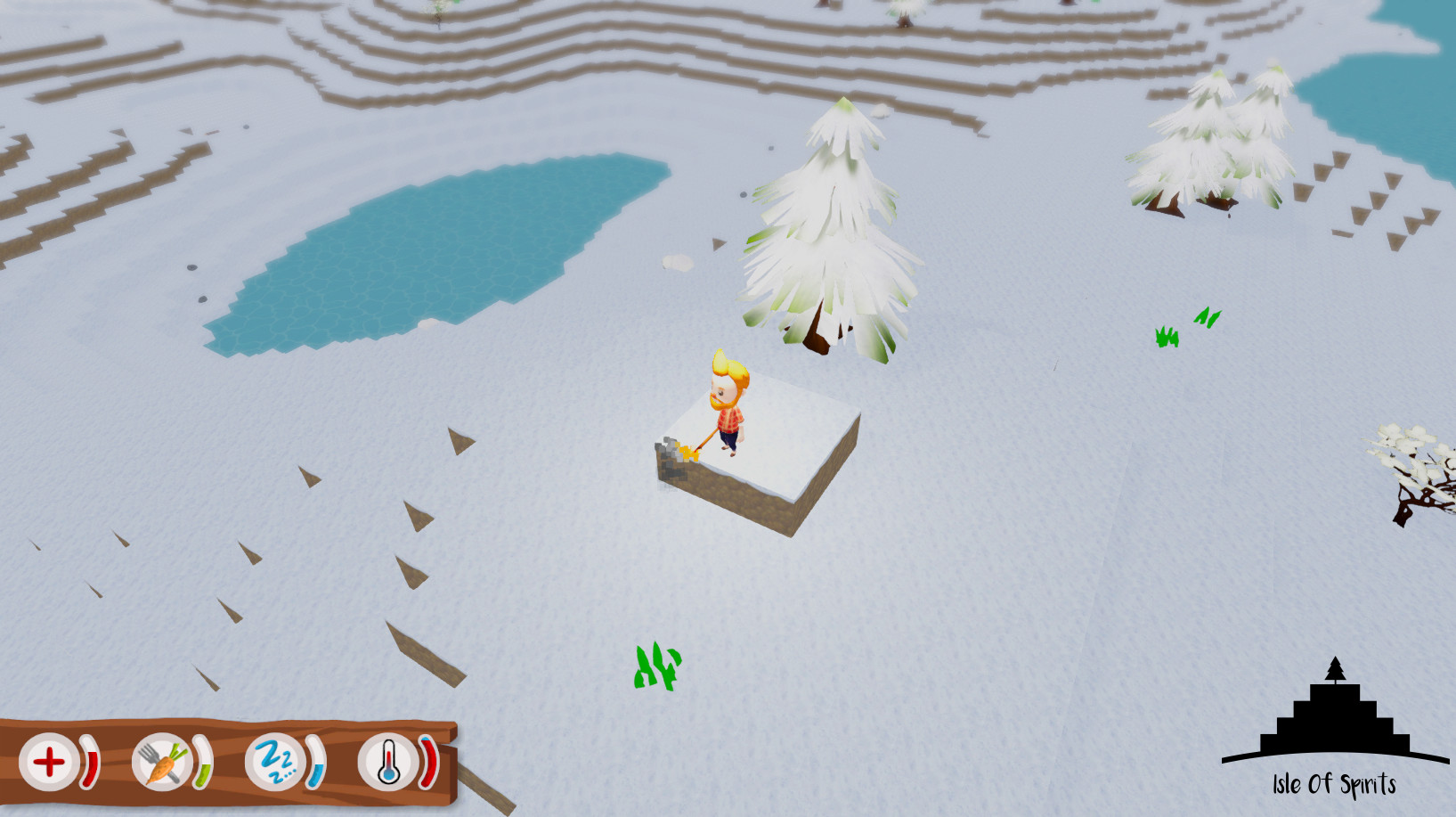
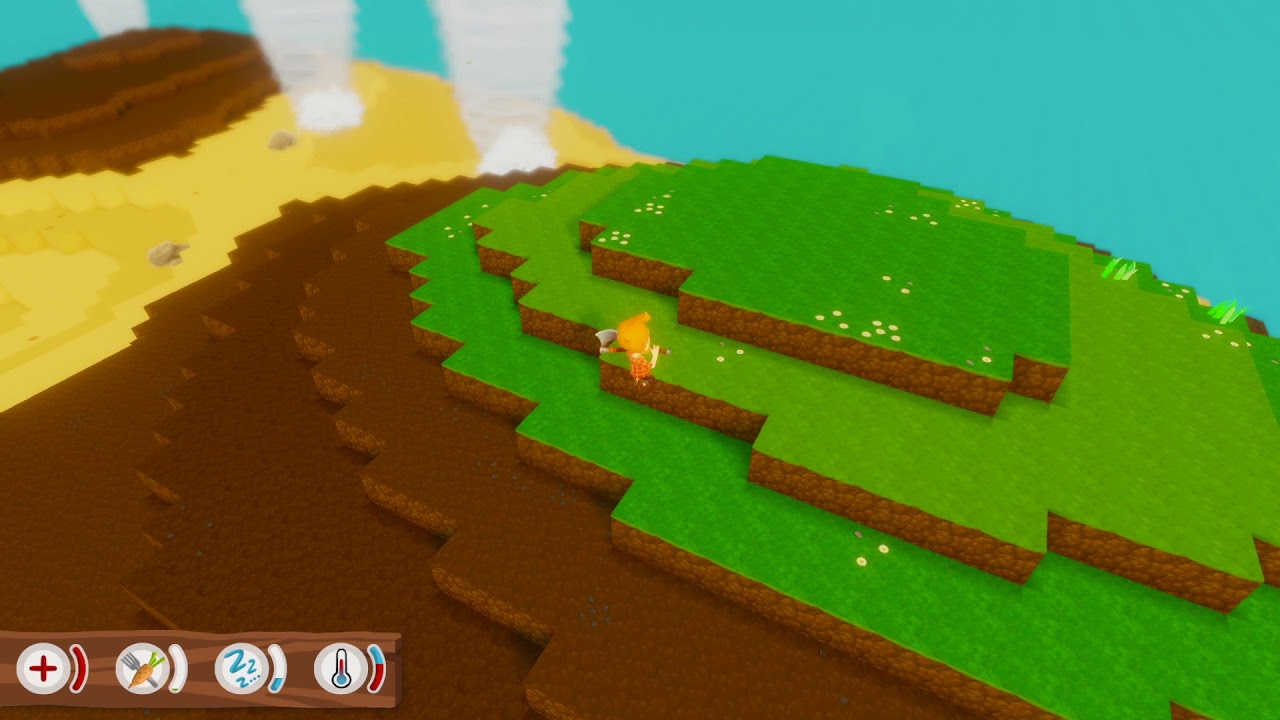
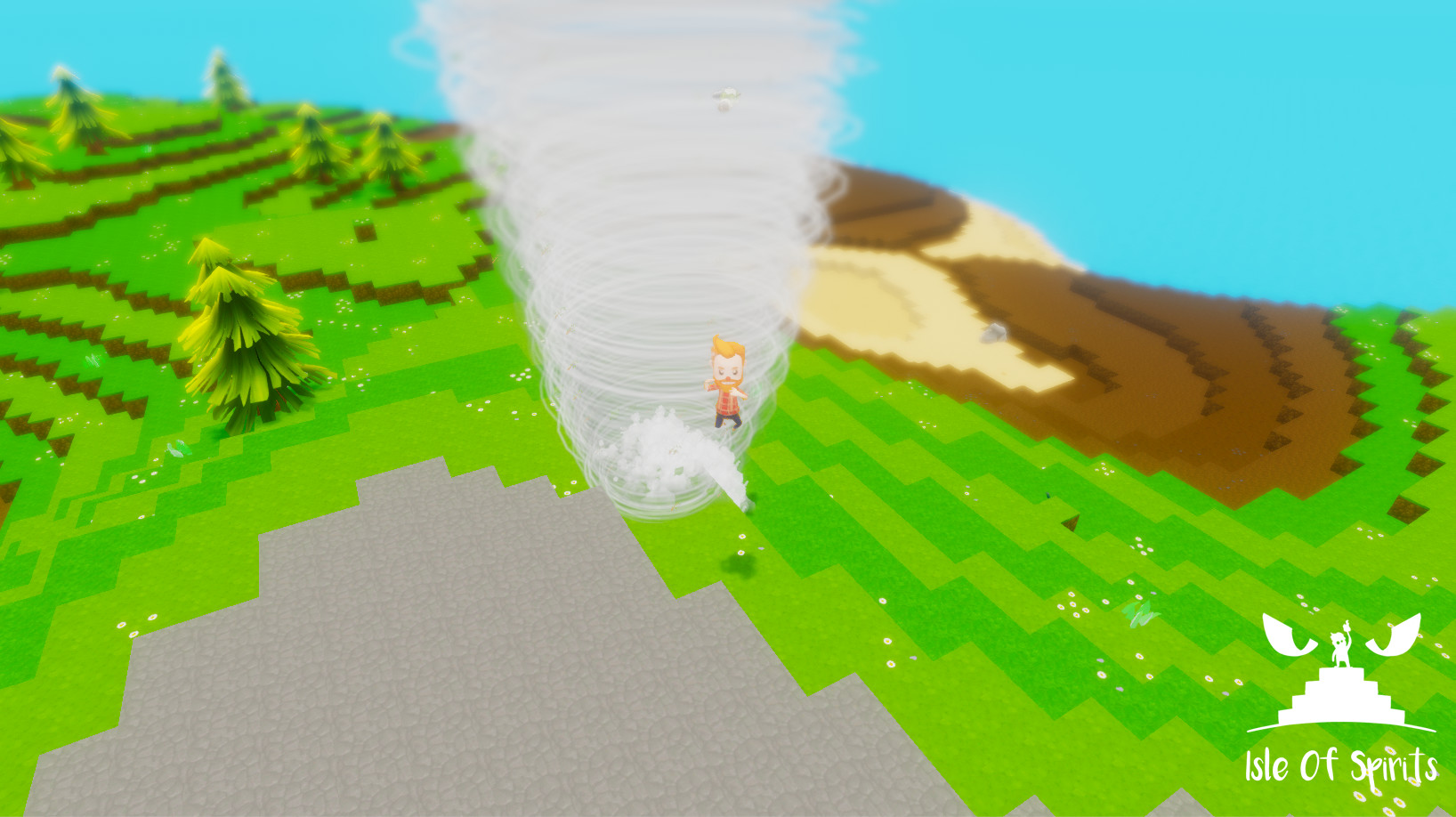
And following further developments made to it since I last visited the concept, I have yet another Q&A to share. Isle of Spirits is an open-world survival game made in the same vein as titles like Minecraft and Don’t Starve. Whereby players must build settlements and adapt to each respective environment and overcome the world’s many dangers, natural or supernatural occurrences. Developed by Silver Bullet Games based in France, it is still currently in the beta stages of development. Yet it shows a great deal of promise in terms of what to expect from the final product. I recently got in touch with the game’s principal designer, Kevin Drure, and asked him a few questions regarding the game’s development. And what to expect from its final release. Here’s what Kevin had to say about Isle of Spirits:

Isle of Spirits 1

What were the influences behind your game? 

Isle of Spirits was mainly influenced by survival games like Don’t Starve and casual games. I was playing Don’t Starve when I was asking myself why most of the games of this genre were addressed to gamers.

What has the developmental process been like?

It was quite straightforward. I did have a clear vision of what the game should focus on, and I designed and programmed the game myself. The sound design was done by Alexis Laugier, a freelancer. I showed him the game early, as the sound design was very important to me. And we built a really great ambiance for the different game paces. I worked with another freelancer, Noemie Bezier, for the user interface. She progressively created a whole theme matching the Isle of Spirits universe.

What has been the most exciting aspect of development? 

Designing a survival game for casual players, while keeping some challenge and letting the player discover the game himself, was exciting. But my best moment was seeing the game come alive during the first playtests for the alpha. I was watching players testing the earliest playable version of the game.

Isle of Spirits 2

Are there more natural or supernatural occurrences planned for inclusion in the game?

No, I try to keep it simple for the player to manage.

What has been the most challenging aspect of development?

On the technical side, it was to get good graphics while running at 60fps for a fully dynamic game on a low-mid-end device. All the elements of the map (and chunks of the map itself) can be moved at any moment; we can’t precalculate anything.

Does any of the development team have any experience in outdoor survival, and if so, did any of that have an impact on development? 

Not at all. We prefer a safe and welcoming house.

Isle of Spirits 3

Would you be open to the idea of the game being open to modding?

It would be awesome to see players making the game their own game. The game has not been designed to get external content. But with some work, it should be possible to tweak the isle generation using a save file.

What platforms are you looking to bring the game to?

Isle of Spirits is released first on Windows/Mac/Linux and Xbox One. I hope to be able to make a Nintendo Switch edition. But I can’t promise anything for the moment.

Do you have any advice for aspiring developers who may be reading this? 

My only advice would be “get a game idea you really enjoy, and stick to it”.

Isle of Spirits 4

Where on the Internet can people find you? 

Mainly on Twitter (@games_bullet), our own website (silverbulletgames.com), and Discord (invite link on our website). We would love to see people join our Discord server to chat with them!

Do you have anything else to add?

I really hope players will enjoy the game. And I would love to see their feedback on our Discord server.

I would also like to take the opportunity to thank Kevin for sharing what he can about this promising upcoming survival title. Isle of Spirits will not be your typical Minecraft or Portal Knights clone and promises a new type of challenge for players expecting the things they will expect going into this game. I hope you guys enjoyed this article as much as I enjoyed writing it, and I will be bringing you guys more new content in the coming weeks, so keep a lookout.

Game on,

Scouse Gamer 88
Soviet Jump Game

Q&A With Thom Glunt

Recently, one of the many indie games that I have been playing and enjoying is the Steam Early Access title Soviet Jump Game:

https://www.youtube.com/watch?v=e6xb8KDYOHM&t=943s

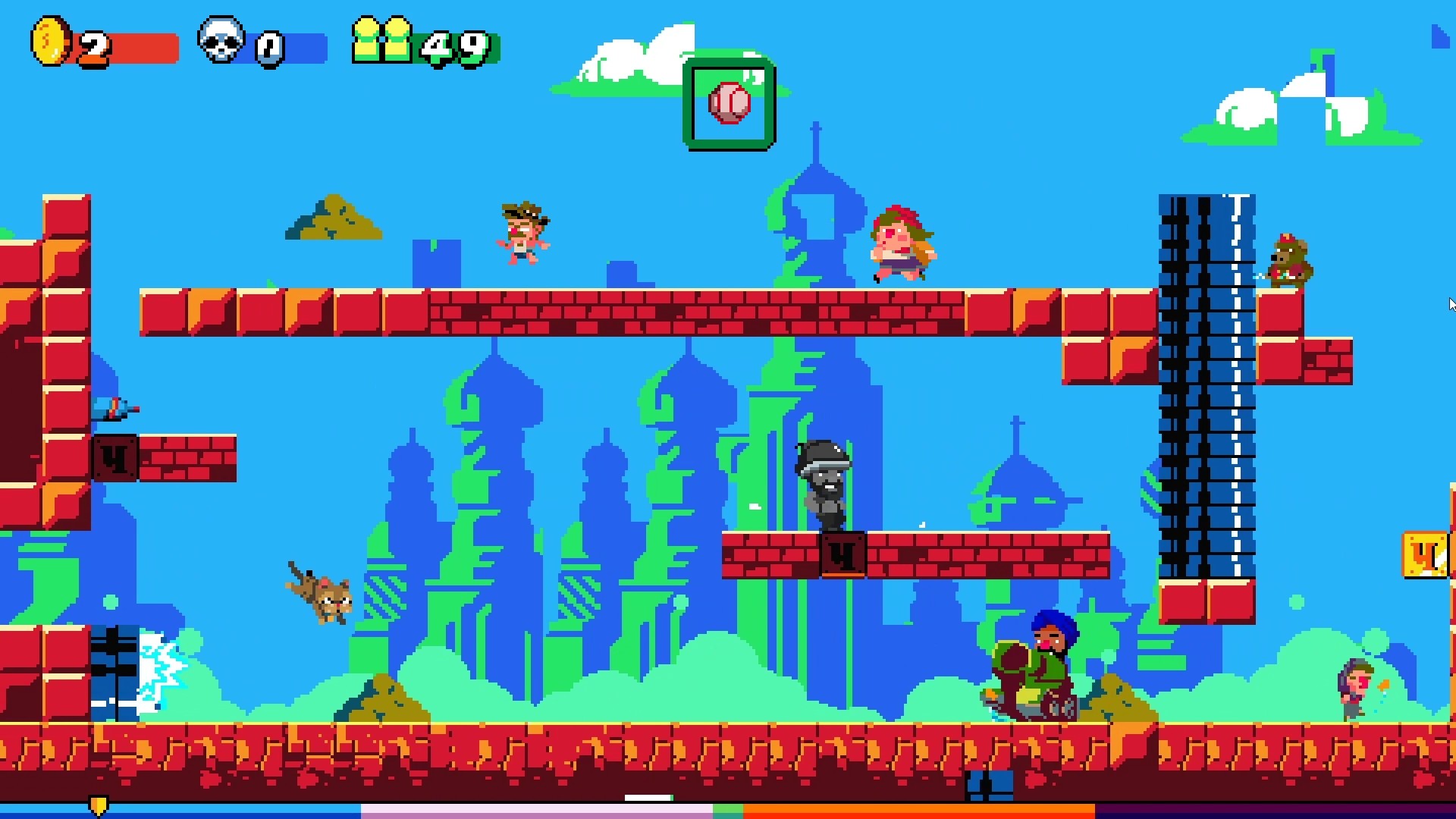
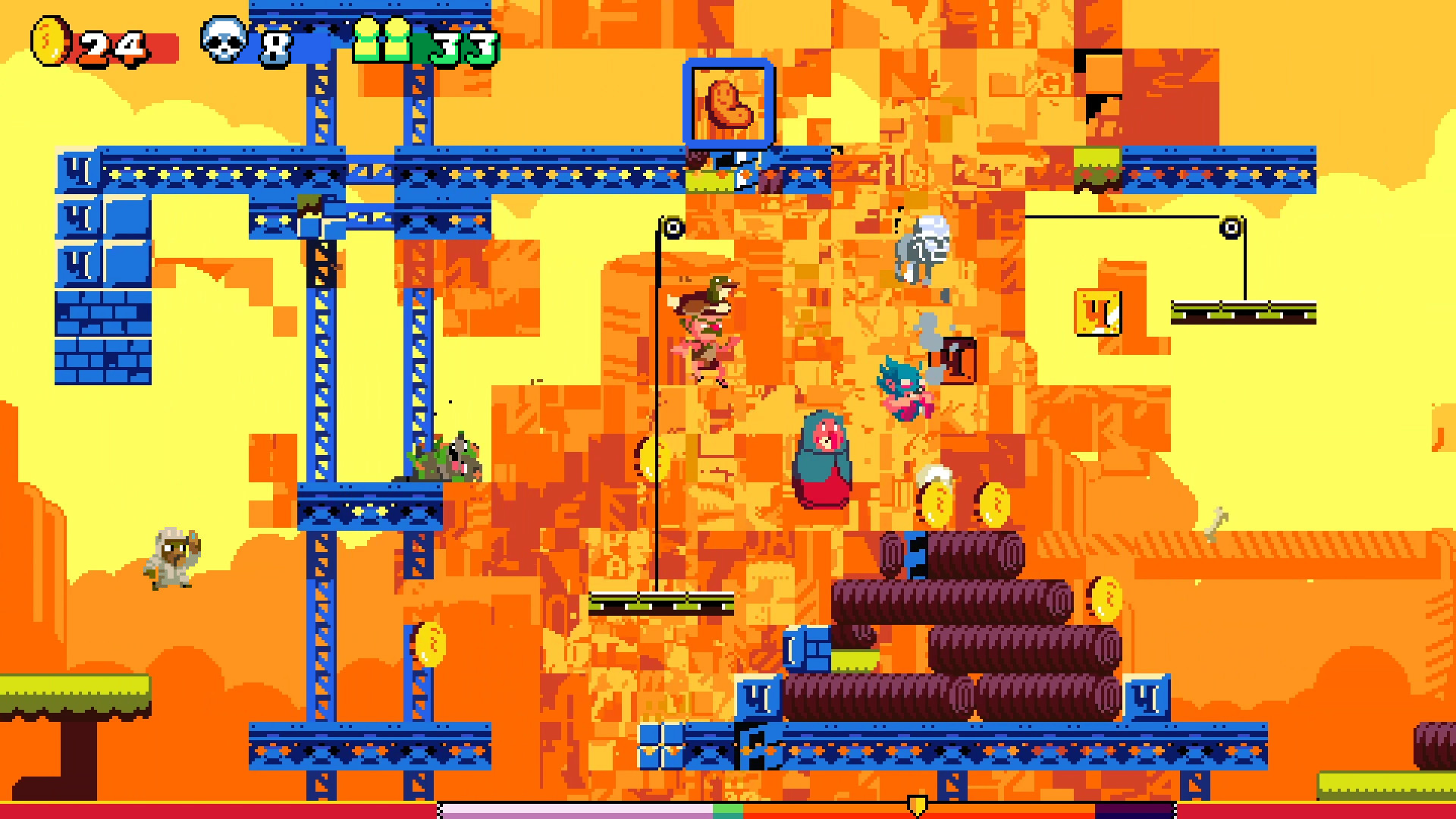
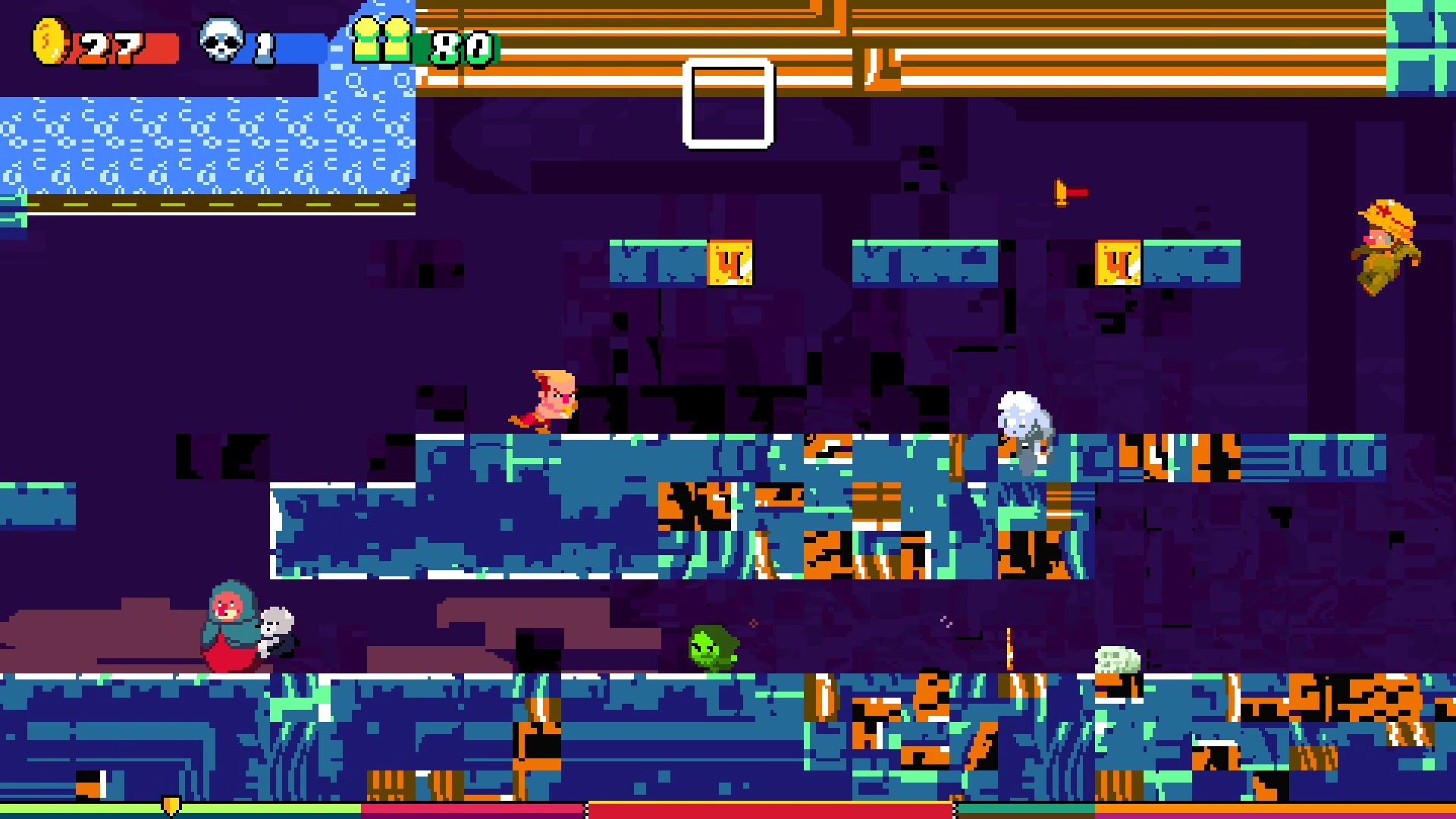
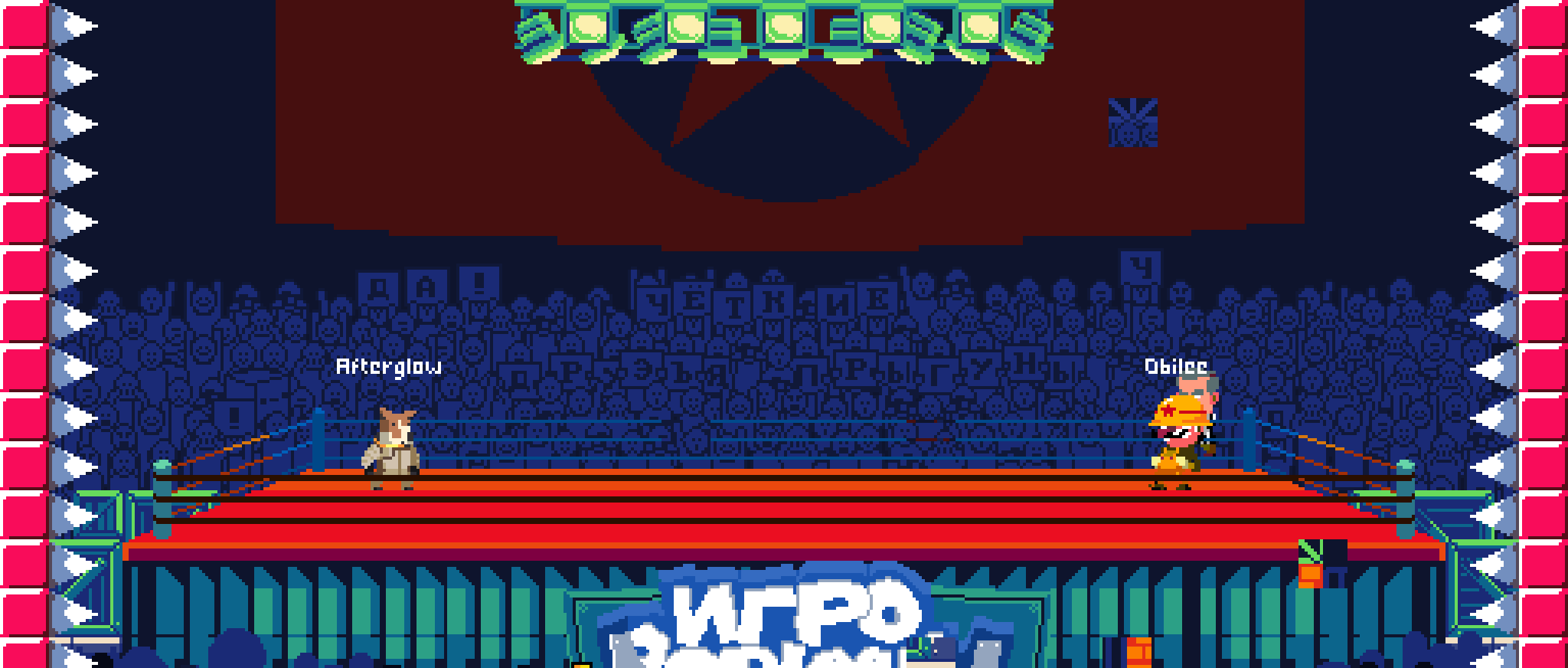
I began playing it for myself, and since then, I’ve hardly been able to put it down. Soviet Jump Game is a 2D side-scrolling battle royale whereby players compete against each other in a last-man-standing battle by either stomping on each other or using various power-ups acquired across a game map with several different biomes inspired by the culture and history of the USSR. After playing the game for some time, I then wrote a first impressions article. But I also decided to reach out to the game’s principal designer, Thom Glunt of Fantastic Passion, based in California.

I had a lot of questions about this game for Thom ahead of its full release. As I’ve not been as excited about an upcoming indie game as I have been about Soviet Jump Game for a long time. And I wanted to find out as much information about it as possible. Thom got back to me with the answers recently. And here’s what he had to say about Soviet Jump Game:


Soviet Jump Game 1


How did the general concept of the game first come about?

By late 2018, it felt like Battle Royale had pervaded every genre of video game. And I thought it would be funny if someone made a BR as a classic side scroller. Then I realized that I would really like to play that, so I talked to Game Grumps, and they were psyched on it too.   


How has it been to experience such an influx of interest surrounding your game and the huge fanbase it has already garnered even before its full release?

I just hope it brings people some joy.


How did your association with Game Grumps and their publishing of Soviet Jump Game come about?

It’s a boring story. 


Soviet Jump Game 2


Would you like the relationship between you and Game Grumps to continue in the future?

I have nothing but good things to say about them. They’ve been a great partner and have trusted us to make the game. I’ve approached them a few times for input and ideas. And between Arin, Vernon, Greg, and Brent (and others), I’ve always left a good idea or new perspective on something. 


Is there anything you can share regarding any possible new content to be added to the game before its full release?

I think with the Daily civic duties and party feature, we are going to hold off on adding major new features until release. We’ve been focusing on Bug fixes, network optimization, polish. And a bit of future content for the time being. 


What’s next for you and Fantastic Passion?

Right now, we’re just focused on making SJG and giving it the attention it deserves. When that’s finished, I plan on climbing some mountains while I figure out if the next game will be a Fantastic Passion game or another game with my friend Stephen as Pixel Titans. 


Soviet Jump Game 3

What other genres of gaming would you and the rest of Fantastic Passion like to develop in the future?

I want Fantastic Passion’s focus to be on smaller, fun games that we can develop in a year and a half on average. That way, we can play with some unique ideas and try to keep things fun.


To me, Soviet Jump Game has one of the catchiest video game soundtracks I’ve heard in a long time. What was it about Alex Yoder’s music style that led you to choose him to compose for the game?

First off, Alex is a beast! It was his amazing soundtrack for CRAWL (Check it out!) and a recommendation from Barney Cumming, and that was all I needed to reach out. I am pretty picky when it comes to what I look for in music for my games. I was lucky to work with Amos Roddy (ToyTree) on my first game (STRAFE®). And he set a high bar. Receiving a new track from Alex is like Christmas. I get psyched and have to share it with the team. We may have some new tracks coming soon.  


What are your and the development team’s characters of choice whilst playing?

My opinion changes weekly, but right now I like Lil Jojo, Harrison seems to main Spots, Nick likes Artem, and that’s all I can remember off the top of my head.


Soviet Jump Game 5


Do you and Fantastic Passion see Soviet Jump Game developing into a series of games further down the line?

To be honest, I have no idea, I’m just taking it as it comes. 


If you had the chance to develop for any mainstream development company or work on any gaming series, which one would it be?

 I’d love to make a demake of Rage with ID Software. Since it was their only current IP to not exist in the 90’s, I would like to make that game if Rage had been made in 1998 after Quake 2. 


Would you be in favor of the idea of the Soviet Jump Game being open to modding?

I don’t think it’s a good idea for this one. But I like the idea of modding in general. 


Do you have any advice to give to any aspiring developers who may be reading this?

If you love video games and truly love them and want to make them, I trust that you’ll find a way. Inspiration is infectious. If you are psyched about making a game and can get some momentum, other people will want a ride. Also, luck and privilege are factors; unfortunately, it’s rarely easy.


I’ve won 88 out of 191 games so far, having racked up 628 kills, 10540 coins, and dealt 1241 damage at level 26. Could I be considered a loyal servant of the state?

Yes.


Is there anything else you would like to add?

Thanks to everyone who’s played the game or shared it with a friend! We hope you’ll like what we have in store. Stay safe and healthy out there. 


Soviet Jump Game 7

I’d also like to take this opportunity to thank Thom for taking the time to answer the questions I had about the game, especially since the developers seem to have been hard at work recently. As the game has undergone a lot of graphical changes compared to the previous build. If anyone reading wishes to check this title out, it’s free to play via the link below:

https://store.steampowered.com/app/1072710/Soviet_Jump_Game/

If anyone also wants to check out Alex Yoder’s website and his various works, here’s the link:

http://www.alexyoder.net/

I’ve been playing this game a lot over the last few weeks, and I cannot wait for what the final build of the game will have to offer, as can everyone else who has played this exciting upcoming title. I hope you guys enjoyed reading this Q&A as much as I enjoyed writing it. And I’ll be back soon with my next article.

Game on,

Scouse Gamer 88
 

Soviet Jump Game: First Impressions

Although I spend a lot of time scouring the Internet in search of upcoming titles in development, there are still those that I fail to notice as they gain momentum across a widespread community of fans; even whilst the game is still in the early stages of development. I need to give a shout-out to my friend Antonia Fraser AKA Dolly Mix Cosplay for recommending this one, as, without her suggestion, I wouldn’t have even known this game exists. It’s entitled Soviet Jump Game and in my opinion, may become one of the most beloved future indie games in recent years once it sees full release and continues to garner popularity at the rate that it is now.

Developed by California-based outlet Fantastic Passion and published by Dan and Arin of the YouTube channel Game Grumps and currently on Steam Early Access as a free download, Soviet Jump Game is a 2D side-scrolling battle player vs player MMO, which has players battling against each other by either jumping on one another, Similar to how enemies are defeated in traditional Super Mario games or using various power-ups that can be found throughout the game’s map. After playing this for only a few short days, I’ve become hooked on it. I don’t normally player multiplayer games, generally preferring the single-player experience, but this game may very well be instrumental in changing my perception of how I view MMOs.

Graphics

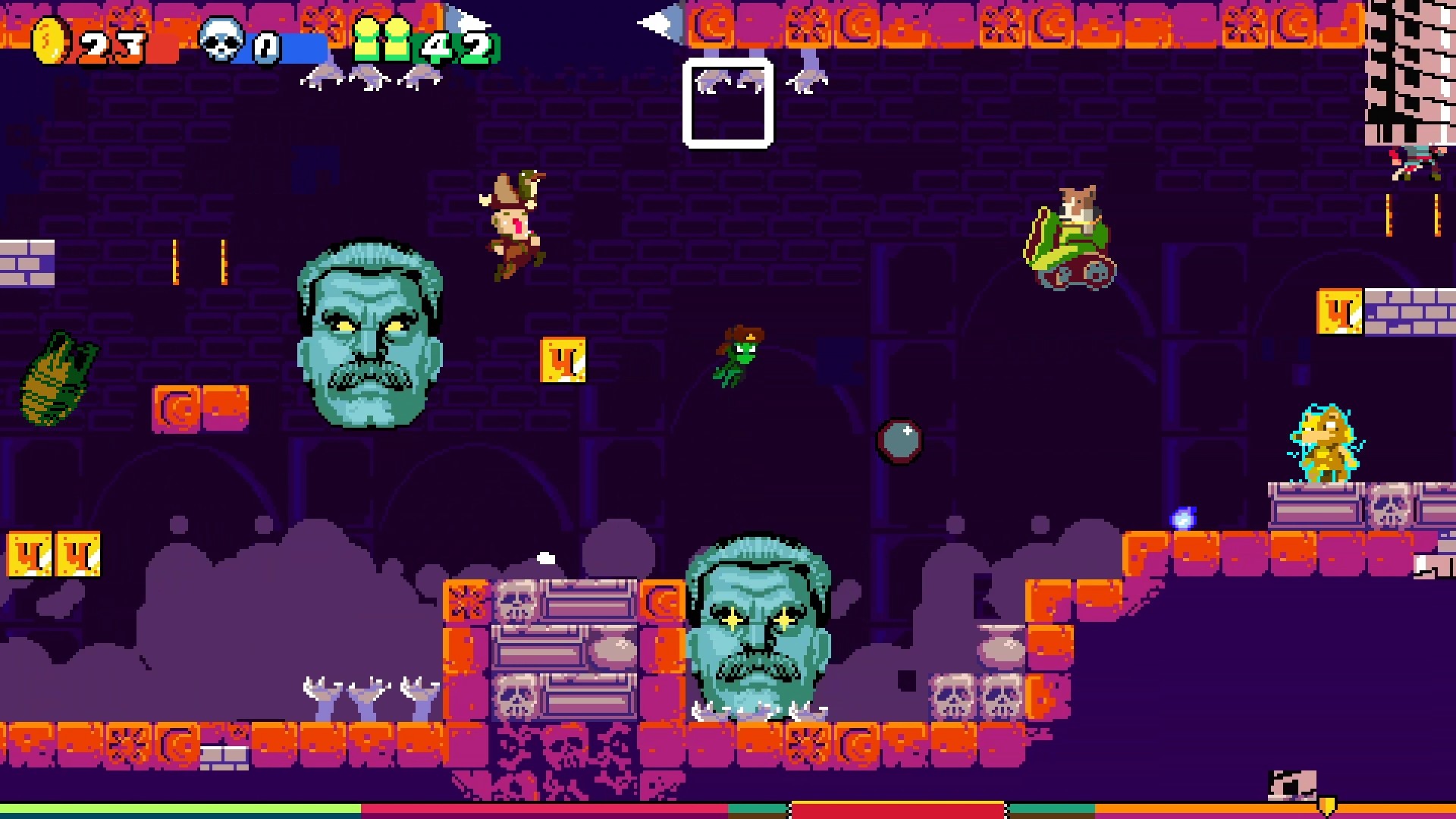
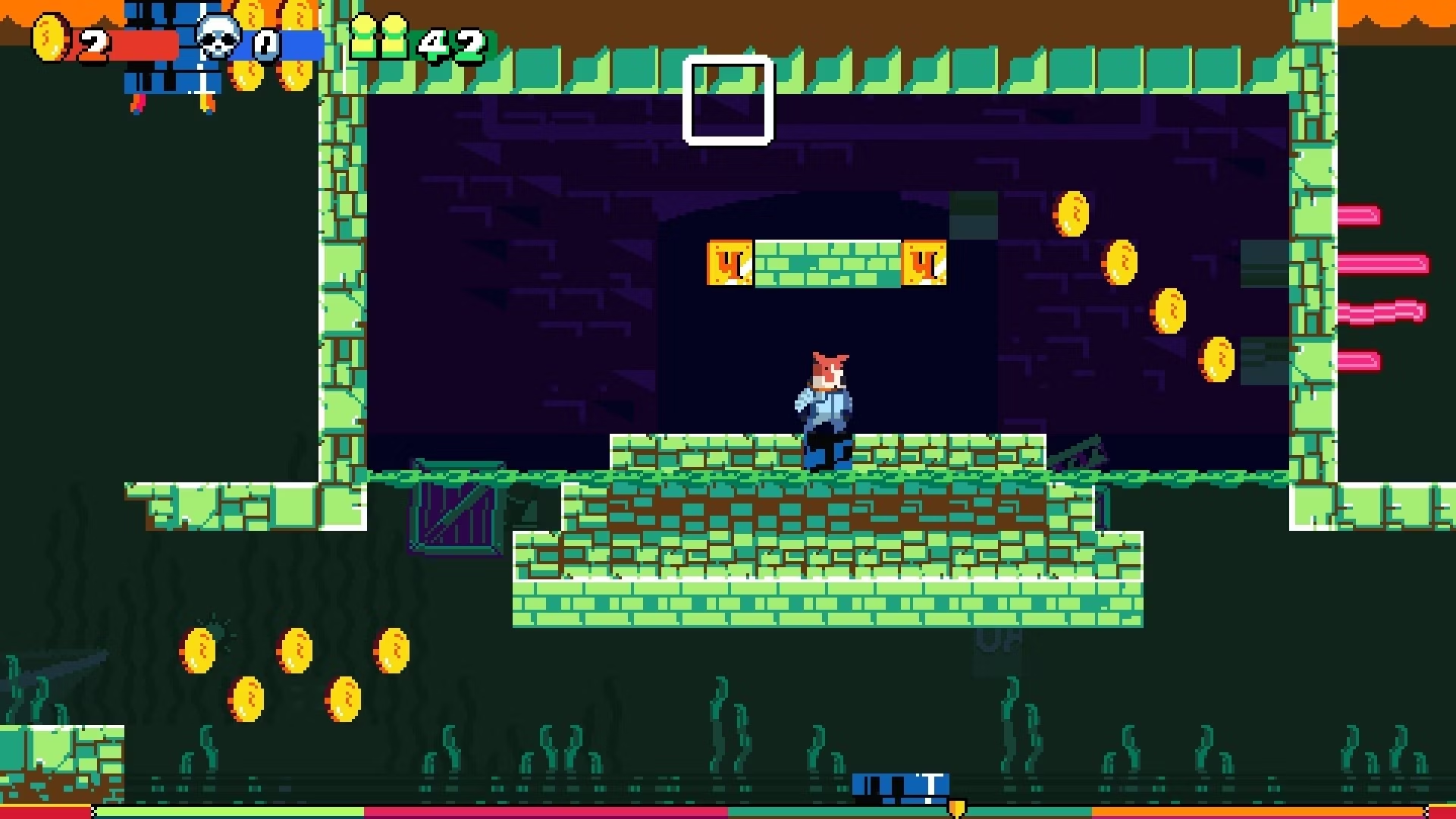
Adopting a traditional 8-BIT visual style, the game’s conceptual design is largely inspired by Russian culture and the way of life under the Soviet Union before it’s dissolution back in the early 90s. There are several references to historical figures and events that happened during the USSR era, such as heads of Joseph Stalin that act like Thwomps from Mario, moving platforms in the form of tetrominoes from Tetris and stage designs alluding to the Chernobyl nuclear disaster. As a long-time Tetris fan and coming off the back of recently playing Russian Subway Dogs in particular, it stands as yet another example to me of how Russian culture has had a significant impact on video games. The scenery is very well designed and the game’s soundtrack threw me with just how stellar that is in addition; certain aspects of it reminded a lot of Shovel Knight in fact; another game soundtrack I think extremely highly of. 

Gameplay

The gameplay is extremely simple in its basic premise, but exhilarating on a scale that I didn’t think possible going into it. It’s simply a matter of the last man standing at the end of each round, including around 38 different players at once generally speaking, battling to stay alive, eliminating other players and collecting tokens used to purchase new characters or customize the characters players already have with new skins, emotes and taunts. I’m biased towards this game to an extent, due to the fact that I’m relatively good at it, having now won 30 games in only a few days of playing. Speaking honestly, multiplayer games generally tend to put me off, since, by the time I come to play one, there is already an influx of people playing who have mastered it and are easily able to dispatch me, bogging down the experience. But probably because this game has much less of a learning curve than an MMO first-person shooter for example, I found that it was easy to get to grips with and learn how to improve with more experience. There’s also a great sense of satisfaction to be had after winning a game to have won out over so many other people at one given time. 

Controls

As the gameplay concept is simple, so too are the controls. The biggest learning curve there is involved with this game is understanding how each power-up works and how they can be best employed to suit the player’s situation. The controls are perfect; as responsive as what a game like this is needed.

Originality

For a game that adopts so many traditional gameplay features that have been seen time and time again throughout the industry, it’s staggering how much this game stands out despite its obvious influences. Where it does stand out is in its conceptual design as well as it’s a differing approach to gameplay compared with other 2D side-scrollers. It almost feels like a genre of its own with how it plays out. It’s also unusual for a side-scroller to have this much variety in terms of unlockable material and gameplay elements and for it to have virtually unlimited replay value. 

Overall, Soviet Jump Game, upon release is set to be a beloved indie classic and I recommend anyone reading to give it a try. The game seems practically complete, but if there’s even more than Fantastic Passion has to add to this already robust title, then I’m excited to think of what the final product will have to offer in comparison to the game’s current build. 

Nanotale

Q&A With Fishing Cactus

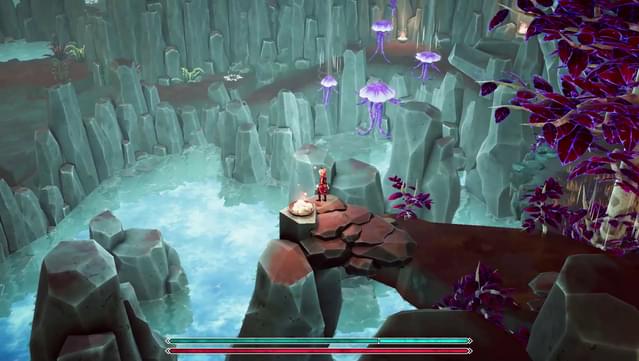
Whilst looking all over the Internet for new upcoming gaming experiences within the indie community, where they have been available, I have tried out either demos or reviewer copies beforehand, and given my first impressions on how the game is during their current stages of development, and given a subsequent assessment of what I believe the final product can bring to the table. One such game has been Nanotale: Typing Chronicles. Developed by Belgian outfit Cactus Games and acting as a sequel to a previous game made in the same vein called Epistory, Nanotale implements an extremely unique style of combat for an RPG, with players having to type in words to string attacks together, to cast spells, or even to solve puzzles to progress throughout the game’s open world.

Wanting to know even more about this wildly distinct project, I contact Fishing Cactus in the hope of securing another Q&A for the site. I received a response from Fishing Cactus’ PR manager, and the development team answered the questions I had regarding the game, which made for some particularly interesting reading. Here’s what Fishing Cactus had to say about Nanotale:

Nanotale 1

Where did the idea stem from, having a gameplay system revolved around typing in the first place, back with Epistory? 

For our very first game, we wanted to do something different from what you can find on the market. One of our Game Designers had the idea of challenging the Typing genre. The rest of the team was not very convinced about it since all the Typing Games we knew were boring and educative while others like Typing of the Dead were more gimmicky. He did a prototype of it, and we were all convinced about the potential of the idea. 

You can play the first proto here:

http://epistorygame.com/prototype/

What has the developmental process been like?

We didn’t plan to do a new typing game at first. Epistory was a success, and we were afraid to fail at making it better. But we decided to do it after getting a lot of emails from the community asking us for a new one. It was like “that’s OK. The community is behind us. They will guide us”. So, we asked them how they wanted that new typing game, and we developed Nanotale according to what they liked less and more in Epistory, what they would like to see improved, etc… 

How close are we to seeing the finished product? 

We just released the second update of the game. The final game is planned for October 2020.

Nanotale 2

What has been the most exciting aspect of development? 

The Cellular Automata! Cellu-what?

It’s a way of simulating a world using a divide-and-conquer strategy. Instead of having a massive “World Simulator™,” it’s often easier to simulate each object when making a game. This strategy goes further by dividing the world into uniform cells. Each cell has a state and a set of rules to change, if possible, into another state. Cellular automata are used in a very wide range of scientific domains, including computer science, mathematics, physics, and many others. The most famous is probably Conway’s Game of Life, which has only four rules and two states, and you can already see a lot of patterns emerging from its simple concept.

What has been the most challenging aspect of development? 

Having the game translated into 11 languages during early access. It was a bad idea and represents a lot of work but we really wanted to do it for our community. Also, players seem pickier when they can play it in their own language. It’s hard to have something that works perfectly in all these languages, but I think we are doing OK with it, thanks to the community that helps a lot in locating bugs. 

Which RPG series had the most impact on the development of Nanotale?

None. I admit that for Nanotale, we mostly started from Epistory and continued following what our community wanted. 

There is a great emphasis on the beauty of nature in Nanotale. Does any of that stem from the personal experiences of the development team?

Not really. We just wanted to have fun and create something different from Epistory, but as memorable. 

Nanotale 3

How well has the game been received so far? 

Good! The community is really happy, and people who discover Nanotale love it, and usually, by Epistory after trying Nanotale. 

Have there yet been any ideas considered for the game that have since been scrapped?

Many of them. We always start with too many ideas, then you cut according to your budget. Many of the new things we have in Nanotale come from what we had to cut from Epistory. Maybe the next typing game will have what we had to cut from Nanotale. 

The thing is, if we don’t cut, the game would never go out. And we really have to stick to deadlines. For our community and for the team working on the project.

Nanotale 4

What platforms are you looking to bring the game to?

Windows, MAC, Linux

Do you have any advice for aspiring developers who may be reading this? 

I just want to say that it’s OK not having exactly the game you wanted for the first time, as soon as you take pleasure working on it and don’t disappoint your community. 

Where on the Internet can people find you? 

Steam: https://store.steampowered.com/app/944920/Nanotale__Typing_Chronicles/

Twitter: @nanotalegame
Facebook: http://www.facebook.com/nanotalegame
Instagram: @FishingCactus

Do you have anything else to add?

Don’t hesitate to add us to your wishlist!!

Nanotale 5

I hope you guys check this game’s Steam page out too; as I said in my first impressions article, Nanotale is one of the most unique-looking RPGs I’ve seen for quite some time, and having played it, it brings a certain level of satisfaction to be had whilst playing with its very different take on what an RPG should be. I also want to take this opportunity to thank Fishing Cactus for agreeing to answer my questions and to wish them the best of luck with this potentially game-changing title.

Game on,

Scouse Gamer 88
The Meldstorm

Q&A With Liam Dehaudt

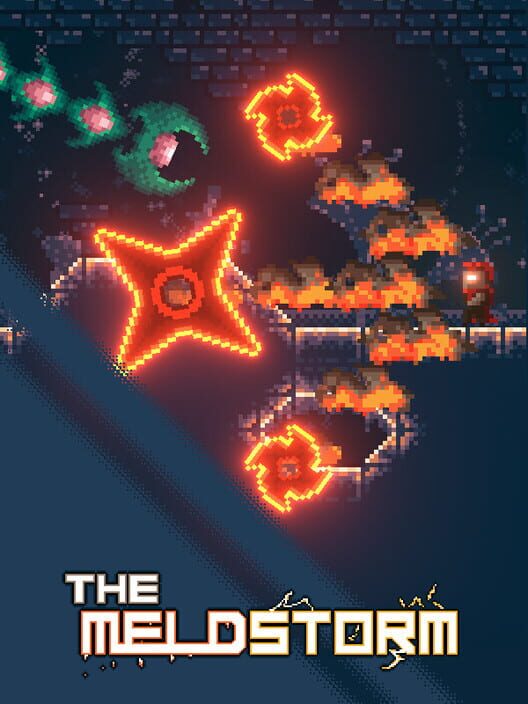
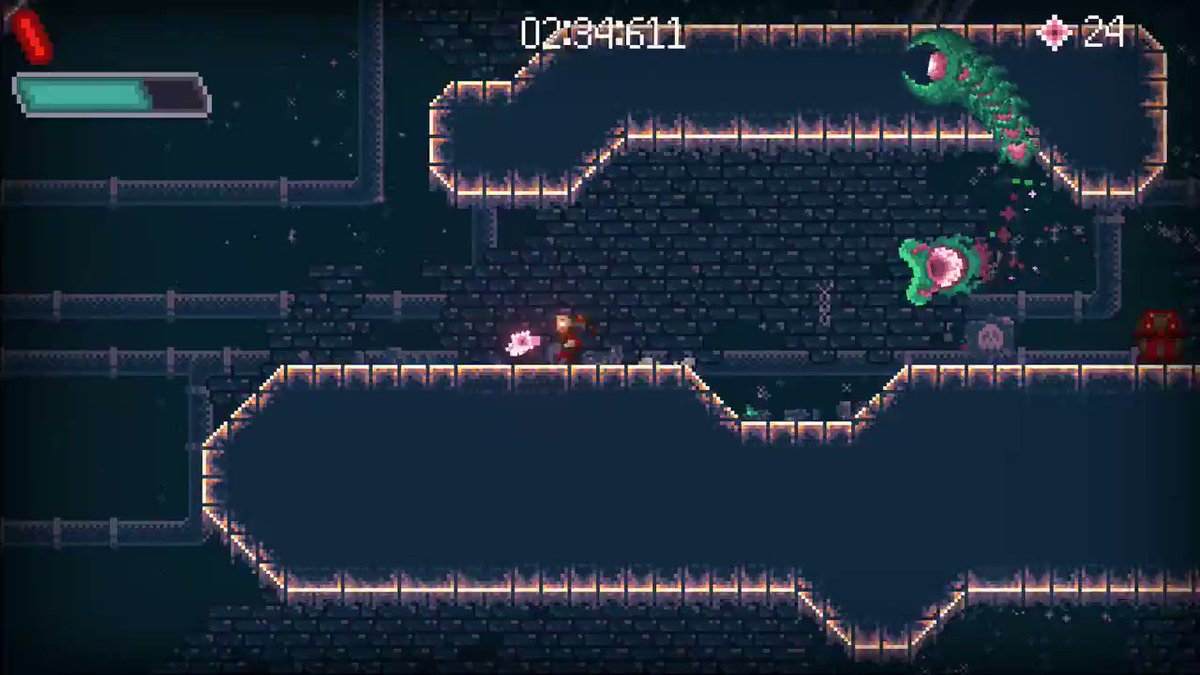
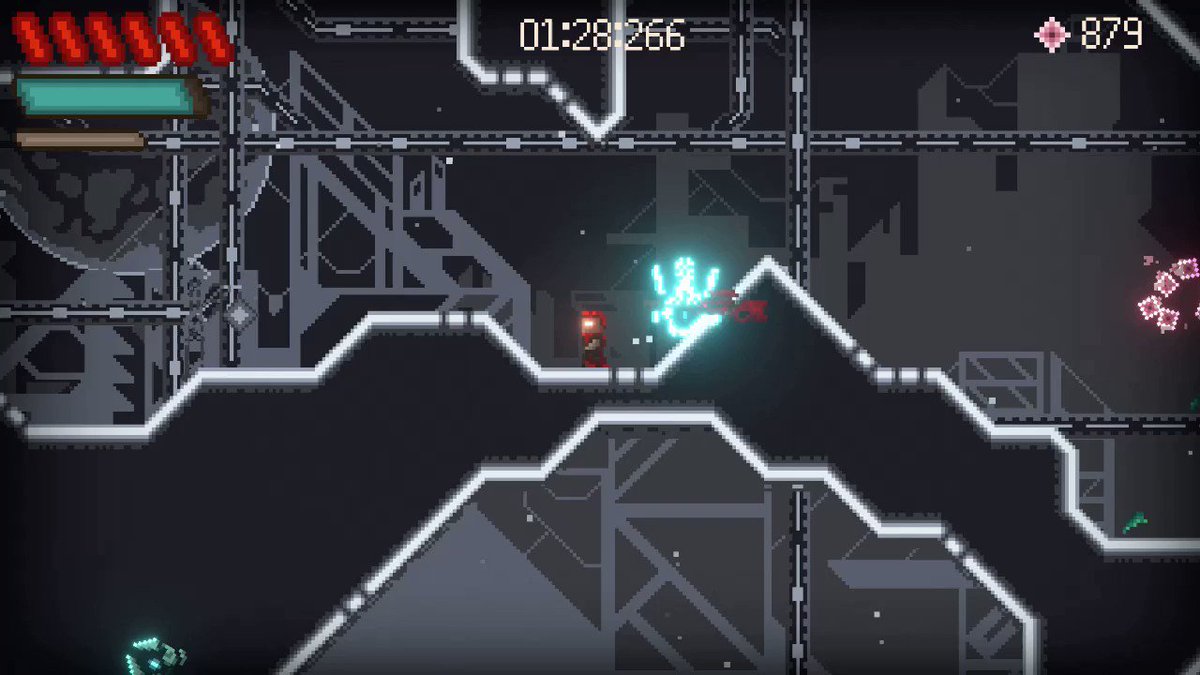
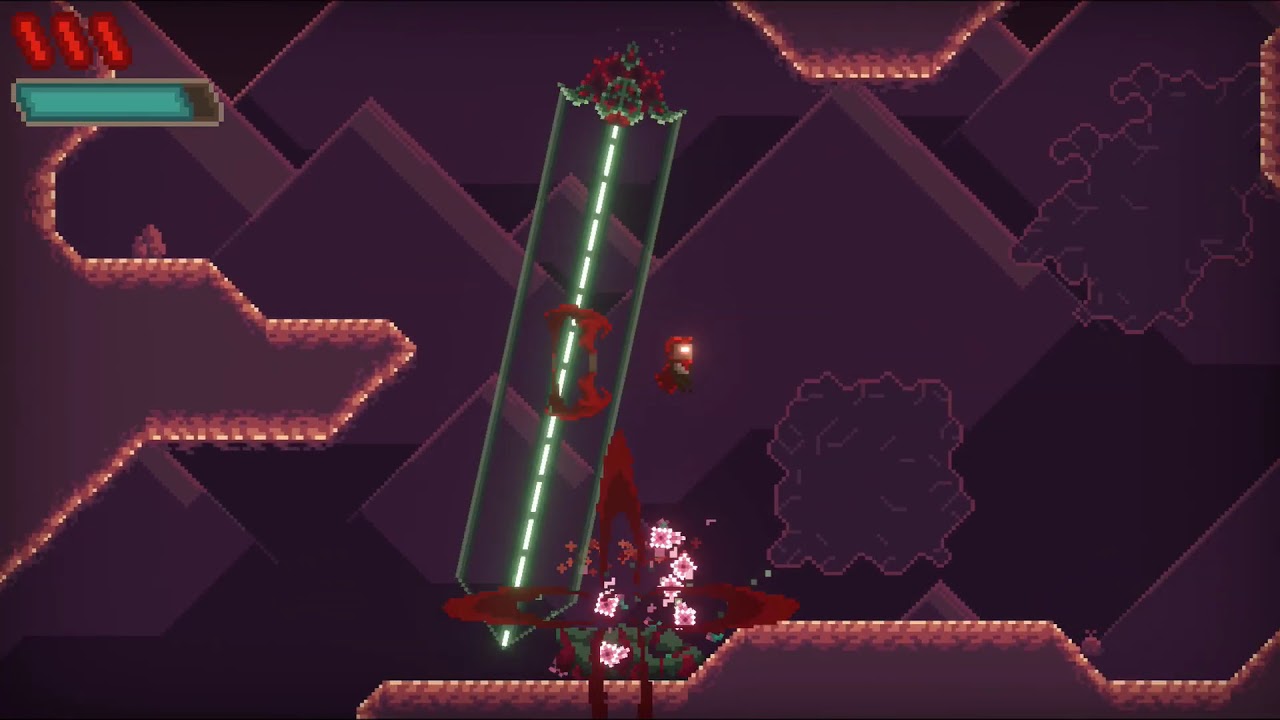
Whilst scouring the internet for new indie game prospects, I came across another title that caught my attention and was slated for release shortly. The Meldstorm is a 2D side-scrolling rogue-lite with item synergy elements. Players will be able to customize their weapons on the same level as games like Mothergunship and Fallout 4 with the game revolving around the player character (either a knight, rogue, or sorcerer, depending on the player’s choice), undertaking the deadly pillar trials: a series of tests requiring combat with an ungodly number of alien enemies and puzzles to solve. Wanting to know more about this game, I contacted its sole developer, Liam Dehaudt, and put forward to him a series of questions regarding how development has progressed and what players can expect to see when the game is fully released on Steam. Here’s what Liam had to say about The Meldstorm:

The Meldstorm 1

What were the influences behind your game? 

Risk of Rain influenced the item system, but I wanted more deliberate combat (fewer but more powerful enemies), so I borrowed a lot from Gungeon’s enemy feel, except as a platformer.

What has the developmental process been like?

It’s fun, it started as a hobby but became a bit more. I’ve worked on a few projects before, so this is like a test to put everything I’ve learned together. Of course, there are ups and downs, but that’s to be expected.

How close are we to seeing the finished product? 

I honestly don’t know. I would have a few months of development left, but since I just got a job, it’s most likely going to be a while longer. Let’s say late 2020 to early 2021, but that’s a super vague guess.

The Meldstorm 2

What has been the most exciting aspect of development? 

Programming is my jam, so making the big systems has to be my favorite part. I had a ton of fun making the mods interact with the weapons, and making a general system to create new weapons easily.

What has been the most challenging aspect of development? 

Marketing is tough and makes me want to pull my hair out sometimes. I’m quite new to it, so I’m learning a ton, but for now, I’m still pretty clueless.

What has been your favorite boss fight to have created so far?

The final boss is cool and pretty different. I got some cool feedback from Reddit that helped me make him look a lot cooler, too. You get the first phase to learn his attacks, then he spices things up in the second.

The Meldstorm 3

How well has the game been received so far? 

People seem to like it. The few players I’ve had try it had fun. As mentioned prior, I am struggling with marketing, which I think is slowing me down a lot, but I think my current audience likes what I’m doing.

What platforms are you looking to bring the game to?

PC/Mac first, if the response is good, then I’ll consider everything else.

Do you have any advice for aspiring developers who may be reading this? 

Manage the scope of your game to something doable. Try to stand out. Aim for the top but expect not to get there. Reach out to people who are working on stuff you like.

The Meldstorm 4

Where on the Internet can people find you? 

I post all my work on Twitter; you can also DM me there if you want: 

https://twitter.com/TheMeldstorm

Also, if you like my game, wishlist The Meldstorm:

https://store.steampowered.com/app/1220300/The_Meldstorm/

Do you have anything else to add?

Have a nice day ^^

I also want to thank Liam for agreeing to this Q&A and hope you guys enjoyed reading more about The Meldstorm as much as I enjoyed drafting it up. The Meldstorm looks like a very promising game with virtually an infinite amount of replay value, and I’m certainly excited for what the final game will have to offer players compared to its current build. I will draft up a review of it upon release, but in the meantime, I wish Liam the best of luck with his debut title.

Game on,

Scouse Gamer 88

Axiom Verge (PC, PlayStation 4, PlayStation Vita, Xbox One, Wii U, Nintendo Switch)

Axiom Verge

Developer(s) – Thomas Happ Games

Publisher(s) – Thomas Happ Games

PEGI – 12

Developed solely by former Petroglyph Game engineer Thomas Happ and five years in the making, Axiom Verge was released back in 2015 to overwhelming critical acclaim from critics, garnering a plethora of favorable reviews and receiving a nomination for the best indie game award for 2015 at The Game Awards. I felt no different about this game. It is most definitely one of the better Metroidvania games that I have had the pleasure of playing, delivering in every aspect.

Graphics – 9/10

The game is set on a planet called Sudra and, in lieu of the Metroidvania tradition, features many varied and wonderfully designed environments with a lot of different enemies to contend with throughout. There is also a species of giant humanoid robots called the Rusalka. These are unlike most things I’ve ever seen in sci-fi. Most gamers will immediately be reminded of Super Metroid when looking at this game. As indeed I was.

But there are elements of the conceptual design that reminded me of other games, too. For example, the environments, which look almost alive with floors and walls moving and pulsating, reminded me a lot of Abadox for the NES. Although in the case of Axiom Verge, there’s even more attention to detail put in. The Rusalka also adds a certain eloquence to the conceptual design of this game. Reminding me in particular of the film Ghost in the Shell. 

Gameplay – 9/10

The game plays out ostensibly like a traditional Metroidvania game, with the player having to navigate through a 2D open world and constantly backtracking to reveal new areas or secrets hidden within the game. But what makes Axiom Verge as exciting to play as it is is its combat. The player is able to find a variety of different guns throughout and to strategize according to whatever enemies are in front of them. The world of Axiom Verge is reasonably big. So there is a lot of backtracking involved as players gain new abilities to access new areas. There is also a speedrun mode for more adept players who wish to complete the game in record time, which gives the game some additional replay value. 

But regardless of whether players may be veterans or entry-level, it’s a reasonable challenge, I thought. Not too hard to the point of being inaccessible, but not too easy either. More importantly, however, the game is extremely satisfying to immerse in. Backtracking to old locations is always fun, as the opportunity to experiment with new weapons constantly presents itself, and there’s a great deal of enjoyment to be had in this respect. The boss fights are also as intense as those of any Metroidvania game, again requiring players to strategize according to what weapons they may have, as well as enemy attack patterns. 

Controls – 9.5/10

The game’s control scheme also presents no problems for the most part. It essentially uses the blueprint of Super Metroid in its general gameplay and weapons system. As well as how ammo and health work. The one minor gripe I had with the controls, however, concerns how the address disruptor works. 

The address disruptor is a gun that either corrupts or de-corrupts enemies or certain walls. This is a tool that needs to be used in order to bypass certain areas of the game. The problem is that if a player removes a certain section of wall and not another, if the player fires again, it can reverse the process for the section of the wall that’s already been removed. Leaving the player having to slowly reverse the process again in order to traverse through walls. However, it’s something that’s easily rectified anyway, and I can’t fault the developer for trying something new. More important than my concern is that this is a game mechanic unlike many others seen in the Metroidvania genre. And it adds more to the game than it takes away. 

Lifespan – 7/10

On average, the game can be made to last around 15 to 20 hours. Which, for a Metroidvania game, is fairly impressive. A sequel is currently in development and is scheduled for release in the autumn of 2020. So here’s hoping that the lifespan is increased with the new game. Without giving the end away, I think there will be a great deal of scope to expand the lifespan for the sequel. But the first game lasts more than an adequate amount of time.

Storyline – 8/10

The story follows a scientist named Trace, who is running a lab experiment in New Mexico. Suddenly, something happens in the lab that causes an explosion. After which, Trace wakes up on the planet Sudra and finds himself embroiled in a one-man fight for survival. All while uncovering the wonders and mysteries behind the planet Sudra and helping the Rusalka defeat the entity known as Athetos. As the story progresses, it unfolds into something a lot deeper. Which makes for a story, which, like the visuals, is unlike a lot of things I’ve seen in sci-fi.

IGN gave this game a somewhat less favourable review than me, citing several problems they found with the game that I whole-heartedly found myself disagreeing with. One such criticism was that they thought the story was forgettable. But in my opinion, the story is anything but forgettable. The most prominent theme throughout the story involves moral ambiguity. The intentions and the character of the Rusalka most definitely come into question more than once and will make the player think whether what Trace is doing is right. Which once players play through it, it will make them anticipate the sequel even more. 

Originality – 8/10

Again, the originality of this game has been brought into question by many other reviewers, due to its obvious similarities to the likes of Super Metroid and Xeodrifter. The game clearly has its influences, and most fans of the genre will be able to identify them from the get-go. But, outweighing its similarities to other games are its differences. The conceptual design of this game really makes it stand out from other titles in the genre, and its soundtrack is exceptional, sounding even more otherworldly than Super Metroid in my opinion. Its story, as I said before, is also not as straightforward as Samus Aran striving to defeat Ridley. But rather than making the player question what happens at the end was for the greater good. Not just for Trace, but for the planet Sudra. 

The fact of the matter is that this game comes into its own with potentially massive mythology to be spawned from it with the introduction with even more games and scope for an even bigger plot to unfold along with it and in my experience, except games like Dust: An Elysian Tail and Ato, there haven’t been many Metroidvania games that have made me feel like what I felt after having played this one through to the end. 

Happii

Overall, Axiom Verge is definitely a must-have for fans of the Metroidvania genre. It’s also a must-have for any fan of science fiction. It’s a very enjoyable game with variety in combat and conceptual design, with an extremely memorable story and a lot of promise as a big gaming franchise for the future. 

Score

50.5/60

8/10 (Very Good)