Tag Archives: Video Gaming

Earthlock: Festival of Magic (PC, PlayStation 4, Xbox One & Wii U)  

Earthlock Festival of Magic

Developer(s) – Snowcastle Games

Publisher(s) – Snowcastle Games & Soedesco

Director(s) – Bendik Stang & Fritz Olsen

Producer(s) – Erik Hoftun

PEGI – 12

A turn-based RPG reminiscent of classic Final Fantasy or Dragon Quest games, Earthlock is a game developed by Norwegian outlet Snowcastle Games after securing $250,000 in funding amidst a successful Kickstarter campaign. It was later published by Soedesco Entertainment. Currently, one of the most prominent publishers of indie games. Having marketed games like Tower of Guns and Teslagrad, to name but a few. Whilst not lasting anywhere near as long as games in the aforementioned two major RPG series, it retains a lot of the addictive gameplay and satisfaction to be had for developing player characters. As well as a fairly intriguing story set in a wonderfully outlandish world.

Graphics – 7.5/10

The conceptual design of this game speaks to me as a combination of Final Fantasy IX and Star Wars. In that, there is the element of futuristic steampunk technology, much like the classic Squaresoft game. And then there’s also the element of different alien species co-existing together. The character Amon and his uncle Benjo scavenge together at the start of the story. Reminiscent of how species exist together in the likes of Star Wars or Mass Effect. Specifically, the desert areas remind me of the planet Tatooine. Though it may not stand out greatly on a technical level, the conceptual design certainly makes up for that.

Gameplay – 8.5/10

Earthlock is a story-driven turn-based RPG. The objective of this is to recruit the main characters to the party. And engage in randomly prompted battles in order to level up each character to make them as strong as possible. In turn, advancing the main story. In addition, there are also side quests and causes to revisit previous areas. As there are places with stronger monsters, players need to become stronger over time in order to go back and explore. Though the gameplay formula has been replicated many times before, Earthlock still gives the player a lot to play for in the time that it lasts. It is also always addictive to level up characters and gain new abilities that can be used in combat to achieve more of an edge in battle.

Controls – 10/10

The controls for these games are always very straightforward. And Earthlock is no exception. Exploration and combat are extremely easy to get to grips with. And players will not experience any unnecessary complications while playing. Seeing games like this surfacing within the indie gaming community since the start of the eighth generation has been a breath of fresh air following the unnecessary and frustrating changes made to the combat system in the Final Fantasy games since Final Fantasy XII. And the controls are a massive part of this. Earthlock is a game that gets turn-based combat right in this respect.

Lifespan – 7/10

Earthlock can take, on average, around 20 hours to complete. But if players are more thorough. And want to do everything possible, it can be made to last around 30 hours. And although this falls short of the average lifespan of a typical turn-based RPG, it’s still more than a reasonably long time for a game to last. Especially one that was initially developed on a lower budget than the average mainstream game. To compare it to another. Although the game may not have the phenomenal conceptual design of Child of Light, it still lasts a lot longer than a game in the same genre developed by a mainstream company.

Storyline – 7/10

Taking place in the fictional setting of Umbra, the story follows a young man named Amon, a scavenging adventurer. They eventually get caught up in a huge conflict involving the Suvian Empire. The game’s plot is also quite reminiscent of that of both Final Fantasy IX and Star Wars. As many different characters from a multitude of different backgrounds form an extremely unlikely alliance to save their world from an impending threat. It’s always interesting to see these kinds of stories come together, and Earthlock, albeit to a smaller extent, tells this kind of story well.

Originality – 7/10

Though Earthlock draws a lot of inspiration from many different sources of fantasy and science fiction, as well as many classic series of RPGs, it still has a unique level of conceptual design that does well to make it stand out from a lot of games, most notably in its character and enemy designs. For example, in most Final Fantasy games, most, if not all, of the main party are made of humans, but in this game, almost every playable character is a member of an entirely different species, and it makes the game seem extremely diverse in that respect.

Happii

Overall, Earthlock was a very enjoyable game to play, and I would recommend it to any fan of the turn-based RPG formula. It has a massive abundance of gameplay and diversity in conceptual design, in addition to an intriguing story that does well to keep players gripped from start to finish.

Score

47/60

7.5/10 (Good)

Everybody’s Gone to the Rapture (PC & PlayStation 4)

Everybodys Gone to the Rapture

Developer(s) – The Chinese Room & SCE Santa Monica Studio

Publisher(s) – Sony Computer Entertainment

Director – Jessica Curry

Designer – Andrew Crawshaw

PEGI – 16

Developed as a spiritual successor to the game Dear Esther, and picked up by Sony after the developers failed to crowd-fund the game, Everybody’s Gone to the Rapture turned out to be one of these games that are driven solely by the story. And is told through a first-person perspective with a fairly sizeable open world with nothing to do in it but walk around.

After first seeing this game announced back in E3 2014, I was quite excited about what potential this game had. Even going so far as to list it as one of my top ten most highly anticipated games at that time. Upon playing it, however, I was glad I didn’t pay any additional amount for it on top of my PlayStation Plus subscription. I was bitterly disappointed by this title. Ben Croshaw of The Escapist described this game as a “walking simulator”. And that’s all, and exactly what it is.

Graphics – 8/10

The game is set in Shropshire, England, in the early ’80s and features a lot of staples of English architecture. Such as Victorian-style houses and local pubs. One positive thing I can say about this game is that the visuals were handled fairly well. Being more impressive on the technical level as opposed to the conceptual level. The game’s soundtrack also does fairly well to add to the game’s deceptively calm atmosphere throughout.

Gameplay – 1/10

The game simply has the player walking around the town trying to piece together exactly what happened to the inhabitants who have mysteriously disappeared. There are no additional quests or combat elements, and the gameplay is almost non-existent. This is where its squandered potential comes into play, as there was definitely enough room to add more to it than simply walking around, making it feel like a very insulting gaming experience, amounting to nothing more than a very long film.

Controls – 10/10

Mercifully, walking around is as easy as it is in most decent first-person games. As there are no problems with the controls. But in a game where the only objective is to walk around, it would probably have been easier to get it right than to mess it up.

Lifespan – 3/10

Clocking in at around 4 and a half hours is another aspect in which the game’s wasted potential sticks out like a sore thumb. Given the addition of more things to do, it could have been made to last a great deal longer. But given the fact that going outside for a walk would be a much more preferable alternative to playing this game, it’s just as well that it lasts as short a time as it does. I myself could only manage 20 minutes of it.

Storyline – 7/10

The story of the game centers around the player character trying to deduce exactly what happened to the inhabitants of Shropshire. And why have they disappeared so abruptly? The plot does take a few unexpected twists and turns, which is good. But not exceptional in my opinion. Overall, it still doesn’t come close to making up for the severe lack of gameplay. At the same time, the fact that the story isn’t even overly good cheapens the experience further. As there have been countless that have told better stories. Yet have had much more in the way of gameplay.

Originality – 4/10

The developers were clearly trying to create something different with this game. But to me, there is hardly anything unique to talk about. The premise is relatively original, but short of that, there is, of course, no innovation in any other aspect. i.e., graphics gameplay, etc, which again, to me, further cheapens the experience. It defeats the object of what the developers were clearly trying to do in the first place. When I looked at the awards this game has garnered, I don’t believe it deserved any of them since there were games in both 2015 and 2016 that had better stories. Batman: Arkham Knight, SteamWorld Heist, and Undertale, to name but a few. And it certainly didn’t deserve the award it got for creative gameplay in the UK from the TIGA Games Industry Awards; I had to laugh when I read that one.

Angrii

In summation, Everybody’s Gone to the Rapture thoroughly deserves its designated title of the walking simulator; it’s a modern example of wasted potential in video gaming, and in my opinion, should be avoided at all costs.

Score

33/60

5.5/10 (Below Average)

The Legend of Zelda: Breath of the Wild (Switch & Wii U)

The Legend of Zelda Breath of the Wild

Developer(s) – Nintendo EPD

Publisher(s) – Nintendo

Director – Hidemaro Fujibayashi

Producer – Eiji Aonuma

PEGI – 12

Four years in development, and released as a launch title for the Nintendo Switch, as well as being the last game to be produced by Nintendo for the Wii U. And met with an overwhelming amount of critical acclaim, The Legend of Zelda: Breath of the Wild retains some conventions of the Zelda series. But gives players a much more open-world and open-ended experience than ever before.

It also incorporates elements new to the series. Such as breakable weapons, cooking food, brewing elixirs, using a variety of different armor sets, and a massive variety of things to do and quests to complete. Which puts many open-world games to shame. Whilst this isn’t my favorite Zelda title (that honor would go to Ocarina of Time), Breath of the Wild has unanimously cemented itself as, in my opinion, one of the greatest video games ever developed. And most certainly worth the amount of praise it has been given worldwide.

Graphics – 10/10

Incorporating cel-shaded visuals reminiscent of games in the Wind Waker series, as well as Skyward Sword, Breath of the Wild takes place in a post-apocalyptic Hyrule. It is mostly abandoned countryside except for a few small settlements and towns, including Gerudo Town, Rito Village, Goron City, and Zora’s Domain. And both Kakariko and Hateno Village. Despite the devastation that ravaged Hyrule a century prior to the start of the story, the in-game world looks captivating, to say the least. Hyrule still retains a staggering level of natural beauty. As well as curious ruins and additional places to explore.

It’s also interesting as a Zelda fan to be able to identify the many different buildings that have appeared throughout the series that now lie in ruins. Such as Lon Lon Ranch, the Temple of Time, and the Bridge of Hylia. The game’s soundtrack also does extremely well to add to the atmosphere of this new Hyrule. As well as fit in with each respective situation, the player may find themselves in. Be that either simply traveling throughout the land in peace, or when battling monsters or mini-bosses. It’s also refreshing to see that the conceptual design of the series, in general, has undergone some dramatic changes. Concerning elements like Link and Zelda’s conceptual design. As well as the elements of futuristic technology that existed in mass before the events of the game. Such as the Guardians, the shrines, and the watchtowers scattered throughout Hyrule.

Gameplay – 10/10

The gameplay has also been dramatically changed to give players a Zelda experience like no other. The main objective is, of course, to defeat Ganon. But players may choose to either put this off for as long as possible and go off and do many other things there are to do in the game. Or they can even choose to go straight ahead to the final boss from the get-go. Either way, players will not be at a loss for how best they wish to approach the game.

Players will also not find themselves with a lack of things to do. There is a wide range of different side quests and collectible items to find. Such as building your own house, completing all 120 shrines, finding all 900 Korok seeds, finding Link’s lost memories, and filling the Hyrule Compendium. And conquering the four divine beasts, to name but a few. As far as gameplay goes, it is unanimously the most extensive Zelda game in terms of things to do, and I was thoroughly impressed from start to finish.

Controls – 10/10

In terms of controls, I also didn’t come across any unnecessary complications. The climbing system is actually reminiscent of what a lot of people tend to do when playing games such as Skyrim and Oblivion. Trying to find the best route to climb up mountains, despite how steep they may be. In Skyrim and Oblivion, for example, players do this without the game encouraging them to do so. But in Breath of the Wild, this is actually an integral part of the gameplay and is widely encouraged. The combat system can also present a welcome level of challenge, in my opinion, especially against multiple enemies.

Lifespan – 10/10

With a massive amount of activity to engage in, Breath of the Wild can easily be made to last over the 100-hour mark. This dwarfs the lifespan of every other major entry in the Zelda series. As well as a vast majority of video games in general. Zelda games would generally last a long time prior. But the sheer scale of this game puts every one of them to shame in this respect.

Storyline – 10/10

The place of Breath of the Wild in the Zelda timeline is uncertain. Nintendo has not revealed that. But the game takes place in the land of Hyrule, 10,000 years after Calamity Ganon had attempted to invade the land. But it was thwarted by Link and Zelda, with the aid of four divine beasts and futuristic technology developed by the Sheikah race. A century prior to the start of the story, Princess Zelda conducted further research on Sheikah technology. And chose four champions to pilot the divine beast in case Ganon were ever to return.

Upon Ganon’s return, he turned the divine beasts and the Sheikah technology against Hyrule, using it to ravage the land, while he remained confined to Hyrule Castle. After fighting the menace, Zelda returns to Hyrule Castle in order to ensure that Ganon is kept confined there. Whilst Link is taken to the Shrine of Resurrection to awake 100 years after Ganon’s return, he is then tasked with freeing the divine beasts. And to finally defeat Ganon and drive him out of Hyrule once again.

Cont…

Being the first main entry in the Zelda series to include voice acting, the story is a lot more emotionally charged than ever before. And it offers a much newer perspective on each character. Excluding Link, who is still the same silent protagonist. Although the voice acting is a little below par, the game’s story is a welcome departure from many conventions of past Zelda titles. The portrayal of Princess Zelda herself, for me, is the best feature. Players are sternly reminded of the reason why the series is named The Legend of Zelda, since she carries an aura of mystery and beauty. And to a much greater extent than before. A great depth to her character that Shigeru Miyamoto was inspired by in the first place when naming her after Zelda Fitzgerald. The wife of the American novelist F. Scott Fitzgerald.

Originality – 9.5/10

Breath of the Wild is definitely much more evolutionary than it is revolutionary in my opinion. Which is why I would personally place it beneath Ocarina of Time. Regardless, the game takes the concept of open-world gameplay. It introduces a wide range of new ideas and gameplay elements. Making it one of the most unique titles of the eighth generation. It seems Nintendo has looked at a lot of limitations in open-world gaming and developed them. Such as in the case of climbing mountains compared to The Elder Scrolls games.

I’ve heard people complaining that there isn’t enough in Breath of the Wild to make it seem like a Zelda game. But to me, that’s a reason that makes the game stand out so much in a positive way, since Nintendo has been accused by critics of merely recycling the games. And giving them a new coat of paint, particularly where games for the Wii U are concerned. But to me personally, the departures that this game seems to have taken from the rest of the series are positive ones. And it makes for the best Nintendo gaming experience in a very long time.

Deliirious

Overall, Breath of the Wild is most certainly one of the best games Nintendo has ever developed. As well as one of the best games ever developed in general. There are a lot of things to do; the world of Hyrule has never looked so compelling. And layers will be engaged in the story on an entirely different level from anything seen in the series before.

Score

59.5/60

9.5/10 (Outstanding)

Overcooked (PC, PlayStation 4, PlayStation 5 Xbox One, Xbox Series X & Switch)

Overcooked

Developer(s) – Ghost Town Games

Publisher(s) – Team17

PEGI – 3

Released in late 2016 and published by Team17 after various expo tours to bring the game to the attention of wider audiences, Overcooked is a cooking simulator. In which the objective is to raise as much money as possible at each respective level. By preparing as many dishes as possible. I first became aware of Overcooked when I went to my first expo, Play Blackpool 2015. And I had been following the progress of the game closely until its release. After playing the final product, I can say that I was not at all disappointed.

Graphics – 7/10

The game’s variety of conceptual designs is heavily based on the layout of each level’s kitchen; many take place in outdoor and indoor restaurants. Whilst other levels take place in more varied locations. Such as volcanoes and pirate ships. It also comes with quite an impressive soundtrack. But it’s the variety in scenery that truly makes the game stand out. It speaks of games with some of the most diverse settings conceived. Including Super Mario Bros and Banjo-Kazooie, to name a few of many examples.

Gameplay – 8/10

The object of the game is to serve as many customers as possible at each level and to finish with a possible total of three stars. Similar to Angry Birds or 10 Second Ninja X. Interestingly, it alludes to the fact that 3 Michelin stars are the highest accolade a chef can attain in the cooking profession. It’s an extremely challenging game, but at the same time, it’s also extremely fun.

It’s satisfying to be able to adapt to the layout of each kitchen. And plan your strategy in accordance with the food that is being ordered by the customers. Much like being an executive chef, in fact. There are penalties for overcooking food. As well as sending the wrong orders. This is also an integral part of where the game’s level of challenge lies. Whilst looking simplistic, beneath the surface, there is a system that is easy to learn. Yet difficult to master.

Controls – 9/10

At times, the controls can be somewhat unresponsive. But not to the extent that it ruins the gameplay. Like what has happened with many other challenging games that have been developed in the past. More often than not, if a player makes a mistake, it is down to how they perform in the game, which is how it should be. Apart from this one minor gripe I have, I was particularly impressed with how the developers handled the controls scheme; it makes it. Unlike any other game I’ve played.

Lifespan – 7/10

The single-player campaign mode in Overcooked has 28 different levels, as well as an end boss fight. It is dependent on player skill and can take up to 4 or 5 hours to complete. However, the game was designed to be a primarily multiplayer experience, whereby two players control two chefs at the same time. This can make for many hours of entertainment. There was also DLC released for the game. But with or without it, it does have a great deal to offer in terms of longevity. The only thing it lacks is online multiplayer. I think this would go a long way to improving the experience even further. But that may be an idea to implement with a possible sequel. The idea of a second game would be particularly exciting to me since there is potentially a lot the developers could do to expand upon the concept even further.

Storyline – 7/10

The game’s story involves the chefs having to save the world from an entity known as the Ever Peckish by traveling the world and cooking. Although a story may not have been necessary, it is a nice extra detail that the developers added to give the game that little more substance. The concept may sound ridiculous on paper, but some of the greatest games developed have had very outlandish stories attached to them, and it’s not necessarily a bad thing, speaking from experience. For example, a plumber saving a princess from a dragon may sound strange, but it’s made for the most iconic gaming franchise ever created.

Originality – 8/10

As I pointed out, Overcooked is unlike any other game I’ve ever played; its gameplay layout and control scheme do extremely well to make it stand out from both mainstream and indie releases, which is why I have been excited about it ever since I first laid eyes on it. As I watched it develop, my excitement and expectations only increased as time went on, and in retrospect, I think it deserves the accolades it’s received since its release.

Happii

To summarize, Overcooked is a charming yet challenging gameplay experience that is certainly worth playing again and again. The developers had outlandish ideas ever since the game’s inception, and to see all these ideas come together so well in the final product made me believe it was well worth the wait to see it fully released.

Score

46/60

7.5/10 (Good)

Alwa’s Awakening (PC, PlayStation 4, Xbox One, Nintendo Switch)

Alwas Awakening

Developer(s) – Elden Pixels

Director – Mikael Forslind

PEGI – 7

The debut title of Elden Pixels, and developed under the supervision of Zoink Games’ Mikael Forslind, Alwa’s Awakening is a throwback to the classic games of the NES era, including Zelda II: The Adventure of Link, Metroid, and Castlevania II: Simon’s Quest. An 8-bit Metroidvania game, it focuses heavily on exploration, combat, and acquiring a range of different abilities in order to progress from area to area. Playing this game felt like an absolute pleasure, as well as a fitting tribute to games of the late 80s. And I would recommend it to any fan of that era of gaming.

Graphics – 8/10

Conceptually, where this game stands out is the design of the enemies, as well as the boss battles. Though clearly influenced by many aspects of medieval mythology, including other fantasy franchises (elements of Dungeons & Dragons seemed most evident to me personally), the developers took these influences and formed their own cohesive concepts in terms of visual design. Which is quite difficult to do when dealing with medieval fantasy, making it seem all the more impressive. The soundtrack, recorded by Robert Kreese, is also nothing short of stellar. On par with, if not better than, many classic NES games.

Gameplay – 8/10

Alwa’s Awakening is a Metroidvania game focusing on adventure and exploration. But the developers also boasted a heightened level of challenge compared to many other classic NES games during development, promising an unforgettable throwback experience to suit both the seasoned and casual classes of gamers of that time. When Elden Pixels first announced this, I did get nervous that they would develop a game that was nigh on inaccessible. As I’ve found in many NES games, such as those in the original Mega Man series.

However, while playing through it, I found it offers a level of challenge that is stern, yet reasonable. A level of challenge on par with Shovel Knight, for example. It came as a relief to me. And I was able to enjoy the game with minimal frustration because of it. There are secrets to uncover along the way, and some of the most invigorating boss fights I’ve seen in a 2D game.

Controls – 10/10

Part of the reason why I found the game to be more accessible than many fully NES titles purposefully made to be hard was that the controls are also flawless. In many Mega Man games, I have experienced problems with the controls. And time and time again, it defeats the object of demanding skill from the player if the developers can’t program the game properly. In this game, however, no such issues exist; the controls are perfect, and any errors made will be down to player performance.

Lifespan – 6.5/10

The game can be made to last around 6 to 7 hours in total. Taking everything to do within it into account, which by NES standards at the time may have been outstanding. But in the current era, especially for a Metroidvania, it does fall somewhat short in this respect. It is the game’s biggest issue in my opinion. And I think it could have been made to last at least 12 to 13 hours, given more things to do within it. However, there is more than enough substance in gameplay for how long it lasts. This does emphasize quality over quantity.

Storyline – 7/10

The story of Alwa’s Awakening follows a girl called Zoe, who is playing video games one night. And after dozing off, she finds herself in the land of Alwa, where her favourite video game is set. And she is thrust into a quest to save the land for real. The plot itself may be quite straightforward, but there are certain aspects of it that do well to foster an air of mystery about the game, as was customary among NES titles in the console’s heyday. It’s a nice touch that the developers added that makes the game more enjoyable to play through overall.

Originality – 7/10

Taking everything into account, I was impressed with how many unique aspects there were within this game compared to other classic 2D titles. As someone who first started out playing video games on the NES, my first ever video game being Chip N’ Dale: Rescue Rangers, it was refreshing to take a step back from AAA mainstream titles. And play a game that not only hearkens back to the days of gaming simplicity. It also offers something different from any other NES title.

In summation, Alwa’s Awakening is a welcome addition to the ever-growing indie scene and a definitive joy to play. There’s great gameplay, atmospheric visuals, and an excellent soundtrack. And a level of challenge that will satisfy all classes of third-generation gamers.

Score

46.5/60

7.5/10 (Good)

Oh… Sir! The Insult Simulator (PC, Android & iOS)

Oh Sir The Insult Simulator

Developer(s) – Vile Monarch

Publisher(s) – Gambitious Digital Entertainment

Rating – N/A (Discretion advised)

Developed by Austrian indie outfit Vile Monarch, Oh… Sir! The Insult Simulator combines turn-based style combat with the layout of a fighting game to deliver a unique twist on both styles of play and quirky humor to match. Whilst not having a great amount of replayability for a fighting game, it can make for hours of entertainment, and for the relatively short time it took me to unlock everything, I enjoyed this title.

Graphics – 7/10

Rendered using 8-bit graphics, the developers were influenced most notably by the Monty Python troupe in both its character and stage designs. As a fan of Monty Python myself, it was fun identifying where the references were placed. Be that either the obvious ones, like the character of John P. Shufflebottom being an obvious caricature of John Cleese’s character from the world-famous dead parrot sketch, or obscure ones like the trumpets being blown by their rear end in the background of the afterlife stage. Reminiscent of a scene from Monty Python’s The Holy Grail. There are also references to other aspects of modern and classic thrown in for good measure, which enhance the game’s level of visual variety in terms of conceptual design.

Gameplay – 6/10

The object of the game is to string together the longest insults possible by picking from a selection of phrases and conjunctions in the best order to deal as much damage as possible to the enemy and deplete their health bar before they can deplete the player’s health bar. There are additional characters to unlock, as well as an additional stage. And then there’s also a multiplayer mode whereby people can compete online. For a fighting game, it doesn’t have a great deal of content. And I’m hoping that’s where the game’s upcoming sequel will come in. Oh… Sir! The Hollywood Roast. It’s not the most plentiful experience available, but well worth the price posted on Steam of £1.59. Stringing elaborate insults together feels satisfying, and it’s also rewarding to be able to identify an individual character’s weaknesses to deal extra damage.

Controls – 10/10

Issues with the controls are non-existent unless gamers have a problem with their mouse. It’s a simple point-and-click game typical of a vast majority of PC games and suffers from no problems in this respect.

Originality – 9/10

In terms of uniqueness, it stands out from any other fighting game ever made. It thrills me to see independent developers trying out new ideas never seen in gaming before, and making them work extremely well, like what has been accomplished with this title. The developers have promised a more plentiful experience with the next game. As well as it being much more open to modding like Civilization 5, perhaps. But the first game is definitely a standout starting point worthy of more attention than it has received so far.

Happii

Overall, Oh… Sir! The Insult Simulator, whilst having a fleeting single-player experience, makes up for that in its quality. It’s an entertaining, reasonably priced, and funny gaming experience, and I would recommend it to all fighting game fans out there.

Score

32/40

8/10 (Very Good)

https://store.steampowered.com/app/512250/OhSir_The_Insult_Simulator/

Titan Souls (PC, PlayStation 4, PlayStation Vita & Android)

Titan Souls

Developer(s) – Acid Nerve

Publisher(s) – Devolver Digital

Designer(s) – Mark Foster & Andrew Gleeson

Programmer – Mark Foster

PEGI – 7

Drawing influence from some of the most critically acclaimed gaming franchises of all time, such as Legend of Zelda and Dark Souls. And being met with critical acclaim following its release in 2015, Titan Souls is a top-down adventure game, similar in gameplay style to A Link to the Past. But with much of the same difficulty as Dark Souls. After playing this game for the first time at Play Manchester 2015, I was somewhat skeptical about going back into it in an attempt to complete it. Since I’d only played the first part prior. And I was massively under the impression that things were only going to get insufferably harder after that point. However, I was pleasantly surprised to find that the game is nowhere near as inaccessible as I feared that it would be. And I ended up enjoying it very much.

Graphics – 10/10

Rendered in 16-bit graphics reminiscent of the fourth generation of gaming, the game looks even better than some of the classic titles of that era. Aside from the in-game world looking vibrant, colorful, and extremely unique in terms of conceptual design, in both its setting and boss characters, the attention to detail regarding the environment. Such as shadows in the forests, and footprints in the snow.

And splashes in the water make it extremely enjoyable to take in whilst playing. In addition, due to elements put in, such as overgrowing moss on buildings and snow mounts in the colder regions, very little about the in-game world looks replicated like what was typical of games of earlier gaming eras. It’s similar to how each cave in Skyrim was uniquely designed in comparison to how they were designed in Oblivion.

Gameplay – 7.5/10

The objective of the game is to seek out and kill a series of titans situated throughout the land. Similar in many ways to Shadow of the Colossus. The player’s only weapon is a single arrow from a bow. It can be telepathically summoned back to the player upon firing. This is where the game’s intense level of challenge comes in. Players need to be able to move and dodge enemy attacks efficiently as much as they need to be accurate in placing their attacks.

The game can be made to look intimidating in terms of challenge. But speaking as a gamer who considers games like Dark Souls and the original Mega Man and Castlevania titles to be overly inaccessible, I didn’t find it to be unforgiving. Players will need to persevere since death will happen more than once. Especially as the player dies in one hit. But the satisfaction to be had after completing the game makes it more than worthwhile to play. Harder than completing the game is fulfilling the additional criteria during boss fights needed to unlock certain achievements within it. For example, knocking out all of the mountain titan’s teeth before killing it.

Controls – 10/10

Thankfully, there are no issues with the game’s control scheme whatsoever. It came as an especially big relief to me. I’ve found many challenging games. Most notably, earlier eras of gaming, like Castlevania and Mega Man, have suffered from having problems with the controls. It can be an unnecessary annoyance while playing. If a game demands that players need to be on top of their game to complete it, then the developers need to be on top of theirs while creating it, I feel. Otherwise, it can largely contradict the point of making a game that hard at all.

Lifespan – 7/10

One playthrough of Titan Souls, depending on how often the player gets themselves killed while playing, can be made to last roughly 5 to 6 hours. However, there is some replayability to be had if players want to truly master the game and do everything there is to do in it. Making for an experience lasting around 15 to 20 hours overall. I think with the size of the world the developers incorporated, they could have added a few more side quests to contribute to the game’s longevity. But regardless, the game does last a respectable amount of time. For those willing to put as much time into it as possible.

Storyline – 6.5/10

The story of the game follows a nameless traveler armed with a bow and a single arrow on a quest to defeat all the titans throughout the land. In order to harness the power of the titan souls and realize a great truth and power. What bugs me about the story more than anything is that there is too much left unexplained, in my opinion. There’s nothing wrong with a level of ambiguity when it comes to a story. For example, if it ends on an interesting cliffhanger. Or if there are certain aspects of characters or plot twists that are left open to debate.

But since there does seem to be some kind of mythology attached to this game, I would have liked to find out a lot more about it. Shadow of the Colossus’s plot was somewhat similar. But there was more depth to it than there is in this game. Making the players care more about what would be going on, or what would happen to the characters. But where Titan Souls is concerned, I was left wanting in this aspect. At least until a sequel may be developed.

Originality – 7/10

Though Titan Souls may not be the first game to do many of the things that it does by any stretch of the imagination, they are all done with their own unique twist, which will make gamers. Especially seasoned players of retro games appreciate it to a great extent. It’s open to players looking for a wondrous sense of nostalgia. As well as younger gamers looking to explore how gaming used to be. But at the same time, it is in for a different kind of experience from what was typically available to gamers back in the days of the Super NES and Mega Drive.

Happii

In summation, Titan Souls is a gaming experience well worth delving into. It’s challenging without being accessible, its visuals are marvelous to behold. And though it may be lacking somewhat in the story, it provides an ample amount of what matters most: immersive gameplay.

Score

48/60

8/10 (Very Good)

Forged of Blood

Q&A With Igor Tanzil

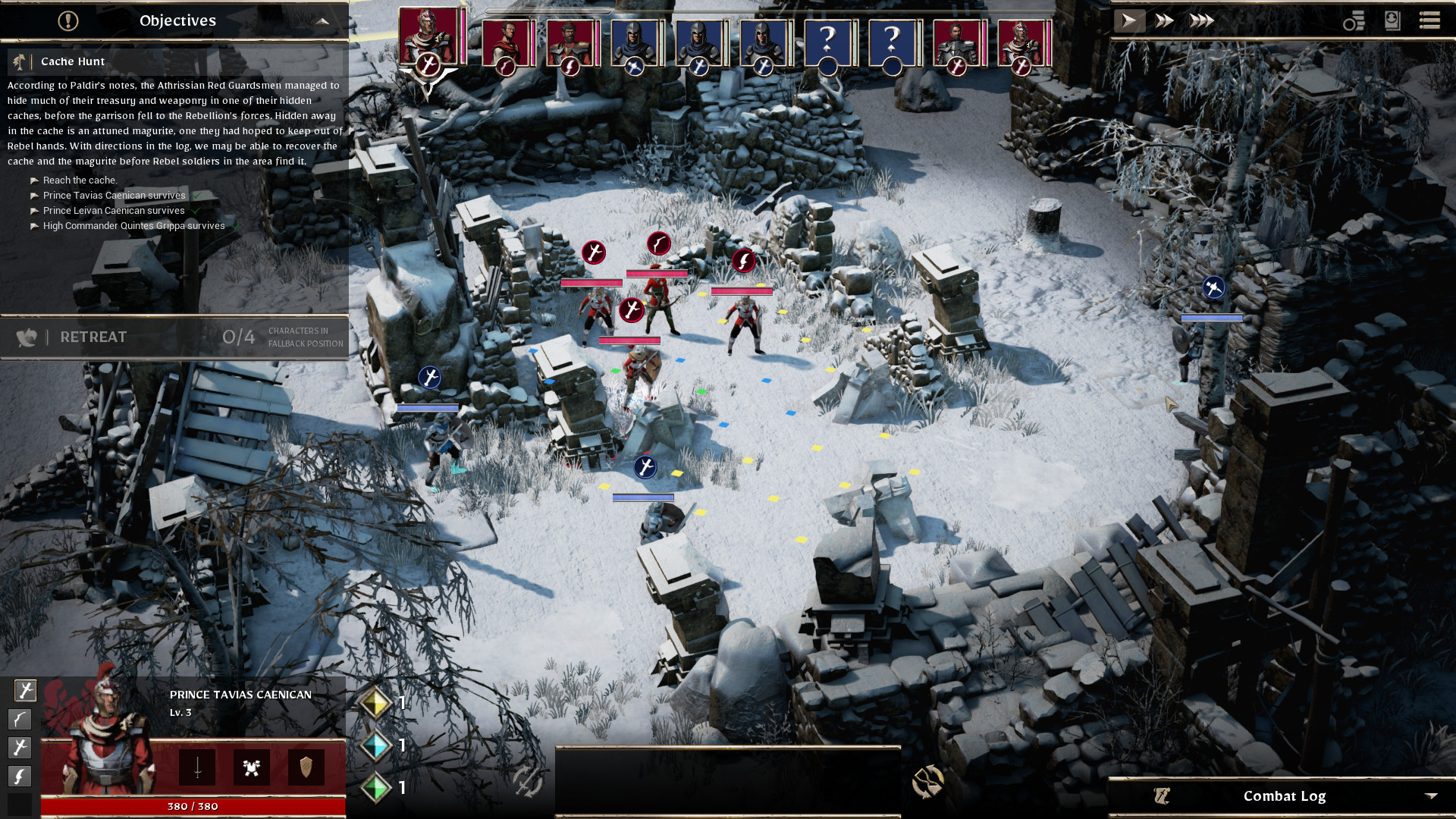
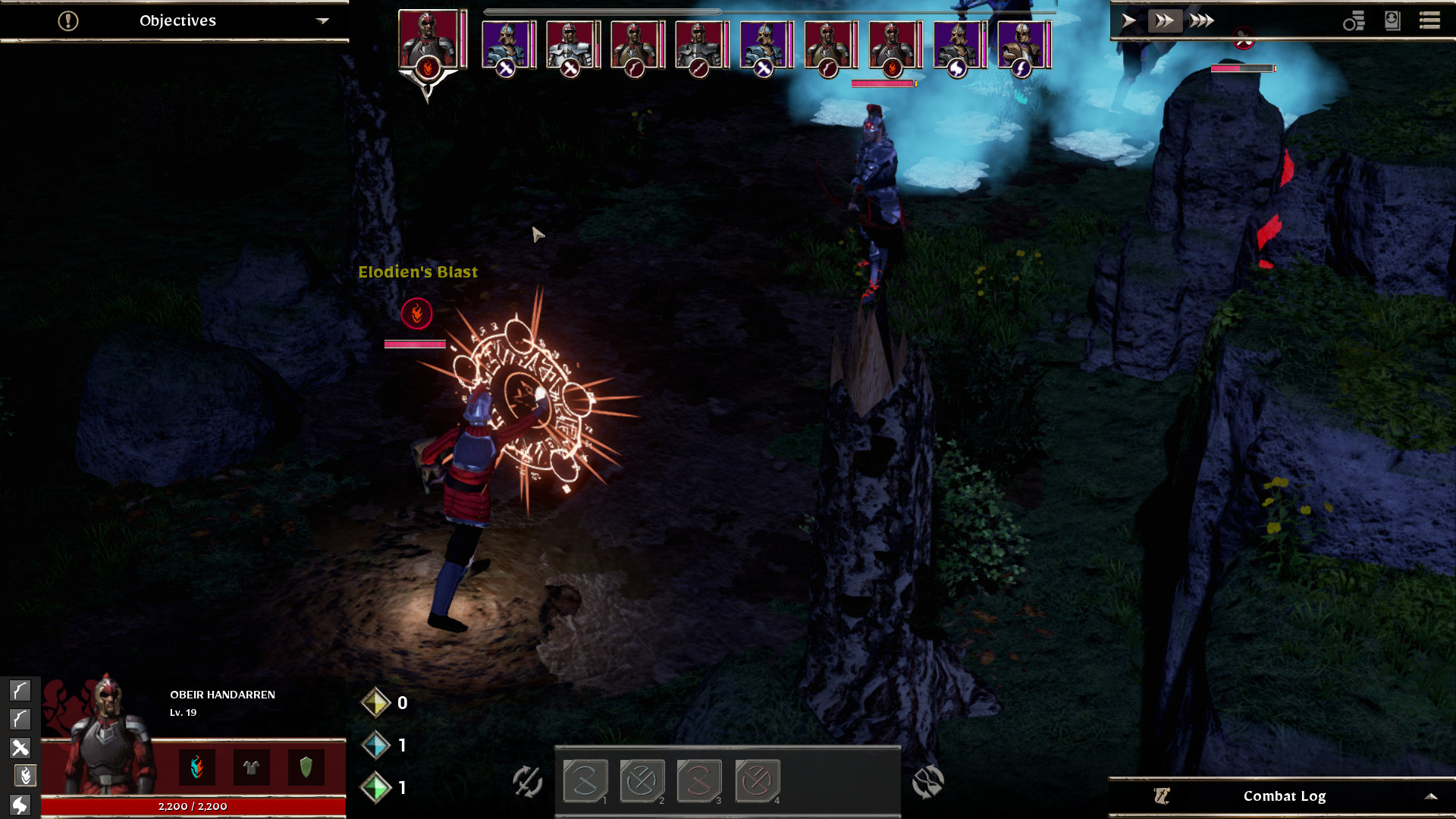
Following my trip to London for the EGX Rezzed conference, I was allowed to ask questions about yet another indie game for the blog. The subject of this particular session is a game called Forged of Blood. Set in a morally ambiguous fantasy world reminiscent of Gary Gygax’s Dungeons & Dragons series, Forged of Blood is a tactical RPG. Similar to the likes of Tactics Ogre & XCOM. Complete with a variety of different weapons and magic to do battle with. And a morality system similar to Fable or Mass Effect. I managed to send some further questions about the game to the creative director of Critical Forge Games, Igor Tanzil. And amidst the game’s ongoing Kickstarter campaign, these are the answers he gave;
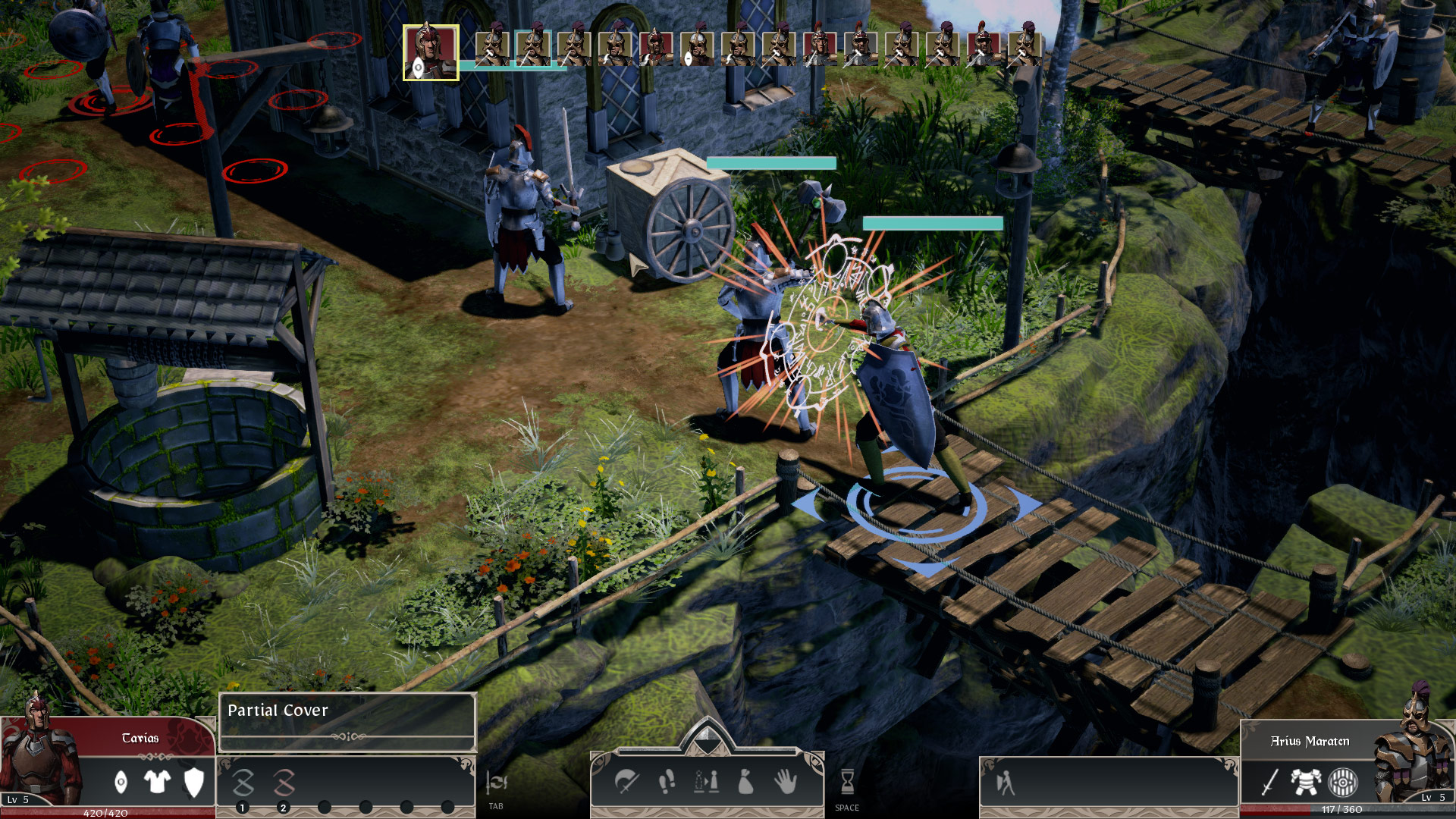
Forged of Blood 1

What were the influences behind your game?

Forged of Blood is the love child of the different personalities and gaming preferences of the studio’s founders. Mechanically, it’s heavily influenced by the tabletop RPGs we’ve played. Along with the old-school TRPGS and RPGs that a lot of us grew up playing. Final Fantasy Tactics, Tactics Ogre, X-Com (both old and new). And of course, Dungeons and Dragons and Pathfinder, you name it, we’ve played it and loved it. And so we set out to make the game that took the best parts of all the games we’ve loved and merged them with modern graphics we can get with Unreal Engine 4. I’ll let Milo, our Game Designer, take the reins on the mechanical side below while I cover the world at large.

For the setting of the game, we wanted to set it in a hard fantasy world that is grounded in the reality of that world. That means coming up with a world and coming up with the rules that would govern that world. We asked ourselves, ok so how would small unit tactics make sense in our fantasy world? How did magic permeate society? And perhaps more importantly, what is possible and not possible with the magic in our world?

Cont…

My partners are huge Brandon Sanderson fans, and I loved the old Stargate SG-1 worlds and Roman cultures. So I kind of took all that in when I started with the world-building. What we end up with is Attiras: A world that is heavily inspired by Roman culture. And one where we have an older ruling species giving way to a new species before getting supplanted.

Attiras is something very near and dear to my heart. It is the world upon which I’ve imprinted my thoughts and feelings of morality. Growing up, I’ve always felt out of place, being a minority in my own country (Indonesia). And then growing up in two other countries, wherein I was just as much of an outcast there as I was in my own home.

So I wanted to explore the themes of race and the tensions that come with a ruling minority. And how a smaller population might come to power. Of course, at the end of the day, Forged of Blood is still a video game. And that means that a lot of these things might be relegated to the depths of our lore books. But my partners and I definitely felt that we needed to have a fully fleshed-out world for us to then create within. The challenge now falls to us to pick and highlight the stories within our world that are fun for a game. And make for a compelling story to drive the narrative forward.

What has the developmental process been like?

The short answer? A thrill ride.

The more realistic and complicated answer is that it has been. And continues to be a process that teaches, humbles, and excites us. As a brand new studio, the onus fell on us to remove as much doubt and risk from our future consumers as possible. And to that end, we’ve taken a very pragmatic approach to our development process. To us, that means making sure from the very beginning that we can make the things that we set out to make before committing to them.

And that led us to initially launch the studio with a small team of six to prototype and world-build the game we had in mind. During this time, we split the team into two, with the programmers testing and building upon a toolkit in Unreal Engine 4. And the rest of us are testing out the base mechanics on the tabletop before implementing it in-engine to test.

From there, we iterated repeatedly until we had something that we felt was fun to play before expanding the team to include the art side of the studio. We’ve since hit a few big milestones in just under a year. From our first fully rendered tactical map to implementing the strategic and tactical layers together. The progress we’ve made here at the studio has just been a wonder to behold.
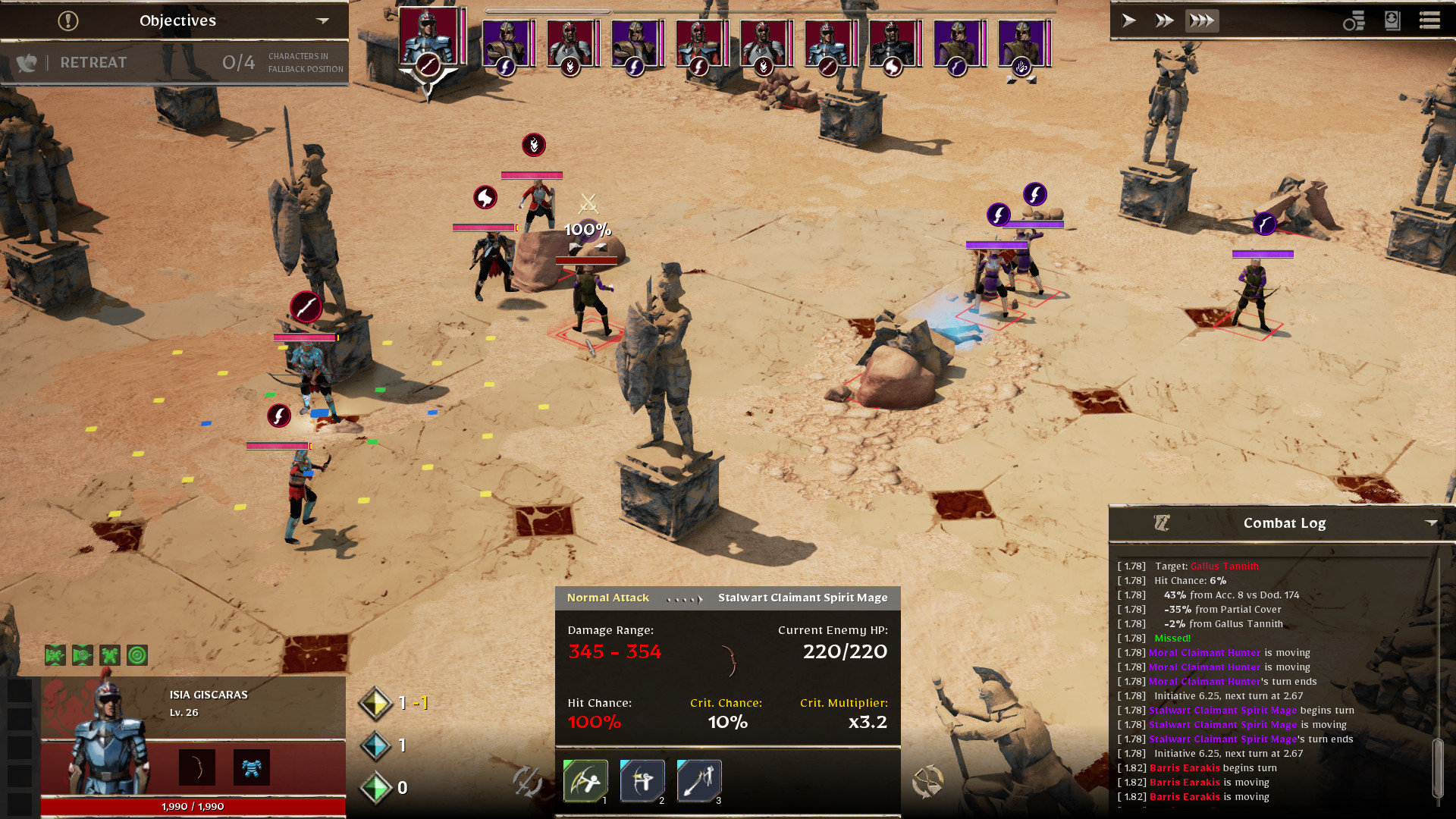
Forged of Blood 2

What has been the most exciting aspect of development?

Oh boy, everyone will probably have a different answer to this question. I have two favorites. I think the first thing that got me excited for Forged of Blood was the worldbuilding. It was and continues to be a creative process unlike any other that I’ve done. Being given the freedom to create an entire world. And then working with the team to bring that world to life, and seeing how others interpreted the world. And the rules I’ve created have been just an absolute treat for me.

However, what I think is the most exciting aspect of the development for all of us has been seeing it all come together right before PAX. Our pre-alpha PAX build was the first time we saw it all start to come together. And being able to catch a glimpse of the game both on the Strategic Layer and Tactical Layer was a huge morale boost for everyone.

What has been the most challenging aspect of development?

The most challenging aspect of the development process so far is finding the balance between our dreams and ambitions and the limitations we have as a small studio. When we started the studio, we focused our efforts almost entirely on finding the right team. Luckily for us, we’ve all worked together on a larger project before. And it just came down to picking the right person for each role. That said, ours is still a very small team, and our budget dictated the production time we’d have to work on Forged of Blood. And that in turn dictates just how much we can do. It’s tough on all of us when we have to forego a good idea or limit the number of assets we can have. But finding a compromise is ultimately the only way forward.
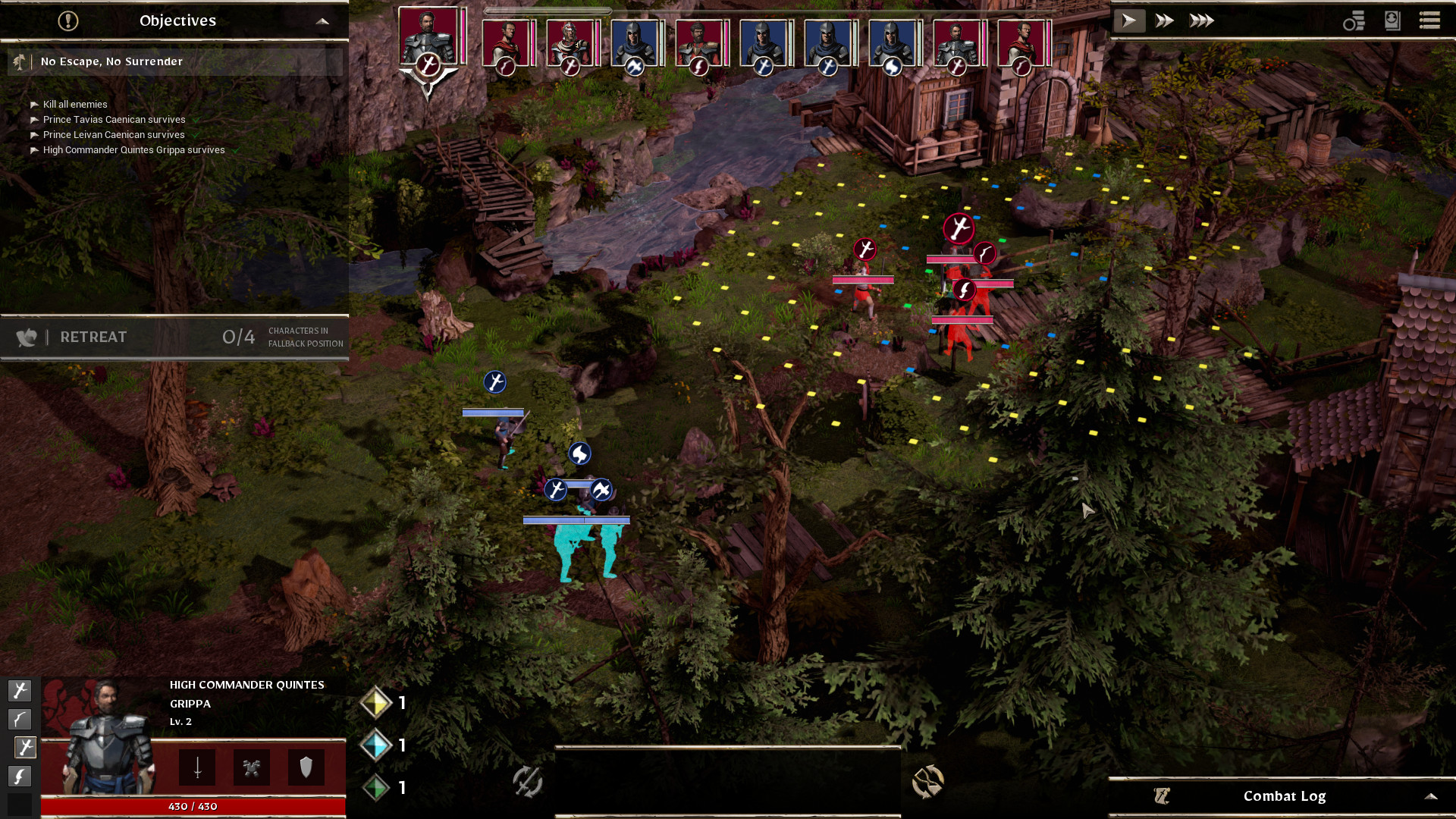
Forged of Blood 3

How well has the game been received so far?

This is interesting to experience as a new indie studio. The hard truth is that for the most part, we are ignored. We’re the “nobodies” from a country that just isn’t known for video games. And we’re working on a very deep game with a rather small market segment. And that has seriously affected just how far word of our game has reached.

However, it has been extremely gratifying to experience the reaction of people who actually gave us a minute to hear our spiel and actually checked out the game. The people who stopped by our little booth at PAX East kept coming back. And they brought their friends time and time again. The more we engaged with people who found the idea of a Fantasy Tactical RPG interesting, the more they loved the project. And we’ve even gotten some fans who are helping us spread the word.

I think we’ve really hit the nail on the head in creating a game that appeals to our market. The fans we’ve made in the last few weeks are a testament to that. But we’re still hindered by a lot of the fatigue that comes from other failed Kickstarter projects and our studio’s relative anonymity. However, we knew that going in, and we’ve taken the steps mentioned before in removing as much risk from the consumer as we can. Even though it is a great expense for us.

What were the influences behind the combat system?

To quote Milo, our game designer:

Before we began designing the game, we discussed what type of game we wanted to make. We wanted a game based on meaningful choices, dark/hard fantasy, and set in a believable world. This leads to decisions about spell crafting and Magurite to create a harder fantasy feel in which you draw the energy in from the environment before expelling it back out. Combining with the Magurite to provide a power source for the spells.

We also drew heavily from games we are all fans of. Such as X-Com, Dungeons and Dragons, Pathfinder, and other turn-based tactical and RPG games. Our Standard Action, Move Action, and Quick Action structure is quite similar to something you would see in Pathfinder or Dungeons and Dragons. We also wanted to provide as much freedom for the players as we could, which led us to have classless character builds that focus more on how the characters will play rather than what their roles will be.

What platforms are you looking to bring the game to?

While the PC is our primary platform, we will be looking into releasing it on other platforms once the PC version has been released. We have also had a lot of people asking for Linux and Mac from our fanbase. And that is certainly something that is feasible with Unreal Engine 4, but we’ll confirm everything once the game is further along.
Forged of Blood 4

Do you have any advice for aspiring developers who may be reading this?

The biggest advice we can give to aspiring devs right now is just: to make the game you can finish. It’s always great to shoot for the stars. In a way, that’s what we’re doing. But it’s even more important that you end production with a game that ships. For us, that means approaching the mechanics and art in a very iterative way that allows us to learn, execute, iterate, and streamline the different production threads in the studio. It also means being able to acquiesce to the very real limitations of time, money, and ability when approaching some of our more grandiose ideas for the game. We are ultimately judged on the work we show. And if the game never ships, we have nothing upon which to build.

Where on the Internet can people find you?

While we have a website and blog, we are also very active in a few gaming communities that I’ll include below. In fact, the majority of our fanbase comes from these gaming communities. Mostly gamers who are really into the sort of game we are developing, who are willing to hear us out and check out the game.

Game Website: http://forgedofblood.com/

Studio Website: http://criticalforge.com/

Kickstarter Campaign: https://www.kickstarter.com/projects/criticalforge/forged-of-blood

Neogaf Thread:

http://www.neogaf.com/forum/showthread.php?p=233027883#post233027883

RPGCodex Thread: http://www.rpgcodex.net/forums/index.php?threads/forged-of-blood-turn-based-tactical-rpg-kickstarter-live.111536/

Facebook: https://www.facebook.com/fobthegame

Twitter: https://twitter.com/ForgedOfBlood

Do you have anything else to add?

I think we’d like to take this time to just express our gratitude for the amount of love we’ve gotten from our fans so far. We’d also like to take the time to plead our case to the many skeptics out there.

Forged of Blood is an ambitious project for us. For anyone, really. But we’ve approached it every step of the way with the sort of pragmatism that we truly believe will result in a game many will enjoy. We’ve taken a huge risk in trying to alleviate the risks to the consumer. And we hope that you will judge us by the work we show. We’ve put everything we have into this game, and we will see it through. Though we are on Kickstarter for a reason. We need those funds to truly elevate the game to be what we know it can be. But no matter the outcome, Forged of Blood will be completed.

Thank you so much for this interview, and please never hesitate to reach out to us!
Forged of Blood 5

I would also like to take the time to thank Igor for providing such an in-depth insight into the game. And to wish him and the team the best of luck with the title and the Kickstarter campaign. Forged of Blood looks very much on par, if not better than, many of the other RTS games I saw at EGX Rezzed, and I would recommend any readers check out their Kickstarter page.

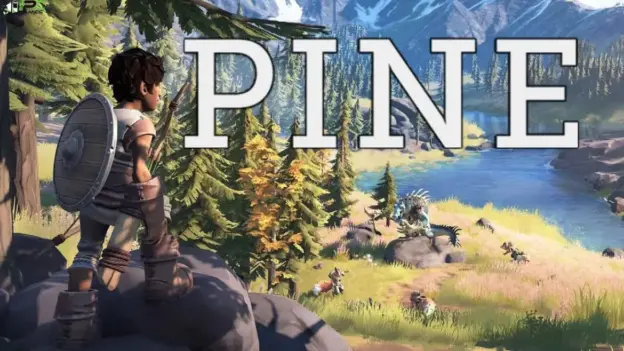
Pine

Q&A With Twirlbound

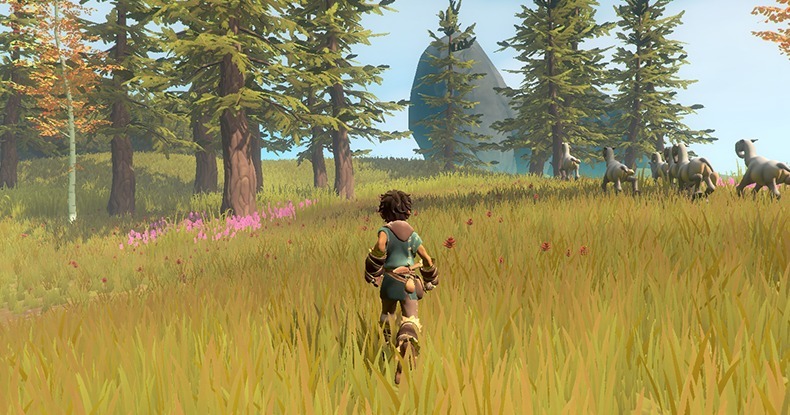
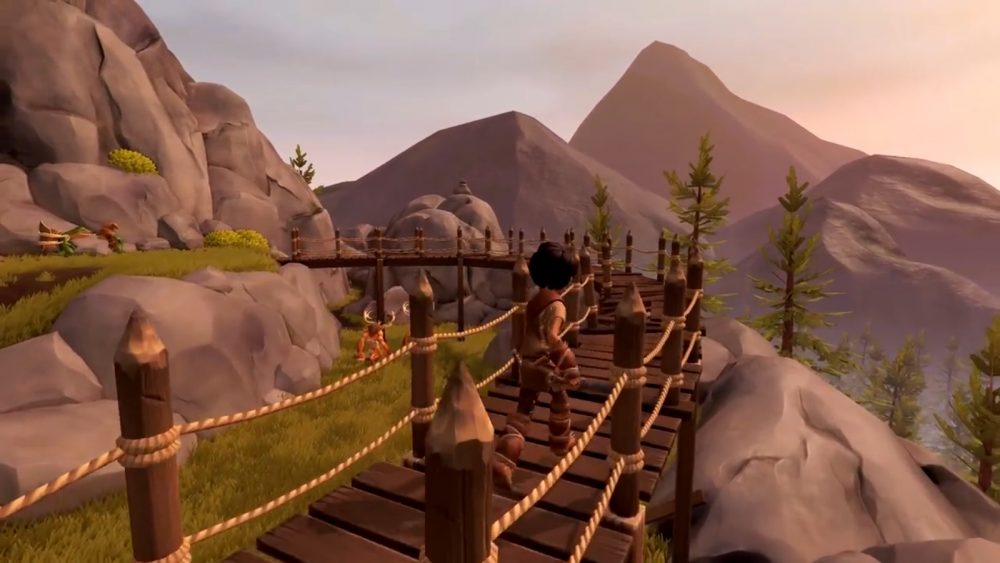
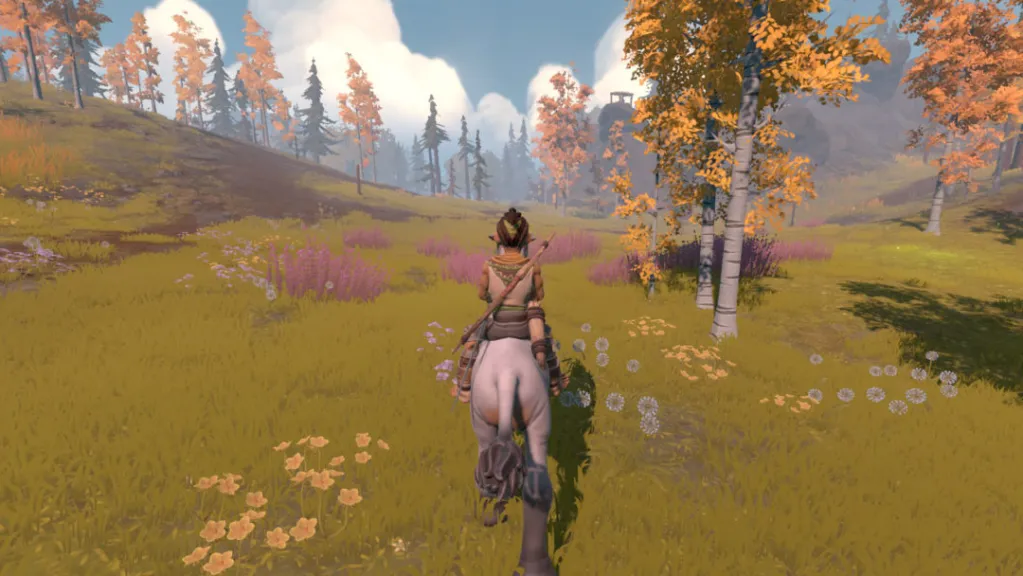
In my ongoing bid to cover more independently developed games and indie developers, and ahead of my trip to London this weekend for EGX Rezzed, this week led me to discover a game on Kickstarter called Pine. Pine, being developed by Twirlbound Games operating out of the Netherlands, is an open-world survival adventure game made in the same vein as the likes of Don’t Starve, Legend of Zelda: Breath of the Wild, and Horizon Zero Dawn.

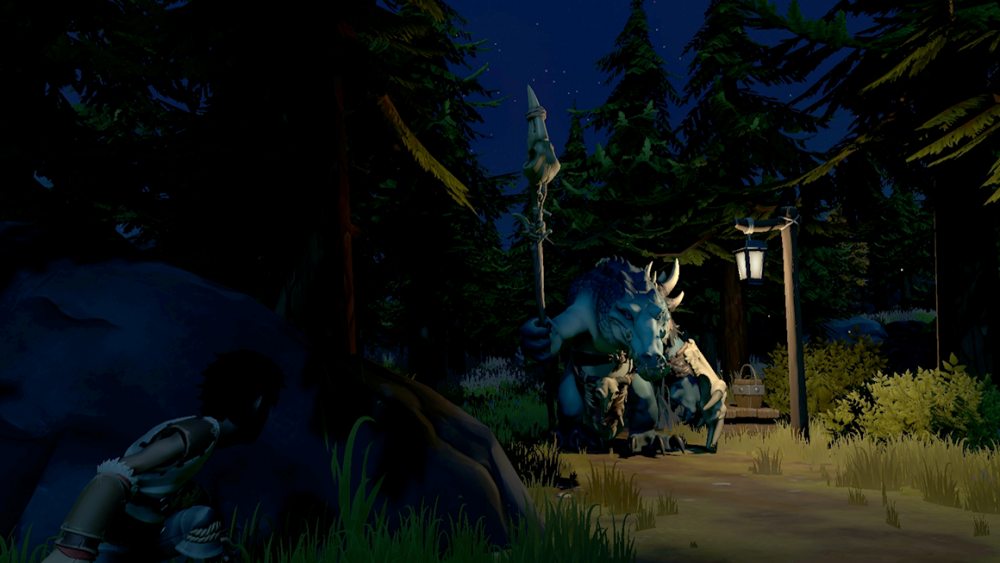
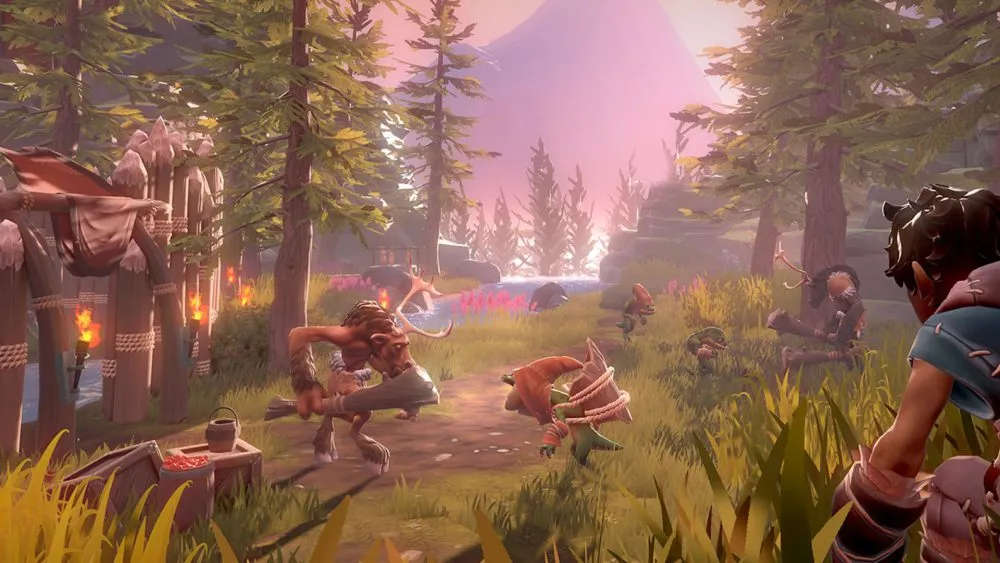
Incorporating many of the same gameplay elements from the aforementioned title. Albeit with its unique graphical style and conceptual design, it also incorporates a combat system heavily influenced by Bloodborne. And from the looks of it, requiring a comparable level of skill and caution to master. This week, I had a Q&A session with the game’s creative director, Matthijs van de Laar, about what gamers can expect with Pine. And what influenced the game’s creation? Here are his answers:


Pine 1

What were the influences behind your game?

We’ve been mostly inspired by the great action-adventure games like The Legend of Zelda and Fable – they tend to strike a chord with people who aren’t being struck enough, we think. Only once every few years does a game like that come by. And there’s still so much to explore within that genre. A very physical, natural feeling to the game was important to us.

Everything should feel grounded and real, with an easy-to-grasp groundwork of physics and interaction. We look at platformers and jolly action adventures for fun. But we look at more serious games for this grounded look and feel. Some of our team members have credits in cinema. And we all have a general interest in movies and TV. This has been a good influence on Pine’s storytelling, camerawork, and rhythm.


What has the developmental process been like?

Starting as a floating idea about 3 years ago, we’ve done an extensive amount of research and prototyping. We wrote several theses on the subjects that are tackled by Pine (mainly about adaptation in game design, machine learning, and natural environments). And all that knowledge was brought into a bigger game after graduating last year. It was only when we knew we had something that worked and after thoughtful consideration, that we decided to go at it full-time. Working hard on the next step, which became Kickstarter. This included trailers. But also a lot of groundwork for the game and systems. Maybe it’s cool to show this 12-week video of that graduation phase:

https://www.youtube.com/watch?v=DhLdiLPQ2Ng


Pine 2

What has been the most exciting aspect of development?

The idea process. There is such a wealth of ideas among team members that every meeting is a joy. We’re always bursting with inspiration, and seeing those ideas come to life in the form of environments. Or specifically the species, is fun to witness. The alternative evolutionary course of Albamare has been a lot of fun to think about, and we’re not even remotely running out of ideas!


What has been the most challenging aspect of development?

Being only 6, we have to make really important decisions sometimes. It’s important to keep the game small enough, but make it feel like an adventure that can last. We have a very strong vision of what it should play like and what the focus should be, and sometimes it’s hard to keep up with that vision with only a few people we have. The open-world nature of the game has certainly been one of the toughest aspects (e.g., building the island, letting assets stream, and simulating the ecology).


How well has the game been received so far?

We’ve always been blown away by the response, actually, since the start! For example, we started by sending out demos only five weeks into the process. We expected a few dozen testers, mainly from our school, but after about 6 weeks, we had 3000 testers. People had been sharing it on Reddit and NeoGaf, and we got a lot of good data out of that. Things kept going like that. We went on the Square Enix Collective without any expectations. And became the highest-rated project to date. Signing up for the Unity Awards, and in a completely surprising turn of events, I even won that one! We applied for a small grant, and we got it – and now, on Kickstarter, we raced past 50% in 10 days. As I said, we’re just pretty much blown away sometimes – the demand for a game like Pine seems to be real.


Pine 3

Concerning the game’s theme, does any of the team have any experience in outdoor survival?

Not really, to be honest – we all have been on camping trips before, but no real survival. It’s more about the theme of adaptation, change, and evolution for us. We’ve always had an interest in the theory of evolution, for its beauty and undeniable systems behind it. Realizing these could be translated into a game, the theme took shape even more.


What platforms are you looking to bring the game to?

We’re currently developing on PC, aiming to bring it to Mac, Windows, and Linux. But consoles are definitely in the future vision – depending on publishers and the platform holders’ interest in Pine, we hope we can take consoles into account early on in the process.


Pine 4

Do you have any advice for aspiring developers who may be reading this?

The only advice I always give to developers or those starting their own company: it’s all about the people you do it with. If I hadn’t met my co-founder, Marc, early on in high school, finding out we worked together really well, nothing would have happened. Not having had such good cooperation with my companions, Pine wouldn’t have existed. Like Pixar’s president, Ed Catmull, says: find people you’re intimidated by, professionally. Find those who are better at things than you are; that’s the only way you can make something truly great! It’s really about the people and what they bring to the table. Recognize each other’s strengths and weaknesses, and be honest with each other!


Where on the Internet can people find you?

Everywhere! More specifically, we’re on Twitter, Facebook, Reddit, and email:

http://twitter.com/Twirlbound

http://facebook.com/Twirlbound

http://reddit.com/r/pinegame

pine@twirlbound.com


Do you have anything else to add?

Kickstarter is scary, as you’re putting your whole game AND team online, but it’s so cool to see people engage that it’s all worth it!


Pine 5

Lastly, I would like to thank Matthijs for agreeing to our Q&A and would like to take this opportunity to wish him the best of luck with the remainder of the Kickstarter campaign.

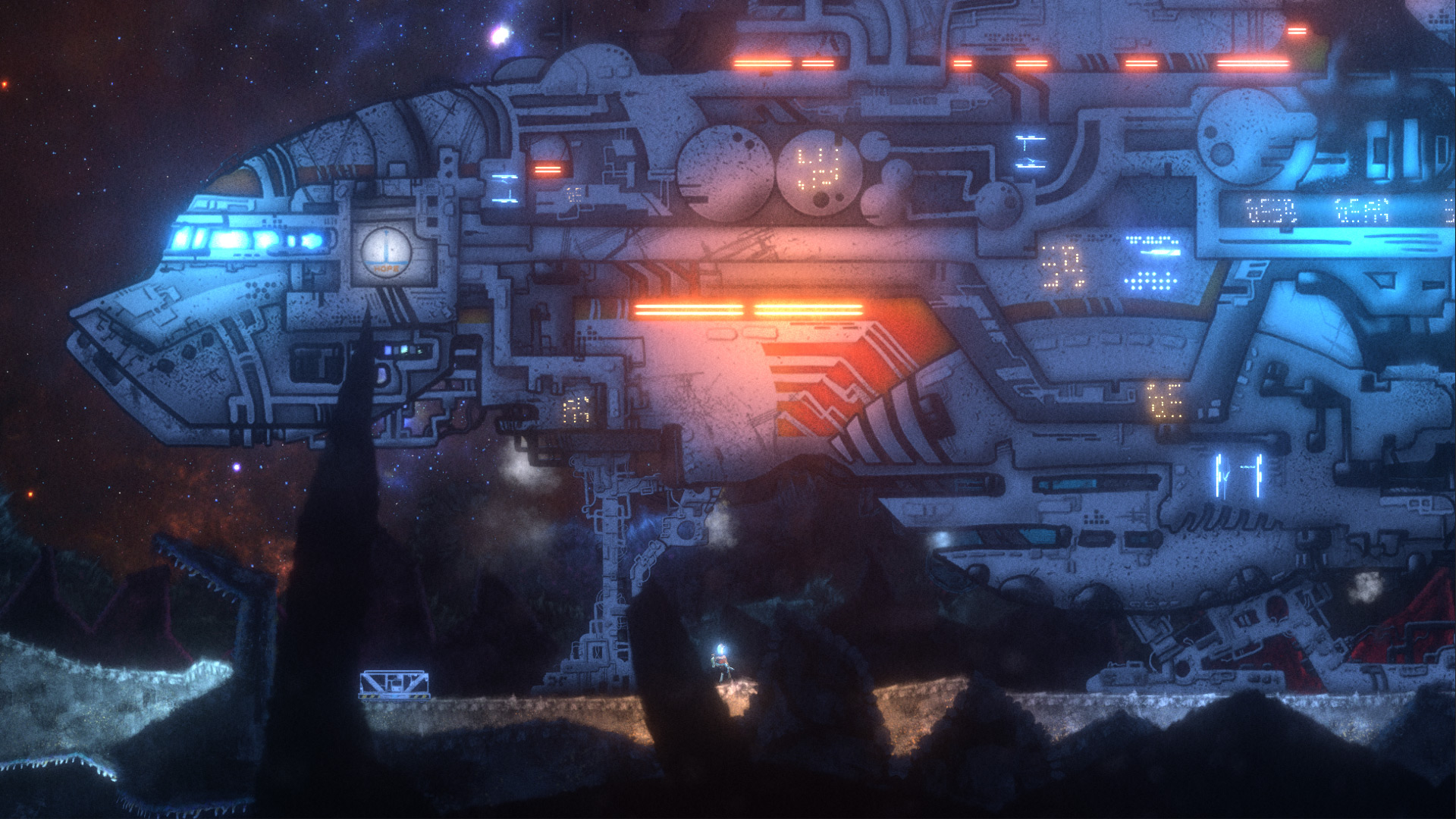
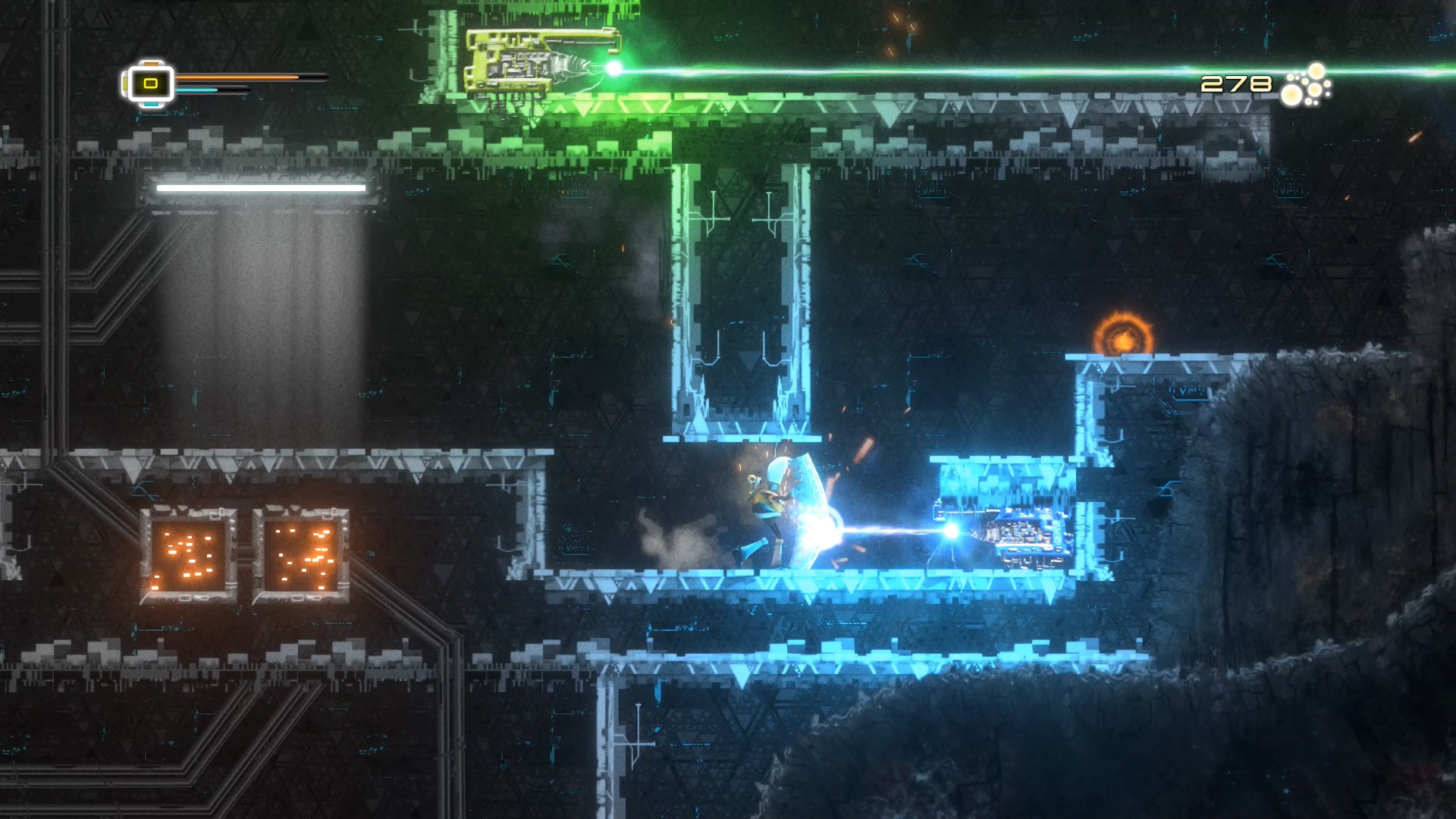
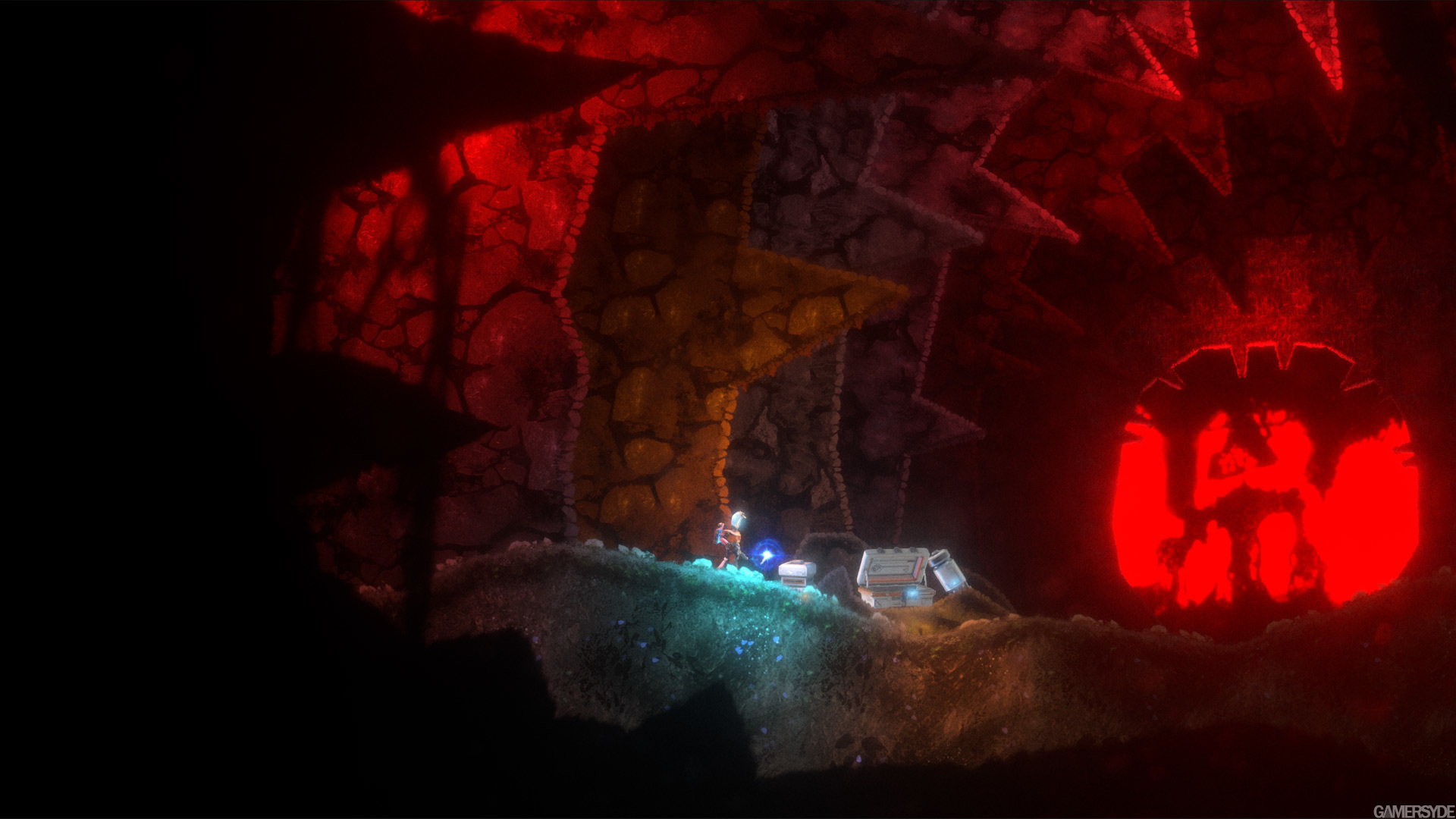
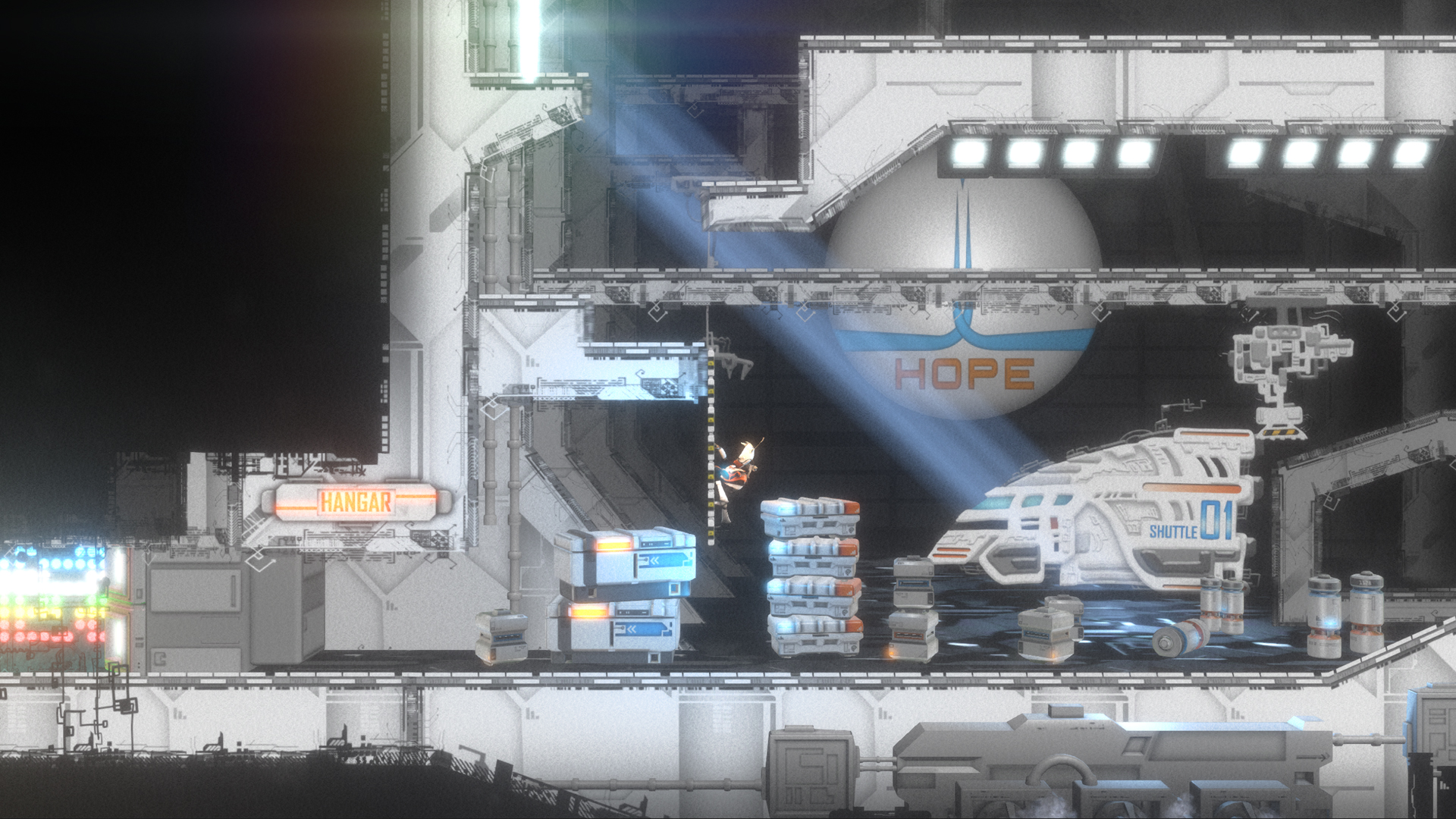
Anew The Distant Light

Q&A With Resonator

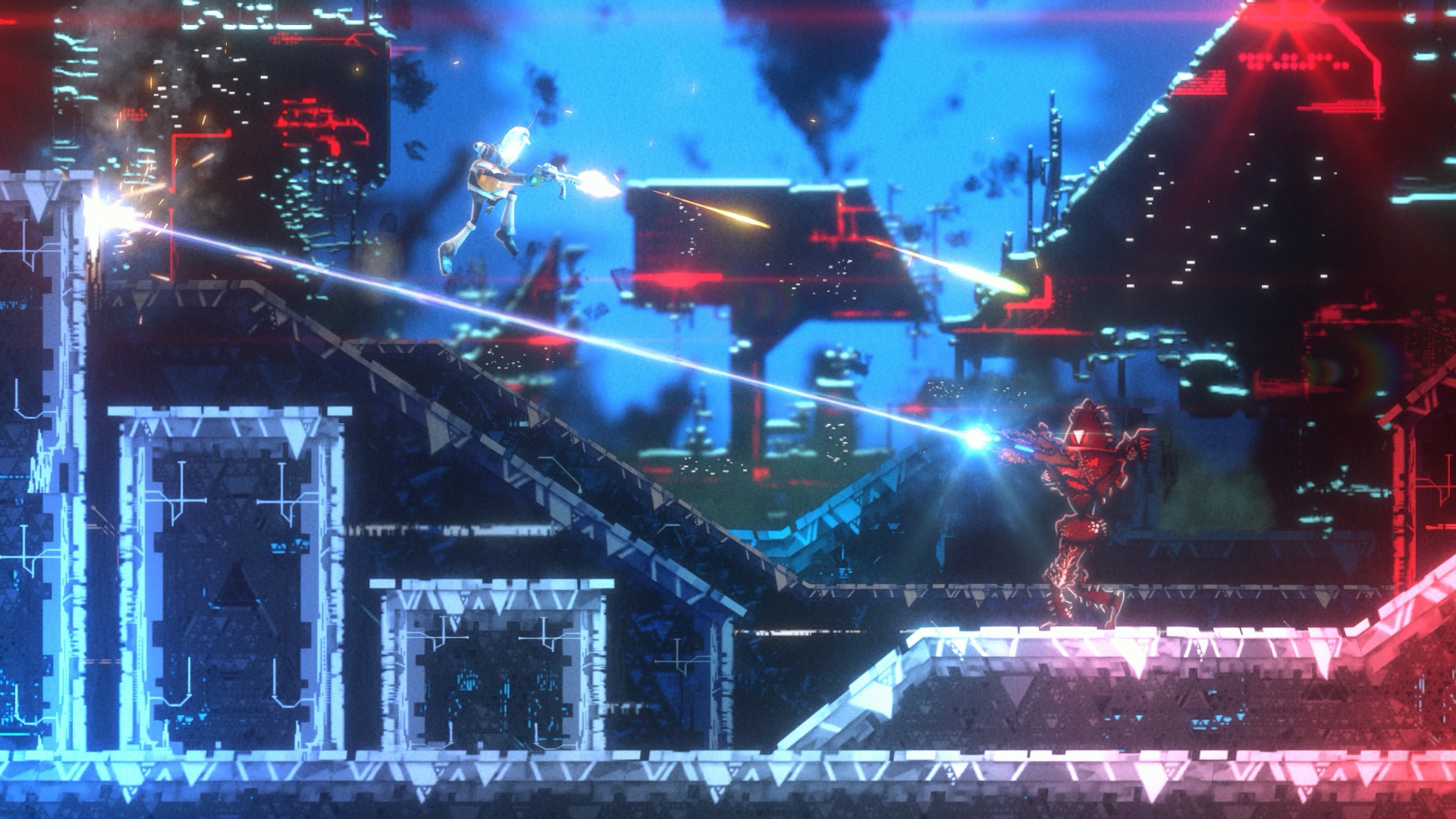
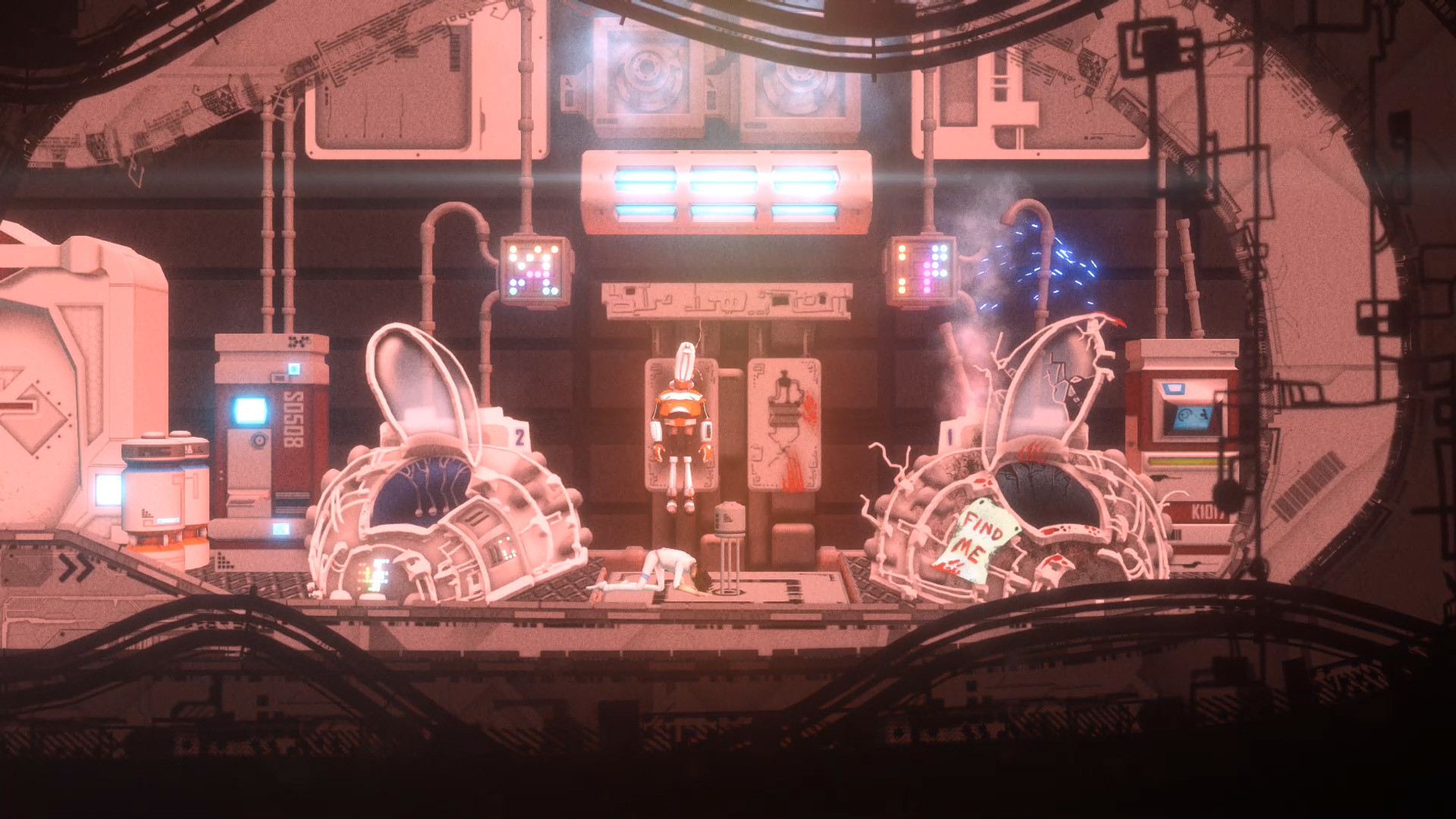
In my ongoing bid to cover and expose as many different independently developed games and indie studios as possible, I discovered a game currently up on Kickstarter entitled Anew: The Distant Light. An action-adventure Metroidvania title, there is a heavy emphasis on combat and exploration. As well as a vibrant science fiction setting that contrasts the beauty and devastation of an endangered futuristic world.

Creating the game are two veteran AAA developers: game director and programmer Steve Copeland, and art director and sound designer Jeff Spoonhower. Collectively known as Resonator. Between then, Steve and Jeff worked on a multitude of major gaming releases over fifteen years, including BioShock 2, Lord of the Rings: Battle for Middle-earth, Borderlands 2, Command & Conquer, and Uncharted: Golden Abyss, to name but a few. After reaching out to Resonator, both Steve and Jeff agreed to answer some questions I had about their upcoming game, their Kickstarter program, and their past and present developmental experiences. Here’s what they had to say:

Anew: The Distant Light 1

What were the influences behind your game?

SC: For me, the classic Metroid games were a big inspiration.  After all, there is a reason our game’s genre is named after it.  You can probably also spot influences from Ori and the Blind Forest, Dark Souls, and Mario Galaxy.  We’re constantly looking for ways to fit fun game mechanics from other genres into Anew: The Distant Light.

JS: I am a big fan of platformers as well. I grew up playing the Mega Man, Mario, and Contra games, so in addition to the non-linear Metroid-style exploration elements, I am excited about including lots of fun platforming elements in Anew.

What has the developmental process been like?

JS: Steve and I have been working on the game full-time for several years now. It’s been hugely challenging and rewarding. We spent a lot of time upfront working on gameplay systems, player mechanics, development tools, and pipelines. And we’ve also built a pretty big section of the game world itself. A lot of the struggles up front were the unknowns – “things we didn’t know we didn’t know about” situations. These were mainly technical, so it was tough to anticipate how long it would take to solve them. We’re happy to say we’ve largely moved through that phase of production and are concentrating on creating content and filling out the game world.

How close are we to seeing the finished product?

SC: A lot of that will depend on how funding goes.  We’re expecting to complete the PC version in about a year. But if we have to stop work to look for investors or a publisher, it will tend to slow things down quite a bit.

Anew: The Distant Light 2

What has been the most exciting aspect of development?

JS: For me, several things. For one, overcoming difficult technical and artistic challenges, and learning a lot. And growing as an artist and designer has been tremendously rewarding. I am also very proud of the world we are creating. We hope that players will find it not only fun to play in, but also visually interesting and enticing to explore and discover. It’s been awesome to be able to tell people that just two people have built the game from the ground up.

What has been the most challenging aspect of development?

SC: With just two people making the game, it can be exhausting to cover all of the needed roles in development and business.  If we could afford to, we’d hire some help.

JS: The number of “hats” Steve and I wear, as far as the roles we are playing in production, is pretty overwhelming. We are each doing the work of 5-10 employees in a traditional studio production! It’s been tiring and oftentimes stressful to have to rapidly switch between these roles on a daily or weekly basis.

Anew: The Distant Light 3

How well has the game been received so far?

SC: Feedback has been very positive on all fronts and in all contexts, especially so when demoing in person at trade shows. Where players can feel the agility and depth built into Anew.  We’re proud to have received the Audience Choice Award at Comicon Phoenix. And I think Jeff sleeps with the golden controller under his pillow.]

JS: Haha, yeah, the golden sheen is starting to wear off. In all seriousness, we are thrilled with the response Anew has received so far. On a personal level, I am so happy that people have responded positively to the look and feel of the game. It’s been my goal to design a world that looks and sounds truly alien and unfamiliar. Those two words have come up repeatedly in press articles we’ve received, so I feel like I’m doing something right.

What platforms are you looking to bring the game to?

SC: We’re leading with PC, including Steam and at least one non-DRM platform for PC.  If our Kickstarter succeeds, we’re also committing to PlayStation 4 and Xbox One.  We also have a stretch goal that will fund research for porting to Nintendo Switch.

Anew: The Distant Light 4

How have your past developmental experiences influenced Anew: The Distant Light?

JS: Our prior AAA studio experience has directly impacted the development of Anew. Steve and I learned a tremendous amount working on games over the past 15-plus years. That includes not only the nitty-gritty of the crafts we practice on a day-to-day basis (modeling, texturing, animating, lighting, programming, designing, tools development, marketing, etc) but also how to set realistic goals and achieve them. We were both senior/lead developers on projects. So we know how important it is to properly schedule a project and avoid common development pitfalls like feature creep and over-scoping. We try to bring everything we’ve learned on these big studio projects to the production of our indie game.

Outside of indie development, what would you say are your and Steve’s favorite projects to have worked on throughout the years?

SC: It was cool to get to work on games related to Star Wars and The Lord of the Rings.  I’m proud of having had a small influence on Command & Conquer: Generals Zero Hour. RTS fans still talk about it nostalgically.  Many of those projects required crushing amounts of hours worked in a week, so it’s hard to call one a favorite in light of that.

JS: I’m really proud of all the games I’ve worked on. Making games is a huge struggle, so I feel like shipping each one has been quite an accomplishment. As a personal fan of the BioShock and Uncharted series, I really got a kick out of working on BioShock 2 and Uncharted: Golden Abyss.

Anew: The Distant Light 5

Has having creative freedom made working on Anew: The Distant Light feel like a better experience than any other?

SC: On the creative freedom front, yes, it’s been the best game development experience I’ve had.

JS: Yes, the creative freedom of making our own game has been very liberating. That freedom comes at a high cost, though. We have taken on a great deal of financial risk. And we are pretty much working on the game all the time! It’s a big commitment. And we have sacrificed a great deal in our personal and professional lives to make it a reality.

Do you have any advice for aspiring developers who may be reading this?

SC: I’d advise them to make and complete things with a very small scope before getting super ambitious.

JS: Agreed. Try to find the one or two things you enjoy doing (be it art or programming), and then really dive headfirst into practicing those crafts. It requires a lot of patience and persistence to get good at this stuff. Ultimately, if you want to get a job in games, you’ll need to show a potential employer that your work is of extremely high quality and would fit into the type of games they are making.

Anew: The Distant Light 6

Where on the Internet can people find you?

JS: We are currently on Kickstarter through March 19th, 11:59 pm

SC: https://www.kickstarter.com/projects/1799572177/anew-the-distant-light. Our official website is www.anewthegame.com. We are also on Facebook and Twitter at @anewthegame.

Do you have anything else to add?

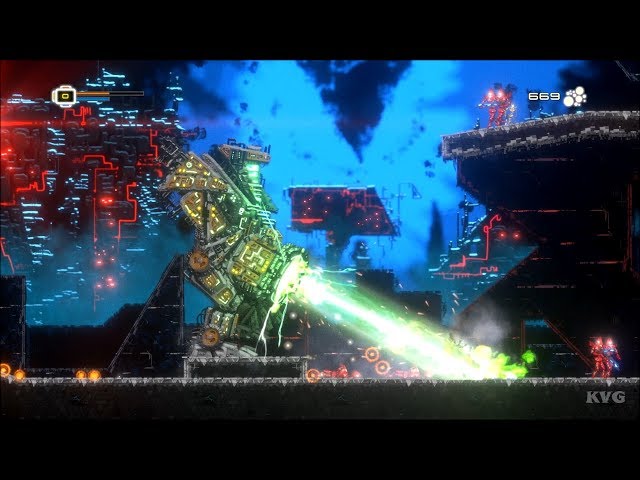
SC: Please check out our Kickstarter!  If you like games with action and exploration, mystery, and a high-skill cap, you’ll find a lot to like about Anew: The Distant Light.  We’re making a game that will scratch the itch for Metroidvania fans. It is also bringing some fresh gameplay to the genre with giant mechs and other vehicles that you can pilot. An upgradable home ship and diverse environments that play quite differently from each other.

Anew: The Distant Light 6

Lastly, I would like to thank both Steve and Jeff for agreeing to answer my questions and to wish them the best of luck with Anew: The Distant Light. I would highly recommend that any gamer who may be looking for an upcoming Metroidvania title check out their Kickstarter page and back the project. Looking at the early footage of it, I myself am extremely excited for the game’s release, and cannot wait to play the finished game.