Monthly Archives: July 2016

Brink (Xbox 360, PlayStation 3 & PC)

Brink

Developer(s) – Splash Damage

Publisher(s) – Bethesda

Designer(s) – Paul Wedgwood, Neil Alphonso & Jamie Manson

PEGI – 16

Designed to be an innovative first-person shooter unlike any other, Brink was released back in 2011, following the then-recent plethora of critically and commercially acclaimed games in the genre, including BioShock, Borderlands, Fallout 3, and Left 4 Dead. Unfortunately for Splash Damage, formerly multiplayer map designers for id Software and developers of the game Enemy Territory: Quake Wars, Brink didn’t turn out to be the huge hit many of the developers had hyped it up to be. And in my personal opinion, it made for one of the worst experiences of the seventh generation of gaming; if not, the worst.

Graphics – 3/10

Whilst the visuals may seem technically sound at first glance, the further a player progresses through the game, the more glitches they are bound to come across. There were more than enough instances I encountered to make me think that the game hadn’t even been properly tested and finished. Not only that, but the game is also very bland from a conceptual standpoint as well. I’m sure that many other people who played this, including myself, would’ve thought that id Software’s influence would have rubbed off on the team at Splash Damage a bit more, having worked with them for such a long time, and even handling some of their IPs themselves. But anyone willing to make this assumption now will be sadly mistaken.

Gameplay – 0/10

Whilst trying to bring an element of innovation in terms of gameplay, Splash Damage failed miserably by making more negative changes than they could have reasonably hoped would make for even a half-decent first-person shooting experience. Brink’s gameplay centres around a system called S.M.A.R.T. Standing for Smooth Movement Across Random Terrain. The idea behind it was to make the game in such a way that players would spend more time running and moving around rather than shooting in order to get to objectives and vantage points fast enough that they wouldn’t be tracked by enemies.

And that they would be able to complete allocated jobs as efficiently as possible. The problem is that this completely defeats the object of the game being a first-person shooter at all. The entire point of playing is to shoot as many enemies as stand in the player’s way. Not only that, but the enemy’s AI had been set to such a high level that they will always try to land headshots. And most of the time, being successful, which only adds to this game’s unfathomable level of frustration. These elements alone pretty much amount to this game’s death sentence. If anyone reading this review is sitting on the fence about this game, I will offer a fair warning that players will spend less time killing and considerably more time dying.

Controls – 4/10

Although there is nothing wrong with the control scheme itself, the game handling, as well as most other decent first-person shooters, the problem lies in the fact that it is put to quite ridiculous use in this game. Since there is much less call for shooting and more call for running, players will get bored very quickly by how redundant the need to press buttons can be. There’s even an option for players to run automatically. And even so, it doesn’t leave even the slightest bit more time for shooting.

Lifespan – 0/10

The main campaign can take about 10 hours to complete on both sides with two different characters. But all I’ll say to anyone reading this is good luck making it through the first ten minutes. Not counting if you choose to watch the five-minute video explaining the basic gameplay premise for the sake of a few measly experience points. In a way, I’ve always found it ironic that the developers chose to award players for sitting through what is basically the advert that outlines how terrible this game is. Anyone willing to spend that time, which they’ll never get back, deserves a medal.

Storyline – 0/10

The story of Brink revolves around two different factions warring with each other over a man-made floating island called the Ark. The Ark Security faction is looking to maintain control over the island. The Resistance faction is looking to protect the Ark’s many refugees and distribute scarce resources equally. The way I see it, I would have been happy enough if the developers had left it at that. And just had nothing more than a basic premise. But one of the very few side quests involves uncovering a lot of the backstory of the faction leaders. Despite the great lack of character and plot development throughout.

Originality – 2/10

The different jobs and extensive character customization options throughout the game do provide players with a little bit of variety. But most innovations the developers tried to make just made the game stand out for all the wrong reasons. If they truly wanted to make a game that had a positive impact, they needed to get the basics right. Unfortunately for Splash Damage, id Software would release Rage later that year. Which would posthumously blow Brink out of the water. And leave Splash Damage to wallow in video game obscurity.

Furiious

To sum up, Brink is a grotesque mess of a game. And I wouldn’t even recommend it in the event of gamers having played every other FPS out there. And who still yearns for more of the same. If handled properly, the game may have been even a little bit more than what it turned out to be. But for me in particular, there are far too many errors present for me to take it seriously. Or draw any kind of valid entertainment value from it.
Score

10/60

1.5/10 (Painful)

Breath of Fire IV (PlayStation & PC)

Breath of Fire IV

Developer(s) – Capcom

Publisher(s) – Capcom & SourceNext

Designer – Makoto Ikihara

Producer – Hironobu Takeshita

ELSPA – 11

Released around the same time as Final Fantasy IX, and when Squaresoft and Enix were considered the two most prominent RPG video game development companies, Breath of Fire IV was still met with positive reviews and a great reception from fans of the series and has since become a cult classic among gamers today. However, after playing it for a fair amount of time, whilst not thinking it’s a bad game, I don’t believe that it really lives up to all the hype I’ve heard about it since I watched that video. Though people believe it to be unjust that this game was overshadowed, I can’t say I agree with that.

Graphics – 7/10

The scenery and style of the game were very well designed. It reminded me of the game Grandia, whereby 2D character sprites would inhabit a fully 3D world. In particular, I enjoyed walking through the village of Chamba. This is very atmospheric and gloomy, and it added an extremely unexpected level of tension for a time. But unlike Grandia, the level design is not as diverse. And a lot of the other villages and towns later on in the game can seem very repetitive. I remember that whilst I was playing Grandia, I was very much taken in by how unique places like Parm and the Zil Ruins looked. But for me, there just seemed to be much less of that level of captivation in terms of conceptual design.

Gameplay – 7.5/10

As a turn-based RPG, it is pretty satisfying to play the game and level up the player characters. And gaining more and more skills and powers as the game goes on. But the problem lies in the fact that there’s not as much variety in Breath of Fire IV in comparison to other big-name RPGs at the time. Such as Final Fantasy. I also find that despite its criminally short lifespan, South Park: The Stick of Truth had more variety in gameplay than this.

There are a few side quests present, such as fishing and so on. But there are nowhere near as many side quests as a lot of other games of its calibre and world size. I find it especially surprising, as Capcom wouldn’t have been on a budget at the time following the sales of Resident Evil 1 and 2. So I think the only limitations involved would have come in the form of the developer’s imagination.

Controls – 9/10

There are no issues with the controls, save for the fact that the camera angles can be awkward at times. And that having to often adjust it can be a bit of a hassle. This would be another advantage that other RPGs of the time would have over Breath of Fire IV. Some of them would simply use hand-drawn graphics. Making the entire setting one big picture for players to traverse across. But because Breath of Fire has a fully 3D environment, camera angles do consequently often have to be adjusted for players to be able to tell where they’re going.

Lifespan – 5/10

I’ve since found out that this game can be completed in just over 20 hours. And whilst that isn’t as short a lifespan as South Park: The Stick of Truth, it’s still very short for a turn-based RPG. Although that may have been considered somewhat long for a game in most other genres at the time, there were still games at that time. These were made to last three, maybe even four times longer.

Storyline – 8.5/10

Despite this game lacking substance in gameplay compared to its competitors at the time, one thing I can’t criticize too much about it is its story. After it starts a little slowly, it does get progressively better as it goes on. It deals with several adult themes and alludes to many real-life political occurrences. Breath of Fire IV follows the story of a dragon god called Fou-Lu. He formed an empire years prior to the start of the game. But became weary of humanity and put himself into stasis.

He awakens at the start of the game to rule again. But he finds he is split into two people. One being himself, and the other being an amnesiac called Ryu. Ryu is taken in by a girl called Nina and her friend Cray. They have set out to find Nina’s sister, Elina, who went missing on a diplomatic mission. It does turn into something much deeper over time, and it does certainly make for a very exceptional story in a time when gameplay stories were first becoming much more prominent than they had been previously.

Originality – 6.5/10

At the time, there didn’t seem to be that many stories in games, which touched on political instability and alluded so elaborately to nuclear war, but more annoyingly to me, it severely lacked innovation in gameplay compared to other RPGs of its time, and to me, it shows how Capcom seemed to focus less on gameplay in general in the midst of the release of Resident Evil, which again focused more on the story as well as horror.

Happii

In summation, Breath of Fire IV isn’t terrible by any stretch of the imagination, but I couldn’t help but feel that it could have been an infinitely better game than what it turned out to be. After playing it, I feel as if people do indeed give it too much credit, and I do believe that it’s overshadowed by Final Fantasy IX wasn’t unjustified by any means.

Score

43.5/60

7/10 (Fair)

Bosconian (Arcade & Various Consoles)

Bosconian

Developer(s) – Namco

Publisher(s) – Namco & Midway

Rating – N/A

Bosconian is a multi-directional, multi-scrolling, and free-roaming arcade shooter. And for me, it stands out as one of the best retro arcade shooters I’ve ever played. Over the years, I’ve been very much used to playing linear shooters like Space Invaders and Galaxian. But I’ve rarely played arcade shooters, which require players to do some exploring. And the way I see it, players at the time must have looked at this game as a breath of fresh air. A very positive change from the norm.

Graphics – 6/10

Though laughable by today’s ever-increasing standards in visuals, the graphics in Bosconian are fairly well done for the time. And they still hold up moderately well, too, in terms of concept. A lot of the enemy and ship designs stand out to me, including the green bases. Which must be cleared from every stage to advance further. Though very similar to Asteroids in terms of gameplay, there’s much more to look at in this title.

Gameplay – 8/10

In lieu of arcade gaming tradition, Bosconian provides a very high level of challenge and addiction. The objective is to destroy the green bases to progress. Whilst shooting down as many additional spaceships as possible for the highest possible score. But what I like most about this game is that, to an extent, it encourages exploration. The green bases can be spread out into several different places on the in-game map. I think any arcade game that can encourage exploration from these earlier gaming generations has to be commended, since linearity was one of the biggest constants back then.

Controls – 10/10

As the game’s general formula had already been developed with games such as Asteroids, there should never have been a problem with the control scheme. And nor is there one in Bosconian, I’m happy to point out.

Lifespan – N/A (10/10)

As with all the greats of the era, Bosconian is a game that can simply be picked up and played by anyone, as and when, and doesn’t have a fixed lifespan. Though there was no system in place at the time telling consumers what was good and what was bad, one of the few things they could rest assured of was that it was up to them how long a game lasted.

Storyline – N/A (10/10)

Another thing gamers of the time could rest assured of was that they could play a game without having to worry too much about story progression. Though the story in video games has become a pivotal factor in the industry by today’s standards, back then, stories in video games were unheard of; long before they were ever considered by the consensus to be a valid art form. As with Space Invaders and Titan Attacks, the basic premise is to stop an alien invasion. Otherwise, there was and is very little need for any further development in terms of story.

Originality – 6/10

Though ultimately a modification of two already existing ideas at the time, this game takes elements from both Asteroids and Galaxian and presents players with a very different experience entirely. Credit is due to the developers of this game, as originality seemed to be such a difficult thing to attain in the first and second generations of gaming. Especially given such things as limited graphics and the then generally primitive nature of the industry.

Happii

Overall, Bosconian is an extremely good arcade game that I regret not ever trying out beforehand. Amidst the library of games released at the time, I’d say this one stands out and definitely would have offered things to many gamers at the time, as well as being able to provide something infinitely different to modern gamers compared with other arcade titles.

Score

50/60

8/10 (Very Good)

Bombing Bastards (PC & Wii U)

Bombing Bastards

Developer(s) – Sanuk Games

Publisher(s) – Nintendo

PEGI – 12

Bombing Bastards, or Bombing Busters as it was later renamed, is a game available on the Wii U virtual console and recently greenlit by the Steam community, which has a level of challenge very unsuitable for children, as well as a fairly dark sense of humour about it. Made in the same vein as Bomberman, it revolves around the player placing bombs around an arena to collect power-ups. And destroy enemies within a designated time limit. But because the game is such a challenge, I found it to be much less accessible than other games. And since I also notice a small extent of originality about it, I think the game suffers as a result.

Graphics – 6/10

Positives about the game that I can point out involve the game’s visuals. Whilst the general layout of each level can seem pretty repetitive after a while, there is some basis in variety as well, in that they are set in several different environments, such as glaciers or volcanoes. The same goes for many of the enemy characters and boss characters, which have all been tailored to suit their respective environments, providing additional visual diversity within the game. Although it doesn’t exactly show off what the Wii U is capable of, the game is, to an extent, conceptually interesting, at least.

Gameplay – 5/10

As I commented earlier, Bombing Bastards provides an unusually high level of challenge compared to a lot of other games out there. This will work famously for some. But not for most gamers, who will simply want to take the time to enjoy the game for what it is. And not feel too weighed down by how hard it is. The point I like to make is that difficulty settings are included in many video games for a reason. To provide a greater challenge to those who want it. And to allow the gamers who don’t appreciate it in every other way. Aside from this game being extremely hard, it can also get pretty repetitive after a while. Plus, there is also a great lack of incentive for a game of this difficulty on top of that.

Controls – 9/10

The only issue I found with the controls was the PC-style menu, whereby a cursor must be moved with the analogue stick over menu options to select them. It would have been much easier to just have menu options selectable by scrolling through them, like most home console games. Otherwise, however, there are no issues.

Lifespan – 6/10

The game does last a fair amount of time for anyone who is willing enough to soldier through each different level and who will enjoy the challenge of it all. However, many others may lose patience with it, given how hard it is. And by that token, it does depend largely on what kind of gamer one may be.

Storyline – N/A (10/10)

The only story element to the game is the basic premise of the player character having to use bombs to defeat enemies around him; the player character is mentored by a sadistic scientist named Dr. Wallow. A game like this doesn’t necessarily require a storyline, and won’t lose any marks for not having one. But the element of humour that Dr. Wallow provides throughout is worth mentioning since it is an indication that this title isn’t entirely appropriate for kids, though on the surface, it looks like it is.

Originality – 2/10

Though the game does attain a small level of uniqueness due to its diversity in level design. It’s almost identical to Bomberman in terms of both gameplay and basic premise. And even after that, it can still seem fairly generic, in my opinion. And whilst it does have that heightened element of challenge compared to most other games on the market, it doesn’t differentiate itself from other titles. But in a pretty negative way.

Niiutral

To sum up, I believe how well Bombing Bastards plays out largely depends on what kinds of gamers play it. Those who relish the challenge of video games will welcome this title with open arms. Whilst many who simply want to try and appreciate the game in every other aspect will be sorely disappointed. And even in light of that, there isn’t much else for players to enjoy other than the difficulty.

Score

38/60

6/10 (Average)

Bloodborne (PlayStation 4)

Bloodborne

Developer(s) – From Software & SCE Japan Studio

Publisher(s) – Sony Computer Entertainment

Director – Hidetaka Miyazaki

Producer(s) – Masaaki Yamagiwa & Teruyuki Toriyama

PEGI – 16

One of the most highly anticipated games of the eighth generation, and one of the commercially and critically successful at this point, Bloodborne basically takes the gameplay premise of the Demon Souls and Dark Souls series into an entirely different world. Wrought with new dangers, new settings, and a whole new range of weapons at the player’s disposal. Unfortunately, I didn’t enjoy playing it, as I found it to be even harder. And therefore less accessible than Dark Souls II. But it does have its finer points, saving it from being a complete disaster, and I’d like to address them.

Graphics – 10/10

The visuals are among the best I’ve seen throughout the eighth generation so far. Every facet of the game is wonderfully detailed. And there’s hardly a glitch in sight. It’s certainly a huge step up from the mediocre graphics I found Dark Souls II to have. Especially for a seventh-generation title. On top of that, the conceptual design is also top-notch. Taking place in the city of Yharnam, it has an extremely strong feel of Victorian England. As well as the Italian Renaissance, with Gothic architecture decorating the streets, and some of the characters wearing what look like plague doctors’ masks. One of the weapons also looks like an oversized straight razor. A possible reference to the story of Sweeney Todd.

Gameplay – 3/10

The premise of gameplay is the same as any game in From Software’s most prominent series of RPGs. Hack and slash through every enemy in sight, and die as few times as possible. Though many have been extremely lukewarm to this style of play over the last few years, I remain unconvinced, especially taking into account how hard From Software has made these games. It makes absolutely no sense to me why developers make games hard for the sake of them being hard.

I’ve had gripes with it ever since I played the first Castlevania. And realized that the reason why developers put difficulty levels in games is to make them as accessible as possible. For developers to break that trend either way, to me, sets an extremely bad precedent. And I’d personally rather not have it that way. My biggest hope going into Bloodborne when I tried it at a lock-in event before release was that From Software had made the game accommodate as many people as possible. Sadly, that isn’t the case.

Controls – 8/10

Since the game was also developed using the same engine as the likes of Dark Souls II, it also has the same issues in terms of controls: annoyingly stiff movement, making it seem like bigger enemies have unrealistically better reflexes, and are more agile. It’s a good job that there aren’t any other problems for players to have to cope with in the process; otherwise, I would have run into a plethora of different, separate issues at certain parts of the game whilst playing.

Lifespan – 7/10

The game has a fairly impressive lifespan, however. Though one separate playthrough may take only 12 hours, there are actually three different endings to the game, making for a minimum of 36 hours. There’s also a multiplayer mode present to add even more to the game’s longevity, which, for players of a higher skill level, will be very accommodating. It’s not often that a mainstream game can be made to last as much time as that nowadays.

Storyline – 7/10

The story follows the player character traveling through the city of Yharnam, seeking a cure known as Paleblood for unknown reasons. He soon realizes that the city is ridden with an illness turning its populace into hostile creatures, and that he must overcome Yharnam’s many trials to recover the Paleblood. Compared to Dark Souls II, the story is a lot more tense and dramatic. And with multiple endings, giving it much more substance in the story than the latter.

Originality – 6/10

Though the gameplay premise has been done many times before, and all by the same developer, it’s mostly the game’s conceptual design that makes it stand out among others. Hidetaka Miyazaki is a very renowned designer throughout the gaming industry, but I’ve always thought of him as being fairly overrated, especially as there are quite a few similarities between both the Demon Souls and Dark Souls series in terms of concept. But it’s in Bloodborne where I think he has shown what he can really do.

Happii

In summation, Bloodborne is nowhere near as good a game as it had the potential to be if only the developers had added an easy mode, or even normal difficulty, compared to what players were given. It isn’t the worst game I’ve played all year, however, and it does have its place within the industry. Unfortunately, it’s just not entirely for me.

Score

42/60

7/10 (Fair)

Blood Omen 2 (PlayStation 2, GameCube, Xbox & PC)

Blood Omen 2

Developer(s) – Crystal Dynamics & Nixxes Software VB

Publisher(s) – Eidos Interactive

Director – Glen Schofield

Producer – Sam Newman

PEGI – 16

Garnishing high commercial sales, but low critical scores from most reviewers at the time of its release back in 2002, Blood Omen 2 takes place between the original events of both the original Blood Omen and Soul Reaver. It tells the story of the events leading up to Kain building his empire throughout the land of Nosgoth. This game is one of the lowest-ranking games in the series on both Metacritic and GameRankings. In my opinion, that’s not to say that it’s bad. Not by a long shot.

Graphics – 7.5/10

The visuals may not be among the most astounding of the sixth generation from a technical standpoint. But the conceptual design is outstanding. The game takes place at night in eerily empty towns, industrial strongholds, and vast castles. All the while, the game maintains an extremely dark and imposing atmosphere. And even though many of the NPCs in towns are simply copies of two or three character sprites, there is a fair amount of diversity in enemy design, as well as boss design. The player has to fight against such enemies as the Hylden race and oversized insects.

Gameplay – 7/10

The developers were looking to create a more action-oriented Legacy of Kain game. And it’s certainly made evident in Blood Omen 2. Whilst the combat doesn’t play as big a role as it did in the original Blood Omen game, there’s enough in Blood Omen 2 to keep the game entertaining throughout. With an arsenal of weapons to use and abilities to take advantage of certain situations. For example, the mist ability can be used to perform stealth kills. And the jump ability can be used to kill enemies from great distances. And though there is considerably less of a puzzle-solving element to this title, unlike the two games in the Soul Reaver series, there are a few instances that require some lateral thinking. Such as when having to use the charm ability to possess people into opening certain doors or lowering bridges to advance.

Controls – 8/10

The problem with the control scheme in Blood Omen 2 is that the moving and walking mechanics can feel quite stiff. It reminds me somewhat of Blasto, whereby the camera needed to be moved in order to turn in different directions. Albeit this game’s controls are nowhere near as annoying as the aforementioned example. Regardless, however, the combat system has been handled by the developers surprisingly well under the circumstances, having a kind of Ocarina of Time feel to it, in the ability to lock onto targets and manoeuvre around them. So I don’t think too many marks should be taken away from the game in this respect.

Lifespan – 7/10

For a linear action-adventure platforming game, 15 to 20 hours is a fairly impressive amount of time to last. It may feel like a step down compared to many other games in the series, especially the original Blood Omen. But it still lasted about as long as most other good games released around the same time, such as the original Jak & Daxter or Ratchet and Clank. There is also some replay value, as there is a code that can be input on the title screen, which will give Kain the ability to wield both the Soul Reaver and the iron armour he wore in the original Blood Omen game. Although, of course, the code is different for each port of the game.

Storyline – 10/10

I’ve highlighted a few times throughout my blogging career that the Legacy of Kain series easily has my favorite video game story of all time (albeit unfinished). And this game is simply a telling of one of the five main chapters. After the events of the first Blood Omen, Kain builds up an army of vampires, appointing four legionaries in the process. And resolves to take the land of Nosgoth for himself.

However, he is opposed by another army known as the Sarafan, a band of fanatical humans. Which had once been disbanded but are newly revived by their mysterious leader, known only as the Sarafan Lord. The two armies collide at the capital of Nosgoth, Meridian, and Kain clashes with the Sarafan Lord. The battle ends with the Sarafan Lord defeating Kain. And taking from him his legendary sword, the Soul Reaver. 200 years later, Kain awakes from a dormant state to find that a small vampiric resistance faction called the Cabal had restored him to health.

Within the time Kain had been asleep, the Sarafan had taken over Nosgoth themselves, enslaving humanity and hunting down every vampire they could find. Kain joins the Cabal and sets out on a quest to defeat the Sarafan and their lord. And thus resume his ascent to power with the end goal of ruling over Nosgoth at last. Blood Omen 2 is considered weaker in the story than the others, but I personally find it just as enthralling as any other entry in the series.

Originality – 6/10

Although this title may not be overly original in terms of gameplay. And even the visual style, to a great extent, the overall concept, and the progression of the series’ story serve to keep it relatively fresh and make it stand out among many other games released at the time. Indeed, I’ve noticed that throughout gaming history, there haven’t been a great many mainstream games released that focus on vampirism. The only ones I can think of off the top of my head are either Castlevania or Bloodrayne.

Happii

To summarize, I happen to think that Blood Omen 2 is fairly underrated. And despite its few flaws, it is a game worth playing through more than once. With action-packed and varied combat, coupled with the continuation of an incredible story (one that doesn’t even necessarily require players to have played any of the previous games), it will keep players extremely entertained for a pretty impressive amount of time.

Score

45.5/60

7.5/10 (Good)

BioShock 2 (Xbox 360, PlayStation 3 & PC)

Bioshock 2

Developer(s) – 2K Marin & 2K Australia

Publisher(s) – 2K Games, D3 Publisher & Feral Interactive

Director – Jordan Thomas

Producer – Melissa Miller

PEGI – 18

The sequel to one of my personal favorite games of all time, BioShock 2, carries on the events following the collapse of the once-Utopian underwater city of Rapture, and puts the player in control of one of the Big Daddy robots, Subject Delta, giving the game a little bit more variety than the first, and keeping the series somewhat fresh. However, I greatly prefer the first game for a few reasons.

Graphics – 9/10

From a technical standpoint, the visuals are a vast improvement on that of the first game, featuring more polish and a greater level of detail. And new locations within the city of Rapture, ranging from Fontaine Futuristics Headquarters to the Rapture History Museum. The graphics and new elements of conceptual design work very well to expand greatly on the game’s backstory and mythology. Whilst still retaining the dark and gritty atmosphere of the first game.

Gameplay – 10/10

Thankfully, the great gameplay of the first has also been kept intact and improved upon. Like Gears of War 2, which I reviewed prior to this, it’s pretty much like an extension of the first game. In the respect that there is a great variety in the wide range of abilities at the player’s disposal, including using ice, fire, swarms of killer insects, and even telekinesis, on top of the additional arsenal of firearms synonymous with the FPS genre. However, the developers also saw fit to add a sniper rifle this time round, much to my personal delight, since sniper rifles are my favorite weapons in first-person shooters. Melee combat has also been improved with the inclusion of Big Daddy’s drill arm.

Controls – 10/10

It was encouraging to see that even with the increased amount of variety in gameplay and new features at the player’s disposal, the control scheme hadn’t been made any harder to cope with than in either the first game or in other first-person shooters in general. Metroid Prime had a complicated control scheme for a game in the genre, which took a bit of time to get to grips with. But there are no complications like this in this game.

Lifespan – 7/10

One of the central problems I have with BioShock 2, however, is that it only lasts about as long as the first. This was quite disappointing, because this is normally a problem that is traditionally addressed by a video game sequel. It was a fairly common trope used by developers of the seventh generation. Games like Batman: Arkham City and Just Cause 2 spring to mind. I don’t think the developers would have had a problem making this game longer than the first, either, if they truly wanted to, given the increased amount of gameplay variety and space for additional side quests. Which felt even more disappointing.

Storyline – 5/10

However, “the” central problem I do have with this game is in the narrative. Which is, in my opinion, a million miles away from the sheer quality of the first game. The story of BioShock 2 takes place 8 years after the events of the first and follows Subject Delta. A Big Daddy who resolves to find and rescue the Little Sister with whom he was previously partnered up to gather the most valuable resource in the city of Rapture, a substance called Adam.

His previous Little Sister, however, happens to be Eleanor Lamb, the daughter of Rapture’s new ruler, Sofia Lamb. Who found them both and took Eleanor away from him in the game’s prologue? The problem I have with it is that it is considerably more difficult to follow than the first. Part of the reason why is that the player has to spend more time trying to piece together the back story as opposed to following the story in the forward direction. And even when doing this, events seem to move at such a pace that not much time is given to the player to think about what’s going on. Everything just happens without much explanation.

Originality – 6/10

I think that the player returns to the city of Rapture to find a much less impressive narrative. And the scenery and style of the game are essentially the same as the last, despite new locations. And there isn’t as much originality about it as there was in the first. Which, in all honesty, perpetuates a concern I have about the survival horror genre. The sequel is nowhere near as atmospheric or intimidating as the first, since players already have a decent idea of what to expect. But as I stated earlier, the series is kept somewhat fresh, with the inclusion of new gameplay mechanics and a new premise. So it isn’t a lost cause by any means.

Happii

To summarize, BioShock 2 is a decent game. But just nowhere near as good as the first. 2K Games would change things up drastically with the release of BioShock Infinite. This was an even more positive departure from the first two games. But the second didn’t accomplish that anywhere nearly as flawlessly in my opinion.

Score

47/60

7.5/10 (Good)

Billy Hatcher & the Giant Egg (GameCube & PC)

Billy Hatcher And The Giant Egg

Developer(s) – Sonic Team

Publisher(s) – Sega

Director – Shun Nakamura

Producer – Yuji Naka

PEGI – 3

Billy Hatcher & the Giant Egg was developed by Sonic Team as a possible fresh start, amidst the beginning of the decline of Sonic the Hedgehog’s commercial popularity compared to what it was during the 16-bit era. There are positives I can point out about this game. But I don’t believe that it’s worthy of the success that Sega was banking on it to have had.

Graphics – 6/10

In Billy Hatcher, there is no shortage of vibrant and colourful environments once the main objective of each level is complete, and morning is restored to go along with the unusual chicken motif of the game. The manner in which this happens is very reminiscent of a game that would come out three years later: Okami. But Billy Hatcher is nowhere near on the same artistic level as Okami. Another negative I can point out is that a lot of the enemies are very generic and similar to one another. A lot of them seem to simply be palette-swapped. Like a majority of the characters in Mortal Kombat 3, in fact. The game’s opening FMV was very nicely done. But another thing I dislike about this game is its opening theme song. Featuring singing children negatively adds to the notion that Nintendo games are exclusively child-appropriate.

Gameplay – 7/10

Whilst it can be described as mediocre in terms of visuals, in my opinion, the game is fairly enjoyable to play, with quite a bit of variety in gameplay. And quite a vast selection of power-ups to collect along the way, with multiple characters to play with their own individual quests. And one further standout side quest is hatching every different type of egg in the game. The formula combines elements of 3 distinct styles of play that have been incorporated by Sega in the past. The ball-rolling mechanic from Super Monkey Ball, and the ring-traveling mechanic from the NiGHTS series. And the multiple playable characters feature of the Sonic Adventure games. Since this is the first game like this, it can be somewhat confusing to start off with. But once players get to grips with it, it can make for something unexpectedly memorable.

Controls – 8/10

The mode of transportation in the game, though unique, can present problems. It can be pretty awkward at times, having to use eggs to get around and reach certain areas of levels. And this, in turn, can add unnecessary difficulty and frustration to the game overall, I found. I think Sega took a gamble by trying to cram so many control elements in one game. And it didn’t entirely pay off, the way I see it.

Lifespan – 6/10

With the side quests taken into account, Billy Hatcher can only be made to last about ten hours maximum, which, in my opinion, is particularly disappointing given how much substance there is in gameplay. It was all very well and good, adding additional side quests for each character. But even with them implemented, I don’t believe the game lasts anywhere near long enough.

Storyline – 5/10

The Story of the game tells of a young boy called Billy Hatcher on a quest to save the morning world from the evil Dark Raven and his army. It’s all very straightforward, even for standards in video game storytelling at a time when video games were only starting to be recognized as a valid art form. Aside from that, though, this title is also obviously directed at kids. So by that token, there was never going to be any great amount of substance in the story. As I alluded to before, Nintendo, for a while now, has had the problem of misleading people to believe that they’re all about appealing to the youngest demographic possible, and it was a game like this that added to that problem.

Originality – 8/10

One thing I mustn’t fault this game for is its level of uniqueness. Though it does comprise several gameplay elements from previous Sega titles, all the elements come together fairly well to create something that is extremely memorable.

Niiutral

To summarize, Billy Hatcher & the Giant Egg is an OK game, but it seems to me that Sega needed to give it that extra boost, and unfortunately, I don’t think they even tried. That this was the first of what could have potentially become a franchise, it was always going to be a question of trial and error, but I think there’s just a bit too much error attached to it to stand out any more than what I believe it does.

Score

40/60

6.5/10 (Above Average)

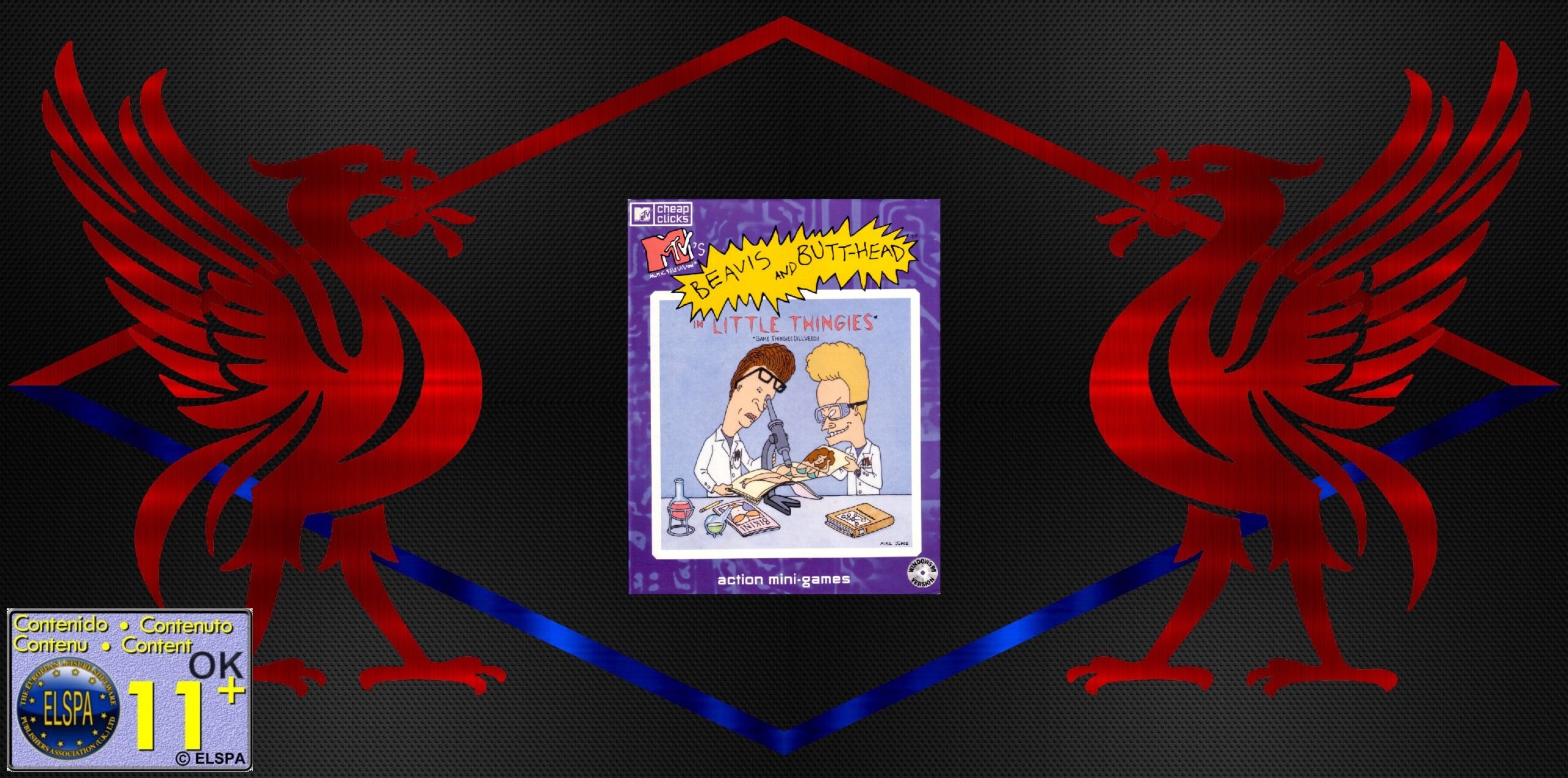
Beavis & Butt-Head: Little Thingies (PC)

Beavis and Butthead Little Thingies

Developer(s) – Viacom New Media

Publisher(s) – Viacom New Media & MTV Interactive

ELSPA – 11

Based on the immensely popular mature cartoon show created by Mike Judge, Beavis & Butt-Head: Little Thingies is a collection of games released in the late 90s based on the exploits and misdemeanours of the two teenage boys from the small American town of Highland. Being a fan of Beavis & Butt-Head, I’d played various other games released throughout the fourth generation based on the license. But in my opinion, not only is this the best of them, but it also still holds up as a pretty enjoyable title compared to many others.

Graphics – 10/10

Because the game is based on a 2D cartoon, there was no need for the developers to splash out on making the visuals as realistic-looking or as technologically advanced as possible for the time. So it looks as good as expected either then or even now. There’s a variety in location design, ranging from many iconic places in Highland. Such as the boy’s high school, and the Restaurant Burger World, where the two boys work. This nicely fits the tableau of each respective game in the collection.

Gameplay – 7/10

Beavis & Butt-Head: Little Thingies consists of seven separate games. Bug Justice, Hock-a-Loogie, Thank-U-Drive-Thru, Air Guitar, Wrecked ‘Em Ball, Court Chaos, and Change It. Bug Justice revolves around the two boys burning bugs with a magnifying glass. Hock-a-Loogie follows them, spitting at people from the roof of their high school. Thank-U-Drive-Thru has them trying to serve as many customers in their restaurant as possible. Wrecked ‘Em Ball revolves around Beavis trying to catch food thrown out of windows by Butt-Head whilst avoiding oncoming bricks and heavy objects.

Court Chaos has the two invading a tennis court and fending off as many tennis players as possible. Air Guitar is a music recording tool similar to that of Mario Paint, and Change It revolves around the boys having to change the channels on multiple TVs in a shop window for the highest score. Most of the games rely on the player earning the highest score possible. But despite the vulgar nature of each of them, the majority of them make for some very enjoyable gaming experiences. My personal favourite is Than-U-Drive-Thru since I found it to be the most addictive and satisfying to play.

Controls – 7/10

The controls are easy to get to grips with since, for most people who play games in general, they become very apparent very quickly. The problem is that none of the games can be played in full screen on later operating systems. This takes fluency out of the experience since it becomes very easy for players to click away from the screen. And thus abruptly stop the game. It may only seem like a meagre complaint. But after experiencing it a lot of times, which players will inevitably do, it can become frustrating, to say the least.

Originality – 8/10

The game is based on a unique license compared to many other licensed video games released at that time. But the games are better designed than many arcade games released that rely on points-racking to succeed. When I sat down to play these games after over twenty years away from them, I was expecting them not to hold up. Remembering them as being casual experiences compared to what I was playing at that time. I was surprised by the amount of time that I ended up investing in them, even after all these years.

Happii

In summation, Beavis & Butt-Head: Little Thingies is not only a very enjoyable collection of games that I would recommend to any fans of the series, but I would also recommend the collection to any fan of arcade games since they provide much of the same level of addiction that many classics in the genre have. Each game is satisfying to play, challenging, and has all the crude humour synonymous with the program thrown in for good measure.

Score

32/40

8/10 (Very Good)

Batman: Arkham Origins (PlayStation 3, Xbox 360 & PC)

Batman Arkham Origins

Developer(s) – Warner Bros. Games Montreal

Publisher(s) – Warner Bros. Interactive Entertainment

Director(s) – Eric Holmes & Benoit Richer

Producer – Ben Mattes

PEGI – 16

With the developmental duties changing hands between Rocksteady Studios and Warner Bros. Montreal, Batman: Arkham Origins went on to receive fairly positive acclaim from most publications. Except Destructoid, which gave the game a mere 3.5/10. Whilst I personally didn’t think it was anywhere near as bad to warrant that kind of score, it’s still much below par compared to both Arkham City and Arkham Knight. But in my opinion, not Arkham Asylum.

Graphics – 8/10

The visuals, from a technological standpoint, offer among the best that were ever made possible on seventh-generation consoles. The textural details of the characters, especially The Joker, are nothing short of flawless. However, from a conceptual point of view, a case can be made for the developers to simply recycle many elements from Arkham City and add them to this game. Aside from the additional islands, there are in the game, the rest is essentially a carbon copy of the previous game. Only the atmosphere is much different.

Gameplay – 9.5/10

Playing out more or less identically to Arkham City, players have the option of completing a story mode with the addition of a great many side quests thrown in for good measure. The Riddler side quest makes a return. And there was also DLC made available for the game containing a side quest revolving around the villain Mr. Freeze. Completing the main story holds around as much depth in gameplay as Arkham City, though the boss fights are a little underwhelming in comparison to the likes of Ra’s Al Ghul, Clayface, and Solomon Grundy.

Controls – 10/10

Arkham Origins runs on the same engine and has the same control scheme as the previous two Batman Arkham games. And so, not only are there problems with the game’s controls. But they also underwent some minor tweaks to make the entire thing play out a lot more smoothly. It’s one of a few things that I was glad to see the different developers get right. And not make any unnecessary complications, which could have been quite disastrous.

Lifespan – 7/10

Coming in at about 40-45 hours, Arkham Origins lasts about as long as Arkham City, which, whilst more than satisfactory, seemed a little bit underwhelming to me. As the in-game world was slightly expanded upon its predecessor. I was adamant that there was room for more side quests. Or maybe even more assassins than the 8 in the game who are after Batman.

Storyline – 7.5/10

The story revolves around a largely unrefined Batman, who is being pursued and hunted by eight of Gotham City’s fiercest criminals. It’s Batman’s job to put an end to the ensuing havoc before these villains can cause any harm to him. But above all, Gotham. The story is much more straightforward than any of the other games in the Arkham series. But the best element of it, in my opinion, was watching how The Joker comes to take such an interest in Batman. And how he would eventually become fixated on him throughout the rest of their sinister cat-and-mouse relationship. The other villains also have some depth in their personalities. But underwhelming compared to what had already been seen within this sub-series so far, or even what was to come.

Originality – 5/10

The worst thing about this game was how much of a template for the overall Batman Arkham formula the developers took advantage of. The map, minus the smaller locations added, is largely recycled, and the story was considerably less inspiring than in the other instalments. I was personally somewhat underwhelmed by this game since I thought that it may have been what I’d always imagined a game in the series had the potential to be. But since the map was only fractionally bigger, it didn’t seem like the Gotham I always saw beyond the in-game worlds in Arkham Asylum and Arkham City.

Happii

Overall, however, despite its limitations and lack of innovation within the series, Batman: Arkham Origins is still an enjoyable game. It does a good job of giving fans of the games more of what they like. It was more than an adequate appetizer for gamers before the release of Arkham Knight. And certainly one of the better games of 2013; in my opinion, even better than Arkham Asylum based on its gameplay alone.

Score

47/60

7.5/10 (Good)