Tag Archives: PC

Oh… Sir! The Hollywood Roast (PC)

Oh Sir The Hollywood Roast

Developer(s) – Vile Monarch

Publisher(s) – Gambitious Digital Entertainment

Rating – N/A (Discretion advised)

Following on from Vile Monarch’s previous indie title, Oh… Sir! The Insult Simulator, The Holly Roast, takes the franchise into the Hollywood movie industry and delivers the same level of quirky humor and the same interesting twist on both turn-based and traditional fighting game combat, and builds on what the first game perpetuated to deliver a greater experience. I first saw this game at EGX Rezzed 2017, and was immediately smitten with it; it drove me to play the original game, but by comparison, the second is even better in my opinion.

Graphics – 7.5/10

The graphics in the series have undergone a significant overhaul compared to the original game, and the characters and setting look even better. There are more varied character and level designs than in The Insult Simulator, deviating away from the Monty Python themes of the first game, and it features a much greater level of detail. It also opens up possibilities in terms of future games in the series, and how they could be based on a wide variety of different subjects.

Gameplay – 7/10

The gameplay of the Hollywood Roast is almost identical to that of The Insult Simulator, but this time around, the developers have added a few new mechanics to the combat system, most notably the comeback ability. Players now have the option to add a comeback to the end of their insults for bonus points. New comebacks can also be unlocked for each character as the game progresses. But the biggest and best new addition to the series is the modding system. Players now have the ability to create new characters and stages within the game, which definitely gives the game an even greater level of variety than what I personally thought to be possible after having played the demo.

Controls – 10/10

Just like the original game, there are no issues with the controls whatsoever, with it being a simple point-and-click game typical of most games that run best on PC.

Originality – 9/10

The Insult Simulator was an original game on its own, but The Hollywood Roast still maintains that same level of uniqueness; the difference between the two of them is that there is far more to play for in the second game. The original demonstrated an entirely new way to play a fighting game, but this title has perfected this new style of play.

Happii

Overall, Oh… Sir! The Hollywood Roast is a more than welcome addition to one of the most unique indie gaming series I’ve ever come across. It’s fun to play, can last even longer than the original with modding possibilities, and I can’t recommend it enough.

Score

33.5/40

8/10 (Good)

Lucah

Q&A With Me Less Than Three

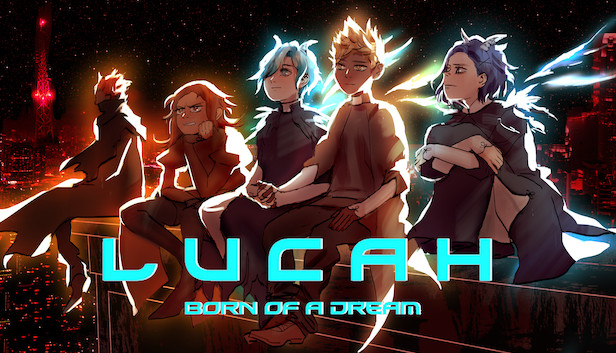
In my ongoing endeavor to discover as many different video gaming prospects as possible, this week I came across a wonderfully dark-looking game entitled Lucah. Lucah is an action RPG with a heavy emphasis on combat and exploration. And a sinister-looking conceptual design. The game itself is described on its Kickstarter page as “a nightmare action RPG about finding oneself”.

Presenting players with multiple combat options and learnable abilities, as well as giving players the additional option of combining these different skills. Giving the game even more variety, I was eager to interview the developer behind the nightmarish title, Me Less Than Three, operating out of Los Angeles, California. Programmer on the game, Colin Horgan, agreed to answer some questions I had about this unique-looking title. And here are his compelling answers:

What were the influences behind your game?

From a gameplay perspective, LUCAH started as a Nuclear Throne-style arena shooter. While I was developing it, though, I was getting more into melee-focused action games like Bloodborne, as well as style-focused brawlers like Devil May Cry and Bayonetta.

I combined this mechanical fascination with the dark, high-contrast style that I had been developing for the past couple of years. Like in my previous game Comforting Sounds

(https://melessthanthree.itch.io/comforting-sounds)

and IAMNOTAMACHINE

(https://melessthanthree.itch.io/iamnotamachine).

This is a style that sort of evolved naturally, just based on my ability. I’m more of a programmer by trade. But I wanted to use my own art in my games, so I started simple, but stylized.

As LUCAH slowly grew into a full game, I started putting a bunch of thematic and narrative ideas into it and kept what stuck. Including a lot of personal subjects I like to explore (nightmares, Catholicism, lyricism). Ultimately, it evolved into a gamified night terror. And I decided to weave the whole story into that context.


What has the developmental process been like?

Since I’m most comfortable with programming, most of my games start as mechanical prototypes. Taking a game idea and making it playable as soon as possible. From there, I’ll put a little bit of kinesthetic polish on the game, the details that make it “feel” a certain way. And allow the aesthetic style to evolve from that.

As LUCAH became a more methodical, tactical action game after the switch from projectile-focused to melee-focused, I tailored the look and pacing to fit a more horror-inspired game. An important step in this process was taking on my friend Nicolo Telesca as our composer. His glitchy and atmospheric soundscapes entered the game even before there were levels to score. So the shape of the game took form based on those sounds and songs.

Once the game felt like it had enough form to be played, I put various demos out. First, a combat-only demo. Then a demo with the first “dungeon”. And saw what resonated with people and what didn’t. The game went through a large visual overhaul at this time. Keeping the distinctive style but pushing it as far as it could go. With an emphasis on better communication for what is going on (attack signals, more contrast for enemies and backgrounds, and so on). At this point, we knew we had something special. And took this direction towards the eventual full game LUCAH will be.


How close are we to seeing the finished product?

All of LUCAH’s major systems are set, and the current demo is a good standard for what the full experience will feel like. However, we still need to fill out the rest of the story. Which I expect will be another 4-5 hours of content. At the current rate of development, my tentative estimate for LUCAH’s full release will be sometime next summer, so be on the lookout then!

What has been the most exciting aspect of development?

The most exciting aspect of development has been sharing my process with others through social media and seeing the excitement the game is already creating. Oftentimes, I would finish a new mechanic and create a GIF to show it off, and with that, I can see what developments excite people most and feed off that energy. I make sure to read every comment, response, and message we get about the game because even though LUCAH is a very intimate and personal experience, I want to do my best to ensure it’s an experience that resonates with as many people as possible!


What has been the most challenging aspect of development?

The most challenging aspect of LUCAH’s development by far has been solidifying the visual style. Because it’s so out there and hard to describe (is it wireframe? stylized pixel art? hand-drawn impressionism?). Making sure it communicates the appropriate moods and information has been a struggle. We are doing our best to make sure a new player can wrap their head around what’s happening on screen. And what these ever-shifting figures represent. But I don’t think we’re totally there yet, even if we’ve come far already. Still, as we develop the game, we’ll do our best to make LUCAH the most brilliant visual experience it can be.


How well has the game been received so far?

LUCAH has been received surprisingly well so far, especially for such a niche title! Besides some of the visual roadblocks I mentioned previously, most people who try LUCAH find something to love about it. Whether they’re absorbed into its abstract world or want to explore the various combat systems at play. It’s a game that resonates with both seasoned game players and new players alike, and that’s something I’m especially proud of.

With Lucah, there is a massive emphasis on dreams, nightmares, and the subconscious in general. Did any of the developers’ dreams serve as inspiration for the game? I used to struggle with night terrors and sleep paralysis. Often, because I became very good at psyching myself out with an overactive imagination. While I’ve become much better at handling nightmares and the anxieties that create them, it’s still fertile material for me to process and explore in LUCAH. Hopefully, once the game is done, those terrors will be a thing of the past!


What platforms are you looking to bring the game to?

Currently, we’re planning to launch LUCAH on Windows, macOS, and Linux, though I would also love to bring it to consoles. The game was built for a controller. So I think it’d fit right at home on the PS4, Xbox One, and Nintendo Switch. And I’ll pursue those consoles if that becomes a possibility.

Do you have any advice for aspiring developers who may be reading this?

The usual answer I give to these sorts of questions is to 1. exercise, and 2. read books. The broader answer here is to make sure you take care of yourself, both mentally and physically, as much as you are able, and be sure to have something non-game-related to enjoy. Not only will it allow your brain to rest from any development-related stress, but varied experiences and interests will help you be a better and more creative developer. Also, be sure to be creative whenever you’re able; it’s the only way to get better!

Where on the Internet can people find you?

I can be found on Twitter @melessthanthree.

You can also follow LUCAH’s development on Facebook –

http://gamejolt.com/games/lucah/184325

and Tumblr (https://lucahgame.tumblr.com/),

and download the free demo on either itch.io (https://melessthanthree.itch.io/lucah) or GameJolt (http://gamejolt.com/games/lucah/184325).


Do you have anything else to add?

At the time of this interview, LUCAH is currently on Kickstarter, and we still need some help to get funded and finish the game! Please check that out

(https://www.kickstarter.com/projects/1617962540/lucah-a-nightmare-action-rpg-about-finding-oneself)

and tell your friends who might also be interested in sharing or pledging. Also, please try the demo and let me know what you think. I love hearing about your experience playing LUCAH!

I would also like to take this opportunity to thank Colin for agreeing to this Q&A session and to wish him and Me Less Than Three Studios the best of luck with the game and with the Kickstarter campaign. As of the publishing of this article, there are 9 days left, so if you’re interested in playing the complete game, you can donate via the link in this article.

Game on,

Scouse Gamer 88


Reus (PC, PlayStation 4 & Xbox One)

Reus

Developer(s) – Abbey Games

Publisher(s) – Abbey Games

Designer(s) – Adriaan Jansens, Dennis Pullens & Nick Witsel

Programmer(s) – Bas Zalmstra, Maarten Wiedenhof, Manuel Kerssemakers, Dennis Pullens, Tim de Jager & Jacco Krijnen

PEGI – 7

Developed and self-published by indie developers Abbey Games, Reus is a unique type of real-time strategy game. Whereby the player must create a world and influence the populace to maintain as peaceful a civilization as possible. Overall, I was extremely impressed with how original this game is. And I would recommend it to any fan of the strategy genre who may want a much different experience than what they may normally be used to.

Graphics – 7/10

Making use of hand-drawn 2D graphics, I really like the conceptual design of this game. It gives it a deceptively innocent look. When in fact, it can become a wonderfully hectic challenge to maintain civility among the world’s people. And provide resources as and when they’re needed. And not overdo it in any way. The game’s soundtrack can also add to this depth of deception. It sounds very peaceful against a potential background of problems that must be solved.

Gameplay – 7/10

The game puts the player in control of four ancient gods. They must be used to create different forms of terrain across the planet to allow for the development of civilization and its expansion. The more food and gold mines the people are able to utilize, the more prosperous they will be. But more prosperous societies may become greedy and complacent. And be the subject of envy amongst other civilizations that may exist across the world, thereby increasing the risk of conflict between them, and affecting the level of peace throughout the land. Though it may not be the first game to introduce mechanics of the same ilk, as it does draw inspiration from strategy games such as Empire Earth and Sid Meier’s Civilization, it does it in a very different way from either of the aforementioned and provides a challenge unlike any other.

Controls – 10/10

As a strategy game, it is inevitably best played on PC, as it can be quicker to issue commands to the gods and carry out tasks as and when required through the use of hotkeys. But on consoles, it’s not unplayable; it’s still quite easy to get to grips with the controls and the overall gameplay system. In fact, it can arguably be seen as a greater challenge playing a game like this on consoles. I felt the same way when I played Tropico 5 on PlayStation 4, and Reus is no exception in my opinion.

Originality – 9/10

To put it simply, I’ve never seen or played a game like this before. Its 2D graphic design and unique way of playing make it stand out from every other strategy game ever developed. It gives a testament to how willing and capable indie developers are of creating new concepts for games of pre-existing genres. There’s been Don’t Starve, Five Nights at Freddy’s, and Super Meat Boy to name but a few, and Reus is every bit as innovative as those examples in my opinion.

Happii

Overall, Reus is an enjoyable and insanely unique gaming experience that comes highly recommended by me. As a fan of strategy games, I had a lot of fun playing this title, and I do not doubt that other strategy game fans will feel a very similar way about it.

Score

33/10

8/10 (Very Good)

Earthlock: Festival of Magic (PC, PlayStation 4, Xbox One & Wii U)  

Earthlock Festival of Magic

Developer(s) – Snowcastle Games

Publisher(s) – Snowcastle Games & Soedesco

Director(s) – Bendik Stang & Fritz Olsen

Producer(s) – Erik Hoftun

PEGI – 12

A turn-based RPG reminiscent of classic Final Fantasy or Dragon Quest games, Earthlock is a game developed by Norwegian outlet Snowcastle Games after securing $250,000 in funding amidst a successful Kickstarter campaign. It was later published by Soedesco Entertainment. Currently, one of the most prominent publishers of indie games. Having marketed games like Tower of Guns and Teslagrad, to name but a few. Whilst not lasting anywhere near as long as games in the aforementioned two major RPG series, it retains a lot of the addictive gameplay and satisfaction to be had for developing player characters. As well as a fairly intriguing story set in a wonderfully outlandish world.

Graphics – 7.5/10

The conceptual design of this game speaks to me as a combination of Final Fantasy IX and Star Wars. In that, there is the element of futuristic steampunk technology, much like the classic Squaresoft game. And then there’s also the element of different alien species co-existing together. The character Amon and his uncle Benjo scavenge together at the start of the story. Reminiscent of how species exist together in the likes of Star Wars or Mass Effect. Specifically, the desert areas remind me of the planet Tatooine. Though it may not stand out greatly on a technical level, the conceptual design certainly makes up for that.

Gameplay – 8.5/10

Earthlock is a story-driven turn-based RPG. The objective of this is to recruit the main characters to the party. And engage in randomly prompted battles in order to level up each character to make them as strong as possible. In turn, advancing the main story. In addition, there are also side quests and causes to revisit previous areas. As there are places with stronger monsters, players need to become stronger over time in order to go back and explore. Though the gameplay formula has been replicated many times before, Earthlock still gives the player a lot to play for in the time that it lasts. It is also always addictive to level up characters and gain new abilities that can be used in combat to achieve more of an edge in battle.

Controls – 10/10

The controls for these games are always very straightforward. And Earthlock is no exception. Exploration and combat are extremely easy to get to grips with. And players will not experience any unnecessary complications while playing. Seeing games like this surfacing within the indie gaming community since the start of the eighth generation has been a breath of fresh air following the unnecessary and frustrating changes made to the combat system in the Final Fantasy games since Final Fantasy XII. And the controls are a massive part of this. Earthlock is a game that gets turn-based combat right in this respect.

Lifespan – 7/10

Earthlock can take, on average, around 20 hours to complete. But if players are more thorough. And want to do everything possible, it can be made to last around 30 hours. And although this falls short of the average lifespan of a typical turn-based RPG, it’s still more than a reasonably long time for a game to last. Especially one that was initially developed on a lower budget than the average mainstream game. To compare it to another. Although the game may not have the phenomenal conceptual design of Child of Light, it still lasts a lot longer than a game in the same genre developed by a mainstream company.

Storyline – 7/10

Taking place in the fictional setting of Umbra, the story follows a young man named Amon, a scavenging adventurer. They eventually get caught up in a huge conflict involving the Suvian Empire. The game’s plot is also quite reminiscent of that of both Final Fantasy IX and Star Wars. As many different characters from a multitude of different backgrounds form an extremely unlikely alliance to save their world from an impending threat. It’s always interesting to see these kinds of stories come together, and Earthlock, albeit to a smaller extent, tells this kind of story well.

Originality – 7/10

Though Earthlock draws a lot of inspiration from many different sources of fantasy and science fiction, as well as many classic series of RPGs, it still has a unique level of conceptual design that does well to make it stand out from a lot of games, most notably in its character and enemy designs. For example, in most Final Fantasy games, most, if not all, of the main party are made of humans, but in this game, almost every playable character is a member of an entirely different species, and it makes the game seem extremely diverse in that respect.

Happii

Overall, Earthlock was a very enjoyable game to play, and I would recommend it to any fan of the turn-based RPG formula. It has a massive abundance of gameplay and diversity in conceptual design, in addition to an intriguing story that does well to keep players gripped from start to finish.

Score

47/60

7.5/10 (Good)

Everybody’s Gone to the Rapture (PC & PlayStation 4)

Everybodys Gone to the Rapture

Developer(s) – The Chinese Room & SCE Santa Monica Studio

Publisher(s) – Sony Computer Entertainment

Director – Jessica Curry

Designer – Andrew Crawshaw

PEGI – 16

Developed as a spiritual successor to the game Dear Esther, and picked up by Sony after the developers failed to crowd-fund the game, Everybody’s Gone to the Rapture turned out to be one of these games that are driven solely by the story. And is told through a first-person perspective with a fairly sizeable open world with nothing to do in it but walk around.

After first seeing this game announced back in E3 2014, I was quite excited about what potential this game had. Even going so far as to list it as one of my top ten most highly anticipated games at that time. Upon playing it, however, I was glad I didn’t pay any additional amount for it on top of my PlayStation Plus subscription. I was bitterly disappointed by this title. Ben Croshaw of The Escapist described this game as a “walking simulator”. And that’s all, and exactly what it is.

Graphics – 8/10

The game is set in Shropshire, England, in the early ’80s and features a lot of staples of English architecture. Such as Victorian-style houses and local pubs. One positive thing I can say about this game is that the visuals were handled fairly well. Being more impressive on the technical level as opposed to the conceptual level. The game’s soundtrack also does fairly well to add to the game’s deceptively calm atmosphere throughout.

Gameplay – 1/10

The game simply has the player walking around the town trying to piece together exactly what happened to the inhabitants who have mysteriously disappeared. There are no additional quests or combat elements, and the gameplay is almost non-existent. This is where its squandered potential comes into play, as there was definitely enough room to add more to it than simply walking around, making it feel like a very insulting gaming experience, amounting to nothing more than a very long film.

Controls – 10/10

Mercifully, walking around is as easy as it is in most decent first-person games. As there are no problems with the controls. But in a game where the only objective is to walk around, it would probably have been easier to get it right than to mess it up.

Lifespan – 3/10

Clocking in at around 4 and a half hours is another aspect in which the game’s wasted potential sticks out like a sore thumb. Given the addition of more things to do, it could have been made to last a great deal longer. But given the fact that going outside for a walk would be a much more preferable alternative to playing this game, it’s just as well that it lasts as short a time as it does. I myself could only manage 20 minutes of it.

Storyline – 7/10

The story of the game centers around the player character trying to deduce exactly what happened to the inhabitants of Shropshire. And why have they disappeared so abruptly? The plot does take a few unexpected twists and turns, which is good. But not exceptional in my opinion. Overall, it still doesn’t come close to making up for the severe lack of gameplay. At the same time, the fact that the story isn’t even overly good cheapens the experience further. As there have been countless that have told better stories. Yet have had much more in the way of gameplay.

Originality – 4/10

The developers were clearly trying to create something different with this game. But to me, there is hardly anything unique to talk about. The premise is relatively original, but short of that, there is, of course, no innovation in any other aspect. i.e., graphics gameplay, etc, which again, to me, further cheapens the experience. It defeats the object of what the developers were clearly trying to do in the first place. When I looked at the awards this game has garnered, I don’t believe it deserved any of them since there were games in both 2015 and 2016 that had better stories. Batman: Arkham Knight, SteamWorld Heist, and Undertale, to name but a few. And it certainly didn’t deserve the award it got for creative gameplay in the UK from the TIGA Games Industry Awards; I had to laugh when I read that one.

Angrii

In summation, Everybody’s Gone to the Rapture thoroughly deserves its designated title of the walking simulator; it’s a modern example of wasted potential in video gaming, and in my opinion, should be avoided at all costs.

Score

33/60

5.5/10 (Below Average)

Overcooked (PC, PlayStation 4, PlayStation 5 Xbox One, Xbox Series X & Switch)

Overcooked

Developer(s) – Ghost Town Games

Publisher(s) – Team17

PEGI – 3

Released in late 2016 and published by Team17 after various expo tours to bring the game to the attention of wider audiences, Overcooked is a cooking simulator. In which the objective is to raise as much money as possible at each respective level. By preparing as many dishes as possible. I first became aware of Overcooked when I went to my first expo, Play Blackpool 2015. And I had been following the progress of the game closely until its release. After playing the final product, I can say that I was not at all disappointed.

Graphics – 7/10

The game’s variety of conceptual designs is heavily based on the layout of each level’s kitchen; many take place in outdoor and indoor restaurants. Whilst other levels take place in more varied locations. Such as volcanoes and pirate ships. It also comes with quite an impressive soundtrack. But it’s the variety in scenery that truly makes the game stand out. It speaks of games with some of the most diverse settings conceived. Including Super Mario Bros and Banjo-Kazooie, to name a few of many examples.

Gameplay – 8/10

The object of the game is to serve as many customers as possible at each level and to finish with a possible total of three stars. Similar to Angry Birds or 10 Second Ninja X. Interestingly, it alludes to the fact that 3 Michelin stars are the highest accolade a chef can attain in the cooking profession. It’s an extremely challenging game, but at the same time, it’s also extremely fun.

It’s satisfying to be able to adapt to the layout of each kitchen. And plan your strategy in accordance with the food that is being ordered by the customers. Much like being an executive chef, in fact. There are penalties for overcooking food. As well as sending the wrong orders. This is also an integral part of where the game’s level of challenge lies. Whilst looking simplistic, beneath the surface, there is a system that is easy to learn. Yet difficult to master.

Controls – 9/10

At times, the controls can be somewhat unresponsive. But not to the extent that it ruins the gameplay. Like what has happened with many other challenging games that have been developed in the past. More often than not, if a player makes a mistake, it is down to how they perform in the game, which is how it should be. Apart from this one minor gripe I have, I was particularly impressed with how the developers handled the controls scheme; it makes it. Unlike any other game I’ve played.

Lifespan – 7/10

The single-player campaign mode in Overcooked has 28 different levels, as well as an end boss fight. It is dependent on player skill and can take up to 4 or 5 hours to complete. However, the game was designed to be a primarily multiplayer experience, whereby two players control two chefs at the same time. This can make for many hours of entertainment. There was also DLC released for the game. But with or without it, it does have a great deal to offer in terms of longevity. The only thing it lacks is online multiplayer. I think this would go a long way to improving the experience even further. But that may be an idea to implement with a possible sequel. The idea of a second game would be particularly exciting to me since there is potentially a lot the developers could do to expand upon the concept even further.

Storyline – 7/10

The game’s story involves the chefs having to save the world from an entity known as the Ever Peckish by traveling the world and cooking. Although a story may not have been necessary, it is a nice extra detail that the developers added to give the game that little more substance. The concept may sound ridiculous on paper, but some of the greatest games developed have had very outlandish stories attached to them, and it’s not necessarily a bad thing, speaking from experience. For example, a plumber saving a princess from a dragon may sound strange, but it’s made for the most iconic gaming franchise ever created.

Originality – 8/10

As I pointed out, Overcooked is unlike any other game I’ve ever played; its gameplay layout and control scheme do extremely well to make it stand out from both mainstream and indie releases, which is why I have been excited about it ever since I first laid eyes on it. As I watched it develop, my excitement and expectations only increased as time went on, and in retrospect, I think it deserves the accolades it’s received since its release.

Happii

To summarize, Overcooked is a charming yet challenging gameplay experience that is certainly worth playing again and again. The developers had outlandish ideas ever since the game’s inception, and to see all these ideas come together so well in the final product made me believe it was well worth the wait to see it fully released.

Score

46/60

7.5/10 (Good)

Alwa’s Awakening (PC, PlayStation 4, Xbox One, Nintendo Switch)

Alwas Awakening

Developer(s) – Elden Pixels

Director – Mikael Forslind

PEGI – 7

The debut title of Elden Pixels, and developed under the supervision of Zoink Games’ Mikael Forslind, Alwa’s Awakening is a throwback to the classic games of the NES era, including Zelda II: The Adventure of Link, Metroid, and Castlevania II: Simon’s Quest. An 8-bit Metroidvania game, it focuses heavily on exploration, combat, and acquiring a range of different abilities in order to progress from area to area. Playing this game felt like an absolute pleasure, as well as a fitting tribute to games of the late 80s. And I would recommend it to any fan of that era of gaming.

Graphics – 8/10

Conceptually, where this game stands out is the design of the enemies, as well as the boss battles. Though clearly influenced by many aspects of medieval mythology, including other fantasy franchises (elements of Dungeons & Dragons seemed most evident to me personally), the developers took these influences and formed their own cohesive concepts in terms of visual design. Which is quite difficult to do when dealing with medieval fantasy, making it seem all the more impressive. The soundtrack, recorded by Robert Kreese, is also nothing short of stellar. On par with, if not better than, many classic NES games.

Gameplay – 8/10

Alwa’s Awakening is a Metroidvania game focusing on adventure and exploration. But the developers also boasted a heightened level of challenge compared to many other classic NES games during development, promising an unforgettable throwback experience to suit both the seasoned and casual classes of gamers of that time. When Elden Pixels first announced this, I did get nervous that they would develop a game that was nigh on inaccessible. As I’ve found in many NES games, such as those in the original Mega Man series.

However, while playing through it, I found it offers a level of challenge that is stern, yet reasonable. A level of challenge on par with Shovel Knight, for example. It came as a relief to me. And I was able to enjoy the game with minimal frustration because of it. There are secrets to uncover along the way, and some of the most invigorating boss fights I’ve seen in a 2D game.

Controls – 10/10

Part of the reason why I found the game to be more accessible than many fully NES titles purposefully made to be hard was that the controls are also flawless. In many Mega Man games, I have experienced problems with the controls. And time and time again, it defeats the object of demanding skill from the player if the developers can’t program the game properly. In this game, however, no such issues exist; the controls are perfect, and any errors made will be down to player performance.

Lifespan – 6.5/10

The game can be made to last around 6 to 7 hours in total. Taking everything to do within it into account, which by NES standards at the time may have been outstanding. But in the current era, especially for a Metroidvania, it does fall somewhat short in this respect. It is the game’s biggest issue in my opinion. And I think it could have been made to last at least 12 to 13 hours, given more things to do within it. However, there is more than enough substance in gameplay for how long it lasts. This does emphasize quality over quantity.

Storyline – 7/10

The story of Alwa’s Awakening follows a girl called Zoe, who is playing video games one night. And after dozing off, she finds herself in the land of Alwa, where her favourite video game is set. And she is thrust into a quest to save the land for real. The plot itself may be quite straightforward, but there are certain aspects of it that do well to foster an air of mystery about the game, as was customary among NES titles in the console’s heyday. It’s a nice touch that the developers added that makes the game more enjoyable to play through overall.

Originality – 7/10

Taking everything into account, I was impressed with how many unique aspects there were within this game compared to other classic 2D titles. As someone who first started out playing video games on the NES, my first ever video game being Chip N’ Dale: Rescue Rangers, it was refreshing to take a step back from AAA mainstream titles. And play a game that not only hearkens back to the days of gaming simplicity. It also offers something different from any other NES title.

In summation, Alwa’s Awakening is a welcome addition to the ever-growing indie scene and a definitive joy to play. There’s great gameplay, atmospheric visuals, and an excellent soundtrack. And a level of challenge that will satisfy all classes of third-generation gamers.

Score

46.5/60

7.5/10 (Good)

Oh… Sir! The Insult Simulator (PC, Android & iOS)

Oh Sir The Insult Simulator

Developer(s) – Vile Monarch

Publisher(s) – Gambitious Digital Entertainment

Rating – N/A (Discretion advised)

Developed by Austrian indie outfit Vile Monarch, Oh… Sir! The Insult Simulator combines turn-based style combat with the layout of a fighting game to deliver a unique twist on both styles of play and quirky humor to match. Whilst not having a great amount of replayability for a fighting game, it can make for hours of entertainment, and for the relatively short time it took me to unlock everything, I enjoyed this title.

Graphics – 7/10

Rendered using 8-bit graphics, the developers were influenced most notably by the Monty Python troupe in both its character and stage designs. As a fan of Monty Python myself, it was fun identifying where the references were placed. Be that either the obvious ones, like the character of John P. Shufflebottom being an obvious caricature of John Cleese’s character from the world-famous dead parrot sketch, or obscure ones like the trumpets being blown by their rear end in the background of the afterlife stage. Reminiscent of a scene from Monty Python’s The Holy Grail. There are also references to other aspects of modern and classic thrown in for good measure, which enhance the game’s level of visual variety in terms of conceptual design.

Gameplay – 6/10

The object of the game is to string together the longest insults possible by picking from a selection of phrases and conjunctions in the best order to deal as much damage as possible to the enemy and deplete their health bar before they can deplete the player’s health bar. There are additional characters to unlock, as well as an additional stage. And then there’s also a multiplayer mode whereby people can compete online. For a fighting game, it doesn’t have a great deal of content. And I’m hoping that’s where the game’s upcoming sequel will come in. Oh… Sir! The Hollywood Roast. It’s not the most plentiful experience available, but well worth the price posted on Steam of £1.59. Stringing elaborate insults together feels satisfying, and it’s also rewarding to be able to identify an individual character’s weaknesses to deal extra damage.

Controls – 10/10

Issues with the controls are non-existent unless gamers have a problem with their mouse. It’s a simple point-and-click game typical of a vast majority of PC games and suffers from no problems in this respect.

Originality – 9/10

In terms of uniqueness, it stands out from any other fighting game ever made. It thrills me to see independent developers trying out new ideas never seen in gaming before, and making them work extremely well, like what has been accomplished with this title. The developers have promised a more plentiful experience with the next game. As well as it being much more open to modding like Civilization 5, perhaps. But the first game is definitely a standout starting point worthy of more attention than it has received so far.

Happii

Overall, Oh… Sir! The Insult Simulator, whilst having a fleeting single-player experience, makes up for that in its quality. It’s an entertaining, reasonably priced, and funny gaming experience, and I would recommend it to all fighting game fans out there.

Score

32/40

8/10 (Very Good)

https://store.steampowered.com/app/512250/OhSir_The_Insult_Simulator/

Pine

Q&A With Twirlbound

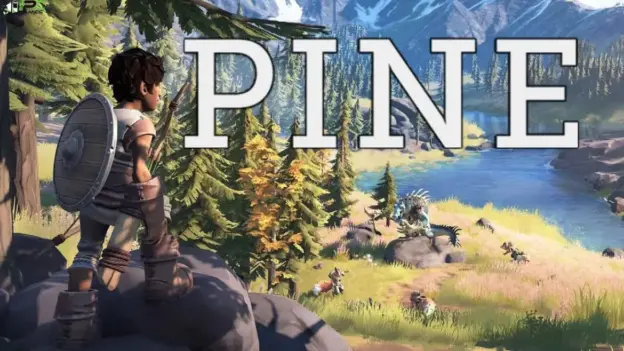
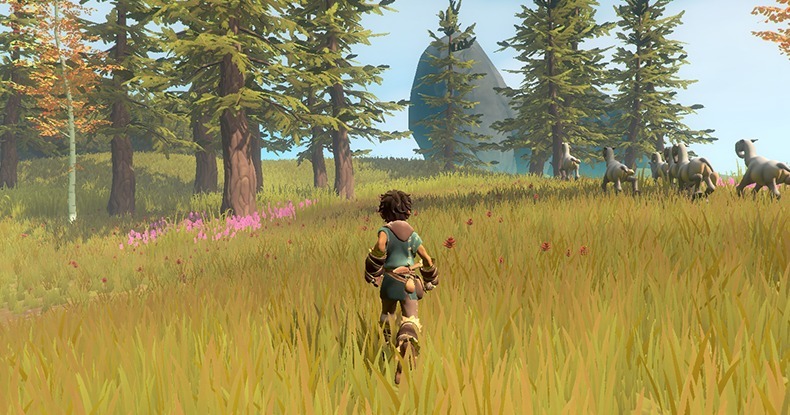
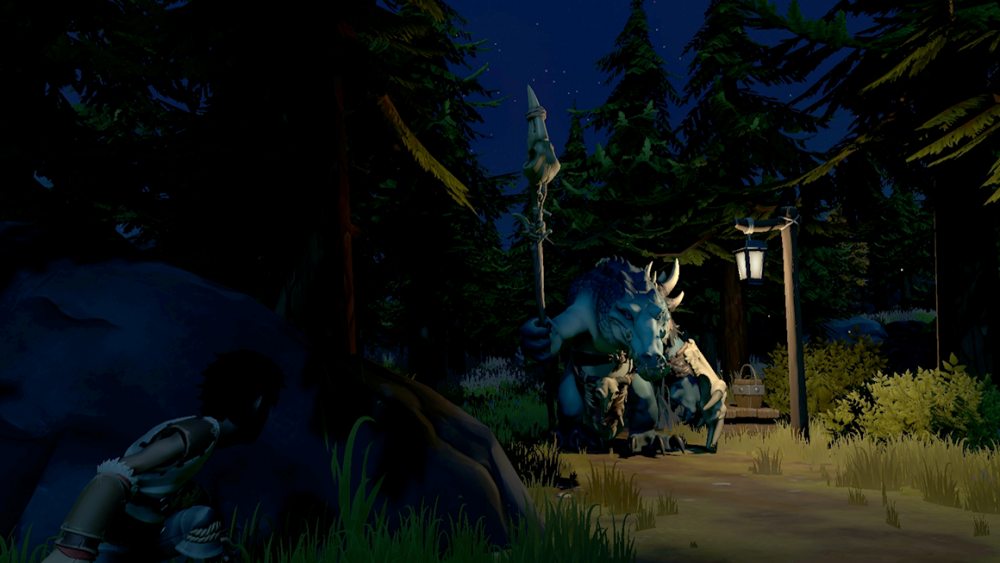
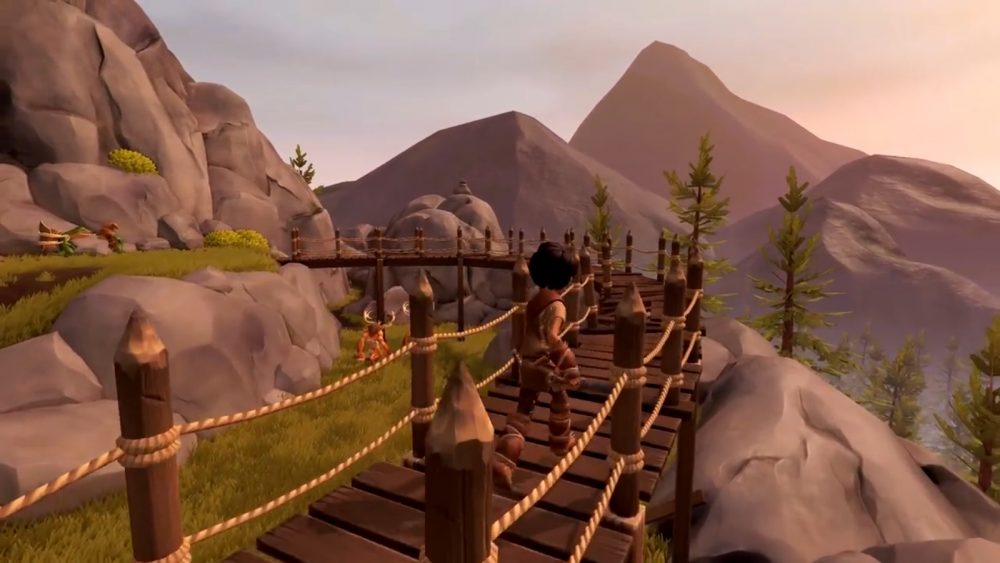
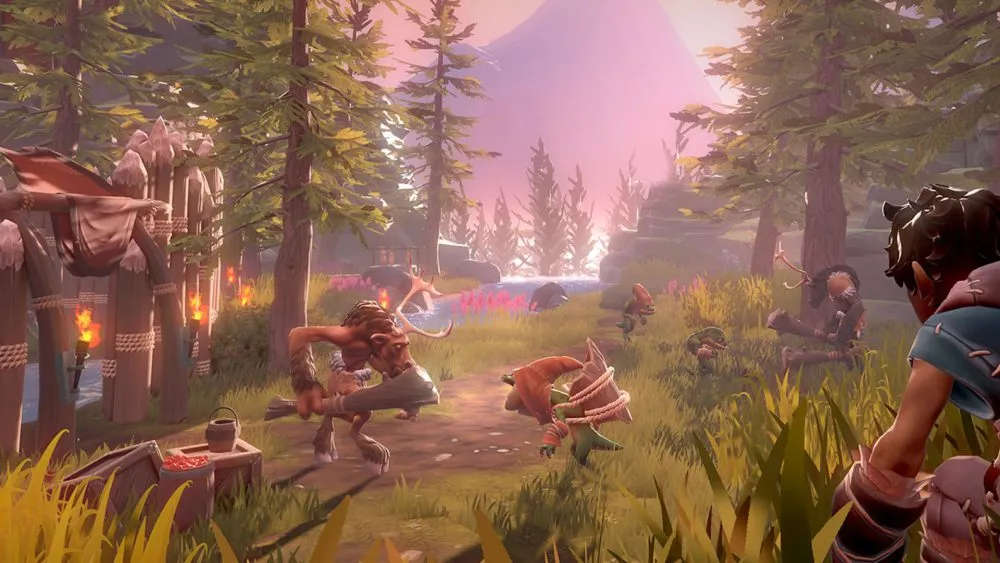
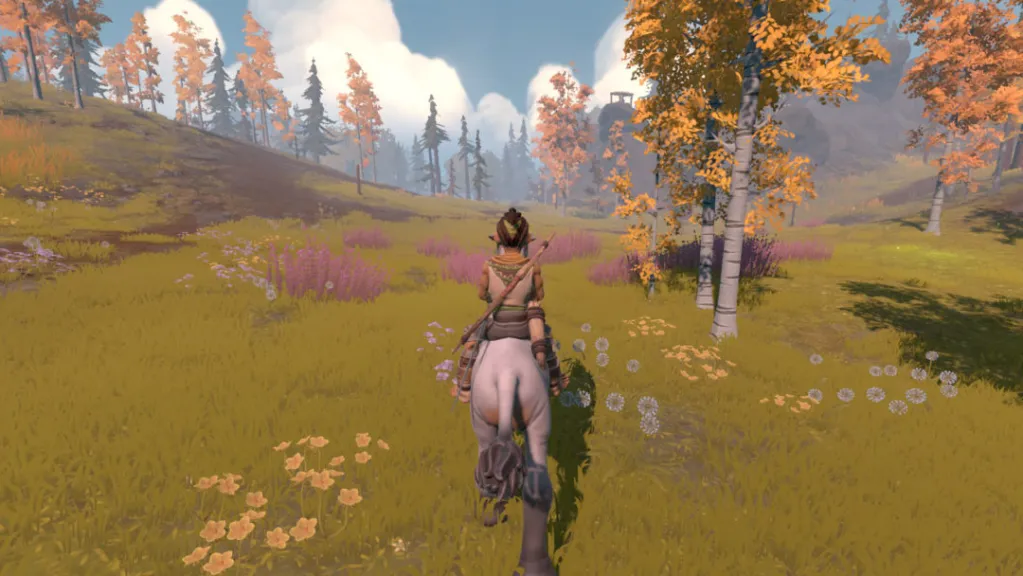
In my ongoing bid to cover more independently developed games and indie developers, and ahead of my trip to London this weekend for EGX Rezzed, this week led me to discover a game on Kickstarter called Pine. Pine, being developed by Twirlbound Games operating out of the Netherlands, is an open-world survival adventure game made in the same vein as the likes of Don’t Starve, Legend of Zelda: Breath of the Wild, and Horizon Zero Dawn.

Incorporating many of the same gameplay elements from the aforementioned title. Albeit with its unique graphical style and conceptual design, it also incorporates a combat system heavily influenced by Bloodborne. And from the looks of it, requiring a comparable level of skill and caution to master. This week, I had a Q&A session with the game’s creative director, Matthijs van de Laar, about what gamers can expect with Pine. And what influenced the game’s creation? Here are his answers:


Pine 1

What were the influences behind your game?

We’ve been mostly inspired by the great action-adventure games like The Legend of Zelda and Fable – they tend to strike a chord with people who aren’t being struck enough, we think. Only once every few years does a game like that come by. And there’s still so much to explore within that genre. A very physical, natural feeling to the game was important to us.

Everything should feel grounded and real, with an easy-to-grasp groundwork of physics and interaction. We look at platformers and jolly action adventures for fun. But we look at more serious games for this grounded look and feel. Some of our team members have credits in cinema. And we all have a general interest in movies and TV. This has been a good influence on Pine’s storytelling, camerawork, and rhythm.


What has the developmental process been like?

Starting as a floating idea about 3 years ago, we’ve done an extensive amount of research and prototyping. We wrote several theses on the subjects that are tackled by Pine (mainly about adaptation in game design, machine learning, and natural environments). And all that knowledge was brought into a bigger game after graduating last year. It was only when we knew we had something that worked and after thoughtful consideration, that we decided to go at it full-time. Working hard on the next step, which became Kickstarter. This included trailers. But also a lot of groundwork for the game and systems. Maybe it’s cool to show this 12-week video of that graduation phase:

https://www.youtube.com/watch?v=DhLdiLPQ2Ng


Pine 2

What has been the most exciting aspect of development?

The idea process. There is such a wealth of ideas among team members that every meeting is a joy. We’re always bursting with inspiration, and seeing those ideas come to life in the form of environments. Or specifically the species, is fun to witness. The alternative evolutionary course of Albamare has been a lot of fun to think about, and we’re not even remotely running out of ideas!


What has been the most challenging aspect of development?

Being only 6, we have to make really important decisions sometimes. It’s important to keep the game small enough, but make it feel like an adventure that can last. We have a very strong vision of what it should play like and what the focus should be, and sometimes it’s hard to keep up with that vision with only a few people we have. The open-world nature of the game has certainly been one of the toughest aspects (e.g., building the island, letting assets stream, and simulating the ecology).


How well has the game been received so far?

We’ve always been blown away by the response, actually, since the start! For example, we started by sending out demos only five weeks into the process. We expected a few dozen testers, mainly from our school, but after about 6 weeks, we had 3000 testers. People had been sharing it on Reddit and NeoGaf, and we got a lot of good data out of that. Things kept going like that. We went on the Square Enix Collective without any expectations. And became the highest-rated project to date. Signing up for the Unity Awards, and in a completely surprising turn of events, I even won that one! We applied for a small grant, and we got it – and now, on Kickstarter, we raced past 50% in 10 days. As I said, we’re just pretty much blown away sometimes – the demand for a game like Pine seems to be real.


Pine 3

Concerning the game’s theme, does any of the team have any experience in outdoor survival?

Not really, to be honest – we all have been on camping trips before, but no real survival. It’s more about the theme of adaptation, change, and evolution for us. We’ve always had an interest in the theory of evolution, for its beauty and undeniable systems behind it. Realizing these could be translated into a game, the theme took shape even more.


What platforms are you looking to bring the game to?

We’re currently developing on PC, aiming to bring it to Mac, Windows, and Linux. But consoles are definitely in the future vision – depending on publishers and the platform holders’ interest in Pine, we hope we can take consoles into account early on in the process.


Pine 4

Do you have any advice for aspiring developers who may be reading this?

The only advice I always give to developers or those starting their own company: it’s all about the people you do it with. If I hadn’t met my co-founder, Marc, early on in high school, finding out we worked together really well, nothing would have happened. Not having had such good cooperation with my companions, Pine wouldn’t have existed. Like Pixar’s president, Ed Catmull, says: find people you’re intimidated by, professionally. Find those who are better at things than you are; that’s the only way you can make something truly great! It’s really about the people and what they bring to the table. Recognize each other’s strengths and weaknesses, and be honest with each other!


Where on the Internet can people find you?

Everywhere! More specifically, we’re on Twitter, Facebook, Reddit, and email:

http://twitter.com/Twirlbound

http://facebook.com/Twirlbound

http://reddit.com/r/pinegame

pine@twirlbound.com


Do you have anything else to add?

Kickstarter is scary, as you’re putting your whole game AND team online, but it’s so cool to see people engage that it’s all worth it!


Pine 5

Lastly, I would like to thank Matthijs for agreeing to our Q&A and would like to take this opportunity to wish him the best of luck with the remainder of the Kickstarter campaign.

Dishonored 2 (Xbox One, PlayStation 4, PC)

Dishonored 2

Developer(s) – Arkane Studios

Publisher(s) – Bethesda

Director – Harvey Smith

Designer – Dinga Bakaba

PEGI – 18

Developed primarily at Arkane Studio’s Lyon branch, and released in late 2016, Dishonored 2 was released later last year to critical acclaim. With players and reviewers citing major improvements made over the first game. Most of which concerned the game’s difficulty, many players opined that the last game seemed too easy. Personally, I agree that the sequel is better than the original game in almost every respect. And whilst the gameplay wasn’t structured as well as I believe a Dishonored game has the potential to be, it was more than a worthy sequel.

Graphics – 9/10

Taking place in a new city away from Dunwall, known as Karnaca, there are many new aspects of conceptual design added to expand upon the series’ mythology. As well as an overhaul of graphical quality. Making the game just as compelling and wonderful to look at as the first game. If not, more so. There are new machines to have to contend with besides the tallboys. And a new set of city streets and buildings to navigate through and discover new secrets and vantage points. The second game also seems even darker than the original, giving it more of a gritty feel, appropriate for the feel of the story. The setting of the Void is where this aspect of the game seems most prevalent. As the Outsider is also portrayed as a much darker character in himself.

Gameplay – 9.5/10

This time around, the player is given the option to select from two characters from the start of the game, both with their own unique set of abilities. There’s Corvo Attano, the protagonist of the original game and the empress’s royal protector. Or Emily Kaldwin, the empress of Dunwall. The game itself is also structured very similarly to the last. Taking place in a semi-open world and offering players the option to either take a stealthy approach or run rampant and kill every enemy standing in the way.

The game also presents the option of going through the duration of it without killing a single person. The best thing about this game is that the character choice not only offers a new dimension of gameplay. With so many new powers and options to experiment with. But it also gives it even more replay value than the first, warranting at least four different playthroughs. So even though it didn’t offer a completely open world. Which I think can be implemented very easily in a game like this. There is plenty of replayability to be had to make for a fairly long gaming experience.

Controls – 10/10

As with the previous game, there are no issues with its control scheme. Even though there are more options and abilities available. It’s actually quite impressive how the developers have managed to incorporate so many new features. Whilst at the same time keeping the fundamentals of the game to a perfect standard. Keeping a control scheme unique in a gameplay perspective that has also taken and maintained prominence throughout the industry for almost twenty years also makes it seem even more impressive in my opinion.

Lifespan – 7/10

Each individual playthrough of Dishonored 2 lasts about as long as it did in the first game, clocking in at around 20-25 hours. Which, for me, was mildly disappointing. A game like this can have a campaign that can be easily made to last longer. However, the game’s lifespan is in its potential replay value. Of which there is a great deal for those willing to delve deeper into the game. So, whilst it may not have the lifespan that a Dishonored game could have, it still has a great deal of longevity attached to it. And will make for hours upon hours of entertainment.

Storyline – 7/10

The sequel to Dishonored takes place fifteen years after the events of the original game. Whilst Emily Kaldwin has long since been installed as the rightful empress of the city of Dunwall, thanks to Corvo, the empire has prospered. But it has not been without challenges. A serial murderer known as the Crown Killer is murdering enemies of the state left, right, and center. And has led many in Dunwall to believe the Crown Killer is Emily herself. Whilst Corvo and Emily are attending a remembrance ceremony for Emily’s mother, Jessamine, a powerful witch named Delilah Copperspoon is introduced to Emily. And claims to be her older half-sister and rightful heir to the empire.

Whichever character the player chooses at this point manages to escape Dunwall. Whilst the other is subdued by Delilah, who usurps the throne. And the player character is tasked with putting an end to Delilah’s regime and rescuing either Corvo or Emily, depending on the character’s choice. Whilst I thought the game’s story was not as suspenseful as the last, since there is not as much of an elaborate twist to it, it still has the same level of political intrigue. And just as much emotional charge. Especially this time around, Corvo is given a voice as opposed to being confined to the role of the silent protagonist.

Originality – 7.5/10

Though the structure of Dishonored 2 remains relatively the same as its predecessor, the formula is kept fresh enough with the introduction of so many new features and abilities added. It’s most definitely evolutionary as opposed to revolutionary. Expanding on what was already good about the first game, except for the story. In my opinion, it does still leave room for both improvement and development in the event of a possible third game, but having played through both, I would welcome a third with open arms. The second game cemented the fact that both the concept and mythology behind the series are more than worth further expanding upon still.

Happii

Overall, Dishonored 2, whilst not being exactly the sequel I had hoped it would be, still presents massive improvement upon the first game. It’s enjoyable and lengthy with a decent story. And plenty of gameplay options to match. Well worth one playthrough at the bare least.

Score

50/60

8/10 (Very Good)