Tag Archives: PC

Ziggurat (PlayStation 4, Xbox One & PC)

Ziggurat

Developer(s) – Milkstone Studios

Publisher(s) – Milkstone Studios

PEGI – 12

First released on Steam Early Access back in 2014, and going on to see both digital and physical releases on multiple platforms, Ziggurat is a Roguelike first-person shooting dungeon crawler, somewhat reminiscent of Tower of Guns, with a heavy emphasis on combat and player character development. And above all, challenge. After having played Tower of Guns, I had fairly high expectations of how good this game would be. And how it would do the things it does. Overall, I was not disappointed.

Graphics – 8/10

The game takes place in a pseudo-medieval fantasy world bearing resemblance to game series such as Warcraft or Baldur’s Gate. The graphical quality of the title is stunning, especially for a game developed independently, but more importantly, it also does extremely well to break away from games that were clearly taken as an influence by incorporating a massive variety of unique creatures and boss characters. Such as Sir Arthur and Lady Audrey. Cutting-edge graphics can mean much less if there isn’t a variety in conceptual design. But this game has both.

Gameplay – 8/10

The basic premise of gameplay, along with the game’s story, is that an apprentice wizard must take on the challenge of the Ziggurat to graduate from his order. Players must undertake increasingly difficult tasks of ascending the floors of the Ziggurat, which are filled with dangerous monsters and challenging obstacles throughout. Players can take advantage of a massive choice of different weapons and spells. And perks that can be found across the game in order to survive for as long as possible, and to try and eventually graduate from the wizard’s order. Locations, enemies. Bosses, in Roguelike tradition, are procedurally generated. And thus, each playthrough provides a new set of challenges every time. Keeping the game insanely fresh and giving it virtually infinite replay value, which can make for hours upon hours of fun.

Controls – 10/10

Belonging to a genre that has dominated the video gaming market since the sixth generation, Ziggurat’s controls are perfect, providing no unnecessary complications, straightforward control mechanics, and incorporating all aspects of gameplay seamlessly. The fact that the player character moves faster than in most other first-person shooters also provides quite a lot of fluency for players who have mastered it after a while, as it can become quite satisfying to be able to effectively dodge a wide variety of simultaneous enemy attacks. By the same token, it can also provide an equal amount of challenge to newcomers, since it can be quite easy to rush through unexplored areas and accidentally fall for several given obstacles, such as lava pits.

Originality – 7/10

Though Ziggurat is not the first game of its kind to incorporate the basic premise of gameplay that it does, it stands out for a massive number of different reasons; the variety in gameplay combat options it provides, as well as its conceptual design and artistic direction in terms of visuals. Although it’s clearly not without its influences, it provides a marvelous gaming experience that greatly shines throughout the indie developer community, and it’s certainly worth playing again and again.

Happii

Overall, Ziggurat is a highly enjoyable game, filled with challenge, entertainment, and a staggering amount of replayability. It looks great, it plays out wonderfully. It stands out as one of the better gaming experiences on eighth-generation hardware.

Score

33/40

8/10 (Very Good)

Undertale (PC, PlayStation 4, PlayStation Vita, Xbox One & Switch)

Undertale

Developer(s) – Toby Fox

PEGI – 12

Developed by Toby Fox over a period spanning over 2 years following a successful Kickstarter campaign, Undertale was heavily inspired by the Super Mario RPG series. It combines turn-based RPG mechanics with real-time combat. It has a narrative deeply reminiscent of many more surreal games, including Anodyne and EarthBound. Though I have voiced my concerns about developers combining Turn-based combat with real-time combat in the past in reviews of games like Dragon Age: Origins and Final Fantasy XII, the way it’s handled in this game is much more adaptable and sensible than in most others. And it made for a very engaging experience.

Graphics – 7/10

At first glance, the visuals seem extremely basic in terms of graphical quality. But as the game progresses, players will start to notice subtle details throughout that really make it stand out. Such as reflections in pools of water, raindrops, snowflakes, and surprisingly effective use of shadow and lighting. The conceptual design, however, is where this game truly differentiates itself from others. It takes place in a wide variety of different locations. It has an insane amount of different character designs. My own personal experiences of witnessing many cosplayers dress up as characters from this game speak for themselves. And give testament to how much of a cult following this game has garnered since its release.

Gameplay – 8/10

The game focuses on a combat system highly resembling that of any classic Final Fantasy or Dragon Quest game. But it is in how players must evade enemy attacks that it becomes extremely enjoyable. The attack evasion system plays out like bullet hell games such as Galaxian or Gradius. With players having to evade an onslaught of objects on the screen. After being disappointed by a plethora of games that have tried and failed to combine turn-based and real-time combat, it was enormously refreshing to find a combat system that does this. And one that actually works well. It gives testament to Toby Fox’s ability as a game designer if he can succeed where many mainstream developers have failed spectacularly.

Controls – 10/10

Even with a very different control scheme from most other games of this kind to have been released over the last 25 years, the control scheme in Undertale presents players with no unnecessary complications or annoyances. Movement is straightforward, as are the combat mechanics. And like many RPGs before it, the developer didn’t try to fix what wasn’t broken, and the game is the best it could be in this respect.

Lifespan – 3/10

Lasting around 6 to 7 hours, Undertale falls way short of the standard lifespan of an average turn-based RPG. And this stands out as the worst thing about the game, in my opinion. If it had much less of a linear progression than it does, then potentially it could have been made to last far longer. Arguably, it can be put down to the fact that the developer worked on a budget. But there have been indie games made on a budget with virtually infinite replay value. Thus, even under the circumstances, the game still feels far too short for it ought to have been.

Storyline – 10/10

The story of Undertale follows a player-named human child who has fallen into a mysterious realm called the Underground. Where monsters were once equal to humans, but were banished following a war that broke out between them. The human sets out on a journey to find the king of the Underground, Asgore Dreemurr. And reach the barrier leading back to the surface world.

The game’s story was heavily inspired by Internet culture, as well as the concept of motherhood, further taking influence from Nintendo’s Mother series; the character Toriel, in particular, is perhaps the most prominent example of this. The story has a unique blend of comedy, tragedy, and moral ambiguity, as players are presented with choices of befriending, fleeing, or killing enemies, which in turn influence the direction in which the story goes. It certainly stands out as one of the better and more subtle narratives told in an indie game. It is worth experiencing at least once.

Originality – 10/10

Though the game takes inspiration from a variety of different sources, such as Internet culture and other game series. Even UK comedy shows such as Mr. Bean present players with a gaming experience largely unlike most others. I was overwhelmingly satisfied to witness how well combat was handled against many other RPGs released throughout the previous generation of gaming, and most other aspects of it also contributed to making this a truly unforgettable experience, like its story and subtle graphical details. It can be looked upon as one of the most remarkable achievements in gaming in general, made even more remarkable by the fact that it was all the work of one man with limited financial backing, but with an unlimited imagination.

Happii

Overall, Undertale is an engaging, subtle, and extraordinary video game that will have players amazed and immersed from beginning to end. Though my biggest concern stems from wishing that it could have been made to last a little longer, what there is in the way of story and gameplay makes for an experience unlike many others. And I recommend it to any fan of the RPG genre.

Score

48/60

8/10 (Very Good)

Doom (2016) (PC, PlayStation 4, Xbox One, Switch & Stadia)

as ‘Doom

Developer(s) – id Software

Publisher(s) – Bethesda Softworks

Director(s) – Marty Stratton & Hugo Martin

Producer(s) – Timothy Bell

PEGI – 18

Twelve years in the making, the re-vamp of id Software’s classic shooter Doom presents players with an experience more akin to Doom 1 and 2. Deviating from the survival horror approach taken with Doom 3. And given an overhaul in visuals, as well as having numerous different features thrown in for good measure.

I thought that, whilst it was pretty light on story, again alluding to the first two games, it was overall a fairly decent gaming experience worth at least one playthrough. And it’s not just another Duke Nukem Forever. As it easily could have been if history had gone another way.

Graphics – 10/10

The game runs on the id Tech engine. One of the most advanced gaming engines on the market. And as a result, it looks nigh-on flawless in terms of technical performance. It’s certainly one of the best-looking video games I’ve seen throughout the eighth generation so far. If not, the best. The conceptual design is very, very good. It looks even more akin to the classic box art than any other Doom game to date. With the red skies and terrains of Mars, and the hordes of demons that players must contend with. Although the game itself plays out much like the first two games in the series, I like that they also kept the scary atmosphere and limited lighting in UAC facilities, which were established in Doom 3.

Gameplay – 7/10

The game has a standard level-based campaign mode. Where players must shoot their way through hordes of demonic creatures. And complete a couple of collectible side quests along the way. But on top of that, there is online multiplayer. But the most interesting feature the game has to offer is undoubtedly the SnapMap system. This allows players to create their own arenas and stages and hold their own online multiplayer battles and single-player levels, as well as other game modes. A direct response to the overwhelming legacy the original game created in terms of user-generated content. The SnapMap feature makes this game stand out among the many other generic FPS games that are released every year. And after completing the main story mode, it will provide much more replay value for people left wanting more.

Controls – 10/10

Handled by the godfathers of the first-person shooting genre, id Software, it was expected that there would be no issues with the game’s control. And so there aren’t any. Doom’s controls are as refined as any other modern FPS game. And present players with no unnecessary complications.

Lifespan – 10/10

The campaign can typically last up to around 13 hours. Which, whilst it isn’t exceptional, is still much longer than the average FPS story mode. But on top of that, online multiplayer and the SnapMap feature will provide players with unlimited replay value, so the game will, in essence, last as long as the player’s interest, which, given what this game has to offer, should be a considerably long time, especially for veteran fans of the series.

Storyline – 4/10

As I said, this game is light on story, even in the campaign mode. The plot is that an unnamed space marine is traversing through the planet Mars, and is on the way to eliminating as much of the demon horde as possible. There are slight instances of character development and a couple of different plot threads, but not enough to make it stand out from other games in this respect. Arguably, there didn’t need to be a story for it to work, and that does apply to a certain extent, but given how id Software has previously demonstrated that they know how to tell at least an interesting story, as evidenced by both Rage and Wolfenstein: The New Order, I still can’t help but feel that this game fell short in this respect.

Originality – 6/10

Another aspect that the game falls short on slightly is in terms of uniqueness, partly in conjunction with the fact that this is simply a second re-telling of the events of the original game. It’s also due to the fact that Doom does essentially play out like a standard first-person shooter, and that there are no unique mechanics within the gameplay itself outside the SnapMap feature. id Software may have wanted to keep things simple for the sake of delaying the game any more than they already had done. If true, the game was made to suffer slightly in terms of originality.

Happii

In summation, however, Doom is a solid first-person shooting experience, and I would recommend it to both veterans and newcomers. It’s longer than the average shooter, and while it does play out a lot like an average shooter, there are enough additional gameplay features to keep players busy vanquishing the demon horde for a long time.

Score

47/60

7.5/10 (Good)

Sumer

Q&A With Studio Wumpus

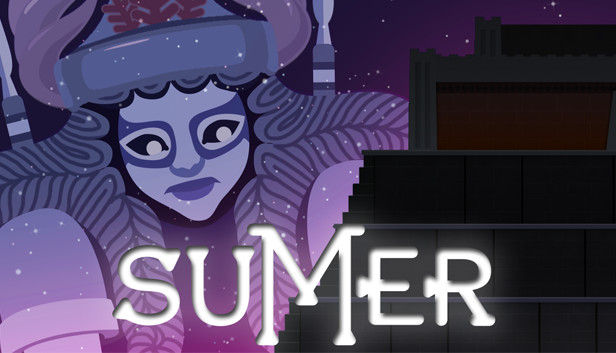
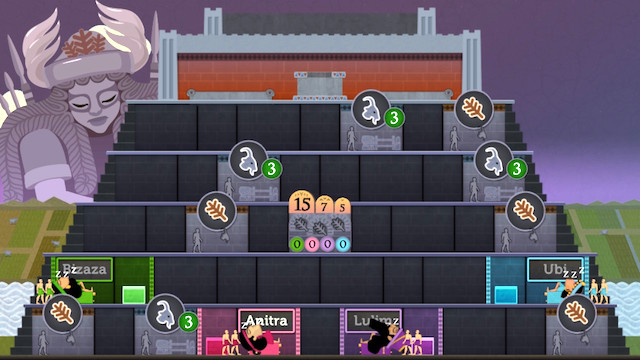
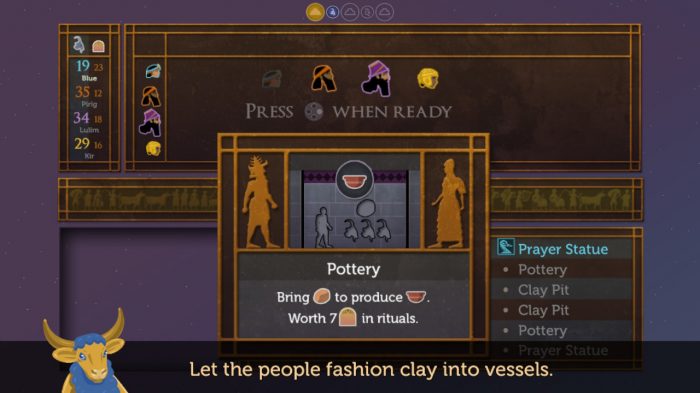
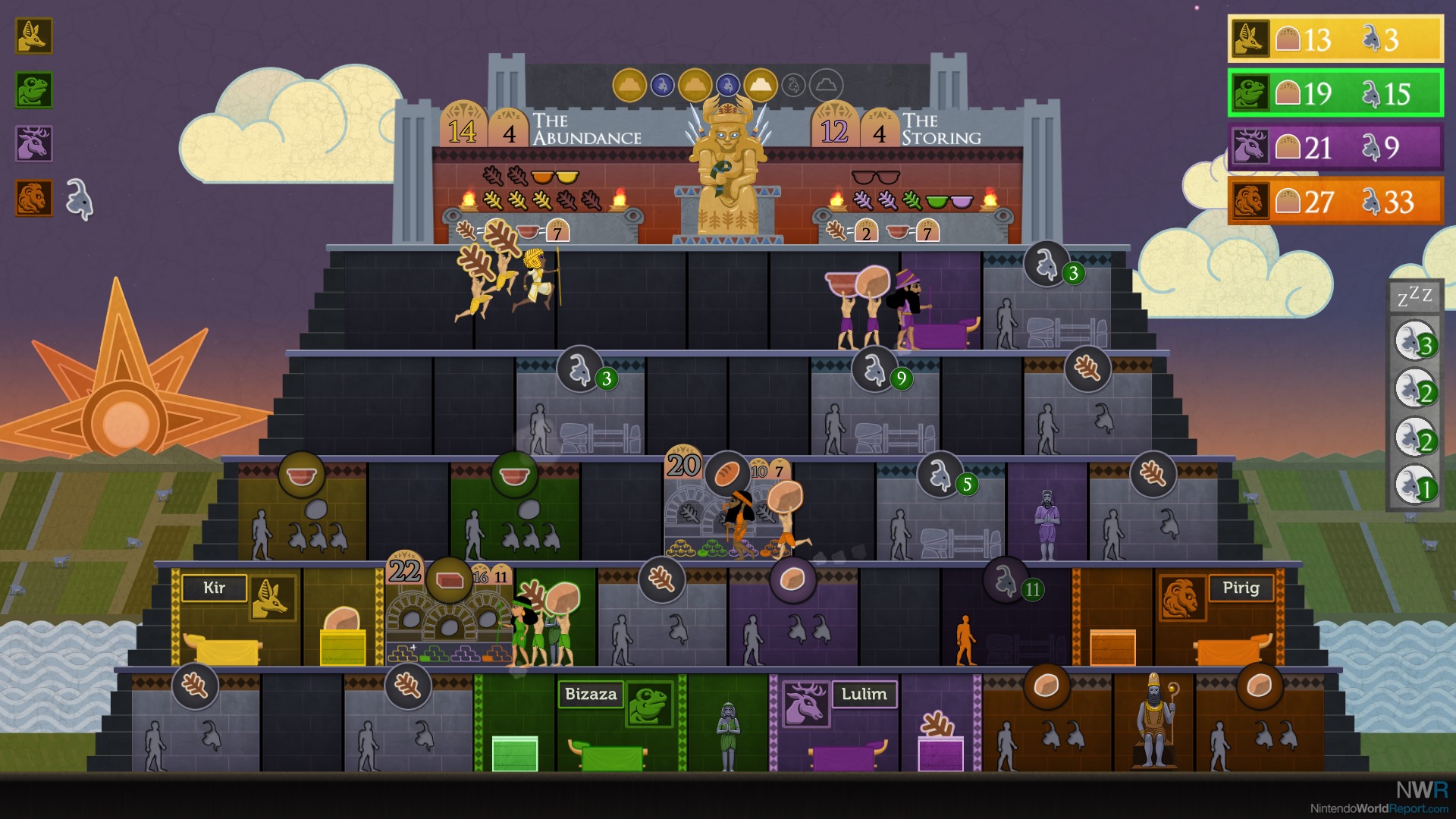
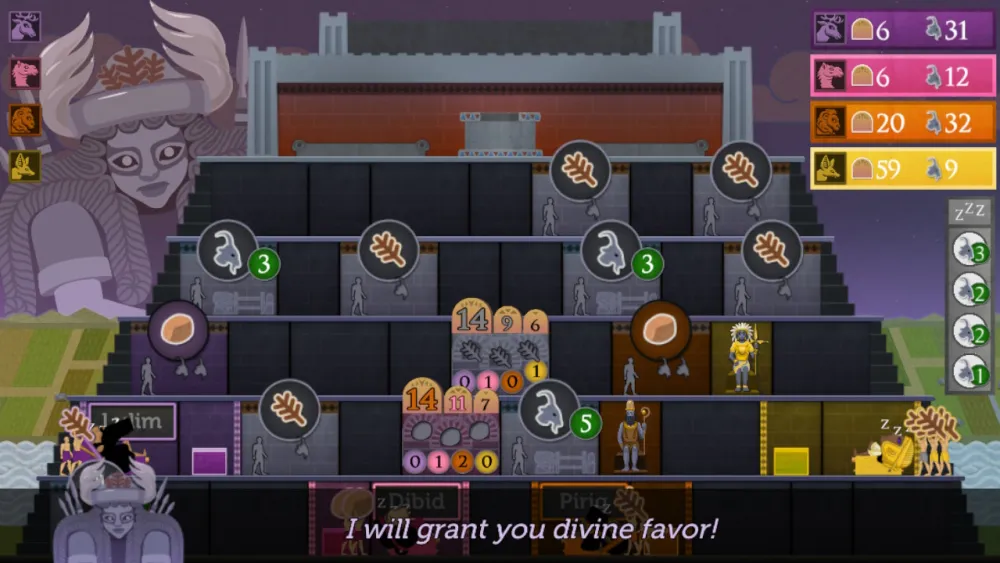
Another game seeking financial backing on Kickstarter that caught my attention this week was a title influenced by board games called Sumer. Developed by Studio Wumpus operating from New York City, Sumer has a look to it similar to the Metroidvania game Apotheon, but plays out much differently than the former, adopting a style of play combining the elements of god games and real-time strategy, but heavily influenced by a game named M.U.L.E, which also had a massive impact on Sid Meier’s Civilization series. I approached the studio, and core game designer Sig Gunnarsson agreed to answer the questions I had about this extremely unique-looking title. These were his answers:

Sumer 1

What were the influences behind your game?

Board games and local multiplayer games are the main inspirations behind Sumer. We really wanted to explore the space between board games and video games. Having played a lot of games like Towerfall and Samurai Gun at the time, but then, when we played the Yawhg, we saw that local games could be more than just action.

We decided to use our experience in board game design to create a game that felt like a board game but was built from the ground up to be a video game. Big board game inspirations for us were games like Troyes, Caylus, and Lords of Waterdeep. Our biggest inspiration has to be M.U.L.E., a game from 1983 made by legendary game designer Dani Berry. M.U.L.E. is an amazing local multiplayer economic strategy game that is incredibly original and fun, but no one has really done anything like it since. It was even based on board games like Sumer.

What has the developmental process been like?

It has been really fun and interesting. We started designing the game while we were MFA students at the NYU Game Center. We had a strong support system and a lot of repeat playtesters. After we graduated, we were accepted into the NYU Game Center Incubator, where we got further support in development. At that point, we had a balanced, playable game, but it just wasn’t polished enough to sell. Jet Landis joined the project, and with her help, we developed the visual style we have today. We have been self-funded since September last year, and every week the game gets a little better.

Sumer 2

How close are we to seeing the finished product?

If the Kickstarter succeeds, we’ll be on Steam Early Access this summer! So it’s not long at all until people will be able to play the game. The game is balanced, playable, and works. We’ll continue to polish it and improve it, and the full release will be when our online mode is ready.

What has been the most exciting aspect of development?

The most exciting part of the process is that no one has done something quite like this in recent years. We started by making paper prototypes, but quickly translated them into digital prototypes. We were treading new ground. Another exciting aspect was building the community. New York is a great place to do that. There are a lot of events that are good for local multiplayer games in or near New York, and people were excited to play Sumer.

What has been the most challenging aspect of development?

The fact that the game was so novel was both a blessing and a curse. It meant that there weren’t many games that we could look for solutions to problems about UI, experience, and design. This meant we had to do more iterations and find more of our own solutions to test. We initially thought that making a digital board game would let us make a more complicated game. The opposite proved to be true! Because everyone has to have access to all information at the same time on the same screen and doing it in real-time, everything had to be streamlined.

Sumer 3

How well has the game been received so far?

People often don’t know quite what to expect when they hear about and see our game. But as soon as they try it, they seem to fall in love with the mechanics and novelty. I’d say we’ve had a great reception so far!

What platforms are you looking to bring the game to?

Currently, the game is set to come out on Steam for Mac and Windows. Who knows what we’ll be able to do in the future?

Do you have any advice for aspiring developers who may be reading this?

The biggest advice I can give is to test. Just test and test and test. Do it earlier than you think, and keep doing it after you think you don’t need to test anymore. When testing initially, don’t be afraid to kill your darlings. You’ll always get new and better ideas. Be nice when taking criticism, listen to the playtester’s problem, and figure out the correct solution to it.

Where on the Internet can people find you?

Find Sumer on www.sumergame.com and me on Twitter @SigGunnarsson. Don’t be afraid to ask me any questions you might have about the game or its design.

Do you have anything else to add?

Be sure to check out our Kickstarter!

Sumer 4

I would also like to take this opportunity to thank Sig Gunnarsson and Studio Wumpus for agreeing to our Q&A and to wish the team the best of luck with the game and the backing process. For anyone interested in this title, the Kickstarter page is accessible via the link below:

https://www.kickstarter.com/projects/studiowumpus/sumer-a-game-of-divine-strategy

Thanks for reading.


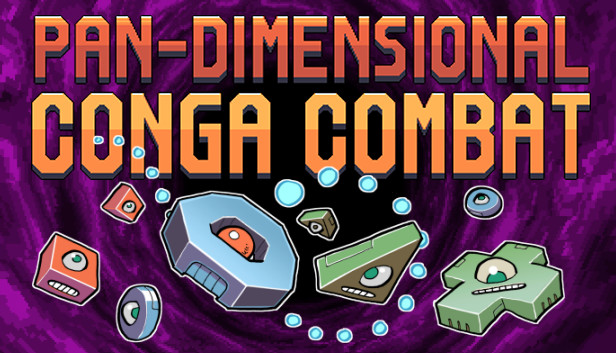
Pan-Dimensional Conga Combat

Q&A With Retro Gamer CD

Last year, whilst attending the 2015 Play Expo in Manchester:

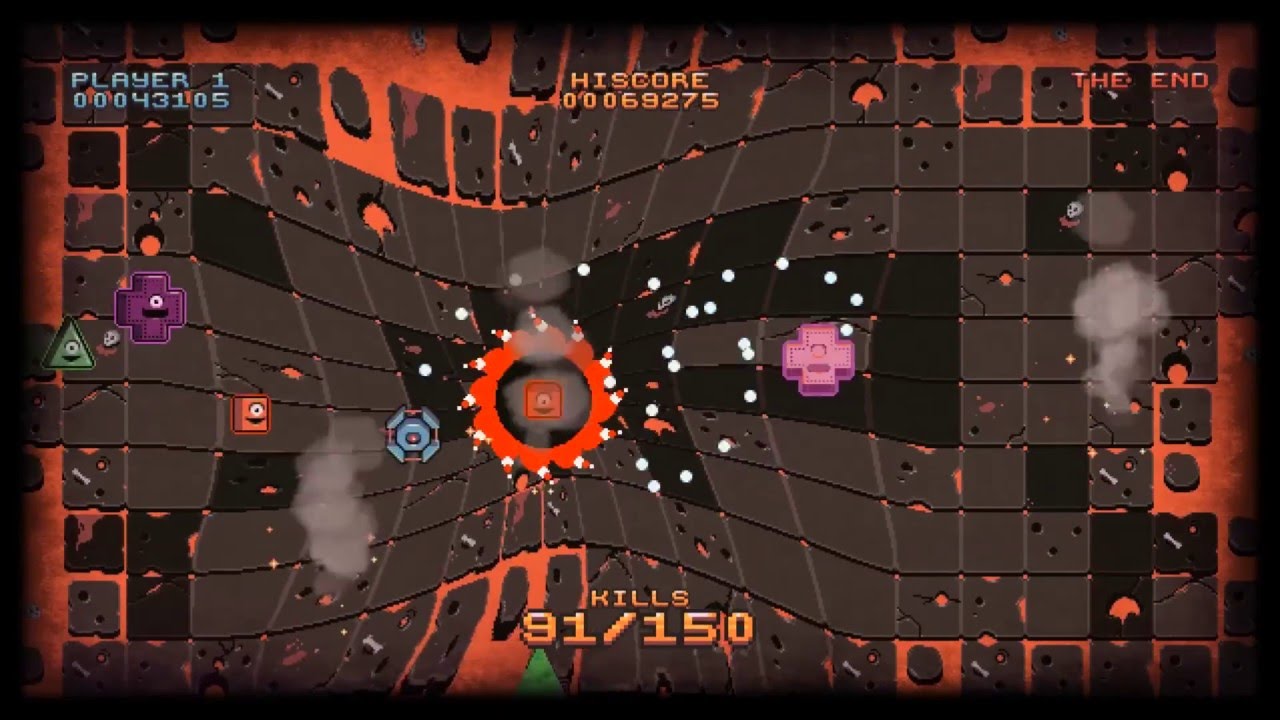
Among the many independent game developers I had the pleasure of conversing with at the show was James Monkman, director at Retro Gamer CD. Who has released over 30 indie games on PC as well as across various retro platforms. Such as Commodore 64, Atari STE, and the Atari Jaguar. James was at the event showcasing the studio’s upcoming arcade title Pan-Dimensional Conga Combat, which he co-created along with fellow coder Jamie Howard and the rest of the staff at RGCD. I recently approached James again to see if he would like to answer a couple of further questions I had about his latest development outing. As well as about the studio in general. This is what James had to say:
Pan-Dimensional Conga Combat 1

What were the influences behind Pan-Dimensional Conga Combat?

Conga is actually the second game that Jamie and I have worked on together (not including Commodore 64 releases), and until recently, he was primarily in charge of the code. Despite my history of already programming and releasing a game on my own (Robotz DX), there was a lot of stuff that I was doing wrong/stupidly. So over the Christmas holidays back in 2014, we decided to spend some time focused on improving my ‘skills’.

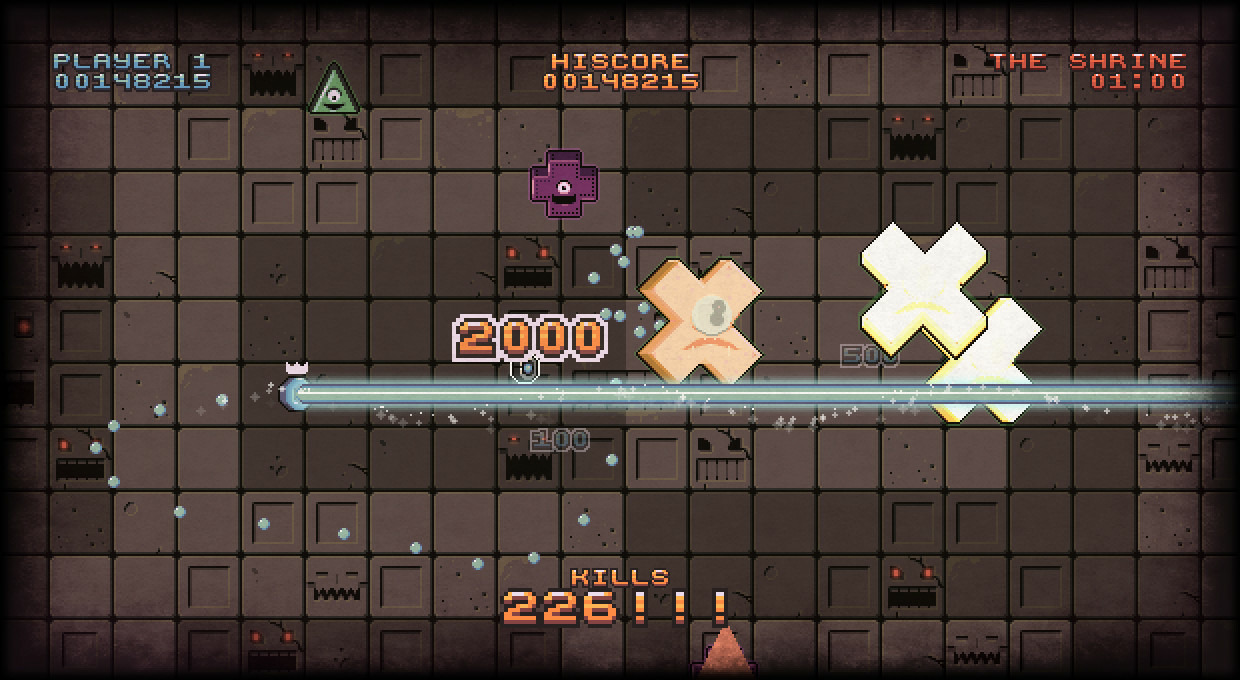
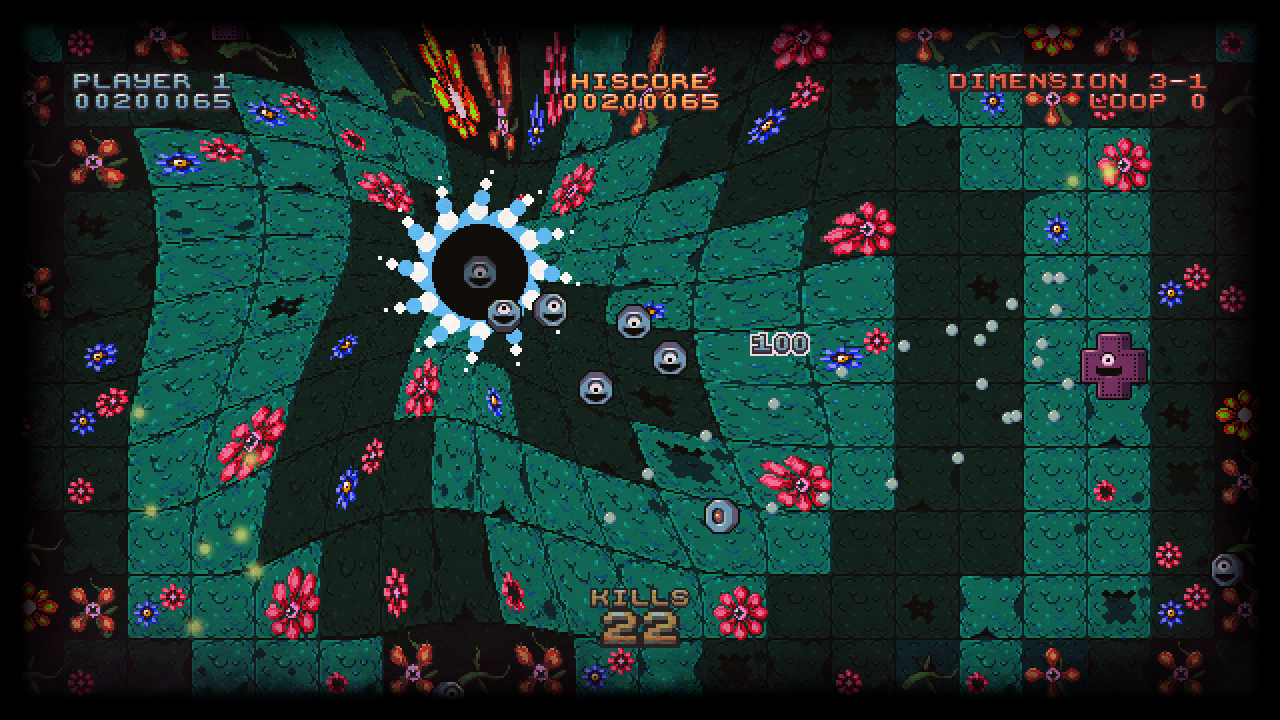
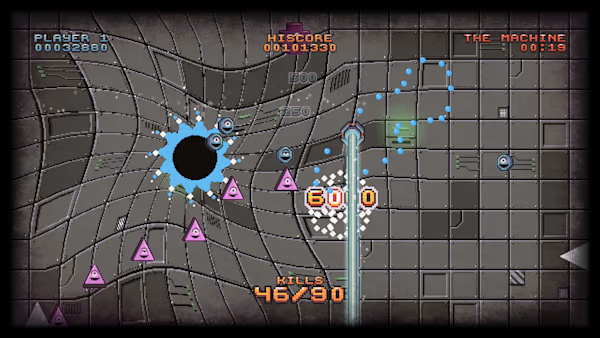
Rather than sit plodding through tedious tutorials, I decided that my solo project should be to remake a simple game from around 10 years ago, a simple avoid-’em-up called ‘Mini01’ by Japanese indie developer Buster. Mini01 shares the core mechanic with Conga (bullet tail used to kill enemies). But it is incredibly simple. There are only two enemy types, and they just fall from the top of the screen. It took us a couple of days to complete the remake, at which point Jamie and I decided that we’d push the design a little further and see what we could make of it. First of all, we added full 8-way movement and the enemy spawning portals. Then came the waves, geometric patterns, mesh distortion, rhythm-synchronized action, the evil X, and the Lazor.


What has the developmental process been like?

SLOW. To be honest, if Jamie and I didn’t have full-time jobs, we could have knocked the game out in less than a month. However, with only occasional weekends together and one or two evenings a month, well, there’s not been much time spent actually punching the keys. 2015 was a really busy year for us both (IRL). We’ve been lucky in that, from the outset. We had outside help with the artwork and music.

Folmer Kelly (the ‘Wrassling’ guy) provided us with 99% of the artwork and a lot of valuable feedback and design tips. And regular RGCD collaborator Ilija Melentijevic permitted us to use his alien freak-beats and reNoise experiments for the soundtrack. Jamie and I have learned a lot of valuable lessons developing this game. More so than with our last (r0x EP) – so despite taking forever, Conga’s development has been a positive experience. We’re not expecting it to set the indie scene on fire. But we’re hoping a few people out there enjoy the game. However, ultimately it’s not *that* important for us to make a profit. The experience that we’ve gained from its development has been priceless.
 

Pan-Dimensional Conga Combat 2

How close are we to seeing the finished product?

Soon! Apart from a few tweaks to the AI and rating system, we’re happy with what we’ve created. The only jobs remaining are the options, stats/achievements, and credits screens. All of which will share similar code. We’re currently saying ‘Beginning of March 2016’ for the initial itch.io release.

What has been the most exciting aspect of developing Pan-Dimensional Conga Combat?

Probably watched other people play it at the PLAY Expo last year. Exhibiting an unfinished game is both a terrifying and super-rewarding experience. In hindsight, the game wasn’t ready for public exposure. Despite our efforts with the tutorial, it was not at all obvious to a lot of people ‘what you had to do’. We had to intervene a LOT. However, we were pleased that when people started playing, they were reluctant to put down the controller and walk away. One guy initially complained that the game was too hard. And then after 10 minutes or so, he smashed my all-time top score! Whilst watching people play, Jamie and I both filled our notebooks with feedback and issues that people faced. And we’re pretty sure that we’ve now rectified them all.


What has been the most challenging aspect of development?

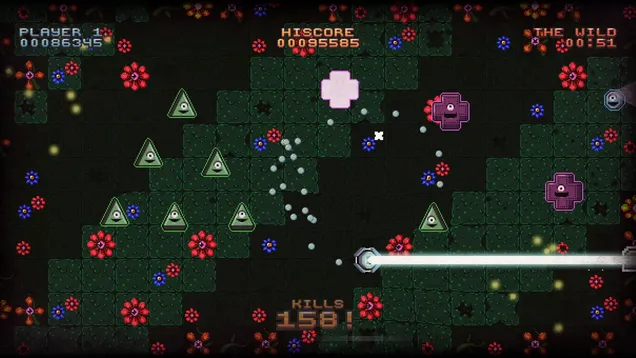
Getting the difficulty right! Jamie and I like classic coin-op style *hard* games – which is why we are fans of one-hit kills and perma-death. However, with Conga, we wanted to introduce a ‘fair’ difficulty curve. Conga has two modes. A classic endless ‘survival’ mode where you eventually get swarmed by the invincible evil X’s. And an arcade mode in which you jump through the four themed dimensions. The kill quota to open each exit portal is increasing every time.

In both modes, progression unlocks dimensions to be replayed in survival. We ended up adding an armor pick-up that effectively offers players an extra hit point for the current stage. Getting this isn’t too easy. You have to first fully charge your lazor by grinding your tail against the purple cross enemies, then fire it and kill one of them (they drop the armor when they die). However, with all that said, I’m personally still not happy. It currently feels too easy, so we’re going to tweak the AI to make the enemies more aggressive.
 

Pan-Dimensional Conga Combat 3

How well has the game been received so far?

Conga has remained pretty much under the radar. Apart from PLAY Expo, it’s received little to no exposure. People get excited on Twitter when we show off the mesh effects as animated .gifs using the #screenshotsaturday tag, but that’s pretty much it – until now.


Before Pan-Dimensional Conga Combat, what has been your favorite game to develop so far?

RGCD has been involved in the development of LOTS of games. Over 33 for the Commodore 64 alone and several for the PC and other obsolete platforms like the Atari ST and Jaguar. It’s hard to pick a favorite. But the one we are most excited about currently is Blastard Squad. Our work-in-progress, squad-based sequel to Robotz DX. We’re hoping that one will be our breakthrough release.


Where do you get ideas for the conceptual design of your games?

It’s no secret that Jamie and I look to the past for inspiration. I was a huge fan of public domain and shareware games back on the Amiga and Atari in the 1990s. Much like today’s indie scene, there were loads of fresh ideas there that offered completely different experiences to what was commercially available. However, a lot of the designs were constrained by the platform limitations of the time. This is not a problem we have today. Jamie has been playing a lot of PC-Engine stuff lately. And some of the weirdo games that came out on that console would be perfect to lift ideas from and evolve. So that’s what we do. Borrow a bit from one game, take some inspiration from another, then mash it up and make the best that we can out of it.
 

Pan-Dimensional Conga Combat 4

What platforms are you looking to bring the game to?

Conga will be released initially on PC via itch.io. Followed by an Android release (we already have some touch control in there) and, very probably, console afterward (via our friends at MixedBag Games). Amusingly, we’ve been using an old OUYA for testing the Android builds. So we’ll release that build as well. We’ll hit Steam Greenlight when it’s out on itch.io and see what the response is like. Conga is definitely a game that would benefit from integrating online leaderboards.


Do you have any advice for aspiring developers who may be reading this?

The simpler the design and scope of your game, the more likely you’ll finish it! Even tiny games take a LOT of work to complete. Start small and build up your skills with each game you make. Don’t be dissuaded from using ‘n00b’ tools like GameMaker, Construct, or other high-level development environments (we use GameMaker Studio and it’s fab). Most importantly, if the driving force behind you making games is ‘for fun’ rather than ‘for money, you’ll never be disappointed. People like Locomalito (who makes games primarily for himself rather than for ‘the market’) are hugely inspiring to us.

Where on the Internet can people find you?

Our home is at www.rgcd.co.uk, but we can also be reached at Facebook (/rgcd.co.uk) and Twitter (@RetroGamerCD).


Do you have anything else to add?

Thanks for the interview! 🙂
Pan-Dimensional Conga Combat 5

I would lastly like to take the opportunity to thank Jamie for agreeing to our question and answer session. And for showcasing Pan-Dimensional Conga Combat at Play Manchester last year. Also, to wish the studio the best of luck with the game. Many of RGCD’s previous works are also currently available for free download from their site via the link below. Look out for reviews of these games from me coming soon:

http://www.rgcd.co.uk/p/games.html

Zombie Vikings (PlayStation 4 & PC)

Zombie Vikings

Developer(s) – Zoink Games

PEGI – 12

Following the immense success of their adventure puzzle game Stick It To the Man, Zoink Games followed up with an adventure beat ‘em up title named Zombie Vikings. But it was met with unjustifiably mixed reviews, at least as of now. Garnishing an average Metacritic score of just 61. Personally, I found it to be much better than the former game for a variety of different reasons. And I hope that other review sites that haven’t yet provided a review see the game for its many different qualities.

Graphics – 8/10

The general design of the game is extremely similar to Stick It To the Man. With characters and scenery hearkening back to the 2D hand-drawn style of the previous game. However, the conceptual design of the game is drastically different. It takes place in a world inspired by Norse mythology as opposed to a world inspired by the trappings and intricacies of modern life. Even though how weird and wonderfully outlandish their previous title was, this one is just as magnificently strange. If not more so. The game may not run at 60 frames per second like the former. But to me, that’s semantics.

Gameplay – 8/10

Taking a drastic departure from Stick It To the Man, Zombie Vikings presents players with a wonderfully varied linear beat ’em-up game reminiscent of the likes of Streets of Rage or Final Fight. And packed with a variety of weapons, abilities, character choices, and even side quests thrown in for good measure, something I’ve personally rarely seen in games of this kind. Playing this makes this game seem as if a trick has been missed for many years. It all makes for a wonderfully fulfilling and addictive gaming experience, which, in my opinion, is much more satisfying to play through than Stick It To the Man.

Controls – 9/10

The game is a 2D side-scrolling beat ‘em up, so by default, I would have problems with its control scheme to a certain extent. But much to my pleasant surprise, nowhere near as much of a problem as I have found with many of the games of its kind that many other gamers consider to be classics. The main reason for this is that movement is infinitely more varied. Players can not only run but can also dodge enemy attacks by rolling in different directions. This certainly helps to alleviate many previous frustrations I have personally had with other games of its kind in the past.

Lifespan – 7/10

As well as being bigger and better than Stick It To the Man, Zombie Vikings is also a much longer gaming experience. This always goes down well with me personally. Although the main story can take around the same amount of time to complete as the former, the increased amount of gameplay variety by proxy gives this title much more replay value, and of course, there’s also the multiplayer to indulge in afterward, which can make for many more hours of entertainment.

Storyline – 8.5/10

The story of Zombie Vikings revolves around four zombie Viking warriors who have been summoned by the thunder god Odin to retrieve his stolen eye from the trickster god Loki. The basis of the game’s story seems simplistic. Yet outrageously abnormal in scope at first glance. But it is also made enormously interesting throughout with its references to modern life and the breaking of the fourth wall. And a quirky sense of humor. I was personally delighted to see that the developers had incorporated these same elements as they did in Stick It To the Man. And to witness them having built upon it. The game also excels in storytelling as well as gameplay. In a market saturated with AAA games seemingly focusing on one and not the other, it is always a breath of fresh air to me.

Originality – 8/10

This title is wonderfully unique in every single respect, from its wonderfully weird visuals to its staggering amount of gameplay variety to its coming together of many different ideas. These all form their own fully cohesive concept in terms of story. Ever since the start of the influx of indie games throughout the last two generations, it’s been fantastic to see so much depth and imagination implemented in the majority of these kinds of titles coming from many vastly creative developers. And this game is yet another excellent example of this.

Happii

In summation, Zombie Vikings is most definitely one of the best indie games I’ve played through 2015, and I would highly recommend it. It’s a vast improvement on what was a similar-looking yet exemplary game in its own right, and it makes me excited for what Zoink has in store in the future.

Score

48.5/60

8/10 (Very Good)

XIII (PlayStation 2, GameCube, Xbox, Mac & PC)

XIII

Developer(s) – Ubisoft Paris, Southend Interactive (Xbox) & Feral Interactive (Mac)

Publisher(s) – Ubisoft, Marvelous Entertainment & Feral Interactive

Director – Elisabeth Pellen

Producer – Julien Barés

PEGI – 16

XIII was a game based on the comic book of the same name, written by Belgian novelist Jean Van Hamme. According to Ubisoft president Laurent Detoc, the game would create “a world so unique and enthralling that gamers will become instantly engaged”. Even with a very new form of visual presentation in video games, I wouldn’t entirely agree with this.

Graphics – 7/10

The graphics were fairly well done for the time. This was, after all, the first-ever comic book-style first-person shooter. Its visual style is indeed the best thing about the game; not only that, but it is also very well polished. I couldn’t see any glitches or anything like that while I was playing through it. I think the weak point about the game’s style is that the settings are extremely similar to those of games like Perfect Dark and Goldeneye 007, which would suggest that influences were somewhat too obvious. For example, the level whereby rooftops have to be traversed in order to elude police recapture was very similar to the opening level of Perfect Dark in conceptual design.

Gameplay – 5/10

Although this game was revolutionary for its time in terms of visuals, it wasn’t in terms of gameplay. Even for the time, this is a first-person shooter, which plays out pretty typically for most games in the genre. Any element of challenge in the game is presented through the stealth mechanics. Which, again, are not as elaborately developed as those found in games like Metal Gear Solid or the first Sly Cooper. The game also has a small amount of incentive and variety. The more the player progresses, the more the main character’s memory is regained. Thus yielding more skills as the game progresses. But even so, this game can become very boring very quickly, in my opinion.

Controls – 7/10

The movement in this game is also particularly stiff. It can become an unnecessary chore at times, and the auto-aim system can be particularly confusing. The crosshair doesn’t fix itself onto targets properly. Also, the grapple hook used to traverse buildings or mountains can be difficult to get to grips with at first. But other than that, the game plays out fine in terms of controls.

Lifespan – 5.5/10

Typical of any standard first-person shooter, XIII can be finished within 6 hours. Visuals alone are never enough to keep people playing a video game. At the end of the day, it’s all about the gameplay. And there wasn’t enough of it in XIII to make it last as long as it may have been able to. The problem with developing linear first-person shooters. Or even linear games in general, as very few of them have side quests and therefore contain next to no replay value apart from playing through them on a harder difficulty.

Storyline – 7/10

The game’s story is about a man named XIII. He wakes up on a beach with amnesia to find out he is the prime suspect in the president’s recent assassination. He must fight his way through the FBI, the CIA, and the criminal underworld. In order to uncover his identity and clear his name in the process. The game’s story is actually not bad, to be fair. There are a few decent twists and turns to it, but the voice acting is a bit off. The standout performances, in my opinion, are those of both David Duchovny and Adam West, who play XIII and General Carrington, respectively. This was based on a fairly popular comic book series. So it was always bound to have some depth in the story, at least. But overall, I think the developers chose to concentrate more on that and the visual style than on gameplay.

Originality – 7/10

Obviously, the most significant features of this game are the stylized visuals, which would become a stable part of game franchises in the future. And the pretty compelling story. But as I keep pointing out, it’s all about gameplay ultimately, and there wasn’t enough innovation in that department to keep it enthralling in my opinion.

Niiutral

Overall, I think first-person shooting fans should play through this game at least once, but I think it should probably be left at that. It’s terrible by any stretch of the imagination, but I think the novelty wears off after a while, as there doesn’t seem to be enough substance in gameplay to keep it entertaining throughout.

Score

38.5/60

6/10 (Average)

Xeodrifter (PC, PlayStation 4, PlayStation Vita, 3DS & Wii U)

Xeodrifter

Developer(s) – Renegade Kid

Publisher(s) – Renegade Kid, Gambitious Digital & Entertainment

Director(s) – Jools Watsham

Programmer – Matthew Gambrell

PEGI – 7

Developed as a love letter to the Metroid series, Xeodrifter is a Metroidvania game with an emphasis on exploration and intense combat. As well as including a small RPG element in the facility to upgrade weapons and learn new abilities as the game progresses. For the small amount of time it takes to complete this game, I was impressed with how it plays out. But underwhelmed by just how fleeting an experience it is. The game ultimately left me wanting a lot more than what was on offer.

Graphics – 7/10

Making use of intricately detailed 8-BIT environments and a dark and gritty atmosphere, the game is set on four different planets with their own unique looks and surroundings. It does extremely well to perpetuate the feeling of isolation that is synonymous with games like this. Super Metroid and The Swapper, to name but a few. The biggest gripe I have with it in terms of visual presentation is the lack of variety in boss designs. The developers chose to simply recycle the same character sprite. But coloring it differently. And giving it different abilities with each battle. But although there is a lack of variation in boss design, there certainly isn’t in general enemy design. There is a wide range of different creatures to fight throughout the course of the game. Keeping things fresh for the most part.

Gameplay – 8/10

More impressive than the visuals, however, is how the game plays out. The combat involved in the game is just as intense and enjoyable as in the original Metroid. If not, more so. There is a wide range of weapons for players to utilize. As well as a satisfyingly strong puzzle element to the game. Players have to use different abilities to progress through different areas. Giving scope for players to revisit previously explored planets in order to uncover secrets inaccessible without the aid of specific abilities. Thus expanding what longevity there is to be had. Whilst the bosses are largely repetitive, they are also legitimately challenging, especially the final boss.

Controls – 10/10

Though this gameplay formula had been popularised and developed for over thirty years until this game was released, the developers did well to program the game’s control scheme properly. But also to build upon the formula, implementing unique features such as shifting from the foreground to the background, vehicular exploration, and combat. As well as traveling and fighting on foot. Unlike many 2D side scrollers that have been released in the past, such as Mega Man and Castlevania, the controls are also adequately responsive and don’t perpetuate any unnecessary frustrations in-game.

Lifespan – 1/10

The worst thing about this game, unfortunately, is how short a time it lasts. It lasts an average of merely 2 hours. It may have been impressive back in 1986 when Metroid first came out. But against most other Metroidvania games released since, Such as Castlevania: Symphony of the Night and Dust: An Elysian Tail, there’s no way it would possibly be able to compare in a positive sense. Personally, I think that even the aforementioned games could have done with lasting a little longer than they ended up doing. Making a 2-hour Metroidvania seems especially unacceptable.

Storyline – 6/10

The game’s story can best be described as Metroid meets Pikmin. It follows an astronaut whose ship is damaged by an asteroid and crash-lands on an uncharted world, and he must find each of the missing pieces to repair it. It’s very simple in scope, and it features next to nothing in the way of the usual tropes of a modern in-game narrative. But the majority of games released during the time that this game is reminiscent of didn’t either. And so I don’t think it should lose out on too many points as a result. Personally, I would much rather have a game that includes standout gameplay over a standout storyline.

Originality – 7/10

Though this game was clearly inspired by many classics of the genre, most notably the Metroid series, of course, in terms of gameplay, it offers something fairly different from what other Metroidvania games do. And I believe there is indeed potential to make a franchise out of this title. And the potential to build upon what is offered within it in a possible sequel. Though it may stand out as one of the shortest games of its kind ever developed, it stands out somewhat for the wrong reasons as a result.

Happii

Overall, Xeodrifter is an intensely enjoyable, yet criminally short game. I think that with a much larger in-game world to explore and even more to do, a sequel could be considered a classic. But if the developers plan to leave this series as it is, then they will have provided nowhere near enough of an experience to warrant any more than one playthrough.

Score

39/60

6.5/10 (Above Average)

Worms (Amiga, CD32, Jaguar, Super Nintendo, Game Boy, Mega Drive, Sega Saturn, MS DOS, PlayStation & PC)

Worms

Developer(s) – Team17

Publisher(s) – Ocean Software

Designer – Andy Davidson

ELSPA – 3+

Starting as an entry for a programming competition called Total Wormage, Worms went on to become not only a hugely popular game but a hugely popular franchise. A by-product of the 90s, a strange time for the industry in its own right, Worms combines some concepts that may sound ridiculous on paper. But makes for something very entertaining on either CD or cartridge format.

Graphics – 6.5/10

The designs of the in-game battlefield, in particular, are unique compared to typical video game settings. Not only for its time but for video games in general. It takes place in settings varying from glaciers to scrap yards. The FMVs that play out before the beginning of each battle were also pretty well done for the time and added quite a bit of entertainment to the game. I will elaborate on this further in the review. The aspect that I think lets the visuals down, however, is how poorly detailed the character sprites stand out among the in-game scenery. I think by that token, the game hasn’t aged particularly well from a visual perspective. After a while, the sound bytes of the character voices could get a little annoying after a while in the first installment.

Gameplay – 6.5/10

I find that this game’s fairly strong level of addiction can be attributed to how many challenges can be involved at times. And for how much strategy and variety in gameplay were surprisingly included in a game like this, which I personally commend it for. At the time, there was something strangely wonderful about determining the best way to take out each of the opposing team’s worms before they took the player’s team out. And it’s a unique gameplay novelty. Which I believe still holds up to this very day.

Controls – 9/10

The only gripe I have about this game’s control scheme is the system of having to measure upwind resistance against trajectory to make the most accurate shot possible with the bazooka or grenades. In my opinion, that can make the game unnecessarily difficult at times. Given the most awkward of circumstances and unit positions. To my dismay, this system would feature in future Worms titles. However, there are no problems otherwise.

Lifespan – N/A (10/10)

As a game with no fixed lifespan, it only lasts as long as the player’s interest. Like games such as Mario Kart, Worms is a game that can simply be picked up and played without players having to worry about making progress in the conventional sense of having to worry about how fleeting the experience may feel after they’ve finished playing.

Storyline – N/A (10/10)

As with many video games before and after the release of Worms, this game has no properly established storyline. But rather a mere basic premise; worms warring with each other. The best thing about the premise of Worms is the entertaining comedic element portrayed in the many FMVs of the game, which play out before each fight. This would become a staple in the series. Much to my personal approval.

Originality – 7/10

In the ’90s, in particular, when most players were primarily used to 2D side-scrolling and first-person shooting, a real-time strategy game about worms at war. Using a wide variety of weapons and gadgets to subdue each other was a breath of fresh air on both a conceptual level and in terms of gameplay. Indeed, these are the kinds of seemingly nonsensical ideas. These have been the very foundations for some of the greatest video game franchises ever conceived.

Happii

In summation, Worms is a very unique and compelling game. Whilst not holding up from a graphical point of view, it definitely holds up in terms of both gameplay and originality. In my opinion, it’s a must-have for any fan of the real-time strategy genre.

Score

49/60

8/10 (Very Good)

Wasteland (PC)

Wasteland

Developer(s) – Interplay Entertainment

Publisher(s) – Electronic Arts

Director – Brian Fargo

Producer – David Albert

Rating – N/A (Discretion is advised)

Making use of the GURPS system (Generic Universal RolePlaying System), a tabletop role-playing system developed by author Steve Jackson back in 1986, Wasteland was released two years later, back in 1988. It remains one of the most influential Western RPGs in gaming history. With director Brian Fargo going on to pioneer the Fallout series as a result. In comparison to the original Fallout, I believe this game to be the superior one of the two by some distance. And in every single respect.

Graphics – 8/10

From a technical standpoint, the game is no more advanced than an average NES game, making use of 8-bit visuals. Albeit with a much more varied color palette than Nintendo’s first home console. However, from a conceptual standpoint, the visuals were exceptional for the time. A post-apocalyptic setting had virtually been unheard of in gaming at the time. The game also has an exceptionally diverse enemy roster for the time being.

Gameplay – 7/10

In addition, the gameplay follows many of the same tropes featured in classic PC RPGs at the time. But as stated, it makes use of the GURPS system, playing out much more like tabletop RPGs. Which were exceptionally popular at the time. And have continued to remain prominent at expos and comic cons all over the world ever since. I was pleasantly surprised to find how short a time it took for me to get into this game in this respect, as since the entire concept was new to me, I didn’t think I’d have the slightest idea of where to begin. Like Fallout 4 to a certain extent. I wasn’t disappointed, however, and ended up having a lot of fun with it.

Controls – 8/10

The biggest gripe I have about Wasteland is the fact that its control scheme and basic mechanics can take a little bit of time to grow accustomed to. Especially if players may be new to this style of play. Old-school PC games relied heavily on similar mechanics, which were largely text-based, and therefore nothing like the games of today. But with perseverance, they can grow accustomed to it. And it is worth it to play through this game, in my opinion.

Lifespan – 10/10

RPGs since the late 90s were established as being capable of lasting at least 50 to 60 hours, 80 hours or more at a stretch. Although Wasteland only lasts around 12 hours, this was exceptionally long for any game to last at that time. Only games like the original Final Fantasy have the same level of replay value as this. The game, like the original Final Fantasy, was also designed to be played multiple times. Giving it even more replay value, and therefore. Making it even more enjoyable and varied.

Storyline – 7.5/10

The game’s story revolves around a group known as the Desert Raiders looking to bring order to a post-apocalyptic world following a global nuclear war in 1998. Whilst the story may sound very basic. Like the original Fallout game, for the time, it was much better than the average and typical story of the hero saving the damsel in distress, which had become synonymous with a lot of games at that time. Super Mario Bros and The Legend of Zelda, to name but a few.

Originality – 9/10

Released in a time when Japanese developers such as Squaresoft and Enix were the dominant forces in the RPG genre, and whilst they remain so to this day, this game eventually went on to establish the Western world as a prominent developer of RPGs, with not only Fallout but with The Elder Scrolls and Warcraft in addition. While it may be easy for younger gamers to simply write this off as a complicated mess of a game, the fact of the matter is that it is one of the most influential games in history, and it paved the way for the better games to come over the years.

Happii

Overall, Wasteland, despite the fact that it may not have aged particularly well, still largely holds up in terms of gameplay in my opinion. It’s a fun RPG, exceptionally long for the time, and will provide many hours of entertainment, as well as extensive replay value.

Score

49.5/60

8/10 (Very Good)