Tag Archives: PS4

Flockers (Xbox One, PlayStation 4 & Steam)

Flockers

Developer(s) – Team17

Lead Artist – Chris Black

PEGI – 16

A strategy game, Flockers plays out more or less identically to the game Lemmings, first developed by Psygnosis for the Amiga. The objective of the game is to lead as many of a designated flock of sheep as possible from one side of a 2-dimensional stage to the other. Though I do have my issues with this game, it does also have quite a bit of entertainment value. And I would ultimately recommend it.

Graphics – 7/10

The game is set in a world very reminiscent of what Team17 has been producing time and again for over 20 years. It’s wonderfully strange and outlandish. But at the same time, it’s also interesting to see how many references there are to games like Worms. Such as the mines and oil cans at the bottom of a lot of the different stages. By that token, there’s also a somewhat darker and grittier feel about the scenery and style of the game than there is in Worms. With obstacles such as circular saws and spikes, but most notably, the inclusion of blood.

Gameplay – 7/10

Although Flockers does essentially play out exactly like the classic Lemmings games, there is a little bit more incentive to play through each level multiple times. In the form of a high score system and a 3-star rating system similar to Angry Birds. As well as providing a very stern challenge, Flockers is also quite addictive. It can be extremely satisfying to think of the best ways of getting around each obstacle using the most elaborate methods possible. I did find it a little bit difficult to get to grips with at first. But thankfully, there are no unnecessary frustrations after that.

Controls – 10/10

After taking influence from a gameplay system very much established and perfected at this time. And also having worked on a port of the game themselves for the PlayStation Portable back in 2006, it was natural to assume there would be no issues with the control scheme, and so there aren’t any. It’s actually quite interesting to see how certain mechanics of both the Worms and Lemming series have been blended together by the developers to make Flockers.

Lifespan – 6/10

Given the game’s level of difficulty and abundance of different stages throughout, it would take players about 8 hours to rush through it. And then there would be cause to play through each level again to try and get all 3 stars, which would constitute about 14 hours. This is fairly impressive for a game of this kind. However, there has been talk on the internet about the developers possibly adding a stage edit mode. Which I think would increase the quality of the game, as well as its lifespan exponentially.

Storyline – N/A (10/10)

Like almost every other one of Team17’s efforts, there is no ongoing narrative to Flockers. But only the basic premise of guiding a multitude of sheep from point A to point B. Like with many games like this that I’ve reviewed, I don’t feel that this title should lose out on marks for not having something that it didn’t need to begin with. The only element of the story is told through the opening FMV introducing the game’s premise. And although it doesn’t have the level of comic relief that Team 17 is most known for, like in the FMVs in Worms, I still don’t feel it deserves to lose any marks for so arbitrary a reason.

Originality – 4/10

The issue I have with this game, however, is how unoriginal it is compared with many of Team17’s past games. As far as I can tell, amidst the number of strange locations and visual styles they have employed in their titles, they have always shown signs of innovation in terms of gameplay. But with Flockers, I don’t think they have fully realized that and brought it to light this time.

Happii

Despite that, however, while there may indeed be nothing original about the overall gameplay formula, Flockers is a fairly enjoyable game and a must-have for any gamer looking for a legitimate challenge. It’s an evolutionary title as opposed to it being revolutionary, and will serve as a viable source of nostalgia for those who may miss Lemmings and want something new made in the same vein.
Score

44/60

7/10 (Fair)

Flame Over (PC, PlayStation 4 & PlayStation Vita)

Flame Over

Developer(s) – Laughing Jackal

PEGI – 7

Released last year to an overwhelmingly positive critical response, Flame Over is a shoot-’em-up Roguelike centering on firefighting. Playing out like a mixture of Baldur’s Gate: Dark Alliance, Luigi’s Mansion, and Rogue Legacy. Expecting a simpler and more casual experience, I entered Flame Over with a somewhat lethargic mindset. Only to be greeted by a wonderfully hectic and satisfyingly challenging experience that kept me on my toes and thinking on my feet.

Graphics – 7/10

The game’s visuals are somewhat dated, looking like they could easily be run on a PlayStation 2. But due to it being a top-down game, and since the settings and elements appear further away, they also appear in more detail than they actually are up close. This was a clever way of making a game that would have been made on a budget look as good as it possibly could have done. The conceptual design isn’t too bad either, since each of the four different kinds of stages stands out from one another in its own unique way. Some of which provide the basis for how each stage comes with its own set of challenges. To me, however, the game’s soundtrack is the most prominent element of the game’s atmosphere. It’s definitely one of the most stellar soundtracks I’ve heard in an indie game so far.

Gameplay – 8/10

The object of Flame Over is to travel from floor to floor of a business firm called Infernal Industries. And completely extinguish all fires on each floor before the time runs out. Additional time and health are made available for rescuing workers and stray cats scattered across the building. Upgrades and additional power-ups are also available to buy and unlock throughout the course of each playthrough to combat the fire. As well as increase things like speed and water capacity. The best thing about this game, in my opinion, is how challenging it is without being completely inaccessible. Which is why it reminds me quite a lot of Rogue Legacy. But as well as it is challenging, it’s also insanely addictive and kept fresh by the fact that each floor is randomly generated. So each playthrough provides a new challenge every time.

Controls – 10/10

The controls in Flame Over are also perfectly simple to get grips with too. And will present no unnecessary complications to players. Obstacles to slow players down are actually hidden quite subtly throughout in the form of tables and desks. This would also be very true to life. The more obstructions there are in a building, the more difficult it is for firefighters to move around and evacuate people in the event of a fire. The game’s control scheme is also the main reason why it reminds me of Luigi’s Mansion. Since both games seem to play out somewhat similarly.

Originality – 9/10

Not only does this game stand out greatly among the indie gaming community. But it also stands out within gaming in general to a phenomenal extent. Though there have been a few games released since the second generation to center around the concept of firefighting, such as Towering Inferno for the Atari 2600 and Real Heroes: Firefighter for the Wii and DS, this game is definitely the most challenging and invigorating of its kind that I’ve ever had the enjoyment of playing through.

Happii

In summation, Flame Over is one of the best indie titles I’ve played since the indie community began to take greater prominence in the late 2000s. It’s fast-paced, challenging, addictive, and unique. It comes highly recommended by me.

Score

33/40

8/10 (Very Good)

Final Fantasy X-2 (PlayStation 2, PlayStation 3 & PlayStation 4)

Final Fantasy X-2

Developer(s) – Square

Publisher(s) – Square Enix & Electronic Arts

Director – Motomu Toriyama

Producer – Yoshinori Kitase

PEGI – 12

The first direct sequel to be developed in the history of the series, Final Fantasy X-2 was created with the intention of presenting players with a much more positive atmosphere within the universe of Spira. Departing from the darker and more serious vibe that the original game gave off. It certainly lived up to that, as most of the main characters are much more carefree than in the previous game, which presents a few problems in the storyline. Nevertheless, it plays out very much in line with the Final Fantasy tradition. Arguably, more so than its predecessor.

Graphics – 9.5/10

From a technical standpoint, there were a few minor improvements made departing from Final Fantasy X. Most notably in the facial expressions of the central characters. A couple of the locations within the game have also been re-designed, with a few new locations within familiar ones thrown in for good measure. Such as the dungeons of Zanarkand and the floating ruins atop Mt Gagazet. Although the majority of the open world in the game is taken directly from the original game. Some players may criticize it, but I look at that as being both practical and realistic.

Gameplay – 8/10

The basic premise of gameplay works pretty differently from most other games in the franchise. It involves the main characters taking many different missions throughout Spira. With the option of choosing where they may go from the beginning. Eliminating the initial sense of linearity synonymous with most main entries in the Final Fantasy series. In addition, the combat also has a few changes. It relies on the active time system to determine which character attacks next.

Character classes also work much differently. Swapping out the sphere grid in favor of giving the player the option to make the character swap out their class at will. Making it easier for each character to become a jack of all trades. Though I prefer the sphere grid system from Final Fantasy X, this system worked particularly well. And to me, it was the last great Final Fantasy combat system. Before Square Enix changed it for the worse.

Controls – 10/10

Despite the new take on combat, it is still particularly simple to get to grips with. And otherwise, the rest of the game plays out more or less identically to the previous game. With which there were also no problems.

Lifespan – 8/10

Though it can’t be made to last over 100 hours like the original game, it can still be made to last a particularly long time. Around 50 hours or so, which is still adequate for an RPG. At first, I thought of it as being underwhelming for a game that had open-world exploration available as an option. But for a game that took merely 2 years to develop, it’s quite the achievement.

Storyline – 7/10

The story of Final Fantasy X-2 follows the female lead of the last game, Yuna, as she has since formed her own team of treasure hunters called the Gullwings, along with former party member Rikku and a new character called Paine. Yuna formed the team after she found a sphere seemingly containing footage of her love interest and the male lead of the last game, Tidus. Believing he may still be in Spira somewhere, she also resolves to find him. Though the story starts as being much happier than Final Fantasy X, it does eventually develop into something much darker and convoluted, which keeps the sub-series fresh. But it’s also marred down during the first half of the game by the fact that the dialogue between the main characters is much cheesier than in the previous game, as the Gullwings give off a vibe very reminiscent of Charlie’s Angels.

Originality – 7/10

Though the game follows very many tropes of the series that many players will be familiar with and, at this point, even accustomed to, it still makes for one of the standout experiences on the PlayStation 2. It gave testament to how innovative the original Square team could be before the merger between them and Enix, and then, in my opinion, at least, the Final Fantasy series was left to stagnate. Commercially and critically, it continues to do exceptionally well, but I’ve never been captivated by any of the newer games in the same capacity that I have with most other entries in the series before Final Fantasy XI. This, in my opinion, has been the last Final Fantasy game with any positive innovation attached to it.

Happii

Overall, Final Fantasy X-2, whilst not having the same sense of longevity as the original game, is nevertheless a very worthy sequel and worthy of the attention of anyone with either a PlayStation 2, 3, or 4. Despite the sometimes cringeworthy dialogue, the story does eventually evolve into something better and has many other elements keeping the series positively fresh at that point.

Score

47.5/60

7.5/10 (Good)

Final Fantasy Type-0 HD (PC, PlayStation 4 & Xbox One)

Final Fantasy Type-0 HD

Developer(s) – Square Enix 1st Production Department & HexaDrive

Publisher(s) – Square Enix

Director – Hajime Tabata

Producer – Hajime Tabata

PEGI – 16

Final Fantasy Type-0 HD was a game originally released on the PlayStation Portable back in 2011. Which, to my surprise, had garnished critical acclaim from several different gaming publications. Famitsu even gave it a near-perfect score of 39/40. I, however, was unable to look upon it so positively. Since I found several frustrations whilst playing. And I found it largely impossible to recommend it to anyone else.

Graphics – 6.5/10

Conceptually, the visuals aren’t too bad. In lieu of the franchise’s tradition, the game is set in a world set apart from every other in the series. But with stable elements of it, or elements alluding to other entries. Such as the Chocobo, Cid, and the concept of earth, water, wind, and fire, which the first game revolved around. On a graphical level, however, it’s all over the place. I found several different textures inconsistent with one another. Such as that of character clothing and buildings. Some of them looked fairly well-rendered. And others made the game look like it could match the graphical quality of the PlayStation 2. The game was reputed to be remastered, but Square Enix and HexaDrive clearly cut a lot of corners, particularly where cutscenes occur.

Gameplay – 2/10

The gameplay is even more woeful. Similar to Final Fantasy XII or Crisis Core: Final Fantasy VII. It relies on the ill-fated mixture of turn-based RPG combat and real-time combat. A gameplay formula that I have had several negative run-ins with over the last decade or so. The game has variety in its combat with the ability to switch characters at will and to use several different abilities, but all it did, in essence, was serve to remind me of how much of a flawed system it is. Most often when I play these kinds of games, I’m reminded of a very good point that YouTube personality Stan Burdman made in his own critique of the series: developers don’t improve on either style of combat when they put them together, but they make both of them worse.

Controls – 7/10

I half-expected that this would be the case when I learned of what play style Final Fantasy Type-0 HD employs, but I never expected it to be anywhere near as bad as it is. The control scheme is also extremely frustrating to have to be able to get to grips with, especially when fighting with summoned creatures. In the first boss fight, in particular, the camera angles were extremely awkward. Oftentimes, I couldn’t see where I was attacking or where the enemy was when I tried to attack. It was after this fight that I completely lost patience with the game altogether.

Lifespan – 7/10

For anyone who has the patience to look beyond this game’s plentiful flaws. There is at least a fairly long gaming experience, clocking in at about 20-25 hours. There are a couple of side quests instead of the franchise’s tradition, and the story mode is also quite long, even for what is, for the most part, an extremely linear game. Final Fantasy games are linear, to begin with, anyway, but just not on the same level as this title. It plays out much more like a Dark Souls game than a Final Fantasy one.

Storyline – 7/10

The story of Final Fantasy Type-0 HD follows a group of students, alluding to Final Fantasy VIII, called Class Zero, who are fighting for the Vermilion Perystilium against an empire called the Militesi, who are attempting to take over the world by destroying the surrounding states of Orience; a land governed by powerful crystals representing different deities for the different states. The story is a lot darker and more violent than most other entries in the series, with it starting extremely morbidly, yet with a frighteningly realistic portrayal of what war is really like. It’s also the goriest Final Fantasy game I’ve seen by some distance. Final Fantasy VII had a fair bit of gore in parts, but this game goes above and beyond that level of violence.

Originality – 6/10

To confound what problems I found with this game, there was also hardly any uniqueness to experience with it, either. To me, it just seemed the same as every other game of its ilk, and whilst it may have had a new story attached to it, it failed to stand out to me from a gameplay perspective. Although I find games like this to be largely forgettable experiences anyway, this title had even less going for it than the likes of Final Fantasy XII or Dragon Age: Origins.

Angrii

Overall, Final Fantasy Type-0 HD is by some distance one of the worst Final Fantasy games to have ever been released. The gameplay is much less immersive, the controls are flawed, the graphics are inconsistent on a home console, and to me, it epitomizes everything that has gone wrong with the series ever since Final Fantasy XI.

Score

35.5/60

5.5/10 (Below Average)

Fez (PC, Xbox 360, PlayStation 3, PlayStation 4 & PlayStation Vita)

Fez

Developer(s) – Polytron Corporation

Publisher(s) – Trapdoor & Microsoft Studios

Director(s) – Marie-Christine Bourdua & Dominic Allair

Designer – Phil Fish

PEGI – 3

Released in 2012 after a five-year development cycle, which attracted an unusual amount of public exposure, as well as controversy stemming from the game’s lead designer, Phil Fish, Fez remains one of the most prominent examples of innovation amongst the indie gaming scene and was met with an overwhelmingly positive response upon release. Becoming one of only 13 games in the following year to receive a Metacritic aggregate score of over 90. Even though I did find it to be a fairly enjoyable game, it did have issues that need addressing.

Graphics – 9/10

One aspect, I have hardly any issues with, however, is the game’s visuals. There is an exceptional amount of variety in each different location throughout this title. And a great deal of imagination had clearly been put into it. Locations vary from forests to sewers to factories to lighthouses to hotels, even. In addition, there are also locations based on video gaming itself. Causing a good few cracks in the fourth wall, which I found to be particularly interesting.

Gameplay – 6.5/10

The objective of the game is to collect cubes and cube pieces (8 of which make an entire cube) to advance to each different location. There is a total of 64 cubes to collect, but the challenge of finding everything lies within the player’s ability to leave no stone unturned. This is made even harder by the fact that this game is presented through both a 2D and 3D perspective simultaneously. Players have the ability to rotate the scenery to uncover hidden items and even different locations.

It’s an extremely enjoyable experience. But in my opinion, severely marred by the fact that there are many overly convoluted puzzles that must be solved in order to find certain types of cubes. The anti-cubes. The infamous obsidian block puzzle is definitely the most prominent example of this since it was only solved after members of the Fez community got together and started pressing random buttons. And the solution was eventually stumbled upon.

Controls – 10/10

The game also has a perfectly good control scheme. Since the 2D side-scrolling formula had long since been perfected. And switching perspectives is seamless. It’s amazing how some of the most innovative ideas can also be some of the most simplistic in design. The map system can be somewhat difficult to follow at first. But that would largely be splitting hairs.

Lifespan – 5/10

To complete the game to 100% can take experienced players around 2 hours. But for players going through the game for the first time, it can take around 5 hours at most. Which, especially for an open-world game, is still quite below par. Part of the problem is that there are only a few objectives to undertake throughout the game of collecting cubes and cube bits. And unlike most conventional games, it doesn’t feature stable elements such as enemies to fight or a lot of side quests.

Storyline – 5/10

There isn’t a great deal in the way of the story either. It follows a character named Gomez, who one day stumbles upon a magic fez. This allows him to change perspectives in order to collect the cubes and restore the universe. Apart from that, not much else is elaborated upon. The game does break the fourth wall at the beginning by glitching out as soon as the chaos begins to ensue. And the game must then be started back up at that point. But after this, it becomes a case of simply finding the various references to games such as Super Mario Bros and The Legend of Zelda.

Originality – 8/10

Whilst it may be one of the simplest-looking games of the modern day, Fez is also one of the more creative. Two different concepts from two different genres of gaming were brought together to make something rather unique. And since being a source of inspiration behind games such as Monument Valley and Secrets of Raetikon. Whilst the conduct of its designer may have left a feeling of bitterness towards this game by the industry as a whole, it also left a strong impression on it.

Happii

In all, Fez, despite what faults I personally found with it, is by no means a bad game and is easy enough to cope with, given the aid of a strategy guide to go along with it. However, I, along with the entire industry, can only imagine what Fez 2 would have been like if it had been developed as originally planned.

Score

44.5/60

7/10 (Fair)

Far Cry 4 (PlayStation 3, PlayStation 4, Xbox 360, Xbox One & PC)

Far Cry 4

Developer(s) – Ubisoft Montreal

Publisher(s) – Ubisoft

Director(s) – Alex Hutchinson & Patrik Méthé

Producer – Cedric Decelle

PEGI – 18

Following on from the immensely successful third game in the series, Far Cry 4 takes many of the same constants throughout the franchise and improves on them all dramatically. There’s the game’s villain taking center stage, a massive open world to explore, and a very decent amount of side quests to undertake. I was first introduced to the franchise with the third game. But it was marred by how fluency was canceled out of gameplay by the profuse need for perfecting stealth. Although there is still an element of that in the fourth game, it’s nowhere near as bad or frustrating.

Graphics – 7/10

Although from a technical standpoint, it is one of the best-looking games on the PlayStation 4, it doesn’t stand out to any great extent conceptually. There is a small amount of unique scenery and architecture throughout the game to provoke some vague interest. But what stands out most about the visuals is the attention to graphical details that have clearly been put into it. Such as water effects and the individual character sprites, etc., a lot of the settlements that must be taken are very similar to one another. Like, certain buildings have been copied and pasted throughout the game.

Gameplay – 8/10

As I said, I was at first a little worried about how the fourth game would play out. The overall Far Cry formula seemed to work very well for many other gamers besides myself. And if any outstanding improvement had been made. Fortunately, I wasn’t disappointed. Far Cry 4 is a very decent open-world first-person shooter. And I was impressed by how enjoyable a game it is to play. There is a plethora of side quests to do outside the main story. And there is a lot of variety in strategy that can be employed to either play it stealthily or go in all guns blazing. I would best describe it as Just Cause 2 in the first person. But not quite as enjoyable.

Controls – 9.5/10

The only minor issue I had with the controls scheme was that it took me a little bit of time to get used to how all the menus worked. After about five minutes of getting used to everything, however, this small complaint, in the long run, is just splitting hairs on my part. And there are no other issues with the game’s controls beyond this. It plays out as well as any decent first-person shooter should.

Lifespan – 8.5/10

As there are a ton of things to do in this game, it will easily keep players occupied for at least 40-50 hours. Maybe even 60 dependent on a player’s desire for 100% completion. As I eagerly awaited the release of Just Cause 3, I felt that Far Cry 4 was more than enough to keep me busy in the meantime. And I would recommend it to anyone looking for a game to invest a decent amount of time in.

Storyline – 6/10

The story of Far Cry 4 centers around a Nepali man named Ajay Ghale. He has come to his native country of Kyrat to spread his deceased mother’s ashes across the province of Lakshmana. However, his errand is compromised. He is subsequently taken prisoner by the army of Kyrat and the country’s tyrannical king, Pagan Min. After escaping his stronghold, Ajay discovers a resistance group fighting against the king called the Golden Path. Of whom his father was previously the leader.

Ajay decides to stay in Kyrat and assist the Golden Path to retake Kyrat and vanquish Pagan Min and his army once and for all. For such a long game, I don’t think a lot of time was spent on the developer’s part on investing in the story. As I alluded to earlier, more recent installments of the series seem to be about focusing on the game’s villain. There was the hugely popular Vaas Montenegro in the third game, and now Pagan Min in the fourth. As far as character development goes, Pagan is by far the most interesting.

Like Vaas, he is psychotic, tyrannical, and to him, and will stop at nothing to get what he desires. But unlike Vaas, Pagan is a lot more casual and eccentric in his personality. How he goes about doing what he does, and his methods of doing so. He’s initially a lot calmer and cooler towards the beginning. And the true extent of his insanity does not unfold until later on in the game’s story. Other than that, however, a story like this has been done many times before in games as well as other forms of media. And there’s not much else to differentiate it from others, apart from the inclusion of a villain like Pagan Min.

Originality – 6.5/10

One of the very few elements of Far Cry 4 that I can think of is the ability to use bait to draw dangerous wildlife, such as elephants and Bengal tigers, towards enemies. It will then proceed to attack them whilst the player remains hidden. Apart from this, there isn’t a great deal included that effectively differentiates it from either other first-person shooters or other open-world games. The game has most of the typical elements found in each genre. And doesn’t really bring a whole lot of new things to the table. It’s an evolutionary game as opposed to being revolutionary.

Happii

Aside from drawbacks like that, Far Cry 4 is a much better game than I thought it would be. And I would recommend it to anyone who may be sitting on the fence about either the individual game or the series in general. It’s not a necessity to have played the previous three games in order to follow the plot, and there is enough to keep players busy for a long time.

Score

45.5/60

7.5/10 (Good)

Fallout 4 (PC, PlayStation 4 & Xbox One)

Fallout 4

Developer(s) – Bethesda Game Studios

Publisher(s) – Bethesda Softworks

Director – Todd Howard

Producer – Jeff Gardiner

PEGI – 18

As one of the most highly anticipated games of the eighth generation, Fallout 4 was released in November of last year to an astoundingly warm reception. Taking everything the team had previously presented in both Fallout 3 and Fallout: New Vegas, expanding on the content greatly. And providing what is arguably the best game in the series overall. After playing the previous two games myself, I took a much dimmer view than what many other gamers took of them. I found far too many issues with them to be able to look upon them as classics. However, whilst I don’t see the fourth game as being the best title of 2015, it is certainly a massive improvement on any other game in the saga so far.

Graphics – 8.5/10

As far as visuals go, they are, for the most part, excellent. From a technical standpoint, scenery, characters, and enemies are extremely well rendered. Graphical performance and attention to detail are greater than they ever have been throughout the series before. The game stands out even more conceptually. Set in a post-apocalyptic Boston and features locations such as the ruins of Fort Independence. And a huge hub city built around the ruins of the Boston Red Sox home baseball park, Fenway. The biggest factor preventing me from giving this game a perfect score in this respect is the fact that there are a good few graphical glitches to be found throughout. Even on the PlayStation 4 version, with things such as hovering characters and characters walking through solid objects. It can be a fairly common occurrence in the game’s creation mode, I find.

Gameplay – 9/10

The game has more content and more variety than any other Fallout game to date. Featuring the ability to build and maintain settlements, weapon customization, armor customization, and build and maintain power armor. In addition to the traditional elements of exploration, side quests, and the mix of FPS and RPG mechanics. Just as Fallout 3 was seen as an improvement on what Bethesda did with Oblivion.

And how Skyrim was seen as an improvement on what was done with Fallout 3, Fallout 4 is largely seen as an improvement on what Bethesda did with Skyrim. Featuring many of the same features, but expanded upon. Although it initially took me a while to comprehend where I should have begun. And whilst I don’t think it’s as good as Skyrim is, I have had a lot of fun with this game. And I would recommend it to any fan of either the first-person shooting genre or the RPG genre.

Controls – 9.5/10

One of the biggest improvements made, in my opinion, is in terms of the game’s control scheme. Calling upon id Software to help them, Bethesda has managed to dramatically improve its shooting mechanics, as well as the series’ famed V.A.T.S system. Players can take advantage of this in order to aim for specific enemy body parts and weak points. Whilst playing Fallout 3 and New Vegas, many of my frustrations stemmed from this factor in the game. But now they have been done properly in Fallout 4, I honestly have no complaints about it this time around. The only problem I found with the control scheme was that it could be a little bit of a frustrating task to put a house together. Since commands can be misinterpreted depending on what the player is pointing at on the screen at the time.

Lifespan – 10/10

In terms of lifespan, players will want for nothing. Aside from the game’s main story. Which can take up to 15 hours to complete alone, players can put in far past 100 hours of gameplay by doing additional things within it. Be that developing settlers and protecting them from raiders, playing the various arcade games that can be found throughout, and completing the various side quests scattered across the Commonwealth. And gathering resources and materials in order to create the best weapons and armor possible to have in the game.

Storyline – 6/10

In my opinion, the biggest disappointment regarding this game is the story. Set in a wasteland called the Commonwealth, formerly Boston, Massachusetts, the player character is at first a down-to-earth family man or woman who has been selected for a place in Vault 111 ahead of an impending nuclear apocalypse. As the family is taken into the vault, it transpires that they are all part of a sadistic cryogenic experiment. In which they are frozen for over 200 years.

During their captivity, the vault is infiltrated by unknown assailants. Who kills either the wife or husband of the playable character and kidnaps their infant child? The player character then vows to find the child and kill those responsible for his/her murder and the child’s abduction. The problems I had with the story were that many of the characters, including the main character, seemed extremely monotonous in terms of emotional expression. And don’t work very well to convey either the main story or side stories, to any great extent. The overall plot is also extremely reminiscent of that of the third game, which further confounds its lack of uniqueness in my opinion.

Originality – 7/10

Aside from the graphics and gameplay being extremely well undertaken by Bethesda, the game also does fairly well to stand out among the crowd. It is probably the most robust mainstream game ever released in terms of content. Although this game isn’t the first to do many of the things that it did. This is why it only gets the score that it does in this respect; they have been done abundantly, efficiently, and all at the same time, and I can’t fault it too much for that. To me, it’s more evolutionary than revolutionary.

Happii

In summation, Fallout 4, whilst not being the best game of its kind that Bethesda has released, is most definitely the best game in the series, as well as one of the best games of the eighth generation so far. There is certainly more than enough to do for players prepared to dedicate as much time as possible to it, and despite that, it may take a while for some players to immerse themselves. I still greatly recommend it.

Score

50/60

8/10 (Very Good)

Ether One (PC & PlayStation 4)

Ether One

Developer(s) – White Paper Games

PEGI – 7

Ether One is a first-person exploration adventure game. With a strong element of puzzle-solving attached to it. Though I found the gameplay to be somewhat bland at times, it was nonetheless a pretty intriguing title.

Graphics – 7/10

In terms of conceptual design, this game wanted very little. It was impressively diverse, containing a plethora of different locations to explore. And different atmospheres along the way, ranging from calm and tranquil to extremely thrilling. And at times foreboding too. The problems I have with it are regarding the technical side. I found that even though the game was powered using the latest version of the Unreal engine, one of the most advanced gaming engines on the market, the frame rate went up and down like a Rollercoaster. Even though it isn’t the most visually astute game I’ve ever seen.

Gameplay – 7/10

The game’s puzzle-solving element can be compared to that of Half-Life or Portal, in my opinion. In that, very little is self-explanatory and does require quite a bit of lateral thinking on the player’s part to get through. The player must use their better judgment to decide which items found are worth keeping in the long term in order to progress through the future arts of the game. Since there isn’t much action involved, the game can feel a little boring at times. But for the most part, it does well to entertain.

Controls – 10/10

Like many other indie first-person video games released these days, there are considerably fewer mechanics for players to have to worry about. And so, the control scheme poses even fewer problems than a conventional first-person shooter does, which is most often none anyway. These days, it’s only the worst shooting games that seem to have any kind of problems with controls, such as Brink. But this is not one of those games, thankfully.

Lifespan – 4/10

To complete the game can take around 5 to 6 hours, which, despite the fact that it is ultimately a linear progression of a game, is still particularly underwhelming. Given the fact that it does heavily encourage the concept of exploration. And normally, such games can be made to last considerably longer. Provided that there is enough to do along the way. There can be the discovery of a back story, which can add a little more longevity. But disappointingly, it is one of the shortest first-person games I’ve played.

Storyline – 8/10

The story of Ether One follows the endeavor of a self-titled character. Who is under the employ of a company called the Ether Institute of Telepathic Medicine, which specializes in mental health. As a restorer, his/her job is to investigate the thoughts of a 69-year-old dementia patient named Jean Thompson and reconstruct her memories using various artifacts retrieved from her subconscious. It’s a very unique story, in that it tackles issues that have never really been tackled to this great an extent in a video game before. And it makes for an extremely interesting insight into the issue.

Originality – 7/10

Even back in the days when a story in video games was starting to become much more prominent, there were few games to tackle political issues. The exceptions of which are Final Fantasy IX and Breath of Fire IV. But not only does this game do it particularly uniquely. But the core concept of gameplay also does well to add to this perpetuated issue. The topic of the human psyche is still able to capture the imagination of many to this very day.

Happii

Overall, Ether One, though flawed in certain ways, is a particularly interesting game and another step towards perpetuating the medium as a valid art form. Though somewhat lacking in gameplay, it conveys some very intriguing thoughts and asks some very serious questions; better than even many films to have come and gone.

Score

43/60

7/10 (Fair)

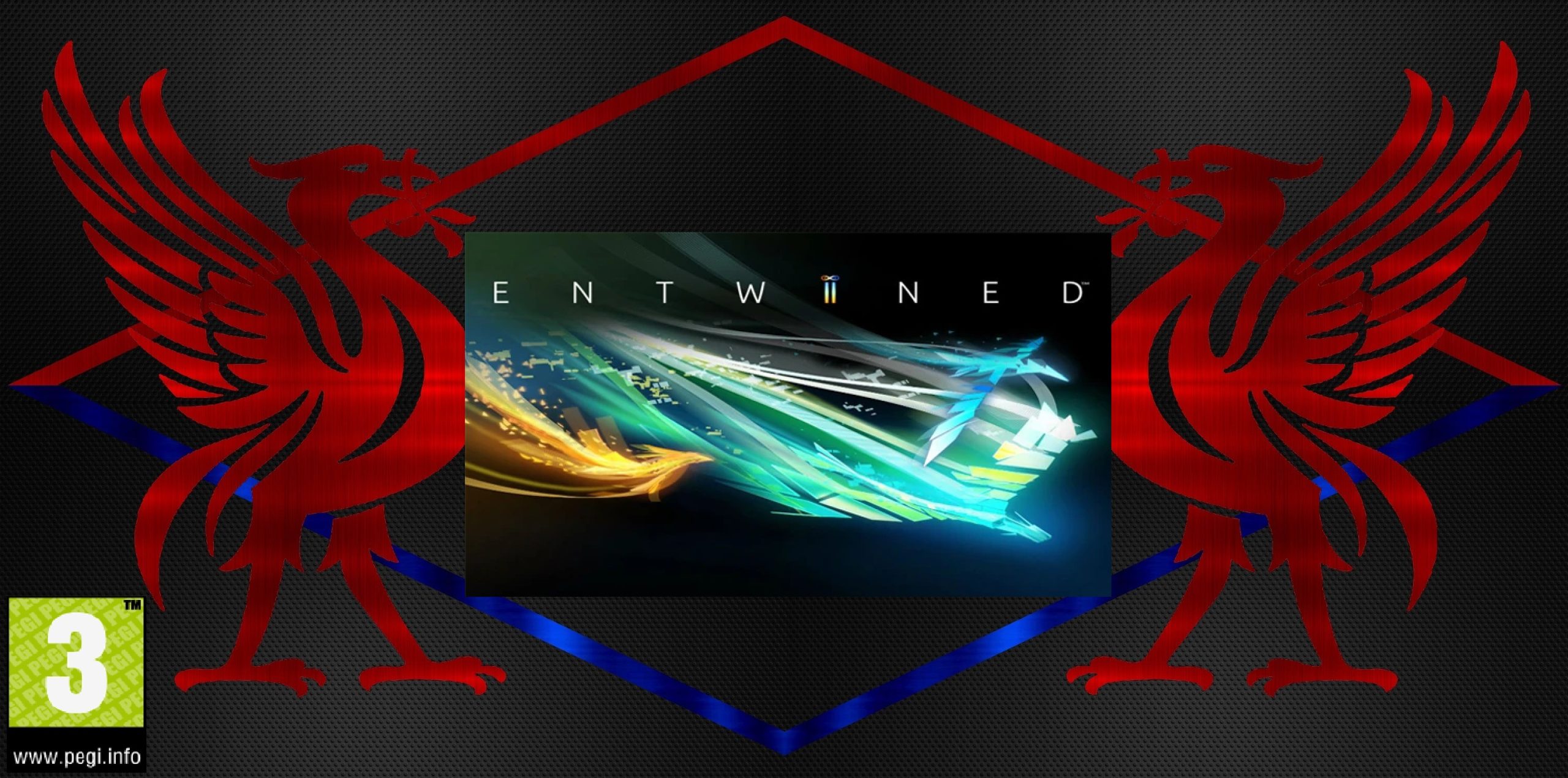
Entwined (PlayStation 4)

Entwined

Developer(s) – Pixelopus

Publisher(s) – Sony Computer Entertainment

Director – Dominic Robilliard

PEGI – 3

Unveiled at E3 two weeks ago, Entwined is a rhythm game whereby players must control two creatures using both analog sticks on the controller to fly them through obstacles in several different stages. Or lifetimes, as they’re referred to in the game. Back when this game was first unveiled, I commented that it negatively reminded me of a Kinect game called Child of Eden. And that it could potentially become overly repetitive in a short space of time. After playing through it, I think I was proven right.

Graphics – 7.5/10

The best aspect of this game, in my opinion, is indeed its visuals. They’re very interestingly stylized, with quite a big range of settings and level designs. And really make the game stand out in terms of visual presentation. One of the game’s most prominent features is its frequent use of symbolism. And a lot of the symbolism in the game is represented through many of its level designs. For example, there is a Ferris wheel on the second level. And many believe the Ferris wheel to be symbolic of many things, such as the circle of life. Or the idea of going around in circles and getting nowhere in life. I did find a few glitches in the game, too. But apart from that, Entwined is fairly well presented.

Gameplay – 1.5/10

Although the gameplay in Entwined has a vague Lylat Wars feel to it. In that, the game moves from linear to open-range at the end of each level, it’s nowhere near as immersive or enjoyable to play. There’s no incentive to be had, and it’s severely lacking in substance. As do most games in the rhythm genre, in my opinion. But in hindsight, I suppose this kind of thing was to be expected. Out of all the games that have been released, and are to be released on a single console, there was always going to be a sizeable portion of inadequate games. Unfortunately, this is one of them.

Controls – 9.5/10

Like Brothers: A Tale of Two Sons, which I reviewed a while back, Entwined relies on the player using both analog sticks to control two different characters in order to overcome each obstacle and progress through the game. But even though there are no problems with the control scheme itself, it wasn’t implemented well by the developers of Entwined. And it makes the game feel a lot more straightforward than it could have been. And a lot less interesting, the way I see it.

Lifespan – 0.5/10

I believe players who are experienced with the rhythm game genre would be able to complete Entwined in roughly 40 minutes, which is unacceptable. It took me an hour or so. But I saw no point in playing through it again. But to me, it begs the question of how long games like this, in general, can be made to last. If developed right, they can last at least a little while longer than Entwined, but not much longer. Guitar Hero, for instance. But to make them last as long as possible, there also needs to be substance in gameplay. And as I stated, I found little of that in Entwined.

Storyline – 3/10

The positive thing I can attribute to the storyline is that it’s different from the conventional means of telling stories. There is a fairly decent use of symbolism in some aspects, which are open to interpretation. But apart from that, I didn’t find the story to be particularly engrossing or even meaningful. For me, the positive aspects I listed weren’t elaborated on enough to keep me interested, and personally, I think the developers would have been better off if they had only used the characters of the game and their situation as merely a basic premise, and not tried to put so much false emphasis on a story that hardly seemed to be present.

Originality – 3.5/10

Entwined is both unique in visual style and basic premise, but more importantly, there isn’t enough focus on making gameplay as unique or as exciting as any great game has attached to it. It’s all very well and good, including decent artistic direction, but it counts for nothing if developers are going to put it in a video game and tailor it to not be enjoyable to play. Gamers might as well be watching a film.

Angrii

To summarize, Entwined is one of the first particularly poor games I’ve played on the PlayStation 4. Although I’ve been both excited and impressed with a lot of the indie games that have found their way onto the system over the last eight months, I was less than impressed with Entwined after I played it.

Score

25.5/60

4/10 (Poor)

Dust: An Elysian Tail (Xbox 360, PC & PlayStation 4)


Developer(s) – Humble Hearts

Publisher(s) – Microsoft Studios

Designer – Dean Dodrill

PEGI – 7

Dust: An Elysian Tail is a Metroidvania-style game with elements of exploration and immersive combat. And one of the best video game narratives I’ve seen in the eighth generation so far. Though it is officially classed as a beat ‘em up, it makes more sense to classify it as a hack-and-slash game. Since combat heavily revolves around the use of a sword. This warrants a level of violence surprisingly high for a 7-rated title. But that’s not to say it isn’t bad, by any means.

Graphics – 9/10

The game takes place in a beautifully designed world called Falana. There are peaceful villages, gloomy meadows, icy and fiery mountains, and frighteningly dark caves. The scenery and style of the game are amazing. Providing a great deal of variety and paying attention to detail. The artistic style of the game blends elements of Japanese animation with some Western animation, too. For example, the deer in The Glade are very reminiscent of the classic Disney film Bambi. And most of the more pivotal characters are similar in design and personality to many of the works of Studio Ghibli. Some enemies are palette-swapped. But for the most part, there is also a great level of diversity in enemy design, too. Presenting different kinds of monsters suited to whichever environment they can be found in.

Gameplay – 8/10

To match the graphics, the gameplay is also extremely enjoyable and immersive. In lieu of the Metroidvania tradition, there is also a very decent amount of side quests thrown in for good measure to keep players busy. And provide cause to revisit previous locations to uncover hidden secrets scattered throughout.

Although there is a lot of button-mashing involved, typical of most beat ‘em up or hack and slash games, there is also a fair bit of incentive on offer to players for hacking through enemies in the form of leveling up the player characters and finding blueprints for new weapons and armor to take to the blacksmith for forging. But what I like most about how this game has been developed is that there is a very even balance between gameplay and story. In an industry where most AAA titles incorporate more story than is perhaps needed, in my opinion, it is good that Humble Hearts haven’t followed suit.

Controls – 9.5/10

The only minor problem I have with the game’s control scheme is that it can sometimes be awkward to traverse platforms upwards. Some protrusions in levels acting as platforms can be quite subtle. It gives the game a certain charm, but sometimes it can be hard to determine where exactly on a platform the character needs to land to traverse it. But other than this one small issue, there are no others. It’s actually very impressive how the developers have managed the combat and special move mechanics.

Lifespan – 6/10

The biggest problem I have with this game is how short a time it lasts for something so brilliant. On average, it can take about 12 hours to complete the game to 100%. And that left me wanting so much more at the end. I’ve had the same problem with a few games that have been released this year. Such as South Park: The Stick of Truth and Child of Light. And it does dismay me that great gaming experiences like these were also made to be particularly fleeting. Compared to other great games made in the same vein. I’m hoping, however, that this is where the sequel comes in.

Storyline – 9/10

The game’s narrative involves the player character Dust, who is awakened by an anthropomorphic sword called the Blade of Ahrah. And its protector, a small flying creature called Fidget. Unsure of who he is and why he is where he is, Dust, along with Fidget and the sword, resolves to find answers. This takes him on a quest to stop a looming threat to the land of Falana.

Several prominent things make the story of the game one of the best I’ve experienced in some time. Among them is character development. Over time, Dust develops in such wonderful ways. He is not always completely successful in his endeavors. And comes to accept the fact that he is not perfect, and can only do his best. And nothing more.

The audience will be made to think for themselves what kind of person Dust is. And whether or not he will have it in him, in the end, to do what he has set out to do. Aside from presenting a strong level of violence, there are aspects and themes present in the story. They cover a lot of mature and morose subjects at times, such as corruption, personal morality, death, and disillusionment. Making me further question whether this game is actually 100% suitable for its appropriate audience.

But on the other hand, this isn’t a bad thing, as it can potentially teach children a very valuable lesson. Of course, an integral part of growing up is learning that adults aren’t perfect, and I think this game handles that subject matter extremely well. Even Fidget, a character I found to be annoying at first, does develop into a lot more respectable character, even providing an element of comic relief at times.

Originality – 8/10

Although the gameplay mechanics do have a strong influence from the likes of Super Metroid, Castlevania: Symphony of the Night, and even Baldur’s Gate: Dark Alliance, the game is insanely unique in terms of both visuals and story, and covers a lot of topics that few games do. Few games have also managed to impress me in the same way as this one has, and have artistic merit comparable to only the most imaginative video game titles out there, such as Shadow of the Colossus or Legacy of Kain.

Happii

Overall, Dust: An Elysian Tail is one of the best games I’ve played throughout the eighth generation, and it comes highly recommended by me. It can easily immerse players in its enjoyable gameplay, stunning visual style, and extremely deep and imaginative story. Dean Dodrill has highlighted that he has many ideas for how he would develop a sequel to the series, but the first game has served as a very impressive starting point.

Score

49.5/60

8/10 (Very Good)