Monthly Archives: July 2016

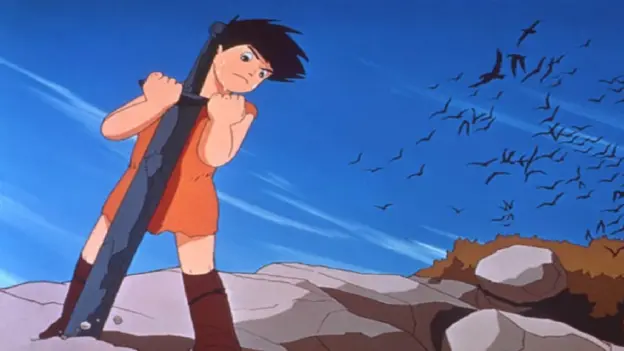
The Little Norse Prince

Scouse Ghibli Volume I: The Little Norse Prince

“I do believe in the power of story. I believe that stories have an important role to play in the formation of human beings, that they can stimulate, amaze and inspire their listeners.”

– Hayao Miyazaki


This is the first volume of a planned monthly series looking at the varied and wonderful works of one of my favorite studios in world cinema; Studio Ghibli. The first review of which being The Little Norse Prince. Founded in June 1985 by filmmakers Hayao Miyazaki and Isao Takahata, the company has since gone on to create and produce the most critically acclaimed Japanese anime movies of all time; eight of which currently rank amongst the 15 highest-grossing anime films of all time, with their masterpiece Spirited Away ranking at number one, having grossed almost $300 million worldwide.

Hayao Miyazaki has gone on to direct, write and produce the majority of Studio Ghibli’s feature-length films, and is today regarded as the Walt Disney of Japan, having garnished critical acclaim for his many works such as Kiki’s Delivery Service, Ponyo, My Neighbour Totoro, and Howl’s Moving Castle to name but a few. His co-founder, Isao Takahata, has also directed several of their most critically prominent releases, such as Pom Poko, The Tale of the Princess Kaguya, and Grave of the Fireflies. This feature will eventually cover all of Studio Ghibli’s films, from Nausicaa of the Valley of the Wind to the upcoming feature When Marnie Was There. Still, the first three features will be dedicated to three films that Hayao Miyazaki and Isao Takahata worked on before the company’s official founding.

The first of these three features was a relatively unsuccessful, yet highly influential anime film entitled The Great Adventure of Horus, Prince of the Sun; or as it was entitled overseas, The Little Norse Prince. The Little Norse Prince took almost three years to create, with production starting in the Autumn of 1965, and finally completed by March of 1968, and going on to be released theatrically in Japan four months later in July. The film is considered influential amongst anime fans since it introduced many different and new elements to the medium and proposed the idea that adults can enjoy them as much as children. Elements that were portrayed in the film included political, social, and mature themes and subjects as well as stylized violence; which made me surprised that the film only received a U rating in the UK. Like many of Studio Ghibli’s later works, which this film would go on to inspire, it features themes such as children coming of age and the suffering of loss; universal elements that Miyazaki and Takahata have used many times to strike as much of a chord with audiences as possible.

The story of the Little Norse Prince follows a young boy named Hols, who during infancy, had his town attacked by the evil and tyrannical frost king Grunwald. Raised by his father, who fled along with Hols amidst the chaos, he one day encounters a stone giant named Mogue after being chased by a pack of silver wolves. Hols notices that Mogue has an object stuck in his shoulder, and investigates to find that it is a sword, which Hols subsequently removes. Mogue tells Hols that once the sword has been reforged, and when Hols can properly wield it, he will visit him again, and Hols will be proclaimed prince of the sun.

At the behest of his father, Hols and his pet anthropomorphic bear Coro resolve to travel back to their home village and confront Grunwald. However, they come across another village, which has been recently attacked by the frost king, and after earning their trust and being excepted into their populace, the villagers become concerned when Hols befriends a young girl named Hilda, who gradually reveals a deep and dark secret to Hols and the rest of the village.

Relying on a turbulent atmosphere, that goes from delightfully charming and innocent to being compellingly dark and gritty, as well as making use of some particularly well-drawn scenery and environments (something that would become synonymous with Studio Ghibli films), I was quite impressed with The Little Norse Prince overall. It also made me quite surprised that it received such a poor reception even in Japan; let alone in other regions. It has also become so obscure that I was extremely lucky to have picked up a copy in a local shop as opposed to taking to the Internet to buy it, as the version I picked has also since gone out of print following its DVD localization back in 2005; almost 40 years after the film’s original theatrical release in Japan.

Locations in the film that stood out to me in particular as being excellent examples of scenery were the Lost Woods, where the film takes its darkest twist, with Hols suffering eerie hallucinations of Hilda and the villagers. The abandoned fishing town where Hols first meets Hilda was also very well crafted and presented in my opinion, with it most likely being a site of great destruction at one time, now a calm and tranquil place. Seemingly to fit how the character of Hilda is being portrayed when the audience is first introduced to her.

The biggest gripes I had with The Little Norse Prince film were with a feeling of abruptness towards the end, as well as one scene in particular coming up to its mid-point. When the silver wolves are attacking the village for the first time, there is next to no animation, but rather a compilation of still drawings, which to me personally suggested an element of laziness on the animator’s part. Another similar scene occurs later on when a hoard of rats attacks the village, but this scene is also interspersed with animations of the rats running, so there is a little bit more to it than the previous scene. It would have been a good idea if the animators had chosen to apply the same technique to the scene of the first attack on the village if only to keep things consistent. Feelings of abruptness stem from a sudden change of atmosphere, with things going from experiencing a sense of hopelessness to a feeling of sudden and complete projection of empowerment on Hols and the village in a matter of less than ten minutes. I believe if the creators had chosen to draw out one of those two atmospheres a little while longer, then I think the transition would have been a lot more believable than what it turned out to be.

However, despite what criticism I’ve levied against this film, I still enjoyed The Little Norse Prince for its dips in the atmosphere, its stylized fight scenes, and the creator’s willingness and bravery to push what they could get away with in a cartoon film primarily aimed at young children, and to use this technique to also appeal to a more mature audience in the process. The level of obscurity that this film has garnished over the years is nothing short of critical in my opinion. It’s a silently influential film, which allowed both Hayao Miyazaki and Isao Takahata to further advance within the industry, and go on to produce some of the best anime films of all time. The film is emotionally charged, has a powerful atmosphere, and is one of Takahata’s better works to date in my opinion.

7/10


Zombie Vikings (PlayStation 4 & PC)

Zombie Vikings

Developer(s) – Zoink Games

PEGI – 12

Following the immense success of their adventure puzzle game Stick It To the Man, Zoink Games followed up with an adventure beat ‘em up title named Zombie Vikings. But it was met with unjustifiably mixed reviews, at least as of now. Garnishing an average Metacritic score of just 61. Personally, I found it to be much better than the former game for a variety of different reasons. And I hope that other review sites that haven’t yet provided a review see the game for its many different qualities.

Graphics – 8/10

The general design of the game is extremely similar to Stick It To the Man. With characters and scenery hearkening back to the 2D hand-drawn style of the previous game. However, the conceptual design of the game is drastically different. It takes place in a world inspired by Norse mythology as opposed to a world inspired by the trappings and intricacies of modern life. Even though how weird and wonderfully outlandish their previous title was, this one is just as magnificently strange. If not more so. The game may not run at 60 frames per second like the former. But to me, that’s semantics.

Gameplay – 8/10

Taking a drastic departure from Stick It To the Man, Zombie Vikings presents players with a wonderfully varied linear beat ’em-up game reminiscent of the likes of Streets of Rage or Final Fight. And packed with a variety of weapons, abilities, character choices, and even side quests thrown in for good measure, something I’ve personally rarely seen in games of this kind. Playing this makes this game seem as if a trick has been missed for many years. It all makes for a wonderfully fulfilling and addictive gaming experience, which, in my opinion, is much more satisfying to play through than Stick It To the Man.

Controls – 9/10

The game is a 2D side-scrolling beat ‘em up, so by default, I would have problems with its control scheme to a certain extent. But much to my pleasant surprise, nowhere near as much of a problem as I have found with many of the games of its kind that many other gamers consider to be classics. The main reason for this is that movement is infinitely more varied. Players can not only run but can also dodge enemy attacks by rolling in different directions. This certainly helps to alleviate many previous frustrations I have personally had with other games of its kind in the past.

Lifespan – 7/10

As well as being bigger and better than Stick It To the Man, Zombie Vikings is also a much longer gaming experience. This always goes down well with me personally. Although the main story can take around the same amount of time to complete as the former, the increased amount of gameplay variety by proxy gives this title much more replay value, and of course, there’s also the multiplayer to indulge in afterward, which can make for many more hours of entertainment.

Storyline – 8.5/10

The story of Zombie Vikings revolves around four zombie Viking warriors who have been summoned by the thunder god Odin to retrieve his stolen eye from the trickster god Loki. The basis of the game’s story seems simplistic. Yet outrageously abnormal in scope at first glance. But it is also made enormously interesting throughout with its references to modern life and the breaking of the fourth wall. And a quirky sense of humor. I was personally delighted to see that the developers had incorporated these same elements as they did in Stick It To the Man. And to witness them having built upon it. The game also excels in storytelling as well as gameplay. In a market saturated with AAA games seemingly focusing on one and not the other, it is always a breath of fresh air to me.

Originality – 8/10

This title is wonderfully unique in every single respect, from its wonderfully weird visuals to its staggering amount of gameplay variety to its coming together of many different ideas. These all form their own fully cohesive concept in terms of story. Ever since the start of the influx of indie games throughout the last two generations, it’s been fantastic to see so much depth and imagination implemented in the majority of these kinds of titles coming from many vastly creative developers. And this game is yet another excellent example of this.

Happii

In summation, Zombie Vikings is most definitely one of the best indie games I’ve played through 2015, and I would highly recommend it. It’s a vast improvement on what was a similar-looking yet exemplary game in its own right, and it makes me excited for what Zoink has in store in the future.

Score

48.5/60

8/10 (Very Good)

Zelda II: The Adventure of Link (Nintendo Entertainment System)

Zelda II

Developer(s) – Nintendo R&D 4

Publisher(s) – Nintendo

Director(s) – Tadashi Sugiyama & Yoichi Yamada

Producer(s) – Shigeru Miyamoto

PEGI – 3

Released the year after the original game, to universal acclaim and sales eventually peaking at over 4 million units worldwide, Zelda II: The Adventure of Link made many radical departures from the first game. Whilst exploration and travel were handled using the top-down perspective synonymous with the first Legend of Zelda, combat was represented through a 2D side-scrolling perspective. It works very similarly to games such as Castlevania II: Simon’s Quest.

Thus, it joined a class of NES sequels that were drastically different from their predecessors. Alongside Double Dragon II: The Revenge, Godzilla 2: War of the Monsters, and most famously, Super Mario Bros 2. Personally, I found that although this formula has never been able to quite match the same level of enjoyment as the classic top-down Zelda formula used in the likes of A Link to the Past or A Link Between Worlds, I still found the first game extremely entertaining. And a strong entry in the series that still holds up even after almost 30 years.

Graphics – 8/10

Making a significant departure from its predecessor, the second game in the Legend of Zelda series displayed many improvements in visual presentation from a technical standpoint. Sprites and scenery are much more detailed, and enemy variety is abundant. Some of which have gone on to become staples of the series. Such as the Moblins, the Iron Knuckles, and perhaps most notably, Dark Link.

In the timeline of the series, this game is the latest, following the game-over scenario in Ocarina of Time, which leads to the decline of the land of Hyrule. So, like many of the games in the series, it has a level of conceptual design that has since continued to deviate away from many familiar elements like Hyrule Castle and Kakariko Village. And thus, it continues to stand out in this respect. It’s also interesting to consider how the names of towns in this game were later reworked into other entries. Most notably, Ocarina of Time.

Gameplay – 7/10

The developers adopted a style of play for the second Zelda game that went against almost everything the original game was based on. And a style of play that has not really been seen in the series since. Instead of the game solely focusing on the bird’s-eye view synonymous with 2D Zelda games, the developers instead opted to use 2D side-scrolling mechanics for the combat side and even incorporated a classic RPG style of play whereby Link would level up in order to become stronger over time.

Whilst Nintendo has never chosen to focus on this style of play again (and most definitely for the better in my opinion), it still made for a particularly fun game; certainly one of the better titles on the NES. Combat is addictive. As well as being challenging. Whilst it may not have been innovative for the time. Since it was largely based on games such as Castlevania and Faxanadu, it still worked surprisingly well.

Controls – 9/10

Both styles of play portrayed in the game were quite prominent at the time. Especially 2D side-scrolling. So there are no problems with this game for the most part. The mechanics of the player having to periodically switch between both were seamlessly handled, and combat was handled almost as well as most other games it was based on. The only bad thing I would say about it, as was indeed the case with a fair few side scrollers on the NES (most notably both Castlevania and Mega Man), is that the controls can at times be a little bit stiff and slow to register player commands. Which adds an unnecessary degree of annoyance. Thankfully, since this game is much more accessible than both the aforementioned examples, it doesn’t cause anywhere near as much of a problem.

Lifespan – 8/10

In all, Zelda II can take around 3 and a half hours to complete to 100%, which by today’s standards may seem like nothing. But it was exceptionally long for the time. Generally, games took a little more than an hour to complete. But there were exceptions made to this rule in titles such as the first two Zelda games. As well as Metroid, Dragon Warrior, and Final Fantasy. Though it may be understandable to wish for a longer lifespan since the game is certainly addictive enough to warrant at least a few more hours of play, hardware limitations at that time should be taken into consideration.

Storyline – 8/10

The story of the second game takes place some years after the first game, during the era of Hyrule’s decline. Princess Zelda has fallen under a sleeping spell. And it is up to Link to seek out Zelda’s caretaker, Impa, to find a way of breaking the curse. As well as stop followers of the evil wizard Ganon. Who plans to kill Link and use his blood to bring their master back to Hyrule.

Interestingly, I found that Zelda II introduced many darker aspects of the series that would also be seen in later entries. Such as mature themes and hints of ritualistic behavior reminiscent of the likes of Majora’s Mask and Twilight Princess. It’s considered a black sheep of the series in terms of gameplay by most fans. But I believe it can also be considered as such in terms of the story since it has a fairly prominent dark undertone to it. Although games at the time generally relied on players reading the manual, for the most part. It, of course, adds to the experience of looking for things like this within the actual game.

Originality – 8/10

As I previously mentioned, Zelda II belongs to a group of sequels that were drastically different from their predecessors. And consequently, this game stands out much more than many others at the time. But in all, in a positive way. Though there would be many future games in the series released that would surpass the quality of this entry, it’s still an extremely pleasurable experience in its own right. This is owed largely to how much it stands out from the rest of the entire Zelda saga.

Happii

Overall, Zelda II: The Adventure of Link is a very strong entry, both despite and because of how different it is from any other Zelda game. And I would recommend it like I would recommend most others in the series. Exploration is rewarded greatly, and combat is very addictive. And in my opinion, it is a game that is likely to hold up for another 30 years.

Score

48/60

8/10 (Very Good)

Yoshis Woolly World

Yoshi’s Woolly World (Wii U)

Developer(s) – Good-Feel Co.

Publisher(s) – Nintendo

Director(s) – Atsushi Kono & Naoya Abe

Producer(s) – Etsunobu Ebisu, Keita Kawaminami & Takashi Tezuka

PEGI – 3

The first Yoshi game to be released on a home console since Yoshi’s Story back in 1998, Yoshi’s Woolly World stays true to the core mechanics of all the other Yoshi games released throughout the years. But also provides a level of challenge unseen in most other games on the Wii U. Whilst this game isn’t as creative or unique as Captain Toad: Treasure Tracker, for example, it’s certainly a stern effort from Nintendo, and certainly goes above and beyond its Nintendo 64 counterpart.

Graphics – 8/10

Deriving influence from the Wii game Kirby’s Epic Yarn, the scenery and style of the game are made up of cloth and woolly textures, which look extraordinarily realistic. Even against video games developed with more advanced hardware than the Wii U, the many different worlds found in the game, in lieu of the franchise’s tradition, also have their own themes and elements similar to any Super Mario game. Whilst it may not be as varied as Yoshi’s Island, which had much more menacing locations. As well as innocent-looking ones, it still has quite a bit of variety about it compared to most other games.

Gameplay – 8/10

The mechanics and the objective of the game are more or less identical to those of both Yoshi’s Island and Yoshi’s Story. Clear each level and fight the boss at the end of the world, rinse, and repeat. What makes Woolly World different from the others, however, is not the level of challenge involved in simply clearing each level. But the challenge is completing every level to 100%.

The secret levels, in particular, can prove extremely testing to clear. Nintendo wanted gamers to be able to explore every nook and cranny of every level to find every secret. But they certainly didn’t make doing that easy. But this isn’t to say that the game is inaccessible. For those who are having too much trouble with it, there is a simplified version that can be played instead to suit both parties of a gamer. Something I think should be done with every other video game that can be considered overly hard.

Controls – 10/10

Since this game plays out identically to every other previous Yoshi side scroller, there are no unnecessary complications with the control scheme. However, I did think it was somewhat interesting to be able to move Yoshi around in 3D environments throughout each overworld. It made me think about what may have been if Nintendo and Argonaut Games had still been in partnership with one another throughout the fifth generation of gaming. And that if a 3D Yoshi game had been released instead of Argonaut breaking off and making Croc: Legend of the Gobbos out of what ideas were left from the previous project.

Lifespan – 7/10

To complete everything in the game will take around 15 to 20 hours, which, whilst being about the average of most side scrollers on the Wii U, is still fairly impressive. Classic side scrollers could only be made to last a fraction of that timescale. But their respective franchises have been kept fresh with the inclusion of new side quests and extracurricular activities. And Woolly World is no exception. I’ve highly anticipated this game since its announcement at last year’s E3. And I was satisfied to see that it lasted this long.

Storyline – 6/10

The plot of the game, again in lieu of the Super Mario tradition, is very straightforward; Yoshi must rescue all the other Yoshis after being unraveled and scattered by the wizard Kamek. And must then take the fight to Bowser Jnr. The story of Yoshi’s Island was a little more interesting. Not only did it put players in the shoes of another character from the series. But it also explored the origins of Mario himself. Unfortunately, Woolly World doesn’t have very many interesting elements like that. And consequently, it makes much less of an impact in terms of story.

Originality – 6/10

In addition to having an unoriginal story, Yoshi’s Woolly World itself is also somewhat unoriginal, bar the inclusion of a much longer lifespan. And a heightened level of challenge. The art direction may be much different from that of the rest of the Yoshi games. But, of course, the same developer used the same visual gimmick in Kirby’s Epic Yarn. It may look very good and very realistic in this game. But it’s been done before. I don’t think recycling boss characters helped matters either.

Happii

However, despite what it lacks in both story and uniqueness, Yoshi’s Woolly World makes up for its gameplay above all else. It’s still a very enjoyable experience. And I recommend it to anyone with a Wii U. It’s certainly a better exclusive than many Xbox One games. It will prove a challenge to any fan of the platforming genre.

Score

45/60

7.5/10 (Good)

Yoshi’s Story (Nintendo 64)

Yoshis Story

Developer(s) – Nintendo EAD

Publisher(s) – Nintendo

Director – Hideki Konno

Producer – Takashi Tezuka

PEGI – 3

Back in a time when the 2D side-scrolling genre was being phased out, and the 3D platforming genre was coming into prominence, Nintendo attempted to revive the former by releasing a spiritual successor to Super Mario World 2: Yoshi’s Island in the form of Yoshi’s Story. But with considerably less success on both a commercial and a critical level.

Graphics – 5/10

Whilst the scenery of Yoshi’s Story is fairly diverse and the game itself is very well polished, the overall visual style made it feel far too much like a kid’s game. Even for Nintendo. Everything from the storybook style to the pretty annoying sound bytes used for the Yoshi characters made me think very little of what was on offer. And severely lacked the kind of atmosphere that came with games. Such as Banjo-Kazooie, Super Mario 64, or Ocarina of Time. This title for me just didn’t seem to give that kind of prominent impression, which other Nintendo games had, even for the time.

Gameplay – 6/10

Though it’s somewhat satisfying to rack up the highest score (something that was lacking in prior Mario titles), I still felt the game’s play was wanting. The bosses, in particular, stand out as being some of the easiest bosses I’ve ever encountered in video games. Yoshi’s Story also had attached to it the most pointless and least threatening Nintendo character, in my opinion; Pak E. Derm. Who is an elephant with a stop sign, who blocks the player’s path? The player must pound the ground in order to make Pak E. Derm fall to the ground, allowing the player to pass. That mechanic is one of the most senseless things I’ve ever seen in any video game.

Controls – 10/10

There are no problems with the controls, at least. Yoshi’s Story plays out very similarly to Yoshi’s Island, except there is no Baby Mario to accompany Yoshi on the adventure. But by that token, I think the game becomes much less intense as a result, but that’s down to gameplay.

Lifespan – 2/10

As the late 90s were undoubtedly a pretty poor time to try and bring back the 2D side-scrolling genre, I was at that point used to playing games that would last in excess of 30 to 40 hours, such as Ocarina of Time or Final Fantasy VII. It took me a day to complete this game, which, whilst that may have been acceptable before the release of the Nintendo 64 and the PlayStation, it certainly wasn’t then. And it definitely isn’t now. One fact about me is that I believe the longer a game can be made to last, the better. That opinion of mine was developed throughout the fifth generation of gaming. And since then, I’ve never looked back. I’ve grown to think little of games, which seem like fleeting experiences unless they have other decent elements or substance in gameplay.

Storyline – 5.5/10

Yoshi’s Story involves Baby Bowser turning Yoshi’s world into a storybook and stealing the super happy tree, with Yoshi resolving to reverse the damage. The game looks like a kid’s book; it plays out like a kid’s book, and the story is very reminiscent of something someone would find in a kid’s book, too. It’s as outlandish as anything else that Nintendo had come up with prior, but it’s just considerably more simplistic, and considerably less appealing and entertaining in my opinion.

Originality – 6/10

Nintendo can’t be faulted for attempting what they have succeeded at so many times. Revolutionizing games. But this time around, they failed in my opinion. Though they would eventually go on to revive the 2D side-scrolling genre with the New Super Mario Bros. series, they didn’t get off to the best start with Yoshi’s Story.

Angrii

To summarize, Yoshi’s Story is a forgettable title on an otherwise legendary console, in my opinion. Nintendo created some great experiences on the Nintendo 64 when 3D gaming started to find popularity, but they went back on themselves in a negative way with this game.

Score

34.5/60

5.5/10 (Below Average)

X-Type+ (Wii U)

X-Type+

Developer(s) – PhobosLab

Publisher(s) – Nintendo

PEGI – 3

Starting as a simple browser game developed by the proprietors of the site PhobosLab.com, I was at first surprised to find a game like X-Type+ appear on the Wii U Virtual Console. But after playing it and seeing just how addictive it can become, I found myself increasingly less surprised by its inclusion. After all, Nintendo knows a good game when they see one.

Graphics – 5/10

One of the weaker points of this game, however, despite its addictiveness, is the fact that the visuals are almost non-existent. Even though this is an arcade game at its core, there have been many games released like it that have implemented much more breathtaking and interesting visuals than this. Essentially, all it encompasses is a blank background, and ship after ship that looks the same. Though it may have started as a browser game, I think even under those circumstances, better visuals could have been implemented.

Gameplay – 10/10

The objective of X-Type+ is simple. Destroy each ship that appears on the screen, and rack up the highest score possible. Like such games as Galaga and Gradius, it is incredibly addictive and will compel players to play again and again in order to simply improve their high scores. And post it on either the website or the Wii U scoreboard.

Controls – 10/10

The best way to play this game is to use a third-party Wii U controller. I found that with either the GamePad or on the original website, the control scheme is not so easy to cope with, and poses several problems. Personally, I’ve never been a fan of using a keyboard to control PC games that aren’t simulators. The GamePad also poses the same problem of the hands cramping up that I’d previously experienced whilst playing through Hyrule Warriors.

Originality – 4/10

The worst thing about this game, however, is how little it stands out compared to the likes of Galaga and Gradius. As I said, the visuals are almost non-existent and do little to differentiate this game from others of its kind. Unlike many other games released in this genre, such as Titan Attacks, there are no new elements introduced. Such as upgrades or experience points, etc.

Happii

Otherwise, however, X-Type+ is an extremely addictive game, and certainly one of the most interesting indie experiences available on the Wii U. Despite its flaws, it makes me wonder why Nintendo doesn’t keep a closer eye out for other indie developers to work with, as opposed to relying primarily on their own IPs to get by.

Score

29/40

7/10 (Fair)

XIII (PlayStation 2, GameCube, Xbox, Mac & PC)

XIII

Developer(s) – Ubisoft Paris, Southend Interactive (Xbox) & Feral Interactive (Mac)

Publisher(s) – Ubisoft, Marvelous Entertainment & Feral Interactive

Director – Elisabeth Pellen

Producer – Julien Barés

PEGI – 16

XIII was a game based on the comic book of the same name, written by Belgian novelist Jean Van Hamme. According to Ubisoft president Laurent Detoc, the game would create “a world so unique and enthralling that gamers will become instantly engaged”. Even with a very new form of visual presentation in video games, I wouldn’t entirely agree with this.

Graphics – 7/10

The graphics were fairly well done for the time. This was, after all, the first-ever comic book-style first-person shooter. Its visual style is indeed the best thing about the game; not only that, but it is also very well polished. I couldn’t see any glitches or anything like that while I was playing through it. I think the weak point about the game’s style is that the settings are extremely similar to those of games like Perfect Dark and Goldeneye 007, which would suggest that influences were somewhat too obvious. For example, the level whereby rooftops have to be traversed in order to elude police recapture was very similar to the opening level of Perfect Dark in conceptual design.

Gameplay – 5/10

Although this game was revolutionary for its time in terms of visuals, it wasn’t in terms of gameplay. Even for the time, this is a first-person shooter, which plays out pretty typically for most games in the genre. Any element of challenge in the game is presented through the stealth mechanics. Which, again, are not as elaborately developed as those found in games like Metal Gear Solid or the first Sly Cooper. The game also has a small amount of incentive and variety. The more the player progresses, the more the main character’s memory is regained. Thus yielding more skills as the game progresses. But even so, this game can become very boring very quickly, in my opinion.

Controls – 7/10

The movement in this game is also particularly stiff. It can become an unnecessary chore at times, and the auto-aim system can be particularly confusing. The crosshair doesn’t fix itself onto targets properly. Also, the grapple hook used to traverse buildings or mountains can be difficult to get to grips with at first. But other than that, the game plays out fine in terms of controls.

Lifespan – 5.5/10

Typical of any standard first-person shooter, XIII can be finished within 6 hours. Visuals alone are never enough to keep people playing a video game. At the end of the day, it’s all about the gameplay. And there wasn’t enough of it in XIII to make it last as long as it may have been able to. The problem with developing linear first-person shooters. Or even linear games in general, as very few of them have side quests and therefore contain next to no replay value apart from playing through them on a harder difficulty.

Storyline – 7/10

The game’s story is about a man named XIII. He wakes up on a beach with amnesia to find out he is the prime suspect in the president’s recent assassination. He must fight his way through the FBI, the CIA, and the criminal underworld. In order to uncover his identity and clear his name in the process. The game’s story is actually not bad, to be fair. There are a few decent twists and turns to it, but the voice acting is a bit off. The standout performances, in my opinion, are those of both David Duchovny and Adam West, who play XIII and General Carrington, respectively. This was based on a fairly popular comic book series. So it was always bound to have some depth in the story, at least. But overall, I think the developers chose to concentrate more on that and the visual style than on gameplay.

Originality – 7/10

Obviously, the most significant features of this game are the stylized visuals, which would become a stable part of game franchises in the future. And the pretty compelling story. But as I keep pointing out, it’s all about gameplay ultimately, and there wasn’t enough innovation in that department to keep it enthralling in my opinion.

Niiutral

Overall, I think first-person shooting fans should play through this game at least once, but I think it should probably be left at that. It’s terrible by any stretch of the imagination, but I think the novelty wears off after a while, as there doesn’t seem to be enough substance in gameplay to keep it entertaining throughout.

Score

38.5/60

6/10 (Average)

Xeodrifter (PC, PlayStation 4, PlayStation Vita, 3DS & Wii U)

Xeodrifter

Developer(s) – Renegade Kid

Publisher(s) – Renegade Kid, Gambitious Digital & Entertainment

Director(s) – Jools Watsham

Programmer – Matthew Gambrell

PEGI – 7

Developed as a love letter to the Metroid series, Xeodrifter is a Metroidvania game with an emphasis on exploration and intense combat. As well as including a small RPG element in the facility to upgrade weapons and learn new abilities as the game progresses. For the small amount of time it takes to complete this game, I was impressed with how it plays out. But underwhelmed by just how fleeting an experience it is. The game ultimately left me wanting a lot more than what was on offer.

Graphics – 7/10

Making use of intricately detailed 8-BIT environments and a dark and gritty atmosphere, the game is set on four different planets with their own unique looks and surroundings. It does extremely well to perpetuate the feeling of isolation that is synonymous with games like this. Super Metroid and The Swapper, to name but a few. The biggest gripe I have with it in terms of visual presentation is the lack of variety in boss designs. The developers chose to simply recycle the same character sprite. But coloring it differently. And giving it different abilities with each battle. But although there is a lack of variation in boss design, there certainly isn’t in general enemy design. There is a wide range of different creatures to fight throughout the course of the game. Keeping things fresh for the most part.

Gameplay – 8/10

More impressive than the visuals, however, is how the game plays out. The combat involved in the game is just as intense and enjoyable as in the original Metroid. If not, more so. There is a wide range of weapons for players to utilize. As well as a satisfyingly strong puzzle element to the game. Players have to use different abilities to progress through different areas. Giving scope for players to revisit previously explored planets in order to uncover secrets inaccessible without the aid of specific abilities. Thus expanding what longevity there is to be had. Whilst the bosses are largely repetitive, they are also legitimately challenging, especially the final boss.

Controls – 10/10

Though this gameplay formula had been popularised and developed for over thirty years until this game was released, the developers did well to program the game’s control scheme properly. But also to build upon the formula, implementing unique features such as shifting from the foreground to the background, vehicular exploration, and combat. As well as traveling and fighting on foot. Unlike many 2D side scrollers that have been released in the past, such as Mega Man and Castlevania, the controls are also adequately responsive and don’t perpetuate any unnecessary frustrations in-game.

Lifespan – 1/10

The worst thing about this game, unfortunately, is how short a time it lasts. It lasts an average of merely 2 hours. It may have been impressive back in 1986 when Metroid first came out. But against most other Metroidvania games released since, Such as Castlevania: Symphony of the Night and Dust: An Elysian Tail, there’s no way it would possibly be able to compare in a positive sense. Personally, I think that even the aforementioned games could have done with lasting a little longer than they ended up doing. Making a 2-hour Metroidvania seems especially unacceptable.

Storyline – 6/10

The game’s story can best be described as Metroid meets Pikmin. It follows an astronaut whose ship is damaged by an asteroid and crash-lands on an uncharted world, and he must find each of the missing pieces to repair it. It’s very simple in scope, and it features next to nothing in the way of the usual tropes of a modern in-game narrative. But the majority of games released during the time that this game is reminiscent of didn’t either. And so I don’t think it should lose out on too many points as a result. Personally, I would much rather have a game that includes standout gameplay over a standout storyline.

Originality – 7/10

Though this game was clearly inspired by many classics of the genre, most notably the Metroid series, of course, in terms of gameplay, it offers something fairly different from what other Metroidvania games do. And I believe there is indeed potential to make a franchise out of this title. And the potential to build upon what is offered within it in a possible sequel. Though it may stand out as one of the shortest games of its kind ever developed, it stands out somewhat for the wrong reasons as a result.

Happii

Overall, Xeodrifter is an intensely enjoyable, yet criminally short game. I think that with a much larger in-game world to explore and even more to do, a sequel could be considered a classic. But if the developers plan to leave this series as it is, then they will have provided nowhere near enough of an experience to warrant any more than one playthrough.

Score

39/60

6.5/10 (Above Average)

WWF Wrestlemania 2000 (Nintendo 64 & Game Boy Colour)

WWF Wrestlemania 2000

Developer(s) – Asmik Ace Entertainment, AKI Corporation & Natsume

Publisher(s) – THQ & Asmik Ace Entertainment

PEGI – 3

Following the success of WCW vs. NWO: World Tour and WCW Vs. NWO: Revenge, the World Wrestling Federation approached publishers THQ and tapped them to develop a WWF game using the same mechanics and visual style as the two aforementioned games. Despite them being able to provide stern competition before the likes of WWF War Zone and WWF Attitude. The gamble, however, paid off greatly, commercially and artistically in my opinion, and whilst it’s disputed which THQ-published WWF game is better out of this and WWF No Mercy, I prefer Wrestlemania 2000 for several reasons.

Graphics – 9/10

The primary reason why my preference lies with Wrestlemania 2000 is because of the visuals. Not necessarily in terms of the game’s presentation from a technical standpoint, but from a conceptual one. The biggest advantage that this has over No Mercy is that the ringside intros are shown in full. And it was great to look back on the day and think about how realistic it was. And it’s great to do it now for anyone who has been a fan of the WWF back around the Attitude era, and may be looking for the nostalgia factor.

Gameplay – 9/10

In-game, players and fans will want for nothing. There is a plethora of different features and game modes that will keep players busy for hours on end. They can choose to go through a career mode. Or, of course, set up multiplayer exhibition matches. Apart from that, each primary annual WWF event is available for players to try out. Such as King of the Ring, Summer Slam, Survivor Series, etc. The only criticism I have of the gameplay is that the career mode is a little bit inaccessible compared to the difficulty level of the rest of the game. But it’s not to the point of being unbearable.

Controls – 9/10

The control scheme is almost perfect, if not for the fact that the movement can be a little bit awkward. At times, it may be just as awkward to land a specific hit or perform a specific move. Apart from that, however, they work just as well as they did in WWF War Zone or WWF Attitude. And to a slight extent, I found that they are an improvement on the previous THQ wrestling games as well.

Originality – 6/10

The entire game is basically a carbon copy of both WCW Vs. NWO: World Tour and WCW Vs. NWO: Revenge, but I’m far too apprehensive to deduct too many marks for this since that was the whole point of tapping THQ as publisher anyway. WWF liked this style of play and wanted to adopt it for their games, and all things considered, it worked splendidly. The formula would arguably be improved upon with new gameplay features with the Advent of WWF No Mercy, but as a starting point, this game was far more than a mere question of trial and error.

Happii

To summarize, WWF Wrestlemania 2000 is my favorite wrestling game of all time. Though I was impressed with prior WWF games that came before this, and even the two THQ games that came before this, this title blew them all out of the water, and in my opinion, no other wrestling game has come close since.

Score

33/40

8/10 (Very Good)

Wreckateer (Xbox 360)

Wreckateer

Developer(s) – Iron Galaxy Studios

Publisher(s) – Microsoft Studios

PEGI – 7

Released back in 2012, Wreckateer was one of the few games released exclusively for use with the Xbox 360’s ill-fated Kinect motion sensor peripheral. Providing a fairly unique twist on the premise of Angry Birds, I happen to think it is better. Though not without its flaws.

Graphics – 5/10

Conceptually, the game perpetuates the medieval fantasy archetype, and there’s nothing present to make it stand out visually to any great extent. On a technical level, the graphics are just below the standard of what players would have been used to at the time, which was surprising to me, since Microsoft Studios published the game, and around that time, there was more effort focused on Kinect games than there ever has been since, with the release of games such as Fable: The Journey, and more Xbox 360 games than ever being given some form of compatibility with the sensor; including Mass Effect 3 and Skyrim.

Gameplay – 7/10

The concept of the game is to try to steer cannonballs into castles using the Kinect sensor and try to decimate each castle in each level as much as possible. There are several different types of cannonballs to use, and several different challenges throughout the game. The different types of weapons make for an amount of variety on par with Angry Birds, but in my opinion, it’s a lot more enjoyable, as well as more challenging and rewarding.

Controls – 10/10

In many games to use the Kinect, I’ve had quite a few issues regarding how it works and how difficult it can be to cope with at times, and it has since made me extremely skeptical of it, especially against the Wii, which most likely compelled the creation of both the Kinect and PlayStation Move. But Wreckateer is so far the only game I’ve played that makes adequate use of the Kinect and poses no complications in the process.

Originality – 6/10

Although this game was heavily based on an already existing concept made popular by Angry Birds, Wreckateer took it into the realm of 3D and did a fairly good job of it, whilst also taking advantage of an unconventional control scheme, which is even more impressive. So whilst there isn’t a great deal of uniqueness in terms of visual design, there is indeed a fair bit in terms of both gameplay and controls.

Happii

Overall, Wreckateer is a fairly decent title, and in my opinion, one that was in 2012, unfortunately. And unfairly fell through the cracks along with the likes of Dishonored and Mark of the Ninja. It may not be the first game to play out the way it plays out, but in my opinion, it’s so far the best.

Score

28/40

7/10 (Fair)