Monument Valley II

Monument Valley II (Android, iOS, PC, PS4, PS5, XOne, X/S, Switch)

Developer(s) – Ustwo Games

Publisher(s) – Ustwo Games

Released three years after the successful launch of the first game. Monument Valley II was also met with critical acclaim. Going on to sell almost three and a half million copies within the first year. And even picking up the award for best mobile video game of 2017. It offers an almost identical experience to that of the first game. It’s pretty much an extension of which, ostensibly. I found it fractionally better than the first game, though it did come with a lot of the same issues as the first game as well. And they hadn’t really been meaningfully addressed.

Graphics – 8/10

The game’s technical and conceptual design has remained largely the same. Making use of colourful and isometric environments to perpetuate the puzzle element of the last game. With very much the same type of atmospheric soundtrack to accompany the visuals throughout. Though as aesthetically pleasing as in the first game, the developers didn’t do a great deal to make it stand out from it in its own right. Putting the two of them together, unless you play them a few times, players would probably be hard-pressed to tell much of a difference between the two games in this respect. 

Gameplay – 7/10

And like the graphics, the gameplay has ostensibly remained the same as well. The only minor difference is that in some levels, the player must control two characters instead of one and have both of these characters solve puzzles simultaneously in order to progress further throughout the game. It works fairly well, but it doesn’t really mix things up as much as what a play could come to expect from a sequel. For a game with two characters to control at the same time, it doesn’t offer the level of innovation that Brothers: A Tale of Two Sons did, for example. In my opinion, an extra push in terms of gameplay could’ve been implemented to make it truly stand out. But it seems they only tried to a certain extent. 

Controls – 10/10

The control scheme also remains the same, with the exception of the two-character sequences. But even this concept is easy enough to get used to from the get-go. So, although again there isn’t a great amount of innovation here, it’s a better alternative than the developers having potentially tried something too outlandish with the control scheme. And made the game worse than it needed to have been.

Lifespan – 2/10

The biggest issue I had with the previous game was the lifespan. And nothing has been done to address this. With the game lasting there around the same amount of time as the original. At this point, players could come to expect the developers to have added a lot more than what had been added to switch gameplay up to an adequate degree. And make the sequel last even a little bit more than the first game. But unfortunately, aside from the one additional mechanic, there’s nothing. 

Storyline – 4/10

One of only a few minor tweaks that have been made to this game at all, compared to the original, is in terms of story. The story of Monument Valley II follows a character named Ro and her child as they initially traverse the world around them together. And later become separated, with Ro’s child having to overcome obstacles herself to find her mother again. The additional substance comes in the respect that the second game feels a little more like a coming-of-age story. A little more is done to convey the character’s feelings and emotions than in the first game. But it still feels like the overall narrative is conveyed in a far too minimalistic way. So it’s worth a certain amount more emotional investment on the part of the player. 

Originality – 6/10

As I’ve alluded to, nothing has really changed in terms of how unique the game is. It still perpetuates the same style of visuals, gameplay, and atmosphere as the first. There have only been very minor alterations made, which, to a very small extent, make it stand out compared to its predecessor. But it didn’t really do a great deal to stand out among other games at the time. Since the overall concept was already familiar after the first game. In this respect, as in most others, the sequel perpetuates a degree of creative stagnation. And didn’t exactly break new ground.

Niiutral

Overall, Monument Valley II is only better than the original game to a very small extent. Although a third game would subsequently be released, the second did not do well enough to break the mould and address the issues of the previous game. In many ways, despite the critical acclaim it garnered everywhere else, to me, it represents wasted potential in pretty much every respect.
Score

37/60

6/10 (Average)

Summer Catchers

Summer Catchers (PC & Switch)

Developer(s) – FaceIT

Publisher(s) – Noodlecake

Director(s) – Eugene Syrik

Programmer(s) – Midkola Zadvorniy

PEGI – 3


Released back in 2019 on Steam to widely positive reviews, and later ported to the Nintendo Switch, Summer Catchers is an arcade game combining several different gaming genres. Including racing, adventure, roguelike, and even a small RPG element. It centres around the player character in their journey to reach the summer. Starting from a nighttime wintery landscape. And transitioning to a plethora of different environments along the way. 

After the first five minutes of playing, I was pretty much ready to put it down. I got pretty frustrated with what I initially thought were disjointed mechanics and overly repetitive gameplay. I did a little more research into the game and got a better understanding of why it was so well-received when it came out. And so, after sticking with it for a little while longer and coming to appreciate all the things this game has to offer, I was proven pleasantly wrong in my initial assessment. 


Graphics – 8/10

The game incorporates the 8-BIT visual aesthetic synonymous with a great number of other indie games. Like Fez or Curses ‘N’ Chaos, for example. But what makes it stand out, among other things, is its diversity in conceptual design. Taking place in atmospheric winter settings, a vibrant, busy city, a rocky mountain, a murky swampland, and a scorching desert. Along the way, there is also a wonderfully unconventional and eccentric cast of characters to meet. 

In the technical sense, the visual style looks simple enough. But looking constantly, players will pick up on small graphical details throughout and differentiate it among a lot of other indie games that use the same visual style.


Gameplay – 8/10

Though in its basic structure, this game is an arcade roguelike, it is so much more than that. It combines elements from some of the best genres in gaming. And all these elements come together to make for a very entertaining and compelling experience. The objective is to essentially get from point A to point B in a car. Overcoming obstacles in the way. 

Primarily dealt with by either jumping over them, ploughing through them, or speeding past them. Over time, there are also upgrades made available for players to be able to last longer within each playthrough. And also side quests given to players to progress through each area of the game. 

The various characters players meet along the way also affect gameplay in subtle ways as well. For example, you’ll have to speed away from those who may give chase. Or others may help by giving hints on how to progress further. In all honesty, the last time I was blown away by a racing game with a story was when I played Diddy Kong Racing for the first time. But while Summer Catchers may not be quite as memorable as the former, it is definitely something in the same strata. And it’s all the more enjoyable for it.


Controls – 10/10

At first, it took me a while to get used to the different mechanics the players need to take advantage of in order to progress. Mainly because I didn’t realize at first that there was an initial tutorial section you could play through. So I pretty much just thrust myself into the deep end without enough prior knowledge of what I was actually meant to be experiencing. Again, I was just about ready to quit out of my initial boredom and frustration. But I decided to stick with it a little while longer. Learning that usable items can be swapped out periodically. And how there are multiple ways to overcome different obstacles. 

So now, knowing pretty much everything there is to know about how this game works, I’m particularly glad I stuck with it. Being able to look past my initial preconceptions and now see it for the wonderful gaming experience that it is.


Lifespan – 7/10

Depending on skill level, the game can be made to last around 6 to 7 hours. Which, for an arcade game, is quite unprecedented. It’s definitely the roguelike element that makes this game last longer than the average game in its ostensible genre. It was a very clever idea, different from many other indie roguelikes for the time. Especially as I went into it expecting, at first glance, a far more fleeting experience than what is on offer with this game. 


Storyline – 7/10

Again, the basic premise of Summer Catchers is that the player character is trying to reach a land reminiscent of the summer season after initially being confined to a punishing winter forest. But what makes the story pretty memorable is the rotating cast of characters the player meets. It’s the same reason why films such as Labyrinth and Nightmare Before Christmas have great stories. The basic concept may seem simplistic and familiar. But it’s the details that make it stand out. 


Originality – 8/10

Speaking of standing out, I have already mentioned a great many ways this game does stand out among a lot of others. In the additional details of the 8-BIT art style, the combination of different gaming genres, its diverse conceptual design, the structure of the story, and the characters to encounter along the way. All these things come together to deliver a very memorable and meaningful gaming experience. The only thing I now regret is that I didn’t start playing sooner. I certainly don’t regret that I decided to give it a second chance. 


Happii

In summation, while Summer Catchers may take some initial getting used to, it’s well worth putting in the effort to do so. Players will find a wonderfully unique and enjoyable gaming experience. And I can’t recommend this title enough. 

Score

48/60

8/10 (Very Good)

The Great Giana Sisters

The Great Giana Sisters (Amiga, Amstrad CPC, MSX2, C64 & Atari ST)

Developer(s) – Time Warp Productions

Publisher(s) – Rainbow Arts

Designer(s) – Armin Gessert & Manfred Trenz

PEGI – Not Rated (mild non-graphic violence)

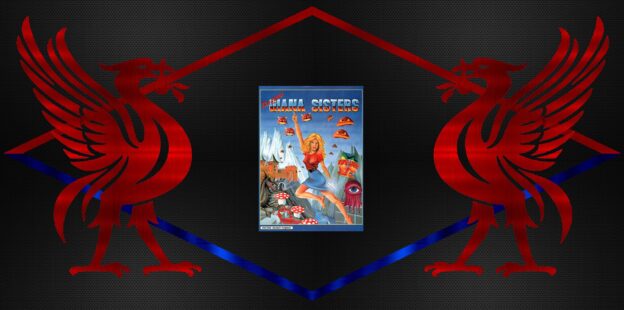
Released back in 1987 on various home computers, The Great Giana Sisters is a 2D side-scroller heavily based on Nintendo’s Super Mario Bros. So much so that production was forcefully stopped not long after the release of the game. It has since gone on to develop a cult following among gamers of the home computer era. But after having played it myself, I don’t get the hype. I stumbled upon this story whilst playing one of the more recent games in the series, Giana Sisters: Twisted Dreams. Which I plan to review in the future. But to me, it’s fair to say that the series had far more tenuous origins. 

Graphics – 4/10

The first thing that makes this game an obvious rip-off (apart from the title, of course) is the graphics. Using almost identical color palettes and scenery to that of the original Super Mario Bros, the only elements that work to differentiate it from the former are the main character and the enemy designs. Only one of the enemy designs stood out positively for me. Which was the pterodactyl enemy that swayed from side to side? Giving it a different dimension compared to other enemies, so to speak. But apart from that, the rest of the enemy designs are only slightly modified versions of Super Mario Bros enemies. And it’s no wonder Nintendo threatened to sue. 

Gameplay – 5/10

The gameplay, however, is only partially valuable. This is the only reason I can think of that it has garnered as much of a cult following as it has. Again, identical to that of Super Mario Bros, players get 33 levels to traverse through, whilst collecting diamonds and defeating enemies. If I were around at the time, I probably would’ve recommended it to anyone who had played pretty much every platformer out there. And they were still looking for something else. If they could get a copy of it before production stopped. But if you were to ask me today, there have been countless side scrollers released since this one that I would rather recommend. 

Controls – 8/10

An element that makes this stand out to a small extent (though for very much the wrong reasons) is the controls. Movement is much stiffer than that of the original Super Mario Bros., and it’s considerably harder to jump from place to place. Which, in a game that relies as heavily on platforming as this does, is a problem. It doesn’t have the worst controls I’ve experienced across games of the home computer era. Or even across other games on the NES. Including the original Mega Man. But the stiffness of the controls still comes across as counterintuitive.

Lifespan – 6/10

Talking about the average amount of time it took to complete a side scroller back in the late 80s, it can be made to last around half an hour. Though most gamers will probably choose to give in after 2 minutes and just play Super Mario Bros if they want a decent side scroller. 

Storyline – 4/10

The game’s story was also similarly lazily handled. It follows Giana, who is trapped in a dream world in search of her lost sister Maria. So in essence, it rips off the gameplay from the original Super Mario Bros and rips off the story of Super Mario Bros 2. Whilst the story would only be explained in manuals at this point in gaming. And would only be minimally expanded upon during the actual game. Still, it stands out as one of the most generic video game stories of the third generation. 

Originality – 0/10

Throughout this review, I have complained extensively about how hardly anything stands out, and the elements that do stand out are for the wrong reasons. There have been Super Mario Bros rip-offs that have been released since, which do have some small merit to them; for example, Super Bernie World. But this has no merit in terms of originality. The series would later be miraculously expanded upon for the better. And I do intend to cover some of those other games in the future. But as for where it started, I can’t say enough bad things about it.

Angrii

Overall, the only positive thing I can say about The Great Giana Sisters is that more and better games would follow it up. It’s a blatant rip-off that was rightfully pulled from the shelves and has languished in obscurity since. And for plenty of legitimate reasons. 

Score

27/60

4.5/10 (Mediocre)

The Mooseman (PC, PS4, PS5, Vita, Xbox S/X, Switch)

Developer(s) – Morteshka 

Publisher(s) – Sometimes You

Director(s) – Vladimir Beletsky

PEGI – 7

Conceived by Russian developer Vladimir Belentsky of Morteshka Studios and released in 2017, The Mooseman is 2D Sidescrolling, narrative-driven puzzle game designed as an artistic reconstruction of Komi and Finno-Ugric mythologies. While I was relatively impressed with the visual direction taken with this game, and its attempts to convey a unique story in and of itself, it’s unfortunately a very minimalistic title, having too little to do and lasting too short a time to be considered memorable among other gaming experiences.

Graphics – 7/10

The first thing to notice is the game’s unique take on conceptual design, borrowing various aspects of predominantly northeastern Russian Mythology, while also conveying a mostly peaceful and somber atmosphere throughout. Despite there being bursts of tension while encountering certain dangerous animals throughout the game, the whole experience can at least be viewed as relaxing for players looking for a less tense and action-packed title, and something easier to get to grips with than the average action-adventure RPG, for example. 

Gameplay – 3/10

But unlike many action-adventure RPGs, The Mooseman lacks a lot of substance in gameplay, with the player having to mostly avoid enemies for the most part and solve a few puzzles here and there. There is also a collectibles side quest, but not much of anything else, unfortunately. It’s at this point, as I find with many other games like it, that I feel like it would’ve worked much better as a film or animated short. The most important aspect of a video game to me is how enjoyable it is to play. Or unenjoyable. And unfortunately, here, there’s not enough to enjoy to keep players engaged for even the small amount of time it lasts. 

Controls – 10/10

The game also poses no problems in terms of controls. But as long as the developers knew the fundamentals of video game controls, it was never going to. But by the same token, it also offers no innovation in terms of how a game’s control scheme works. Which, for me, made the game all the more underwhelming. 

Lifespan – 1/10

The game can be made to last barely an hour, which, for a relatively modern game, is nothing. Of course, with more gameplay substance and content, it could’ve gone on to become far greater than what it turned out to be. But unfortunately, it’s a game that falls short of the average gaming experience, and furthermore, there are far too many games like this that are being released and somehow enjoyed. And it has created a very niche and unwelcome subgenre of games in the same strata, and it’s not a good thing. 

Storyline – 5/10

The story follows the titular Mooseman as he journeys to the underworld to save the world from eternal cold by retrieving the sun. In terms of its basic premise, it sounds amazing. But even in this aspect, there isn’t a great deal of elaboration on the story here. A lot of the story is incorporated into collectibles that the gamer may or may not be bothered to find. And again, among this subgenre of short, minimalistic games, the player should come to expect more in this respect at least. But again, they might as well have made it into a film to put as much emphasis on the story as possible. 

Originality – 4/10

The only thing I would say that is original about this title is its artistic direction. Based on a mythology much more obscure than the typical medieval fantasy or sci-fi settings of a lot of other games. But apart from that, there is no originality to be had with this game. It relies on elements that have been seen throughout gaming many times before and after its release. And there’s not even enough of that to keep it engaging. It’s uniquely bad.

Angrii

Overall, The Mooseman is by no means an enjoyable experience. Its gameplay is boring, its control scheme is uninnovative, and the experience is far too fleeting. I can’t recommend it even on an ironic level, unfortunately.

Score

30/60

5/10 (Far Below Average)

Deadhaus Sonata 1

Deadhaus Sonata: First Impressions

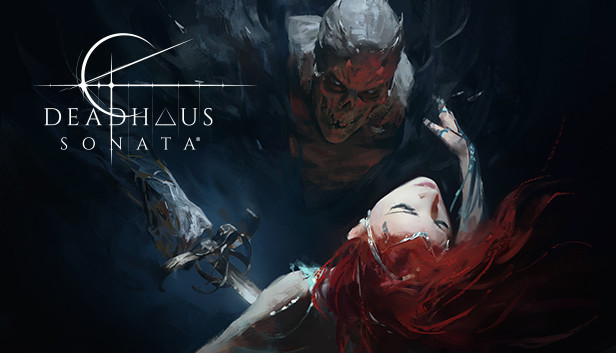
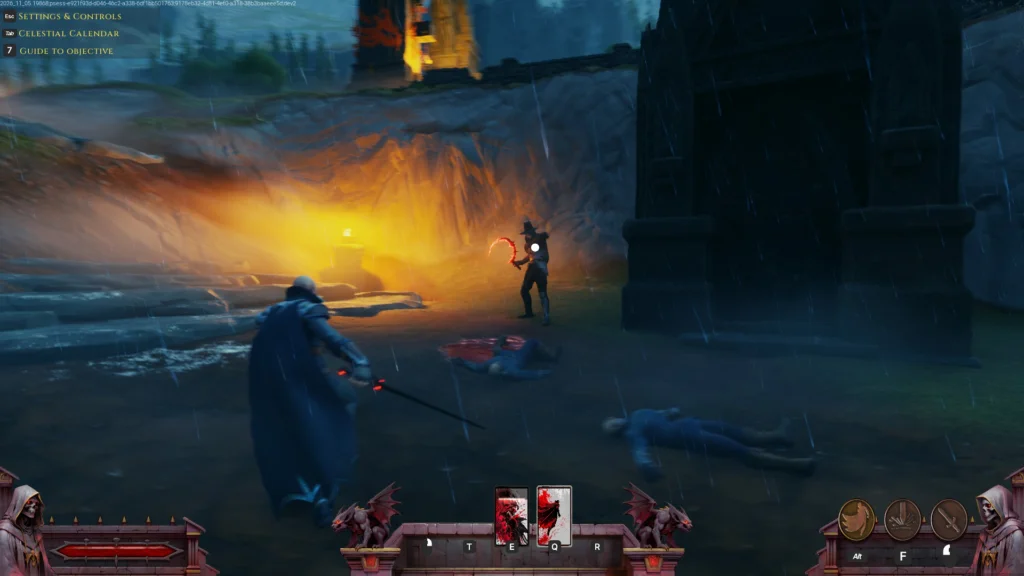
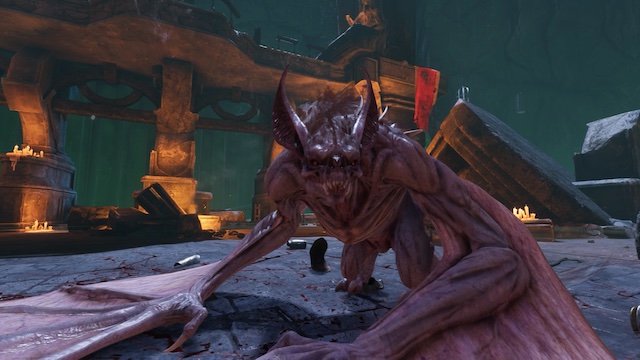
Released last week on Steam Early Access by Canada-based developer Apocalypse Studios, and helmed by Blood Omen director Denis Dyack, Deadhaus Sonata is at its core an action RPG with a heavy emphasis on combat, exploration, narrative, and character customization and levelling up to become more powerful as the game progresses. I’d been following the development of this game for a fair few years now. And have been fairly excited for its full release. To see how development would progress from then to now and beyond. It’s an ambitious title with an amphibious team behind it. However, judging by the early access version recently released on Steam, my final verdict is that the potential for this to be a great game is still there. Though there is a lot of work that needs to be done in most respects. 

Deadhaus Sonata 2

Graphics

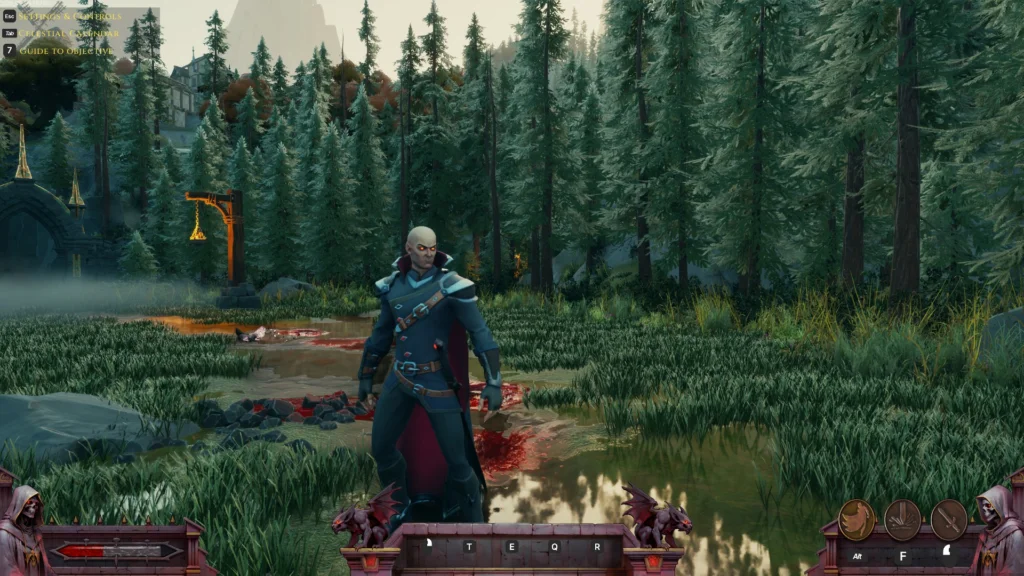
The game takes place in a vast, open world choked with medieval and gothic architecture. And circumstances that affect gameplay in ways including the weather and alignment of surrounding planets. Which I will further elaborate on. The game is conceptually sound, and certain aspects do make it feel like a love letter to Blood Omen, such as the healing obelisks and collectible cards. 

In terms of technical quality, it sits somewhere between sixth and seventh-generation visuals. Looking like it would comfortably run on a PlayStation 3. I also found a couple of graphical glitches; most notably, when the player is feeding on enemies to regain health, enemies can sometimes veer away from the player mid-feed when they’re not supposed to. From my point of view, I could accept the overall quality of the visuals given the relatively low price tag currently attached to the game. But these glitches desperately need to be ironed out before the final release.

Gameplay

As an action RPG, the objective is to choose a character class (with the only class available at present being the vampire class, with more to be introduced), defeat enemies, and level up your character. The game also has items available to collect, explaining the game’s lore and backstory. As well as a system known as the celestial clock. This determines the type and amount of loot the player can pick up. Depending on factors such as the alignment of the planets, the weather, the time of day, etc. But as it stands, the world can at times feel relatively bare. Like the exploration to be had currently is not rewarding enough for how vast the in-game world is. A plethora of content is planned for release over time. But for now, there is nowhere near enough to keep players engaged with the current build of the game. 

Deadhaus Sonata 3

Controls

The game is easy enough to control, with movement and combat feeling pretty fluid overall. Which was to be expected since Apocalypse Studios’ own Tomo Itagaki having worked on the likes of Ninja Gaiden and Dead Or Alive. It’s about the only aspect of this game that, so far, I have had no reservations about. This may change over time with the introduction of new character classes and how they are handled compared to others. But at least with the vampire class, the development team has gotten the fundamentals right when it comes to this.

Lifespan

Deadhaus Sonata does take a relatively long time to play through as it currently stands. However, there is a ton of content planned for inclusion in this game over a period of 10 years, according to Denis Dyack. With he himself having aspirations for Deadhaus Sonata to have infinite replay value. And being able to be played long after the original development team is gone. I don’t know how exactly this game has the potential to last as long as a piece of string. But there is a lot that needs to be added to make that happen, in my opinion.

Deadhaus Sonata 4

Storyline

The basic premise of the story is that the dead are at war with the living in the desolate world of Malorum. But at the moment, the majority of the game’s story is explained through its lore and backstory. This can be experienced by the player as they collect more tomes. But what I do think needs to happen is that the story needs to be better integrated into the gameplay. Since, as things are now, it can be fairly difficult to invest in. As the story feels far too separate from the gameplay. This wouldn’t have been as much of a problem if the quality of gameplay outweighed that of the story. But work needs to be done on both, and players care more about narrative within video games these days than ever before. 

Originality

It’s rare that a game with as much potential as this comes along and ultimately lives up to it’s own expectations. Deadhaus Sonata is ambitious in both size and scope. And Denis Dyack himself has promised a title that truly stands out within the gaming industry. But as I’ve emphasized a few times now, there is a lot of work that needs to be done here in order to realize that vision. Otherwise, it may just become another failed experiment. Especially if the core issues of the game are not addressed within the next 18 months, and player interest is not maintained. 

A Fox Tale

A Fox Tale (PC)

Developer(s) – Danny Peet

Publisher(s) – Danny Peet

PEGI – Not Yet Rated (No Graphic Content)

Released late last month on PC by Derby-based indie developer Danny Peet, and 5 years in the making, A Fox Tale follows the story of a fox named Eva in the form of an 8-BIT, challenging, linear 2D side scroller. My thoughts on this game ended up being very positive overall. Though not without factors to address, I found it to be an extremely solid first effort from a new up-and-coming indie developer.

Graphics – 8/10

Incorporating 8-bit visuals synonymous with the era of the NES and the Sega Master System, among other consoles, the game’s atmosphere is quite calm and serene throughout. Accompanied by a wonderfully relaxing soundtrack. This sense of calm changes dramatically towards the very end of the game. But for the most part, it contrasts the feeling of tension the player will inevitably have while undergoing the challenge this game has to offer.

The games I found myself comparing this to the most were the two Ori games developed by Moon Studios. In terms of visuals (as well as gameplay and story to a certain extent), the overall atmosphere and conceptual design are very similar. Bar the hand-drawn graphics of the former. 

Gameplay – 7/10

But unlike Ori, it isn’t a Metroidvania, but rather a linear 2D side scroller with a heavy emphasis on puzzle solving and precision platforming. There is also a side quest to undertake throughout, whereby the player can collect items throughout certain levels within each sequence of the story. Undoubtedly, the best element this game has to offer in terms of play is its unprecedented level of challenge. For a cutesy 2D platformer with a relaxing atmosphere, underneath the surface, there is a very intense and challenging experience. All the time without it being inaccessible. It’s made hard for the sake of being hard. But more importantly, it’s also a fair challenge. 

Controls – 10/10

I make this point frequently in my reviews, but it always bears repeating. If a developer is going to make an intentionally hard game, they must get the controls right as well. And I’m happy to report that this game gets it absolutely right. Danny Peet is a new developer with a great idea for a game. But it was imperative that he also got the fundamentals of game development right with A Fox Tale, which he did do. 

Lifespan – 5/10

The game can be made to last for around 4 to 5 hours. Which, for a linear side scroller, is about the average. Although I think a game in this series would work even better as a Metroidvania (if indeed Danny decides to build on this series further, rather than make a whole new game next), it’s still an enjoyable game for the short time it lasts compared to other games. Especially as it was a solo effort after all.

Storyline – 7/10

The Story of A Fox Tale follows the journey of a fox named Eva, who traverses a mysterious and almost derelict land to discover the fate of the foxes, reputed to be extinct. Eva resolves to uncover whether or not she is the last of her kind, meeting various companions along the way. The basic premise is quite straightforward. But without spoiling it, the story goes in a very unexpected direction that the player will not see coming. I was pleasantly surprised with the direction taken with the story. And although it’s not quite as narratively involved as the Ori games, it’s definitely something in the same strata.

Originality – 6.5/10

The most unique thing about this game is how ambitious it is in terms of challenge. Especially for a first-time effort. And although it does clearly have its influences from other games, and it’s by no means the first game to do many of the things that it does, it remains a relatively memorable experience in its own right. If nothing else, it certainly bodes well for the future of this new up-and-coming indie developer. And it will be particularly exciting to see what he comes up with next, judging by this first effort.

Happii

In summation, I can highly recommend A Fox Tale to any fans of side-scrolling games looking for an exciting new challenge. The best word I can use to describe this game in and of itself is solid. Solid in visuals, gameplay, story, and difficulty. 

Score

43.5/60

7/10 (Fair)

Living Dead House

Living Dead House (PC & Switch)

Developer(s) – Deprecated Games

Publisher(s) – Flynn’s Arcade Publishing

ESRB – T For Teen

Released earlier this month on both Steam and the Switch, Living Dead House is an arcade action platformer with survival horror elements developed by US indie game studio Deprecated Games. This is their second outing following their debut title, Awakened Evil. In recent years, Flynn’s Arcade Publishing has demonstrated they have an eye for spotting talent within the indie development scene. And, Deprecated Games have certainly done well to follow up on their debut game with this latest effort.

Graphics – 7/10

Like most arcade games of old, Living Dead House takes place on a single screen throughout. Taking the form of an abandoned, derelict mansion under attack on all fronts by zombies. Though having one screen constantly, the interior of the house is changed with each level. This keeps things fresh throughout and offers different types of challenges and elements that players can take advantage of to kill more zombies in quick succession. I.E, the faulty light switch in the first level. 

The game’s soundtrack is also shockingly stellar. Though the game has a strong feel of survival horror about it, it’s hard not to bop your head to the music at the same time.

Gameplay – 7/10

The object of the game is to traverse the mansion in each level and kill as many zombies as possible until the sun comes up. Players are given various weapons to deal with the zombie menace, whilst also making sure they don’t accidentally become avalanched in between the different environments and the oncoming zombies. They can also prevent the zombies from overwhelming the mansion by using nails and boards to barricade doors and windows to stop zombies from entering the mansion. There are also the letters to collect spelling out the word “SHRED,” which, when all are collected, give the player a chainsaw to temporarily ravage through zombies unscathed. 

The game is similar in layout to Flynn’s previously published title, Goliath Depot. Developed by Vidvad Games. But while both of these games provide a stern challenge (even on easy mode in the case of Living Dead House), this title has much more in the way of combat, whereas Goliath Depot has more in the way of puzzle solving. 

Controls – 10/10

Whichever way the player chooses to play, the control scheme poses no technical issues. Collision mechanics and the platforming mechanics are very well handled. But it feels more natural to play this game with a controller than a keyboard, in all honesty. It’s most certainly a welcome addition to the Switch in particular. It’s one of those games that’s ideal for playing on the go. A quick-start arcade game that can be played for hours to rack up as high a score as possible.

Originality – 7.5/10

Goliath Depot offered a unique take on the failed Philips CDi title Hotel Mario. Living Dead House, whilst made under a different developer, seems to expand on that concept. While at the same time, offering up a much better gaming experience than Hotel Mario. It’s another example of an indie developer offering their own unique take on a retro game, along with Puppygames’ Ultratron and Maybell Games’ Satryn DX. And it works particularly well with this game.

Happii

Overall, Living Dead House is a game ideal for any fan of arcade classics looking to try out a wonderfully retro experience. It’s heavy on combat, doesn’t hold back in terms of challenge, and comes well recommended by me. 

Score

31.5/40

7.5/10 (Good)

Anamorphine (PC, PS4, XOne)

Developer(s) – Artifact 5

Publisher(s) – Artifact 5

Designer(s) – Mohannad Al-Khatib

PEGI – 7

Released in 2018 by Montreal-based developers Artifact 5, Anamorphine is an interactive story game telling a deep and abstract story. With minimalistic gameplay elements from a first-person perspective. As much as I could appreciate the developers of this game going hard in terms of story from the very beginning, there wasn’t enough here, in my opinion, to warrant more than one playthrough. Story-based games have sustained a prominent place in the industry since the fifth generation, which has had more to offer in terms of gameplay. 

Graphics – 8/10

The game presents the player with a surreal and disjointed world based on the thoughts, memories, and subconscious of the main character, Tyler. Initially, I was attracted to this game for its presentation of abstract environments in its press releases, but there are also settings reminiscent of everyday life, which, while relatively generic, are still integral to the story. Overall, the constant changes of scenery throughout the work work pretty well together to convey where the game goes. And how it plays out. 

Gameplay – 2/10

What doesn’t work so well, however, is the gameplay. A first-person adventure game by design. And similar to the likes of Shape of the World and Everybody’s Gone to the Rapture. All players are confined to doing is navigating through the labyrinth of changing settings and environments to progress the outcome of the story. There are some collectibles in the form of memories and two endings to unlock. But otherwise, the game is far too minimalistic in terms of what it offers someone looking to play a game. The developers might as well have just made a film. 

Controls – 10/10

The controls pose no problems, but there’s no way they possibly could have done so when there are so few options in terms of use. All players need are the analogue sticks, nothing more.

Lifespan – 2/10

Clocking in at around an hour and a half, the game also falls far too short of a typical first-person adventure game. On a personal note, by my own admission, I talk about games of this nature being too short or too lacking. Games like Proteus, Journey, and Hohokum spring to mind. And it probably feels to a lot of people reading my reviews like I’m missing the point. I’m not so shallow as to not realize that. But like I say a lot when reviewing these types of games, we have a film industry for a reason. 

Storyline – 8/10

The one aspect in which this game doesn’t disappoint, however, is in the conveyance and the design of the story. It follows a married couple, a musician named Elena and a photographer named Tyler. They initially marry and get settled into their new house. And later events begin to unfold into something tragic and harrowing. It portrays how abruptly a happy situation can change. And can, in time, become a nightmarish one. How dreams and aspirations can crumble given a certain set of circumstances.

The story pulls absolutely no punches, portraying themes. Such as tragedy, loss, domestic conflict, and the nature of depression. How the environmental surroundings coincide with how the story plays out is also really well done. I guess it’s the only positive thing I can point out about this experience being a game. But at least in this sense, this is the one aspect in which it didn’t fail.

Originality – 5/10

The fact that so many of these games are being developed left, right, and centre these days also poses a problem in terms of originality. Since there’s not much going for them gameplay-wise by default, the only thing that can differentiate games like this from one another is indeed the story. To me, it just lends more credence to the case of these games being developed as films or short animations instead. At least that way, there’s a greater chance of them being appreciated for what they are. As opposed to what gamers will inevitably think they’re trying to be. And this game is absolutely one of these cases.

Niiutral

Overall, Anamorphine has an immersive and impactful story, but it was better off being made as a film rather than a game. Unless the developers were more inclined to treat it as more of a game rather than a film, they should’ve gone back to the drawing board before it was too late.

Score

35/60

5.5/10 (Below Average)

Vridnix (Steam & Switch)

Developer(s) – Uncanaut

PEGI – 3

ESRB – Everyone 10+

Initially released back in 2018 to respectable critical acclaim, Vridnix is a story-driven, fast-paced, challenging platformer. It tests players with tricky obstacles, creative boss fights, and frantic platforming sequences. Cut from the same cloth as Super Meat Boy. But arguably even more surreal. For me, it was easy to compare both games in terms of their level of challenge. But as hard as Super Meat Boy was, even more intrepid layers than I will definitely find more of a challenge in this game than in the former. It was this factor, among others, that hampered my enjoyment of it, unfortunately.

Graphics – 6/10

Vridnix makes use of an 8-BIT cartoony style of visuals that impressed me in some respects but not in others. The feature I enjoyed about this game’s graphics was the level designs, as they were particularly diverse throughout. They mostly consist of desert lands. But there are also a lot more futuristic and psychedelic locations featured as well. The biggest gripe I have with the visuals is the design of a lot of the NPCs. They look pretty minimalistic compared to the rest of the game, like they don’t belong to the world that they’re featured in. It reminded me somewhat of the games that David Firth used to develop. Like Sheep Wars and Mel Gibson’s Safari 3.

Gameplay – 7/10

For as similar as it is to Super Meat Boy, I was pleasantly surprised by how diverse it is. The main objective is to get from point A to point B. As in any typical platformer. But players also have to do this without stopping and flipping the environment around 90 degrees at a time. And using that ability, among others, to take on a wide variety of challenging bosses in the process.

As well as that, there are also additional characters to play as, again with their own unique abilities to switch things up throughout. If it weren’t for the game being as overly challenging as it is at times (at least to me), I feel as if I could’ve had a lot more fun with this game than I did. However, for the more intrepid player, there’s a lot to offer here. It goes beyond a game simply made hard for the sake of being hard. 

Controls – 8/10

The concept of the control is easy enough to wrap your head around. But it’s hard to master it given how fast-paced the game is. For more audacious players, however, this only adds to the challenge. The game actively makes it particularly easy for players to hesitate at crucial moments, making seemingly easy things needlessly convoluted. It’s not as big a problem in Vridnix as I’ve witnessed in other games. But especially if you’re not used to this style of play, it can seem very frustrating very quickly.

Lifespan – 7/10

For those who can tolerate the limitations imposed on them throughout the game, however, there is a surprisingly long title to enjoy amidst all the chaos. Clocking in at around 8 hours to complete. If the developers were ever inclined to make a sequel, they could probably make it even longer than this with the same gameplay ideas implemented in this title. Even longer if they introduced new ones, and it’s pleasantly easy to imagine how they would do that.

Storyline – 5/10

The story of Vridnix involves the titular character on a quest to save the world with the aid of allies that he meets along the way. The basic premise is as simple as that. But throughout, there are events and circumstances that are out to derail Vridnix’s resolve. And a fair bit of adult humour thrown in for good measure. So much so that I was very surprised to learn that the highest age rating this game has is an E-10+ from the ESRB.

The Switch version is rated PEGI 3, but I’m not sure if any of the foul language from the PC version was taken out. It’s interesting to think about whether any of that stuff did indeed get past the censors; it would probably be the most blatant example I can think of in terms of video games since the inception of the ESRB back in the 90s. 

Originality – 6/10

Although Vridnix is directly comparable to another massive indie hit in Super Meat Boy, there is plenty here to keep it unique enough. With the added characters and different gameplay features. The aspect that goes against more than any other, however, is how uniquely inaccessible a lot of players may find it due to its staggering level of challenge. Super Meat Boy was indeed a hard game that players had to persist with, but in that respect, this game is in a class all of its own.

Happii

Overall, Vridnix is an enjoyable game, but it definitely caters best to the more daring and intrepid gamer than it does to casual players. For a lot, it will seem impossible to get through and too easy to put down and never dare to bother with again. But there definitely is a lot to enjoy here for those who can handle the challenge on offer.

Score

39/60

6.5/10 (Above Average)

Monument Valley (Android, iOS, PC, PS4, PS5, XOne, X/S, Switch)

Developer(s) – Ustwo Games

Publisher(s) – Ustwo Games

Director(s) – Neil McFarland

Programmer(s) – Peter Pashley, Manesh Mistry & Van Le

PEGI – 3

Initially released on iOS, later Android, and then a host of different consoles over multiple generations, Monument Valley is an indie puzzle game. It incorporates a standout visual style and relaxing atmosphere. Similar to the likes of Fez, Braid, and The Witness. It relies on players manipulating each environment in various ways to progress the character through a series of levels. It was an immediate hit on the app stores when it first came out. And has since spawned two sequels. 

I’d had this game on my radar for quite some time. But I’d never gotten around to playing it until recently. Ultimately, while I found that there was a fair bit to enjoy with this title, I felt that there wasn’t enough of what it was offering for it to be able to stand as a gaming classic. 

Graphics – 8/10

Inspired by Japanese art and a multitude of indie games that came before it, the game’s visuals are by far the most impressive thing about this title. They are aesthetically pleasing. Making exceptional use of colour and lighting to portray a wide variety of different captivating scenes. Even though the visual style is consistent throughout, the developers did really well to make each level feel unique and memorable in its own right. The soundtrack also complements the game perfectly. Making for one of the most relaxing gameplay experiences I’ve known for a long time. 

Gameplay – 7/10

The player must guide the player character, Ida, through a series of different levels and puzzles. These are solved by moving objects and building around them to pave the way to the next area until the game is complete. One of the two common criticisms I was aware of going into this game was how easy a lot of reviewers thought it was. And that it doesn’t present the level of challenge that it had the potential to do. To me, it presented around the right amount of challenge. Especially given that this is the first game. And for a puzzle game, something like this was a relatively new concept at the time. 

Controls – 10/10

Regardless of what platform the player is playing this game on, be that mobile, PC, or console, the controls pose no issues whatsoever. If I were forced to choose, I’d say the best way of playing is on PC with a mouse. The visuals are too good to enjoy on just a smartphone, in my opinion. And playing it with a mouse simplifies things the most out of any other means of controlling the game.

Lifespan – 2/10

The other aspect for which this game was commonly criticised at the time of its release was just how short a game it is. And I agree with the general consensus when it comes to this. Clocking in at just short of an hour and a half, it falls well short of industry standard. Especially that of a typical smartphone game. Which can be made to last as long as players care to keep coming back.

There was simply far too much scope for expansion and potential for this game to have lasted as short a time as this does. Even at the time, the first game came out. Like I pointed out before, there have been two sequels created to Monument Valley. But each entry clocks in at the same amount of time as the others. It has been disappointing to learn.

Storyline – 3/10

The story of Monument Valley follows the player character, Ida. Who journeys through each of these optically illusory environments? To be forgiven for some unnamed transgression she has committed. The story is pretty minimalistic. And I’m flabbergasted as to how there is supposedly a film of this game coming out sometime in the future, as it would take quite some imagination to build on a story concept as underdeveloped as this. 

It may be that the sequels built on this as they went on, and that the filmmakers have more source material to work with now. But it would be interesting to see how that pans out. But based on the first game alone, there’d need to be quite some work done to it. Because for me, it’s too hard to imagine how they’d pull that off. 

Originality – 6/10

But as the story is minimalistic, the concept of gameplay does relatively well to make this title stand out among the indie scene. It was certainly a very different experience at the time of its release from what players would’ve normally been used to. Puzzle games seem to be one of the few genres of focus for indie games, with titles like The Bridge, Puzzledorf, and The Swapper (among many others). But whilst having drawn inspiration from several different titles, this game still does well to stand out as its own fully cohesive concept.

Niiutral

Overall, Monument Valley is an enjoyable, visually appealing, and standout game. But there’s just not enough to warrant repeated playthroughs. Though it is worth going through once. In the criminally short time that it lasts, I do wish that this concept would be worked on more than it has been since the release of the first game.

Score

36/60

6/10 (Average)