Tag Archives: Scouse Gamer 88

Titanfall (Xbox 360 & Xbox One)

Titanfall

Developer(s) – Respawn Entertainment

Publisher(s) – Electronic Arts

Director – Steve Fukuda

Producer – Drew McCoy

PEGI -16

One of the most highly anticipated games of last year, Titanfall, was supposed to be Microsoft’s ace in the hole concerning the Xbox One. The title would attract more people to align with their system as opposed to the PlayStation 4. Unfortunately, it didn’t work out that way, and for good reason in my opinion.

Graphics – 6/10

Compared with the conceptual design of many other science fiction games, it feels to me like the game is wanting. As for me, it looks like a watered-down version of the game Hawken. Marred down by elements of both Call of Duty and Battlefield. The reason why it doesn’t lose too many marks in this category is that, from a technical standpoint, the game is visually flawless. There are no glitches in sight, and everything is extremely well-polished.

Gameplay – 3/10

In a lot of ways, I can best describe this game as a middle finger to anyone who bought an Xbox One around the time of its launch. It was a game eagerly anticipated for years, but ended up being overwhelmingly restricted in terms of gameplay, as not only is an Xbox Live subscription mandatory to play it. But there isn’t even a single-player campaign mode; players have to instead contend with an online multiplayer campaign mode. Some would argue that Destiny was the same. But a PlayStation Plus subscription isn’t mandatory. And players can enjoy it whilst not having to pay an extra £40 on top of what they paid for the game.

Controls – 10/10

There are no issues with the control scheme, thankfully, since it ultimately plays out like any other run-of-the-mill first-person shooter. Even when players embark on one of the titan robots, it plays out more or less exactly the same as it would if they were on foot. Whilst there may be no problems, henceforth why it loses no marks in this category, there’s nothing special about them either. It’s proof of how difficult it can be in this day and age to make an FPS that stands out among most.

Originality – 4/10

Because of the bog-standard control scheme and the visible lack of difference between playing on foot or in a titan, I don’t think for a second that Titanfall is the revolutionary game-changing title it was advertised as being at the time of its release. The restrictive gameplay makes it stand out somewhat. But for all the wrong reasons. To me, this title can be seen as not only vastly overrated. Since it miraculously won over 60 gaming awards last year. But it can be seen as a lesson on how not to make a video game.

Angrii

In summation, Titanfall is most definitely one of the worst games of 2014. It’s one of many reasons to buy a PlayStation 4 as opposed to an Xbox One, and makes me think that if the developers want an entire franchise to spawn from this one wretched game, then making the sequel multi-platform should be the tip of the iceberg. Major improvements need to be made in every other aspect, in my opinion.
Score

23/40

5.5/10 (Below Average)

Titan Attacks (PC, PlayStation 3, PlayStation 4 & PlayStation Vita)

Titan Attacks

Developer(s) – Puppy Games

PEGI – 7

Titan Attacks is an arcade shooter extremely similar to Space Invaders, which involves the simple concept of shooting down oncoming waves of aliens and advancing through the many stages of the game. Although it’s a fairly fun game to play, I thought there were many other aspects that left me wanting. I couldn’t help but compare it to Space Invaders, as at times, I didn’t know if I was playing that or Titan Attacks.

Graphics – 5.5/10

Not only does it play out almost identically to Space Invaders. But it also looks almost identical to Space Invaders. The character sprites are very similar, and in a way, I think the ship the player controls throughout the game is very similar to the one found in the arcade classic, too. I thought the most standout and stunning visual aspect of this game was the scenery and the pretty wide variety of color palettes used throughout each of the five stages. They can positively add to the feeling of nostalgia. But every other visual aspect in the game would suggest to me that there wasn’t a great deal of effort or thought put into the game’s overall visual concept.

Gameplay – 7/10

I’m happy to at least say that this game is a fairly fun one. It’s pretty enjoyable to play, and the most original aspect of this game also happens to be the most satisfying, in my opinion. Players have the option to spend in-game currency accumulated in each level on upgrades to the ship. Such as improved weapons and shield maintenance. That aspect at least adds something that didn’t come with the original Space Invaders. And it makes for an overall moderately exciting gaming experience.

Controls – 10/10

As expected, there are no problems with this game’s control scheme. Just like the best arcade games of the ’70s and ’80s, player progression relies heavily on skill. I’m pleased to see that the developers of this game at least seemingly designed it with that rule firmly in mind.

Lifespan – N/A (10/10)

It will take less than an hour to progress through each of the game’s five different stages. But once this is complete, it then becomes a survival-endless scenario. Players must follow the simple and age-old video gaming objective of repeating the game at progressively harder difficulties in order to gain the highest score possible. This is the kind of game that can simply be played at the player’s leisure. Without the worry of making in-game progress in the sense that most younger gamers are familiar with nowadays. And there’s nothing wrong with a game like that if it’s done right. And it has been done right in this case.

Storyline – N/A (10/10)

Again, as with every great arcade game back in the first and second generations of gaming, there is no highly developed story to Titan Attacks, but only a basic premise. To stop an alien invasion. There never needs to be a particularly deep story in an arcade game, as an attempt at which could ruin it. Since they’re solely about gameplay.

Originality – 3/10

The only things that make this title unique to Space Invaders are the diversity in set designs and the ship upgrade facilities. But there’s not much in this game to differentiate it from others past Space Invaders, unfortunately. Even adding that small RPG element has been a trope used in some other recent indie arcade games like Dead Nation and Mercenary Kings.

Happii

In summary, although Titan Attacks seems like nothing more than a heavy modification of an existing idea on the surface, it is still fun to play. And it doesn’t lose marks for getting some other aspects right, too. Those things for me are enough to even save it from being considered an average game, in my opinion.

Score

45/60

7/10 (Fair)

Theme Hospital (PC, PlayStation & PlayStation Network)

Theme Hospital

Developer(s) – Bullfrog Studios & Krisalis Software

Publisher(s) – EA

PEGI – 12

Theme Hospital is a simulator game, whereby the player must manage various hospitals by researching breakthrough medical advances. Employing competent and committed staff, and of course, successfully treating as many patients as possible. The game is notable for its immersive gameplay and twisted sense of humor. If history had gone a different way, that humor may be seen as even darker by others. As the fictional and comedic diseases used in the game. Discrete Itching and Chronic Nose hair were put in to replace the originally planned inclusion of real-life illnesses into the game. While that does add some controversy, it was thankfully nevertheless tailored to be much more light-hearted and comedic. And most importantly, gameplay came first.

Graphics – 5/10

While comic relief is added in the game’s graphics through some of the comedic looks of some of the patients with ridiculous diseases, such as Bloaty Head, there was never going to be much else in terms of concept in a hospital simulator game. There are a few full-motion videos adding a bit more to the game’s comedic value as well as the darker aspect of its humor. But other than these small elements, there’s not much else to look at, unfortunately.

Gameplay – 8/10

Theme Hospital was one of the most addictive games I ever played growing up. And that level of addiction still holds up to this day, the way I see it. I remember it was one of the first games that made me understand how something that could be seen as mundane and repetitive in real life can be made to seem extremely entertaining. There have been many other games come and gone that have tried to replicate that feeling with the same level of success. Indeed, most recently, I’ve been playing the game Papers Please, which could easily fall under this category. But very few have succeeded on the same level as this game.

Controls – 10/10

The simulation and real-time strategy gaming genre had long been perfected before the release of Theme Hospital. And so it was unlikely, to begin with, that there would be any problems with the game’s control scheme, and so there aren’t. Theme Hospital, though relatively difficult to master, is simple to get to grips with.

Lifespan – 3/10

The biggest issue I have with this game, however, is that there is a fixed lifespan, making the game very short-lived for one in its genre. The game’s main mode can be completed in less than six hours. And for a game that can be made to last an infinite amount of time, that’s almost unforgivable. Unlike Rollercoaster Tycoon, there doesn’t exist any kind of endless mode. Whereby players can just build and maintain a hospital, and stick to it. They simply have to meet all the hospital’s requirements. And then move on to the next until the game is complete. That, in turn, also affects the gameplay, as this makes it a lot less satisfying to play than it easily could have been.

Storyline – N/A (10/10)

Theme Hospital doesn’t have any kind of established story or even much in the way of a basic premise, but nor did it need anything like that to be any more enjoyable. The only element of the story is in the game’s humor, which can make the ambiance of the game both funny and taboo at the same time, but otherwise, there isn’t much else to talk about in terms of the story. There’s no need for the game to lose marks for not having something that it didn’t necessarily have to have.

Originality – 8/10

Simulator games had been around for some time before this, but this game was in a class of its own. It garnished a great level of popularity among players and is still unlike anything I’ve ever played since. It was instrumental in shaping a lot of my own personal viewpoints about gaming, and I hope that more titles like this come along in the near future, with the same, or an even greater level of originality attached to them.

Happii

Overall, whilst it hasn’t stood the test of time, as well as other games of the 90s have, Theme Hospital is still fairly addictive and fun to play, and its dark and twisted humor and great level of uniqueness have made it a cult classic, and I would still recommend it to anyone reading who hasn’t tried it yet.

Score

45/60

7.5/10 (Good)

The Swapper (PC, Wii U, PlayStation 3, PlayStation 4 & PlayStation Vita)

The Swapper

Developer(s) – Facepalm Games & Curve Studios

Publisher(s) – Facepalm Games

Writer – Tom Jubert

PEGI – 7

The Swapper combines elements of puzzle games and the 2D side-scrolling open-world aesthetics of a Metroidvania game. Talking about this game in the same breath as the likes of Super Metroid and Castlevania: Symphony of the Night may make the game sound exciting. But even with the inclusion of a semi-open world, it doesn’t even come close to matching the quality of the aforementioned examples.

Graphics – 10/10

The most praise I can offer The Swapper is in its visuals; they are more or less flawless. There are no graphical glitches, and the design of the settings is wonderfully unique. And the attention to detail on the developer’s part is staggering. There is also a very effective use of textures, such as lighting and shadows, to add to the overall atmosphere of the game. Though it isn’t survival horror, there is a heightened sense of urgency throughout that perhaps the player will feel in a much different way than in the likes of Resident Evil 4 or Silent Hill. The game’s visual concept does draw similarities with Dead Space in its character designs. But there are plenty more differences to make it stand out in at least this sense.

Gameplay – 5/10

One way in which The Swapper doesn’t stand out, however. And the one aspect it should have done to attain the most important points, in my opinion, is in its gameplay. Players have to solve puzzles throughout by duplicating the player character. And swapping between the duplicates to perform multiple tasks at the same time. There is also one side quest, which involves finding a series of terminals giving details of the game’s back story.

As well as ten additional hidden terminals throughout the game. Taking into account the size of the in-game world. And the amount of space available to include additional content, I don’t think there is anywhere near enough substance in gameplay compared to what could have potentially been added. And there is hardly any incentive for completing the game’s side quests unless you happen to be playing it on a PlayStation console. In this case, there are PlayStation trophies to collect for each hidden terminal found.

Controls – 10/10

As a formula long since perfected, there should have been no issues with the control scheme in any case. And so there aren’t. But it is also interesting to see how the developers have added some interesting gameplay mechanics to the 2D side-scrolling formula.

Lifespan – 1/10

Due to its lack of substance in gameplay, and the main focus being put on the story (indeed, where there is normally a director and producer listed on most video game Wikipedia pages, there is only a writer on The Swapper’s page), this title can only be made to last two and a half hours tops, which, especially for an open-world game, is unacceptable. Since there was clearly room for so much more to be added, it seemed to me like that much more of an incredibly fleeting experience.

Storyline – 7/10

In a time when humanity’s natural resources on Earth have been exhausted, and they have resorted to deep space exploration to keep themselves alive, the story of the Swapper follows a person who lands on the planet Chori V and investigates a derelict ship called the Theseus. But in typical science fiction fashion, he/she ends up finding more than what they bargained for, and the unnamed person resolves to escape the ship with his/her life, and from the watchers, a murderous race of minerals with rudimentary intelligence, who had killed the initial crew of the Theseus.

The story is interesting to follow from beginning to middle, but although I won’t give away what happens in the end, I will say how I felt so jaded by it. There is a choice for the player to make at the end, but either way, it makes the story seem ultimately pointless. If the player makes one of the two choices, another character even closes the game with the line “Does it really matter anymore?” It makes me hope that there will be a sequel, albeit with major improvements to gameplay, that will elaborate on the game’s mythology. Otherwise, I think the developers may very well have ended up shooting themselves in the foot by making other gamers feel the same way.

Originality – 6/10

Despite the visuals of the game being top-notch in my eyes and some standout modifications to the 2D side-scrolling formula, in terms of overall gameplay, it seems neither evolutionary nor revolutionary. Great Metroidvania games have come and gone, such as Symphony of the Night and Aria of Sorrow, and even some of the latest generations have yielded a few, such as the re-vamped Strider and Dust: An Elysian Tail. But it’s fair to me to say that this title doesn’t fall under that category.

Angrii

To summarize, The Swapper is a much worse game than I previously thought. Despite being impressed by its visuals and attention to detail, I hadn’t realized how short and lacking in substance it was, and I always begrudge video games like that being released in the first place.

Score

34/60

5.5/10 (Below Average)

The Stanley Parable (PC)

The Stanley Parable

Developer(s) – Davey Wreden & Galactic Café

Rating – N/A (Profanity & mature themes)

The Stanley Parable was developed about three years ago, as an attempt by its creator, Davey Wreden, to go against the kind of narratives typically found in video game stories. And my goodness, he accomplished that. It’s unlike any other interactive story I’ve ever experienced, in that it’s a lot more interesting and open-ended. However, I wish a bit more could have been added in terms of gameplay to keep it a little bit more interesting.

Graphics – 6/10

Though the visuals can indeed seem extremely generic and dull at first. As the game progresses, they become thoroughly more varied and engrossing, taking place in factories and lush fields. And even Matrix-style computer rooms, depending on which direction the player takes. The fact that there are so many places to go throughout the course of the game itself makes for a fairly wide degree of visual diversity for a game that takes place mainly in an office building.

Gameplay – 4/10

The game takes on a first-person mode but only contains a handful of things to do in-game. There are no enemies to fight or puzzles to solve; only the facility to go off in multiple directions. Thus affecting what ending the player is treated to. As I said, I wish the developer had added at least a little bit more to make the gameplay a bit more enjoyable. But ultimately, it feels more like watching a film, unfortunately. It’s impossible for me to fully appreciate games that are made solely for the sake of art. And having next to no basis in viable gameplay.

Controls – 10/10

As a first-person with next to no other functions apart from walking and turning. And interacting with certain objects and buttons, there was hardly anything the developer could have gotten wrong during the making. As there weren’t any problems to address. So there is this positive to deduce, at least. If there had been any issues with the controls, then it would have inevitably led to me having major issues with this game.

Lifespan – 6/10

It will take roughly 10 hours for players to take each route and witness each individual ending, since there are a fair few to discover. The only basis in gameplay this title truly has, in my opinion.

Storyline – 8/10

The story of The Stanley Parable is most definitely the greatest aspect of this game. No matter how confusing it may be to people, after a while. It follows an ordinary man called Stanley, who is guided by the player through a series of different paths leading to different places with a plethora of different events unfolding; all the while being narrated by British actor Kevin Brighting. Aside from the surrealist goings-on that happen throughout the course of each playthrough, Brighting does provide an extremely good narration, and at times also even brings an element of dark humor, as well as breaking the fourth wall.

Originality – 7/10

Though this game does have one of the most unique stories ever told in a video game (indeed, one to go against other video game narratives by design), the gameplay remains largely unoriginal, and consequently, I can’t call it the overly unique game that many other critics have taken to calling it. It’s all very well and good to have such a strange story add to the game’s charm, but for me, the most important aspect in any game is the gameplay, and unfortunately, this title comes up short in that respect.

Niiutral

To summarize, The Stanley Parable is indeed an extremely strange game with an interesting story. However, for all the room there is in the game’s environment, it seems criminal to me that the developers did not add any more basis in gameplay than what there ended up being.

Score

41/60

6.5/10 (Above Average)

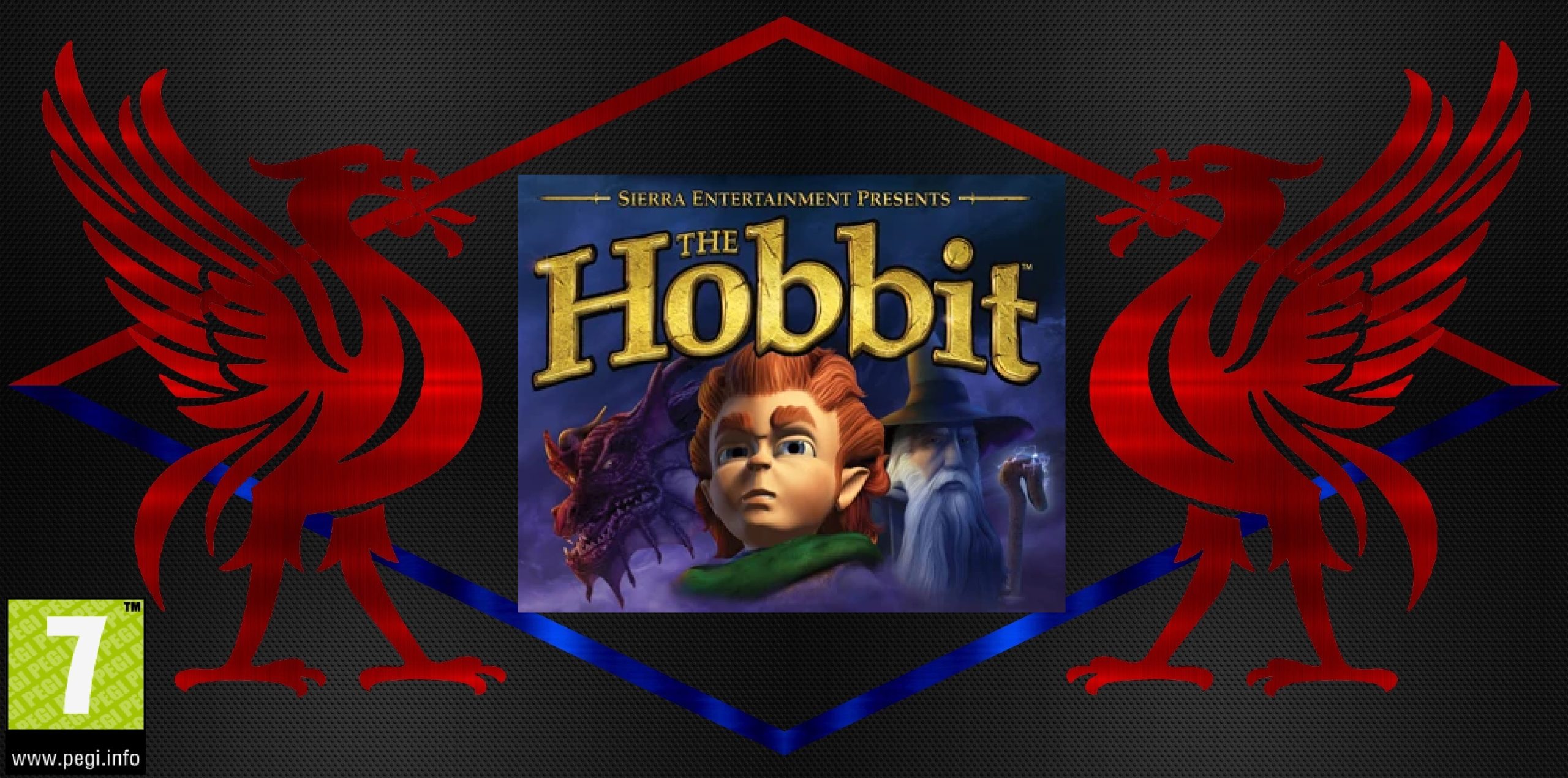
The Hobbit (Xbox, PC, PlayStation 2, GameCube & Game Boy Advance)

The Hobbit

Developer(s) – Inevitable Entertainment, The Fizz Factor & Saffire

Publisher(s) – Sierra Entertainment

Designer – Chuck Lupher

Producer(s) – Jaime Grieves

PEGI – 7

Amidst the newfound popularity of the Tolkien mythos surrounding the Lord of the Rings film trilogy directed by Peter Jackson, and amidst an ongoing dispute regarding the rights to the Tolkien license, with multiple games based on the books and films being developed at the time, The Hobbit was released to mixed reviews from critics. Who cited the gameplay as being uninspiring, and its failure to appeal to younger gamers.

In the industry, licensed games have, for the most part, been generally frowned upon. And seen as simply being a modern form of shovelware. With the owners of their respective licenses simply releasing games to coincide with films for the most part. However, there are a select few licensed games that go above and beyond what is expected of them. And end up offering some legitimately enjoyable gaming experiences. In my opinion, whilst The Hobbit may not be among the best, it’s certainly not among the worst, I find.

Graphics – 6.5/10

One aspect that the game falls short on somewhat is the visuals. Whilst they may have looked fairly impressive at the time, they don’t hold up nearly as well on a technical level as many other games of their kind do. Such as Final Fantasy X and Metal Gear Solid 2, to name but a few. Like the game based on the first volume of The Lord of the Rings trilogy, developed by WPX Games & Surreal Software, it largely conforms to the same conceptual design as in the films. But there are a couple of standout elements that did fairly well to separate it from both the initial Peter Jackson film trilogy. And the aforementioned game at the time of its release, at least (before the Hobbit film trilogy came out years later, as well as Lego The Hobbit). Such as locations like Lake Town, Mirkwood, and Erebor.

Gameplay – 7/10

For the most part, playing out like a traditional 3D platformer, the game also has a few little side quests thrown in for good measure during the first half of it. Like the previously mentioned Lord of the Rings game. Most notably involving completing the tasks for the dwarves before the party departs for The Lonely Mountain. There is also a small stealth aspect. This fits in fairly well with the tableau of the story of Bilbo Baggins being hired as a thief. And which I moderately enjoyed. Stealth can be quite a tricky aspect to pull off in games. As it can eliminate fluency if it requires players to play through the same area a certain number of times. But for the most part, it’s done fairly well in this title, in my opinion.

Controls – 10/10

As far as 3D platforming in this game goes, I had no gripes with it whatsoever. Which, in all fairness, was to be expected, I think. As the genre had well and truly taken prominence at this time. Following the release of games such as Super Mario 64 and Jak & Daxter. Combat and stealth are also both handled adequately well. And there are no unnecessary complications with the game’s control scheme present to add any kind of unwarranted level of frustration.

Lifespan – 6/10

The game can be made to last an average of 8 hours, even taking in the completion of side quests throughout the course of the game, which, whilst it isn’t great by any means, is still fractionally longer than the game based on The Lord of the Rings license, which can be made to last around 6 to 7 hours. As the game conforms to a very linear progression, it wasn’t expected to have a great lifespan in any case, but I can’t help but think that with a little bit more imagination on the developer’s part, it could have been made to last at least a little while longer; certainly, the first part of the game is set in the Shire.

Storyline – 8/10

Depicting the events of the classic children’s novel written by JRR Tolkien, The Hobbit follows the exploits of Bilbo Baggins of the Shire. He is persuaded by the wizard Gandalf and his band of 13 dwarves to accompany them on an adventure to retake the dwarven city of Erebor from the dragon Smaug. The story itself isn’t an issue at all since it’s enjoyable in any form that it’s told. Be that through a game, a film, or most notably, of course, a classic book. The biggest problem I had with it, however, is that the voice acting is quite lackluster. Even by video game standards at that time. And thus, it’s much more difficult to take seriously than in other forms of media in which the story would be told.

Originality – 6/10

The game does retain a slight element of uniqueness. It incorporates the aforementioned stealth element. Which, at this point, was only really seen in the Sly Cooper games. However, for the most part, it plays out like most other 3D platformers that were released before their time, and consequently, I don’t think it can be considered either evolutionary or revolutionary. The stealth mechanics in the Sly Cooper games were much more sophisticated than in this title. And in terms of normal 3D platforming mechanics, it fails to stand out amidst many of the classics in the genre that had been released prior.

Happii

In summation, despite its lack of originality and less-than-satisfactory voice acting, The Hobbit is nevertheless a fairly enjoyable gaming experience. And shouldn’t be entirely overlooked. Whilst the visuals may not hold up to this day on a technical level, and whilst more could have been added to increase the game’s longevity, the developers did a good job for the most part, and it’s certainly worth at least one playthrough, for both fans of the Tolkien mythos and the 3D platforming genre.

Score

43.5/60

7/10 (Fair)

The Escapists (Steam, PlayStation 4, Xbox One)

The Escapists

Developer(s) – Team17

PEGI – 7

Different from anything Team17 has ever done before, I found myself fascinated with The Escapists. But I was disappointed to find how short a time one playthrough can be made to last. Set in a prison that the player must escape from with the aid of the other inmates. It also delivers an unusually light-hearted and comedic portrayal of prison life.

Graphics – 7/10

The visuals are extremely reminiscent of games in the 16-bit era, such as EarthBound or any of the original Pokémon games. Whilst it could be viewed as a step back from the more modernized visuals from Worms Revolution or even Flockers to a certain extent, they still work fairly well to portray the aforementioned light-heartedness of the game’s overall atmosphere. And in turn, Team17’s subtly warped sense of humor.

Gameplay – 7/10

Overall, as well as being particularly different from most top-down 16-bit games of the way back when, it’s also extremely satisfying to play for how short a time it can be completed in. There are quite a lot of side quests to do between other missions allocated by other inmates. There is also quite a strong Minecraft influence throughout. Crafting items from collectibles is integral to the ultimate objective of the game, which is to escape the prison.

Controls – 10/10

As Team17 has worked with PC hardware since its founding, there should never have been any issues with the game’s control scheme. Especially not with a game like this. Since what I can gather must be one of the easiest control schemes to work on.

Lifespan – 4.5/10

As I mentioned earlier, for how much substance there is in gameplay, it is disappointing to think that one playthrough of this game can take an average of 7 hours to finish. I personally hate it when a game’s lifespan outlasts its gameplay value. I encountered this many times throughout the seventh generation. With the release of such games as Batman: Arkham Asylum, Deus Ex: Human Revolution, and South Park: The Stick of Truth. Considering that this game would also have taken considerably less time and effort to develop than any of the aforementioned examples, it just makes it that much more unforgivable.

Storyline – N/A (10/10)

Again, instead of the tradition set by the developers, The Escapists doesn’t have a fixed story. But only a basic premise, whereby the player character must find a way to escape the prison in which the game is set. Though I think it would have at least been interesting to have some kind of backstory added to it to again possibly add even more to the game’s comedic element, I was happy to see that the game wasn’t at least marred by any attempt to create any kind of singular narrative.

Originality – 7/10

Though there have been countless top-down RPGs over the years, from Pokémon to EarthBound to Final Fantasy to Chronicles of a Dark Lord, there is something about The Escapists that does set it apart from the rest. It differs in a negative way in how short a time it lasts compared to most others. But positively, in that the gameplay and the objectives involved are drastically different. And don’t feel quite as repetitive without being addictive at the same time.

Happii

To summarize, The Escapists is a pretty good game, but could have done with lasting so much longer than it did. I feel that out of all the games that Team17 has made, where lifespan is largely non-applicable, I can’t help but feel that if the same had been applied to this title, then it could have ended up being something particularly special.

Score

45.5/60

7.5/10 (Good)

The Darkness (Xbox 360 & PlayStation 3)

The Darkness

Developer(s) – Starbreeze Studios

Publisher(s) – 2K Games

Designer(s) – Jens Andersson

Producer(s) – Lars Johansson

PEGI – 18

After problems arose with development concerning publishing rights, with Majesco originally owning them before having to sell them amidst financial problems, it would have been very easy to assume at that time that The Darkness would suffer as a result. Most likely due to creative or artistic differences between the various parties involved. Thankfully, it doesn’t suffer any great deal and turned out to be a fairly enjoyable game. A linear first-person shooter, it introduces some very interesting gameplay mechanics into the genre. And does pretty well to stand out among many others in turn. This is especially impressive, as, at this point, the genre had dominated mainstream gaming.

Graphics – 6.5/10

What I enjoyed most about the game’s conceptual design was its exceptionally dark tone as the player wanders around back alleys and open streets of a very gritty-looking New York City. It all works extremely well to set the tone of the game and make it highly representative of the dark directions the game’s story takes. What I didn’t like about it, however, are the dream sequences in which the main character is placed in a World War I environment known as the Otherworld. In these sequences, in particular, I found there to be much less textural detail. And ironically, looked considerably less dark than in real-world sequences.

Gameplay – 7/10

At first, the game seemingly plays out like a run-of-the-mill first-person shooter. With the same kinds and variety of weapons that would typically be found in any instalment of either Medal of Honour, Battlefield, or Call of Duty. As players progress, however, it becomes apparent that this title has a little more going for it than that. The player gains the ability to summon small dog-like demons in order to solve puzzles and attack enemies. As well as a pair of snake-like demons, in order to reach otherwise impassable areas and see where enemies are positioned in order to gain a tactical advantage. There are also a couple of side quests involving collectible items, like most first-person shooters. This adds a little bit more to its longevity. But it all did leave me wanting a little bit more for how much variety there is in combat.

Controls – 9/10

The only gripe I had with the game’s controls in The Darkness is that it can be a little bit awkward to move the snake-like demons whilst trying to move around impassable areas or detect enemy patterns and positions. It can also be a little bit needless and annoying. As they can only stretch to a certain distance. And without warning, they can immediately retract. Otherwise, however, the game plays out as any good first-person shooter should. Movement and attacking are straightforward. And it tried something different without messing with the core formula too much. There are other FPS games of the seventh generation that suffered worse problems with controls. Fallout: New Vegas, for example.

Lifespan – 6/10

The game lasts about the average length of time for a linear first-person shooter to last. Around six to seven hours. As I alluded to earlier, it would have been nice to see the developers add more things to do within it, to, in turn, add to its longevity. Making it stand out even further than the average first-person shooter, than what it already does. And, therefore, it would have most definitely been held in much higher regard than it was. For example, they could have easily expanded on the brief morality mechanics seen throughout the game.

Storyline – 6.5/10

The story of The Darkness involves a contract killer for the Mafia named Jackie, who becomes an assassination target, along with his girlfriend Jenny, for his uncle Paulie after a failed job. And later on requires a mysterious power known as the darkness, which gives him an edge over his enemies. But has unforeseen consequences, which unfold as the game progresses.

Overall, the story is reasonably immersive. And there are elements of tragedy to it, along with the fact that Jackie is portrayed quite well as an anti-hero wrestling with his perceptions of right and wrong. However, one fatal flaw I found with it is that it would have made much more sense if Paulie weren’t Jackie’s uncle, because I personally found it unbelievable that an uncle would immediately decide to kill his nephew for losing some money. And the way this plot element was portrayed seemed nothing short of tacked on.

Originality – 7/10

I have to commend how well this game stands out amongst a genre that was already destined for commercial success throughout the seventh generation, given the launch and prior success of many other first-person series, such as Half-Life, Red Faction, Halo, and Call of Duty. Like BioShock, but nowhere near on the same level, it presented players with a new way of playing these kinds of games and did well to remind them that they don’t have to be anywhere near as generic as a vast majority of FPS franchises either were at that time or what would later become in the future.

Happii

Overall, The Darkness is a pretty enjoyable gaming experience, and I would recommend that an FPS fan try it at least once. Though flawed in several different ways in varying degrees, it made for a decent early seventh-generation title that still holds up reasonably well.

Score

42/60

7/10 (Fair)

The Binding of Isaac (PC, PlayStation 4, PlayStation Vita, Wii U, New Nintendo 3DS & Xbox One)

The Binding of Isaac

Designer(s) – Edmund McMillan & Florian Himsl

PEGI – 16

Created by Edmund McMillan, the same mind behind the infamously difficult Super Meat Boy, The Binding of Isaac is a Roguelike that can be seen as a love letter to the original Legend of Zelda game. But with its own very unique twists. Regardless of how morbid this game can seem to many people, it’s also a particularly enjoyable one to play. But be warned. It isn’t for those who are easily offended.

Graphics – 7/10

The visuals, rendered in the same artistic style as Super Meat Boy, contain a lot of uniqueness. Yet taboo elements in things like the various power-ups that can be found in the game. And especially in its creature roster. It was capped off by some of the most compellingly disturbing bosses I’ve ever seen. The only gripe I have with it is that the settings can get a little repetitive at times. But the various DLC packages and re-releases fixed that problem to a certain extent.

Gameplay – 8/10

Playing out with mainly the dungeon-crawling aspects of The Legend of Zelda series, it involves simply killing all enemies. And the boss at the end of each stage, then rinse and repeat. But each playthrough is different, as every section of every stage is randomly generated, presenting players with new power-ups and a new challenge every time. It’s quite testing, but not to the point of being unforgiving. After playing Super Meat Boy, it was like a breath of fresh air to me.

Controls – 10/10

There are also no issues with the controls. There are obstacles present in certain areas of each stage, such as floor spikes and bombs that could detonate unexpectedly. But whether or not the player survives is entirely dependent on their own level of skill. Which is how I think games like this should be. At times, players are required to think on their toes in order to accommodate for what abilities and perks they may or may not have. Especially during boss fights.

Lifespan – 10/10

As each playthrough presents a new challenge and experience every time, the game quite literally has infinite replay value. I love to see this in any game. But it’s particularly noteworthy when an indie developer manages to accomplish this. I hear many developers and critics citing that the budget may have been a factor in a game’s development cycle. But especially considering that this started as a mere Flash game, it says to me that the limitations stem from the developer’s imagination.

Storyline – 8/10

The story is extremely reminiscent of the Bible story of the same name. It follows a young boy named Isaac, who once lived peacefully with his mother until the voice of God called out to her to “cut her son off from the world’s evils”, and lock him in his room. God finally calls out to Isaac’s mother, demanding that she sacrifice her son to him as proof that she loves God above all. But before his mother can burst in to kill him, Isaac jumps down a trap door in his bedroom to plunge into the dangerous depths below. And into a world of danger. The story is extremely controversial. It contains several mature themes and taboos, including suicide, child neglect, religious hypocrisy, and infanticide; the list goes on. But above all, it’s very enjoyable for those willing to take heed to the lessons conveyed within it.

Originality – 7/10

Though there have been many Roguelike games to have come and gone, this is a game that stands out among most others. It goes where other games and developers are generally afraid to go. After Super Meat Boy, I resented the development of such a game. But The Binding of Isaac has made me respect Edmund McMillen a great deal more than I did as a developer. Especially since this was also a very personal game for him, as many of the game’s events were in fact based on his own childhood experiences.

Happii

Overall, The Binding of Isaac, whilst being the most controversial game I’ve ever played, is also one of the more enjoyable. It has everlasting replay value, as well as a story and premise that have rightfully propelled Edmund McMillen into a very special place in gaming history.

Score

50/60

8/10 (Very Good)

The Adventures of Rocky & Bullwinkle (Nintendo Entertainment System)

The Adventures of Rocky and Bullwinkle

Developer(s) – Radical Entertainment

Publisher(s) – THQ

Rating – N/A

Released first on the NES and Game Boy in 1992, and then a remarkable re-release on the Super NES the following year. And then on the Mega Drive, the year after that. The Adventures of Rocky and Bullwinkle was one of many mediocre licensed games released on the system, along with Nightmare on Elm Street and Who Framed Roger Rabbit? But out of these three games, the worst has to be Rock and Bullwinkle for a good number of reasons.

Graphics – 5/10

The first of which is the visuals. Though several more advanced graphics rendering techniques were incorporated during development, such as black outlines for characters and sprites, the overall conceptual design is nothing short of woeful. There have been many games that have come and gone that have made good use of cartoon-like visuals (most cel-shaded games spring to mind). But the scenery and style of this game make it seem that it was literally drawn by a four-year-old.

Gameplay – 2/10

A traditional 2D platformer, the game basically involves having to get from point A to point B, and not much of anything else. There is a small basis in combat, with the ability to use grenades and some specialist attacks. And some basis in variety, being able to switch from two characters at will. But that’s not to say that any of it is enjoyable. The game can be rushed without difficulty, making combat unnecessary.

Controls – 4/10

Even after almost a decade since the release of the original Super Mario Bros, there were development companies that still couldn’t get the fundamentals of the genre right. Rocky and Bullwinkle is one of the most prominent examples of which. Not only are the stair climbing controls terribly inaccurate, but so is the hit detection, making combat unnecessarily hard and nigh on unbearable to cope with. There were other games in the genre that suffered from issues like this, but this game took it to a whole new level.

Lifespan – 0.5/10

For first-time players, it will take about an hour to play through this game. But for veteran players (although there aren’t many of them since not a lot of people in their right mind should actually play this game for any extended amount of time), the game can take less than seven minutes to finish. It is a painfully short amount of time for a video game to last. But with a game of such undeniably bad quality, there isn’t much call for it to last any longer than that.

Storyline – 2/10

As in the cartoon, the story involves Rocky and Bullwinkle resolving to find and defeat their arch-nemesis, Fearless Leader. Personally, I was never a fan of the cartoon. And so making a video game from the source material was never going to work for me. Certainly not as well as the likes of Chip N’ Dale: Rescue Rangers. It’s a terrible license, which has somehow warranted the development of a terrible game. And by proxy, a terrible film. By some distance, the worst thing Robert De Niro has ever done in his career.

Originality – 0/10

There is no originality since everything had already been done before. And there’s absolutely nothing present in it to be able to differentiate it from other prominent names in the genre at the time, such as Castlevania and Mega Man. In fact, a lot of the many stables of the genre, such as bosses, are not present, which only makes matters worse.

Furiious

In summation, Rocky and Bullwinkle is one of the worst video games I’ve ever played. Even if players may have played every single platform game and still hunger for more of the same, I can’t recommend it at all.

Score

13.5/60

2/10 (Terrible)