Tag Archives: Side Scroller

Alien Scumbags (PC)

Alien Scumbags

Developer(s) – Monster Finger Games

Designer – James Ross

PEGI – Not Rated (mature content)

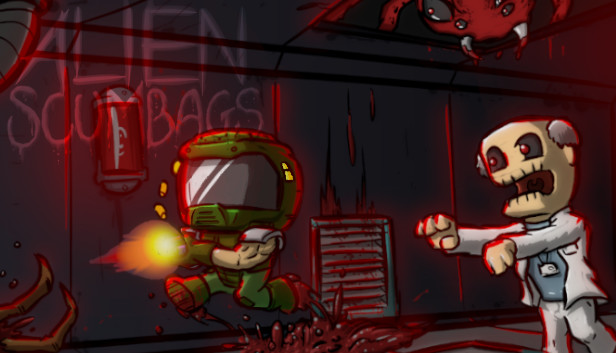
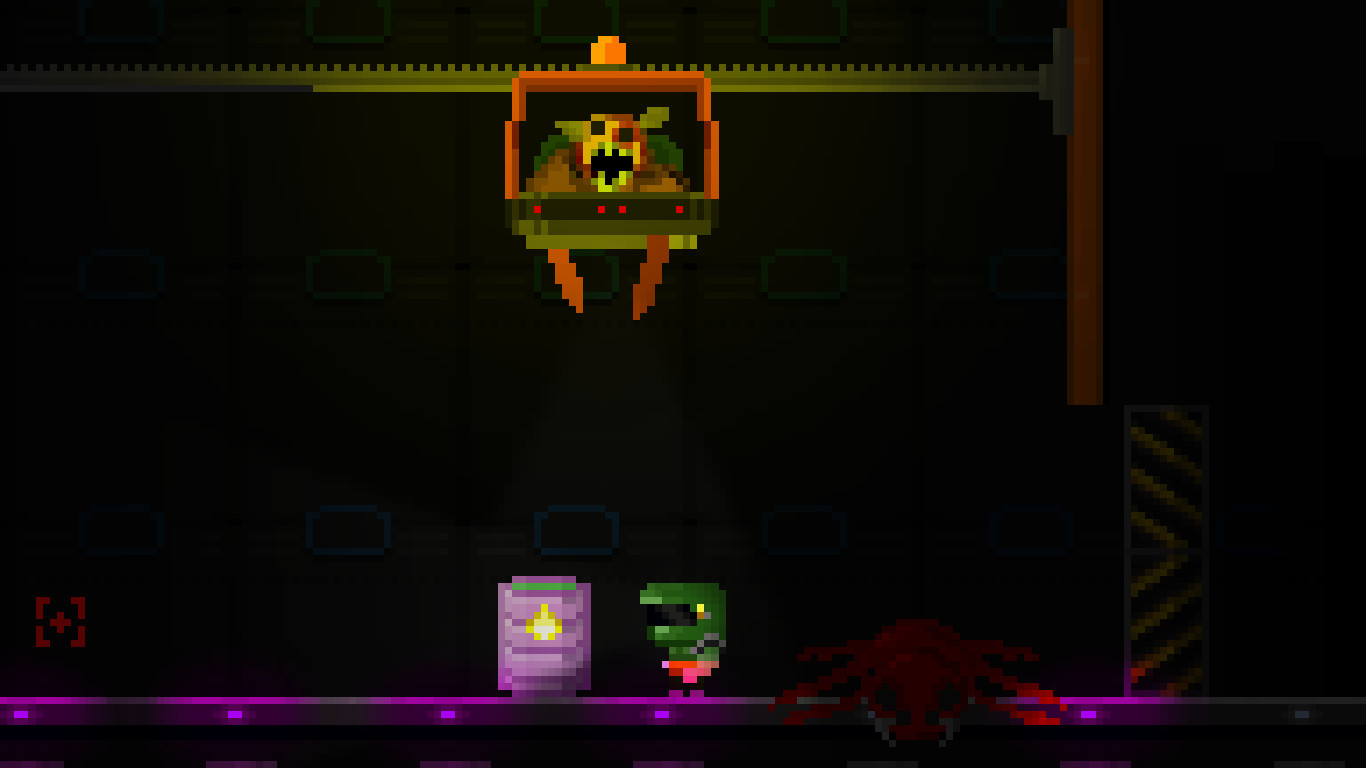
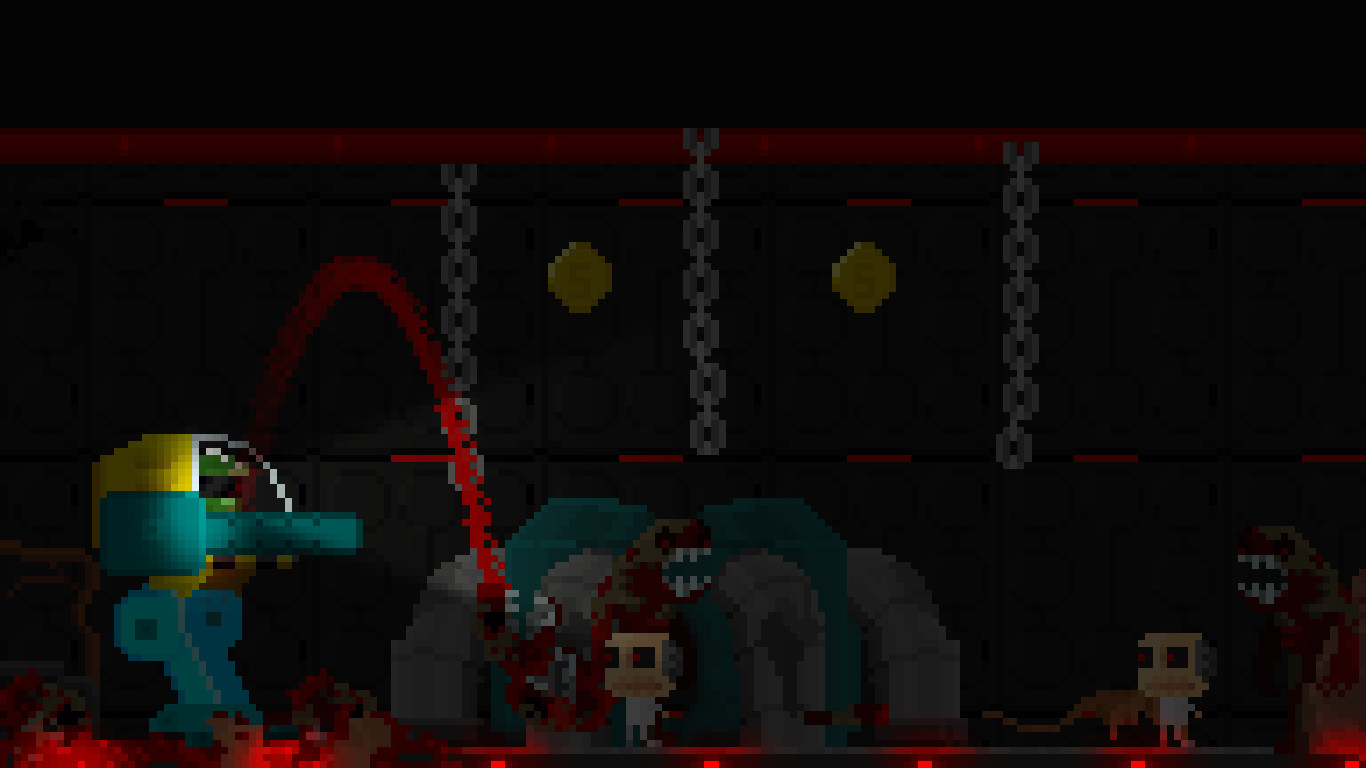
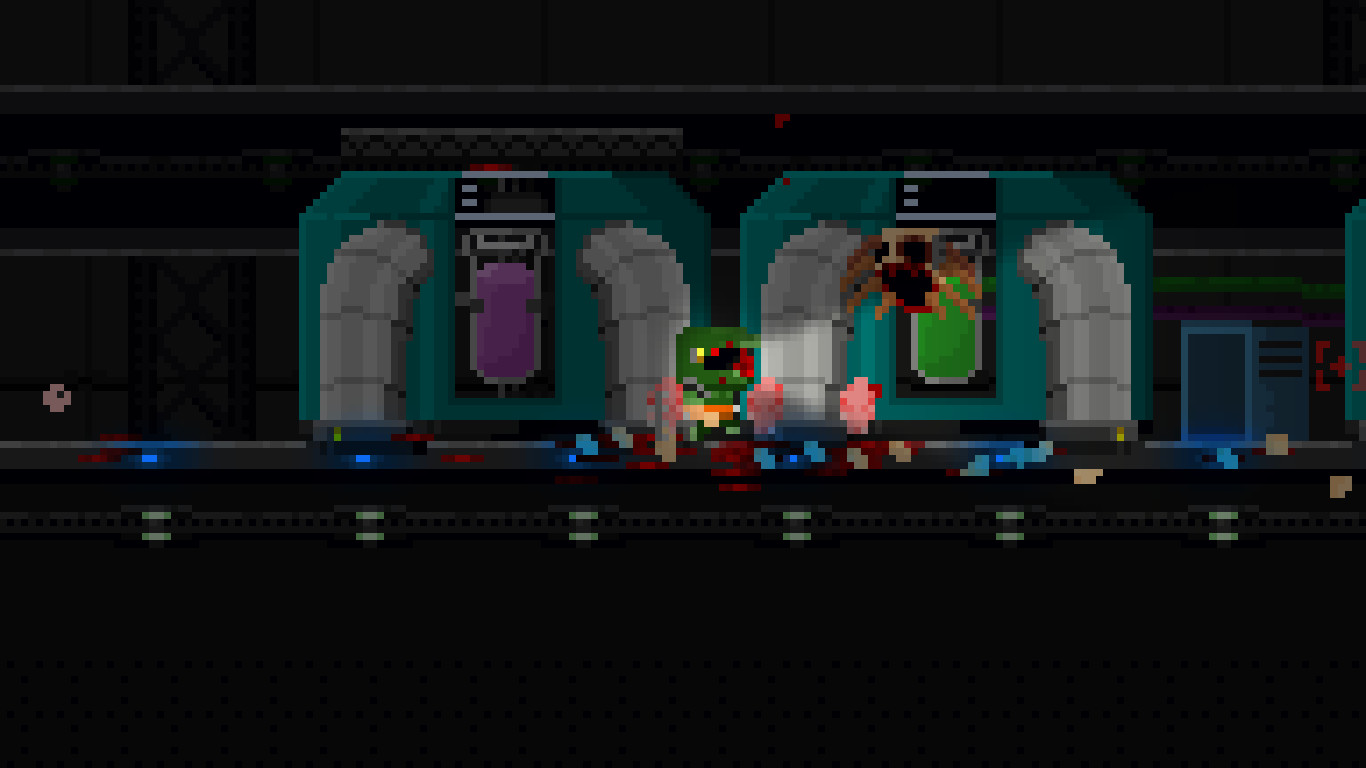
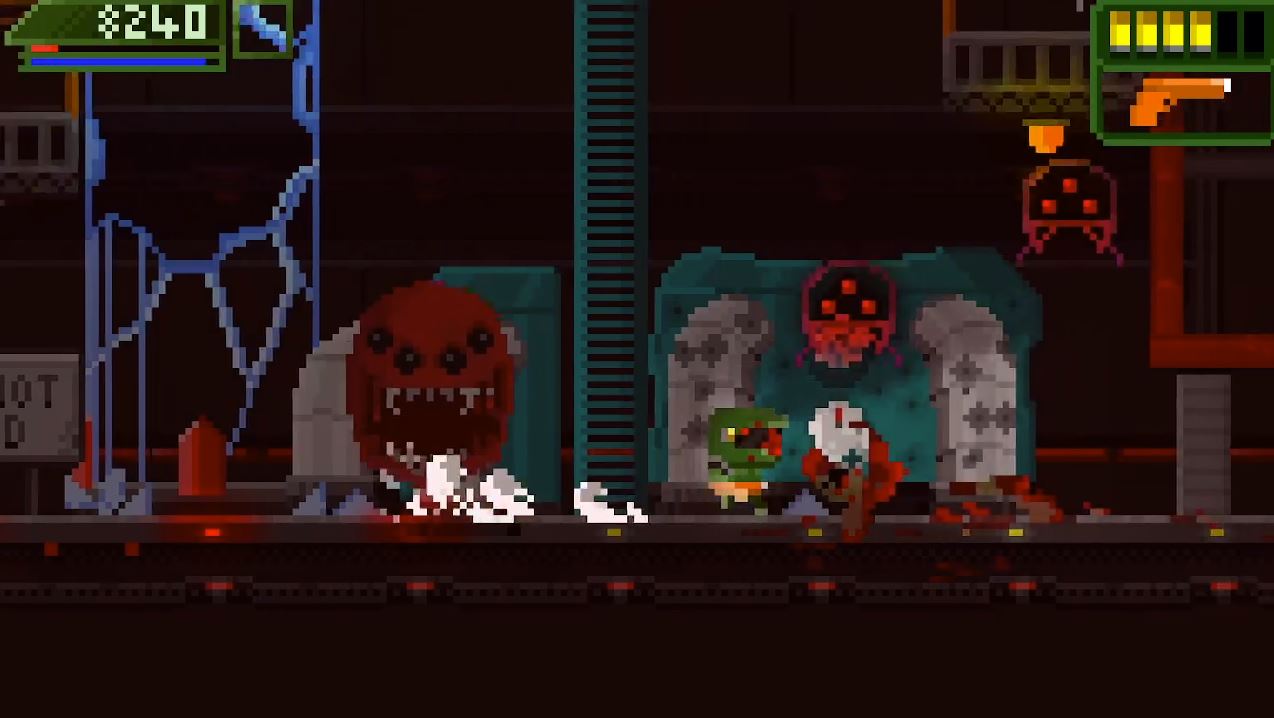
The first title from Southampton-based studio Monster Finger Games, Alien Scumbags, is an 8-BIT sci-fi side-scrolling shoot ’em-up survival horror game with light RPG elements. It presents a very balanced mixture of horror and comedy, littered with references to classic games. I’d been following this title for some months before its release, having drafted up a first impressions article and interviewed the game’s principal designer, James Ross:

https://scousegamer88.com/2020/05/09/alien-scumbags-first-impressions/

https://scousegamer88.com/2020/05/10/qa-with-monster-finger-games/

I’d been excited for the release of this game for quite some time, and when it finally made the jump from its original platform on Game Jolt to Steam, I wasn’t disappointed.

Graphics – 8/10

The game is set on a spaceship gone dark named the Nostrami, which is infested with hostile alien lifeforms. The best way I can describe the overall feel of the game is that it’s like an 8-bit version of Dead Space. Like the game Lone Survivor, it makes use of lighting despite its retro 8-BIT visual style. But in my opinion, this game makes better use of lighting than the former, as there is lighting from more sources, therefore making it look much more detailed, and there is much more atmosphere. 

The scenery design is also unprecedentedly varied for a game set in one location. There are references to other games scattered all over the place. And also references to popular horror movies like Alien and It. The game’s soundtrack also accompanies the horrific atmosphere of the Nostrami particularly well, in addition to making use of otherworldly synthesized tunes and sound effects designed to emulate the human heartbeat present in the first level. 

Gameplay – 8/10

With a gameplay structure similar to Doom, players are tasked with blasting their way through hordes of alien enemies and uncovering secrets throughout each level, such as hidden areas, additional perks, and easter eggs. There are also multiple characters to unlock (again, modelled after iconic video game characters), with their own unique abilities, giving the game replay value since each character offers a new experience with every playthrough. It’s a survival horror with the vast majority of focus being on gameplay, which, unlike many in mainstream survival horror series, does pretty well. 

Controls – 10/10

The side-scrolling genre has been redefined and reinvented over many decades in gaming. Therefore, the control scheme presents no issues in this title. It’s a very bread-and-butter style of play that both fans of retro gaming and newer generation players alike can appreciate. They will be able to pick up and enjoy it very easily without having to worry about the controls. 

Lifespan – 8/10

The game’s lifespan consists of around 20 hours of gameplay, which goes above and beyond many classic side-scrolling titles that gained popularity throughout the NES era, but there is also new content being planned for the game in addition, as the game is still being tweaked by the developers. In the future, depending on the game’s final lifespan when all content is released, the game’s score may have to be updated, but even in its current state, 20 hours is an exceptional amount of time for a game of its ilk to last. 

Storyline – 7/10

The basic premise of the game is extremely simple. Board the Nostrami and take the ship back from the horde of aliens that have killed the crew and invaded. There’s a comedic intro at the beginning, giving the player the rundown of the situation. But where the game’s story lies is in its backstory, which is discovered by the player as the game progresses. Provided they can find the crew recordings scattered across each level. It adds a real layer of horror that players may not necessarily expect going into it. It provides that unique balance of scares and laughs that’s quite frankly unusual for a survival horror title. 

Originality – 7/10

Although the game is one giant easter egg of references to gaming and popular culture, its unique balance of comedy and horror certainly helps it stand out among many survival horror series to have been released throughout the years. All the while keeping the emphasis on what truly matters, which is the gameplay. I’ve been frustrated by games like The Last of Us, Journey, and Everybody’s Gone to the Rapture. They’ve shown promise and not delivered on what was expected of them as games. But with this title, you know exactly what you’re getting from the get-go. And what it delivers is what players want. 

Happii

Overall, Alien Scumbags is an extremely enjoyable title. A labour of love that gamers old and new will not be disappointed with. It’s a scary, funny, and intense experience throughout, and I can’t recommend it enough. 

Score

48/60

8/10 (Very Good)

Soviet Jump Game: First Impressions

Although I spend a lot of time scouring the Internet in search of upcoming titles in development, there are still those that I fail to notice as they gain momentum across a widespread community of fans; even whilst the game is still in the early stages of development. I need to give a shout-out to my friend Antonia Fraser AKA Dolly Mix Cosplay for recommending this one, as, without her suggestion, I wouldn’t have even known this game exists. It’s entitled Soviet Jump Game and in my opinion, may become one of the most beloved future indie games in recent years once it sees full release and continues to garner popularity at the rate that it is now.

Developed by California-based outlet Fantastic Passion and published by Dan and Arin of the YouTube channel Game Grumps and currently on Steam Early Access as a free download, Soviet Jump Game is a 2D side-scrolling battle player vs player MMO, which has players battling against each other by either jumping on one another, Similar to how enemies are defeated in traditional Super Mario games or using various power-ups that can be found throughout the game’s map. After playing this for only a few short days, I’ve become hooked on it. I don’t normally player multiplayer games, generally preferring the single-player experience, but this game may very well be instrumental in changing my perception of how I view MMOs.

Graphics

Adopting a traditional 8-BIT visual style, the game’s conceptual design is largely inspired by Russian culture and the way of life under the Soviet Union before it’s dissolution back in the early 90s. There are several references to historical figures and events that happened during the USSR era, such as heads of Joseph Stalin that act like Thwomps from Mario, moving platforms in the form of tetrominoes from Tetris and stage designs alluding to the Chernobyl nuclear disaster. As a long-time Tetris fan and coming off the back of recently playing Russian Subway Dogs in particular, it stands as yet another example to me of how Russian culture has had a significant impact on video games. The scenery is very well designed and the game’s soundtrack threw me with just how stellar that is in addition; certain aspects of it reminded a lot of Shovel Knight in fact; another game soundtrack I think extremely highly of. 

Gameplay

The gameplay is extremely simple in its basic premise, but exhilarating on a scale that I didn’t think possible going into it. It’s simply a matter of the last man standing at the end of each round, including around 38 different players at once generally speaking, battling to stay alive, eliminating other players and collecting tokens used to purchase new characters or customize the characters players already have with new skins, emotes and taunts. I’m biased towards this game to an extent, due to the fact that I’m relatively good at it, having now won 30 games in only a few days of playing. Speaking honestly, multiplayer games generally tend to put me off, since, by the time I come to play one, there is already an influx of people playing who have mastered it and are easily able to dispatch me, bogging down the experience. But probably because this game has much less of a learning curve than an MMO first-person shooter for example, I found that it was easy to get to grips with and learn how to improve with more experience. There’s also a great sense of satisfaction to be had after winning a game to have won out over so many other people at one given time. 

Controls

As the gameplay concept is simple, so too are the controls. The biggest learning curve there is involved with this game is understanding how each power-up works and how they can be best employed to suit the player’s situation. The controls are perfect; as responsive as what a game like this is needed.

Originality

For a game that adopts so many traditional gameplay features that have been seen time and time again throughout the industry, it’s staggering how much this game stands out despite its obvious influences. Where it does stand out is in its conceptual design as well as it’s a differing approach to gameplay compared with other 2D side-scrollers. It almost feels like a genre of its own with how it plays out. It’s also unusual for a side-scroller to have this much variety in terms of unlockable material and gameplay elements and for it to have virtually unlimited replay value. 

Overall, Soviet Jump Game, upon release is set to be a beloved indie classic and I recommend anyone reading to give it a try. The game seems practically complete, but if there’s even more than Fantastic Passion has to add to this already robust title, then I’m excited to think of what the final product will have to offer in comparison to the game’s current build. 

The Meldstorm

Q&A With Liam Dehaudt

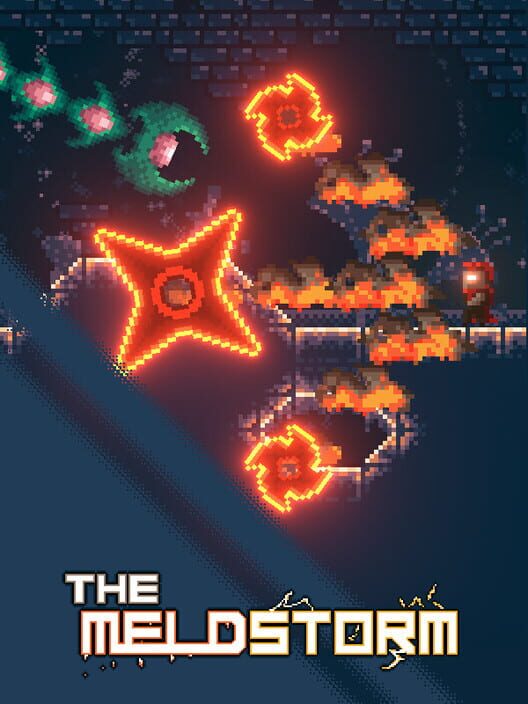
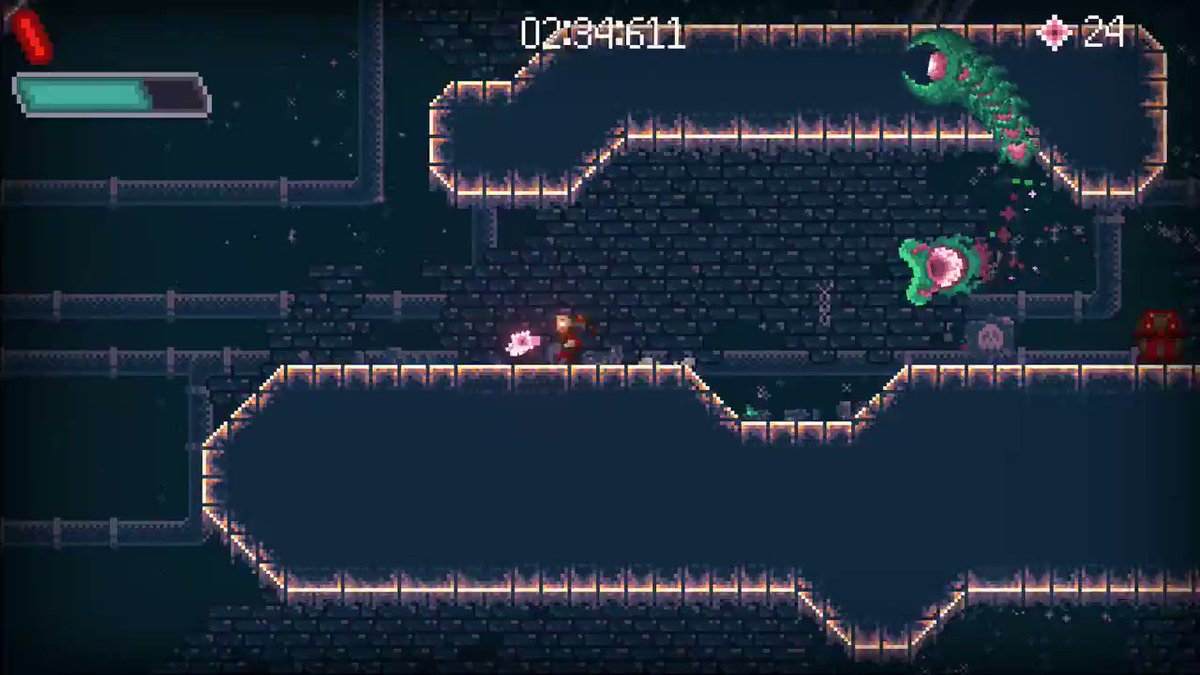
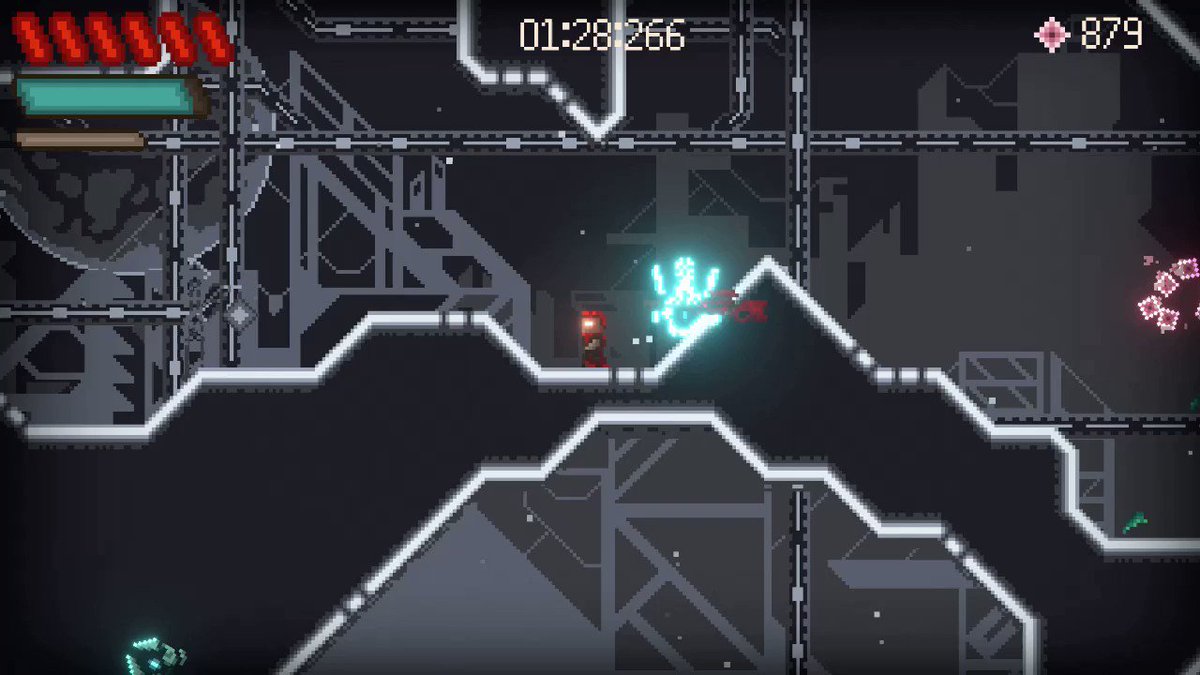
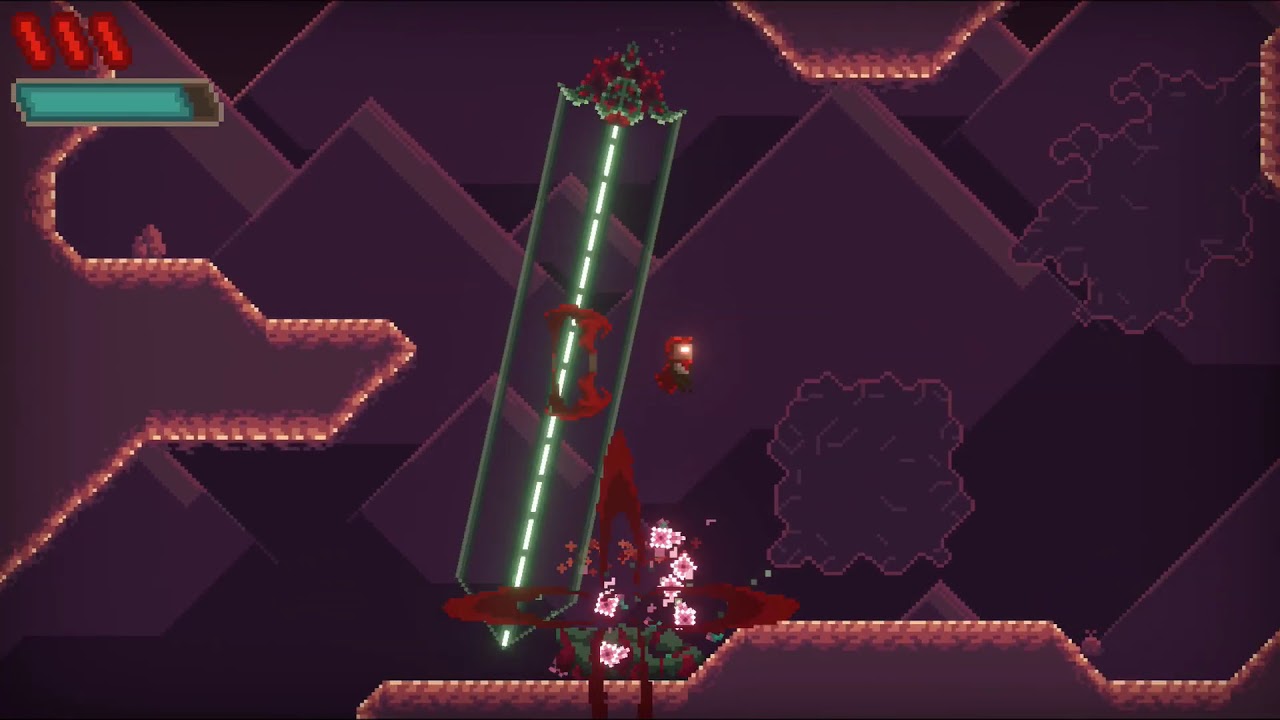
Whilst scouring the internet for new indie game prospects, I came across another title that caught my attention and was slated for release shortly. The Meldstorm is a 2D side-scrolling rogue-lite with item synergy elements. Players will be able to customize their weapons on the same level as games like Mothergunship and Fallout 4 with the game revolving around the player character (either a knight, rogue, or sorcerer, depending on the player’s choice), undertaking the deadly pillar trials: a series of tests requiring combat with an ungodly number of alien enemies and puzzles to solve. Wanting to know more about this game, I contacted its sole developer, Liam Dehaudt, and put forward to him a series of questions regarding how development has progressed and what players can expect to see when the game is fully released on Steam. Here’s what Liam had to say about The Meldstorm:

The Meldstorm 1

What were the influences behind your game? 

Risk of Rain influenced the item system, but I wanted more deliberate combat (fewer but more powerful enemies), so I borrowed a lot from Gungeon’s enemy feel, except as a platformer.

What has the developmental process been like?

It’s fun, it started as a hobby but became a bit more. I’ve worked on a few projects before, so this is like a test to put everything I’ve learned together. Of course, there are ups and downs, but that’s to be expected.

How close are we to seeing the finished product? 

I honestly don’t know. I would have a few months of development left, but since I just got a job, it’s most likely going to be a while longer. Let’s say late 2020 to early 2021, but that’s a super vague guess.

The Meldstorm 2

What has been the most exciting aspect of development? 

Programming is my jam, so making the big systems has to be my favorite part. I had a ton of fun making the mods interact with the weapons, and making a general system to create new weapons easily.

What has been the most challenging aspect of development? 

Marketing is tough and makes me want to pull my hair out sometimes. I’m quite new to it, so I’m learning a ton, but for now, I’m still pretty clueless.

What has been your favorite boss fight to have created so far?

The final boss is cool and pretty different. I got some cool feedback from Reddit that helped me make him look a lot cooler, too. You get the first phase to learn his attacks, then he spices things up in the second.

The Meldstorm 3

How well has the game been received so far? 

People seem to like it. The few players I’ve had try it had fun. As mentioned prior, I am struggling with marketing, which I think is slowing me down a lot, but I think my current audience likes what I’m doing.

What platforms are you looking to bring the game to?

PC/Mac first, if the response is good, then I’ll consider everything else.

Do you have any advice for aspiring developers who may be reading this? 

Manage the scope of your game to something doable. Try to stand out. Aim for the top but expect not to get there. Reach out to people who are working on stuff you like.

The Meldstorm 4

Where on the Internet can people find you? 

I post all my work on Twitter; you can also DM me there if you want: 

https://twitter.com/TheMeldstorm

Also, if you like my game, wishlist The Meldstorm:

https://store.steampowered.com/app/1220300/The_Meldstorm/

Do you have anything else to add?

Have a nice day ^^

I also want to thank Liam for agreeing to this Q&A and hope you guys enjoyed reading more about The Meldstorm as much as I enjoyed drafting it up. The Meldstorm looks like a very promising game with virtually an infinite amount of replay value, and I’m certainly excited for what the final game will have to offer players compared to its current build. I will draft up a review of it upon release, but in the meantime, I wish Liam the best of luck with his debut title.

Game on,

Scouse Gamer 88

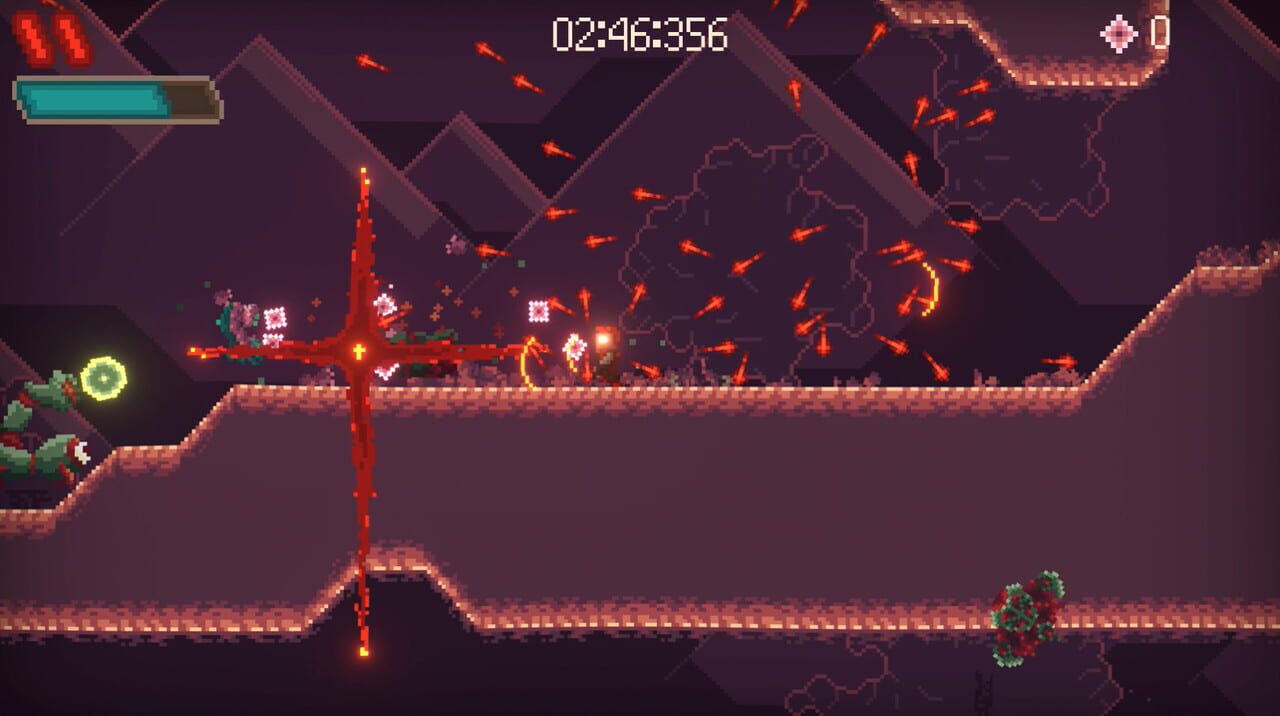
Axiom Verge (PC, PlayStation 4, PlayStation Vita, Xbox One, Wii U, Nintendo Switch)

Axiom Verge

Developer(s) – Thomas Happ Games

Publisher(s) – Thomas Happ Games

PEGI – 12

Developed solely by former Petroglyph Game engineer Thomas Happ and five years in the making, Axiom Verge was released back in 2015 to overwhelming critical acclaim from critics, garnering a plethora of favorable reviews and receiving a nomination for the best indie game award for 2015 at The Game Awards. I felt no different about this game. It is most definitely one of the better Metroidvania games that I have had the pleasure of playing, delivering in every aspect.

Graphics – 9/10

The game is set on a planet called Sudra and, in lieu of the Metroidvania tradition, features many varied and wonderfully designed environments with a lot of different enemies to contend with throughout. There is also a species of giant humanoid robots called the Rusalka. These are unlike most things I’ve ever seen in sci-fi. Most gamers will immediately be reminded of Super Metroid when looking at this game. As indeed I was.

But there are elements of the conceptual design that reminded me of other games, too. For example, the environments, which look almost alive with floors and walls moving and pulsating, reminded me a lot of Abadox for the NES. Although in the case of Axiom Verge, there’s even more attention to detail put in. The Rusalka also adds a certain eloquence to the conceptual design of this game. Reminding me in particular of the film Ghost in the Shell. 

Gameplay – 9/10

The game plays out ostensibly like a traditional Metroidvania game, with the player having to navigate through a 2D open world and constantly backtracking to reveal new areas or secrets hidden within the game. But what makes Axiom Verge as exciting to play as it is is its combat. The player is able to find a variety of different guns throughout and to strategize according to whatever enemies are in front of them. The world of Axiom Verge is reasonably big. So there is a lot of backtracking involved as players gain new abilities to access new areas. There is also a speedrun mode for more adept players who wish to complete the game in record time, which gives the game some additional replay value. 

But regardless of whether players may be veterans or entry-level, it’s a reasonable challenge, I thought. Not too hard to the point of being inaccessible, but not too easy either. More importantly, however, the game is extremely satisfying to immerse in. Backtracking to old locations is always fun, as the opportunity to experiment with new weapons constantly presents itself, and there’s a great deal of enjoyment to be had in this respect. The boss fights are also as intense as those of any Metroidvania game, again requiring players to strategize according to what weapons they may have, as well as enemy attack patterns. 

Controls – 9.5/10

The game’s control scheme also presents no problems for the most part. It essentially uses the blueprint of Super Metroid in its general gameplay and weapons system. As well as how ammo and health work. The one minor gripe I had with the controls, however, concerns how the address disruptor works. 

The address disruptor is a gun that either corrupts or de-corrupts enemies or certain walls. This is a tool that needs to be used in order to bypass certain areas of the game. The problem is that if a player removes a certain section of wall and not another, if the player fires again, it can reverse the process for the section of the wall that’s already been removed. Leaving the player having to slowly reverse the process again in order to traverse through walls. However, it’s something that’s easily rectified anyway, and I can’t fault the developer for trying something new. More important than my concern is that this is a game mechanic unlike many others seen in the Metroidvania genre. And it adds more to the game than it takes away. 

Lifespan – 7/10

On average, the game can be made to last around 15 to 20 hours. Which, for a Metroidvania game, is fairly impressive. A sequel is currently in development and is scheduled for release in the autumn of 2020. So here’s hoping that the lifespan is increased with the new game. Without giving the end away, I think there will be a great deal of scope to expand the lifespan for the sequel. But the first game lasts more than an adequate amount of time.

Storyline – 8/10

The story follows a scientist named Trace, who is running a lab experiment in New Mexico. Suddenly, something happens in the lab that causes an explosion. After which, Trace wakes up on the planet Sudra and finds himself embroiled in a one-man fight for survival. All while uncovering the wonders and mysteries behind the planet Sudra and helping the Rusalka defeat the entity known as Athetos. As the story progresses, it unfolds into something a lot deeper. Which makes for a story, which, like the visuals, is unlike a lot of things I’ve seen in sci-fi.

IGN gave this game a somewhat less favourable review than me, citing several problems they found with the game that I whole-heartedly found myself disagreeing with. One such criticism was that they thought the story was forgettable. But in my opinion, the story is anything but forgettable. The most prominent theme throughout the story involves moral ambiguity. The intentions and the character of the Rusalka most definitely come into question more than once and will make the player think whether what Trace is doing is right. Which once players play through it, it will make them anticipate the sequel even more. 

Originality – 8/10

Again, the originality of this game has been brought into question by many other reviewers, due to its obvious similarities to the likes of Super Metroid and Xeodrifter. The game clearly has its influences, and most fans of the genre will be able to identify them from the get-go. But, outweighing its similarities to other games are its differences. The conceptual design of this game really makes it stand out from other titles in the genre, and its soundtrack is exceptional, sounding even more otherworldly than Super Metroid in my opinion. Its story, as I said before, is also not as straightforward as Samus Aran striving to defeat Ridley. But rather than making the player question what happens at the end was for the greater good. Not just for Trace, but for the planet Sudra. 

The fact of the matter is that this game comes into its own with potentially massive mythology to be spawned from it with the introduction with even more games and scope for an even bigger plot to unfold along with it and in my experience, except games like Dust: An Elysian Tail and Ato, there haven’t been many Metroidvania games that have made me feel like what I felt after having played this one through to the end. 

Happii

Overall, Axiom Verge is definitely a must-have for fans of the Metroidvania genre. It’s also a must-have for any fan of science fiction. It’s a very enjoyable game with variety in combat and conceptual design, with an extremely memorable story and a lot of promise as a big gaming franchise for the future. 

Score

50.5/60

8/10 (Very Good)

Alien Scumbags

Q&A With Monster Finger Games

This week, I have been reaching out to a vast number of independent video game developers to discover new titles in the works throughout 2020. One such game is Alien Scumbags; A 2D 8-BIT side-scroller survival horror shoot ‘em up developed by Monster Finger Games operating out of Southampton, England. The game offers players a balanced blend of horror and comedy, with it being set on the Nostrami. A ship that has gone dark and is then invaded by a hostile alien race, which the players must combat to survive. Whilst on the way, uncovering what happened on board the derelict spacecraft. I composed an article that details my first impressions of the game in its preliminary stages of development:

https://scousegamer88.com/2020/05/09/alien-scumbags-first-impressions/

However, I have also been in contact with the game’s principal designer, James Ross, who agreed to answer a few questions ahead of the game’s release. Regarding how the game’s development is progressing and what players can expect to see with the finished article. Here’s what James had to say about Alien Scumbags:

What has the developmental process been like?

The development has had its ups and downs, it’s awesome to think how much can happen in 2.5 years spent working on a game. Life can get in the way, and it’s tough to push through it. One of the hardest things was creating the lighting system. As ending up rebuilding the existing levels from scratch. The way the lighting looks now is so worth it, though. I’ve learned a lot on the development journey. One lesson, in particular, is to always keep backing up regularly. I lost around 3 months’ worth of work just before Christmas, which hit me hard. But again, Alien Scumbags has come back better than before.

How close are we to seeing the finished product? 

I aim to have it finished by the end of the year. Of course, we still have the game in early access. As we like the idea of people who play it having the opportunity to have their say. 

Though the influences for the game’s style of play have been outlined on your GameJolt page, where do you draw influence from, where the story is concerned? 

It’s a tough one, as I just came up with the story out of the blue. I watch a lot of horror films and wanted the story to reflect my love of that film genre. A lot of what created the story is the monsters that I created before it was created. I needed to be able to link everything together.

What has been the most exciting aspect of development? 

Seeing it grow from being a game jam title to something that people really love to play. I would also say managing to create the lighting system was super exciting. As I really enjoy playing around with the different effects I can create with it.

Alien Scumbags 2

What has been the most challenging aspect of development? 

Staying motivated when something goes wrong, losing all my data, and issues in my private life, sometimes make you want to throw the towel in and give up, not to mention having anxiety issues too, can also give you the feeling that your game is not good enough. I have kept pushing forward, though, and every step is worth it when I look back. 

How important has community feedback been in shaping the game into what it is now?

Extremely important, for example, the game didn’t have an aiming reticule, to begin with, no run, no air boost, and right at the beginning, no health bar. A lot of these improvements may not have happened if it weren’t for the amazing Streamers/YouTubers and other devs who have given their feedback. 

What further cultural references are being planned for inclusion in the final game? 

The cultural references are things that tend to be added as my mind thinks of them. I can tell you that I have planned for a while to add some other gaming references, including Metal Gear Solid; you will have to wait for the next update to see that, though. 

How well has the game been received so far?

So far, people have enjoyed playing it; throughout its development, people have found little bugs and such, but the majority of people have enjoyed it. I make sure to patch out any issues people find on streams asap, as I want the game to be as polished as it can be. We have built a small community of great people and hope this continues as we continue with Alien Scumbags.

What platforms are you looking to bring the game to? 

PC is the only platform at the moment; however, we would be open to chatting with publishers about bringing it to other platforms if there is interest.

What would be next for Monster Finger Games? Have further ideas for games been considered yet?

Not sure what our next title will be following Alien Scumbags. We had started work on Super Bombardier, but who knows what the future will bring.

Alien Scumbags 4

Do you have any advice for aspiring developers who may be reading this? 

The best thing to do if you want to make something is to do it. I would also say to try to think about something small initially and work up from that. Releasing a game teaches you a lot of lessons. Above all else, enjoy the journey and don’t think too much about the finish line.

Where on the Internet can people find you? 

I am most active on Twitter @kkindiegame. You can email us at:

monsterfingergames@mail.com 

We have a Facebook page too, at https://www.facebook.com/monsterfingeruk/. We also have a website at www.monsterfingergames.com 

Do you have anything else to add?

I want to thank you for this opportunity; it’s been great, and I enjoyed chatting. DM me anytime. I also want to say a massive thank you to every Streamer, YouTuber, Blogger, and fan that has supported the development of Alien Scumbags.

Alien Scumbags 4

I would also like to take this opportunity to thank James for agreeing to answer the questions I had and to wish him the best of luck with the game. I certainly had a lot of fun playing Alien Scumbags even this early on in development, and if anyone wishes to experience this title for themselves, the game is available to download from the team’s GameJolt page via the link below:

https://gamejolt.com/games/alienscumbags/312460

I hope you guys enjoyed reading this article as much as I enjoyed composing it, and I hope you all enjoy playing Alien Scumbags.

Game on,

Scouse Gamer 88

Q&A With Blake Speers

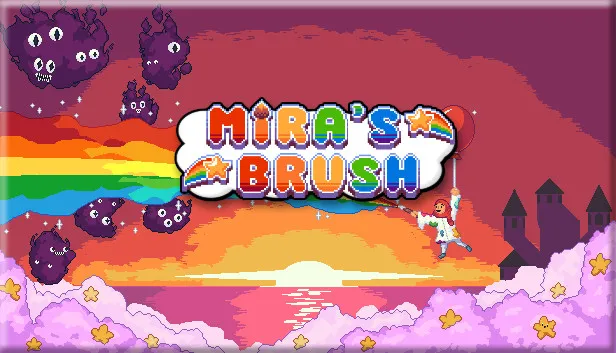
Once again, scouting Kickstarter for new and exciting-looking video game projects on the indie scene, I came across a wonderful-looking 2D side-scrolling platformer called Mira’s Brush developed by Canadian developer Blake Speers. The premise of this is that the game’s titular character, Mira, is tasked with restoring color to the world of Chromaland.

The game boasts several very unusual and potentially groundbreaking gameplay features. Such as changing an enemy’s color and stealing their shape to gain new abilities, similar to Kirby when he swallows enemies.

The developer has also outlined plans on his Kickstarter page to include alternative routes throughout levels, secrets to uncover, varying degrees of difficulty for both seasoned and entry-level gamers, and an array of what could turn out to be some very intriguing boss fights.

I got in touch with Blake to see if he would answer a few questions I had about the game, and this is what he had to say about Mira’s Brush:
What were the influences behind your game?

Short answer: Jumpman (C64), Kirby’s Adventure (GB), Epic Mickey, Mario Odyssey/Galaxy 2

Longer Answer:
I was one of the first generations of kids to grow up beside home video game systems. Back in 1982, when I was a toddler, this guy Randy Glover had the idea to make a “clone” of Donkey Kong. But got carried away playing with the physics and game mechanics. The result was “Jumpman,” a game with more unique mechanics from level to level than I’ve seen in a game until now, maybe Mario Galaxy.

Basically, every level had a new kind of idea, including one where you shoot clones, an all-black level that appears as you clear through it. And one where you throw javelins at dragons that look kind of like somebody crushed the Pink Panther in a pixelated trash-compactor.

I was obsessed with that game as a kid. And when I turned 16, a friend and I made my first big game, Flags of Doom, kind of an awkward Windows 3.1 clone of Jumpman. But with all the new levels.

Flags of Doom came out back in the days of trading bootleg floppies. And if you search hard on the Internet, you can find a tiny number of people who played it and liked it. It ended up on a couple of those free software CDs that come with magazines in Eastern Europe.

Until Mario Galaxy came out, I didn’t see another game with that kind of premise. Mario games have always been inventive. But something felt really fresh about the compendium of Galaxy 1 and 2.

When I decided it was time to make a game that people might actually intentionally play, I went through my big book of ideas (I have a lot of ideas, most of which are totally unworkable). And found a concept for color stealing that was a bit like a Kirby game.

I decided to take the same experimental approach I’d seen in Jumpman, Flags of Doom, and Mario Galaxy, and jam it with the power-stealing gameplay of Kirby games and the color mechanics of stuff like Epic Mickey and De Blob. 

Around that time, I got into Mario Odyssey, and I loved the open-ended sense of exploration, with so many options for beginner and more advanced players. That’s when I decided on a very open-ended, option-heavy exploration style.

You can basically pop into any level and beat it. Or just farm secrets for that completion line. Beating the whole game should be “easy,” But finding some of the secrets will mean taking the harder path.
What has the developmental process of Mira’s Brush been like? 

I’m a dad with a regular job in an office. I like my job. It’s interesting enough. I also have two kids. One in Kindergarten (Nursery in the UK) and one in Grade 3 (Year 2 in the UK). The development has been spotty. Learning the Construct 2 engine (easier than pure coding, of course), and playing with the edges of what is possible.

I’ve basically been working every morning until I have to leave, and every night once the kids are asleep, I’m essentially asleep at the screen. It’s tough, but I love the challenge of it.

How close are we to seeing the finished product? 

Based on my current level of progress and how much is still on my checklist, I should have a final version in late October. And be ready for launch in mid-December. I’ll have some demos for testers along the way.

How instrumental has the OpenGameArt community been in terms of the game’s conceptual design? 

Fundamental. All my basic tilesets come from there originally. I’ve since done a bunch of edits for different terrains to make them stand out a bit. But without those sets and a few key enemy sprites, I’d still just have a prototype. I am learning to push pixels and slowly getting better. But I still turn to the OpenGameArt community often for inspiration or templates.

Part of my goal with this Kickstarter is to enlist more help to make the art stand out a bit more. Make it more unique to this game. And then give some of that art back to the community in the form of original tilesets.
What has been the most exciting aspect of development?

I absolutely love it when an idea finally works. This isn’t one of those “mob and jump” platformers with a lot of repetition. At almost every level, I’m learning something new about scripting, about game physics. And at every level, I bang my head against the screen until it finally works.

What has been the most challenging aspect of development?

The hardest part for me is all the fiddly bits, UI, and physics. I love designing levels, but a lot of the coding and art is beyond my own abilities. This means a lot of research, practice, and reaching out for help.

Have you had much experience with art, and if so, did those experiences have an impact on the development of the game? 

I’m not a visual artist by any stretch of the imagination. Even my scribbles are outside the lines. I did take art history in high school. And my wife used to work in art galleries. She took me through the various galleries of Europe in our 20s (we were working and living in England at the time) and showed me the history behind some of our favorite pieces.

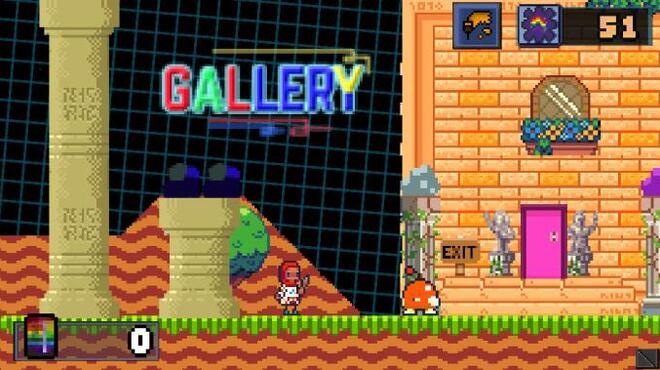
Each world of Mira’s brush is “inspired” by art movements. But I wouldn’t say most gamers will notice; it’s not in-your-face, more just the theme of each world. For example, the first world is inspired by local indigenous art and local artists of renown. Like Emily Carr (who also acts as the jumping-off point for a boss in the game).

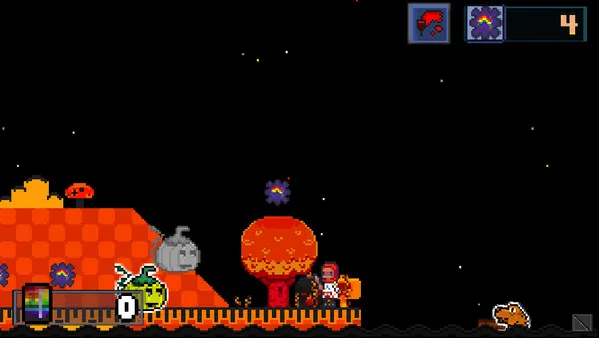
The second world is a mash-up of “primitivism,” cave art, and the neon aesthetic of the ’80s and ’90s. But again, you’d hardly notice while playing. It’s just a way of breaking up the worlds in a way that’s different from the “ice world,” “fire world,” “desert world,” and “clouds.”
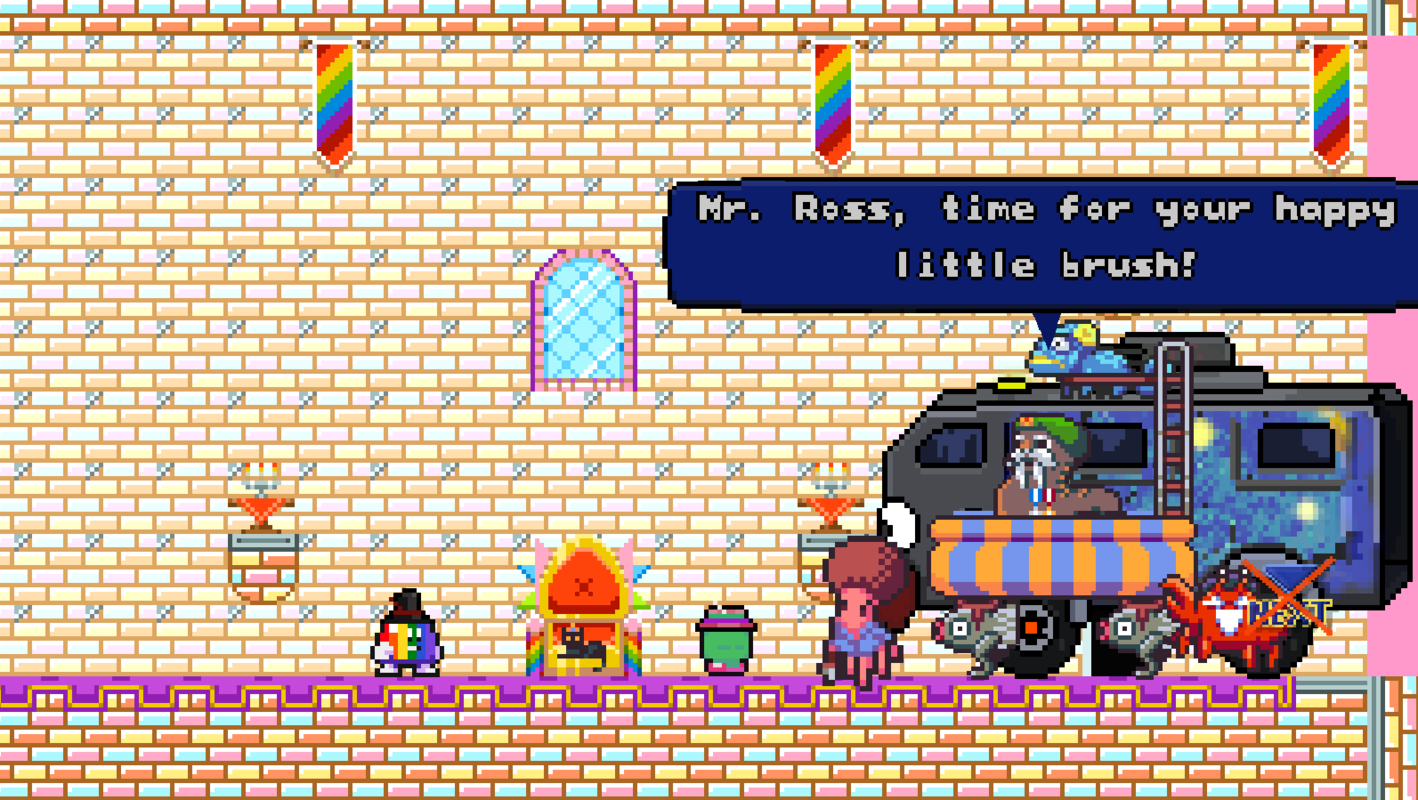
How well has the game been received so far? 

I would say all the responses have been super positive, but we have a very small number of people who have seen it at all yet. The few that follow closely are exuberant, so hopefully, I can meet their expectations.

Was there a particular genre of music that influenced the game’s soundtrack? 

The game was composed entirely with Beepbox, a web-based tool for writing 8-bit (and now 16-bit) choons. And I tried to keep it poppy and fun. The music is really classic “game-music” in style. I’m still learning, and only the best stuff I can make ends up in the game.

All my stuff is heavily inspired by the great Chiptune artists from the Midlands to the northern half of England and from Ireland, people like Rob Hubbard, Marin Galway, Tim and Geoff Follin, Ben Daglish, David Whittaker, etc. I’m not at their level, but they inspired me to learn and try.
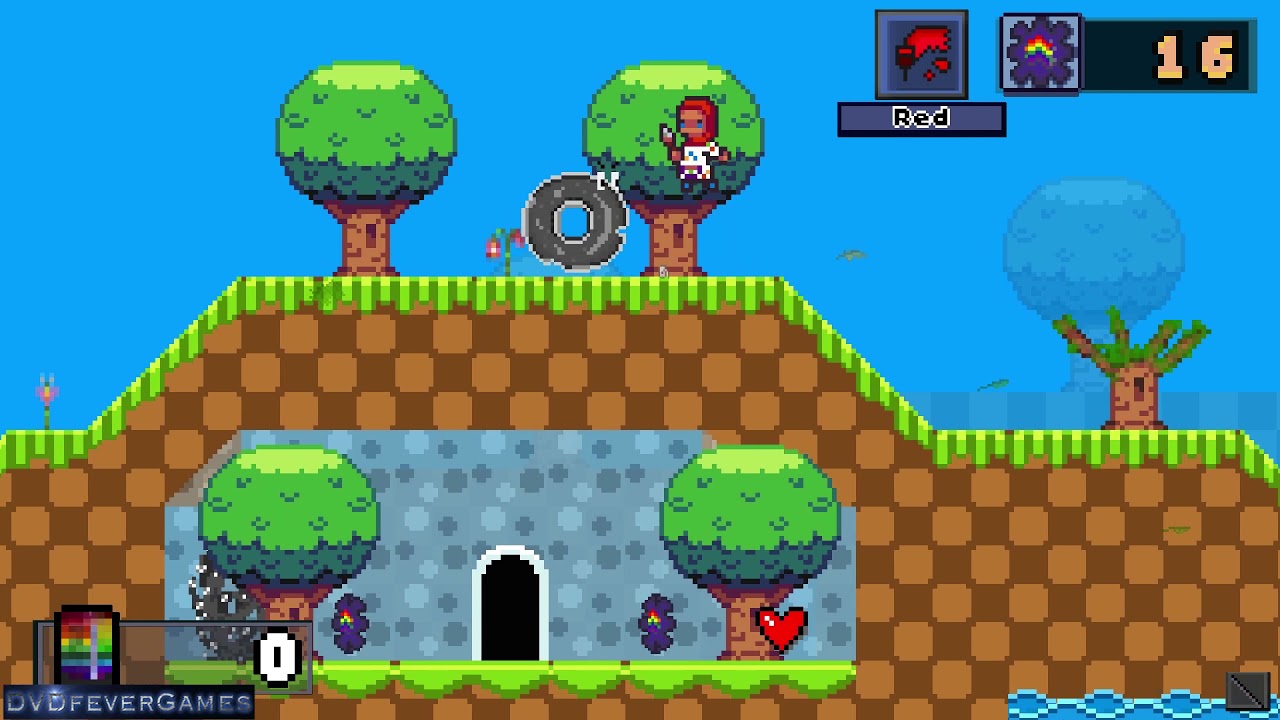
What platforms are you looking to bring Mira’s Brush to? 

Right now, the game is for PC only. If I make my stretch goals, I’d love a Switch port, and maybe a PS4/5 store item as well. Nothing is off the table if I get the funding for it. For now, Steam.

What has been your favorite area of the game to have designed so far out of so many vibrant and colorful environments?

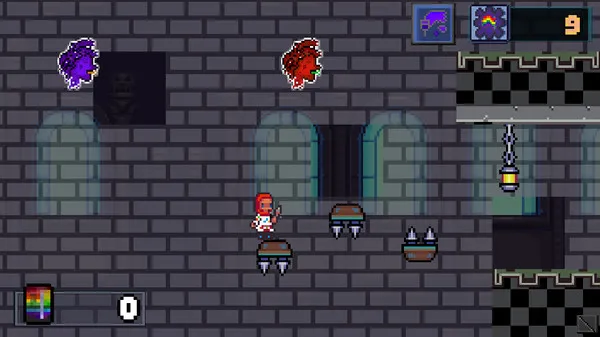
Hard to say. The urban/modern art world (Tagspire City) is just gorgeous, thanks to the help of a dude called GfxKid. But the best-looking levels are in Trois Kingdoms. A world-spanning Egyptian, Greek, and Medieval art history with rich purple castles and dark, orange temples. Also, I’m just starting the design of Abstraxis, the abstract world. And the gameplay in that world is going to be nuts.  

Do you have any advice for aspiring developers who may be reading this? 

Listen. As of this year, I just turned 40. I have kids, a regular job, and other hobbies, but I didn’t want to wait until I was retired to start getting these games out of my head. Start now, and set yourself a weekly schedule so you get stuff DONE. My own family gets prizes (dinner out, or maybe doughnuts) when I hit a major milestone, and I don’t want to let them down. It pushes me to keep going.

Also, if you’re younger, don’t be afraid to take a regular, boring job. I like my boring job, and it fires me up to get creative in the off-hours. Plus, it pays the bills, which is how I’m able to focus on getting funds to improve the game rather than make rent.

Every dollar of the Kickstarter will go directly toward development, which really makes the whole project more stable and achievable. I work more slowly than if I quit my job. But the game, at least, is safe; nobody’s going to come and repossess my computer.
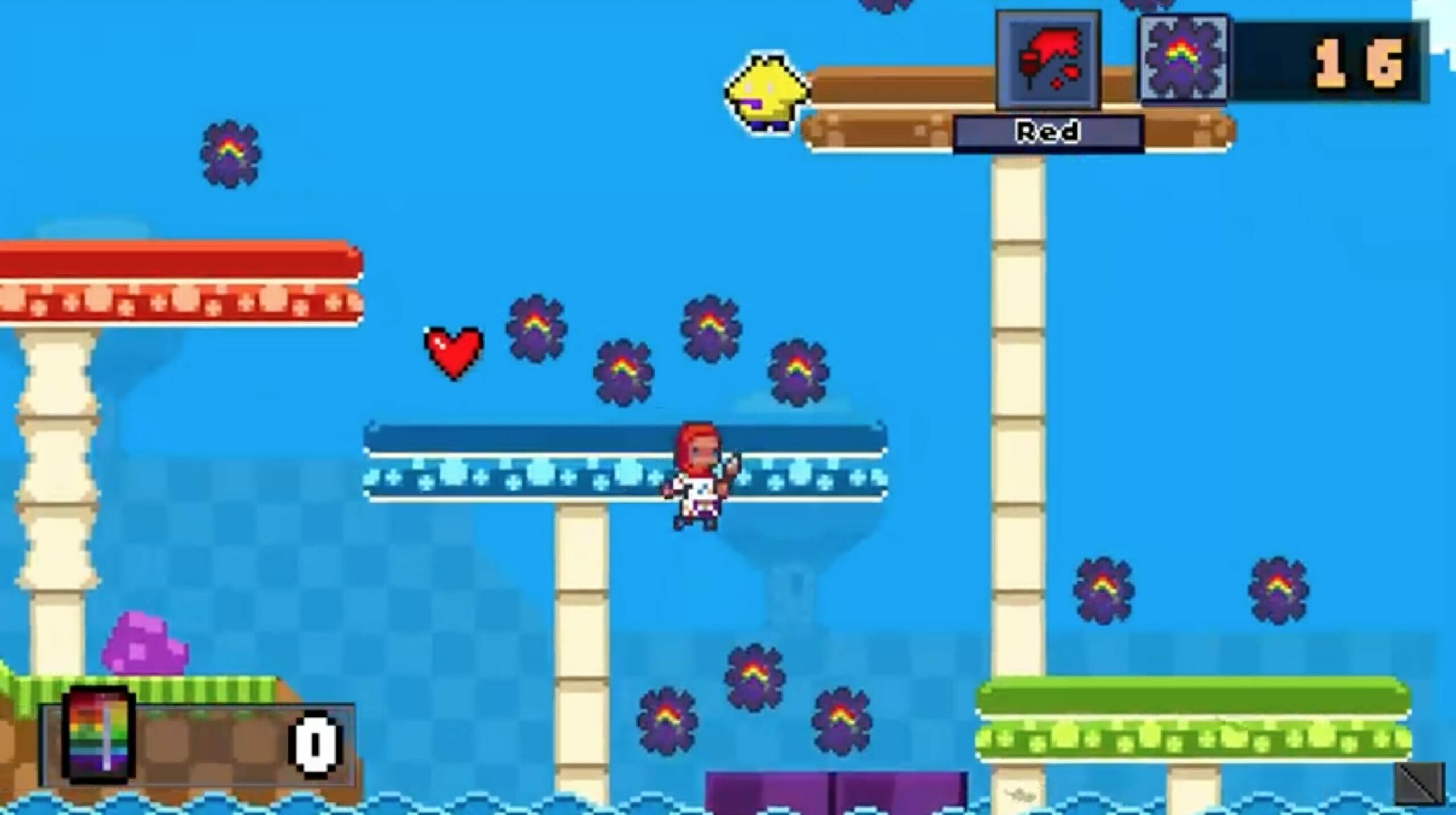
Where on the Internet can people find you? 

Mira’s Brush does have a YouTube channel, and I do frequent Reddit, but the best place to follow progress is on Twitter, @MirasBrush. That’s where I’m most active, sharing everybody’s awesome projects and uploading new chiptunes daily.

Do you have anything else to add?

No, I really enjoyed this opportunity and hope people check out the game. My Kickstarter isn’t a charity. I don’t want a cent for me, it’s all about making the best game I can, so people want not just to play it, but complete it.

Thank you!

-Blake
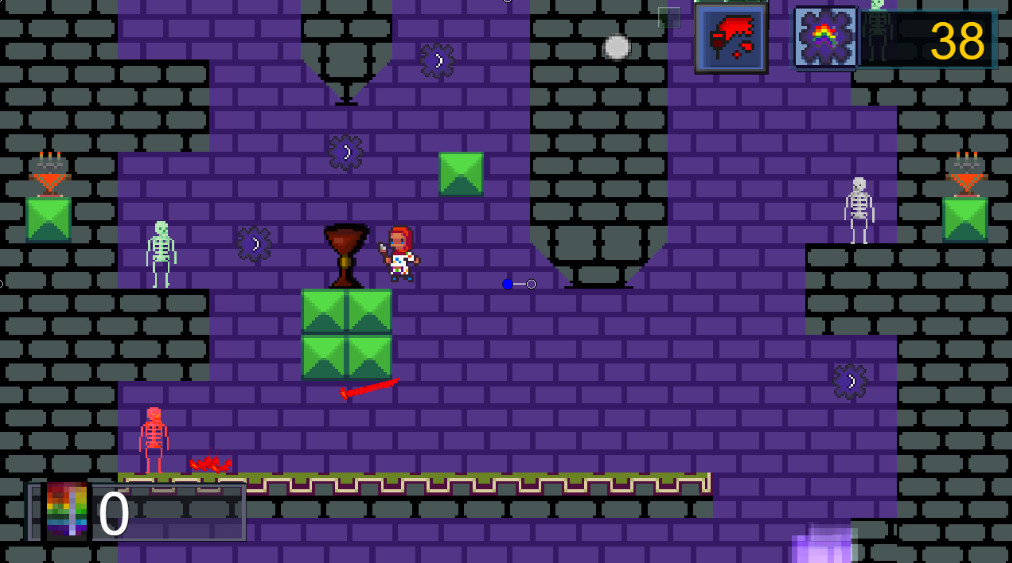
I’d also like to take this opportunity to thank Blake for agreeing to speak about his game and to let you know that the Kickstarter project is live now. And you can back it via this link to help bring this awesome-looking project to life:

https://www.kickstarter.com/projects/mirasbrush/miras-brush-the-cute-colour-based-platform-game

I hope you guys had as much fun reading about Mira’s Brush as I did talking with Blake and discovering this potentially wonderful game. And I wish Blake the best of luck with the campaign.

Game on,

Scouse Gamer 88

Platypus (PC, PSP, iOS, Windows Mobile & Xbox 360)

Platypus

Developer(s) – Squashy Software

Publisher(s) – Idigicon

Designer – Anthony Flack

First released back in 2002 and then later ported to a wide variety of different systems, Platypus is a scrolling bullet-hell shooter. It makes use of digitized sprites and scenery to create a claymation effect. Similar to games like ClayFighter. When I first picked this game up some time ago, I first got the impression that it was a particularly unassuming title. It was insanely cheap, and the box art looked quite substandard.

But when I started playing it, I was immediately enthralled with it. And largely taken aback by just how good it is. When I subsequently did my research on it, I later found out that not only did it spawn several ports to different consoles, but it also spawned ports to mobile phones. But it also got a sequel five years after the release of the original. Researching this game also made me understand what a labor of love is for many different reasons. 

Graphics – 8/10

To reiterate, the game adopts visuals inspired by claymation. Making it a particularly quirky-looking title. It’s vibrant and colorful, and it also has a decent amount of variety in both level and enemy design. I was also ready to argue that the game’s first two levels look somewhat similar to each other. But after finding out the process behind the making of this game, I knew that I would’ve been far too over-critical. The game’s designer, Anthony Flack, cited that at the time of the game’s development, there had been limited availability of plasticine in his home country of New Zealand.

Therefore, he used one lump of it to create every scenery element and individual sprite within the game. And photographed them one by one. And used photo editing software to color them in various colors. Personally, I’m amazed the visuals of this game were essentially the work of one man. And how well it panned out, given the outlandish creative process behind it. The soundtrack is also particularly impressive. Comprising remixes of tracks from old Commodore 64 games. It’s a pretty tokenistic thing for any Commodore fans playing the game who may spend time trying to figure out which game each track is taken from. 

Gameplay – 8/10

The game is also particularly fun to play. Albeit challenging. It plays out very similarly to the likes of Defender or Gradius. Players are able to grab a variety of different power-ups throughout in order to gain a foothold against hordes of oncoming enemies. But what makes this game different from the aforementioned examples is that the power-ups, throughout certain instances within the game (especially the boss fights), become more or less a necessity. Adding to the game’s sense of challenge. It’s difficult but not inaccessible. Although players may struggle at first, the general strategy is simple enough to exploit. The boss fights in each level are also pretty well done throughout. For example, I couldn’t help but wonder whether or not the first boss fight was inspired by the Forever Train from Star Fox 64. 

Controls – 10/10

As I always point out with games like Platypus, what cannot be tolerated in a game that relies heavily on individual skills to get through are problems with the control scheme. Massively, it negates the point of having a challenging title and makes it pretty much unplayable. I was very happy to discover in this game that there are no issues with the controls. Although this was to be expected since the formula has been tried and tested for many years throughout various generations of gaming, it’s always reassuring when a player dies in-game, it will be down to awareness of their surroundings whilst playing. 

Originality – 8/10

Although this wasn’t the first game to use digitized sprites or even claymation, Platypus is one of the games that makes players think that it’s far too distinctive to be unheard of on an unjustifiable scale. It blends classic side-scrolling shooting action with a quirky, colorful. And a unique art style, which certainly will have made it stand out within the circle of independent PC developers throughout the early 2000s. And it’s still an experience that remains quite distinctive today. 

Happii

Overall, Platypus is a fun, great-looking game with a great deal to offer in terms of replayability. It’s a game that I thought would most likely be another write-off from the word go. But it ended up being something far more special than that, and I wholeheartedly recommend it. 

Score

30/40

8/10 (Very Good)

NetherWorld

Q&A With Hungry Pixel

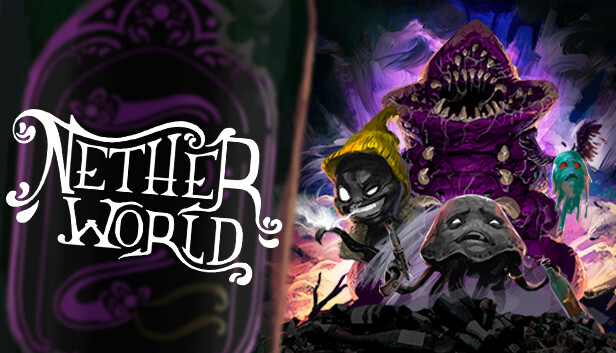
In my continuing efforts to discover new gaming talent and bring it to the attention of the industry, I came across the indie outfit Hungry Pixel based in Madrid. For some time, the studio has been hard at work on NetherWorld. An open-world side scroller set in a hellish universe. Containing mysterious characters, a sinister plot, and a plethora of hostile creatures to fight throughout.

At first glance, it’s extremely reminiscent of games such as The Binding of Isaac and Castlevania: Symphony of the Night, but even a cursory scratch of the surface will reveal that this game has something particularly different to offer compared to the aforementioned titles. Following a successful Kickstarter campaign, the game is slated for release on both Steam and Nintendo Switch. Curious to learn more, I contacted the company, and head programmer Dan Barreno kindly agreed to answer a few questions I had about it. Here are his responses:

What were the influences behind the general design of your game’s play?

It all started with playing Undertale, which I think is one of the best games I’ve ever played. After finishing it in 2016, I decided to create an original story with simple mechanics but with a strong narrative. I imagined what the darkest and most decadent version of Undertale would be, adding drugs, alcohol, and realism to it. Stories like the indie game “To the Moon” were also an inspiration.

We’ve used tons of references to build NetherWorld, most of them kind of creepy. Some of the characters of the NetherWolian Church were inspired by the Rammstein song Morgenstern. Or the desert scenario by Sergio Leone’s films (“For a Few Dollars More”, “The Good, the Bad and the Ugly”…).

What has the developmental process been like?

Very well! We’ve indeed passed through treacherous times that required us to go back and rethink some designs, concepts, and ideas in the past. Luckily, now we’re progressing at a very good rate.

How close are we to seeing the finished product?

We’re working nonstop to have the game ready as soon as possible, but there’s still a lot to do. We intend to finish NetherWorld between late 2019 and early 2020. As Miyamoto once said: “A delayed game is eventually good, a bad game is bad forever”. It’s our first game, so we want it perfectly made!

NetherWorld 2

What has been the most exciting aspect of development?

Its evolution. Have you watched the first video of NetherWorld? You shouldn’t. If you compare it to what we’ve got now, it has changed and improved a lot.

However, there’s another one even more exciting and fulfilling: community support. Since I started to post my progression alone and then after the Kickstarter campaign as a team with Hungry Pixel, we receive lots of messages every week encouraging us to continue working on it because they like what we do, and that’s simply amazing.


What has been the most challenging aspect of development?

I think one of the worst parts of it is not having the time you wish to develop the game, especially when you have to combine it with other jobs (yeah, devs need to eat too!). Sometimes it can be very frustrating.

NetherWorld 3

Where did the inspiration come from for the design of the in-game world and its characters?

Well, as said before, we’ve taken inspiration from lots of games, music, and films. But what really encouraged us to create NetherWorld is to make something unique, original, and weird, a world with its own personality and aesthetic. You’re gonna find more than 10 scenarios based on basic climates/ locations (mountain town, big city, desert, forest, snow…), but all of them adapted to world peculiarities.

NetherWorld is kind of a dark and satirical land made of the worst things and taboos of human society: drugs, sex, alcohol, and sectarianism… So we can say one of the main inspirations of the game is real life. It happens the same with characters. We wanted them to be quirky, a mix between humanoids, animals, and irregular black simple creatures (all properly dressed –or undressed- depending on their location in NetherWorld). So yes, you’ll find escorts, cowboys, cokehead mages, and tons of weird (and funny) people.

Besides Star Wars, are there any other figures in popular culture that will make an appearance in the game? And on the same subject, could the game be theoretically open to modding?

Yeah! You’ll see lots of references to pop culture and other games in NetherWorld, and not only visual things… You’ll have to discover it by playing and being clear-eyed 😉 Regarding mods, I’d love to see NetherWorld mods. Although I don’t know if it’ll be possible for me to give other people the necessary tools to create them (I wish I could finally do it!).

NetherWorld 4

How well has the game been received so far?

Since the Kickstarter finished, we’ve received lots of positive feedback (even from people who missed the Kickstarter and wanted to back the project!). We released a demo for the backers to test most of the mechanics we wanted to use in the final game. And also developed an in-game feedback system where anyone who played the demo could not only score it from 0 to 10, but also write their opinions about the game, bug detection, etc. We’re so glad that the results of the first test were so positive. Except for a few bugs that will be fixed for the final game.

The support we received from our 505 Kickstarter backers was awesome, and we’ll always be grateful for it (thank you, Netherholics!). Without them, NetherWorld wouldn’t have been possible. We also want to thank all the people who had some words for us through Twitter and Facebook before, during, and after the campaign.

We also like to share our progress through social media. So that people can see what we are working on at every moment, and we can get their feedback constantly.

What platforms are you looking to bring the game to?

For now, we’re going to release NetherWorld on PC and Nintendo Switch. But we don’t rule out considering other platforms in the future.

NetherWorld 5

Do you have any advice for aspiring developers who may be reading this?

Maybe sounds like a cliché, but don’t give up! You’re gonna find lots of people in your way telling you that’s impossible, but that’s not true. If you have a good idea, determination, and you work a lot to get it, you’re gonna move forward for sure.

It’s also very important to build a community everywhere you can (Twitter, dev forums), where people can reach you and send their feedback to you. Sometimes we’re so focused on our beloved project that we miss important details… External people can help us detect them!

Where on the Internet can people find you?

On our website netherworldgame.com, you’ll find all you need to know about NetherWorld: videos, music, Steam page, mailing list, Twitter, Facebook… Check it out!

Do you have anything else to add?

Yes. Thanks so much for allowing us to be on your blog, and I hope y’all enjoy the interview as much as I’ve enjoyed doing it! 🙂

NetherWorld 6

I would also like to take this opportunity to thank Dan and Hungry Pixel for sharing what they have to say about NetherWorld. And to wish them the best of luck with it upon release. If anyone would like to learn more about the game, there are links below to the game’s website. As well as various links to social media pages.

Game on,

Scouse Gamer 88
https://twitter.com/hungrypixlgames?lang=en

https://netherworldgame.com/

https://www.facebook.com/netherworldgame/

https://www.youtube.com/channel/UC-2yzQrtEB0gHQ4DHEqAX1w

Dragon Bros (PC & Xbox One)

Dragon Bros

Developer – Space Lizard Studio

Publisher – Space Lizard Studio

PEGI – 7

Developed by Liverpool-based indie outfit Space Lizard Studio, Dragon Bros is a run-and-gun side scroller drawing influence from many old-school NES classics such as Contra and Blaster Master. Offering new-generation gamers an insight into the tropes of the generation. Whilst also offering older gamers an appreciation for their routes, a great sense of nostalgia. It also caters to players of all skill levels with varying degrees of challenge. Though I had some issues with this title, I was pretty impressed with it. It had a lot to offer that I could appreciate in terms of nostalgia value. And the future of the indie scene.

Graphics – 9/10

Rendered in wonderfully detailed 8-BIT graphics, the game’s scenery and characters are overwhelmingly diverse without becoming too repetitive over the course of the game. There are four worlds, each with its own themes. And new enemies are introduced to keep things fresh on a conceptual level. The game’s soundtrack is also stellar. Composed by Gabriel Caruso, it blends 8-BIT music with rock and roll. Complementing the feel of the game brilliantly. In particular, I was blown away by the game’s main theme, which is used in the first two boss fights.

Gameplay – 7.5/10

There are no unnecessary complications with the game’s control scheme. This was always going to be important in a game that can demand as much as it does of players in the higher difficulty settings. Some of the mechanics involved with controlling certain weapons also add to that challenge in an unprecedented way. The laser cannon is probably the best example of this. As it causes the enemy to gradually recoil over time, they must, therefore, be careful to make sure not to fall off any platforms as a result of not paying attention.

Lifespan – 2/10

The biggest issue I had with this game is how criminally short the main story is. Even taking into account the mini-games as well as the main levels. In total, the game can take around 2 to 3 hours to complete to 100%. Whilst more intrepid players will get more than that out of it, replaying it on the greater difficulty settings, many other players will most likely be left wanting more. But to me, even bearing this in mind in addition, I was still left wanting more. That’s why I think a possible sequel would work well as a Metroidvania game. With elements like leveling up, or an even bigger arsenal of weapons to choose from.

Storyline – 5/10

The game’s story is also only vaguely touched upon. Being portrayed through two cutscenes, one at the start, and the other after finishing it. It follows four infant dragons looking to save their home planet from the invading Mechaliches, whilst also trying to rescue their mother from their leader. While it may be reminiscent of the old way of telling stories within games, like what was done with NES games, telling the story mostly through the game’s manual (the same effect of which was perhaps intended by the developers), very little of that is actually told within the game. So if players want the details of the plot, they need to read the game’s Steam page. But regardless, the story does retain a slight feel of uniqueness about it. So I can appreciate that to an extent.

Originality – 6/10

By far the most unique thing about Dragon Bros is its conceptual design. Very few indie games have stunned me in this respect as much as this game has. And it shows the vast amount of effort the developers put into making it. It also works well for me in particular because I’ve loved dragons ever since I was a kid. But bias aside, the 8-BIT renderings are as fantastically detailed as the likes of Rogue Legacy or Titan Souls. The one gripe I have in terms of uniqueness is that it arguably follows the tropes of its influences too much. And that I think even more could’ve been added to make the gameplay to make it stand out among others.

Happii

However, criticisms aside, Dragon Bros is quite an enjoyable game, and it comes recommended from me for any fans of old-school games out there, and players looking to experience these styles of play for the first time. It’s entertaining throughout for how long it lasts, and players looking for a challenge will certainly not be disappointed.

Score

39.5/60

6.5/10 (Above Average)

Cuphead (PC & Xbox One)

Cuphead

Developer(s) – Studio MDHR

Publisher(s) – Studio MDHR

Director(s) – Chad & Jared Moldenhauer

Producer(s) – Maria & Ryan Moldenhauer

PEGI – 7

One of the most highly anticipated games of 2017, following its initial showcasing at E3 four years prior, Cuphead is a traditional side-scrolling run-and-gun game with an eye-catching and unique conceptual design and gameplay that is as challenging as it is satisfying. I first sampled this game at Play Manchester 2017 shortly after its release and realized that while it is indeed very challenging, it’s also a great deal of fun and one of the better indie experiences of last year.

Graphics – 10/10

The game adopts the visual style of the golden age of American animation of the early 1900s. Having been influenced by classic cartoons such as Mickey Mouse and Betty Boop, among many others. The game’s visual style was the most noteworthy aspect of it when it was first showcased. And arguably still is. Although the game’s playstyle is extremely enjoyable beyond its visuals, I believe it’s still the game’s finest point. Though plenty of games based on cartoon animation have since come and gone, few games have ever looked as compelling as Cuphead does.

Gameplay – 8/10

As stated, the game revolves around players running and gunning through a selection of side-scrolling levels. But the most prevalent feature in the gameplay is the numerous boss fights throughout. Which, for the most part, are extremely well handled. And come with a fair amount of challenge to match. I had an extremely difficult time trying to pick a favorite boss fight in Cuphead because each one of them is memorable in its own right. But in the end, I decided to pick out Grim Matchstick as my favorite. As for me, it provided the best blend of both challenge and individual conceptual design. Other outstanding boss fights in this, in my opinion, included Dr. Kahl’s Robot, Djimmi the Great, Ribby & Croaks, and Cali Maria.

Controls – 10/10

With every intentionally difficult game I review, I always look at the controls with a greater sense of importance than in other games. Because control schemes in these kinds of games, in my personal opinion, are largely hit-and-miss. And it can greatly affect the sense of challenge the game has to offer. For example, the original Mega Man was intentionally difficult. And as most players who have played it will testify, it is a particularly challenging game. But I personally found there to be some issues with the controls, especially in Guts Man’s stage, where there is precision platforming required. Thankfully, however, Cuphead does not have these issues. If mistakes are made, it will be down to the player’s individual skill. Which is the way it should be.

Lifespan – 6/10

The biggest gripe I have with the game is its lifespan. The game, dependent on the player’s skill, of course, can take around 6 hours to complete to 100%, which, for the amount of time it took to finish, seemed somewhat uneven to me personally. I can’t deduct too many points from it in this aspect, however, for two reasons. It lasts longer than most classic games of its kind. And the development time was clearly put into getting every other aspect of the game right. It would have been nice to have a few more side-scrolling levels added to balance out the number of boss fights. But nevertheless, it’s a somewhat reasonably long game, and for the time players will spend playing it, they will thoroughly enjoy it for what it is.

Storyline – 7.5/10

The story follows the titular character Cuphead and his friend Mugman. Who, against the advice of their master, The Elder Kettle, wander off far from their home. And come across a casino. They find themselves on a winning streak at the craps table when they are suddenly interrupted by the Devil, who raises the stakes. If they win one more roll, the pair will get all the loot in his casino.

But if they lose, they must forfeit their souls. Cuphead agreed, but rolled a pair of snake eyes, and after pleading for their lives, the Devil made Cuphead and Mugman a deal. If the pair can claim the souls of numerous runaway debtors for the Devil, he may consider pardoning them. The game’s story is simple in structure, but fairly unique in concept at the same time. It even has multiple endings, given the player’s choice. It’s the story, as well as its visual design, that makes it clear that this game was quite simply a labour of love.

Originality – 8/10

The Moldenhauers created this game based on their own experiences of watching classic Disney and Fleischer cartoons in their youth. And in Chad Moldenhauer’s own words, they sought to mimic the more subversive and surrealist elements of the classic cartoonists of the day. And subversive and surreal are some of the best words that I can possibly use to describe this game. It was enough to raise a lot of eyebrows at E3 2014 with its own unique conceptual design. And it has impressed a lot of gamers since its release, including me.

Happii

Overall, Cuphead is a visually stunning and delightfully challenging game with a lot to offer both veteran gamers with an appreciation for their roots and newer generation gamers, who may be curious about experiencing some of the beginnings of video game design. Though it took an unusually long time to be released following its initial showcasing, it turned out to be more than worth the wait, and it comes highly recommended by me.

Score

49.5/60

8/10 (Very Good)