Tag Archives: Side Scroller

Alwa’s Awakening (PC, PlayStation 4, Xbox One, Nintendo Switch)

Alwas Awakening

Developer(s) – Elden Pixels

Director – Mikael Forslind

PEGI – 7

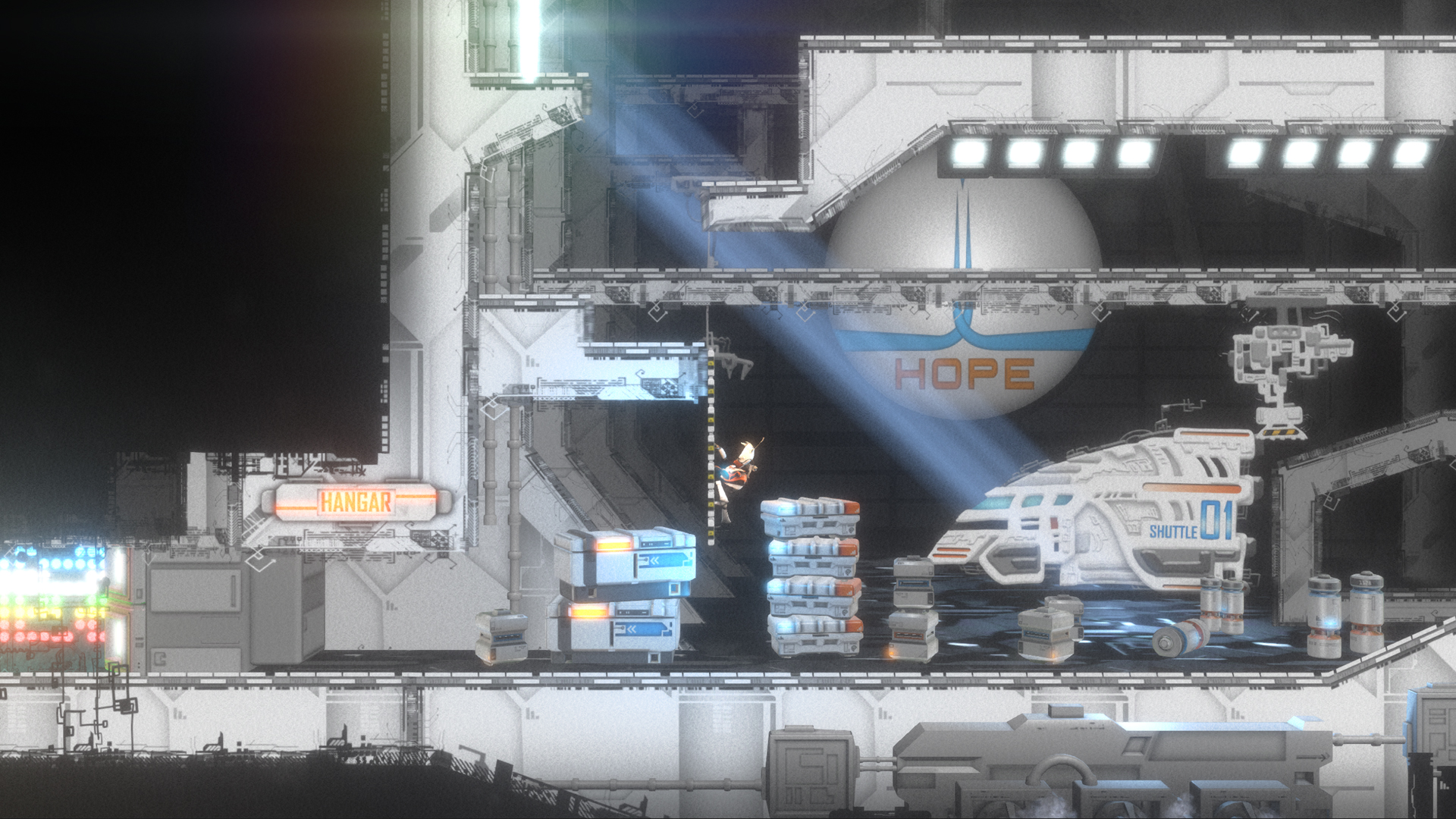
The debut title of Elden Pixels, and developed under the supervision of Zoink Games’ Mikael Forslind, Alwa’s Awakening is a throwback to the classic games of the NES era, including Zelda II: The Adventure of Link, Metroid, and Castlevania II: Simon’s Quest. An 8-bit Metroidvania game, it focuses heavily on exploration, combat, and acquiring a range of different abilities in order to progress from area to area. Playing this game felt like an absolute pleasure, as well as a fitting tribute to games of the late 80s. And I would recommend it to any fan of that era of gaming.

Graphics – 8/10

Conceptually, where this game stands out is the design of the enemies, as well as the boss battles. Though clearly influenced by many aspects of medieval mythology, including other fantasy franchises (elements of Dungeons & Dragons seemed most evident to me personally), the developers took these influences and formed their own cohesive concepts in terms of visual design. Which is quite difficult to do when dealing with medieval fantasy, making it seem all the more impressive. The soundtrack, recorded by Robert Kreese, is also nothing short of stellar. On par with, if not better than, many classic NES games.

Gameplay – 8/10

Alwa’s Awakening is a Metroidvania game focusing on adventure and exploration. But the developers also boasted a heightened level of challenge compared to many other classic NES games during development, promising an unforgettable throwback experience to suit both the seasoned and casual classes of gamers of that time. When Elden Pixels first announced this, I did get nervous that they would develop a game that was nigh on inaccessible. As I’ve found in many NES games, such as those in the original Mega Man series.

However, while playing through it, I found it offers a level of challenge that is stern, yet reasonable. A level of challenge on par with Shovel Knight, for example. It came as a relief to me. And I was able to enjoy the game with minimal frustration because of it. There are secrets to uncover along the way, and some of the most invigorating boss fights I’ve seen in a 2D game.

Controls – 10/10

Part of the reason why I found the game to be more accessible than many fully NES titles purposefully made to be hard was that the controls are also flawless. In many Mega Man games, I have experienced problems with the controls. And time and time again, it defeats the object of demanding skill from the player if the developers can’t program the game properly. In this game, however, no such issues exist; the controls are perfect, and any errors made will be down to player performance.

Lifespan – 6.5/10

The game can be made to last around 6 to 7 hours in total. Taking everything to do within it into account, which by NES standards at the time may have been outstanding. But in the current era, especially for a Metroidvania, it does fall somewhat short in this respect. It is the game’s biggest issue in my opinion. And I think it could have been made to last at least 12 to 13 hours, given more things to do within it. However, there is more than enough substance in gameplay for how long it lasts. This does emphasize quality over quantity.

Storyline – 7/10

The story of Alwa’s Awakening follows a girl called Zoe, who is playing video games one night. And after dozing off, she finds herself in the land of Alwa, where her favourite video game is set. And she is thrust into a quest to save the land for real. The plot itself may be quite straightforward, but there are certain aspects of it that do well to foster an air of mystery about the game, as was customary among NES titles in the console’s heyday. It’s a nice touch that the developers added that makes the game more enjoyable to play through overall.

Originality – 7/10

Taking everything into account, I was impressed with how many unique aspects there were within this game compared to other classic 2D titles. As someone who first started out playing video games on the NES, my first ever video game being Chip N’ Dale: Rescue Rangers, it was refreshing to take a step back from AAA mainstream titles. And play a game that not only hearkens back to the days of gaming simplicity. It also offers something different from any other NES title.

In summation, Alwa’s Awakening is a welcome addition to the ever-growing indie scene and a definitive joy to play. There’s great gameplay, atmospheric visuals, and an excellent soundtrack. And a level of challenge that will satisfy all classes of third-generation gamers.
Score

46.5/60

7.5/10 (Good)

Anew The Distant Light

Q&A With Resonator

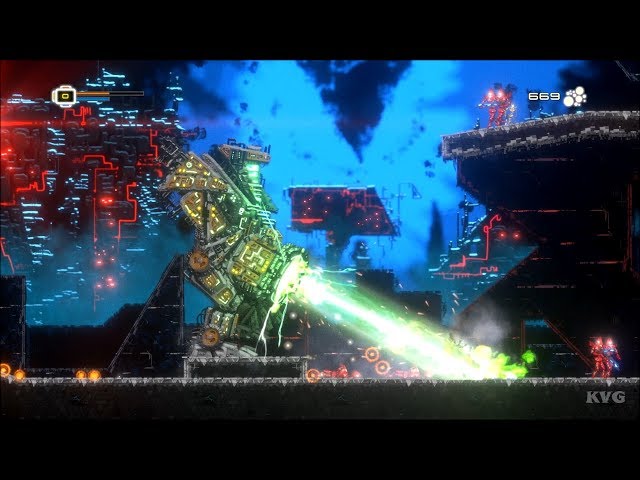
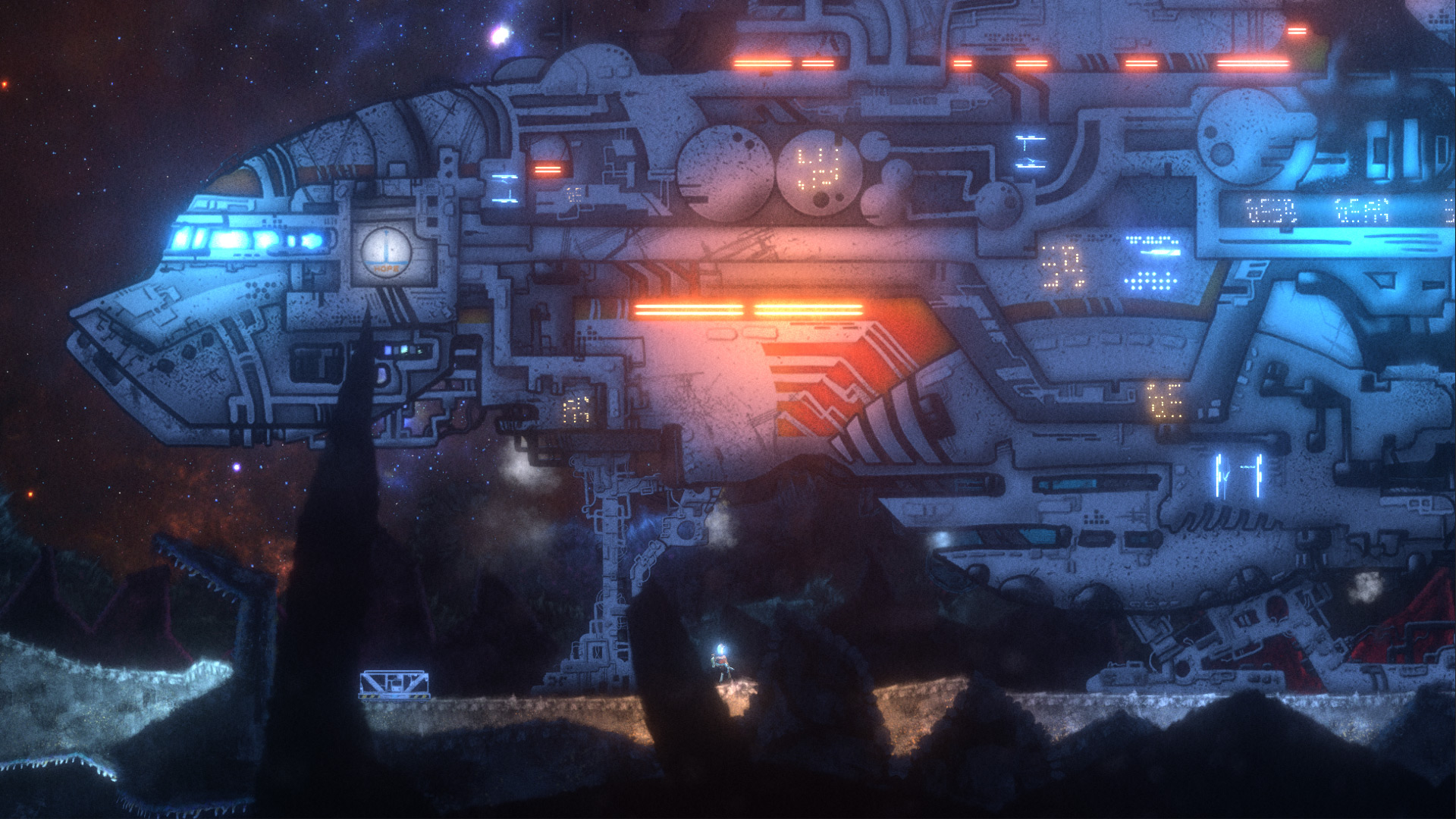
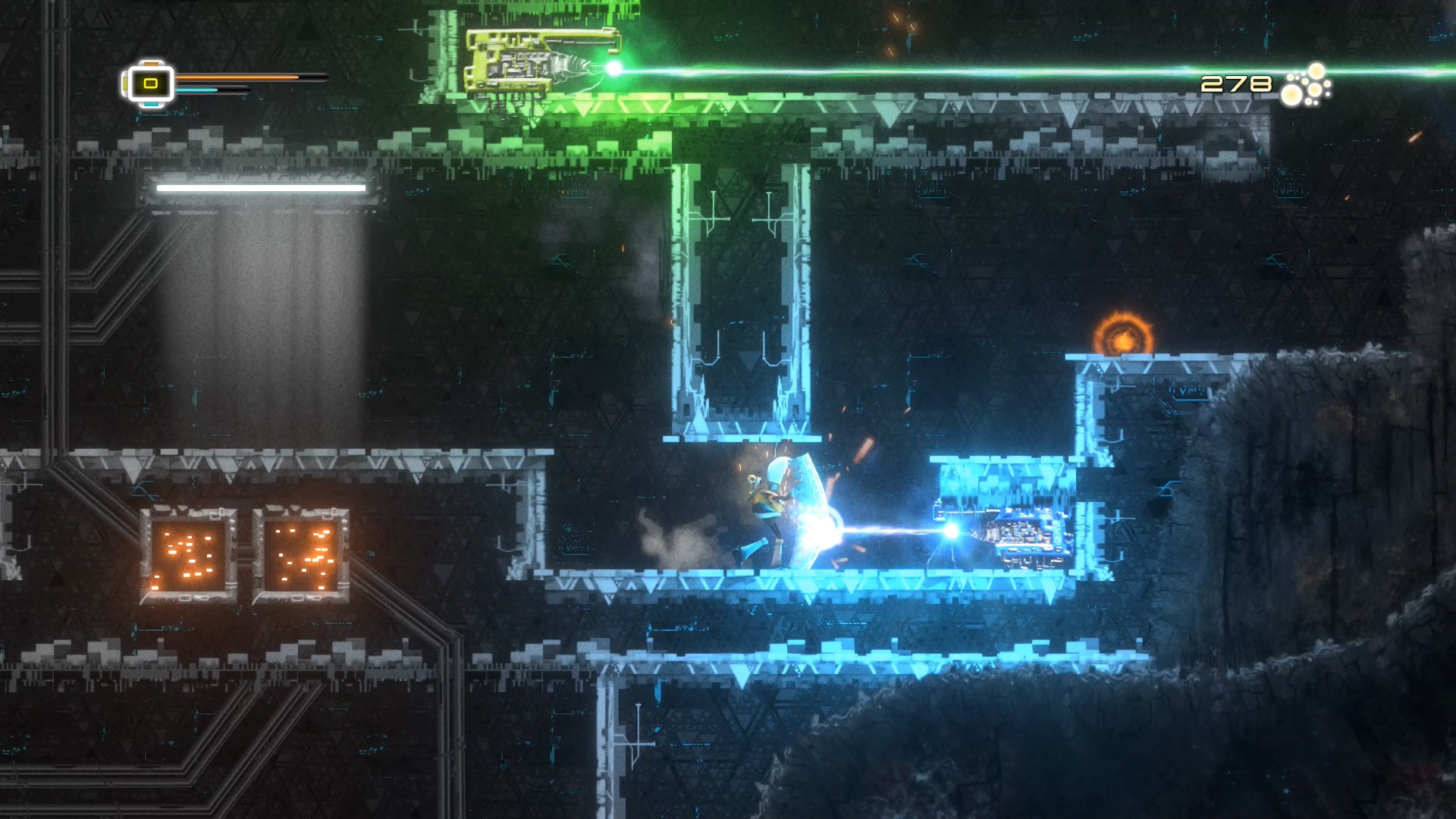
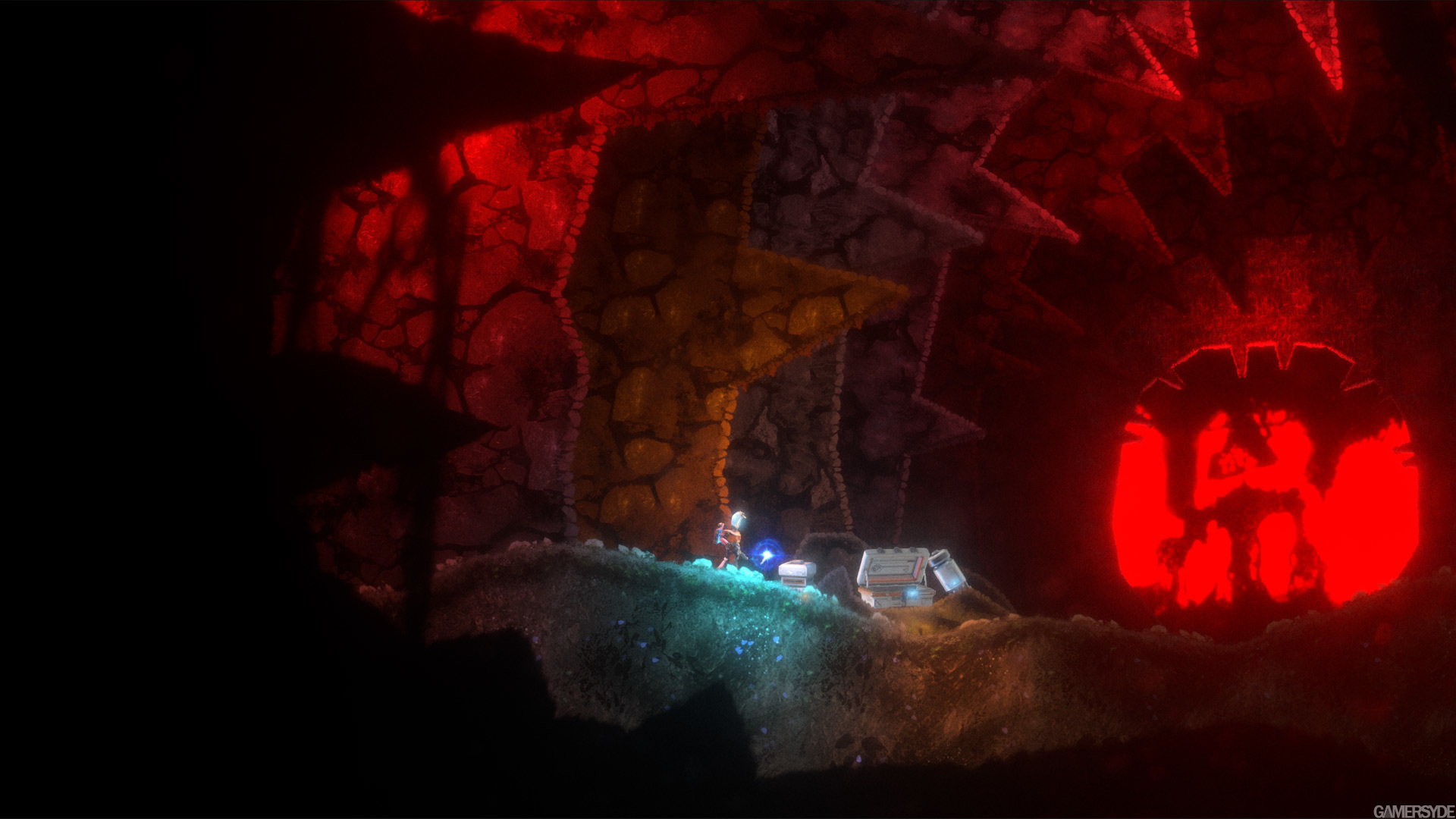
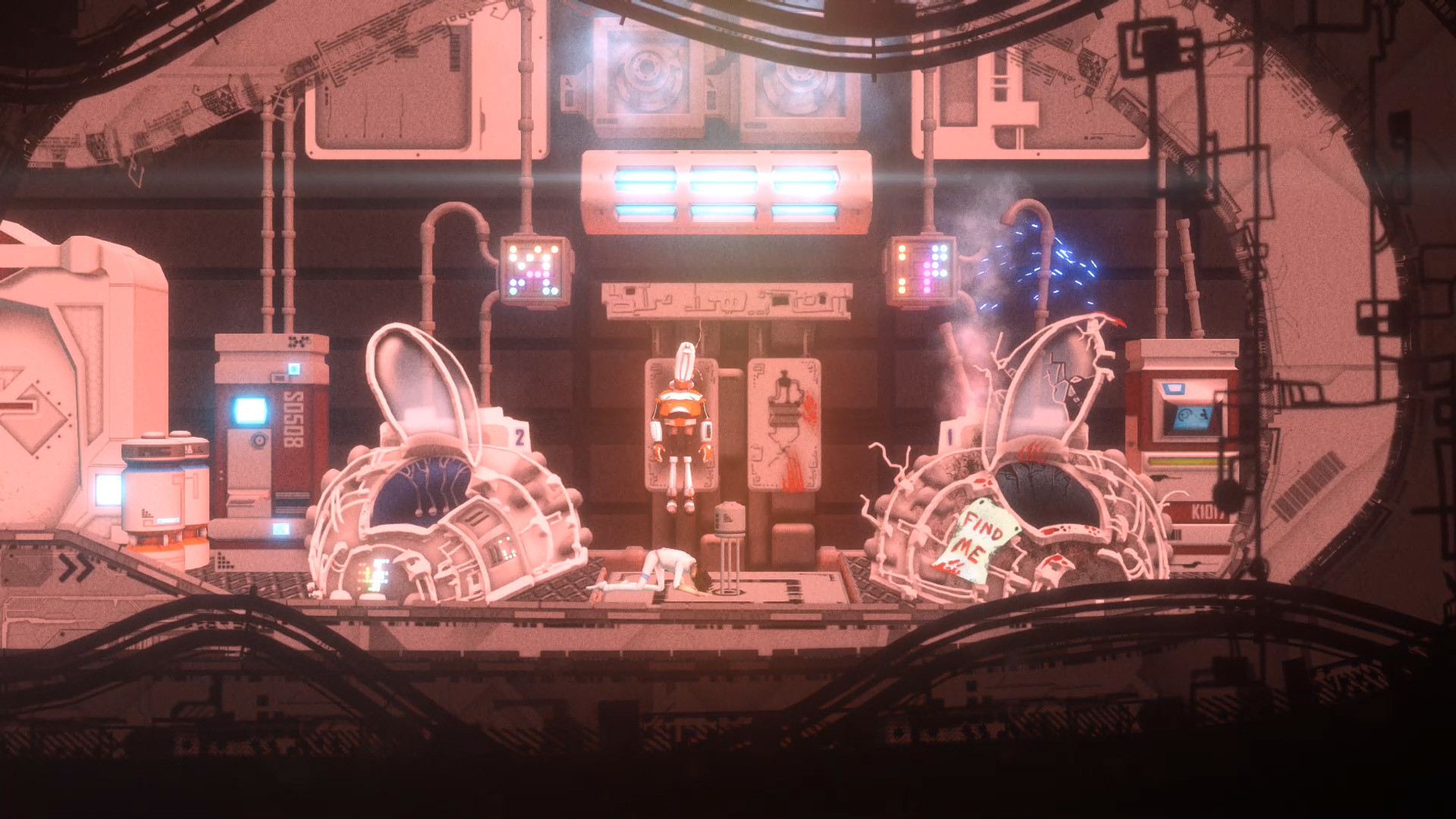
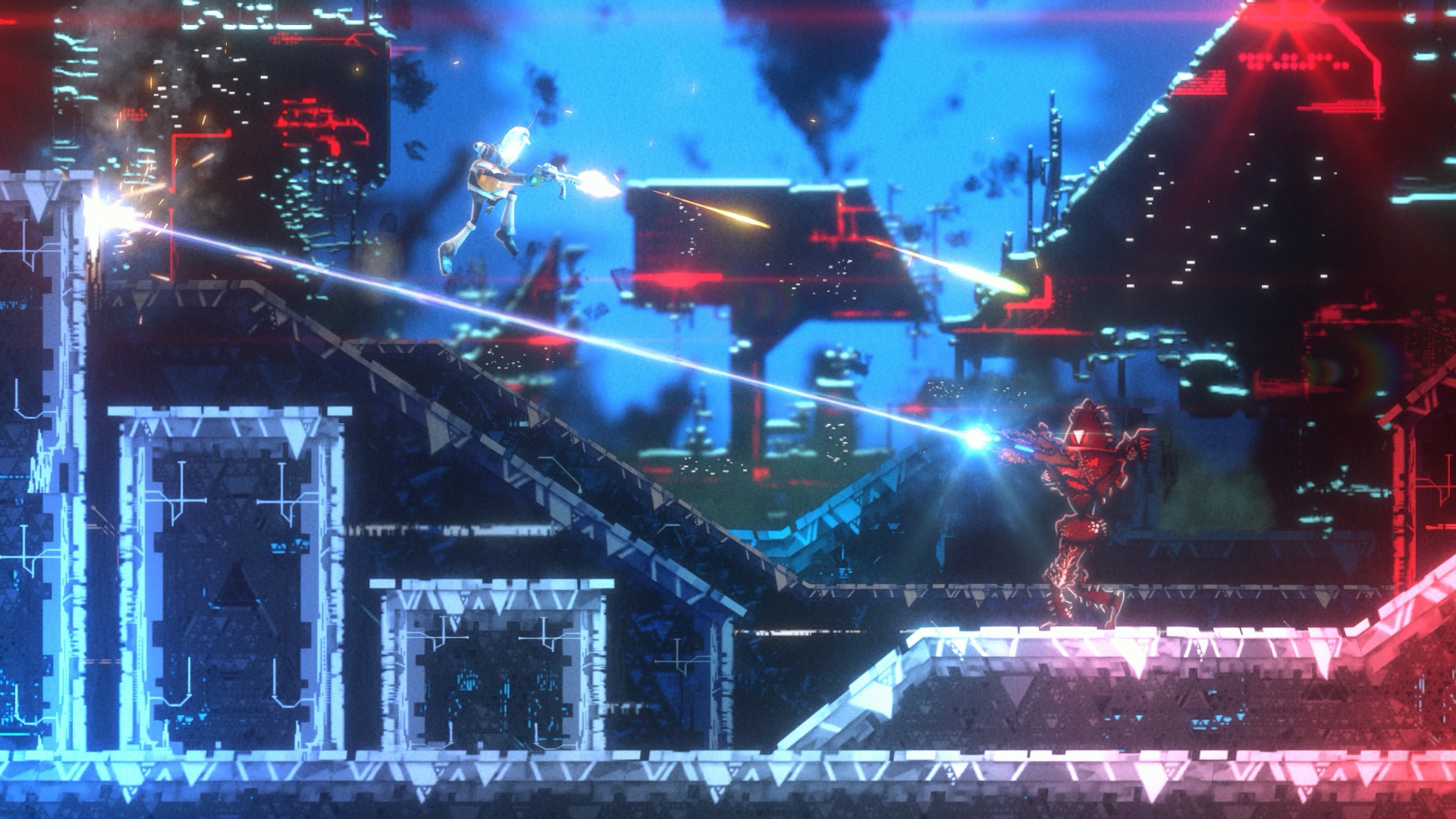
In my ongoing bid to cover and expose as many different independently developed games and indie studios as possible, I discovered a game currently up on Kickstarter entitled Anew: The Distant Light. An action-adventure Metroidvania title, there is a heavy emphasis on combat and exploration. As well as a vibrant science fiction setting that contrasts the beauty and devastation of an endangered futuristic world.

Creating the game are two veteran AAA developers: game director and programmer Steve Copeland, and art director and sound designer Jeff Spoonhower. Collectively known as Resonator. Between then, Steve and Jeff worked on a multitude of major gaming releases over fifteen years, including BioShock 2, Lord of the Rings: Battle for Middle-earth, Borderlands 2, Command & Conquer, and Uncharted: Golden Abyss, to name but a few. After reaching out to Resonator, both Steve and Jeff agreed to answer some questions I had about their upcoming game, their Kickstarter program, and their past and present developmental experiences. Here’s what they had to say:

Anew: The Distant Light 1

What were the influences behind your game?

SC: For me, the classic Metroid games were a big inspiration.  After all, there is a reason our game’s genre is named after it.  You can probably also spot influences from Ori and the Blind Forest, Dark Souls, and Mario Galaxy.  We’re constantly looking for ways to fit fun game mechanics from other genres into Anew: The Distant Light.

JS: I am a big fan of platformers as well. I grew up playing the Mega Man, Mario, and Contra games, so in addition to the non-linear Metroid-style exploration elements, I am excited about including lots of fun platforming elements in Anew.

What has the developmental process been like?

JS: Steve and I have been working on the game full-time for several years now. It’s been hugely challenging and rewarding. We spent a lot of time upfront working on gameplay systems, player mechanics, development tools, and pipelines. And we’ve also built a pretty big section of the game world itself. A lot of the struggles up front were the unknowns – “things we didn’t know we didn’t know about” situations. These were mainly technical, so it was tough to anticipate how long it would take to solve them. We’re happy to say we’ve largely moved through that phase of production and are concentrating on creating content and filling out the game world.

How close are we to seeing the finished product?

SC: A lot of that will depend on how funding goes.  We’re expecting to complete the PC version in about a year. But if we have to stop work to look for investors or a publisher, it will tend to slow things down quite a bit.

Anew: The Distant Light 2

What has been the most exciting aspect of development?

JS: For me, several things. For one, overcoming difficult technical and artistic challenges, and learning a lot. And growing as an artist and designer has been tremendously rewarding. I am also very proud of the world we are creating. We hope that players will find it not only fun to play in, but also visually interesting and enticing to explore and discover. It’s been awesome to be able to tell people that just two people have built the game from the ground up.

What has been the most challenging aspect of development?

SC: With just two people making the game, it can be exhausting to cover all of the needed roles in development and business.  If we could afford to, we’d hire some help.

JS: The number of “hats” Steve and I wear, as far as the roles we are playing in production, is pretty overwhelming. We are each doing the work of 5-10 employees in a traditional studio production! It’s been tiring and oftentimes stressful to have to rapidly switch between these roles on a daily or weekly basis.

Anew: The Distant Light 3

How well has the game been received so far?

SC: Feedback has been very positive on all fronts and in all contexts, especially so when demoing in person at trade shows. Where players can feel the agility and depth built into Anew.  We’re proud to have received the Audience Choice Award at Comicon Phoenix. And I think Jeff sleeps with the golden controller under his pillow.]

JS: Haha, yeah, the golden sheen is starting to wear off. In all seriousness, we are thrilled with the response Anew has received so far. On a personal level, I am so happy that people have responded positively to the look and feel of the game. It’s been my goal to design a world that looks and sounds truly alien and unfamiliar. Those two words have come up repeatedly in press articles we’ve received, so I feel like I’m doing something right.

What platforms are you looking to bring the game to?

SC: We’re leading with PC, including Steam and at least one non-DRM platform for PC.  If our Kickstarter succeeds, we’re also committing to PlayStation 4 and Xbox One.  We also have a stretch goal that will fund research for porting to Nintendo Switch.

Anew: The Distant Light 4

How have your past developmental experiences influenced Anew: The Distant Light?

JS: Our prior AAA studio experience has directly impacted the development of Anew. Steve and I learned a tremendous amount working on games over the past 15-plus years. That includes not only the nitty-gritty of the crafts we practice on a day-to-day basis (modeling, texturing, animating, lighting, programming, designing, tools development, marketing, etc) but also how to set realistic goals and achieve them. We were both senior/lead developers on projects. So we know how important it is to properly schedule a project and avoid common development pitfalls like feature creep and over-scoping. We try to bring everything we’ve learned on these big studio projects to the production of our indie game.

Outside of indie development, what would you say are your and Steve’s favorite projects to have worked on throughout the years?

SC: It was cool to get to work on games related to Star Wars and The Lord of the Rings.  I’m proud of having had a small influence on Command & Conquer: Generals Zero Hour. RTS fans still talk about it nostalgically.  Many of those projects required crushing amounts of hours worked in a week, so it’s hard to call one a favorite in light of that.

JS: I’m really proud of all the games I’ve worked on. Making games is a huge struggle, so I feel like shipping each one has been quite an accomplishment. As a personal fan of the BioShock and Uncharted series, I really got a kick out of working on BioShock 2 and Uncharted: Golden Abyss.

Anew: The Distant Light 5

Has having creative freedom made working on Anew: The Distant Light feel like a better experience than any other?

SC: On the creative freedom front, yes, it’s been the best game development experience I’ve had.

JS: Yes, the creative freedom of making our own game has been very liberating. That freedom comes at a high cost, though. We have taken on a great deal of financial risk. And we are pretty much working on the game all the time! It’s a big commitment. And we have sacrificed a great deal in our personal and professional lives to make it a reality.

Do you have any advice for aspiring developers who may be reading this?

SC: I’d advise them to make and complete things with a very small scope before getting super ambitious.

JS: Agreed. Try to find the one or two things you enjoy doing (be it art or programming), and then really dive headfirst into practicing those crafts. It requires a lot of patience and persistence to get good at this stuff. Ultimately, if you want to get a job in games, you’ll need to show a potential employer that your work is of extremely high quality and would fit into the type of games they are making.

Anew: The Distant Light 6

Where on the Internet can people find you?

JS: We are currently on Kickstarter through March 19th, 11:59 pm

SC: https://www.kickstarter.com/projects/1799572177/anew-the-distant-light. Our official website is www.anewthegame.com. We are also on Facebook and Twitter at @anewthegame.

Do you have anything else to add?

SC: Please check out our Kickstarter!  If you like games with action and exploration, mystery, and a high-skill cap, you’ll find a lot to like about Anew: The Distant Light.  We’re making a game that will scratch the itch for Metroidvania fans. It is also bringing some fresh gameplay to the genre with giant mechs and other vehicles that you can pilot. An upgradable home ship and diverse environments that play quite differently from each other.

Anew: The Distant Light 6

Lastly, I would like to thank both Steve and Jeff for agreeing to answer my questions and to wish them the best of luck with Anew: The Distant Light. I would highly recommend that any gamer who may be looking for an upcoming Metroidvania title check out their Kickstarter page and back the project. Looking at the early footage of it, I myself am extremely excited for the game’s release, and cannot wait to play the finished game.

Mighty No 9 (PlayStation 3, PlayStation 4, PlayStation Vita, Xbox 360, Xbox One, Wii U, 3DS, PC & Android)

Mighty No 9

Developer(s) – Comcept & Inti Creates

Publisher(s) – Deep Silver & Spike Chunsoft

Director(s) – Koji Imaeda & Kinshi Ikegami

Producer – Nick Yu

PEGI – 12

Released following an immensely successful Kickstarter campaign and a series of delays, Mighty No 9 is the brainchild of Mega Man creator Keiji Inafune. As well as personnel from the development team of the original game in the series. Highly anticipated by Mega Man fans, it was released in mid-2016 to mixed to negative reviews by critics and gamers alike. It dramatically failed to live up to its budget and expectations. Having played it, I can understand why many of the original Kickstarter backers were deeply disappointed with this title.

Graphics – 6/10

Although the game was an independently developed venture, the visual quality of the game does not match the budget the developers were given by backers of almost $4,000,000. Besides this, the game also suffers from a number of technical issues. Especially concerning the Wii U version of the game. One of many insults to the backers is that the developers clearly didn’t spend the time needed to polish the game before it was released to markets. Especially coming as it did from a team of developers who experienced internal frustrations themselves from Capcom’s powers that were. From a conceptual standpoint, the game also fails to impress, with the developers seemingly taking basic elements and ideas from the Mega Man series. And building upon them in a very half-hearted manner.

Gameplay – 5/10

The game’s play also doesn’t live up to Mega Man standards, let alone those of the industry as a whole. Intended to present players with the traditional level of challenge the famed series was known for, this game, at times, can be even more unnecessarily unforgiving. Many casual players may struggle to get past even the first level. At least with Cut Man’s stage in the original Mega Man game, it was an appropriately fair introduction to the rest of the series. But with Mighty No 9, it seemed to have been designed with only veteran Mega Man players in mind. Which, for a lot of potential newcomers, causes needless problems.

Controls – 8/10

The original Mega Man game suffered from minor issues with the controls in terms of unresponsiveness. But Mighty no 9 suffers from the same problem, but to a slightly greater extent. Again, causing a lot of unnecessary frustration. Potentially to both newcomers and veteran Mega Man players. Even throughout the first level of the game, there are a lot of platforming obstacles the player has to overcome in order to progress. These unresponsive controls can cause a multitude of different issues at different points in the game. Especially as it is based on a number of lives the player has, hearkening back to old-style gaming.

Lifespan – 5/10

Clocking in at around 6 hours, despite the fact that funding for the Kickstarter project was supposed to have been enough to reach the stretch goals required to bring DLC to the game, Mighty No 9’s lifespan was also criminally short. Especially for a modern game. Most 2D platformers that are typically developed by Nintendo, for example, can be easily made to last 15 to 20 hours, given enough substance in gameplay. New Super Mario Bros U and Donkey Kong Country: Tropical Freeze are textbook examples of this. Six hours may have been impressive by 1987 standards when the original Mega Man game was released. But in this day and age, especially against other kinds of games, it doesn’t hold up the same as it once may have done.

Storyline 3/10

Basically mirroring the plot and basic premise of Mega Man, the game’s story centers around a robot named Beck. The ninth in the Mighty Number android line-up. He has been tasked with eliminating his fellow Mighty Number robots after they have been infected with a computer virus. Almost identical to how Mega Man must neutralize the robot masters. Almost every aspect of Mighty No 9’s story was taken directly from that of Mega Man’s. As was the conceptual design. And has not had a great deal of real thought put into it. It’s especially underwhelming. Given the fact that the main appeals, the developers wanted this game to have also failed to live up to their respective expectations.

Originality – 3/10

Taking everything into account, the only hint of uniqueness this game has is in the conceptual design. Whilst it may have been heavily borrowed from the Mega Man series, it does minimally well to stand out among other games in general. But certainly not enough to make it do so to any great extent. Although this game certainly does not spell the end for challenging 2D side scrollers. Since the likes of Rogue Legacy continue to impress gamers everywhere, it spells a particularly grim future for Comcept, as their latest project, Red Ash, failed to reach its Kickstarter goals.

Angrii

To sum Mighty No 9 up, I would describe it as a gaming travesty. A middle finger to Mega Man fans, as well as the Kickstarter backers. Though it may have been a once-promising game to players, especially those who played the beta, the end product is certainly something to be forgotten.

Score

30/60

5/10 (Far Below Average)

Yoshi’s Story (Nintendo 64)

Yoshis Story

Developer(s) – Nintendo EAD

Publisher(s) – Nintendo

Director – Hideki Konno

Producer – Takashi Tezuka

PEGI – 3

Back in a time when the 2D side-scrolling genre was being phased out, and the 3D platforming genre was coming into prominence, Nintendo attempted to revive the former by releasing a spiritual successor to Super Mario World 2: Yoshi’s Island in the form of Yoshi’s Story. But with considerably less success on both a commercial and a critical level.

Graphics – 5/10

Whilst the scenery of Yoshi’s Story is fairly diverse and the game itself is very well polished, the overall visual style made it feel far too much like a kid’s game. Even for Nintendo. Everything from the storybook style to the pretty annoying sound bytes used for the Yoshi characters made me think very little of what was on offer. And severely lacked the kind of atmosphere that came with games. Such as Banjo-Kazooie, Super Mario 64, or Ocarina of Time. This title for me just didn’t seem to give that kind of prominent impression, which other Nintendo games had, even for the time.

Gameplay – 6/10

Though it’s somewhat satisfying to rack up the highest score (something that was lacking in prior Mario titles), I still felt the game’s play was wanting. The bosses, in particular, stand out as being some of the easiest bosses I’ve ever encountered in video games. Yoshi’s Story also had attached to it the most pointless and least threatening Nintendo character, in my opinion; Pak E. Derm. Who is an elephant with a stop sign, who blocks the player’s path? The player must pound the ground in order to make Pak E. Derm fall to the ground, allowing the player to pass. That mechanic is one of the most senseless things I’ve ever seen in any video game.

Controls – 10/10

There are no problems with the controls, at least. Yoshi’s Story plays out very similarly to Yoshi’s Island, except there is no Baby Mario to accompany Yoshi on the adventure. But by that token, I think the game becomes much less intense as a result, but that’s down to gameplay.

Lifespan – 2/10

As the late 90s were undoubtedly a pretty poor time to try and bring back the 2D side-scrolling genre, I was at that point used to playing games that would last in excess of 30 to 40 hours, such as Ocarina of Time or Final Fantasy VII. It took me a day to complete this game, which, whilst that may have been acceptable before the release of the Nintendo 64 and the PlayStation, it certainly wasn’t then. And it definitely isn’t now. One fact about me is that I believe the longer a game can be made to last, the better. That opinion of mine was developed throughout the fifth generation of gaming. And since then, I’ve never looked back. I’ve grown to think little of games, which seem like fleeting experiences unless they have other decent elements or substance in gameplay.

Storyline – 5.5/10

Yoshi’s Story involves Baby Bowser turning Yoshi’s world into a storybook and stealing the super happy tree, with Yoshi resolving to reverse the damage. The game looks like a kid’s book; it plays out like a kid’s book, and the story is very reminiscent of something someone would find in a kid’s book, too. It’s as outlandish as anything else that Nintendo had come up with prior, but it’s just considerably more simplistic, and considerably less appealing and entertaining in my opinion.

Originality – 6/10

Nintendo can’t be faulted for attempting what they have succeeded at so many times. Revolutionizing games. But this time around, they failed in my opinion. Though they would eventually go on to revive the 2D side-scrolling genre with the New Super Mario Bros. series, they didn’t get off to the best start with Yoshi’s Story.

Angrii

To summarize, Yoshi’s Story is a forgettable title on an otherwise legendary console, in my opinion. Nintendo created some great experiences on the Nintendo 64 when 3D gaming started to find popularity, but they went back on themselves in a negative way with this game.

Score

34.5/60

5.5/10 (Below Average)

Xeodrifter (PC, PlayStation 4, PlayStation Vita, 3DS & Wii U)

Xeodrifter

Developer(s) – Renegade Kid

Publisher(s) – Renegade Kid, Gambitious Digital & Entertainment

Director(s) – Jools Watsham

Programmer – Matthew Gambrell

PEGI – 7

Developed as a love letter to the Metroid series, Xeodrifter is a Metroidvania game with an emphasis on exploration and intense combat. As well as including a small RPG element in the facility to upgrade weapons and learn new abilities as the game progresses. For the small amount of time it takes to complete this game, I was impressed with how it plays out. But underwhelmed by just how fleeting an experience it is. The game ultimately left me wanting a lot more than what was on offer.

Graphics – 7/10

Making use of intricately detailed 8-BIT environments and a dark and gritty atmosphere, the game is set on four different planets with their own unique looks and surroundings. It does extremely well to perpetuate the feeling of isolation that is synonymous with games like this. Super Metroid and The Swapper, to name but a few. The biggest gripe I have with it in terms of visual presentation is the lack of variety in boss designs. The developers chose to simply recycle the same character sprite. But coloring it differently. And giving it different abilities with each battle. But although there is a lack of variation in boss design, there certainly isn’t in general enemy design. There is a wide range of different creatures to fight throughout the course of the game. Keeping things fresh for the most part.

Gameplay – 8/10

More impressive than the visuals, however, is how the game plays out. The combat involved in the game is just as intense and enjoyable as in the original Metroid. If not, more so. There is a wide range of weapons for players to utilize. As well as a satisfyingly strong puzzle element to the game. Players have to use different abilities to progress through different areas. Giving scope for players to revisit previously explored planets in order to uncover secrets inaccessible without the aid of specific abilities. Thus expanding what longevity there is to be had. Whilst the bosses are largely repetitive, they are also legitimately challenging, especially the final boss.

Controls – 10/10

Though this gameplay formula had been popularised and developed for over thirty years until this game was released, the developers did well to program the game’s control scheme properly. But also to build upon the formula, implementing unique features such as shifting from the foreground to the background, vehicular exploration, and combat. As well as traveling and fighting on foot. Unlike many 2D side scrollers that have been released in the past, such as Mega Man and Castlevania, the controls are also adequately responsive and don’t perpetuate any unnecessary frustrations in-game.

Lifespan – 1/10

The worst thing about this game, unfortunately, is how short a time it lasts. It lasts an average of merely 2 hours. It may have been impressive back in 1986 when Metroid first came out. But against most other Metroidvania games released since, Such as Castlevania: Symphony of the Night and Dust: An Elysian Tail, there’s no way it would possibly be able to compare in a positive sense. Personally, I think that even the aforementioned games could have done with lasting a little longer than they ended up doing. Making a 2-hour Metroidvania seems especially unacceptable.

Storyline – 6/10

The game’s story can best be described as Metroid meets Pikmin. It follows an astronaut whose ship is damaged by an asteroid and crash-lands on an uncharted world, and he must find each of the missing pieces to repair it. It’s very simple in scope, and it features next to nothing in the way of the usual tropes of a modern in-game narrative. But the majority of games released during the time that this game is reminiscent of didn’t either. And so I don’t think it should lose out on too many points as a result. Personally, I would much rather have a game that includes standout gameplay over a standout storyline.

Originality – 7/10

Though this game was clearly inspired by many classics of the genre, most notably the Metroid series, of course, in terms of gameplay, it offers something fairly different from what other Metroidvania games do. And I believe there is indeed potential to make a franchise out of this title. And the potential to build upon what is offered within it in a possible sequel. Though it may stand out as one of the shortest games of its kind ever developed, it stands out somewhat for the wrong reasons as a result.

Happii

Overall, Xeodrifter is an intensely enjoyable, yet criminally short game. I think that with a much larger in-game world to explore and even more to do, a sequel could be considered a classic. But if the developers plan to leave this series as it is, then they will have provided nowhere near enough of an experience to warrant any more than one playthrough.

Score

39/60

6.5/10 (Above Average)

Valiant Hearts: The Great War (PC, PlayStation 3, PlayStation 4, Xbox 360 & Xbox One)

Valiant Hearts

Developer(s) – Ubisoft Montpellier

Publisher(s) – Ubisoft

Designer(s) – Credic Barthez, Simon Choquet-Botanni, Jean-François Le Quéré, Gregory Palvadeau, Yannick Patet & Antoine Tous

Producer – Bruno Galet

PEGI – 12

Valiant Hearts: The Great War is a puzzle game developed by Ubisoft with the use of the same engine incorporated in the making of other games, such as Rayman Legends and Child of Light, set in World War I. And told through several different perspectives. It makes for a ton of character development and a great story. However, whilst this may be the best thing about the game, it is also distinctively satisfying and enjoyable to progress through. Unlike many different mainstream titles released in recent years.

Graphics – 7.5/10

The visuals are rendered in a cartoony style, somewhat reminiscent of Child of Light. Though nowhere near as elegant or beautiful. Instead, they do an unexpectedly excellent job of portraying the horrors of war. And the squalid, horrific environments and conditions that soldiers and citizens alike had to contend with at the time, with documents even provided throughout each level of the game giving in-depth descriptions of such situations, as well as rundowns of what happened during the war at each stage of the game. Though I think the general art direction of the game does take a little of the seriousness out of the game at the same time, the game’s atmosphere and soundtrack outweigh this drawback well enough.

Gameplay – 7/10

The objective of the game is to simply get from point A to point B. All while solving a multitude of puzzles and finding as many of the game’s numerous hidden collectibles as possible. Using multiple playable characters, and even a German detection dog, to reach otherwise inaccessible areas. To me, it’s much more unique and variable than most other conventional war games, which all seem to encompass the same objective: shoot everything in sight, capture an area, rinse and repeat.

Controls – 10/10

There are also no issues with the game’s control scheme, which, whilst this was most probably to be expected as Ubisoft has worked with the same gaming engine on multiple occasions, the fact of the matter is this game’s control scheme works differently from the other aforementioned games made with the same engine. It baffles me that so many different kinds of games with different art directions have been made on the same hardware to the point where I can’t wait to see what they possibly do next with it.

Lifespan – 5/10

Valiant Hearts can take around 5 to 6 hours to finish, which is fairly long for a linear game in this day and age. But not overly impressive. I think the developers could have encompassed a wider range of puzzles throughout each stage of the game. Or maybe even another side quest along with the collection of hidden trinkets (for example, having the dossiers presented at the beginning of each level collectible, but there isn’t such a feature. And consequently, the game is made to suffer to an extent because of it, in my opinion.

Storyline – 9/10

After the declaration of World War I, following the assassination of Archduke Franz Ferdinand, a German farmer named Karl was called up to fight and was separated from his wife Marie and their baby boy Victor. Meanwhile, Marie’s elderly father, Emile, is called upon to fight for the French. Shortly after, he meets and befriends an American soldier fighting for the French army named Freddie. Later on, a Belgian nurse named Anna joins Emile and Freddie, along with a detector dog called Walt, as they resolve to survive the war and find Karl to reunite him with his wife and child. The story focuses on such themes as love, friendship, and the will to survive. It is portrayed in an extremely realistic manner. As well as in an elegant and emotionally charged one.

Originality – 7/10

Ever since I first played this game, I’ve been hoping that more war games continue to defy convention like this game clearly has. And help them to go beyond being something encompassed in one single genre of gaming. This had already been long established and refined before the arrival of overrated and generic series such as Call of Duty. With the way the market is at the moment, it seems unlikely. However, innovation is always happening within the indie gaming scene. It gives me hope for the future.

Happii

Overall, Valiant Hearts isn’t one of the most engaging games I’ve ever played. But it’s certainly one of the most interesting ones to portray the themes and settings it does. Perhaps one day there may be a different war game released to provide entertainment more effectively. But this game does that far better than most other war games I’ve ever played.

Score

46.5/60

7.5/10 (Good)

Terraria (PC, Xbox 360, Xbox Live Arcade, Xbox One PlayStation 3, PlayStation 4 PlayStation Vita, PlayStation Network, Windows Phone, Wii U, Android & iOS)

Terraria

Developer(s) – Re-Logic, Engine Software & Codeglue

Publisher(s) – Re-Logic, 505 Games & Spike Chunsoft

Programmer – Andrew “Redigit” Spinks

Producer – Jeremy Guerette

PEGI – 12

Terraria is a 2D platforming sandbox game, whereby the idea is to explore a huge open environment (including underground). And build a house to accommodate non-playable characters such as a merchant, a demolitionist, and a nurse. And to fend off waves of hostiles that try to attack either the player or their house. Whilst it is very addictive in gameplay and lasts only as long as the player’s interest, other faults hamper Terraria to an extent. But nowhere near the extent to make it unplayable, by any stretch of the imagination.

Graphics – 6/10

Visually, this game is a nice throwback to the era of both the SNES and the Mega Drive. It’s rife with 16-bit sprites and environments. The main concern I have regarding the graphics is that they may seem unique to a lot of younger gamers. As they may not have played games from the 16-bit era, older gamers may not be so smitten by the visuals. As there is not that much unique about it in a conceptual sense. Most of the enemies found in the game are pretty generic and typical. Including zombies, vampires, skeletons, and even slimes, which have been a stable element in the Dragon Quest series for years.

The most unique enemies in the game are, without a doubt, the demon eyes, which are floating eyeballs that attack people. Even the Wall of Flesh, the hardest enemy in the game, doesn’t seem overly original compared to other monsters of its kind that have been seen in video games prior. Such as Melchiah from Legacy of Kain: Soul Reaver or the Mother Brain from Metroid. For the most part, the enemies are pretty typical. But nevertheless, the 16-bit graphics are nicely rendered, and to an extent, I could appreciate that the developers were trying to make the game stand out from a graphical point of view.

Gameplay – 8/10

The fact that the game’s conceptual design is pretty weak doesn’t at all change the fact that it is an absolute joy to play once players become immersed. It is extremely addictive. And it can obligate players to continue playing, whilst they may not be making progress in the conventional sense. A gameplay element very reminiscent of The Elder Scrolls series. However, it will take some getting into. A lot like Minecraft or Don’t Starve, it’s not strictly self-explanatory. I would recommend getting tips on how to play it effectively before trying it.

At first, I saw little point in carrying on with Terraria. From first impressions, it seemed like things were moving too slowly. I then watched a few videos of people playing it and a few tutorials. And I decided to give it another go. Before I knew it, it was half past 2 in the morning. Although at first, I struggled to understand exactly what this game had going for it in terms of gameplay, it grew on me. And I came to be impressed with what there was on offer. I have played very few 2D side scrollers that offer this level of exploration and freedom. And whilst it’s not a very original idea in general, I enjoy playing it.

Controls – 9.5/10

Another thing that initially annoyed me was the mechanics of building and mining in this game. It took me a while to figure out how to do it as effectively as possible. I was about to run out of patience when I accidentally discovered that the analog stick can be used to switch between two ways of building and mining when it’s pushed down. But as I said, I found that out by chance, and it wasn’t self-explanatory. I guess by that logic, however, it would be much easier to play this game on a PC. But anyone reading this who is thinking of trying the game will now know. And there aren’t any other problems to address at all.

Lifespan – 10/10

As I previously wrote, this game will only last as long as the player’s interest, and given this game’s level of addiction and variety, that should indeed be a particularly long time. There is no obligation to complete the main objective at hand, and players will be encouraged to make other forms of progress in order to pass the time, such as building a bigger and better house. I, for example, have dedicated time to simply making an underground network, simply to be able to explore the depths of the in-game world more easily.

Storyline – N/A (10/10)

One thing I tend to keep in mind whilst critiquing a video game is that not every game has to have a story in order for it to be good. Therefore, if a game doesn’t have a story, but doesn’t necessarily need one, it won’t lose any marks and will attain a perfect score in that axiom of judgment. There is no point in criticizing a game for not having an element that it didn’t need, and Terraria is certainly one of these games. When I reviewed Don’t Starve some time ago, I thought that it didn’t have to have a story at all, but the fact of the matter is that it’s there, and it’s just not elaborated on very much, so it lost marks. But with Terraria, there is no story; nor does it need one. Therefore, there is no need for it to lose marks.

Originality – 4/10

This is the aspect in which the game was left wanting, in my opinion. As I said, although it is addictive and fun to play, the developer’s desire to incorporate uniqueness in the visuals with the 16-bit style wasn’t fully realized, the way I see it, as it was pretty weak in conceptual design, with few standout enemies or visual elements. It’s because of this that I’m skeptical that it would’ve stood out if the game had been actually released in the 16-bit era.

Happii

In summation, aside from Terraria’s lack of visual uniqueness, and in terms of gameplay, whilst it does indeed borrow elements from Minecraft and the Metroidvania style of play, and therefore lacks the feel of a fully cohesive concept, it was still fun to play and one of the more addictive games I’ve played in recent times, and it’s definitely worth the very generous asking price attached to it.

Score

47.5/60

7.5/10 (Good)

Super Princess Peach (DS)

Super Princess Peach

Developer(s) – TOSE

Publisher(s) – Nintendo

Director(s) – Akio Imai & Azusa Tajima

Producer(s) – Shigeru Miyamoto, Yasuhiro Minamimoto & Hitoshi Yamagami

PEGI – 3

Released in the early years of the shelf life of the original DS, Super Princess Peach was designed to be a unique take on the classic 2D side-scrolling formula pioneered by Nintendo. Whereby players take control of Princess Peach for the first time. She assumes the role of the heroine as opposed to the damsel in distress. Though it does have some basis in uniqueness, I found the game to be particularly easy compared to most Mario games. And by proxy, nowhere near as good or interesting.

Graphics – 7/10

Instead of the Super Mario tradition, the atmosphere is happy-go-lucky. The game has no shortage of vibrant and colorful environments. And an array of different enemies and worlds. An interesting element of this game is Peach’s weapon. An anthropomorphic umbrella named Perry. Which was actually a young man once. As revealed through various flashbacks throughout the game. Back when the original Super Mario game was relatively new, there was a cartoon film made of it in Japan, featuring a dog. Which turns out to be Peach’s prince, and it returns to normal at the end of the film. I can’t help but think that this particular element of the film may have inspired this game in turn.

Gameplay – 6/10

As in most Mario games, the objective is simply to get from point A to point B. But in this title, there are 3 Toads to find in each level. As well as an array of different abilities for Peach to use in the form of different emotions. For example, crying projects water, which may be used to water beanstalks, growing them to advance. Though there is that small element of puzzle-solving to it, it is still a particularly easy game. Since Peach is at a great advantage with her umbrella, which can be used to attack enemies. To me, it highlights why it was such a bad idea that Nintendo originally wanted to give Mario a gun.

Controls – 10/10

As far as the control scheme goes, whilst there shouldn’t have been any problems with the basic layout (and so there aren’t any), at this point, it wouldn’t have been particularly hard to add other features to the mix along with them. I was pretty happy to see the touchscreen being put to decent use, at least. Other than this, however, there isn’t much else to say about it, unfortunately.

Lifespan – 4/10

Though it does indeed last around the same time as most other conventional Mario games, clocking at about 3 to 4 hours, the game’s paltry difficulty level can make it seem as if it lasts a great deal shorter than even that. The side quest can keep more intrepid players busy for a short while longer. But not as long as its world layout would suggest. The map looks a lot like that of Super Mario RPG, so I was somewhat disappointed to learn that it lasts nowhere near as long.

Storyline – 3/10

Not differing to any great extent from the plot most typically associated with Super Mario, Princess Peach, along with her umbrella friend Perry, are on a quest to save Mario and Luigi from Bowser, as opposed to it being the other way round. Though the game didn’t necessarily need a decent story at all, what I don’t like about it is how much it contradicts the entire premise of the series. If Peach has always had these different abilities, then it makes me suspicious of why she couldn’t use them against Bowser whenever she is kidnapped.

Originality – 6/10

The game does have at least some basis in uniqueness, at least, with the different range of abilities Peach has throughout the course of the game. Ultimately, however, it plays out essentially like any other Mario game and doesn’t stand out to any significant extent. I think the developers could build on what they achieved with this game if they ever decided to make a sequel, but the first game in this potential series was a question of trial and error.

Niiutral

Overall, whilst Super Princess Peach isn’t one of the worst games I’ve ever played, it, unfortunately, doesn’t stand out as one of Nintendo’s better efforts. I can’t help but think that with a bit more challenge, it could have been much more than what it turned out to be, but given the less-than-satisfactory sales figures this game has garnered, a sequel seems unlikely.

Score

36/60

6/10 (Average)

Super Mario Maker (Wii U)

Super Mario Maker

Developer(s) – Nintendo EAD Group No 4

Publisher(s) – Nintendo

Director – Yosuke Oshino

Producer(s) – Tazashi Tezuka & Horiyuki Kimura

PEGI – 3

Partly inspired by the Super Nintendo classic Mario Paint, Super Mario Maker is a game in which players are given the ability to design their own Super Mario courses. And share them across the Internet with players from around the world. Personally, whilst I was mightily impressed with the practically infinite amount of replay value there is to be had with this title, I did have a few issues with it preventing me from being able to call it the ultimate Mario experience.

Graphics – 8/10

The templates available to players to create their own Super Mario levels consist of the conceptual and technological design of the original Super Mario Bros, Super Mario Bros 3, Super Mario World, and New Super Mario Bros U. By proxy, players will already know that they will eventually be in for a whirlwind of customization options. It involves some of the most wonderfully outlandish conceptual designs in video game history.

If that weren’t enough, Nintendo has also added a few new elements into the mix that can be implemented. Such as distorting scenery to add to a stage’s level of challenge. And a whole range of sound effects and scenery effects like fireworks. And funny noises are activated whilst interacting with a certain object in each stage. In some of the better-level designs I’ve encountered so far, I’ve been impressed with how Nintendo has managed to keep the franchise relatively fresh and creative even after thirty years.

Gameplay – 7/10

As mentioned, what Super Mario Maker entails is players designing, sharing, and playing a multitude of different Super Mario courses based on four templates of four classic Mario games. Different elements can be unlocked through either playing other people’s courses or through the nine-day unlocking cycle. But there is another way of getting around this for anyone who would prefer to have these features unlocked even sooner. All that the player must do is experiment with the creation mode for 5 minutes at a time.

At this point, they will receive a notification that new features will soon be available. After this, the player can then set the date forward by a day in the system settings. And reload the game. And the new features will become available. This can be done multiple times until all the features are unlocked. However, one problem that I think will always apply to this game is that the levels present will always vary in quality from either masterful to exceedingly boring. Since the content is almost solely user-generated. I’ve already encountered this problem whilst playing, and I don’t think this, at least, is likely to ever change.

Controls – 10/10

There is hardly anything to say about the game’s controls since it consists of a control scheme. Which has already been around for thirty years, and has been perfected all this time. Super Mario Bros. set the standard for how a 2D side-scrolling video game should be correctly developed. And by proxy, there was never going to be an issue with controls.

Originality – 6/10

Though the entire concept of user-generated content. And modding is by no means anything new to the world of gaming; Nintendo has still managed to at least keep the Mario franchise relatively fresh by adding a gameplay concept new to it. Whilst along the way, adding new elements never been seen in Super Mario stages before. Ultimately, the majority of what uniqueness this game holds lies in the player’s ability to design as many rich and varied courses as possible. And from what I’ve seen so far, the quality of that has ranged from captivatingly unique to courses that Nintendo itself would despair at if they were to see them for themselves.

Happii

Overall, Super Mario Maker is a very decent game. It also has the potential to be even better still if Nintendo decides to provide players with even more course templates. And elements as the next few months or years go on. In my opinion, it could potentially pave the way for Nintendo to make even more of these kinds of games. Which could be extremely interesting if they decide to do so. It would be just another example of how this franchise could continue to establish new trends in the world of gaming.

Score

31/40

7.5/10 (Good)

Super Mario Land 2: 6 Golden Coins (Game Boy)

Super Mario Land 2 6 Golden Coins

Developer(s) – Nintendo R&D1

Publisher(s) – Nintendo

Director(s) – Hiroji Kiyotake & Takehiko Hosokawa

Producer – Gunpei Yokoi

PEGI – 3

As another Game Boy Game developed under the watchful eye of the late great Gunpei Yokoi at Nintendo R&D1, Super Mario Land 2 is, in many ways, a massive improvement on the original Super Mario Land. Introducing a new world in the Mario series. As well as a new objective. It was also the first time gamers were introduced to the character of Wario, giving the Mario universe a new and more stable villain than Tatanga from the previous Mario Land game. After having first played this game only very recently, I can say it is definitely a must-have for anyone with a Game Boy. Or a 3DS since it is on the Virtual Console.

Graphics – 9.5/10

One of the most noticeable improvements is most definitely in the visuals. Whilst settings and character sprites may take up more of the screen than they did in the original game, that sacrifice is most definitely worth it. Not only does everything in the game look in far more detail. But unlike in Metroid 2, there is a very even balance between graphical detail. And how much of the screen is taken up by this?

Not causing as much of a hindrance as many people have cited about the second outing of Samus Aran for the Game Boy. Also. Whilst the game’s soundtrack may not be as stellar as the original Super Mario Land, one noteworthy thing is that Kazumi Totaka composed it. And the fabled Totaka’s Song Easter egg can indeed be found within the game. On the game over screen, wait for 2 minutes and 30 seconds, and it will play.

Gameplay – 9.5/10

Although the visuals have been drastically improved, and an adequate level of variety in setting design has been very much adhered to, the most significant improvement to me is the gameplay. Playing out less like the classic Super Mario Bros. game. And offering a gameplay experience more akin to Super Mario World, it offers greater variety in gameplay as well as the ability to finish it in any order the player so desires. Indeed, 6 Golden Coins was actually one of the largest games ever developed on the Game Boy at a whopping 4 megabits. It may seem like a very small amount by today’s standards. But at the time, that was a big deal. Especially for a handheld monochromatic system. As well as that, the same amount of stern challenge is also present as it was in the original game.

Controls – 10/10

The only gripe I had with the control scheme in the original Super Mario Land was that the controls could be somewhat unresponsive at times. And that it could cause a bit of pretty unnecessary frustration. Thankfully, however, the developers didn’t repeat the same mistake with this title. And there are fortunately no issues to address.

Lifespan – 5/10

Another improvement made was to the lifespan. The original Super Mario Land could be completed in a time of merely half an hour. But the second game can last closer to 2 hours. Whilst that isn’t really that significant an improvement. Especially compared to Super Mario World itself. The thing to bear in mind is that a Game Boy cartridge could only hold so much memory. And it would still be a fair few years before advancement in cartridge technology would allow for significantly bigger open worlds and even more gameplay. Like that which would be seen in the Pokémon games.

Storyline – 7/10

Aside from the gameplay being an improvement, there is also a slight positive deviation from the regular story of Mario having to travel to save a princess in the form of something quite different. In this title, Mario must retake his castle. It has been stolen by a new villain named Wario. To do this, he must travel the land to find the 6 golden coins needed to regain access to the castle. And thereby entering to defeat Wario.

Originality – 7.5/10

With a new world, a new villain, and even a couple of new power-ups thrown in for good measure, I’d say that the second Super Mario Land game keeps the series a fraction fresher than the original game did. The difference is that more things that were introduced to the franchise in the second game would go on to become staples of the series. This was good in the way that, in itself, would lead to Nintendo taking the character to greater heights of success in the future. With the likes of Super Mario 64 and Super Mario Galaxy.

Happii

In summation, Super Mario Land 2: 6 Golden Coins is a thoroughly enjoyable Mario game. And I would recommend it to anyone else who may not have played it yet. Or have been sitting on the fence about trying it out. It may be a considerably aged game. Especially compared to the many Mario games that have come out on other handhelds since. But it plays out just as well. If not better.

Score

48.5/60

8/10 (Very Good)