Tag Archives: Side Scroller

Metroid (Nintendo Entertainment System)

Metroid

Developer(s) – Nintendo R&D1 & Intelligent Systems

Publisher(s) – Nintendo

Director(s) – Satoru Okada

Producer(s) – Gunpei Yokoi

PEGI – 7

Released at around the midpoint of the third generation on the NES to generally positive reviews, selling best in America, Metroid became a favorite among fans of the original NES, and of course, would go on to become one of Nintendo’s flagship franchises along with the likes of Super Mario, The Legend of Zelda, and Donkey Kong. I was excited before first going into this one some years ago. Because it wasn’t a game I got to experience at the time of its release.

And I was very much looking forward to seeing the beginnings of this franchise after hearing what I had heard through word of mouth. But I do think it is one of the better games released on the NES. And I can understand why so many people regard it as a beloved classic. To me, the series did get better as it went on. Especially as this game suffered from a lot of limitations that the era of gaming in which it was presented. 

Graphics – 10/10

The best quality this game has, in my opinion, is the visuals. Set across an expansive alien world, it presented something extremely different from what Nintendo was putting out at the time. Which mostly involved worlds made up of anthropomorphic animals and contemporary fantasy settings. Although there were plenty of games with sci-fi elements on the NES. Such as Abadox, Contra, and Metal Gear, it was indeed interesting to see the makers of the console try their hand at it themselves. And the result is one of the best-looking games on the system. The game’s soundtrack, composed by Hirokazu Tanaka, also complements the game’s atmosphere. In a way that also goes above and beyond what many other NES games attempted.

Gameplay – 6/10

Although the original Metroid is generally described as an action-adventure, ostensibly it’s a Metroidvania. Although that term at the time had yet to be coined, of course, until Super Metroid and Castlevania: Symphony of the Night were both released many years later. The player must navigate their way through an open world and collect items, upgrades, and new abilities. And defeat bosses in order to unlock new areas, and ultimately face off against the end boss.

But as this particular genre of game was yet to be built on, it suffers from limitations, such as there being no in-game map. This, in the Metroidvania genre, has become a staple element. Being a by-product of its time, players were reliant on either a strategy guide or even drawing up rough maps for themselves to make sure they didn’t get lost or explore an area twice needlessly. It’s enjoyable to play with a strategy guide, but a nightmare without one. 

Controls – 7/10

Another area where problems exist is the control scheme. As the game also has a lot of sequences whereby players must jump up vertically elongated areas, this presents issues because the game’s jump mechanics can feel quite inconsistent. Super Metroid had the same problem. As well as a few others, but not to the same extent as the original Metroid does. What’s also sorely lacking is the ability to shoot diagonally. Which again, would be something that would be greatly improved on with future Metroidvania titles.

Lifespan – 7/10

The game can be made to last around an hour and a half. In all fairness, whilst that seems like nothing compared to games today, it was actually a fair bit of time longer than the average game in the late 80s. In this respect, the original Metroid was somewhat ahead of its time. Along with the original Legend of Zelda and Zelda II: The Adventure of Link. Again, it may be down to the limitation of what hardware was being used back then that the game couldn’t have been made to last longer than it does. But the lifespan did manage to break some new ground at least. 

Storyline – 7/10

The story of Metroid is that the Galactic Federation has sent a bounty named Samus Aran to the planet Zebes. It is infested with mysterious, hostile aliens known as Metroids, in order to take out Mother Brain. The biochemical life form controlling the Space Pirates, who were responsible for the Metroid outbreak. Not a lot of that is made clear throughout the game. Instead of third-generation tradition, players had to read the manual in order to learn as much about the narrative as possible. But the reveal that Samus is, in fact, a woman is considered to be one of the most iconic moments in gaming history. The concept of a female protagonist was pretty much unheard of in video games at the time. 

Originality – 8/10

It’s for that same reason, as well as its contemporary sci-fi setting, style of play, and accompanying soundtrack, that Metroid stands out as one of the most unique titles on the system. Although the series would go on to reach greater heights. And the character of Samus Aran would go on to become even more admired by gamers everywhere. This is where it all started. And for many gamers, this title broke a lot of new ground in ways that no one could have expected. Satoru Okada would go on to become one of Nintendo’s most iconic figures until his retirement in 2012. And it’s not hard to see why, with the legacy he and the late great Gunpei Yokoi have left behind with the release of titles like this.

Happii

Overall, Metroid, whilst it indeed has too many flaws for me personally to be able to label it as such, is still considered by many to be a classic and an NES favorite. And for good reason. It was Metroidvania before the genre was even properly conceived. And no game had played anything like it at the time. 

Score

45/60

7/10 (Good)

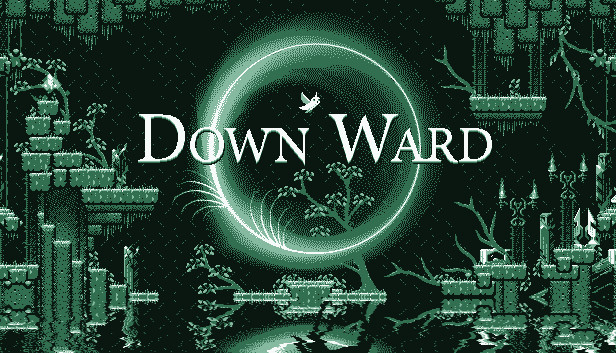
Down Ward

Q&A With Fisholith

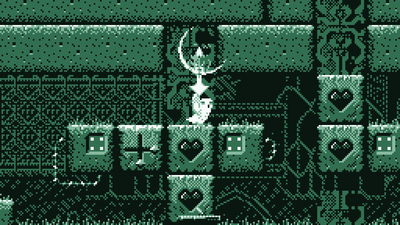
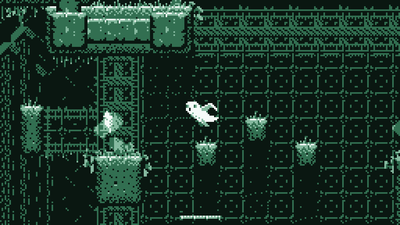
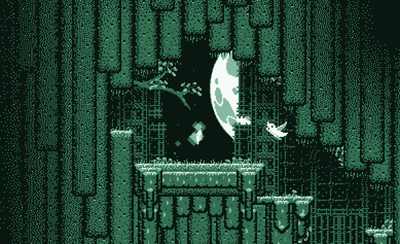
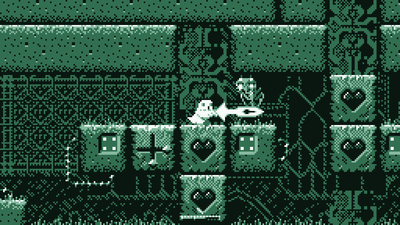
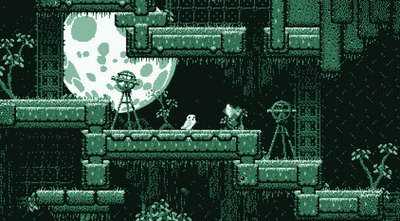
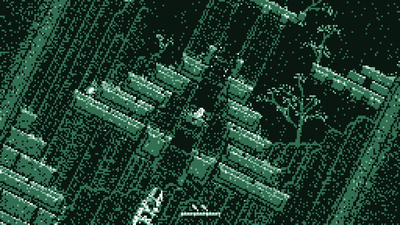
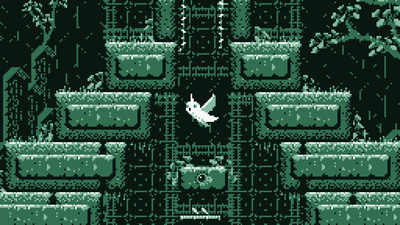
After once again scouting Kickstarter for new video game developers looking for crowdfunding, I came across a stunning-looking 8-BIT title already available on Steam. But in the process of undergoing major changes. Down Ward is an 8-BIT 2D platformer telling the story of an owl named Gable, who sets out on a journey to rekindle dormant relics of a land long forgotten and abandoned. Similar in concept to games like RiME and Journey. Not only does the game make use of 8-BIT visuals. But it also makes use of a monochromatic visual style very reminiscent of Game Boy classics such as Super Mario Land and The Legend of Zelda: Link’s Awakening.

Wanting to know about what changes this project is currently undergoing and the challenges that came with implementing such drastic improvements, I got in touch with the game’s lead designer. Simply known as Fisholith, operating out of Costa Mesa, California. It turned out that the influences and thought process behind this game were even more intricate than I’d realized at first glance. And Fi’s answers certainly provided a lot of clarity on where he hopes to go with this game following its successful backing on Kickstarter. So, here’s what Fisholith had to say about Downward:
Down Ward 1

What were the influences behind Down Ward?

This might not be too surprising, but … birds. I got into photographing birds quite a while ago, and I gradually became more and more interested in learning about them. I think that has definitely carried over into a lot of the creative stuff I’m working on.
In terms of gameplay, there are probably a lot of subtle influences. But certainly among them is Descent (1995) with its zero-gravity flight, exploration, and intrinsic verticality. Likewise, another influence has been some of the design philosophies that Shigeru Miyamoto described. Like how he approaches making games fun.

What led to the decision to implement the numerous monochromatic visual styles in Down Ward?

I’m the kind of idiot who will find the color customization options for a text editor make a “water level” for it, and then start working on lava and ice.

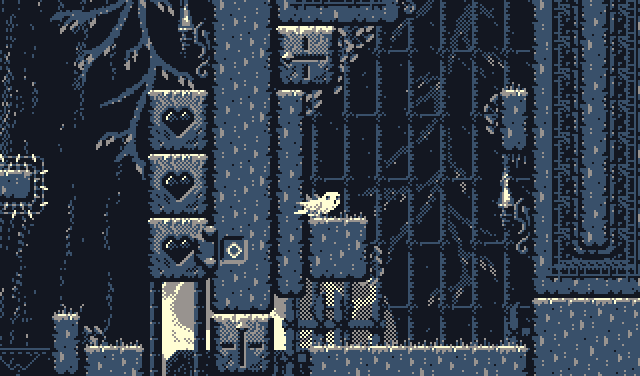
I’d say there are two reasons for the multitude of palettes. Firstly, the visuals in Down Ward only ever use four colors on-screen at a time. I decided early on that I wanted to try giving the game a sort of painterly look. So I wouldn’t be using any outlines to visually separate the foreground objects from the background. Instead, I was going to try to rely on techniques found in traditional painting, like lighting and shadows, brightness, contrast, and texture.

So instead of having the four colors represent abstract things, like outlines, dominant color, secondary color, and accent color, I arranged the four colors to simply represent a range of brightnesses: dark, dim, light, and bright. I had a grayscale game, essentially. With a palette based only on lighting. And this is what opened up the possibility of having so many palette variations. An interesting concept from traditional painting is that the dominant readability of a scene comes from light and shadow first. So if a scene reads well in grayscale, then you can colorize those light and dark areas with whatever colors you want. And the scene will pretty much always read well.

This meant that I could dream up as many color palette variations as I wanted. And as long as they roughly followed that relative dark-to-light brightness scale, the scene would always be just as readable as the grayscale version. Secondly, I like colors… Specifically, I really like designing with colors. And in particular, how changing just the colors of a scene can dramatically change the mood and atmosphere.
Down Ward 2

What has the developmental process been like?

The most heartening part of it all has been creating something that I love and seeing others fall in love with it, too. Over the last year, I’ve gotten several messages from people telling me that they appreciate the game or the art of Gable. Or some bit of respite they’ve found in my project. Amid the unusual circumstances we’re all in. I think some of that may just be due to the pretty stressful year 2020 has been. Nonetheless, I’ve tried to be a positive source of creativity in the maelstrom of this year’s strangeness. It’s such a different place to have ended up than I expected going in.

How close are we to seeing the finished product?

Close in some aspects, and semi-distant in others. There’s quite a bit I want to do to expand on Down Ward visually. There are gameplay mechanics I would like to add. I don’t want to get too ambitious, though, as it’s my first major game. And it’s easy to get mired in feature creep. As with any creative project, when you’re the creator, your vision of cool things you’d love to do will always extend beyond whatever you create. Whatever interesting hill you reach the top of, you’re always rewarded with a sprawling vista of more intriguing distant hills.

What has been the most exciting aspect of developing Down Ward?

I’ve made a lot of wonderful friends. And I’ve gotten to meet and talk with some incredible people who created some of my favorite games that I grew up with. At the same time, getting to see the little world I’ve created for Downward grow and take shape has been a joy.
Down Ward 3

What has been the most challenging aspect of developing Down Ward?

Trying to learn the outreach and social media side of game development. And build up everything needed to make a Kickstarter work. While also trying to keep the momentum working on the game itself. I love learning it all, and I love talking with people. But I don’t feel like I’m especially good at the outreach side of things yet. I’m trying to learn, though. I have a lot of respect for the amount of work that publicists must do.

How well has the game been received so far?

Early on, I was worried that not many people would be interested in a four-color monochrome game. But it has been received very well. Much better than I’d have expected. Even outside of the game, people seem to really like Gable. It’s also nice that all of the constructive critiques I’ve gotten on the game have been very helpful.

In what ways are you looking to expand on the current game?

I have a lot of ideas, and I’m sure as I go, I’ll gradually realize which I want to focus on. Outside of the things I’ve specifically promised in the Kickstarter, nothing is set in stone yet. Broadly speaking, I’d like to expand on the mechanics, hazards, enemies, and puzzles. I would like to expand on the graphics and style of the game a bit, with distinct environments. As well as music composed to fit each. In fact, at the moment, I’m working on a piece of music based on an in-world folklore song.
Down Ward 4

What platforms are you looking to bring the game to?

PC, Mac, and Linux. A lot of people have asked me about Switch. And while I’d love to try that, there’s a whole world of features and design compliance requirements totally separate from just porting the code. I’ve researched it, but I’ve never done it. And I want to limit my promises to things I’ve done before and know I can do, since it’s my first game.

Have there been any ideas at this stage of development that have since been scrapped or reworked?

While touchscreen controls have never been a planned feature, I have done some work on creating a flexible touch interface. It allows you to unlock the touch UI, move the buttons wherever you want, and create unlimited copies of any buttons. And scale the buttons for larger devices. Though not scrapped, it has been put on a distant back burner for the time being.
Down Ward 5

Given how passionate you clearly are about art, did you find working with monochromatic visuals to be one of your biggest challenges?

Not necessarily one of the biggest. But there are a lot of interesting and unintuitive challenges that emerge from 4 color graphics that I wasn’t expecting, going in. Some of that challenge came from the no-outlines style I decided to go with. For instance, screenshots can look nice. But the game has much more visual clarity when you see it in motion. Early on, I started making seamless looping GIF animations of gameplay as an alternative to screenshots. As I think the GIFs do a much better job of presenting Down Ward’s look and feel. They definitely take longer to create than a screenshot, and evolving the workflow for creating them has certainly been a challenge.

Another tricky aspect is how to represent objects that are darker colors. For instance, a snowy white owl on a black background is not too hard. But if I wanted to add a crow, it would be a bit of a design challenge to figure out how exactly to make that work.

How instrumental has player feedback been in terms of shaping the course of the project?

In terms of refining the difficulty, solving level design ambiguities, and improving the introduction of mechanics, player feedback has definitely been instrumental. Even just watching gameplay videos from players is very enlightening.

I’m constantly trying to think through what I design from the perspective of a first-time player. But as the developer, my familiarity with what I’ve created works against me. I know what’s around every corner, and what’s just off-screen. So it’s easy to accidentally create something that makes sense to me. Without realizing that a new player will encounter it with a different expectation. This makes a lot more sense if you’ve never seen it before. Player feedback is like a kind of X-ray vision. You get to see the holes in your own perception. You get to “look” at your own blind spot. It’s pretty cool.
Down Ward 6

If you had the opportunity to develop a game with any company or for any franchise, which would it be, and why?

This is an interesting question. On the one hand, there are quite a few companies that I think would be really interesting to work with. And on the other hand, I actually really like the creative freedom that comes from being a solo developer. Two companies come to mind, though, Revival Productions and Stonemaier Games.

Revival Productions is the company behind Overload, the recent spiritual successor to Descent. It was founded by Mike Kulas and Matt Toschlog. The creators of the original Descent franchise. They, and the Revival team, seem like a really cool group of people who genuinely care about the player community that came together around the genre that they established. If I were going to work with a company on a six-degrees-of-freedom FPS game, that would be the company to work with.

The other is Stonemaier Games. Created by Jamey Stegmaier, a tabletop game designer. I love tabletop games. I’ve created a few for fun. And for a long time, I’ve been fascinated by the similarities and differences between tabletop games and digital games. I also really just love the design puzzle of making rules elegant enough to create interesting gameplay. While running on the notoriously slow and unstable People-at-a-Table operating system. Jamey of Stonemaier has spent a lot of time creating articles and videos sharing his thoughts and what he’s learned in the course of designing and publishing tabletop games. He seems like a really creative and really nice guy, who grants a lot of creative freedom to the designers that work with him. So I think that would also be a pretty fun company to develop a game with.
Down Ward 7

Do you have any advice for aspiring developers who may be reading this?

I’m certainly not an expert, but I can share what has helped me. I think there are two different goals I could give advice about. Game development and game crowdfunding.

The most concise bit of advice I can give that benefits both of those is, “Do game jams.”

To get better at game development, you need to experiment quickly, release publicly, and plan around simple deadlines, and it helps if it’s a relaxed environment. To improve your prospects in crowdfunding, you need to begin building an audience and get comfortable interacting with people about your work.

Game jams will gift-wrap much of what you need to learn in both domains and present it to you in a fun, short, and bite-sized package. Even better is that there are lots of jams with all sorts of different creative limitations, timeframes, and skill ranges. So you can almost adventure your way through them, like different little island worlds, gaining experience as you go.

Where on the Internet can people find you?

Twitter @Fisholith

In the not-too-distant future, I’ll also be creating a website. There are a lot of subjects I’m interested in, and while I wouldn’t call myself an expert in them, I’d love to start creating tutorials and articles to share some of the stuff I’ve learned so far.

Do you have anything else to add?

I began my prior Kickstarter for Down Ward, a little over a year ago, and without any advanced press coverage and a much smaller audience, it didn’t make it to the funding goal. Rather than cancel it, I ran it to the end and thanked everyone. I explained in my thank you message that I planned to relaunch in the future, and should my future campaign succeed, I would like to let this campaign stand as one more example for anyone discouraged by a campaign that fell short, that you can always take what you’ve learned and try again. Perhaps the most important lesson that I’ve learned from games. 🙂
Down Ward 8

As always. I’d like to take this opportunity to thank Fi for taking the time out of development to talk more about what players can come to expect of the final version of Down Ward compared to how the game currently plays out. If you’d like to check out the game as it is, you can do so by visiting the Steam Page, where it can currently be downloaded for free:

https://store.steampowered.com/app/904700/Down_Ward/

But if you think you’d like to back the project in addition, you can do that by visiting the game’s Kickstarter page in addition:

Down Ward Kickstarter Page

But in the meantime, I hope you guys enjoyed learning more about this title as much as I certainly did. As soon as I laid eyes on Down Ward, I had to learn more. And it turns out I got even more than what I bargained for with this one, and I was pleasantly surprised. I hope you guys were, too.

Game on,

Scouse Gamer 88

Super Metroid (Super NES)

Developer(s) – Nintendo R&D1 & Intelligent Systems

Publisher(s) – Nintendo

Director(s) – Yoshio Sakamoto

Producer(s) – Makoto Kano

PEGI – 7

Released in 1994, coming up to the twilight years of the Super NES, and finding critical acclaim worldwide and commercial acclaim mainly in North America, Super Metroid is considered to be one of the most influential games of all time. Along with Castlevania: Symphony of the Night, it helped to pioneer the so-called Metroidvania genre of games. The 2D side-scrolling open-world experience focused on combat, epic story, and exploration. I decided that, as I’ve now reviewed a great number of games in the genre, I’d examine the game where the groundwork was laid. And find out whether or not the experience still holds up to this day, and for me, it did not disappoint. 

Graphics – 10/10

One of the standout features of the game is undoubtedly its beautifully crafted 16-BIT visuals, with the game taking place across several locations that have since become iconic and synonymous with the Super NES era. Including Brinstar, Norfair, and Maridia. This game’s visuals have gone on to inspire several retroactive indie titles over the last decade, such as Blasphemous and Axiom Verge, and not just Metroidvania titles. For the time, these graphics were revolutionary. And the accompanying soundtrack, composed by Kenji Yamamoto and Minako Hamano, perfectly complements the wonderfully horrific atmosphere this game perpetuates throughout, which, in and of itself, was very much out of character for a Nintendo game at the time, as most Super NES titles, for the most part, focused on happy-sounding music and brightly colored environments.

Gameplay – 8/10

Super Metroid followed the basic model of the original Metroid but with drastic improvements. Players could now combine different types of weapons to create more powerful ones. And the boss fights littered throughout are far better. There’s even more cause for exploration than in the original game or Metroid 2: Return of Samus. And it also comes with the synonymous Metroidvania map system. Something which was sorely lacking from the previous two games. And something that every other Metroidvania title would adopt in increasingly innovative forms from then on. Few side scrollers at the time encouraged exploration to the extent that this game did. And it was a welcome breath of fresh air for those who got the chance to play it back in the day. 

Controls – 8/10

The game’s control scheme, however, isn’t perfect. Whilst most Super NES games used the Y and B buttons for attack for primary movement and combat controls, this game uses the X and A buttons for that purpose. And among Super NES fans, this will have caused some confusion for players back when it was released. It can still potentially confuse modern-day players looking to play it for the first time. As indeed I found, since I wasn’t introduced to this game back when it was released. Kind of like Metroid Prime, it can take a bit of time for players to get used to it initially. What the developers did add in terms of controls, however, was the facility to shoot diagonally. Which again, was sorely lacking from the original games, and furthermore included in the re-release of the first. Metroid: Zero Mission for the Game Boy Advance.

Lifespan – 7/10

A thorough playthrough of the game can take an average of around 4 hours. Which is about an exceptionally long amount of time for a game to have lasted back in the days of the Super NES. Although the game can be completed within half an hour (indeed, as this title has become particularly popular among speedrunners), it’s not a game that’s designed to be rushed through. And whilst it may sound like a paltry amount of time for a game to last compared to what gamers are used to these days, it was relatively unheard of at the time. And most fans of the game have ended up playing it multiple times throughout the years anyway. 

Storyline – 7/10

Taking place in the latter stages of the Metroid timeline, the alien lifeform (the Metroid) that bounty hunter Samus Aran had recovered from planet SR388 at the end of Metroid 2: Return of Samus had been delivered to a research facility by her for further study. But shortly thereafter, the space station is attacked by the leader of the Space Pirates, Ridley. Who then captures the Metroid specimen? And takes it to the nearby planet Zebes, and Samus is in pursuit of him.

The game is also a lot more cinematic than games of the previous generation. The game’s opening cutscene, in particular, has become an iconic moment in Super NES history. It’s also one of the earliest examples of how gameplay sequences can be used to build up tension within the confines of the story. As there are sequences in which Samus must escape from certain places within a designated time limit before it explodes. 

Originality – 10/10

There is no understating how unique and influential this game was back in the day. Any game from which an entire genre is created stands out as being among the most influential of all time. Doom gave birth to the first-person shooting genre, and Rogue paved the way for the Roguelike genre. And Super Metroid was the primary pioneer of the Metroidvania genre. Even Castlevania: Symphony of the Night adopted several gameplay elements that this game had first introduced. 

Happii

In summation, as well as being one of the most influential video games of all time, Super Metroid also stands out as one of the best titles on the Super NES. It is an experience that still holds up and one that I would highly recommend. Regardless of the issues I may have had with the controls, the immersive gameplay, wonderfully rendered graphics, and engrossing story more than make up for it. 

Score

50/60

8/10 (Very Good)

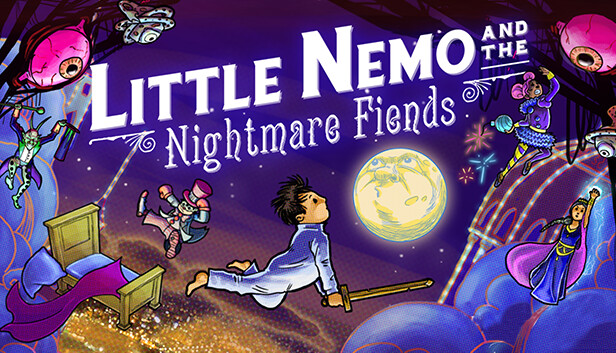
Little Nemo

Q&A With Chris Totten

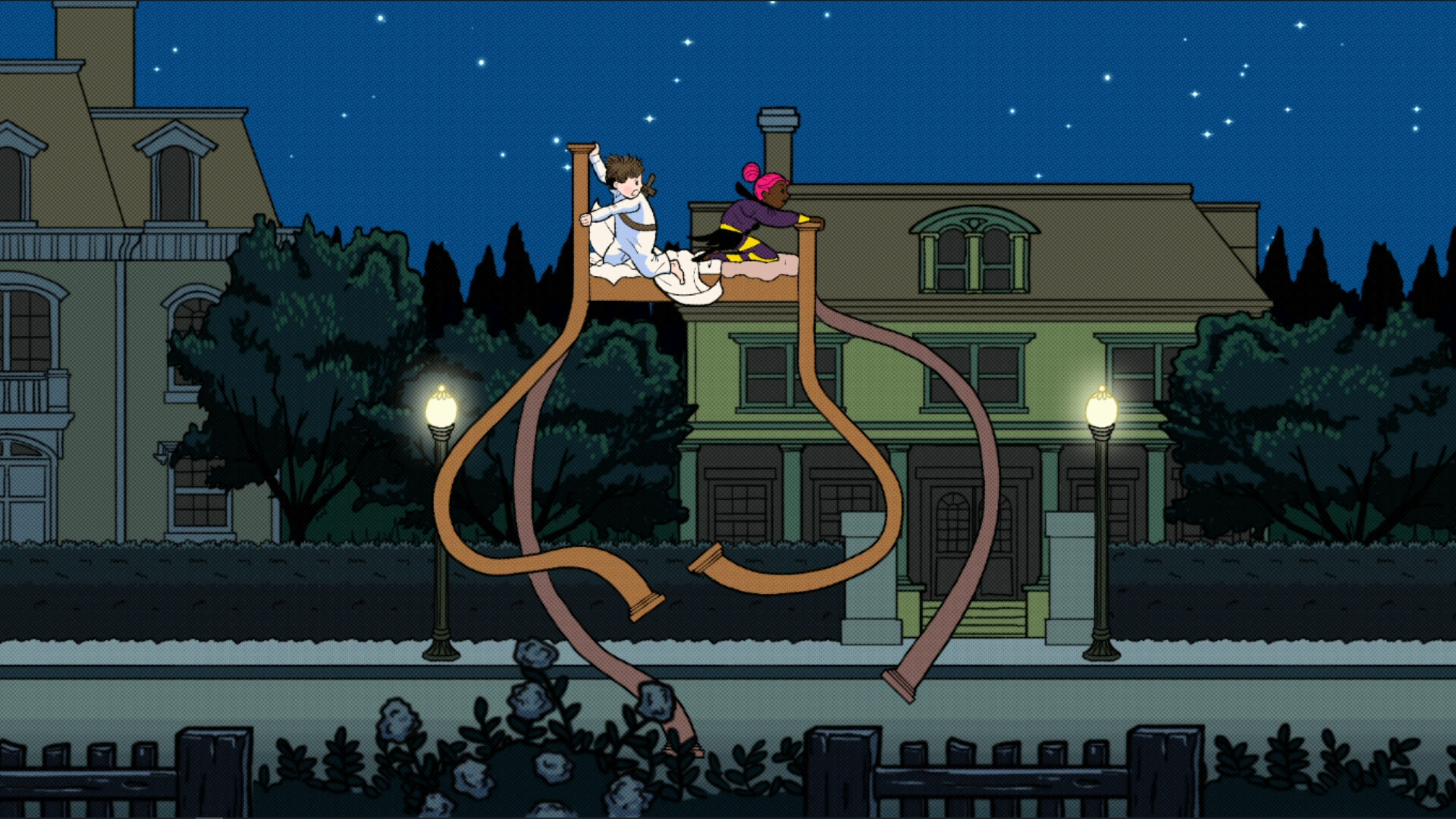
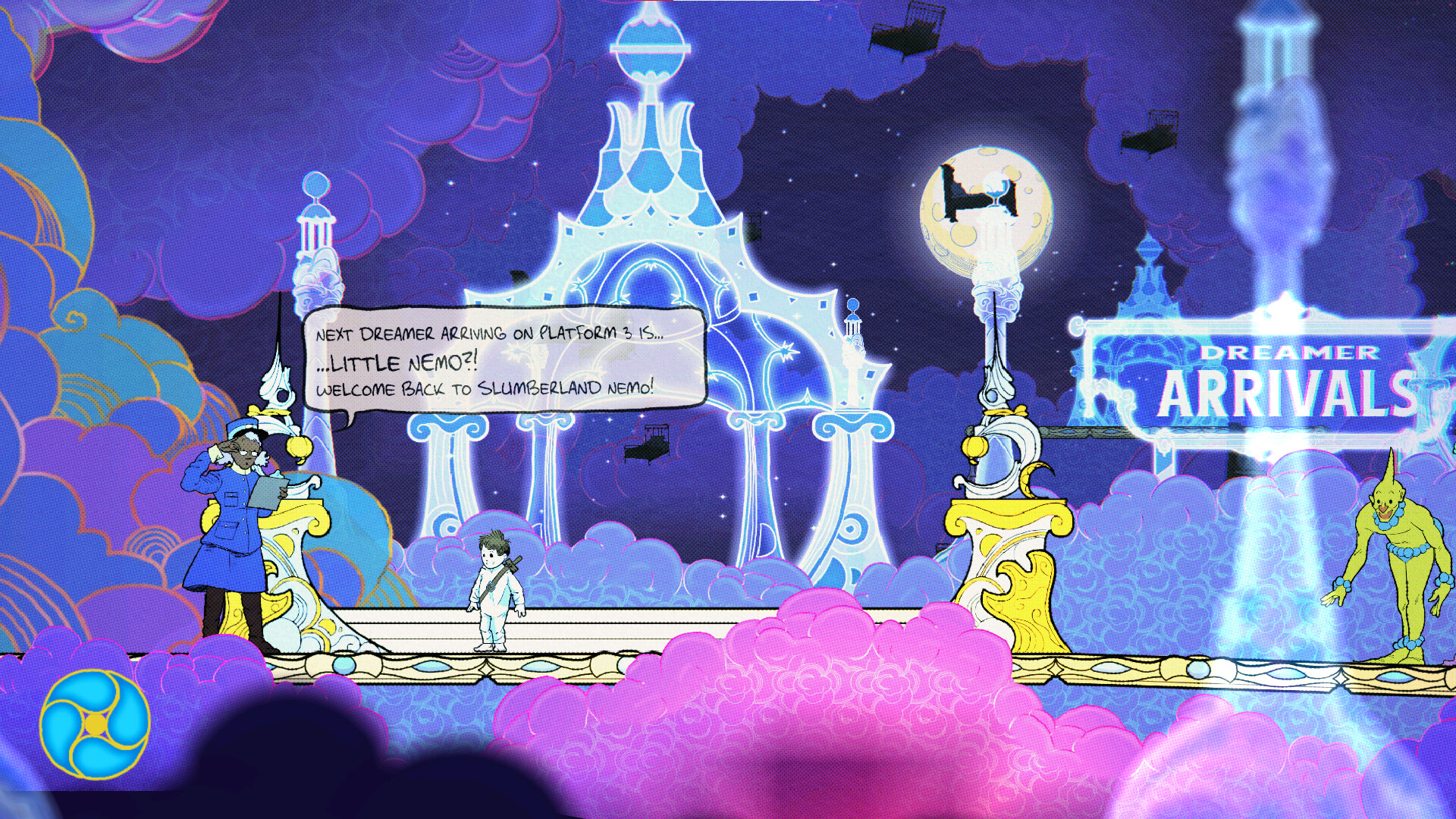
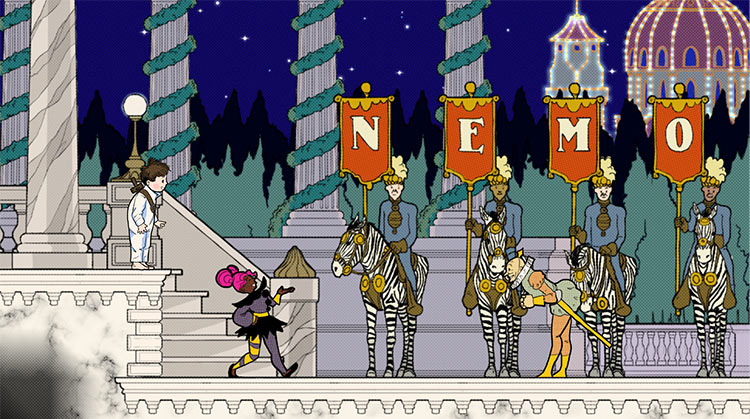
In my efforts to discover yet more indie titles in the making on crowdfunding platforms, I found another Kickstarter campaign for what is a very promising passion project based on a beloved comic book series. Little Nemo and the Nightmare Fiends is a 2D  non-linear sidescroller based on the works of the innovative US comic book artist and animator Winsor McCay. Having inspired famous animators and artists since, including Walt Disney himself, he left behind a legacy and a mythos that are, in equal parts, beautiful and surreal, and this serves as the inspiration for this game.

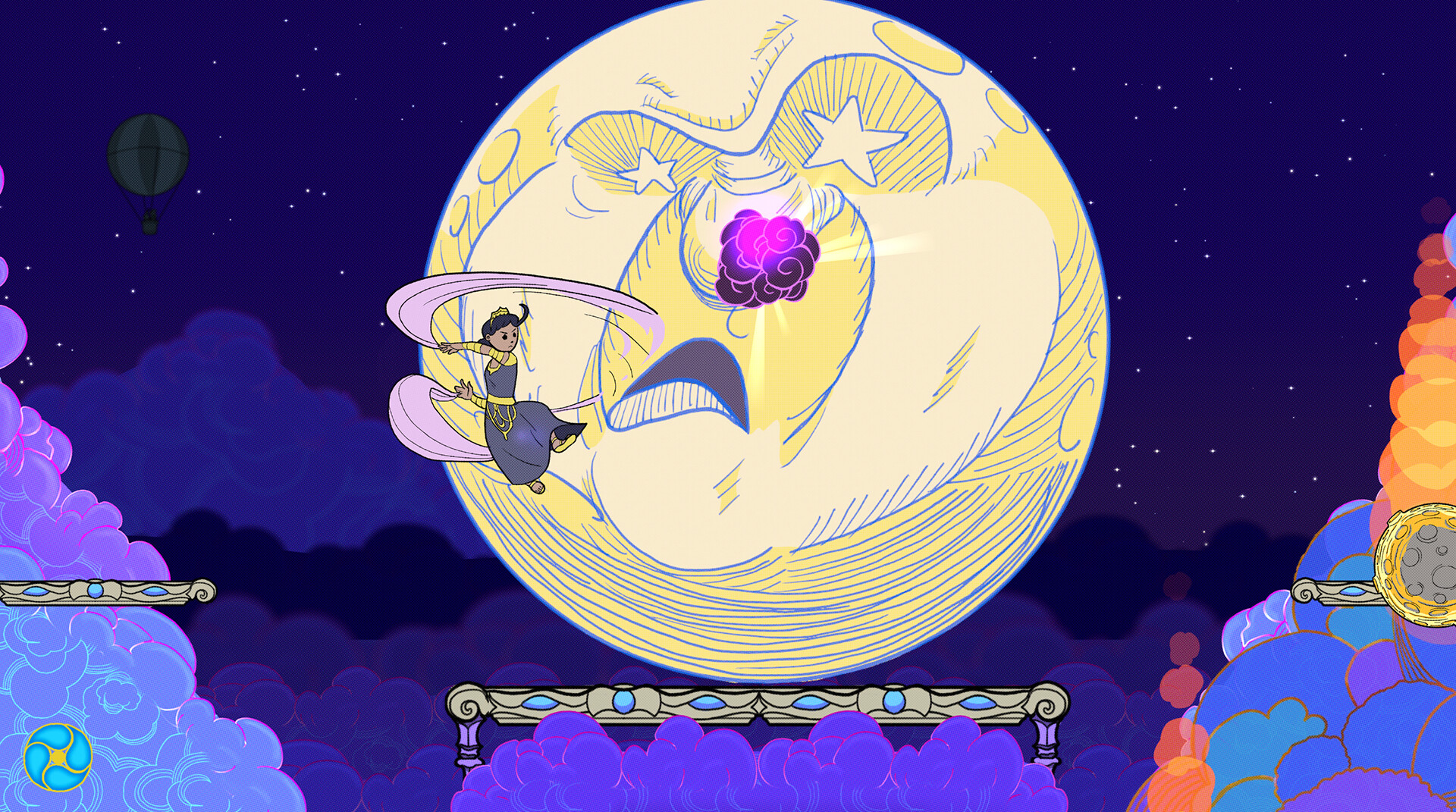
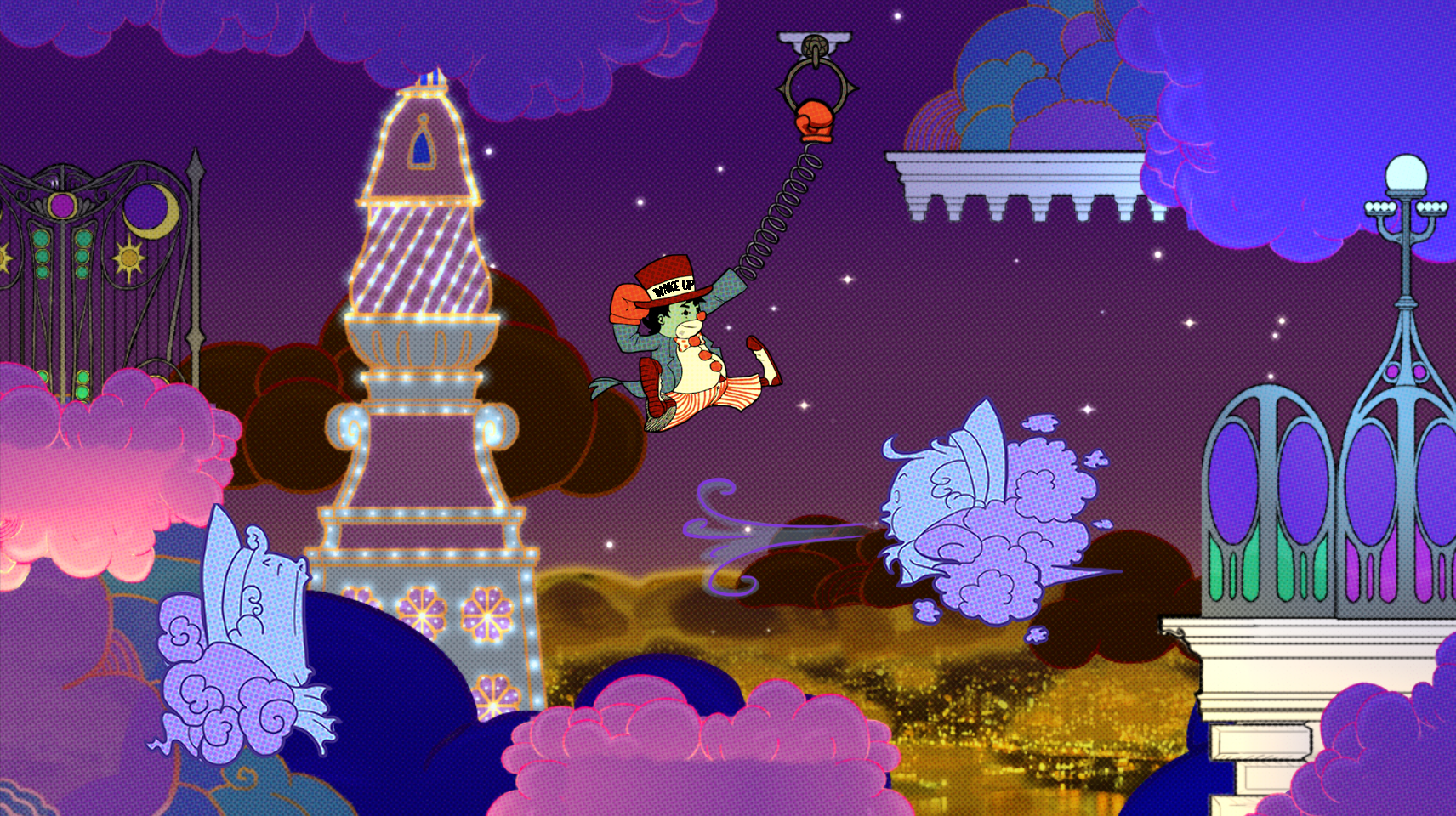
The player controls 4 different characters throughout, including Peony, a character added to the mythos exclusively for the game, to explore non-linear 2D sidescrolling levels, whilst along the way collecting hidden items, engaging in different varieties of combat, and making each character stronger as time goes on. Similar to Mickey Mania, the levels are based on classic Little Nemo episodes and stay faithful to the art style that McCay perpetuated throughout his career.

Wanting to know more about this gorgeous-looking and ambitious title, I contacted the project lead, Chris Totten, head of Pie for Breakfast Studio based in Kent, Ohio, to get a better idea of this game amidst its Kickstarter project, and a better idea of the varied team behind it. Ranging from a variety of different indie development studios that are also helping out on the project. Here’s what Chris Totten had to say about little Nemo and the Nightmare Fiends:

Little Nemo 1

Of course, the main influence behind the game was Winsor McCay’s classic comic book series of the same name. But what video games have been kept in mind most throughout development?

We’re really big retro gaming fans, so when coming up with a game that involves a cast of characters like this, we take a lot of inspiration from games like Little Samson or Demon’s Crest (where the player character could change his form). We’re asked about Little Nemo the Dream Master a lot as well. And while we can’t remake that (it’s not public domain like the comics), we are going to make lots of nods to it.

What has the developmental process been like?

Our team is geographically distributed, so that’s always a challenge, but one we’ve dealt with before. Making a game during a pandemic has been a bigger challenge. But it’s also provided something to keep us occupied. I’m mainly responsible for the art and animation so far (with bits of level design alongside Adrian Sandoval). So that’s been a lot of intense drawing. Each character has dozens of frames so far and will probably need dozens more before release!

Little Nemo 2

How close are we to seeing the finished product?

Our production schedule is mapped out as an 18-month project from the end of the Kickstarter, assuming we’re funded, of course.

What has been the most exciting aspect of development?

In my day job, I teach game development at a university, and my research is on the intersections between games and older fields of art, design, and animation. For me, this is an opportunity to use the process of making art to explore an important piece of comics and animation history.

What has been the most challenging aspect of development?

For me specifically, all that drawing! In general though, when you’re working on the first stages of a project trying to produce sample gameplay on nights and weekends, it can be very difficult to balance when you’re trying to put something out.

Little Nemo 3

How well has the game been received so far?

Incredibly well! Folks seem to love the characters and the art style. Either they know the original comics and are excited to see someone use public domain stuff in that way, or they didn’t know about the comics at all, and we’re educating them!

How did the collaboration with so many other indie developers come about?

These are all friends that I’ve made through years of going to conferences and conventions. We occupy a lot of the same spaces.

Do the additional developers share the same love for Little Nemo that you have?

Yes, the team is pretty passionate about Little Nemo. We all have our entry points: either renting the NES game or seeing the movie. But as everyone’s learned more, they’ve discovered a favorite character or comic.

Little Nemo 4

What platforms are you looking to bring the game to?

If we reach our initial funding goal, we’re going to launch on at least Windows and Mac. But we’ll consider other platforms depending on funding. We’d love to bring it to consoles!

Have you found that many other fans of the comic book series have offered their feedback regarding the game?

Yes! One of our main cheerleaders has been Zachary J.A. Rondinelli, a researcher doing a social media project called Welcome to Slumberland:

(https://zrondinelli.wixsite.com/welcometoslumberland).

Every day, he posts a new Little Nemo strip and delivers really excellent commentary along with an audience of contributors. We’ve been able to boost one another’s projects. And it’s been fun having a community like that.

How much fun has it been celebrating the license by adding new elements to the Little Nemo mythos?

This is the best part of working with the public domain, I think. You can add your own twist to things or address problematic parts of an original work. There are parts of McCay’s comics (from the early 20th century) that are pretty racist. So we worked with a BIPOC artist to create characters so that Slumberland can be for everyone.

Little Nemo 5

Have there been any ideas at this stage of development that have since been scrapped or reworked?

We’re always reworking things. I don’t want to cite anything specifically, but we’re always tweaking what characters can and can’t do. It’s a normal part of game development.

If you had the opportunity to develop a game with any company or any franchise, which would it be, and why?

I’m a shameless Nintendo fanboy, so anything Mario, Zelda, or Metroid would be in my wheelhouse. I’d love to do a hand-animated Mario game that looks like the original promotional art!

Out of the many varied things you’ve done throughout your career, would you say this project is what you’re most proud of?

So far, this has been a high point, but one of the best parts of being a game design academic is that I also have a lot of freedom to work on self-directed projects. One of the best things I’ve done has been to write a book on level design. I’m also really proud of the tabletop game I released in 2019, based on Don Quixote (which was also a Kickstarter project!)

Little Nemo 6

Do you have any advice for aspiring developers who may be reading this?

Learn the tools, but don’t think that’s the whole game development experience. Games are about the player experience. And you can make wonderful things no matter what tool it is. Make lots of little games, don’t just try to make something that looks like the big commercial games.

Where on the Internet can people find you?

My Twitter is @totter87, and my studio’s website is www.PFBStudios.com. Little Nemo and the Nightmare Fiends can be found at www.LittleNemoGame.com (redirects to the Kickstarter campaign)

Do you have anything else to add?

We hope you love Little Nemo and the Nightmare Fiends! Please support and share the campaign so we can make this the game of our dreams!

Little Nemo 7

I’d like to close out by thanking Chris for taking the time to talk to me about this wonderful-looking game, and to wish him the best of luck with Little Nemo and the Nightmare Fiends and its Kickstarter campaign. Little Nemo is clearly a labor of love, and if it sees its full release, I have every confidence that this will be a gaming experience loved by fans of McCay’s work, as well as fans of the 2D side-scrolling genre.

And that it will be a fantastical journey that McCay himself would’ve been proud to see. In the meantime, you can check out the Kickstarter page if you would like to back the project via the link provided by Chris, but I hope you guys enjoyed reading this Q&A because I certainly had a fun time learning more about not only this game but also about the inspiration behind it.

Game on,

Scouse Gamer 88.

Skul: The Hero Slayer (PC)

Skul The Hero Slayer

Developer(s) – SouthPAW Games

Publisher(s) –  NEOWIZ

PEGI – 12

An early indie title released in the first part of 2021, Skul: The Hero Slayer is a rogue-lite that provides a new gameplay experience with every playthrough, offering intense combat and platforming. And an insane amount of customization options for the player character throughout each play. Similar to the likes of Rogue Legacy and 88 Heroes, the game can make for hours upon hours of playability and a level of variety in gameplay that I haven’t seen for quite some time. It makes for a far better game than either of the aforementioned examples. As well as other games of the same ilk developed in recent years. 

Graphics – 8/10

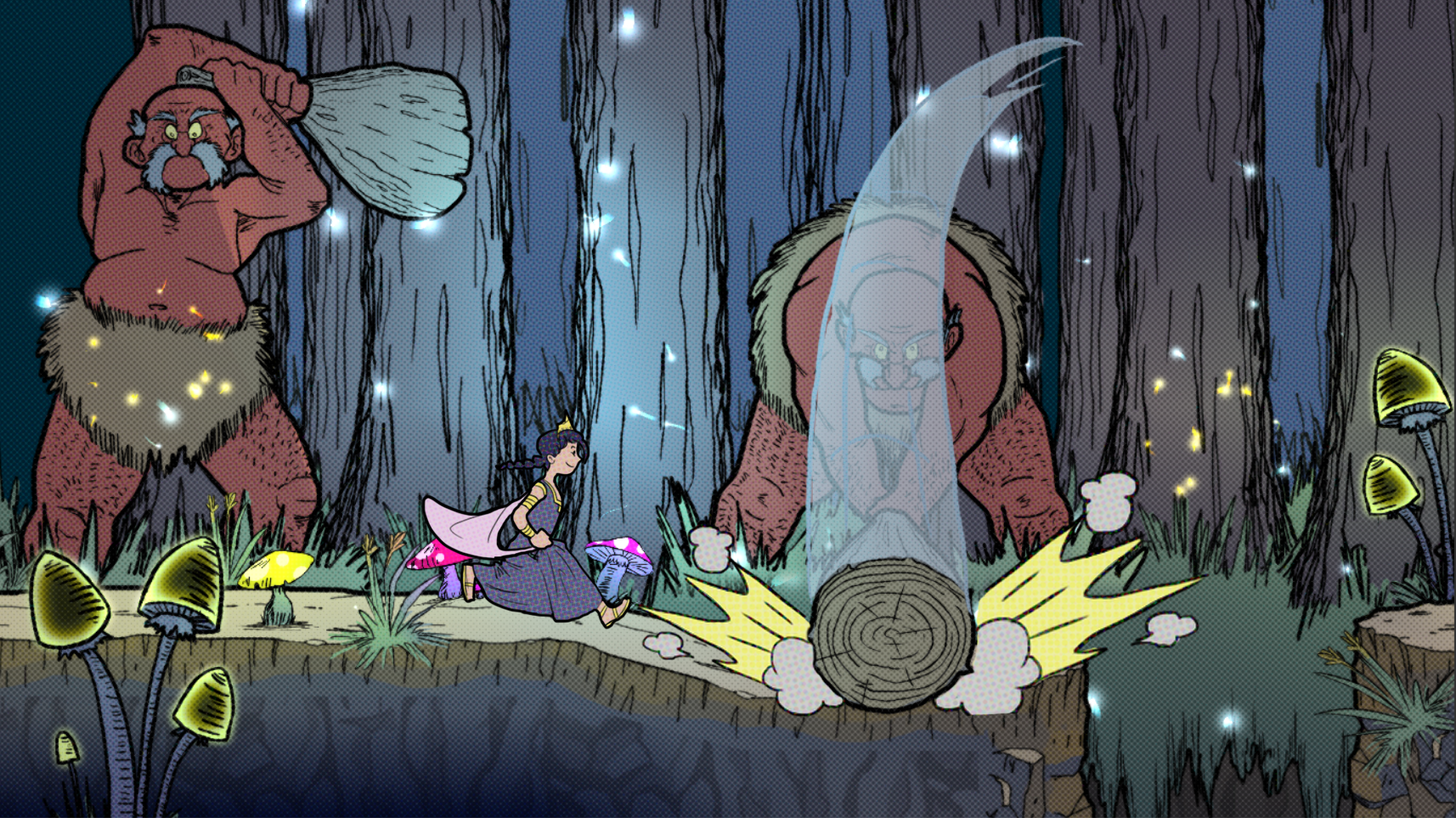
Skul makes use of a traditional 8-BIT visual style with a mythology heavy inspired by high and dark fantasy; it’s basically The Lord of the Rings or Dungeons and Dragons in 8-BIT form, featuring creatures straight from the works of Tolkien and Gary Gygax, such as ents, chimeras, liches, and demons.

But it also has elements inspired by the modern world. For example, one of the power-ups allows the player to take the form of a biker who attacks with chains. He rides a motorbike for a limited amount of time as one of his special moves. It fits interestingly with the tableau of the game. As the character was clearly inspired by the comic book Ghost Rider. But that, along with many of the other power-ups found throughout the game, such as the genie and the samurai, adds an unexpected, yet welcome level of diversity in character design that I never saw coming at all. 

Gameplay – 9/10

The game is a rogue-lite whereby players must face off against hordes of enemies. Whilst conserving as much as they have as possible, including their health. Whilst at the same time, using items and upgrades collected throughout as wisely as possible. There is an insane amount of power-ups that can be used by players to adopt a ridiculous amount of playstyles. Making each playthrough a completely different experience. In that respect, you can draw comparisons to 88 Heroes. Only in this case, the feature of being able to play as what are essentially different characters throughout is a lot better thought out in this title. And makes for a much more accessible experience overall. Because with 88 Heroes, characters are given to the player at random.

And it can hinder the gameplay through no fault of the players. But here, the player gets far more of a choice, making for a better experience overall. On top of that, there are also a great number of perks that can be acquired throughout each playthrough that offer increases in attack, speed, and magic. And that also offers passive benefits such as freezing, poisoning, or burning enemies to deal additional damage. The base stats can also be upgraded before each playthrough. Such as the attack power and amount of health that the player starts with. Making each playthrough more accessible over time, like in Rogue Legacy. But again, in this game, that element is also handled in a far better manner. 

Controls – 10/10

The game’s control scheme is also very interesting indeed. Whilst there are common control elements with each playthrough, such as the ability to attack, jump, and dash, each character is controlled differently through their different movement capabilities, attack patterns, and special moves. So the player has to strategize in accordance with the power-up they have equipped. The controls will seem familiar to players. Whilst at the same time also offering more than what they’ll be used to in the form of the different power-ups. And it’s really quite an impressive feat that’s been achieved. 

Lifespan – 8/10

Seasoned players have been able to play through the main game in its entirety in just shy of an hour. However, this is a game that has clearly been designed to be played through many, many times. And players should not stop at one playthrough by any means. Even if they somehow manage to beat it on the first time of asking. With everything taken into account in terms of gameplay, there is enough on offer to make this game last an ungodly amount of hours; players may wish to go through the game using different power-ups, or they may wish to try to go through it without using any power-ups or passive abilities at all. The customization options are insane.

Storyline – 7.5/10

But in addition to the compelling gameplay, there’s also a surprisingly touching story behind it as well. The game follows Skul, who is a lowly minion in service to the army of a Demon King. As heroes of humans storm the Demon King’s castle and take him captive, Skul evades capture and resolves to destroy the human army and free his master. The game puts the player on the side of evil and paints Skul, the Demon King, and their allies as the heroes, and it’s done in a way that I’ve never seen in a video game before. There have been games that have tried similar things, like Overlord, for example, but it’s presented much differently in this game. There’s a sense of elegance about it in each intermittent cutscene that I wasn’t expecting at all. 

Originality – 8/10

I’ve mentioned throughout this review that this game threw stuff at me that I was not prepared for in the least bit, and I was pleasantly surprised by all of it. It’s a game that gets the fundamentals right as if it were created by a team of seasoned developers, but it also gives players an experience unlike most that have been created throughout the years, and considering that it came from an indie studio, it is really something. It wasn’t the first game developed by the South Korea-based studio (that would be an app game called BSTG), but their first effort at creating a game designed for conventional consoles, really is phenomenal. 

Happii

Overall, Skul: The Hero Slayer is a fantastic rogue-lite with almost limitless possibilities in terms of gameplay, and I can’t recommend it enough. It’s an exciting and dynamic title in every respect and is not one to be overlooked. 

Score

50.5/60

8/10 (Very Good)

Wandersong (PC, PlayStation 4, Switch & Xbox One)

Wandersong

Developer(s) – Greg Lobanov

Publisher(s) – Humble Bundle

PEGI – 7

Released in 2019 to an overwhelmingly positive reaction from gamers and critics alike, Wandersong is a 2D platformer centered around music; puzzles are solved with music, and new areas are uncovered with music. And abilities within the game are taken advantage of through music. Developed by Greg Lobanov with the music and sound put together by Em Halberstadt and Gordon McGladdery, it’s one of those games that is a true labor of love and is evident within every aspect of it. I interviewed Greg Lobanov sometime before the initial Kickstarter program was successfully funded:

https://scousegamer88.com/2016/07/09/qa-with-greg-lobanov/

And I’m glad I did. Looking back, I’m thrilled that this game has since garnered the critical and commercial acclaim that I felt it deserved before release. And the game did not disappoint by any means. 

Graphics – 8/10

Firstly, the conceptual design of the game is nothing short of beautiful. Each area is vibrantly colorful and a pleasure to behold. Whether the game takes the player into dark caves, skyward temples, or peaceful towns. Each area has a different main color palette, similar to the original Yoshi’s Island. It works flawlessly to distinguish each area as the player visits it. Influence from several cultures and periods in human history is also evident in the architecture of the game. Such as Indian culture and even modern-day culture. And overall simply adds to its visual diversity. 

Gameplay – 8/10

As I alluded to, the gameplay involves the player taking control of a young bard and progressing through the game by singing. Singing is at the core of the gameplay. The player sings to move platforms for jumping across and manipulate wind traps to move ahead and advance the story. And to solve puzzles, among many other things. It’s definitely one of the most interesting and innovative platformers to have been developed in recent times. And to me, it even outstripped many other indie titles in terms of gameplay, including Journey and Flower. There’s much more to play for in this game than in many indie titles that have been developed throughout the eighth generation. Players will not be disappointed going into it. 

Controls – 10/10

The control scheme has been handled as well as any other platformer; in that respect, there are no negative issues to be addressed. I’m actually quite impressed with just how singing and dancing are incorporated into the game’s control scheme very effectively to allow for a lot of things the player must do in order to progress through each area of the game. There have been indie games released. Such as The Swapper and Contrast. They have had innovative gameplay mechanics. But have arguably not been used to their full potential to provide as great an experience as what could have been. But Wandersong delivers on that spectacularly. 

Lifespan – 7/10

What the game also delivers in a big way, compared to many other indie games, is lifespan. Taking around 12 hours to complete fully, it’s definitely one of the longest linear 2D side scrollers I’ve played in a long time. Side scrollers that long don’t normally get released unless it’s by a mainstream development company. It could be argued that it was to be expected, given the somewhat lengthy development cycle this game had. But it still excels compared to many other indie games that have taken just as long to develop, if not longer.

Storyline – 7/10

The story follows the young bard, named by the player in-game, who embarks on an adventure to learn what is known as the Earthsong. According to prophecy, it is the only way to prevent the upcoming end of the world. Along the way, the players will meet a massive cast of characters. Each has its own stories and situations to be resolved, which all add so much depth to the story. A lot of the different situations in this world can be seen as very true to life, and it does incredibly well to connect with gamers. This game actually has a better story than a lot of other indie games that focus on story. And sacrificing gameplay in the process. With Wandersong, there is a clear equilibrium between the two. 

Originality – 10/10

Simply put, there is no other game like Wandersong. I’ve never played a game in which music and singing are so integral to how the player must progress through it. And enjoyed it as much as this. Games like Parappa the Rapper and Guitar Hero are obviously titles that make use of music within the gameplay, but Wandersong does even better to integrate it into gameplay, making for, as far as I’m concerned, better titles than the two former. Platformers have been coming and going since the 80s, but never handled in the way it is in this game. 

In summation, Wandersong is an excellent game from start to finish. Any platforming fan needs to give this game a try; it’s innovative, enjoyable to play, and beautiful to behold with a wonderful soundtrack to listen to along the way, and again, I’m happy for Greg Lobanov and the team to have gotten the recognition they deserved for it.

Happii

Score

50/60

8/10 (Very Good)

Chronology (PC)

Chronology

Developer(s) – Bedtime Digital

Publisher(s) – Bedtime Digital

PEGI – Not rated (Suitable for all ages)

The debut game of Danish indie outfit Bedtime Studios, who would go on to develop the critically acclaimed indie hits Back to Bed and Figment, Chronology is a 2D side-scrolling puzzle game. This puts the player in the shoes of a kindly old inventor and an anthropomorphic snail with the ability to manipulate time in various ways. Although I had minor issues with this game, it is a very fun title, which provides an insight into how future Bedtime Digital games would be influenced and where many of their ideas for games came from. 

Graphics – 7/10

The game’s visuals are entirely and lovingly hand-drawn, taking place in a contrast between the lush green environments of the present day and the dark, gloomy, and seemingly lifeless environments of the future. Visible depending on which timeline the player is in at any given moment. The scenery is almost like a character in and of itself. With a contrasting personality and a perpetuation of a theme. That theme is the nature of time itself. The game’s soundtrack is, for the most part, very calm and relaxing. But it can start to add to tension during precarious platforming sequences, for example. 

Gameplay – 7/10

The game relies on the player’s ability to effectively platform as well as puzzle-solving to progress. The player must switch between both characters in order to solve puzzles by manipulating time. And changing elements of the world in conjunction with how things will be in the future or present if certain things are done at opposite times. It’s really satisfying to be able to solve each puzzle as it comes. As the entire game can challenge players vigorously to think on their toes for the most part. 

Controls – 10/10

The controls, as the 2D side-scrolling genre has been around for over 40 years, were expected to have been done correctly. And so they are in this game. There are no unnecessary issues with platforming interaction. And it’s quite clever the way the developers handled the snail’s part in this game in terms of movement in order to progress. For example, the player may have to position the snail in a certain way for the inventor to be able to reach particularly awkward ledges. 

Lifespan – 6/10

The game lasts there about the average lifespan of a traditional 2D side scroller. Which is around an hour and a half. Although Bedtime Digital would’ve inevitably been operating on a budget since this was their first title, I think there was certainly scope for it to have been made to last a little longer, at least. Lifespan in their games is something that would be decisively improved upon with games that the company would go on to develop in the future. Such as in Back to Bed, Figment, and their upcoming game, Figment 2: Creed Valley. But Chronology is a pretty short game. Given how inexpensive it is, it’s not something that should be marked down too much. 

Storyline – 7/10

The story of Chronology follows the exploits of an old inventor. He has been forced into exile by his mentor after having developed a device known as the Verve. Encountering a huge anthropomorphic snail, they resolve to find the mento. And confront him in a plot that provides an intense twist ending. The concept of the game’s story is unique. And well presented for the small amount of time the game lasts. It’s packed with comedic moments between the inventor and the snail. And it all comes to a head between the inventor and his former teacher in the final confrontation. 

Originality – 6/10

Although the story’s concept is relatively fresh in terms of gaming, where the game apart most is its approach to gameplay. I’ve seen many puzzle-solving platformers since the start of the eighth generation. But very few have been handled in the same way as in this game. Save for titles like The Swapper, Fez, and Guacamelee. For their first foray into gaming, Bedtime Digital did fairly well to provide players with a fresh new experience and would provide the ideal springboard for where their later games would go.

Happii

Overall, Chronology, though short, is a fun game for the time it can be made to last. It’s a fairly unique side-scrolling game filled with brain-testing puzzles and a story concept that stands out relatively well within the indie development circle. 

Score

43/60

7/10 (Fair)

Blasphemous (PC, PlayStation 4, Switch & Xbox One)

Blasphemous

Developer(s) – The Game Kitchen

Publisher(s) – Team 17

PEGI – 16

Released back in 2019 to universal acclaim after an immensely successful Kickstarter campaign, Blasphemous is a Metroidvania title influenced by games such as Dark Souls and Resident Evil 4 combining wonderfully rendered visuals with intense and challenging combat sequences and precise platforming. After having gotten the chance to play this game myself, I was captivated from start to finish. It is most definitely one of the best Metroidvania titles released throughout the eighth generation of gaming. If not one of the best games in general released throughout the time. 

Graphics – 9/10

The game is set in the harsh and mostly dangerously desolate landscape of Cvstodia, which was inspired by religious art composed by classic Spanish artists such as Francisco Goya and de Ribera. The developers also drew further inspiration from the religious iconography of their hometown of Seville, Spain, with Gothic architecture and the religious attire associated with it. 

The world of Cvstodia is also beautifully rendered in 16-bit pixel art reminiscent of titles of the fourth generation of gaming. The world of Cvstodia is as wonderfully captivating as it is dark and gritty. It features some of the best examples of video game conceptual design I’ve seen for some time. Everything from the landscape to the character design attests to how much of a labour of love this game truly is. 

Gameplay – 8/10

Playing out like a traditional Metroidvania title, the game is heavy on combat and character development, as well as requiring precise and clever platforming to progress. Players must both subdue hordes of enemies and uncover new areas within by acquiring new abilities and improving their character’s stats. Two different endings are available to unlock. Which depends on what items the player has acquired and how they are used or modified. 

Another particularly standout feature in this game, however, is the boss fights, which again give testament to the quality of the game’s conceptual design. Bosses such as Ten Piedad, Our Lady of the Charred Visage, and my personal favorite, Exposito the Scion of Abjuration. The game is every bit as challenging as the titles it took influence from. But at the same time, not inaccessible. It’s also an extremely satisfying experience to revisit locations far stronger than before with the acquisition of new abilities and more health and magic. But also equally as satisfying to defeat each boss. It does exceptionally well to make the player feel like this is their journey, along with the player character. The Penitent One. 

Controls – 10/10

The game’s controls are precise and responsive, and present the player with no necessary issues. Which is desperately needed in a game like this. There’s nothing worse than when a developer tries to challenge a player with a tough game. And the controls aren’t right, like what I found with the original Mega Man. Fortunately, however, this issue is non-existent in Blasphemous.

Lifespan – 7.5/10

To complete the game to 100%, along with the DLC package The Stir of Dawn, will take roughly 30 hours. Which, for a Metroidvania game, is particularly impressive. It could possibly be made to last longer with the potential introduction of new DLC released somewhere down the line (here’s hoping). But regardless, this game will have players investing in it for a particularly long time to come. There are plenty of collectibles to scout for and abilities to acquire to make Blasphemous last more than a meaningful amount of hours. 

Storyline – 9/10

The story of Blasphemous follows a mute lone soldier known only as The Penitent One. He is the sole survivor of an order known as The Brotherhood of the Silent Sorrow. The Penitent One embarks on a pilgrimage in the name of The Miracle. A god-like supernatural force that governs the land of Cvstodia. It manifests itself in various twisted ways in the name of either mercy or punishment. 

The Penitent One seeks a holy relic named the Cradle of Affliction. He is instructed by a narrator of the Miracle named Deogracias to carry out the three humiliations. Thus, gaining access to the location where the Cradle of Affliction is housed. 

The game’s story is expertly structured and masterfully written with full voice acting and a plethora of lore and backstory to unearth throughout Cvstodia. It raises questions about the nature of godhood and everlasting life in a world where the desire for punishment or forgiveness comes at a high cost. And what impact religious institutions can have on the world. Again, it was yet another element to this game that excited me from beginning to end. 

Originality – 9/10

Taking into account everything about this title, from its conceptual design to its combat system to its gripping story, it is definitely one of the most original titles I’ve ever played. In a gaming generation that has been arguably over-saturated with Metroidvania titles in recent years, it would have taken something particularly special to make another one stand out among so many others. But this game does that flawlessly. It tackles themes, gameplay mechanics, and graphical features that have rarely been seen before. And will go on to influence a plethora of games for years to come. 

Happii

In summary, Blasphemous is definitely one of the best games of the eighth generation. The influx of indie games over the last seven years has made this generation one of the most exciting in the history of gaming. But this title will be one that gamers will still be playing long after. With its wonderfully rendered visuals, intense combat, and boss fights. And a story that players will be talking about for many years after its release. 

Score

52.5/60

8.5/10 (Great)

Shot In The Dark

Shot in the Dark (PC)

Developer(s) – Possum House Games

Publisher(s) – Possum House Games

PEGI – Not yet rated (strong violence)


Released by indie outfit Possum House Studios based in Rochester, New York, Shot in the Dark is a western side-scrolling shoot ‘em up game. Players must adapt to a black and white 8-BIT rendered universe (similar to Possum House’s previous title Heavy Is The Crown), to keep a sharp eye out for oncoming demonic enemies that are hiding in the fog or in the night skies. Ranging from gargoyles to undead gunslingers. Although I found a few faults with the game, I ended up enjoying it for the most part and appreciating it for its own unique take on the traditional 2D platformer genre.


Graphics – 6.5/10

The game makes use of 8-BIT visuals in black and white with specks of red; in conceptual design, it’s quite similar to MadWorld. Which I was quite impressed by this. The gripe I have with the visuals is that the character sprites are. Most notably, the human or skeleton sprites are made to look quite basic in comparison to many other 8-BIT rendered indie games. Such as Cathedral or Alwa’s Awakening. To go along with the tableau of the game, it may have been an idea to add grey colors to it to make the game more playable in general. As players are reliant on keen eyesight to detect enemies as it is. They also need it to make more environmental features stand out to a greater degree.


Gameplay – 6.5/10

The game is a 2D platformer similar to games developed during the third generation of gaming, with the difference being that it focuses on gun combat as well as precise platforming. With players having to shoot through hordes of enemies that are hidden across the level. The strategy the player must employ is not to rush through levels. And instead keep their eyes peeled for enemies that roam each level. These are easily concealed by environmental features such as mist or skies. It’s kind of like how Super Mario Bros may have been. If the idea was kept in for Mario to have a gun. But of course, this game provides its own take on that idea. And for the most part, it works relatively well. 


Controls – 7/10

The game’s control scheme was most definitely the biggest issue I had with this title. It’s designed to be played using a keyboard to input commands such as jumping, shooting, and reloading. And the mouse to aim the crosshair. But it doesn’t work all that well with a keyboard. It’s because this was how the game was intended to be played. But it doesn’t even work great with a traditional controller either. The reload system was put in to provide players with the added challenge of studying each environment to determine how they need to conserve ammo. But for the most part, it’s much more of a hindrance if anything. Since there’s no time limit to each level like a traditional platformer, mercifully, the game’s control scheme doesn’t make it unplayable. But needlessly frustrating at certain times. 


Lifespan – 6/10

The game has a fair few stages to it, and it lasts around the standard amount of time for a game of its ilk to last. Around an hour or two. There could have been some replay value to be added to it. Such as unlockable features or a scoring system to give the player a little more to shoot for, so to speak. But I can’t bring myself to knock it too much in terms of lifespan since some of the greatest 2D side scrollers throughout the years have been developed to last there around the same amount of time. 


Storyline – 6/10

Again, like many games of the third generation, there is no standout story, only a basic premise. It would’ve done far better to stand out during the NES era. But since the western genre has been tackled in video games, particularly in recent years, it does relatively well to stand out in terms of story concept, but not overly well. The story makes me think of the game Darkwatch, but in 2D.


Originality – 8/10

The main aspect in which this game does quite well to stand out, however, is in its basic gameplay concept. There have been side scrollers reliant on gun combat before. But not quite like in the way it’s handled in this title. For all I’ve complained about it in this review, this game does have some redeeming value. And there is enough enjoyment for players to warrant at least one playthrough. 


Niiutral

Overall, Shot in the Dark, despite the gripes I’ve addressed, is a fairly enjoyable game and worth playing through at least once. It will provide quite a stern challenge for the more avant-garde side-scrolling fan. And it has a distinctive charm to it in its own right.  

Score

40/60

6.5/10 (Above Average)

Alien Scumbags

Q&A With Monster Finger Games Volume 2

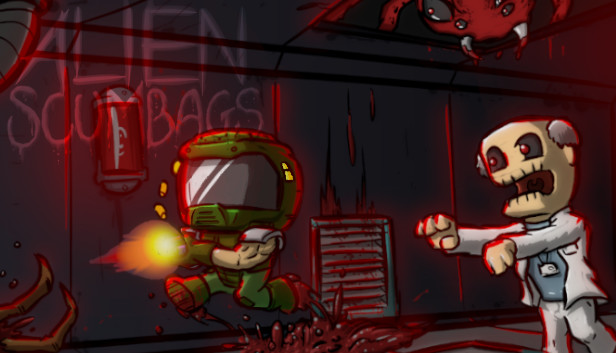
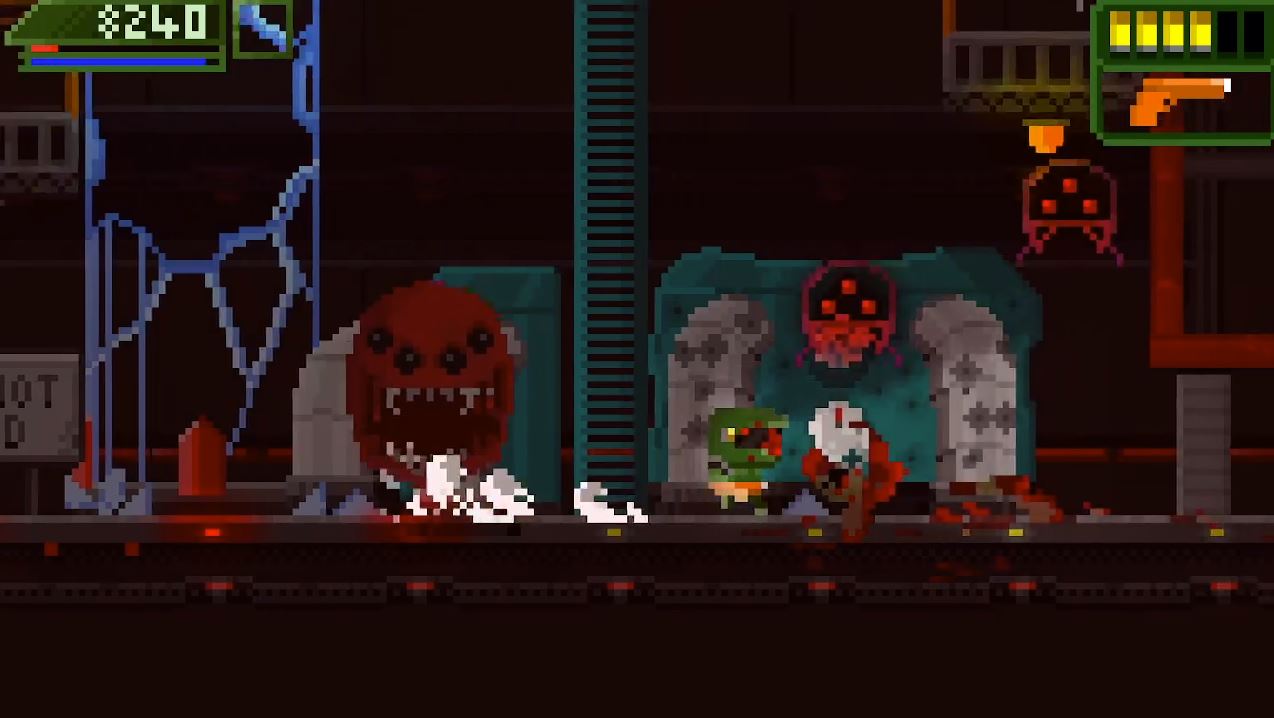
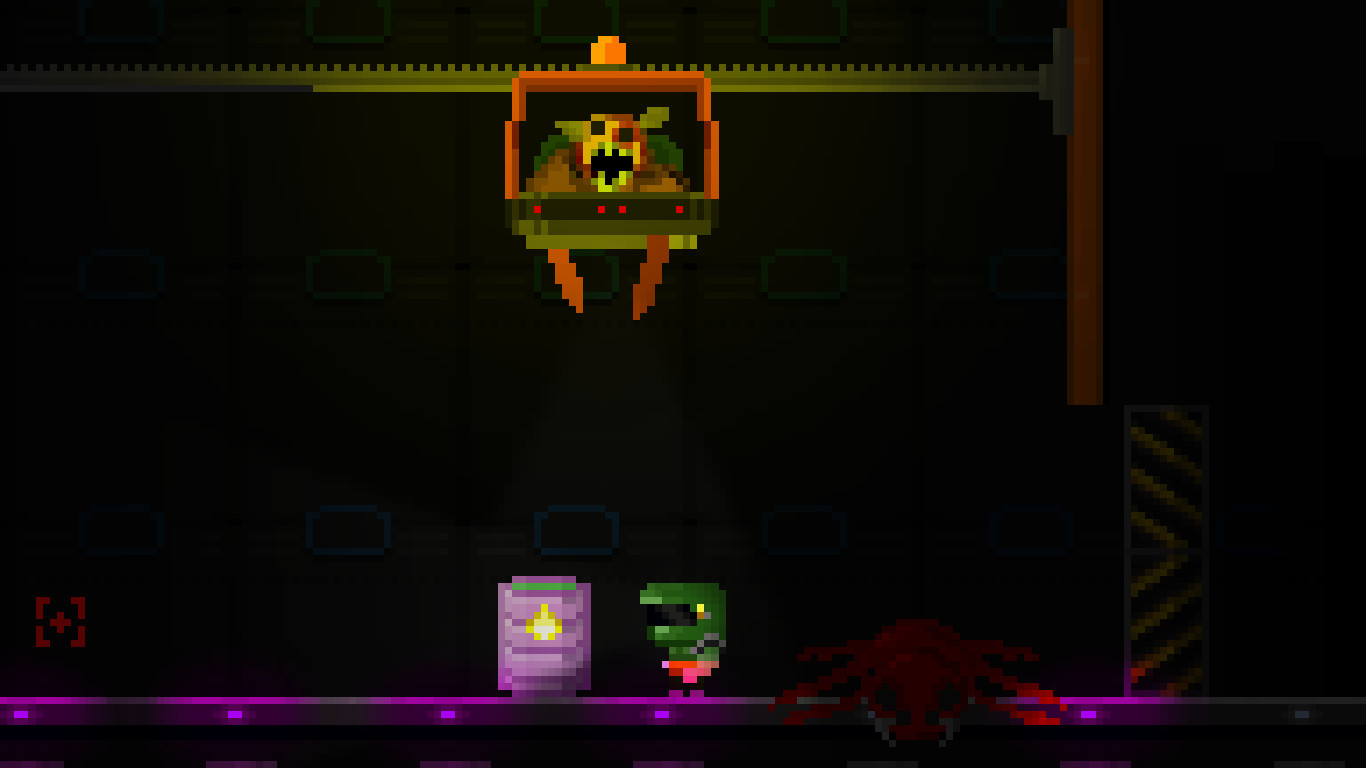
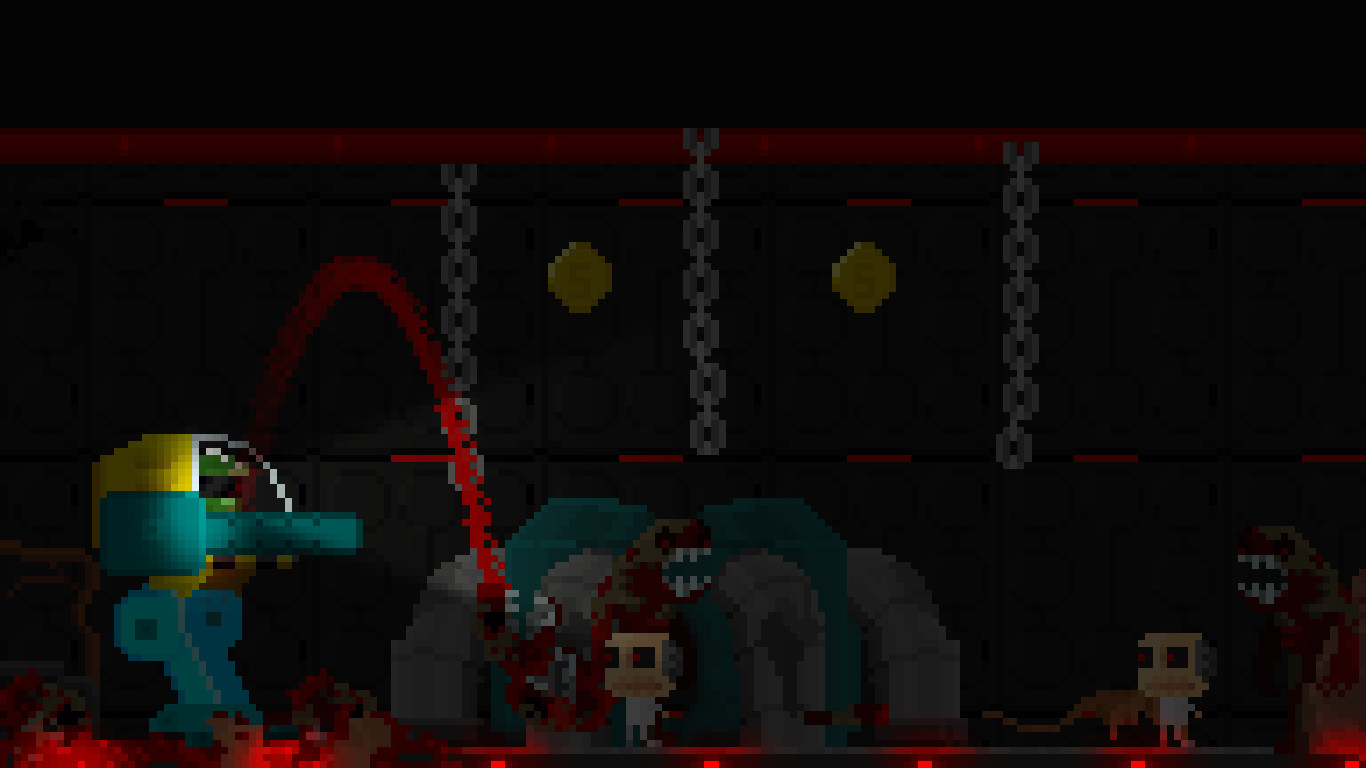
Last month, I played and reviewed a new PC release entitled Alien Scumbags. Developed by Monster Finger Games under principal designer James Ross, it’s an 8-BIT shoot’em up made as a love letter to the likes of Doom, Quake, and Duke Nukem, but also features a plethora of discoverable references to a wide range of classic games, as well as modern-day hits, whilst also delivering on a nice blend of horror and comedy. After having interviewed James before the release of the game:

https://scousegamer88.com/2020/05/10/qa-with-monster-finger-games/

I once again got in touch with him to find out more about the future of this title. As well as the additional content planned for future inclusion. And his experiences following the game’s official release. Here’s what James Ross had further to say about Alien Scumbags:

Alien Scumbags 1

How has the game been received since its release? 

Sales are not as high as we hoped, but the majority of people who have played it absolutely love it, which is really great to see.

Is there scope to bring Alien Scumbags to other platforms in the future? 

Possibly Switch, but it depends on how well it does on Steam, really.

The last time we spoke, you mentioned further content being developed for the game and even showed me this piece of concept art. Can you tell us more about it? 

I have created several pieces of concept art, and the plan is for everything to make it into the game. The last big release added a new enemy to the mix, which needed another strategy to kill. And the next big release will be adding another new enemy. The first projectile-based enemy. So excited for people to see that.

Alien Scumbags 2

You also mentioned the importance of community feedback throughout the game’s development, but how active has the community been since its release, and have you had any more important feedback after that?

The game has evolved since its release in a variety of ways due to feedback. Including how certain guns work, being able to aim above, etc. A lot of the feedback has come from the amazing Twitter community and streamers.

What further video game references are you planning to include with the introduction of new content in the game?

I can’t tell you much about that, you will have to wait and see 😉

If you could develop a game in any franchise, indie or mainstream, which one would it be?

I would love to be a part of creating another Road Rash game. I think a pseudo-3D game similar to the originals would make for a really interesting title.

Alien Scumbags 3

What is your favorite easter egg you’ve added to Alien Scumbags? 

My favorite Easter egg is the secret room that takes inspiration from a certain plumber.

In our last Q&A, you also mentioned developing a game entitled Super Bombardier. How has development been progressing? 

Currently, I am only working on Alien Scumbags; more levels/content will continue until the end of the year. With the final ending coming at the start of 2021.

After your current projects, what do you envision maybe next for Monster Finger Games? 

We have a few ideas rolling around, but not sure just yet, possibly more work on the Shmup Super Bombardier or Super Mega Shark, one thing is for sure, you will be the first one to know about it 🙂

Alien Scumbags 4

Following on from the advice you gave readers the last time we spoke, you mentioned that releasing a game can teach you a lot of lessons. Are there any further lessons you or the team have learned yourselves following the release of Alien Scumbags? 

Yes, I think the next time we release a Steam game, the page will be up a lot earlier. We suffered a little from not building up a big enough wish list before launch.

Do you have anything else to add?

Just want to say a huge thank you for the unreal amount of support you have given me with Alien Scumbags.

Alien Scumbags 5

Again, I’d like to thank James for taking the time to talk to me further about this exciting game, which will have even more to offer in the future as updates are introduced. Alien Scumbags is already an extremely impressive title as is, but it looks set to be an even better game in time. As always, I hope you guys enjoyed this article as much as I enjoyed writing it, and I’ll see you for the next one.

Game On,

Scouse Gamer 88