Tag Archives: Xbox

88 Heroes (PC, PlayStation 4, Xbox One & Nintendo Switch)

88 Heroes

Developer(s) – Bitmap Bureau

Publisher(s) – Rising Star Games

PEGI – 7

Developed by Bitmap Bureau and released in March 2017, 88 Heroes is a 2D side-scroller whereby the player assumes control of 88 pointless superheroes to defeat the evil Dr. H8, who plans to destroy the Earth in 88 minutes. I first played this whilst on display at Play Expo Manchester 2015, along with Coffin Dodgers and Kaiju Panic. I first viewed it as a potentially addictive title with a great deal of replayability. The finished product is a respectable title, whilst not as addictive as I thought, it does have replay value. 


Graphics – 7/10

The game takes place in 4 different worlds for the player to progress across a total of 88 levels. Each world has its unique look, ranging from office buildings to dungeons to space stations. The variety in design is pretty impressive, but it can get somewhat repetitive across a total of 22 levels. The majority of the game’s visual variety is represented through character design. 99 in total, counting the characters featured in the physical release of the game. 


Gameplay – 6/10

The character design in 88 Heroes is the basis of variety in gameplay. Each hero has their unique abilities and limitations, making each playthrough different in both variety and challenge. Playing this, I was as challenged as I was amused by how both wonderful and terrible each hero is; the game being nigh-on impossible to get through with certain heroes like Captain Colossus and El Delayo. On the flip side, some heroes can be used to either pass levels with ease or bypass most obstacles altogether, such as Mighty Mite, Bat Bot, and Tech Tank. Overall, I’d describe it as a fair challenge. Traversing through levels can get a little repetitive in terms of gameplay as well as visual design, and the boss fights are somewhat repetitive as well, but it played out well enough to have held my interest for a fair few playthroughs.


Controls – 7/10

The control scheme is hit-and-miss depending on which hero the player has control of. Some are easier to handle than others, which can either help or hinder the gameplay accordingly. I’ve already mentioned this hero, but the one that did cause me the most problems was El Delayo, as his actions are delayed after the player registers them through the controller, which, whilst I can appreciate, is part of the challenge, and can start to get pretty frustrating at times. Others, like Gonan and Tommy the Gun, are also not able to move and attack at the same time. And again, helps or hinders the game depending on whatever way the player looks at it. 


Lifespan – 7/10

A single playthrough can take there around an hour or two, dependent, of course, on the player’s skill. But if players are looking for a stern challenge each time, there is replay value to be had playing through the game multiple times. Heroes are picked at random every time a hero dies, posing a different challenge every time. It gives the game a Roguelike feel to it, albeit with the levels laid out the same as opposed to being randomly generated. It could be an idea to do that with a potential sequel, though they would have to make the heroes fractionally less useless. Otherwise, the game would be practically impossible to complete. 


Storyline – 6/10

The basic premise is simple: 88 pointless superheroes are called in to stop an invasion of Earth carried out by the evil alien Dr. H8. I enjoyed the sense of humour that was infused into this title, with the sheer variety of terrible, terrible superheroes and how their abilities were more of a hindrance than a help. If you’ve seen films like The Mystery Men or Kick-Ass, you can appreciate the humour in 88 Heroes. 


Originality – 7/10

Overall, despite lacking originality in environmental design, no 2D side-scroller like this has ever come about. And it’s a pretty creative title in terms of gameplay because of that. Despite the game’s flaws, I think its creators did a good job taking the old way of playing games and making something new from them. There aren’t many 2D side-scrollers with as much replay value as there is in this title.

Niiutral

In summation, whilst lacking in areas, 88 Heroes is a fairly enjoyable title and definitely worth more than one playthrough. It provides challenge and humour, outweighing the frustration of playing with certain heroes and accomplishing what the developers intended. 
Score

41/60

6.5/10 (Above Average)

Cuphead (PC & Xbox One)

Cuphead

Developer(s) – Studio MDHR

Publisher(s) – Studio MDHR

Director(s) – Chad & Jared Moldenhauer

Producer(s) – Maria & Ryan Moldenhauer

PEGI – 7

One of the most highly anticipated games of 2017, following its initial showcasing at E3 four years prior, Cuphead is a traditional side-scrolling run-and-gun game with an eye-catching and unique conceptual design and gameplay that is as challenging as it is satisfying. I first sampled this game at Play Manchester 2017 shortly after its release and realized that while it is indeed very challenging, it’s also a great deal of fun and one of the better indie experiences of last year.

Graphics – 10/10

The game adopts the visual style of the golden age of American animation of the early 1900s. Having been influenced by classic cartoons such as Mickey Mouse and Betty Boop, among many others. The game’s visual style was the most noteworthy aspect of it when it was first showcased. And arguably still is. Although the game’s playstyle is extremely enjoyable beyond its visuals, I believe it’s still the game’s finest point. Though plenty of games based on cartoon animation have since come and gone, few games have ever looked as compelling as Cuphead does.

Gameplay – 8/10

As stated, the game revolves around players running and gunning through a selection of side-scrolling levels. But the most prevalent feature in the gameplay is the numerous boss fights throughout. Which, for the most part, are extremely well handled. And come with a fair amount of challenge to match. I had an extremely difficult time trying to pick a favorite boss fight in Cuphead because each one of them is memorable in its own right. But in the end, I decided to pick out Grim Matchstick as my favorite. As for me, it provided the best blend of both challenge and individual conceptual design. Other outstanding boss fights in this, in my opinion, included Dr. Kahl’s Robot, Djimmi the Great, Ribby & Croaks, and Cali Maria.

Controls – 10/10

With every intentionally difficult game I review, I always look at the controls with a greater sense of importance than in other games. Because control schemes in these kinds of games, in my personal opinion, are largely hit-and-miss. And it can greatly affect the sense of challenge the game has to offer. For example, the original Mega Man was intentionally difficult. And as most players who have played it will testify, it is a particularly challenging game. But I personally found there to be some issues with the controls, especially in Guts Man’s stage, where there is precision platforming required. Thankfully, however, Cuphead does not have these issues. If mistakes are made, it will be down to the player’s individual skill. Which is the way it should be.

Lifespan – 6/10

The biggest gripe I have with the game is its lifespan. The game, dependent on the player’s skill, of course, can take around 6 hours to complete to 100%, which, for the amount of time it took to finish, seemed somewhat uneven to me personally. I can’t deduct too many points from it in this aspect, however, for two reasons. It lasts longer than most classic games of its kind. And the development time was clearly put into getting every other aspect of the game right. It would have been nice to have a few more side-scrolling levels added to balance out the number of boss fights. But nevertheless, it’s a somewhat reasonably long game, and for the time players will spend playing it, they will thoroughly enjoy it for what it is.

Storyline – 7.5/10

The story follows the titular character Cuphead and his friend Mugman. Who, against the advice of their master, The Elder Kettle, wander off far from their home. And come across a casino. They find themselves on a winning streak at the craps table when they are suddenly interrupted by the Devil, who raises the stakes. If they win one more roll, the pair will get all the loot in his casino.

But if they lose, they must forfeit their souls. Cuphead agreed, but rolled a pair of snake eyes, and after pleading for their lives, the Devil made Cuphead and Mugman a deal. If the pair can claim the souls of numerous runaway debtors for the Devil, he may consider pardoning them. The game’s story is simple in structure, but fairly unique in concept at the same time. It even has multiple endings, given the player’s choice. It’s the story, as well as its visual design, that makes it clear that this game was quite simply a labour of love.

Originality – 8/10

The Moldenhauers created this game based on their own experiences of watching classic Disney and Fleischer cartoons in their youth. And in Chad Moldenhauer’s own words, they sought to mimic the more subversive and surrealist elements of the classic cartoonists of the day. And subversive and surreal are some of the best words that I can possibly use to describe this game. It was enough to raise a lot of eyebrows at E3 2014 with its own unique conceptual design. And it has impressed a lot of gamers since its release, including me.

Happii

Overall, Cuphead is a visually stunning and delightfully challenging game with a lot to offer both veteran gamers with an appreciation for their roots and newer generation gamers, who may be curious about experiencing some of the beginnings of video game design. Though it took an unusually long time to be released following its initial showcasing, it turned out to be more than worth the wait, and it comes highly recommended by me.

Score

49.5/60

8/10 (Very Good)

XIII (PlayStation 2, GameCube, Xbox, Mac & PC)

XIII

Developer(s) – Ubisoft Paris, Southend Interactive (Xbox) & Feral Interactive (Mac)

Publisher(s) – Ubisoft, Marvelous Entertainment & Feral Interactive

Director – Elisabeth Pellen

Producer – Julien Barés

PEGI – 16

XIII was a game based on the comic book of the same name, written by Belgian novelist Jean Van Hamme. According to Ubisoft president Laurent Detoc, the game would create “a world so unique and enthralling that gamers will become instantly engaged”. Even with a very new form of visual presentation in video games, I wouldn’t entirely agree with this.

Graphics – 7/10

The graphics were fairly well done for the time. This was, after all, the first-ever comic book-style first-person shooter. Its visual style is indeed the best thing about the game; not only that, but it is also very well polished. I couldn’t see any glitches or anything like that while I was playing through it. I think the weak point about the game’s style is that the settings are extremely similar to those of games like Perfect Dark and Goldeneye 007, which would suggest that influences were somewhat too obvious. For example, the level whereby rooftops have to be traversed in order to elude police recapture was very similar to the opening level of Perfect Dark in conceptual design.

Gameplay – 5/10

Although this game was revolutionary for its time in terms of visuals, it wasn’t in terms of gameplay. Even for the time, this is a first-person shooter, which plays out pretty typically for most games in the genre. Any element of challenge in the game is presented through the stealth mechanics. Which, again, are not as elaborately developed as those found in games like Metal Gear Solid or the first Sly Cooper. The game also has a small amount of incentive and variety. The more the player progresses, the more the main character’s memory is regained. Thus yielding more skills as the game progresses. But even so, this game can become very boring very quickly, in my opinion.

Controls – 7/10

The movement in this game is also particularly stiff. It can become an unnecessary chore at times, and the auto-aim system can be particularly confusing. The crosshair doesn’t fix itself onto targets properly. Also, the grapple hook used to traverse buildings or mountains can be difficult to get to grips with at first. But other than that, the game plays out fine in terms of controls.

Lifespan – 5.5/10

Typical of any standard first-person shooter, XIII can be finished within 6 hours. Visuals alone are never enough to keep people playing a video game. At the end of the day, it’s all about the gameplay. And there wasn’t enough of it in XIII to make it last as long as it may have been able to. The problem with developing linear first-person shooters. Or even linear games in general, as very few of them have side quests and therefore contain next to no replay value apart from playing through them on a harder difficulty.

Storyline – 7/10

The game’s story is about a man named XIII. He wakes up on a beach with amnesia to find out he is the prime suspect in the president’s recent assassination. He must fight his way through the FBI, the CIA, and the criminal underworld. In order to uncover his identity and clear his name in the process. The game’s story is actually not bad, to be fair. There are a few decent twists and turns to it, but the voice acting is a bit off. The standout performances, in my opinion, are those of both David Duchovny and Adam West, who play XIII and General Carrington, respectively. This was based on a fairly popular comic book series. So it was always bound to have some depth in the story, at least. But overall, I think the developers chose to concentrate more on that and the visual style than on gameplay.

Originality – 7/10

Obviously, the most significant features of this game are the stylized visuals, which would become a stable part of game franchises in the future. And the pretty compelling story. But as I keep pointing out, it’s all about gameplay ultimately, and there wasn’t enough innovation in that department to keep it enthralling in my opinion.

Niiutral

Overall, I think first-person shooting fans should play through this game at least once, but I think it should probably be left at that. It’s terrible by any stretch of the imagination, but I think the novelty wears off after a while, as there doesn’t seem to be enough substance in gameplay to keep it entertaining throughout.

Score

38.5/60

6/10 (Average)

Vexx (GameCube, PlayStation 2 & Xbox)

Vexx

Developer(s) – Acclaim Studios Austin

Publisher(s) – Acclaim Entertainment

ELSPA – 11+

Being the last original IP published by Acclaim Studios before filing for bankruptcy in late 2004, Vexx was a 3D platformer released to mixed critical success and low sales figures, leading to the cancellation of a planned port to the Game Boy Advance. Personally, I did find that the game had more than its fair share of issues. But it’s certainly not the worst 3D platformer I’ve played. And not one of the worst 3D platformers released throughout the sixth generation. The game also has its finer points that are certainly worth highlighting.

Graphics – 6.5/10

One of these finer points is that the game’s visuals are about as wonderfully varied as many other, more successful 3D platformers, featuring a wide variety of different locations ranging from forests to volcanoes to dream worlds. The boss and enemy designs were also fairly well-executed, for the most part. Suiting the tableau of each of their respective levels. My biggest concerns about the graphics were focused on the technical side of things.

The game looks somewhat outdated for the time compared to a lot of games released prior, such as Luigi’s Mansion and Metroid Prime. And the lighting is also pretty inconsistent, which will leave players struggling to navigate through levels when the night comes. It can be an especially annoying problem when players need to climb certain wall surfaces to reach higher ground. The poor lighting can make it difficult for players to differentiate between walls that are traversable and walls that are not.

Gameplay – 7/10

The object of the game is largely reminiscent of that of some of the best 3D platformers ever developed, such as Super Mario 64 and the original Jak & Daxter. Completing specific objectives to collect items needed to advance. In this case, it’s the hearts of dead wraiths. This gives Vexx a much darker undertone than either of the aforementioned games. There is also an emphasis on combat and stringing combos together, which, for the most part, keeps things interesting.

I did enjoy how tasks to complete to collect the hearts were surprisingly varied, and how there are a fair few hearts to collect in each level. Giving players plenty to do. Interestingly, some of the hidden locations in the game that can be found relatively early on involve warping into and traversing through wall paintings. These mechanics are extremely reminiscent of the game Contrast, which involves players having to traverse shadows in order to get around. I can’t help but wonder if this game influenced Contrast.

Controls – 8/10

For the most part, the controls are fairly simple to cope with, like most other 3D platformers that require the use of an analog stick for movement. But I did find a couple of flaws. For example, the swimming mechanics weren’t handled particularly well. Handled in a manner reminiscent of the swimming mechanics in Majora’s Mask. I also wished that combat could have been handled a little bit better. I think that having a targeting system reminiscent of Ocarina of Time or Dark Cloud would have helped to significantly improve the experience and add a lot more fluency to it.

Lifespan – 6.5/10

Vexx can be made to last around 7 to 8 hours. This, whilst it may be much lower than the average lifespan of a 3D platformer, is still a length of time in which gamers will be kept busy by a lack of cutscenes and a fair abundance of gameplay. There are around ten wraith hearts to collect at each level. And a lot of the objectives required to get some of them are fairly demanding. In terms of both time investment and challenge. Making it longer than many other games released on the system. Although Luigi’s Mansion is ultimately the superior of the two games, Vexx can be made to seem much longer in comparison.

Storyline – 7.5/10

The story of the game follows a young villager named Vexx. After being forced into slavery along with his grandfather, Vargas, by the evil wraith lord Yabu, Vargas escapes captivity. And vows revenge against him and his army after Yabu kills Vargas, following an attempt by the latter to save Vexx from being killed by Yabu himself. I was surprised by everything about the game’s story. From how the tone is set to how the plot unfolds, and then right up to how it ends. Compared to many of the other games that this game was undoubtedly influenced by, there is a surprisingly dark and gritty aspect to it.

Originality – 7/10

Undoubtedly, the most unique aspect of the game is how mature and sinister the story is compared to many other games in the genre. And how the supposed hero isn’t always triumphant. Of how innocent the game looks on the surface, players will inevitably be very surprised when and if they come to pick it up and play it. Better and more unique gameplay mechanics were pioneered in the sixth generation than what was seen within this title. And there are mistakes present that make it stand out for the wrong reasons. But for the most part, I found that it did the things it needed to do fairly well. Making it worthy of at least one playthrough.

Happii

In summation, Vexx is a pretty enjoyable and wonderfully dark gaming experience. The gameplay is pretty well executed, and the story is shockingly well told. Albeit with a few examples of bad voice acting. And even though the visuals were somewhat outdated for the time, the world of Astara is immersive. And varied enough to be enjoyable for the most part.

Score

42.5/60

7/10 (Fair)

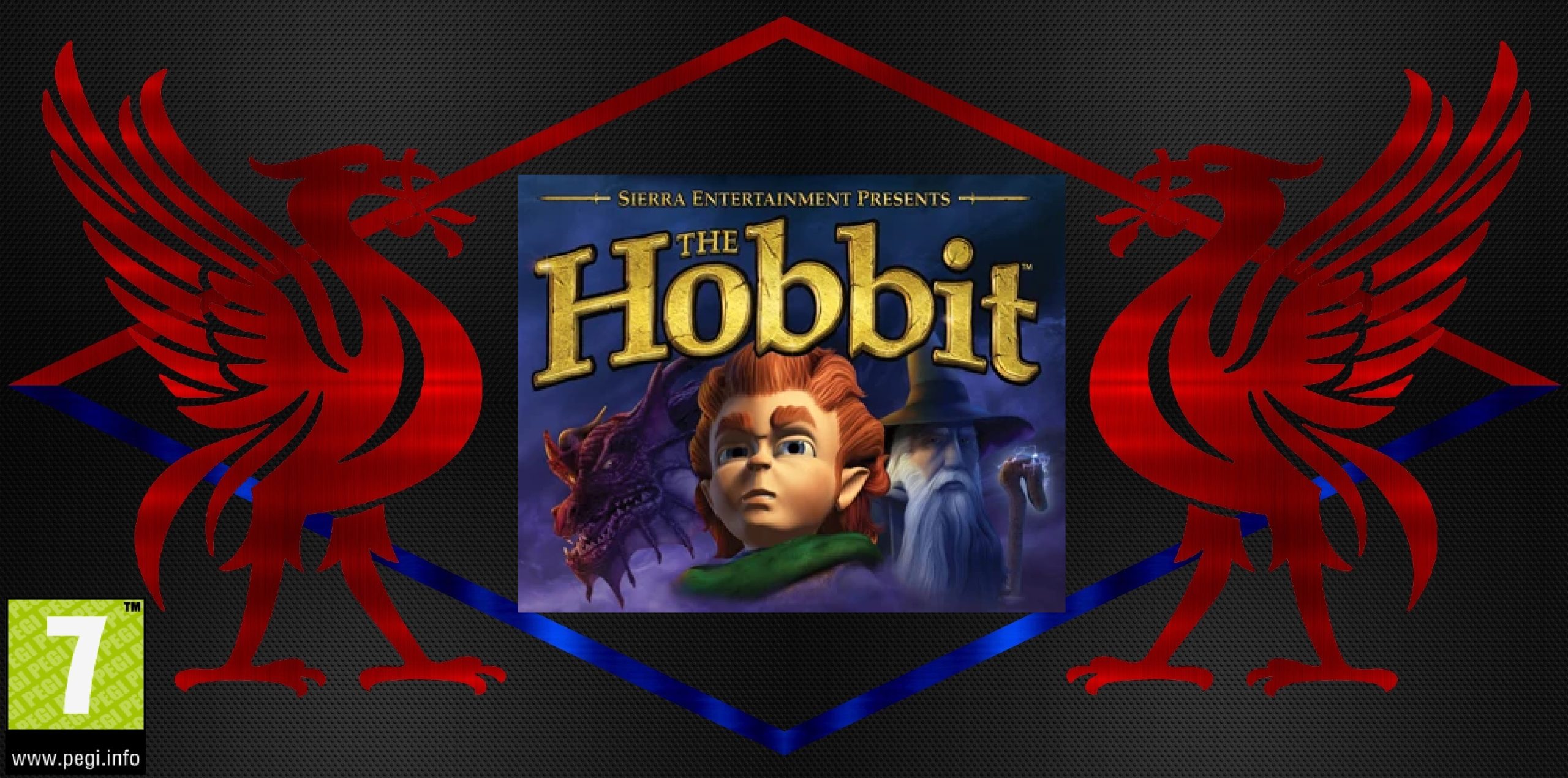
The Hobbit (Xbox, PC, PlayStation 2, GameCube & Game Boy Advance)

The Hobbit

Developer(s) – Inevitable Entertainment, The Fizz Factor & Saffire

Publisher(s) – Sierra Entertainment

Designer – Chuck Lupher

Producer(s) – Jaime Grieves

PEGI – 7

Amidst the newfound popularity of the Tolkien mythos surrounding the Lord of the Rings film trilogy directed by Peter Jackson, and amidst an ongoing dispute regarding the rights to the Tolkien license, with multiple games based on the books and films being developed at the time, The Hobbit was released to mixed reviews from critics. Who cited the gameplay as being uninspiring, and its failure to appeal to younger gamers.

In the industry, licensed games have, for the most part, been generally frowned upon. And seen as simply being a modern form of shovelware. With the owners of their respective licenses simply releasing games to coincide with films for the most part. However, there are a select few licensed games that go above and beyond what is expected of them. And end up offering some legitimately enjoyable gaming experiences. In my opinion, whilst The Hobbit may not be among the best, it’s certainly not among the worst, I find.

Graphics – 6.5/10

One aspect that the game falls short on somewhat is the visuals. Whilst they may have looked fairly impressive at the time, they don’t hold up nearly as well on a technical level as many other games of their kind do. Such as Final Fantasy X and Metal Gear Solid 2, to name but a few. Like the game based on the first volume of The Lord of the Rings trilogy, developed by WPX Games & Surreal Software, it largely conforms to the same conceptual design as in the films. But there are a couple of standout elements that did fairly well to separate it from both the initial Peter Jackson film trilogy. And the aforementioned game at the time of its release, at least (before the Hobbit film trilogy came out years later, as well as Lego The Hobbit). Such as locations like Lake Town, Mirkwood, and Erebor.

Gameplay – 7/10

For the most part, playing out like a traditional 3D platformer, the game also has a few little side quests thrown in for good measure during the first half of it. Like the previously mentioned Lord of the Rings game. Most notably involving completing the tasks for the dwarves before the party departs for The Lonely Mountain. There is also a small stealth aspect. This fits in fairly well with the tableau of the story of Bilbo Baggins being hired as a thief. And which I moderately enjoyed. Stealth can be quite a tricky aspect to pull off in games. As it can eliminate fluency if it requires players to play through the same area a certain number of times. But for the most part, it’s done fairly well in this title, in my opinion.

Controls – 10/10

As far as 3D platforming in this game goes, I had no gripes with it whatsoever. Which, in all fairness, was to be expected, I think. As the genre had well and truly taken prominence at this time. Following the release of games such as Super Mario 64 and Jak & Daxter. Combat and stealth are also both handled adequately well. And there are no unnecessary complications with the game’s control scheme present to add any kind of unwarranted level of frustration.

Lifespan – 6/10

The game can be made to last an average of 8 hours, even taking in the completion of side quests throughout the course of the game, which, whilst it isn’t great by any means, is still fractionally longer than the game based on The Lord of the Rings license, which can be made to last around 6 to 7 hours. As the game conforms to a very linear progression, it wasn’t expected to have a great lifespan in any case, but I can’t help but think that with a little bit more imagination on the developer’s part, it could have been made to last at least a little while longer; certainly, the first part of the game is set in the Shire.

Storyline – 8/10

Depicting the events of the classic children’s novel written by JRR Tolkien, The Hobbit follows the exploits of Bilbo Baggins of the Shire. He is persuaded by the wizard Gandalf and his band of 13 dwarves to accompany them on an adventure to retake the dwarven city of Erebor from the dragon Smaug. The story itself isn’t an issue at all since it’s enjoyable in any form that it’s told. Be that through a game, a film, or most notably, of course, a classic book. The biggest problem I had with it, however, is that the voice acting is quite lackluster. Even by video game standards at that time. And thus, it’s much more difficult to take seriously than in other forms of media in which the story would be told.

Originality – 6/10

The game does retain a slight element of uniqueness. It incorporates the aforementioned stealth element. Which, at this point, was only really seen in the Sly Cooper games. However, for the most part, it plays out like most other 3D platformers that were released before their time, and consequently, I don’t think it can be considered either evolutionary or revolutionary. The stealth mechanics in the Sly Cooper games were much more sophisticated than in this title. And in terms of normal 3D platforming mechanics, it fails to stand out amidst many of the classics in the genre that had been released prior.

Happii

In summation, despite its lack of originality and less-than-satisfactory voice acting, The Hobbit is nevertheless a fairly enjoyable gaming experience. And shouldn’t be entirely overlooked. Whilst the visuals may not hold up to this day on a technical level, and whilst more could have been added to increase the game’s longevity, the developers did a good job for the most part, and it’s certainly worth at least one playthrough, for both fans of the Tolkien mythos and the 3D platforming genre.

Score

43.5/60

7/10 (Fair)

Terraria (PC, Xbox 360, Xbox Live Arcade, Xbox One PlayStation 3, PlayStation 4 PlayStation Vita, PlayStation Network, Windows Phone, Wii U, Android & iOS)

Terraria

Developer(s) – Re-Logic, Engine Software & Codeglue

Publisher(s) – Re-Logic, 505 Games & Spike Chunsoft

Programmer – Andrew “Redigit” Spinks

Producer – Jeremy Guerette

PEGI – 12

Terraria is a 2D platforming sandbox game, whereby the idea is to explore a huge open environment (including underground). And build a house to accommodate non-playable characters such as a merchant, a demolitionist, and a nurse. And to fend off waves of hostiles that try to attack either the player or their house. Whilst it is very addictive in gameplay and lasts only as long as the player’s interest, other faults hamper Terraria to an extent. But nowhere near the extent to make it unplayable, by any stretch of the imagination.

Graphics – 6/10

Visually, this game is a nice throwback to the era of both the SNES and the Mega Drive. It’s rife with 16-bit sprites and environments. The main concern I have regarding the graphics is that they may seem unique to a lot of younger gamers. As they may not have played games from the 16-bit era, older gamers may not be so smitten by the visuals. As there is not that much unique about it in a conceptual sense. Most of the enemies found in the game are pretty generic and typical. Including zombies, vampires, skeletons, and even slimes, which have been a stable element in the Dragon Quest series for years.

The most unique enemies in the game are, without a doubt, the demon eyes, which are floating eyeballs that attack people. Even the Wall of Flesh, the hardest enemy in the game, doesn’t seem overly original compared to other monsters of its kind that have been seen in video games prior. Such as Melchiah from Legacy of Kain: Soul Reaver or the Mother Brain from Metroid. For the most part, the enemies are pretty typical. But nevertheless, the 16-bit graphics are nicely rendered, and to an extent, I could appreciate that the developers were trying to make the game stand out from a graphical point of view.

Gameplay – 8/10

The fact that the game’s conceptual design is pretty weak doesn’t at all change the fact that it is an absolute joy to play once players become immersed. It is extremely addictive. And it can obligate players to continue playing, whilst they may not be making progress in the conventional sense. A gameplay element very reminiscent of The Elder Scrolls series. However, it will take some getting into. A lot like Minecraft or Don’t Starve, it’s not strictly self-explanatory. I would recommend getting tips on how to play it effectively before trying it.

At first, I saw little point in carrying on with Terraria. From first impressions, it seemed like things were moving too slowly. I then watched a few videos of people playing it and a few tutorials. And I decided to give it another go. Before I knew it, it was half past 2 in the morning. Although at first, I struggled to understand exactly what this game had going for it in terms of gameplay, it grew on me. And I came to be impressed with what there was on offer. I have played very few 2D side scrollers that offer this level of exploration and freedom. And whilst it’s not a very original idea in general, I enjoy playing it.

Controls – 9.5/10

Another thing that initially annoyed me was the mechanics of building and mining in this game. It took me a while to figure out how to do it as effectively as possible. I was about to run out of patience when I accidentally discovered that the analog stick can be used to switch between two ways of building and mining when it’s pushed down. But as I said, I found that out by chance, and it wasn’t self-explanatory. I guess by that logic, however, it would be much easier to play this game on a PC. But anyone reading this who is thinking of trying the game will now know. And there aren’t any other problems to address at all.

Lifespan – 10/10

As I previously wrote, this game will only last as long as the player’s interest, and given this game’s level of addiction and variety, that should indeed be a particularly long time. There is no obligation to complete the main objective at hand, and players will be encouraged to make other forms of progress in order to pass the time, such as building a bigger and better house. I, for example, have dedicated time to simply making an underground network, simply to be able to explore the depths of the in-game world more easily.

Storyline – N/A (10/10)

One thing I tend to keep in mind whilst critiquing a video game is that not every game has to have a story in order for it to be good. Therefore, if a game doesn’t have a story, but doesn’t necessarily need one, it won’t lose any marks and will attain a perfect score in that axiom of judgment. There is no point in criticizing a game for not having an element that it didn’t need, and Terraria is certainly one of these games. When I reviewed Don’t Starve some time ago, I thought that it didn’t have to have a story at all, but the fact of the matter is that it’s there, and it’s just not elaborated on very much, so it lost marks. But with Terraria, there is no story; nor does it need one. Therefore, there is no need for it to lose marks.

Originality – 4/10

This is the aspect in which the game was left wanting, in my opinion. As I said, although it is addictive and fun to play, the developer’s desire to incorporate uniqueness in the visuals with the 16-bit style wasn’t fully realized, the way I see it, as it was pretty weak in conceptual design, with few standout enemies or visual elements. It’s because of this that I’m skeptical that it would’ve stood out if the game had been actually released in the 16-bit era.

Happii

In summation, aside from Terraria’s lack of visual uniqueness, and in terms of gameplay, whilst it does indeed borrow elements from Minecraft and the Metroidvania style of play, and therefore lacks the feel of a fully cohesive concept, it was still fun to play and one of the more addictive games I’ve played in recent times, and it’s definitely worth the very generous asking price attached to it.

Score

47.5/60

7.5/10 (Good)

Street Fighter III (Xbox, Xbox 360, PlayStation 2, PlayStation 3, Arcade & Dreamcast)

Street Fighter 3

Developer(s) – Capcom

Publisher(s) – Capcom

Designer(s) – Yasuhiro Seto, Tomonori Ohmura & Obata Shinichiro

Producer – Tomoshi Sadamoto

PEGI – 12

First released for Japanese arcades in 1997, and brought overseas in 1999 on the Dreamcast, Street Fighter III received critical acclaim upon release; albeit to a much lesser extent of a commercial success than the universally influential Street Fighter II, but enough of an effort for many long-time fans of the series to go so far as to hail it as the perfect fighting game, due to the fluidity of its controls compared to every other fighting game around at that time, as well as previous entries in the series. Curious, I approached it with fairly high expectations, and whilst I didn’t find it to be my favorite fighting game of all time, by far that honor would go to SoulCalibur IV, I wasn’t disappointed for the most part, and had a lot of fun playing it.

Graphics – 7.5/10

Instead of incorporating 3D graphics into the franchise, like most other gaming franchises were doing at this time, Street Fighter stuck with the more traditional 2D visuals, as well as the more traditional 2D style of play, and even against many fighting games released at the time, it still looks particularly impressive. What I was most enticed by personally was how detailed, varied, and visually striking the backdrops of each stage were.

And the amount of effort that went into the conceptual design in general. Although I found the character roster to not be the strongest of the series (my personal favorite being Ultra Street Fighter IV), Capcom tried to branch out in different directions in terms of character design, and some, unfortunately, work better than others. I personally would have liked to see one or two more classic characters than what was present in III, but overall, the roster is fairly solid, and the visuals did well to make the game stand out.

Gameplay – 8/10

The third game is essentially a carbon copy of the second, but with added features thrown in for good measure, as well as, of course, new characters and move sets. The main addition to the series that came with Street Fighter III was the ability to parry opponents’ attacks, and to string together more elaborate and powerful combos; the bars for which are charged up every time the player lands a hit on their opponents. They made for robust and welcoming new features to the series that built upon what made Street Fighter II undisputedly the most influential fighting game of all time, which is, in turn, part of the reason why many fans consider it to even be superior to the second game. Whilst fighting isn’t my favorite genre of video game, I’ve had fun with a fair few of them, and Street Fighter III is no exception.

Controls – 10/10

As I alluded to earlier, despite the fact that there were many fighting game series that we were able to implement 3D movement relatively well, including my favorite fighting game of all time, I’ve always favored 2D movement for its simplicity and lack of additional complication. It’s because of this that Street Fighter III, like almost every other entry in the series bar the original game, poses no problems in terms of controls. It’s certainly very satisfying to witness how far Capcom has come from creating one of the worst fighting games of all time to some of the greatest.

Originality – 6/10

Both the game’s visuals and the general style of traditional fighting gameplay are the key elements that make the third installment stand out among others. Though I may not have liked every new character implemented, Capcom did reasonably well to keep things fresh in this respect. However, I was surprised at the lack of game modes in Street Fighter III, since by this time every other major fighting game franchise had implemented new game modes, such as survival, time trial, etc. The only thing closest to an additional game mode in Street Fighter III is the return of the Crush the Car mini-game from Street Fighter II. Otherwise, there’s nothing beyond either arcade mode or multiplayer (online or offline) that makes it stand out from the point of view of variety in gameplay.

However, despite the qualms I have about the lack of gameplay modes in comparison with most other fighting games released at the time, Street Fighter III still remains an extremely enjoyable fighting game, and one coming highly recommend. It has excellent and fluent controls, as well as challenge and a great feeling of intensity in its gameplay, and the hand-drawn visuals make for a 2D feast for the eyes that whilst may have been more or less fazed out during the sixth generation, have since inspired many current developers, both indie and mainstream, to create more games throughout the seventh and eighth generations using the same rendering methods; and the industry is all the better for it in my opinion.

Score

31.5/40

7.5/10 (Good)

Silent Hill 2 (PlayStation 2, Xbox, Windows, PlayStation 3 & Xbox 360)

Silent Hill 2

Developer(s) – Konami Computer & Entertainment Tokyo

Publisher(s) – Konami

Director – Masashi Tsuboyama

Producer – Akahiro Imamura

PEGI – 16

After the success of the first Silent Hill game, the sequel did not disappoint overall. It was met with positive reviews and huge sales figures, selling over one million copies worldwide in its first month. I, however, wasn’t overly impressed after playing through it. Although I think it is better than a lot of other survival horrors that have come out before it. What I like about it is that it’s a psychological horror game. This differentiates it from most other games in the genre in an extremely positive way.

Graphics – 9/10

Although there is a protagonist, an established antagonist for the franchise, and several supporting characters in this game, there’s no doubt in my mind that the town of Silent Hill itself is, in many ways, the star of the show. The atmosphere of the place is absolutely horrific, with most scares in the games coming not from a massive amount of jump scares, bloodstains throughout, or a staggeringly high body count. But from its constant build-up of tension, the sense of gritty realism in the settings, and the lack of light throughout the game. The thought that anything could jump out of either the darkness in the numerous buildings the player has to traverse or from out of the outdoor fog is enough to keep players constantly on edge.

Gameplay – 4.5/10

I find that the gameplay is only fractionally more enjoyable than that of Outlast, for example, since there are means of self-defense in addition to a few alternative endings to unlock. Ultimately, it again felt more like I was watching a film than playing a game, as the only objective seemed to be simply uncovering the story. The alternative endings and a few unlockable weapons are the only two forms of incentive that come with playing through the game multiple times. Reviewers have commented on how they think that the second game is the highest point in the franchise, and that doesn’t really make me want to try any of the other entries.

Controls – 10/10

Although reviewers have criticized this game for its controls, I didn’t really find any problems with it. The best thing about this game’s control scheme is the excellent use of camera angles. This, in a way, adds more to the atmosphere and overall feel of the game. They were very well done.

Lifespan – 6/10

Depending on how much exploration is done throughout a single playthrough, the game can last up to about twelve hours. This is about the average lifespan of a typical survival horror. This and the scarcely satisfying gameplay just give testament that there is a massive imbalance of focus on both horror and gameplay. It makes me wonder why there are so many developers who can’t seem to get the balance right. Even if this game lasted longer, the gameplay would be drawn out. And repetition would definitely be over-emphasized. So there wouldn’t be much point in making it last any longer than it does anyway, without further substance in gameplay.

Storyline – 8/10

For what this game lacks in more important aspects, whilst not making up for what it lacks, it certainly delivers in terms of story. A psychological thriller with elements of the supernatural will leave players feeling enthralled. And emotionally drained throughout. With its coverage of taboo subjects, such as incest and domestic violence. And with the mystery of what is true and not true, or what is real and not real. The protagonist, James Sunderland, is drawn to the town of Silent Hill by a message that he recently received from his wife, Maria, saying she was there waiting for him. Even though she’d been dead for three years before the start of the game.

As James explores further into the town, he enters a battle with his own personal demons. And subconscious desires to realize a horrifying truth and understand the errors of his ways. So as you may imagine, there are a few twists and turns before the end. It all makes for an extremely compelling plot. The voice acting can seem a bit laughable at times. But ultimately, the characters in Silent Hill 2 are very well-conceived, and how they develop throughout the course of the game makes for an excellent tale. Another interesting thing is that whilst the character Pyramid Head steals the show as the game’s primary antagonist, he’s not even the scariest character, the way I see it. By far, that honor would go to Eddie, and I will go further into why I think that later on.

Originality – 7/10

With Silent Hill 2 relying on tension as the source of its horror, and with a story and concepts that defy convention, the Silent Hill genre is particularly unique in its own right, not just the second game. But where it lacks originality is in gameplay. It ultimately plays out like most games in its genre, and it seems as if the developers didn’t even try to defy convention in that respect.

Happii

In summary, Silent Hill 2, whilst it severely lacks in gameplay, has a lot to experience in terms of story, and I suppose it is worth playing through once because stories that are compelling don’t come around often. But the way I see it, whilst certain elements do save it from being a terrible game, even saving it from being an average one, I don’t think it should be considered a classic.

Score

44.5/60

7/10 (Fair)

Second Sight (PlayStation 2, Xbox & GameCube)

Second Sight

Developer(s) – Free Radical Design

Publisher(s) – Codemasters

Lead Designer – Mike Armstrong

PEGI – 16

Back in the sixth generation of gaming, 3D third-person shooting was more or less in its infancy; long before games such as Gears of War and Mass Effect would go on to populate and revolutionize the genre. And deliver some of the greatest gaming experiences to date. As a genre in its early stages, I had trouble enjoying many third-person shooters on the PlayStation 2, including Max Payne, Operation WinBack, and Headhunter. And Second Sight. Though I think it stands out better than most others of that time, not many of the fundamentals were done quite right. And the game suffered because of it, in my opinion.

Graphics – 5/10

From what had been seen already on the PlayStation 2. Such as Silent Hill 2, Metal Gear Solid 2, and Final Fantasy X. The game’s visuals are not only substandard from a technical point of view. But also from a conceptual one. The settings are extremely bland. Made up of what players would find in most typical Medal of Honour or Call of Duty games. And nothing about them makes it stand out from most other games. Even for the time. The most positive thing I can say in terms of visuals is that it’s a very polished game with minimal glitches.

Gameplay – 5.5/10

I have played many worse games than this and many less variable ones, too. Indeed, having psychic powers at your disposal certainly offers some diversity in gameplay. But as far as the run-and-cover-based shooting is concerned, I found it pretty frustrating, especially since some sequences can simply be bypassed by players with a sacrifice to some health. And where’s the fun to be had in that? I can appreciate that many of the game mechanics in Second Sight could be seen as precursors to some of the ideas seen in later classic games. Such as the Mass Effect trilogy. But with this title, it was very much a question of trial and error. But with a lot more errors than I would have personally liked.

Controls – 6/10

As I mentioned before, third-person shooting games have a long way to go at this point to be perfect. Many developers at the time focused on genres such as first-person shooters, 3D platformers, and especially RPGs. Control schemes for those kinds of games had long since been developed almost to the point of perfection. But with third-person shooting, it was a very different story in my opinion. Specifically, in Second Sight, I found the controls for using psychic powers in Second Sight to be quite a chore. And at times, incredibly difficult to get to grips with. At the time, it wasn’t often that games in the genre had as much variety as there is in this title. And so it was always going to be a question of trial and error in this respect too.

Lifespan – 2.5/10

Even if it isn’t rushed, this game can only take about three and a half hours to finish. There are minimal side quests. The main objective of the game seems to be only to find out what happens next in the story. I despair whenever I find a game that has little to no side quests when there was quite clearly room for at least one, since it would suggest laziness on the part of the developers to me.

Storyline – 7/10

By far, the best thing I can attribute to this game is its story. It follows a parapsychology researcher and former soldier named John Vattic. He is on an expedition to recover his memory and discover the reasons and machinations behind his newly found range of psychic abilities. There are quite a few twists and turns throughout to keep things interesting. And whilst the voice acting may be a little bit off at times (as was somewhat of a stable thing back then), the dialogue is pretty well written, and the story has a lot of suspense attached to it.

Originality- 5/10

The most unique things about this game are its added variety in gameplay compared with most other games in the genre, and of course, it’s a pretty well-conceived plot. But where it loses marks is through its bland conceptual design, which hampers the game quite a bit. At times, it reminded me very much of Hitman: Contracts, which is one of my least favorite video games of all time. I can appreciate that there were signs of the developers wanting to deliver something very unique for the time, and it worked well for quite a lot of people, but not for me.

Angrii

In summation, Second Sight could have been seen as a great game in scope if the developers had gotten the basics right, but sadly, that wasn’t the case. Though it has become a cult classic for many other gamers since its release, I had too hard a time trying to see its full appeal, and am unable to completely appreciate it.

Score

26/60

4/10 (Poor)

Red Dead Revolver (PlayStation 2 & Xbox)

Red Dead Revolver

Developer(s) – Rockstar San Diego

Publisher(s) – Rockstar Games

Designer – Josh Needleman

PEGI – 16

The precursor to the 2010 game of the year, Red Dead Redemption, Red Dead Revolver was Rockstar’s take on the spaghetti western genre. Something that has been an unusual rarity in video games. But after playing it, I could see why Rockstar would want to improve on the overall concept as they eventually did. How the official PlayStation magazine rated this game 9/10, I’ll most likely never understand.

Graphics – 5/10

The best thing I can say about this game in terms of visuals is that it does capture the scenery and style of the old American West well enough. But that’s about the only positive I can attribute to it. Other than the town of Tarnation, there’s not much else that stands out. The scenery can get extremely repetitive after a while. And not much is done to switch it up throughout the course of the game.

Gameplay – 3/10

The gameplay is even more repetitious than the visuals, unfortunately. It plays out almost like an arcade game. The objective is to simply rack up the highest score possible by getting the most accurate shots on people. At that point, it would have also felt more like the industry may have been going back on itself than what it may feel like now, with many of the games released on the PlayStation Network. New gameplay ideas would be established in the seventh, and were still being experimented with during the sixth. And arcade games may have simply been seen as a concept long dead.

Controls – 6/10

As what was more or less an arcade game, precision shooting was something that one would think the developers would surely have to get right. As the concept had been around for a particularly long time. But you’d be wrong. The crosshair sensitivity, no matter how the player may alter it in the options menu, will cause some serious problems. In many ways, it ruined the gameplay for me, because although it gets most of everything else right, the developers failed to get right the element that mattered most in an arcade third-person shooter: precision shooting.

Lifespan – 2/10

On top of all my previous complaints, it barely has a lifespan better than an arcade game. The game can be completed within 5 hours, which, for a late sixth-generation game, is awful. Considering there were so many more longer-lasting games around at the time, and even more to come the following year.

Storyline – 5/10

The story of Red Dead Revolver follows the titular character, Red, a bounty hunter who is caught up in a quest to avenge the death of his father. Again, just like Watch Dogs, and also many other spaghetti western films such as The Quick and the Dead, it’s pretty typical for its genre. Plus, the voice acting is particularly off at times, and it made it too hard for me to take it seriously, in all honesty.

Originality – 2/10

In terms of either visuals, story, or gameplay, this game is one of the most generic I’ve ever played and certainly stands out to me as being one of Rockstar’s weaker efforts, making it original, but in a much more negative way. Nothing suggested to me that this game was worth playing for any extended amount of time, and nothing suggests to me that I should ever play it again, quite frankly.

Angrii

In summation, Red Dead Revolver was definitely a question of trial and error, and the only positive way I could attribute it overall is the fact that it instigated the creation of a much better title.

Score

23/60

3.5/10 (Very Poor)