Category Archives: Video Game Reviews

I am Scouse Gamer 88; an amateur Liverpudlian game reviewer making his opinion heard about as many video games as possible. Scroll through and read all my video game reviews from A to Z. All my thoughts and opinions on some of the very best and very worst games released!

Throughout my career, I have reviewed a great of games; be that AAA mainstream titles or independently developed indie hits. In my 30+ years, I have had extensive experience playing every kind of game. Ranging from critically acclaimed beloved titles to forgotten flops.

I take great pride and put great care into what I do, and I hope you enjoy reading my reviews as much as I writing them!

Five Nights at Freddy’s (PC, PlayStation 4, Xbox One & Switch)

Five Nights at Freddys

Developer(s) – Scott Cawthon

Publisher(s) – Scott Cawthon & Clickteam LCC USA

Designer(s) –  Scott Cawthon

PEGI – 12

Released in 2014 by indie developer Scott Cawthon, who at this point had released over 75 games since 1994, the idea behind Five Nights at Freddy’s was first conceived after one of the previous games, Chipper & Sons Lumber Co., had received comments from reviewers remarking that the characters looked and moved like animatronics. The critiques stuck with Cawthon, and he created Freddy Fazbear’s Pizzeria. A Chuck-E Cheese-style restaurant, where kids come for fun during the day.

And where the animatronics come to life at night to terrorize a newly-hired security guard. It went on to become one of the most popular franchises throughout the eighth generation of gaming. And it all started with a small horror title with an insanely unique approach to gameplay. At the time this game came out, I was pleasantly surprised by the result. Especially as I’m not the biggest fan of the survival horror genre anyway.

Graphics – 8/10

Set in the horrifying Freddy’s Fazbear’s Pizzeria in the early hours of the morning, the game is incredibly atmospheric, especially for a setting that would sound quite generic on paper compared to other games. It only gets even more intense the further the player progresses, with new goings-on and situations to deal with throughout. Later games in the series would expand on this idea, as well as the series’ mythos. The foundations of which were set up perfectly in this game. 

Gameplay – 7/10

The object of the game is to survive five 6-hour nights at Freddy Fazbear’s Pizzeria by watching the cameras around the restaurant. And making sure the doors are closed at the appropriate times. So that the player is not caught and killed by any of the four animatronic mascots of the restaurant that come to life in the night. The challenge is to make sure the restaurant’s facilities are used to a sufficient extent that the player is kept alive. But to not overuse them in order to conserve electricity as best as possible before it runs out.

There is also a 6th night to unlock, and an additional custom night, whereby the player can set the difficulty to the max. Something that was initially deemed impossible to complete by Scott Cawthon himself. Though many have since succeeded. Again, as with the visuals, the gameplay only gets more intense as each night is completed. And there’s more to think about, like when Foxy starts to come out of Pirate Cove, or when Freddy finally starts coming out to stir things up in addition. 

Controls – 10/10

Although the gameplay mechanics are unlike any other game ever released up to this point, the control scheme poses no problems and is easy to come to terms with. It’s one of those games that’s easy to learn, but hard to master. And it’s handled in a very fluent manner. Again, more mechanics would be introduced later on throughout the series to keep things fresh. But the whole idea was fresh anyway. I’ve yet to see how this game works on controller-based consoles, and I imagine it’s far less bearable. But I can understand how it works with the Switch when playing it away from the TV. It was scary back when it was released to think about how it would function in VR. Which unfortunately didn’t happen until many years later with Five Nights at Freddy’s: Help Wanted.

Lifespan – 4/10

The worst thing about the game is how criminally short it is. Only clocking in at around 3 hours in total, depending on player skill. Again, this is something that later entries in the series would go on to address with the inclusion of things like mini-games and easter eggs to discover along the way in between nights, or even discoverable during night shifts. But I suppose for more intrepid players, there are many replays of this to be had. Though the following point was definitely easier for me to make with the benefit of hindsight, there was a fair bit of folklore. And it would’ve been nice to have the mini-games incorporated in the first game to explore that more. 

Storyline – 9/10

Besides the basic plot of what the player has to do each night to survive, there is a mythos to this series that has been perpetuated since the first game in a very low-key and obscure manner. But it is extremely satisfying to piece the early story together by discovering different things hidden throughout the game. Also, the message the player received from the previous security guard over the phone only adds to the intensity of each night, which all comes to a head on the fourth night. 

Originality – 10/10

As I’ve alluded to numerous times throughout this review, there simply wasn’t, or truly isn’t, any game like Five Nights at Freddy’s. It’s definitely one of the most unique survival horrors ever released. As well as one of the most unique games ever released in general. It gives testament to how innovative a lot of indie developers proved themselves to be throughout the eighth generation with games like Blasphemous, The Witness, and Enemy Mind, but this game is one of the most prominent examples of that; arguably the most prominent. 

Happii

Overall, the original Five Nights at Freddy’s received overwhelming popularity upon release, and it’s simple to see why. It’s a unique concept that spawned a massive fanbase that cried out for more and has become one of the most prolific indie gaming series in recent memory, and it all started here. It was an excellent start. 
Score

48/60

8/10 (Very Good)

Q&A with Ajal Game Studios

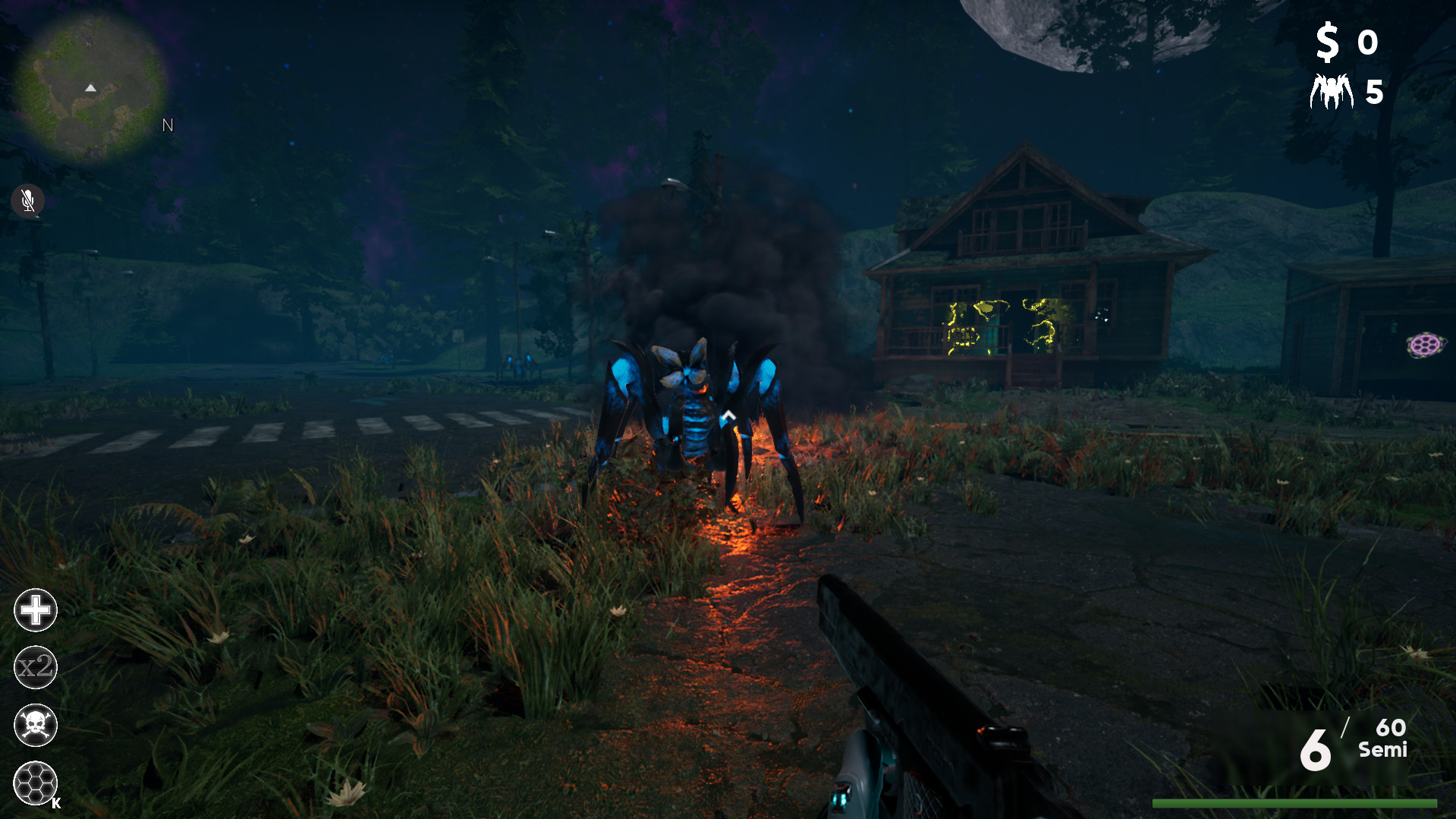
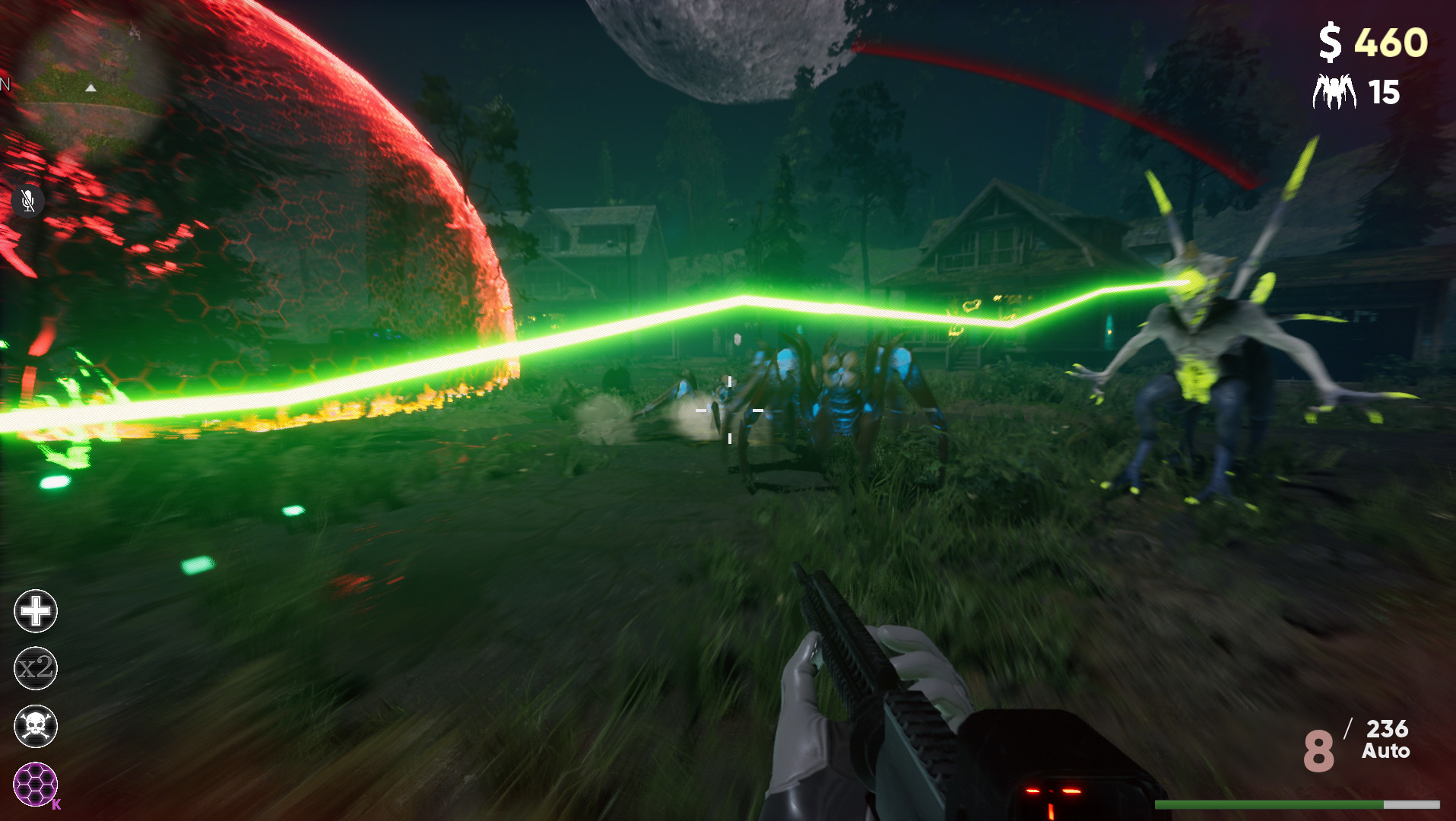
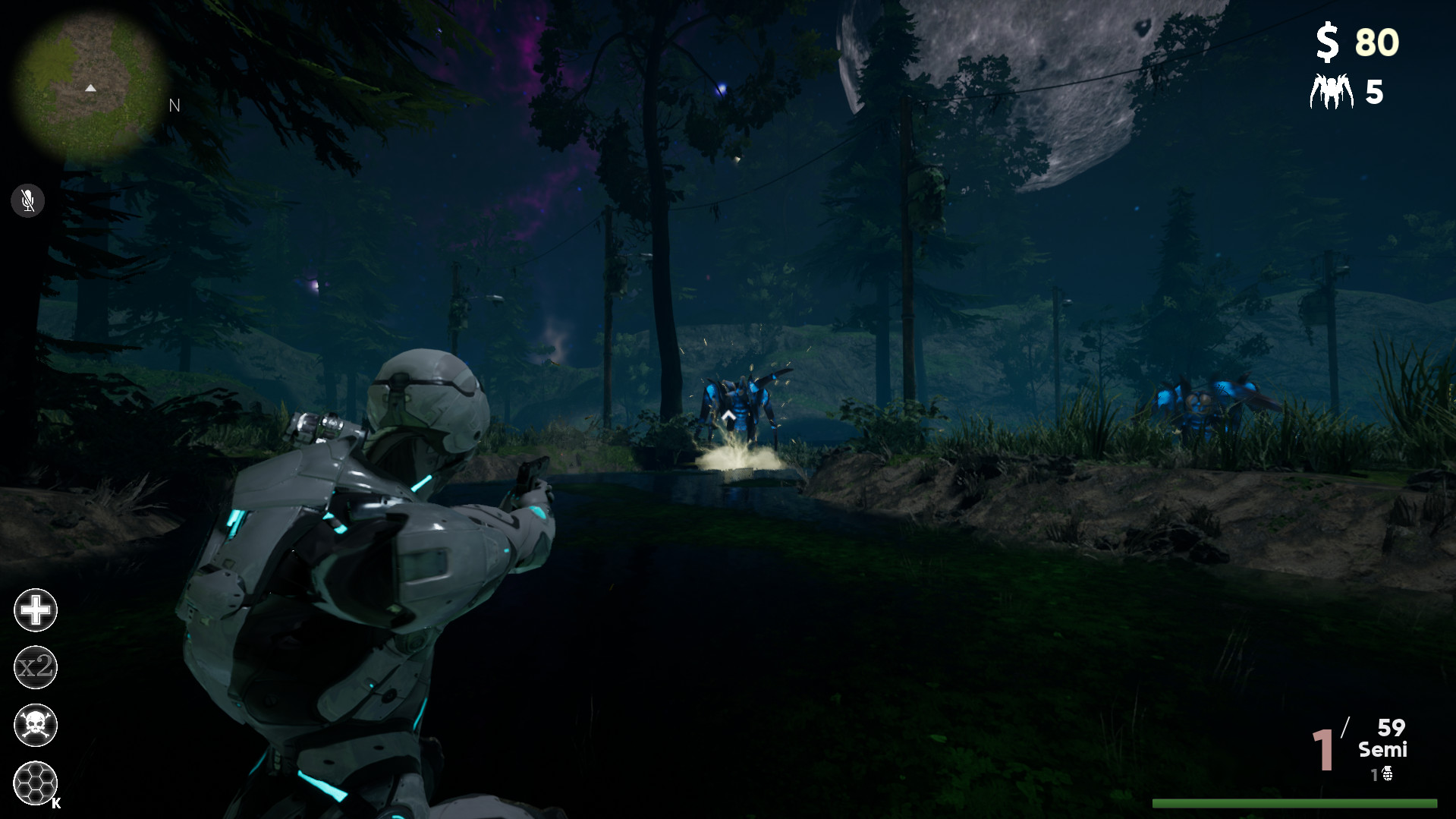
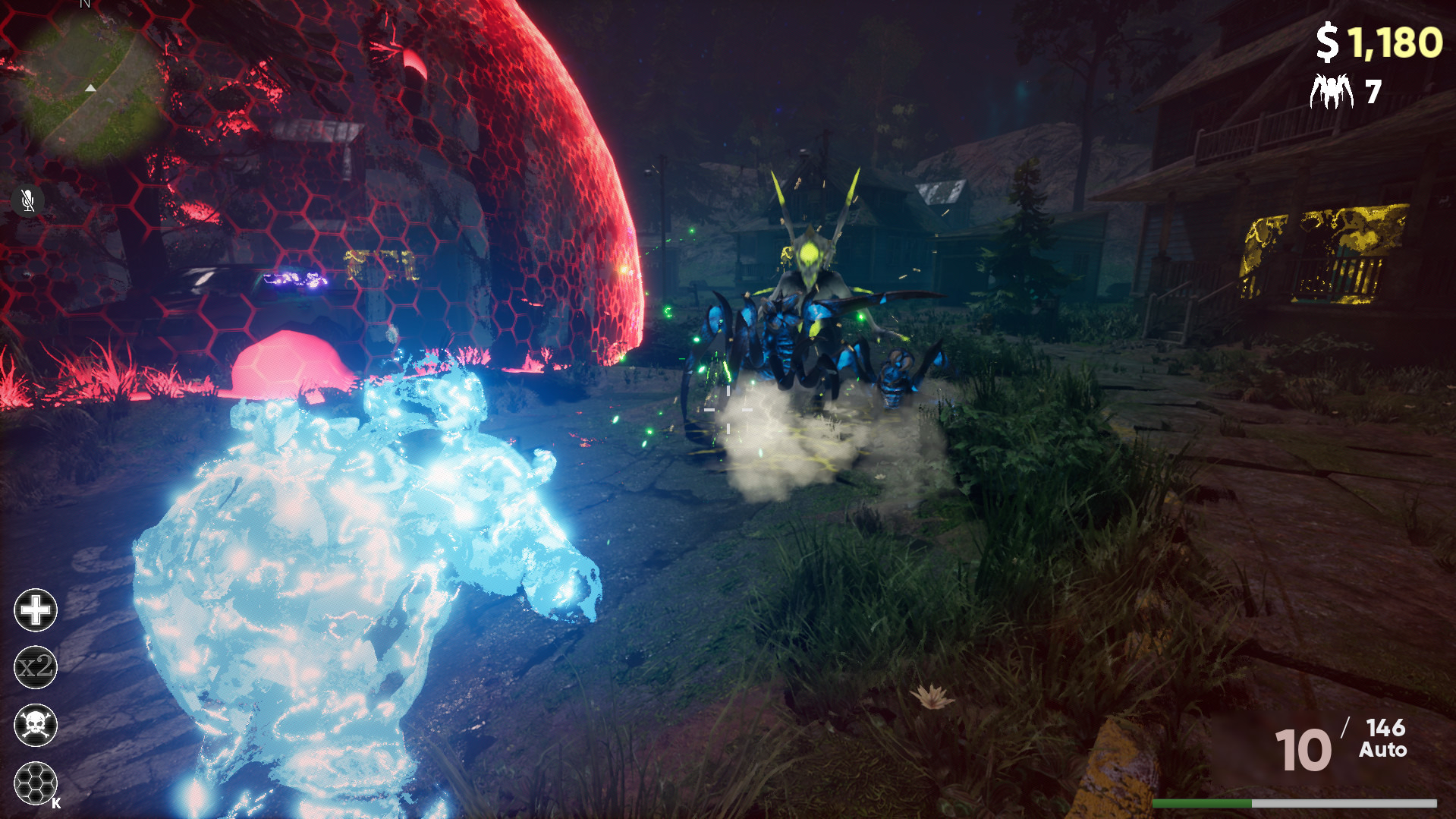
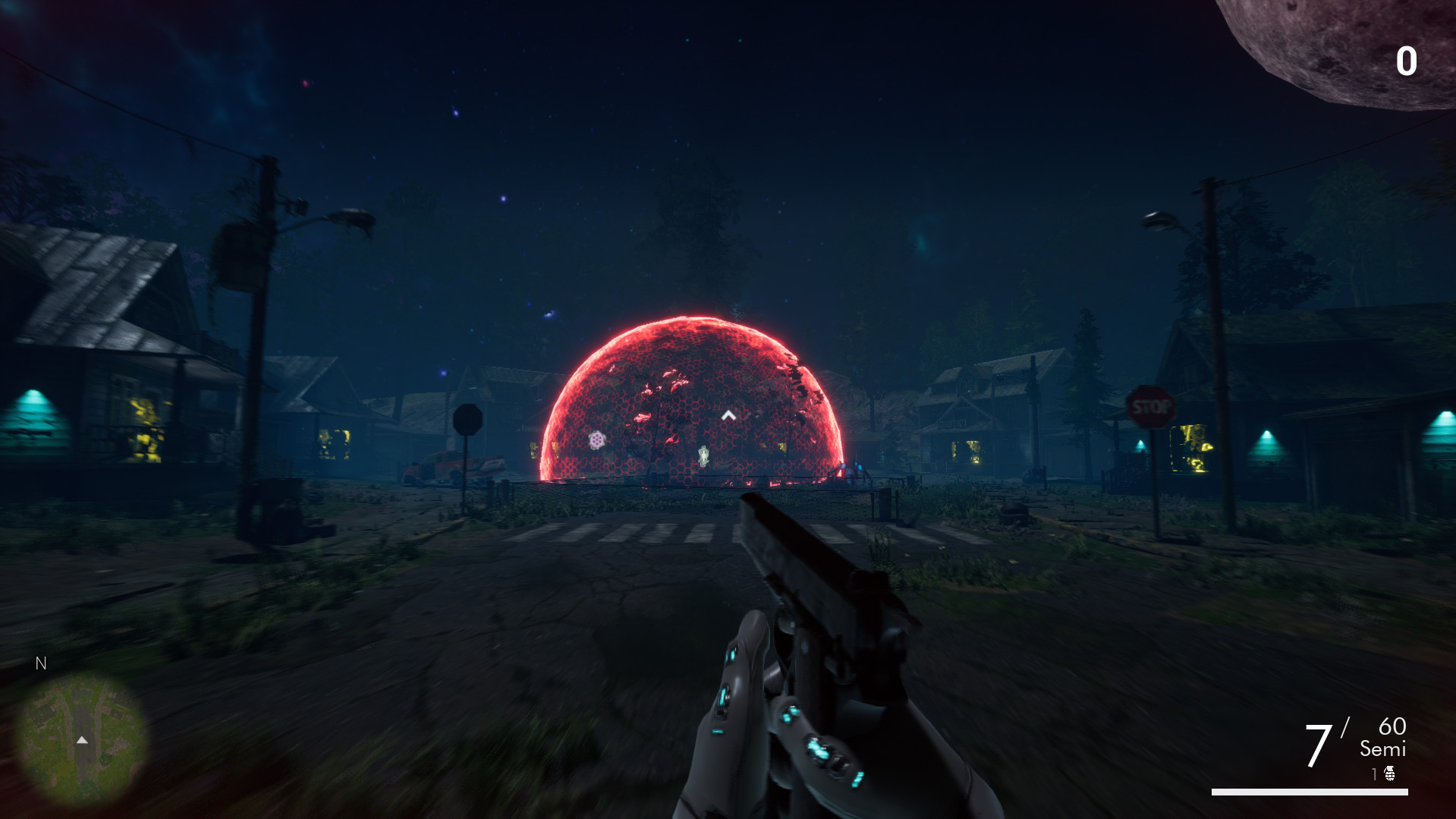
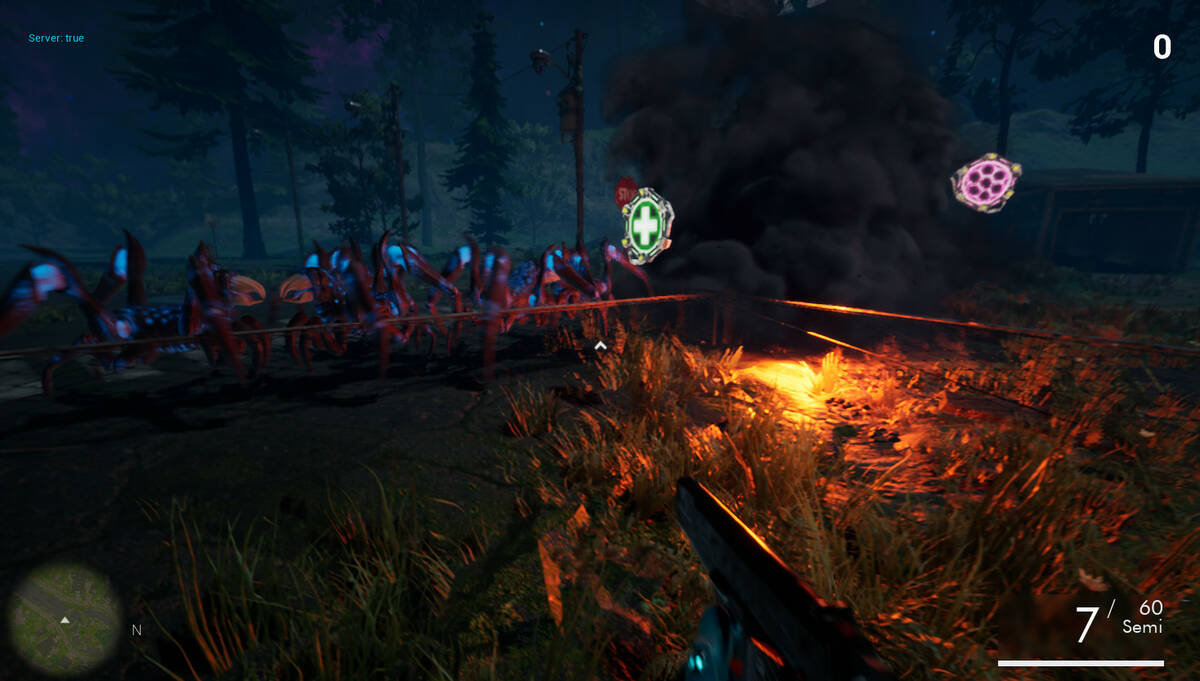
In yet another attempt to scout out more indie games with the potential to make waves upon release, I came across a science-fiction first-person shooter that definitely fit the bill. Space Invader Kreature, SIK for short, is an FPS boasting top-of-the-line visuals and intense gun combat with some RPG elements. Including upgrading things like health, speed, shields, and more. Developed under Ajal Game Studios based in Sinaloa, Mexico.

A Kickstarter for the game is currently live. And judging by what I’ve seen so far of this game, it deserves to gather momentum as it progresses, in my opinion. Eager to find out more about what players can come to expect from the finished game, I contacted Brisia Aguirre of Ajal Game Studios to learn what sci-fi series went on to influence its conceptual design. Where the developers expect to be following the Kickstarter campaign, and details of what the developmental process has been like so far. Here’s what Ajal Game Studios had to say about Space Invader Kreature:

What were the influences behind your game? 

We love to play multiplayer shooters, particularly the CoD franchise. Although this game is strongly influenced by this game. We also had influences from other classics such as Counterstrike and, of course, DOOM, the father of this genre. 

What has the developmental process been like?

It has been both a pleasure and a nightmare. We were academics, and research is so different from game development. We had to learn more about marketing, testing, iterations, and different gaming concepts that we did not know in advance. Although time does help, we still struggle sometimes when there is a bug or something unexpected happens. 

How close are we to seeing the finished product? 

Right now, we are close to finishing an alpha version, but for a complete product, there is still work to be done. A project like this requires updates because people are used to new maps, gameplay, and characters, so we will finish the core by the end of 2021, but the development will continue as we increase the number of players and add-ons.

What has been the most exciting aspect of development? 

The teamwork. We have been working together since 2017, and it is a dream come true to be able to work with your close mates. It is a really diverse group because we come from different backgrounds, and the fact that we are based in a rural place like La Cruz, Sinaloa, Mexico, makes it more unique. Who would have thought that after our project manager studied video game development at UCL in London, she would find her crew in such a random place? 

What has been the most challenging aspect of development?  

Money, it is hard to find for such a venture. We are so grateful for finding our main investor, Ramón Campos. He has been so supportive and believes in this project, which is Ajal Game Studio. 

How well has the game been received so far? 

The people who get to know the game love it, they like how they feel so immersed, and love the graphics and the gameplay. The fact that we designed the enemies makes it more unique and engaging, but also, they like that it reminds them of games like CoD, so it is easy for them to understand the game mechanics.

What platforms are you looking to bring the game to?

We will start by launching for Windows, in stores like Steam, Gamejolt, and itch.io, which last 2 are known for having a wide number of indie games and have been really supportive of this community. 

Were there any other particular facets of science fiction that influenced the conceptual design of SIK?

Yes, we watched a Russian movie called Coma. We were thinking about our main character and the worlds that are hidden in his dreams. When we saw this movie, it connected to what we wanted to do. Exploring the mind has always been a present topic of sci-fi; we wanted to explore this theme to make SIK different from the other shooters. 

Have there been any ideas at this stage of development that have since been scrapped or reworked?

Of course! You always start big! We started with a horror concept, making the nightmares and the story of Elizabeth and Steve, but in those days, our in-house illustrator left our team, and it was really hard to continue, so we focused on the shooter part and made it more active. We love the idea of a more frantic game and something that we could test as a team.


As academics, have you found the development of this game harder than progressing through a university course?

Academia is hard! You need a lot of passion and time, just like development, but I think that many activities in academia were so time-consuming, like politics and all that, which is the place where the funding comes most of the time. So even though developing is hard, we pretty much prefer it over academia, but let’s be clear, we still love that part and would be glad to join academic projects. 

How instrumental has player feedback been in terms of shaping the course of the project?

If we want to build something appealing, feedback is a MUST. We appreciate the time that testers have put into our game because they helped us so much by being honest about the spots that were not attractive and implementing some of those ideas into what we have done so far.

Have any other fellow indie developers reached out to you to offer advice?

We are fortunate because we have a great network, and other indies gave us so many insights, particularly in terms of Unreal, which is the engine we are using. It was the first time we developed this software, and it was hard to understand some of the technical features.

If you had the opportunity to develop a game with any company or for any franchise, which would it be, and why?

It is such a hard question, haha, I think we could go with Rockstar and GTA. This one because of the huge details, and easter eggs, and how real it is. Also, Activision’s Call of Duty because of the quality of their visuals, how engaging their game mechanics are, and how professional their level design is, or, lastly, Soma by Frictional Games, the gameplay was so different and interesting. We like bizarre games.

Do you have any advice for aspiring developers who may be reading this? 

Please be patient and never stop studying. Game development evolves so fast, and it’s good to keep informed about new assets or technology that can be helpful. Also, be sure to learn about business because after all, you will be selling what you do if you choose to do it as your main gig, then you definitely need to learn your art, but also how to market it. 

Where on the Internet can people find you? 

Please look for us on our Facebook https://www.facebook.com/AjalGamesOficial

https://www.facebook.com/spaceinvaderkreaturesik

Do you have anything else to add?

We are looking for people interested in testing our solo player mode. If you would like to receive the demo, please send an email to ajalgamedevs@gmail.com. Thanks!!!

Thank you to Brisia and Ajal Game Studios for taking the time out of developing this game to answer my questions. If you think you’d like to back Space Invader Kreature, you can do so by clicking the link below:

Kickstarter Page

Space Invader Kreature looks like a very promising FPS indie game releasing within the ninth generation with a lot to offer players in terms of both gameplay and story, and I can’t wait to start playing the final product! In the meantime, I hope you guys enjoyed learning more about SIK as much as I did to bring this game to the attention of as many gamers as possible.

Game on,

Scouse Gamer 88

Momodora III (PC)

Developer(s) – rdein

Publisher(s) – rdein

PEGI – Not yet rated (some non-graphic violence)

Released on Steam back in 2014, three years after the release of Momodora II, Momodora III largely reverted to the basic gameplay structure of the first Momodora. A semi-open world side scroller requiring a small amount of backtracking. But not to the same extent as a traditional Metroidvania game. There were a few new elements synonymous with the series introduced, as well as some perpetuated from the first two games. It delivered a fair amount of variety in gameplay. Garnishing generally favorable reviews from gamers and critics. In terms of quality, I would put it second out of the original trilogy. Not quite as good as Momodora II, but much better than the first game.

Graphics – 7.5/10

The first thing to notice when comparing Momodora III to the previous two games is that, in terms of concept, it does far better to come into its own and stand out among many other side scrollers. Gone is any trace of science fiction. Or the recycled setting of the second game in favor of more varied landscapes from vibrant and colorful forest lands to snowy tundras and deep underground caves. The next game, Reverie Under the Moonlight, would then go on to differentiate itself even more from other games in terms of conceptual design. But the third game is where the series truly started to take on a life of its own.  

Gameplay – 6.5/10

The gameplay, compared to the first two games, however, seemed a lot more underwhelming. As there was simply less to do. Taken away were the facilities to discover new weapons from the first Momodora, and, like the second game, it was replaced with finding new items that grant new abilities. But the reason why it works worse in this game than it does in Momodora II is simply that the additional abilities aren’t ostensibly needed to complete the game.

It works better on hard mode. But in normal mode, it can simply be rushed through without having to make use of anything else other than the main attack. So the gameplay feature is made quite redundant. The linear gameplay structure also doesn’t help things either. As there is very little cause to backtrack through the game anyway. The third game felt like it needed much more of a boost in terms of gameplay. Which unfortunately, it didn’t get. 

Controls – 10/10

As it plays out more or less identically to both of the first two games, there are at least no problems with the control scheme. But at this point, it was to be expected if the developers were simply going to release a game that didn’t make any strong leaps away from its predecessors and added very few new features in terms of gameplay. 

Lifespan – 1/10

Clocking in at around an hour once again, the lifespan of Momodora III is very much below par compared to that of most sidescrollers released either at the time or even back in the fourth generation. For what is supposed to be an ultimately retroactive experience, it does very little to differentiate itself in terms of gameplay. And in turn, the game’s lifespan is abysmal even compared to what was acceptable in days gone by. The hard mode necessitates an additional playthrough for more intrepid players. But completing the game on hard mode offers no incentive, so there’s not much point. 

Storyline – 6/10

The story follows either one of two priestesses, depending on which difficulty the player selects. Momo or Dora, who is charged with investigating supernatural goings-on around the land of Koho. For me, the highlight of the game’s story was the encounter with the main character of Momodora: Reverie Under the Moonlight. Kaho. Apart from that, the game’s story has slightly less substance than that of the second game. But much more than the original Momodora. As there is a lot more text and a lot more going on. It also has multiple endings, which would also be included in Reverie Under the Moonlight. But overall, the story is fairly generic. 

Originality – 5/10

Although the third game in the series does far better to stand out in terms of visuals, that’s about the only way it does stand out. Gameplay is very typical of a generic 2D sidescroller. And it needed a massive boost in terms of quality in this aspect compared to the first two games. And I don’t think it got it in my opinion. The series would later be taken to its apex with Reverie Under the Moonlight. But the original Momodora trilogy was overall a fairly disappointing experience. And the third game caps it all off in a very boring and dissatisfactory manner.

Niiutral

Overall, Momodora III is a pretty standard 2D side scroller, which, for reasons beyond me, has been touted as one of the best side scrollers on PC. In my opinion, it’s tedious, lacking too much in substance. And only served as a precursor for better things to come, as did the original Momodora trilogy on the whole. 

Score

36/60

6/10 (Average)

Momodora II (PC)

Momodora II

Developer(s) – rdein

Publisher(s) – rdein

PEGI – Not yet rated (Non-graphic violence and some strong language)

Released one year after the original game, Momodora II took a different approach to gameplay, playing out as a Metroidvania as opposed to a linear 2D platformer. And carried on the story almost directly after the events of the original Momodora. Although this game pales in comparison to other classic Metroidvanias, the second game is decisively the best out of the original trilogy that was developed before the release of Momodora: Reverie Under The Moonlight.

Graphics – 7/10

The graphical quality of the game is just as good as the first. And it seems a lot more cohesive somehow. Gone are the science fiction elements of the first game. Such as guns and aliens, in favor of a much more fantastical look. The second game perpetuates a lot of the common elements found in later Momodora games. Such as the save points and the variety of enemies found throughout. Gone also is the 8-BIT soundtrack in favor of a more orchestral brand of music. Which, in all honesty, fits the tableau of the series far better.

Gameplay – 7.5/10

Playing out like a traditional Metroidvania game, there is a variety of new abilities to collect in place of different kinds of weapons. Additional items can be found to give the player additional health. There are also a couple more boss fights thrown in as opposed to the one found in the first game. And although again, it falls way below par of what many other games in the genre have to offer. Such as Blasphemous, the Ori games, and even Xeodrifter, it is still a pretty fun game to play, with a good few challenges and secrets to uncover along the way. 

Controls – 10/10

Again, like the first game, there are also no issues with the controls. Since they practically play out identically to each other. The second game is almost like an extension of the first in respect to controls. But there are a couple of new mechanics introduced in the form of new types of abilities to wield compared to the previous game, to at least keep things relatively fresh.

Lifespan – 1.5/10

Clocking in at around 50 minutes in total, the second game only lasts fractionally longer than the first. And especially as the second game is a lot more open-ended, it seems all the more underwhelming because of that. I can’t help but think that with a little more thought and time put into it, this game could’ve ended up being far more than what it turned out to be. After all, Blasphemous had a particularly lengthy development cycle before finally seeing the light of day. And turns out to be one of the most critically acclaimed games of the eighth generation. But the developer seemed to prioritize getting the game out as fast as possible as opposed to putting in that little more effort than was needed, unfortunately.

Storyline – 6.5/10

The story of Momodora II, however, is a drastic improvement compared to that of the first game. It follows a young girl who has made a journey into a mysterious lair outside of Koho in order to find and defeat an entity known as the Underworld Queen, terrorizing the land. There’s a lot more dialogue. And therefore, a lot more story and emotion conveyed throughout. And it has a particularly interesting outcome that again makes it a much more interesting narrative to experience than that of the first Momodora.

Originality – 4/10

Momodora II does far better to stand out from other Metroidvanias in comparison to the first game. But still, there are a lot of familiar elements that make it seem quite typical of any game in the genre. Eventually, the series would go on to become something much more distinct than what it started as. But it was a lengthy process that happened over the course of several years. And it was something that could’ve happened a lot sooner if the developers had tried a few new things, like new gameplay mechanics or something newer in terms of conceptual design. Some small contribution to that was made here, but not enough in my opinion.

Niiutral

Overall, Momodora II goes leaps and bounds ahead of its predecessor, but it is still a fairly generic Metroidvania title compared to others. It may be the best of the original Momodora trilogy, but unfortunately, it is the best of a bunch of below-par games in the lead-up to Reverie Under the Moonlight, which would blow them all out of the water. 

Score

36.5/60

6/10 (Average)

Momodora (PC)

Momodora

Developer(s) – rdein

Publisher(s) – rdein

PEGI – Not yet rated (non-graphic violence)

Released back in 2010 in a very low-key and obscure manner, Momodora went on to develop somewhat of a cult following, spawning two sequels and a spin-off, Momodora: Reverie Under the Moonlight. Which, along with Momodora III, saw a full release on Steam. Though this game clearly has its fanbase and led the developers to go on and do even greater things, the series had a very slow start, in my opinion. Releasing the original two games on Steam would probably only work as a bundle. Along with the other Momodora games, they are short as well. 

Graphics – 7/10

The visuals are much different from the types of locations and the mythology that the Momodora series would later perpetuate. The game has much more of a science-fiction look to it as opposed to high fantasy or gothic horror. The game bears a striking resemblance to the likes of Metroid, Xeodrifter, and Axiom Verge. Especially as they’re 8-BIT rendered. The soundtrack is also in chiptune. Which would change from Momodora II to a more orchestral soundtrack. But the tracks in the game are quite well-composed. 

Gameplay – 7/10

The gameplay is also fairly entertaining in addition. It’s a linear 2D sidescroller. The player must collect various items throughout. And discover new and better weapons to become more effective in combat, with a boss fight thrown in at the end. Again, perpetuating a very different style of combat from the rest of the series, players are given guns to use as opposed to swords, bows, and magic spells. This series was something extremely different at first. And was later envisioned as something else entirely. There are a couple of common elements linking each game. But how it later evolved is very interesting indeed. In terms of gameplay, later entries would also go on to become even more entertaining than the first. But what is here in the way of that is pretty good.

Controls – 10/10

There are also no issues with the controls, as expected. It’s even bearable to play this game using a keyboard. And I don’t often think that of platformers exclusive to PC. If it were a faster-paced platformer, then most likely the controls would’ve been a huge problem. But thankfully, that isn’t the case here. It’s a reasonably paced platformer with no additional complications in terms of its control scheme. 

Lifespan – 1/10

Lasting less than an hour, the game is criminally short. Especially for 2010, when other indie games were being released that could have been made infinitely longer. It may be easier for fans of the series to simply rate the series as a whole as opposed to rating each installment separately. Especially as, in all fairness, each game is relatively cheap, but looking at the first game on its own merits, 40 minutes is a pitiful amount of time to last; not since the mid-80s has less than an hour been the industry standard. 

Storyline – 5/10

The story of Momodora takes place in the land of Koho, where a young orphan girl has entered a forbidden land after her mother had been sacrificed. As is customary in Koho. The orphan girl travels to this forbidden land to find a hidden power reputed to bring the dead back to life. The closest game I could draw comparisons with in terms of story is Shadow of the Colossus. Albeit regarding the concept as opposed to the quality. The story sounds good in its basic premise, but there isn’t much, at least until the end, to get players particularly invested in the narrative. And even at the end, the way the story is closed out is very questionable. It doesn’t challenge players to speculate about what the ending means, but rather, it’ll make them question why this was the best ending the developers could come up with. 

Originality – 2/10

The game’s second-biggest problem (second to lifespan) is how unoriginal it is. As I said before, the series would go on to become something far more distinct than what it started as with the first game, but in every way, it’s possible to draw comparisons with many other games that came before it; some for the right reason, but many for the wrong reasons as well. I can’t help but feel that this was largely a question of trial and error on the developer’s part; a learning curve before building on the series in a far more positive way. 

Angrii

Overall, while the first Momodora game has its merits here and there, it is ultimately a very flat and generic gaming experience that’s screaming out for improvement. It’s fairly fun to play, and the graphics are good to look at as well, but there’s simply not enough of any of that to be had with lasting as short a time as it does, and there’s not much separating it from games made of the same ilk. 

Score

32/60

5/10 (Far Below Average)

Zapling Bygone: First Impressions

I recently came across yet another Metroidvania title with a great deal of promise and a great deal of substance in its early stages of development. Zapling Bygone is a sci-fi Metroidvania following the story of an alien asylum seeker named Zapling, who after fleeing his home planet comes across a completely new world inhabited by strange and dangerous creatures and must traverse it in a bid to call it home. I’d had one eye on this game for a few weeks leading up to this article, and a Q&A will be to follow as soon as possible, but for now, I wanted to give my verdict on the game in this early stage of development, and happily, my verdict is extremely positive. 


Graphics

The game makes use of traditional 8-BIT visuals set on a weird and wonderful alien planet reminiscent of many classic or independently developed games within the genre, such as Metroid, Xeodrifter, and Axiom Verge. What has been shaped in the way of environmental design is very interesting to look at, albeit it’s only a very small section of what is soon to be a particularly sizable open world, and I can’t wait to see what the rest of it looks like when the full project is released. Already packed with numerous different areas to explore, it’ll be even more interesting to see how the mythology of the game is expanded upon. 


Gameplay

The game is a traditional Metroidvania and primarily takes inspiration from Hollow Knight, relying on exploration, combat item collecting, and gaining new abilities in order to discover new areas. The player character must find different types of skulls in order to gain additional abilities that can either fool enemies into thinking you are one of them or to gain other strategic advantages; it works in a somewhat similar way to Skul: The Hero Slayer. Something else I was pleasantly surprised to find was that there is actually an easter directly referencing another indie game currently in development that I covered some time back; Scrabdackle by Jakefriend. I interviewed Jake some time ago:

https://scousegamer88.com/2021/03/23/qa-with-jakefriend-scrabdackle/

And so I slipped the lead developer of Zapling Bygone Stevis Andrea an additional question about their relationship and how the easter egg came to be, so it’ll be interesting to learn more about that in addition. But besides which, the game in its current state shows great promise in terms of its wildly varied combat system, level of exploration, and the design of the boss fights, which reminded me of Teslagrad in particular. 


Controls

The idea of the game’s general control scheme is fine, and once it’s released I’m sure the concern I’m about to express will be ironed out during development, but my advice would be that if you’re playing with a PlayStation 4 controller, the controller mapping is not immediately established, and it takes a little bit of adjustment. Below is my own personal mapping of the controls for Zapling Bygone, which worked just fine to me, so if anyone is thinking of trying the demo, and are using a PS4 controller, refer to this mapping:


But otherwise, many of the control mechanics themselves are either very unique or very reminiscent of other Metroidvanias, such as the Ori games or Blasphemous.


Lifespan

With only a portion of the game’s world revealed, and the promise on the Kickstarter page of at least 6 different areas to explore throughout, it indeed has the potential to last an extraordinarily long time. Whether it does end up lasting as long as the average Metroidvania, or maybe even longer, depends on how much is given to players to do throughout. But with the insane amount of collectibles, there are throughout the demo alone, I’m confident it will be made to last an exceptional amount of time. 


Storyline

The basic premise of Zapling Bygone follows the alien lifeform Zapling as he crashlands onto a brave new mysterious world in a bid to call it home and overcome the many dangers it poses to him. The charm of the game’s story exists not just in its basic premise, but in its backstory, which can be periodically discovered across the entire game, similar to the likes of The Swapper, though I can already tell that this game’s story is going to be far more immersing than the former. It certainly has the potential to spark wonder, controversy, and fan theories that can possibly make for one of the most interesting Metroidvania mythologies yet. 


Originality

Though clearly not without its sources of inspiration, it certainly had the potential to stand out among the circle of indie Metroidvania games. The extent of which would depend on how it does to try and break away from the likes of Super Metroid, Guacamelee, Dust: An Elysian Tail and others, and how much emphasis there is on this being its own fully cohesive concept. The combat system and the world mythos has a lot to them, and elements are there unlike a lot of Metroidvanias I’ve played, but it will be interesting to see exactly how much effort the developers put into making this game truly their own, and not just coming across as a collection of features and ideas based on other games. 


But overall, I was extremely impressed with how Zapling Bygone looks, plays, and tells the story of the main character and of the world around him. Since the Kickstarter campaign began, the idea has gathered a great of momentum from backers, gamers, and streamers alike, and it’s not hard to see why. If you’d like to try the demo out for yourself, you can download it now for free via the link below:

https://store.steampowered.com/app/1489110/Zapling_Bygone/


Or if you would like to back the game on Kickstarter, you can do so via this link:

https://www.kickstarter.com/projects/9fingergames/zapling-bygone


In the meantime, I hope you guys enjoy playing Zapling Bygone, and tell me what you think of this game. I hope you enjoyed reading my assessment as much as I did putting it together.

Game on,

Scouse Gamer 88

Nubarron: The Adventure of an Unlucky Gnome (PC, Xbox One & Switch)

Nubarron

Developer(s) – Nastycloud

Publisher(s) – Hidden People club

Designer(s) – Ignacio Rud & Federico Segovia

PEGI – 3

Released on Steam in early 2020 to a mixed critical reception from gamers and reviewers, Nubarron is a semi-open world 2D side-scroller following the adventures of a Gnome being pursued by an ever-changing cloud. Tasked with recovering the pages of a magic book. For the first hour of playing, it seemed like a pretty generic platforming game; I can best compare it to Chronology by Bedtime Digital. But after getting past that initial period, it did become progressively better. And I ended up enjoying it very much.

Graphics – 8.5/10

To begin, the game’s hand-drawn visuals are quite stunning. Almost on par with the best games to use this graphical style. Such as the Ori games, Dust: An Elysian Tail, and Hollow Knight. It takes place in a fantastical forest home to many weird and wonderful creatures. With a blend of both medieval fantasy and science fiction elements. The reason I say that this game is almost on par with the aforementioned games is that it doesn’t quite stand out as much on the conceptual level. Nevertheless, it is one of the better-looking indie games developed in 2020. 

Gameplay – 7/10

The game is a semi-open world puzzle-solving 2D side-scroller that requires some tracking back to previous areas to complete quests. Gameplay is made as variable as possible with the acquisition of new abilities throughout, and the unusual combat system. Combat is engaged through the cloud that follows the player’s character. It can be used to subdue enemies. But in certain sequences throughout the game, the cloud can become either more difficult to control or out of control altogether. The player has to avoid being killed by the cloud when it becomes uncontrollable. Aside from the combat element being wonderfully outlandish compared to other games, the puzzle-solving element is also pretty well-executed, with some of which. Especially towards the end of the game, which is particularly challenging. 

Controls – 10/10

One of the main reasons why I would still most closely compare Nubarron to Chronology is that the controls are almost the same. Nearly to the point where you would think both games were made on the same engine. The movement controls are somewhat wooden compared to other side scrollers. But with so much more functionality and abilities to take advantage of than the former, it’s a far better game to control. The slowness of the movement commands is also not hindering enough to be considered a significant problem. The game’s control scheme poses no unnecessary complications, as any good game should be made. 

Lifespan – 5/10

The aspect that lets this game down, however, is its lifespan. The problem is that the games I have compared this to in terms of graphics are Metroidvanias and therefore require far more backtracking. I can’t help but feel that if this game were made in the style of Metroidvania, then it would’ve been made to last far longer than it does. But since there is only a minimal amount of backtracking to be done, the game clocks in at only around 5 to 6 hours. Which, in this day and age, is pretty underwhelming. 

Storyline – 8/10

What wasn’t underwhelming, however, was the story of Nubarron. It follows a Gnome, simply named Gnome. He one day has not only, unfortunately, lost his lucky hat, but is also persistently followed by a cloud, whose behavior changes on a whim. Wanting to get rid of the cloud and find his hat, he enlists the help of a magical omniscient owl who requests that Gnome recover all the missing pages from a spellbook called the Nubarron, and so Gnome sets out on his quest.

At first, my first impression of the game’s story was that it was quite typical. A bog-standard fantasy story, if you will. However, as the game progresses, it becomes something far better than that. Without spoiling the details of the ending, it’s perfectly poised for a sequel to happen, and I’m very much hoping that it does happen. There’s a lot of scope to expand on the mythology of the series. As well as the gameplay mechanics and the lifespan. So here’s hoping that this game gets the follow-up it deserves. 

Originality – 7/10

It’s not until after the first hour or so that players will be able to fully appreciate the depth and the unconventional aesthetics that this game truly has to offer players. So it is something that will have to be borne with at first. But when that initial period passes, there’s so much to be had in terms of uniqueness. Sure, I was left thinking to an extent that if a little more effort was put in, this game could’ve ended up being even more than what it is. But for what there is here, it’s still a pretty standout experience.

Happii

Overall, Nubarron was a game that I looked at and thought was going to be a very generic gaming experience. It turned out to be anything but that. It’s enjoyable to play with a surprisingly in-depth narrative. And I would advise anyone looking at this game to ignore the mixed reception that it has received. It’s certainly worth at least one playthrough. 

Score

45.5/60

7.5/10 (Good)

Undying (PC)

Undying

Developer(s) – EA Los Angeles

Publisher(s) – EA Games

Director(s) – Brady Bell

Producer(s) – Brady Bell

PEGI – 18

Released in 2001 at the dawn of the sixth generation of gaming, Undying is a first-person shooter programmed by Brady Bell of Medal of Honor fame and written by acclaimed horror writer and director Clive Barker, telling a story of the occult, eldritch horrors, and creatures of the night. Despite being released to widespread critical acclaim at the time, the game ended up selling unjustifiably poorly. And a sequel has been shelved ever since.

I recently played this game for the first time. And I was taken completely by surprise with just how great and how silently innovative it was in the grander scheme of things. Both the sixth and seventh generations of games would be a time for many first-person shooting series to find popularity throughout the gaming industry, with the likes of Halo, Call of Duty, Half-Life, and Red Faction dominating sales charts everywhere. However, there were a few games in the genre that unfairly fell through the cracks and never got the attention they deserved. And you’d be hard-pressed to find a better example than this. 

Graphics – 8/10

Undying takes place in a dark and atmospheric mansion on the coast of Ireland, similar to games like the original Resident Evil and Luigi’s Mansion. But throughout, there are also some wonderfully disturbing secrets to uncover, with certain sections breaking away to lead the player to some horrific environments. The game’s setting is like a character in and of itself. This is something that Clive Barker is renowned for conveying.

It reminded me very much of Hellraiser II when the main character is taken to the labyrinth world of the cenobites. The mansion is also littered with terrifying creatures from every corner of horror, from Lovecraft to Bram Stoker. There’s not a great deal of music throughout to add to the tension. But what music there is in certain sequences was expertly composed. The biggest criticism I have about the visuals is that, like the game Darkwatch, the environments are sometimes not lit enough. Almost to the point of impracticality. But regardless, this doesn’t create too much of a problem throughout. 

Gameplay – 9/10

Undying is a first-person shooter. But far higher than the standard of what gamers were used to at the time. The player also has supernatural abilities to use in either combat or to solve puzzles throughout the mansion. There is a series of wonderfully unconventional boss fights and collectibles for the player to pick up throughout. And also a plethora of easter eggs to uncover for good measure. Including a hidden shooting gallery. An open-world first-person shooter, even a semi-open-world one as this is, was pretty much unheard of back then. As a result, it offers far more to play for than many other FPS games that were around at the time.

Controls – 8/10

The game’s controls are, however, an aspect with which I had a couple of problems. For the simple reason that first-person shooter games are best played with a controller. This, unfortunately, as this is a PC exclusive developed in the early 2000s, doesn’t offer. One time, this game was on Steam. But for some reason, it was pulled, which is a great shame because not only are people being further denied the opportunity to play it. But they’re being denied the opportunity to play it in the best possible way since control mapping would’ve fixed this. Maybe it will be put back on Steam one day. Or remastered as what many players are crying out for. But for the moment, the original CD-ROM port is the only official way to play it.

Lifespan – 7/10

Lasting 6 and a half hours, the game perpetuated the industry-standard lifespan of a first-person shooter. On par with the likes of classics such as Goldeneye 007 and Perfect Dark. Whilst not on par with games like Fallout 3 and 4, and games in the Borderlands series, it still lasts a fair amount of time. Even more so than a lot of FPS games that were released across the seventh generation, like Halo 4. If the series were ever expanded upon, there is certainly scope to make a sequel last even longer than this, in my opinion. Given the nature of how the story ends. 

Storyline – 7/10

The story of Undying takes place in 1923 in Ireland. A World War I veteran and paranormal investigator named Patrick Galloway is summoned to the mansion estate of the Covenant family by Jeremiah Covenant in order to investigate strange and violent goings-on within the mansion. Soon, Patrick uncovers an ungodly truth about the Covenant family that will have players on the edge of their seats. As Clive Barker was so good at doing, the game’s story is extremely well-executed from start to finish. The voice acting can come off as wooden. And even a little comical at times. But it’s not bad enough for players not to be able to take the narrative seriously, like it is in the original Resident Evil. 

Originality – 9/10

It may be easy to take a cursory look at this game and write it off as a generic shooter title (perhaps that was part of the reason why it was sold as poorly as it did). But the fact of the matter is that in many respects, this game was years ahead of its time. Without games like System Shock and Half-Life 2, there would be no BioShock or Borderlands. Shooters that would defy convention and offer players more than just going around and shooting anything that moves. There’s plenty of that in this game, naturally. But there’s more than enough to make it stand out as one of the unique FPS games of the sixth generation. 

Happii

Overall, Clive Barker’s Undying is an obscure gem that deserves a far bigger part in gaming history than it has been confined to since its release. It’s exceedingly enjoyable to play with a superbly crafted narrative. Hopefully, one day it will be made available to gamers of newer generations through either a re-release or remaster. 

Score

48/60

8/10 (Very Good)

Twisted Metal 4 (PlayStation)

Twisted Metal 4

Developer(s) – 989 Studios

Publisher(s) – Sony Computer Entertainment

Director(s) – Jonathan Beard

Producer(s) – Jonathan Beard, Darrin Fuller & William Todd

ESRB – T For Teen

Released on Halloween of 1999, again exclusively in North America, Twisted Metal 4 split fans firmly down the middle in terms of quality. It received mixed to positive reviews at the time. It delivered improvements in the gameplay and controls. But introduced a very questionable cast of characters overall. In my opinion, the fourth game is without a shadow of a doubt the worst out of the original Twisted Metal quadrilogy. But I went into this game thinking I was going to end up giving it a far worse review than what I actually did. I was surprised in some respects by playing this one. 

Graphics – 8.5/10

In terms of technical design, there were some minor improvements made to the level of polish. But regardless, the game still maintains the higher frame rate associated with 989 Studio’s take on the impressive series. The variety in level design and the intricate layouts of tracks are also maintained to quite a high degree. It’s by a small fraction the best-looking game of the original four. The only thing letting it down in terms of conceptual design is the design of the new characters, which is largely underwhelming. Characters like Pizza Boy, The Joneses, and Trashman leave a lot to be desired.

Gameplay – 8/10

The gameplay premise remains identical to that of the first three games. Vehicular death matches over a certain number of rounds. And a few boss fights were thrown in additionally. But the improvements made to Twisted Metal 4 over Twisted Metal 3 include things like more weapons to use and more variety in boss battles. Another neat little feature the developers added is the ability to use certain elements of each environment in combat. For example, players can control a crane in the first level to damage other cars. It was the level of improvement that the series needed to come to Twisted Metal 3. And they’re welcome additions in the fourth game. 

Controls – 10/10

There were also a few minor improvements made to the controls. Including the new mechanics of manipulating the environment to the player’s advantage. And although the series didn’t really need any improvement in this respect, it’s always welcome to see minor tweaks implemented. I’m glad at least that the developers didn’t take it too far too soon. And try to incorporate all kinds of new mechanics and potentially ruin it in terms of controls at least.

Lifespan – 6/10

Clocking in fractionally longer than Twisted Metal 1 and 3, the game can be made to last around 13 hours, with each playthrough lasting about an hour again. But I can’t help but think that if the boss characters were at least unlockable. Or if the developers just had the inkling to add a few more game modes. It was at this point that something the series desperately needed. Then it could have been made to last so much longer than any of the previous three games. It was still quite a long time for a game like this to last, but by this time, there was definitely scope for expansion. 

Storyline – 2/10

Again, the basic premise of the story remains the same: the world’s best vehicular combatants challenging for the title of Twisted Metal champion. This time, however, the mascot of Twisted Metal, Sweet Tooth, has overthrown the tournament’s regular organizer, Calypso. And taken his power to grant wishes to the victor. Indeed, Calypso is a playable character for the first time in the series as he looks to take back his status. Unfortunately, that, along with the story arcs of a few other characters such as Mr. Zombie, Quatro, and Captain Grimm, are about the only ones that have any substance to them. 

Most of the new characters, like Pizza Boy, Meter Maid, Trashman, Goggle Eyes, and The Joneses, have very nonsensical and unambitious wishes in scope. And although some of the endings to these characters are played for laughs, like Twisted Metal 3, it completely demeans what David Jaffe envisioned for this series. Twisted Metal 2 was the best in the series because it blended seriousness with humor pretty much perfectly. But when 989 Studios took the developmental rights, they made it into something much more slapstick and cartoony. And I’ve never been a fan of this. But Twisted Metal 4 is where this idea was cranked up to 11. And doesn’t work for me at all. 

Originality – 6/10

The fourth game suffers from the same problem as the third game. Some innovation has been made in some respects. But not enough overall. In terms of story, they started going back to what made the series great, with the third game. But in the fourth, that is made far more apparent. It’s a shame how 989 Studios took certain elements of this series quite seriously and neglected others to the point where it becomes almost enraging.

Niiutral

Overall, Twisted Metal 4 is the worst game of the original four, but at the very least, it is still fairly enjoyable to play, even if the incentive for completing the game with every character is minimal. The series would take a far more interesting turn in the future, but for the most part, like Twisted Metal 3, I’m glad it stayed in North America. 

Score

40.5/60

6.5/10 (Above Average)

Twisted Metal 3 (PlayStation)

Twisted Metal 3

Developer(s) – 989 Studios

Publisher(s) –  989 Studios

Director(s) – Howard Liebeskind

Producer(s) – Ken George

ESRB – T For Teen

Released a year after Twisted Metal 2, exclusively in North America by a completely different development company, Twisted Metal 3 in some ways improved on the first two games. But in other ways, the series took a turn for the worse. Regardless, it sold relatively well in America and received a fair few positive reviews at the time, too. Personally, I managed to find a middle ground with this game, as is truly warranted. Overall, I’m glad that it didn’t get released over here because it gave me the time when I was a kid to focus more on the PlayStation classics. But overall, this isn’t one of the worst games released on the console. 

Graphics – 8/10

The immediate improvement to notice is that the frame rate of the game is so much faster. Making it seem a lot more fluent to play in turn. However, part of the reason for this may be because of how badly the game was polished compared to the other two games. The conceptual design stayed as diverse as it was in Twisted Metal 2, thankfully. And the track designs have also stayed as intricate, something which needed to happen. But in order to have been able to top Twisted Metal 2, every aspect of the graphics needed to be improved upon. I think I may have settled for the lower frame rate if it meant the game looked technically better, or the tracks being even more elaborate. 

Gameplay – 7.5/10

Again, the gameplay concept has stayed pretty much the same as it did in Twisted Metal 2. Albeit with the inclusion of a few new boss races thrown in between each round for good measure. But beyond that, there was no further innovation made compared to the previous 2 games, which again, was needed at this point. I can’t help but think that 989 Studios would’ve been able to release the game overseas as well as in America if they’d simply taken that little bit more time to improve on what was already good, as opposed to giving players the same game again. 

Controls – 10/10

There are furthermore no issues with the controls in Twisted Metal 3. And again, the increased frame rate indeed helps the game in this regard as well. No new mechanics were introduced. But what was already there seems to have been improved slightly, and I can’t take any points off it in this regard.

Lifespan – 6/10

Now that we’re back to 12 characters, it equates to a minimum of 12 hours of gameplay. Falling slightly shorter than Twisted Metal 2. It’s still the same minimum time as what the first Twisted Metal can be made to last. But since this is the third installment, it seems slightly more underwhelming as it’s only around the same time as what one can expect. And not any longer. Even if they flooded the game with characters and sacrificed character development even more, then I think that would’ve probably been the better option. 

Storyline – 4/10

Speaking of character development, this is the aspect in which the series took a drastic turn for the worse. The story of Twisted Metal 3 is pretty much the same as it was in Twisted Metal 2. The 12 best drivers are hashing it out in vehicular deathmatches all around the world at the behest of Calypso. However, the cast of characters included is, even more, hit-and-miss than in the first 2 games. And the classic characters that have been included have still been downgraded in terms of their own individual personalities.

The game overall takes a far more cartoony approach to storytelling. The wishes that some of the drivers request from Calypso make very little sense or have no real substance to them. Such as Flower Power’s wish for the world to be covered in flowers. Or Damian’s wish to have a barbecue with all his friends. At least with the first two games, the characters made far more practical wishes and could be taken far more seriously, but in terms of story, it pretty much systematically destroys the legacy that David Jaffe left behind at this point. 

Originality – 6/10

Although improvements were made in some areas, not enough improvements were made to make this either one of the standout entries in the series or one of the standout titles on the original PlayStation. It certainly had its fanbase, as the sales figures in America would demonstrate. But the fact of the matter is that the 989 Studios era was, without a shadow of a doubt, the worst period of the series until David Jaffe became involved with the series again. And the third game definitely gives testament to that. 

Niiutral

Overall, Twisted Metal 3 is certainly one of the lowest points of the series. But at the same time, still more playable than a lot of the shovelware titles developed for the original PlayStation. It has its upsides and its downsides. It’s certainly not the best entry in the series, but it’s not the worst one either. 

Score

41.5/60

6.5/10 (Above Average)