Tag Archives: Nintendo

Five Nights at Freddy’s (PC, PlayStation 4, Xbox One & Switch)

Five Nights at Freddys

Developer(s) – Scott Cawthon

Publisher(s) – Scott Cawthon & Clickteam LCC USA

Designer(s) –  Scott Cawthon

PEGI – 12

Released in 2014 by indie developer Scott Cawthon, who at this point had released over 75 games since 1994, the idea behind Five Nights at Freddy’s was first conceived after one of the previous games, Chipper & Sons Lumber Co., had received comments from reviewers remarking that the characters looked and moved like animatronics. The critiques stuck with Cawthon, and he created Freddy Fazbear’s Pizzeria. A Chuck-E Cheese-style restaurant, where kids come for fun during the day.

And where the animatronics come to life at night to terrorize a newly-hired security guard. It went on to become one of the most popular franchises throughout the eighth generation of gaming. And it all started with a small horror title with an insanely unique approach to gameplay. At the time this game came out, I was pleasantly surprised by the result. Especially as I’m not the biggest fan of the survival horror genre anyway.

Graphics – 8/10

Set in the horrifying Freddy’s Fazbear’s Pizzeria in the early hours of the morning, the game is incredibly atmospheric, especially for a setting that would sound quite generic on paper compared to other games. It only gets even more intense the further the player progresses, with new goings-on and situations to deal with throughout. Later games in the series would expand on this idea, as well as the series’ mythos. The foundations of which were set up perfectly in this game. 

Gameplay – 7/10

The object of the game is to survive five 6-hour nights at Freddy Fazbear’s Pizzeria by watching the cameras around the restaurant. And making sure the doors are closed at the appropriate times. So that the player is not caught and killed by any of the four animatronic mascots of the restaurant that come to life in the night. The challenge is to make sure the restaurant’s facilities are used to a sufficient extent that the player is kept alive. But to not overuse them in order to conserve electricity as best as possible before it runs out.

There is also a 6th night to unlock, and an additional custom night, whereby the player can set the difficulty to the max. Something that was initially deemed impossible to complete by Scott Cawthon himself. Though many have since succeeded. Again, as with the visuals, the gameplay only gets more intense as each night is completed. And there’s more to think about, like when Foxy starts to come out of Pirate Cove, or when Freddy finally starts coming out to stir things up in addition. 

Controls – 10/10

Although the gameplay mechanics are unlike any other game ever released up to this point, the control scheme poses no problems and is easy to come to terms with. It’s one of those games that’s easy to learn, but hard to master. And it’s handled in a very fluent manner. Again, more mechanics would be introduced later on throughout the series to keep things fresh. But the whole idea was fresh anyway. I’ve yet to see how this game works on controller-based consoles, and I imagine it’s far less bearable. But I can understand how it works with the Switch when playing it away from the TV. It was scary back when it was released to think about how it would function in VR. Which unfortunately didn’t happen until many years later with Five Nights at Freddy’s: Help Wanted.

Lifespan – 4/10

The worst thing about the game is how criminally short it is. Only clocking in at around 3 hours in total, depending on player skill. Again, this is something that later entries in the series would go on to address with the inclusion of things like mini-games and easter eggs to discover along the way in between nights, or even discoverable during night shifts. But I suppose for more intrepid players, there are many replays of this to be had. Though the following point was definitely easier for me to make with the benefit of hindsight, there was a fair bit of folklore. And it would’ve been nice to have the mini-games incorporated in the first game to explore that more. 

Storyline – 9/10

Besides the basic plot of what the player has to do each night to survive, there is a mythos to this series that has been perpetuated since the first game in a very low-key and obscure manner. But it is extremely satisfying to piece the early story together by discovering different things hidden throughout the game. Also, the message the player received from the previous security guard over the phone only adds to the intensity of each night, which all comes to a head on the fourth night. 

Originality – 10/10

As I’ve alluded to numerous times throughout this review, there simply wasn’t, or truly isn’t, any game like Five Nights at Freddy’s. It’s definitely one of the most unique survival horrors ever released. As well as one of the most unique games ever released in general. It gives testament to how innovative a lot of indie developers proved themselves to be throughout the eighth generation with games like Blasphemous, The Witness, and Enemy Mind, but this game is one of the most prominent examples of that; arguably the most prominent. 

Happii

Overall, the original Five Nights at Freddy’s received overwhelming popularity upon release, and it’s simple to see why. It’s a unique concept that spawned a massive fanbase that cried out for more and has become one of the most prolific indie gaming series in recent memory, and it all started here. It was an excellent start. 
Score

48/60

8/10 (Very Good)

Nubarron: The Adventure of an Unlucky Gnome (PC, Xbox One & Switch)

Nubarron

Developer(s) – Nastycloud

Publisher(s) – Hidden People club

Designer(s) – Ignacio Rud & Federico Segovia

PEGI – 3

Released on Steam in early 2020 to a mixed critical reception from gamers and reviewers, Nubarron is a semi-open world 2D side-scroller following the adventures of a Gnome being pursued by an ever-changing cloud. Tasked with recovering the pages of a magic book. For the first hour of playing, it seemed like a pretty generic platforming game; I can best compare it to Chronology by Bedtime Digital. But after getting past that initial period, it did become progressively better. And I ended up enjoying it very much.

Graphics – 8.5/10

To begin, the game’s hand-drawn visuals are quite stunning. Almost on par with the best games to use this graphical style. Such as the Ori games, Dust: An Elysian Tail, and Hollow Knight. It takes place in a fantastical forest home to many weird and wonderful creatures. With a blend of both medieval fantasy and science fiction elements. The reason I say that this game is almost on par with the aforementioned games is that it doesn’t quite stand out as much on the conceptual level. Nevertheless, it is one of the better-looking indie games developed in 2020. 

Gameplay – 7/10

The game is a semi-open world puzzle-solving 2D side-scroller that requires some tracking back to previous areas to complete quests. Gameplay is made as variable as possible with the acquisition of new abilities throughout, and the unusual combat system. Combat is engaged through the cloud that follows the player’s character. It can be used to subdue enemies. But in certain sequences throughout the game, the cloud can become either more difficult to control or out of control altogether. The player has to avoid being killed by the cloud when it becomes uncontrollable. Aside from the combat element being wonderfully outlandish compared to other games, the puzzle-solving element is also pretty well-executed, with some of which. Especially towards the end of the game, which is particularly challenging. 

Controls – 10/10

One of the main reasons why I would still most closely compare Nubarron to Chronology is that the controls are almost the same. Nearly to the point where you would think both games were made on the same engine. The movement controls are somewhat wooden compared to other side scrollers. But with so much more functionality and abilities to take advantage of than the former, it’s a far better game to control. The slowness of the movement commands is also not hindering enough to be considered a significant problem. The game’s control scheme poses no unnecessary complications, as any good game should be made. 

Lifespan – 5/10

The aspect that lets this game down, however, is its lifespan. The problem is that the games I have compared this to in terms of graphics are Metroidvanias and therefore require far more backtracking. I can’t help but feel that if this game were made in the style of Metroidvania, then it would’ve been made to last far longer than it does. But since there is only a minimal amount of backtracking to be done, the game clocks in at only around 5 to 6 hours. Which, in this day and age, is pretty underwhelming. 

Storyline – 8/10

What wasn’t underwhelming, however, was the story of Nubarron. It follows a Gnome, simply named Gnome. He one day has not only, unfortunately, lost his lucky hat, but is also persistently followed by a cloud, whose behavior changes on a whim. Wanting to get rid of the cloud and find his hat, he enlists the help of a magical omniscient owl who requests that Gnome recover all the missing pages from a spellbook called the Nubarron, and so Gnome sets out on his quest.

At first, my first impression of the game’s story was that it was quite typical. A bog-standard fantasy story, if you will. However, as the game progresses, it becomes something far better than that. Without spoiling the details of the ending, it’s perfectly poised for a sequel to happen, and I’m very much hoping that it does happen. There’s a lot of scope to expand on the mythology of the series. As well as the gameplay mechanics and the lifespan. So here’s hoping that this game gets the follow-up it deserves. 

Originality – 7/10

It’s not until after the first hour or so that players will be able to fully appreciate the depth and the unconventional aesthetics that this game truly has to offer players. So it is something that will have to be borne with at first. But when that initial period passes, there’s so much to be had in terms of uniqueness. Sure, I was left thinking to an extent that if a little more effort was put in, this game could’ve ended up being even more than what it is. But for what there is here, it’s still a pretty standout experience.

Happii

Overall, Nubarron was a game that I looked at and thought was going to be a very generic gaming experience. It turned out to be anything but that. It’s enjoyable to play with a surprisingly in-depth narrative. And I would advise anyone looking at this game to ignore the mixed reception that it has received. It’s certainly worth at least one playthrough. 

Score

45.5/60

7.5/10 (Good)

Braid (PC, PlayStation 3, PlayStation 4, PlayStation 5, Xbox 360, Xbox One, Xbox Series X & Switch)

Braid

Developer(s) – Number None

Publisher(s) – Number None & Microsoft Game Studios

Director(s) – Jonathan Blow

PEGI – 12

Released back in 2009, Braid was one of the games that truly kick-started the influx of independently developed games, which would be seen throughout the eighth generation and beyond, along with the likes of Minecraft, Fez, and Castle Crashers. It was received with universal acclaim upon release, proving to be one of the most influential games of the 21st century. With many critics even citing it as one of the very best games of all time. Although I found it to be brimming with artistic merit and certainly having well earned its place within gaming history, I wouldn’t go so far as to call it one of the best of all time. Nevertheless, there was a lot to be enjoyed with this one.

Graphics – 10/10

The first thing to notice and to truly be awe-inspired by is the visuals. Hand-drawn and taking place within environments are equally vibrant and colourful, as well as dark and ominous. Visually, the game was expertly put together to the extent that it makes players feel that this wasn’t programmed on a computer by a developer. But rather painted onto a blank canvas by a master artist. The game’s soundtrack is also expertly composed by three classically trained musicians. Further perpetuating the contrasting feeling of calmness and ambiance with that of danger and dark portent. 

Gameplay – 7/10

The game is a 2D side-scroller with puzzle-solving elements to it, similar to a lot of indie experiences that have seemingly been influenced by it. Such as Chronology and The Swapper. It also features a lot of gameplay elements similar to those of the Super Mario series. The puzzle-solving element is not quite as intricate or subtle as it is in Jonathan Blow’s future game, The Witness. Nevertheless, players will have to have their thinking caps on in order to progress through this game. The puzzles can be particularly challenging at times. 

Controls – 10/10

Aside from the jumping controls feeling somewhat stiff, the game’s control scheme poses no problems at all. All I would suggest is to get either the console or Steam version, since all these versions offer controller support. Unlike the PC version on CD-ROM, which forces players to use the keyboard. This is exactly how a game like this should never play out. At least with the Steam version, keyboard mapping becomes available. 

Lifespan – 3/10

Braid can only be made to last around 2 hours. Which, for a game that came out in the middle of the seventh generation, is nothing. Especially since its release, there have been plenty of other games made in the same ilk that have been made to last considerably longer than this. This is the main reason why I’ve not been so hasty as to label it one of the best of all time. Whilst having as much artistic credibility as this game does, it should only be secondary to things like gameplay. And in this day and age, lifespan, and I didn’t find that it was in this case. 

Storyline – 7/10

The story of Braid tells of a man named Tim who is searching for his princess, who has been taken by an evil monster. Like Super Mario Bros, the game’s story sounds extremely simplistic in scope. And again, for a game that was released when it was, you may think that wouldn’t be enough since games were becoming more geared towards telling stories. But what makes this game hold up in that respect is in the details. Plot threads and backstories are accessible throughout the game. And it gives it more substance than players may think at first glance. There are also a few twists and turns before the end that players will not see coming at all. 

Originality – 7/10

Whilst this game was by no means the first game to do the majority of things that it does do, the fact of the matter is that it went on to inspire a new generation of developers to come up with their own ideas and share them with the world, and props need to be given to both Jonathan Blow and the team of developers behind it. This game, along with many other games released around the same time, taught the new generation that they don’t need to be part of the mainstream to realize that they can become successful developers. And that, with the know-how and the effort, a great game can be developed on a budget. 

Happii

Overall, Braid, whilst I can’t bring myself to consider it one of the best, is certainly one of the most influential. And still quite a lot of fun for the short time it lasts. Jonathan Blow went through an arduous process to bring this game to life. And in the end, he deserved his success. 

Score

44/60

7/10 (Fair)

Savage Halloween (PC, PlayStation 4, Xbox One & Switch)

Savage Halloween

Developer(s) – 2ndBoss

Publisher(s) – 2ndBoss

Designer(s) – Abdel de Oliveira & Fernando Rodrigues

PEGI – 7

Developed as a love letter to several NES classics, most notably Castlevania and Contra, Savage Halloween is an 8-BIT side-scrolling shoot ‘em up set in a world based on several tableaus associated with Halloween. And boasting a massive amount of variety in gameplay. I’d seen previews of this game before playing. And yet, I was still taken aback by just how good it is. It’s definitely one of the standout retroactive indie experiences of 2020. 

Graphics – 8/10

Taking place in a world reminiscent of classic works and characters of horror, including Frankenstein and Dracula, there is as much variety in terms of visual design as there is in gameplay. With multiple characters and its horror-styled setting, the game that reminded me of most in its graphical design is actually Castlevania III: Dracula’s Curse. But at the same time, the game also does well to differentiate itself from the former. Each level perpetuates a different subject of horror. Such as circuses complete with clowns and circus monkeys, along with a couple of elements that don’t necessarily do that. As the mini gun-wielding Santa Clauses.

Gameplay – 8/10

Though the game is primarily a side-scrolling shoot ‘em up, there are also a number of gameplay sequences that challenge the player in a number of different ways, reminiscent of other classic games. Such as Battletoads and Gradius, including on-rail shooting sequences. Like in Contra, there is also a massive amount of variety in terms of weapon choice. With machine guns, burst weapons, and guns that fire ghosts and exploding chickens. There are three characters to choose from at the start. Each has its own strengths and weaknesses. So the game is designed to be played 3 times at a minimum, and each of these three playthroughs offers a new experience and challenge. A challenge that also doesn’t seem too inaccessible, like the likes of Mega Man.

Controls – 10/10

The game’s control scheme is also exceedingly simple to get to grips with. Especially if you’re a fan of the third generation of gaming. And poses no problems whatsoever. The only distinction that I suppose can be made is whether players may prefer to use the analog stick or the D-pad. Either one works fine. That being said, it is also quite impressive how the developers managed to cram as many different control mechanics into this game, with the amount of gameplay variety there is compared to other titles of the era of influence. 

Lifespan – 7/10

One playthrough of the game can last about an hour and a half. But as I said, this was a game designed to be played multiple times. So it can be made to last as long as the player desires, ostensibly. Especially with the included traditional incentive to try to beat your high score. So the bare minimum that this game should be made to last is 4 and a half hours. But there is definitely scope for more playtime than that. 

Storyline – 7/10

The story of Savage Halloween is that a vampire hosting a 24-hour Halloween rave for creatures of the night has decided to close the portals leading back to Hell so they can continue to rave forever. The three main characters, James, Dominika, and Lulu, have been called in to defeat the night creatures and stop the rave. It’s not exactly a story that reinvents the wheel. But it’s just as wonderfully insane and outlandish as any story associated with gaming in the third generation. It’s a concept somewhat reminiscent of A Nightmare Before Christmas, in fact. As that’s one of my personal favorite films, the story concept of this game works pretty well for me. 

Originality – 8/10

Although Savage Halloween has been influenced by a great number of games that have come and gone before it, all the elements of which do come together to nicely form its own cohesive concept. And it stands out to a great extent as a result. It was also rare in the third generation to come across a platformer whereby the high score played as much of a role as it does in this one; something which only generally has meaning in arcade games such as Space Invaders and Pac-Man, so this game does quite well to go against that tradition as well.

Happii

Overall, Savage Halloween is a title I can’t recommend enough. It’s entertaining, challenging, wonderfully varied, and will provide players with hours of fun. 

Score

48/60

8/10 (Very Good)

Metroid (Nintendo Entertainment System)

Metroid

Developer(s) – Nintendo R&D1 & Intelligent Systems

Publisher(s) – Nintendo

Director(s) – Satoru Okada

Producer(s) – Gunpei Yokoi

PEGI – 7

Released at around the midpoint of the third generation on the NES to generally positive reviews, selling best in America, Metroid became a favorite among fans of the original NES, and of course, would go on to become one of Nintendo’s flagship franchises along with the likes of Super Mario, The Legend of Zelda, and Donkey Kong. I was excited before first going into this one some years ago. Because it wasn’t a game I got to experience at the time of its release.

And I was very much looking forward to seeing the beginnings of this franchise after hearing what I had heard through word of mouth. But I do think it is one of the better games released on the NES. And I can understand why so many people regard it as a beloved classic. To me, the series did get better as it went on. Especially as this game suffered from a lot of limitations that the era of gaming in which it was presented. 

Graphics – 10/10

The best quality this game has, in my opinion, is the visuals. Set across an expansive alien world, it presented something extremely different from what Nintendo was putting out at the time. Which mostly involved worlds made up of anthropomorphic animals and contemporary fantasy settings. Although there were plenty of games with sci-fi elements on the NES. Such as Abadox, Contra, and Metal Gear, it was indeed interesting to see the makers of the console try their hand at it themselves. And the result is one of the best-looking games on the system. The game’s soundtrack, composed by Hirokazu Tanaka, also complements the game’s atmosphere. In a way that also goes above and beyond what many other NES games attempted.

Gameplay – 6/10

Although the original Metroid is generally described as an action-adventure, ostensibly it’s a Metroidvania. Although that term at the time had yet to be coined, of course, until Super Metroid and Castlevania: Symphony of the Night were both released many years later. The player must navigate their way through an open world and collect items, upgrades, and new abilities. And defeat bosses in order to unlock new areas, and ultimately face off against the end boss.

But as this particular genre of game was yet to be built on, it suffers from limitations, such as there being no in-game map. This, in the Metroidvania genre, has become a staple element. Being a by-product of its time, players were reliant on either a strategy guide or even drawing up rough maps for themselves to make sure they didn’t get lost or explore an area twice needlessly. It’s enjoyable to play with a strategy guide, but a nightmare without one. 

Controls – 7/10

Another area where problems exist is the control scheme. As the game also has a lot of sequences whereby players must jump up vertically elongated areas, this presents issues because the game’s jump mechanics can feel quite inconsistent. Super Metroid had the same problem. As well as a few others, but not to the same extent as the original Metroid does. What’s also sorely lacking is the ability to shoot diagonally. Which again, would be something that would be greatly improved on with future Metroidvania titles.

Lifespan – 7/10

The game can be made to last around an hour and a half. In all fairness, whilst that seems like nothing compared to games today, it was actually a fair bit of time longer than the average game in the late 80s. In this respect, the original Metroid was somewhat ahead of its time. Along with the original Legend of Zelda and Zelda II: The Adventure of Link. Again, it may be down to the limitation of what hardware was being used back then that the game couldn’t have been made to last longer than it does. But the lifespan did manage to break some new ground at least. 

Storyline – 7/10

The story of Metroid is that the Galactic Federation has sent a bounty named Samus Aran to the planet Zebes. It is infested with mysterious, hostile aliens known as Metroids, in order to take out Mother Brain. The biochemical life form controlling the Space Pirates, who were responsible for the Metroid outbreak. Not a lot of that is made clear throughout the game. Instead of third-generation tradition, players had to read the manual in order to learn as much about the narrative as possible. But the reveal that Samus is, in fact, a woman is considered to be one of the most iconic moments in gaming history. The concept of a female protagonist was pretty much unheard of in video games at the time. 

Originality – 8/10

It’s for that same reason, as well as its contemporary sci-fi setting, style of play, and accompanying soundtrack, that Metroid stands out as one of the most unique titles on the system. Although the series would go on to reach greater heights. And the character of Samus Aran would go on to become even more admired by gamers everywhere. This is where it all started. And for many gamers, this title broke a lot of new ground in ways that no one could have expected. Satoru Okada would go on to become one of Nintendo’s most iconic figures until his retirement in 2012. And it’s not hard to see why, with the legacy he and the late great Gunpei Yokoi have left behind with the release of titles like this.

Happii

Overall, Metroid, whilst it indeed has too many flaws for me personally to be able to label it as such, is still considered by many to be a classic and an NES favorite. And for good reason. It was Metroidvania before the genre was even properly conceived. And no game had played anything like it at the time. 

Score

45/60

7/10 (Good)

Blu

Q&A With Damien Robinett

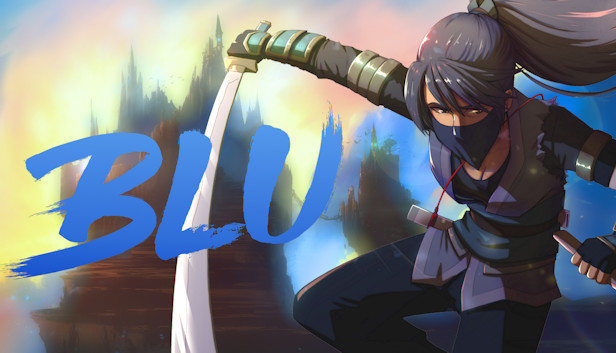
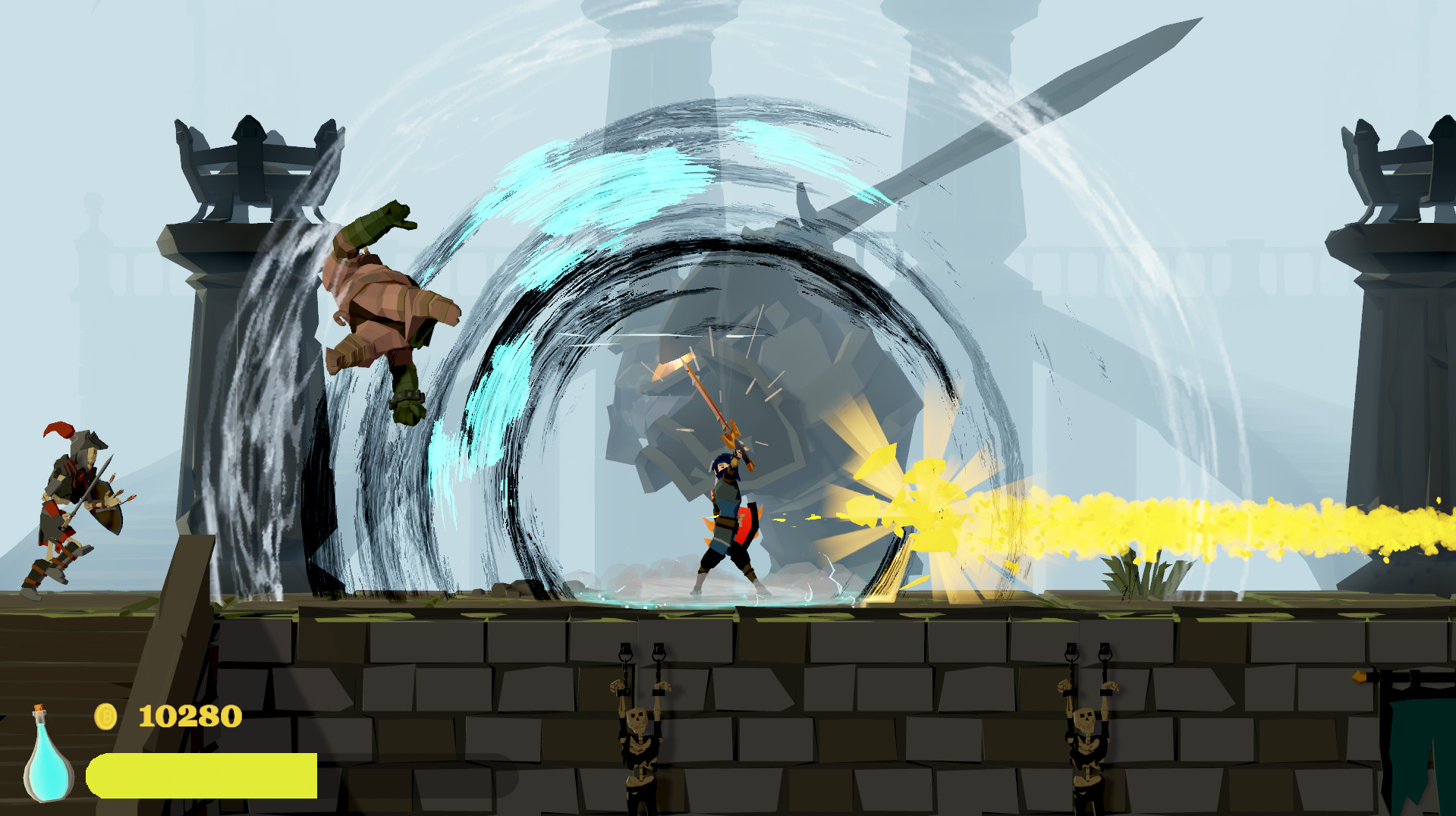
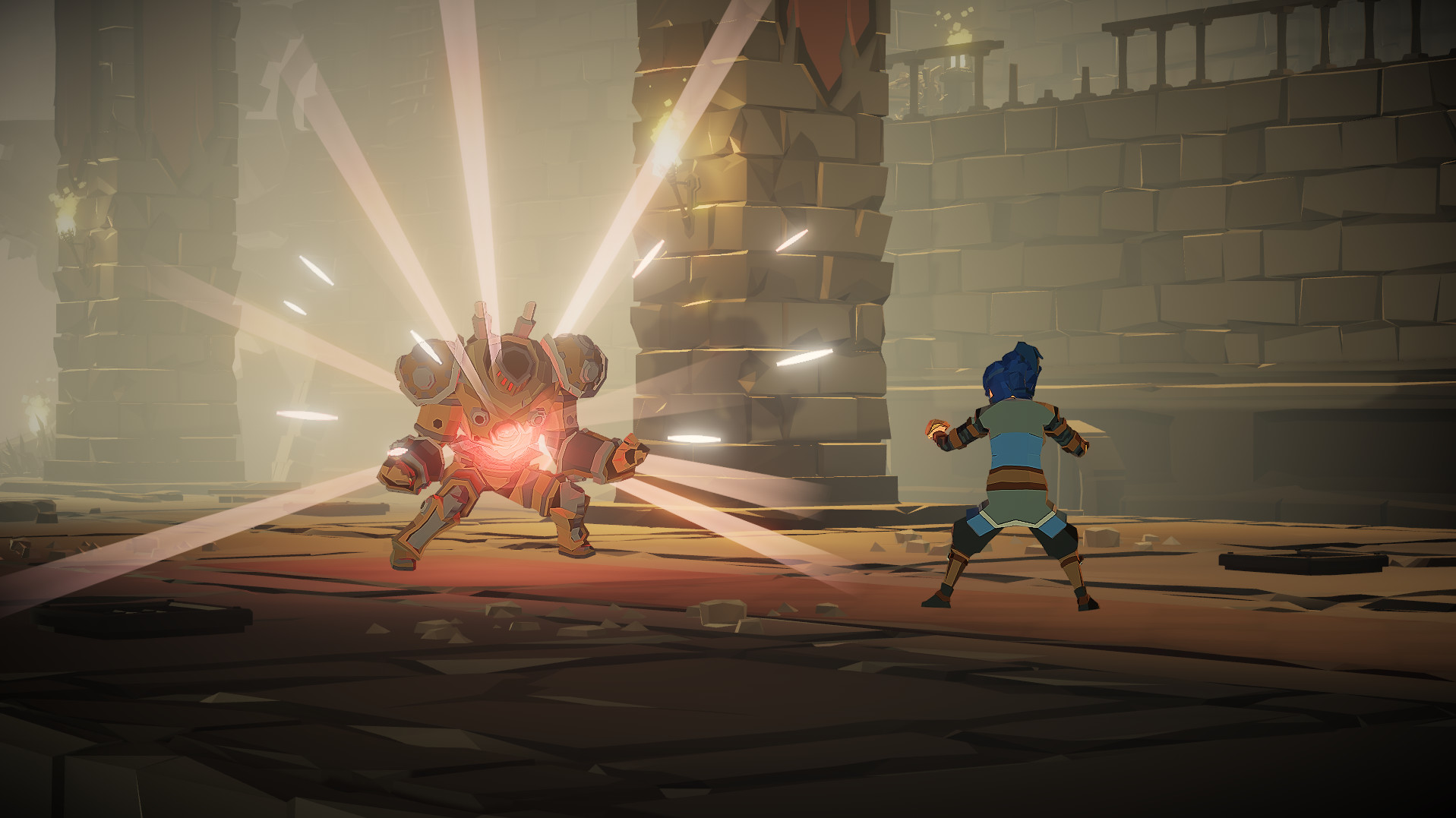
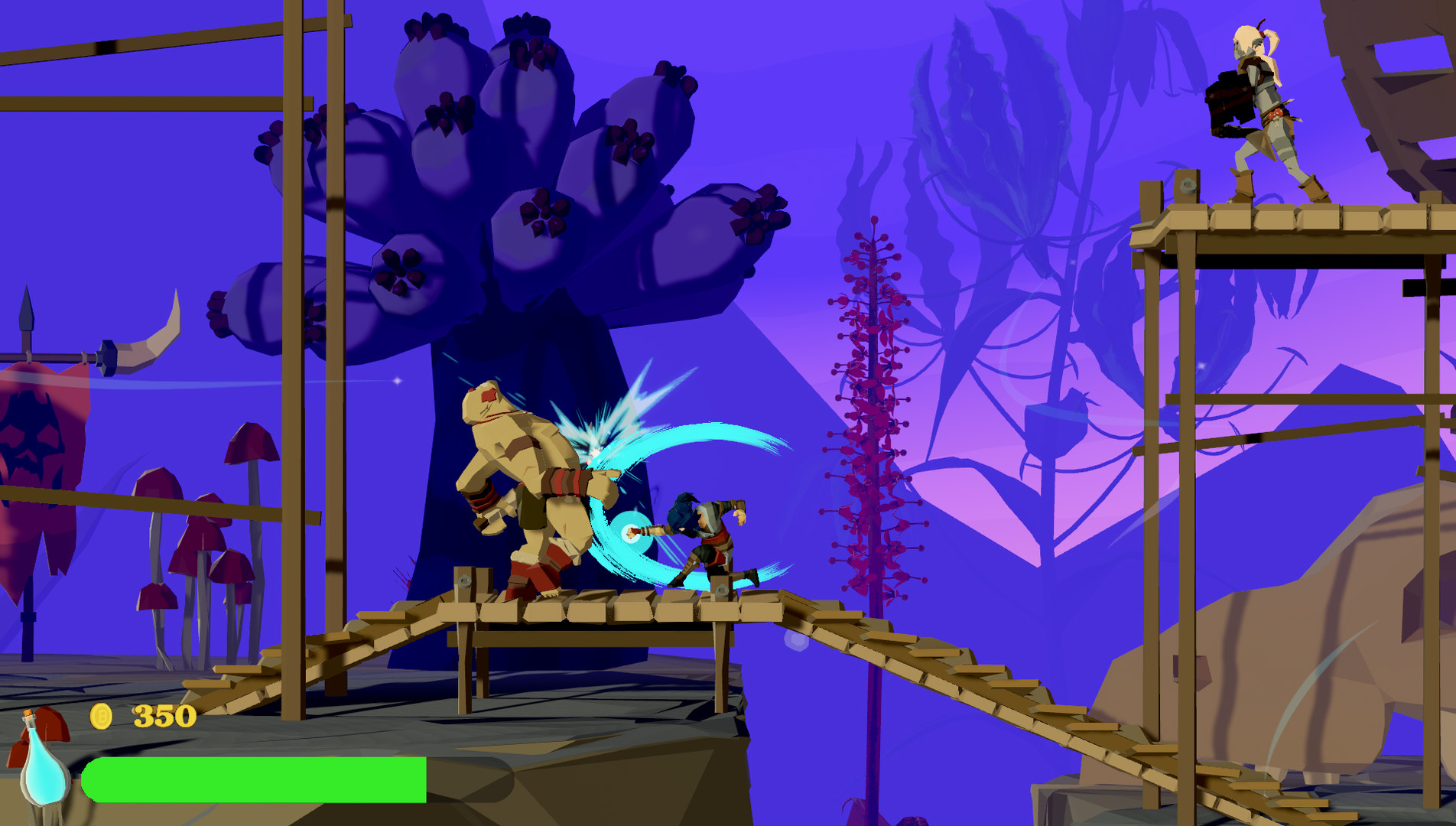
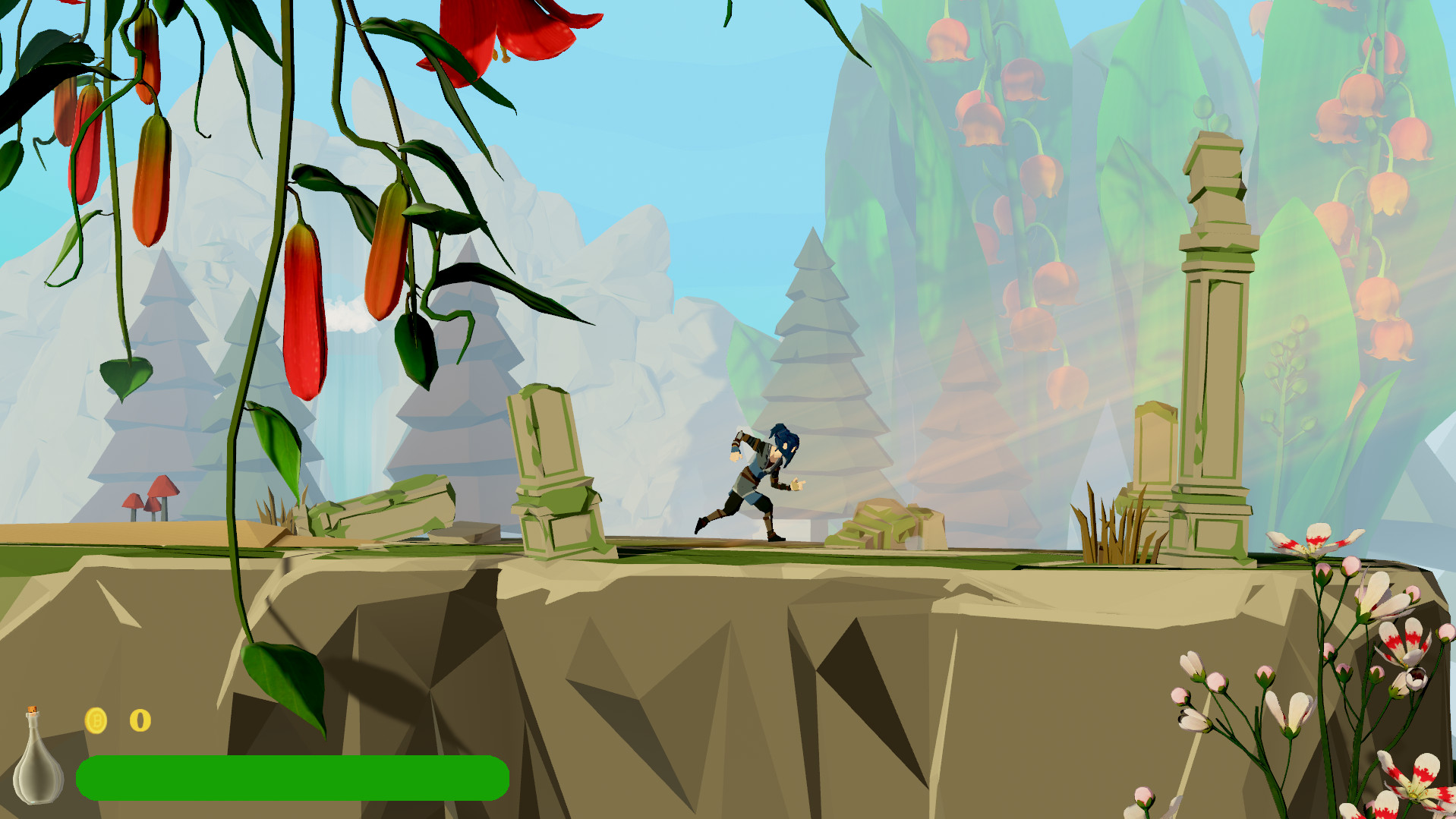
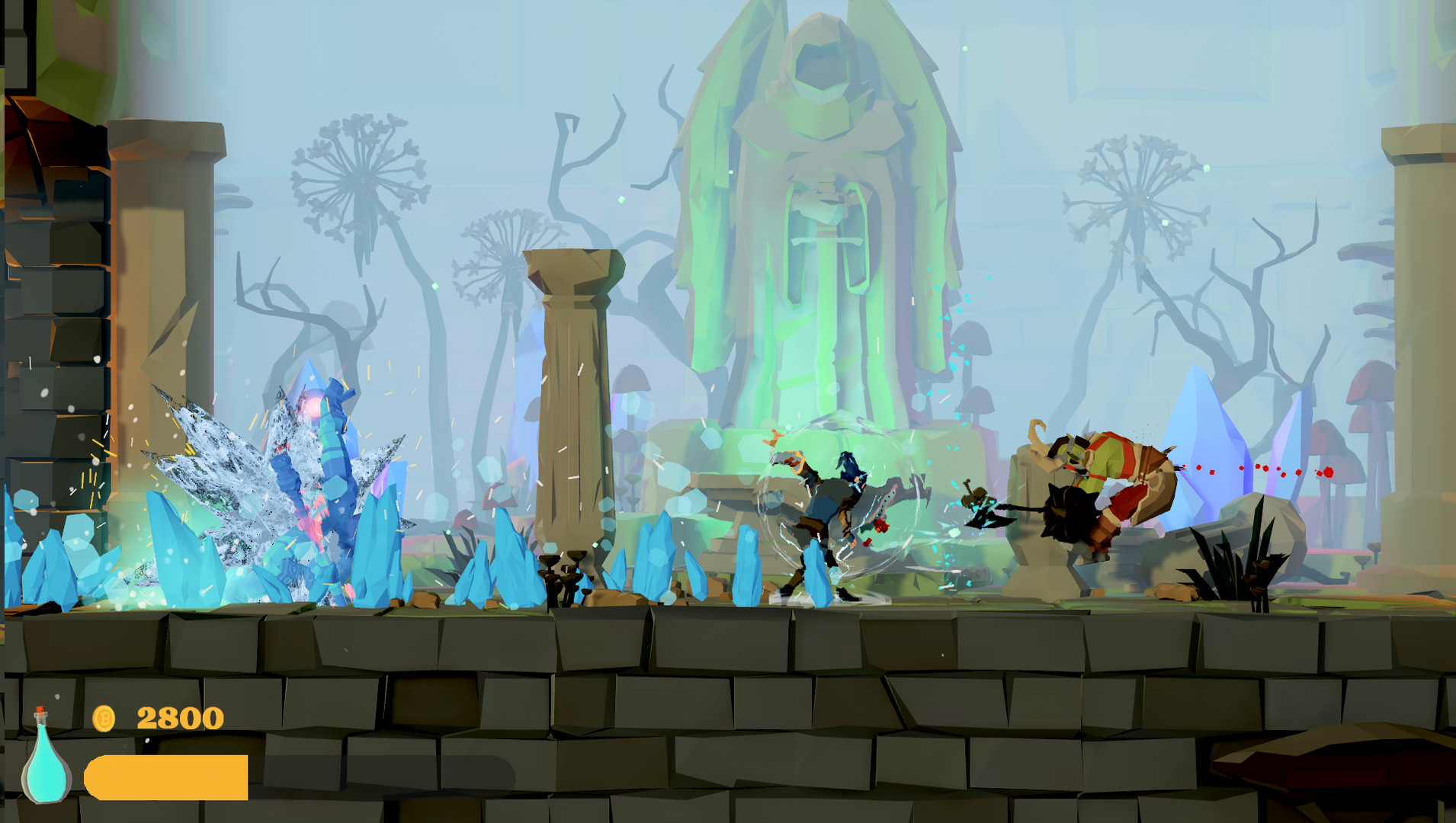
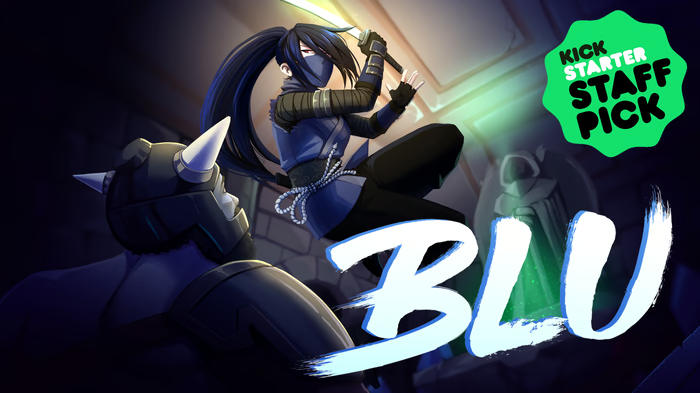
At the time, centered when I scouted Astral Ascent on Kickstarter, I also came across yet another French indie title made in a somewhat similar vein, but with a completely different, yet just as exciting, premise. Blu, under development at MyOwnGames based in Paris, is a Metroidvania centering around the titular ninja character set in a world reminiscent of Feudal Japan. But with a lot of twists in terms of conceptual design. Influenced by the likes of Super Smash Bros, The Legend of Zelda, and the modern indie classic Dead Cells, it perpetuates many of the same awesome qualities associated with any classic Metroidvania game: exploration, intense combat, and epic boss fights.

It also features a particularly catchy soundtrack composed by award-winning German composer Lukas Piel. Again, wanting to know even more about this compelling-looking Metroidvania, I contacted the game’s lead programmer, Damian Robinett, to see where the project is in its current state, when players can expect to see the finished product, and to learn more about the game’s upcoming Kickstarter campaign, due to begin on April 6th:

https://www.kickstarter.com/projects/-myowngames-/blu-vs-the-world

Here’s what Damian Robinett had to say about Blu:

Blu 1

What were the influences behind Blu?

Several indie games that have come out in recent years, Dead Cells and Hollow Knight in the lead. But also a lot of the manga universe. Naruto, for example, for certain attacks and designs, or to a lesser extent, One Piece, where I draw on the richness and diversity of its environments.

What has the developmental process been like?

Although working alone, I try to manage the development of Blu like any midsize organization. It begins with a reflection phase that lasts several months. Followed by a design phase where I design my game (which often looks like a AAA production on paper). An analysis phase where, depending on the resources available, I extract the fundamental concepts from my game design document in order to reduce them and strengthen the consistency.

And it is only then that I start the production phase. At this point, I am moving forward a little on all aspects at the same time, on the one hand, to keep the motivation, on the other hand. Because it allows keeping the game balanced and anticipating the problems in advance. I also devote a couple of hours a day to promoting the game and to discussing with my community.

How close are we to seeing the finished product?

The vast majority of the game mechanics have been implemented. Most of the Level design remains to be done, and as in all Metroidvanias, it will take a lot of time, in the end. To balance the game so that all players can enjoy a nice progression curve.

Blu 2

What has been the most exciting aspect of development?

Discover and test new things. I love to experiment, and being alone on a project means you have to diversify your activities and gain a lot of experience. Both at a practical level and in the organization of the work. Creating new relationships has also been extraordinary. The support in the game developer community is truly amazing, with great empathy and support.

What has been the most challenging aspect of development?

Combat mechanics. Starting from nothing, it’s very quick to get something playable. And you progress quickly. But when you have to streamline the gameplay in order to get something really satisfying for the player, it quickly becomes hundreds of hours of testing and tuning to get the character to behave perfectly as the player expects. A good feeling of combat results from the meeting of all the components of a game: animations, visuals/sound effects, physics, code … It’s very hard to obtain.

How well has the game been received so far?

Very good. The community of players is extremely benevolent and knows how to judge a game according to its maturity. When I see the enthusiasm that Blu causes, I am often afraid to disappoint the players, but although often bugged, the different releases always look more or less like what players expect.

Blu 3

How instrumental has fan feedback been across platforms like Discord and Twitter in shaping the development of the game?

A lot! My community shapes the game in its own way. I take into account all user feedback. I can count on talented game devs, as well as seasoned users who see the game with a fresher eye than mine. All the people who come to give feedback do so in a constructive way. And as is often done in public chats, it allows you to quickly gauge the interest in a new feature. When the change is quick, I often try to make it within the hour rather than writing it down.

What platforms are you looking to bring the game to?

My goal is to make a simultaneous release on PC, Nintendo Switch, and PS4 before the end of 2022. The console version may be postponed to the first semester of 2023. Depending on the scope of the work to be done to port the game. An Alpha, Beta, and several test builds will be released before that.

How has having Lukas Piel on board with the project helped to bring the game to life so far?

Lukas brings poetry to the game that I hadn’t envisioned when I first started developing Blu. He weaves a musical universe over the levels that turns a fighting game into a heroic adventure. If there’s one thing I’m sure of, it’s that the soundtrack will be magnificent. Working with him is a pleasure. I hope I can count on him for all my productions in the future.

Blu 4

Have there been any ideas at this stage of development that have since been scrapped or reworked?

Very much! I write down all the ideas that come to mind. Half go by the wayside after a second reading. The second phase is longer; I let it ripen for a while to determine if these ideas really bring something coherent to my game. When you’re a developer, you often tend to program certain features because you CAN do it. But most of the time, the player doesn’t even notice its details. You have to know how to bring a little magic, but time is our enemy, and you have to know how to do it with relevance.

Then the third phase will come, the one where I will no longer have time to do everything that I have stacked in my to-do list. And it will be necessary to reorganize in order of priority what is imperative to include in the game. And what is optional. We always keep them in a corner for later, but even after the release, the list of tasks often grows longer.

Will there be many stretch goals for the Kickstarter campaign when it’s launched?

Yes, it will mainly be stretch goals aimed at lengthening the playing time with new modes and offering exclusive in-game content to my backers. At each level, the game will also be translated into new languages. I decided to focus my stretch goals and rewards on the game itself. And not to diversify into derivative products.

Since Blu is heavily influenced by Smash, how exhilarating would it be to see Blu join the roster? What would her final smash move be?

I will quickly imagine that this is not reality and would definitely go crazy if it really were. But I guess it would be like having a part of myself fighting in the arena. I have spent more time with Blu than with any human being for the past two years, and I regard her as my own daughter. I don’t think she would match the big names of Nintendo, but for her final attack, I would say a heavy diving attack, Ganondorf-like. She’s a ninja, but she’s not in the delicacy.

Blu 5

If you had the opportunity to develop a game with any company or for any franchise, which would it be, and why?

We have some really cool development studios in France, so I will probably stay here. I would say Motion Twin for its cooperative legal form, which encourages developers to believe in and get involved in the projects they develop.

Do you have any advice for aspiring developers who may be reading this?

Don’t go for it with your head down. You could miss beautiful things. If you are working on a title that is close to your heart, take your time to lay your project down, and learn about best practices. Don’t take the easy road, experiment with new things, learn XP before finishing your quests, make friends on Twitter, make a Game Jam with them, and meet them in real life if you can. Promotion is hard at first until the day you don’t call it “Promo” anymore, but just a productive break you enjoy. And persevere. Over time, it always pays off.

Where on the Internet can people find you?

Mainly on Twitter and Discord. I work alone at home, so I often go there to chat a little:

Twitter – @blu_vs

Discord – https://discord.com/channels/722365912354652231/730153875901775903

Do you have anything else to add?

Yes, there are some friends of mine from Angouleme who are currently living on Kickstarter with their project Astral Ascent, and you should also take a look at it!

Blu 6

Indeed, if anyone is interested in checking out Astral Ascent, you can do so via their own Kickstarter page; a link to which can be found in my recent Q&A with the lead programmer at Hibernian Workshop, Louis Denizet:

https://scousegamer88.com/2021/03/31/astral-ascent-hibernian-workshop

But for now, I’d like to thank Damian for sharing what information he could about Blu and to wish him the best of luck with the Kickstarter campaign launching April 6th. Blu, like most Metroidvanias released throughout the eighth generation, looks like a particularly engrossing and addictive game. And I can’t wait to get my hands on it when it’s finally released. In the meantime, I hope you guys check out Damian’s Kickstarter. And that I hope you enjoyed learning more about this awesome-looking game.

Game on,

Scouse Gamer 88

Super Metroid (Super NES)

Developer(s) – Nintendo R&D1 & Intelligent Systems

Publisher(s) – Nintendo

Director(s) – Yoshio Sakamoto

Producer(s) – Makoto Kano

PEGI – 7

Released in 1994, coming up to the twilight years of the Super NES, and finding critical acclaim worldwide and commercial acclaim mainly in North America, Super Metroid is considered to be one of the most influential games of all time. Along with Castlevania: Symphony of the Night, it helped to pioneer the so-called Metroidvania genre of games. The 2D side-scrolling open-world experience focused on combat, epic story, and exploration. I decided that, as I’ve now reviewed a great number of games in the genre, I’d examine the game where the groundwork was laid. And find out whether or not the experience still holds up to this day, and for me, it did not disappoint. 

Graphics – 10/10

One of the standout features of the game is undoubtedly its beautifully crafted 16-BIT visuals, with the game taking place across several locations that have since become iconic and synonymous with the Super NES era. Including Brinstar, Norfair, and Maridia. This game’s visuals have gone on to inspire several retroactive indie titles over the last decade, such as Blasphemous and Axiom Verge, and not just Metroidvania titles. For the time, these graphics were revolutionary. And the accompanying soundtrack, composed by Kenji Yamamoto and Minako Hamano, perfectly complements the wonderfully horrific atmosphere this game perpetuates throughout, which, in and of itself, was very much out of character for a Nintendo game at the time, as most Super NES titles, for the most part, focused on happy-sounding music and brightly colored environments.

Gameplay – 8/10

Super Metroid followed the basic model of the original Metroid but with drastic improvements. Players could now combine different types of weapons to create more powerful ones. And the boss fights littered throughout are far better. There’s even more cause for exploration than in the original game or Metroid 2: Return of Samus. And it also comes with the synonymous Metroidvania map system. Something which was sorely lacking from the previous two games. And something that every other Metroidvania title would adopt in increasingly innovative forms from then on. Few side scrollers at the time encouraged exploration to the extent that this game did. And it was a welcome breath of fresh air for those who got the chance to play it back in the day. 

Controls – 8/10

The game’s control scheme, however, isn’t perfect. Whilst most Super NES games used the Y and B buttons for attack for primary movement and combat controls, this game uses the X and A buttons for that purpose. And among Super NES fans, this will have caused some confusion for players back when it was released. It can still potentially confuse modern-day players looking to play it for the first time. As indeed I found, since I wasn’t introduced to this game back when it was released. Kind of like Metroid Prime, it can take a bit of time for players to get used to it initially. What the developers did add in terms of controls, however, was the facility to shoot diagonally. Which again, was sorely lacking from the original games, and furthermore included in the re-release of the first. Metroid: Zero Mission for the Game Boy Advance.

Lifespan – 7/10

A thorough playthrough of the game can take an average of around 4 hours. Which is about an exceptionally long amount of time for a game to have lasted back in the days of the Super NES. Although the game can be completed within half an hour (indeed, as this title has become particularly popular among speedrunners), it’s not a game that’s designed to be rushed through. And whilst it may sound like a paltry amount of time for a game to last compared to what gamers are used to these days, it was relatively unheard of at the time. And most fans of the game have ended up playing it multiple times throughout the years anyway. 

Storyline – 7/10

Taking place in the latter stages of the Metroid timeline, the alien lifeform (the Metroid) that bounty hunter Samus Aran had recovered from planet SR388 at the end of Metroid 2: Return of Samus had been delivered to a research facility by her for further study. But shortly thereafter, the space station is attacked by the leader of the Space Pirates, Ridley. Who then captures the Metroid specimen? And takes it to the nearby planet Zebes, and Samus is in pursuit of him.

The game is also a lot more cinematic than games of the previous generation. The game’s opening cutscene, in particular, has become an iconic moment in Super NES history. It’s also one of the earliest examples of how gameplay sequences can be used to build up tension within the confines of the story. As there are sequences in which Samus must escape from certain places within a designated time limit before it explodes. 

Originality – 10/10

There is no understating how unique and influential this game was back in the day. Any game from which an entire genre is created stands out as being among the most influential of all time. Doom gave birth to the first-person shooting genre, and Rogue paved the way for the Roguelike genre. And Super Metroid was the primary pioneer of the Metroidvania genre. Even Castlevania: Symphony of the Night adopted several gameplay elements that this game had first introduced. 

Happii

In summation, as well as being one of the most influential video games of all time, Super Metroid also stands out as one of the best titles on the Super NES. It is an experience that still holds up and one that I would highly recommend. Regardless of the issues I may have had with the controls, the immersive gameplay, wonderfully rendered graphics, and engrossing story more than make up for it. 

Score

50/60

8/10 (Very Good)

Chip N’ Dale: Rescue Rangers 2 (NES)

Chip N Dale 2

Developer(s) – Capcom

Publisher(s) –  Capcom

Producer(s) – Tokoru Fujiwara

PEGI – N/A (Suitable for all ages)

Released very late in the shelf life of the NES back in 1993, Chip N’ Dale Rescue Rangers 2 received favorable reviews upon release and was later released as part of the Disney Saturday Morning Collection along with the original game, Duck Tales, Talespin, and Darkwing Duck. The previous review of this game that caught my eye above all others was the EGM review.

This alluded to what it would’ve been like to see a sequel alternatively released on more current hardware at the time. Such as the Super NES or the Mega Drive. Whilst I believe it to be true that if that had indeed been the case (indeed, it would have sold even better than what it did and would’ve been more capable of standing out), the final game is still a very enjoyable experience. As well as being a more than worthy sequel, topping what the original game had to offer. 

Graphics – 9/10

The most notable improvement between the first and second games is undoubtedly the graphics. Everything from the character sprites to the scenery is a lot more detailed than that of the previous game. And there are definitely signs that the developers have done a lot more with the console’s relatively limited colour palette. The conceptual design is also even more diverse than the last. Towards the end of the former, the levels seemed to have similar elements to the previous levels. Whereas the second game doesn’t suffer from that issue at all. The only thing that this game doesn’t have going for it in comparison to its predecessor is that the soundtrack is nowhere near as catchy. 

Gameplay – 8/10

The gameplay pretty much follows the same formula as the first. Though with a few minor tweaks. Gone is the facility to choose between levels, as this game offers a completely linear progression. And players can now stun enemies and grab them in addition to throwing inanimate objects at them. Making it even more reminiscent of Super Mario Bros 2 than the first Chip N’ Dale game. Whilst it may seem a bad thing that the second game has a far more linear progression, it’s actually an improvement. It removes the option of skipping levels in order to progress faster. It forces the player to enjoy the full game for what it is. The most significant improvement in terms of gameplay, however, is that the boss fights are far more elaborate than those of the first game. Requiring a far greater degree of strategy to defeat them. 

Controls – 10/10

As with the previous game, there are no issues with the controls, as the 2D side-scrolling genre had become a staple in gaming at the time. And it seemed harder for developers to get it wrong than to get it right. There are a few tweaks that have been made to the controls, however. Such as the facility to throw objects diagonally. Whereas, in the previous game, they could only be thrown up, left, or right. It was quite impressive for an NES title, since many other games only relied on the up, down, left, and right axes. Whereas games like this attempted to break the trend, it would seem. 

Lifespan – 7/10

Lasting about the standard time of a third-generation side scroller, the game can be completed within an hour. Of course, because the game forces the player to experience every level, unlike in the first, players are forced to spend a standard amount of time on it, however. Instead of potentially skipping levels in order to progress as fast as possible. There were many other side scrollers at the time released on better hardware that was being made to last considerably longer than this. But those playing it at the time, and those looking to try it out, will not be disappointed. 

Storyline – 7/10

The storyline of Chip N’ Dale 2 is also massively improved compared to that of the first game. The story is that Chip and Dale, along with Monterey, Zipper, and Gadget, are on a mission to stop Fat Cat from using an ancient artifact to achieve world domination. It seems generic at first glance, in the basic premise. But what separates this game from the previous, and indeed from several early NES titles, is that there is a notable amount of cutscenes included to tell the story. And far more dialogue than there is in the first game. Breaking another NES trend, players would be reliant on the game’s manual to learn about the majority of the game’s story. But in this game, the developers went above and beyond that to tell it in a more detailed manner in-game. 

Originality – 7/10

Though there were a lot of Super NES and Mega Drive games developed at the time that had already perpetuated a lot of the things that this game did, this game stands out for making these innovations. But on previous-generation hardware. The game, in and of itself, was a very retroactive experience. It showed developers that more could be done with the NES than perhaps they may have thought throughout the mid to late 80s. Certainly in terms of controls and storytelling anyway. In terms of gameplay, whilst there are a few tweaks made, it just about does enough to be kept fresh. 

Happii

Overall, whilst Chip N’ Dale 2 doesn’t hold as much nostalgic value to me personally (indeed, the first Chip N’ Dale was actually the first game I ever played), it is still a much better game than its predecessor. It celebrates the license in a more meaningful way by presenting the story better. And there are significant improvements made in almost every other aspect in addition. 

Score

48/60

8/10 (Very Good)

Super Smash Bros (Nintendo 64)

Super Smash Bros

Developer(s) – HAL Laboratory

Publisher(s) – Nintendo

Director(s) – Masahiro Sakurai

Producer(s) – Hiroaki Suga, Satoru Iwata, Kenji Miki & Shigeru Miyamoto

PEGI – 7

Released in 1999, following a long and lucrative development cycle, Super Smash Bros went on to become one of the most beloved games on the Nintendo 64, selling the best part of 5 million copies after other fighting games flopped poorly on the system and later spawned into one of the company’s flagship franchises that today acts as one of Nintendo’s biggest system-selling series upon release. However, the original game had far more humble origins. And as such, it started as an idea that would later be built upon to an astronomical extent. It’s a very enjoyable game, considered a classic by many Nintendo fans.

Graphics – 7/10

The game takes place among various stages based on beloved Nintendo franchises. Such as Donkey Kong, Super Mario, Star Fox, and The Legend of Zelda. With some of the lesser-known franchises at the time. Which were EarthBound, F-Zero, and Metroid, it’s impressive how the developers envisioned how these series would look in 3D despite the lack of source material at the time, compared to the more well-known Nintendo series that were much more established. But besides that, every stage and every character looked brilliant for the time and hardware available. And it was all complete with the iconic opening cinematic that has since become synonymous with the franchise. 

Gameplay – 7/10

Super Smash Bros was the fighting game that every Nintendo fan had long dreamed of since the game was ever created. It features a selection of some of Nintendo’s most beloved characters hashing out with fists, iconic weapons, and other weapons or objects that can be used to the player’s advantage. In terms of the core gameplay, there was a great deal to keep players coming back for more. And continuing to do so even over 30 years on. Although the variety in gameplay would be improved upon massively (with it actually being shocking how few unlockables there are in the original game compared to future entries in the series), the first game offers more than enough incentive to last for hours upon hours. 

Controls – 9/10

For a completely new franchise, the game’s control scheme works out well enough. There are only a few minor nitpicks I have about it, such as the need to use the C-buttons for things like jumping. Whereas later entries in the series would go on to improve on this. It’s kind of like the transition between Goldeneye and Perfect Dark in that respect. This is part of the reason why I ended up enjoying later Super Smash Bros games far more than the first. But for the most part, the controls are fine. 

Originality – 7/10

What made this game as original as it is is not the general concept of including Nintendo characters in a fighting game, because at the time it seemed like an obvious idea that Nintendo had astonishingly not undertaken themselves before Masahiro Sakurai showed them the initial demo he had worked on in secret. But what made this game truly stand out among other fighting titles is the way in which it plays out. Not with health meters that need to be depleted.

But rather a health meter that needs to be racked up to a high enough percentage that the opposition can be knocked out of the stage itself. It was a really unique idea, and it’s a system that has been adopted. And modified by several other developers throughout the years. It would’ve been more influential if original ideas like the final smash moves were implemented (which wouldn’t be until Super Smash Bros Brawl), but on its own merits, it turned a niche gaming genre on the Nintendo 64 into a beloved one. 

Happii

Overall, the original Super Smash Bros has remained, and always will remain, a classic game with a lot to play for. Other Smash Bros games would come along and blow this game out of the water, in my opinion. But the original game was certainly a more than adequate starting point. 

Score

30/60

7/10 (Good)

Mario Golf (Nintendo 64)

Mario Golf

Developer(s) – Camelot Software Planning

Publisher(s) – Nintendo

Director(s) – Haruki Kodera (N64)

Producer(s) – Shinji Hatano, Hiroyuki Takahashi, Shugo Takahashi & Hidetoshi Endo

PEGI – 3

Released back in 1999, with a separate port finding its way onto the Game Boy Colour. Mario Golf was met with an overwhelmingly positive response on release and would then go on to spawn a whole new series in the Super Mario franchise. Garnishing even more critical and commercial acclaim. A vast majority of spin-off Super Mario series historically start as well as what could be expected. Such as Mario Kart, Luigi’s Mansion, and Captain Toad: Treasure Tracker. There are some, however, that, in my opinion, started with evident flaws. But then later go on to have games developed that are far better than the original. Super Smash Bros. is probably the best example of this. But the way I see it, Mario Golf under Camelot started the same way as well.

Graphics – 6/10

The visuals of the game, as what any fan of the series would’ve come to expect at the time, fit in well with the tableau of the Super Mario mythos. The courses are extremely reminiscent of parts of the Mushroom Kingdom as seen in previous Mario titles. And the developers did relatively well to diversify each tournament’s settings in that respect. When comparing it on a technical level to previous Super Mario games ported to the Nintendo 64, players will find that the level of detail is also on par with many of them.

Arguably even better than some, too. The biggest problem I had with this game, in terms of both graphics and gameplay, is the character roster. Of course, you have classic Mario characters. Such as Mario himself, Luigi, Donkey Kong, Peach, and Bowser, among others. But as well as that, there are also a lot of generic characters included alongside them, like Plum, Harry, Sonny, and Charlie. The majority of them have never been seen in a Mario game again, and for good reason.

Gameplay – 6/10

The game has several different modes to choose from. Such as playing 18-hole tournaments, speed golf, and ring shot. And the head-to-head mode that pits you against other characters to unlock. The game has a lot to offer in terms of variety. But with the get-character mode, it’s a mixed bag due to how equally exciting and boring it can feel to unlock certain characters. It’s also not the most accessible game in terms of difficulty. I remember playing this game when I was growing up, and even unlocking Luigi seemed like an endurance test. And I still find it to be the case now, even after playing other games in the series. 

Controls – 7/10

Probably the worst thing about this game, however, is its control scheme. The heads-up display is not self-explanatory like it is with future Mario Golf games; the putting system is unnecessarily complicated, as it becomes almost impossible to determine how much power should be put behind the ball. There were many other 3D golf games even back then that had much better control schemes attached to them, and although this would be improved in later entries, it didn’t start well in my opinion. 

Originality – 6/10

Although this is one of those games that was probably dreamt up by many Nintendo kids before it was even conceived, it does fairly well to keep things unique on its own merits with its diverse settings for different tournaments (again, something which would be improved on further. Again, the thing holding it back most in terms of originality is having so many unoriginal characters included in addition, which, by Nintendo’s standards, were profound to me, even at the time. There were so many other characters they could’ve included at this point that it just baffled me to know that they chose to go with Camelot’s idea of including so many generic ones instead. 

Niiutral

Overall, Mario Golf is not the best entry in the series; not by a long shot. And later, a plethora of improvements would be made with the likes of Mario Golf: Toadstool Tour and Mario Golf: World Tour. The upcoming Mario Golf: Super Rush also seems set to break new ground with its story mode and additional challenges attached to it, but in terms of the Nintendo 64 game, the developers could’ve done better. 

Score

25/40

6/10 (Average)