Tag Archives: Nintendo

Blasphemous (PC, PlayStation 4, Switch & Xbox One)

Blasphemous

Developer(s) – The Game Kitchen

Publisher(s) – Team 17

PEGI – 16

Released back in 2019 to universal acclaim after an immensely successful Kickstarter campaign, Blasphemous is a Metroidvania title influenced by games such as Dark Souls and Resident Evil 4 combining wonderfully rendered visuals with intense and challenging combat sequences and precise platforming. After having gotten the chance to play this game myself, I was captivated from start to finish. It is most definitely one of the best Metroidvania titles released throughout the eighth generation of gaming. If not one of the best games in general released throughout the time. 

Graphics – 9/10

The game is set in the harsh and mostly dangerously desolate landscape of Cvstodia, which was inspired by religious art composed by classic Spanish artists such as Francisco Goya and de Ribera. The developers also drew further inspiration from the religious iconography of their hometown of Seville, Spain, with Gothic architecture and the religious attire associated with it. 

The world of Cvstodia is also beautifully rendered in 16-bit pixel art reminiscent of titles of the fourth generation of gaming. The world of Cvstodia is as wonderfully captivating as it is dark and gritty. It features some of the best examples of video game conceptual design I’ve seen for some time. Everything from the landscape to the character design attests to how much of a labour of love this game truly is. 

Gameplay – 8/10

Playing out like a traditional Metroidvania title, the game is heavy on combat and character development, as well as requiring precise and clever platforming to progress. Players must both subdue hordes of enemies and uncover new areas within by acquiring new abilities and improving their character’s stats. Two different endings are available to unlock. Which depends on what items the player has acquired and how they are used or modified. 

Another particularly standout feature in this game, however, is the boss fights, which again give testament to the quality of the game’s conceptual design. Bosses such as Ten Piedad, Our Lady of the Charred Visage, and my personal favorite, Exposito the Scion of Abjuration. The game is every bit as challenging as the titles it took influence from. But at the same time, not inaccessible. It’s also an extremely satisfying experience to revisit locations far stronger than before with the acquisition of new abilities and more health and magic. But also equally as satisfying to defeat each boss. It does exceptionally well to make the player feel like this is their journey, along with the player character. The Penitent One. 

Controls – 10/10

The game’s controls are precise and responsive, and present the player with no necessary issues. Which is desperately needed in a game like this. There’s nothing worse than when a developer tries to challenge a player with a tough game. And the controls aren’t right, like what I found with the original Mega Man. Fortunately, however, this issue is non-existent in Blasphemous.

Lifespan – 7.5/10

To complete the game to 100%, along with the DLC package The Stir of Dawn, will take roughly 30 hours. Which, for a Metroidvania game, is particularly impressive. It could possibly be made to last longer with the potential introduction of new DLC released somewhere down the line (here’s hoping). But regardless, this game will have players investing in it for a particularly long time to come. There are plenty of collectibles to scout for and abilities to acquire to make Blasphemous last more than a meaningful amount of hours. 

Storyline – 9/10

The story of Blasphemous follows a mute lone soldier known only as The Penitent One. He is the sole survivor of an order known as The Brotherhood of the Silent Sorrow. The Penitent One embarks on a pilgrimage in the name of The Miracle. A god-like supernatural force that governs the land of Cvstodia. It manifests itself in various twisted ways in the name of either mercy or punishment. 

The Penitent One seeks a holy relic named the Cradle of Affliction. He is instructed by a narrator of the Miracle named Deogracias to carry out the three humiliations. Thus, gaining access to the location where the Cradle of Affliction is housed. 

The game’s story is expertly structured and masterfully written with full voice acting and a plethora of lore and backstory to unearth throughout Cvstodia. It raises questions about the nature of godhood and everlasting life in a world where the desire for punishment or forgiveness comes at a high cost. And what impact religious institutions can have on the world. Again, it was yet another element to this game that excited me from beginning to end. 

Originality – 9/10

Taking into account everything about this title, from its conceptual design to its combat system to its gripping story, it is definitely one of the most original titles I’ve ever played. In a gaming generation that has been arguably over-saturated with Metroidvania titles in recent years, it would have taken something particularly special to make another one stand out among so many others. But this game does that flawlessly. It tackles themes, gameplay mechanics, and graphical features that have rarely been seen before. And will go on to influence a plethora of games for years to come. 

Happii

In summary, Blasphemous is definitely one of the best games of the eighth generation. The influx of indie games over the last seven years has made this generation one of the most exciting in the history of gaming. But this title will be one that gamers will still be playing long after. With its wonderfully rendered visuals, intense combat, and boss fights. And a story that players will be talking about for many years after its release. 
Score

52.5/60

8.5/10 (Great)

Cat Quest II (PC, PlayStation 4, Switch & Xbox One)

Cat Quest II

Developer(s) – The Gentlebros

Publisher(s) – The Gentlebros & PQube

PEGI – 7

Released 2 years after its predecessor to widespread critical acclaim, Cat Quest II picks up pretty much immediately where the first game left off. But at the same time, giving players a much bigger world to explore and more quests to undertake. As well as introducing a few new Gameplay mechanics and expanding the lore of the universe greatly. In every single respect, the second game is much better than the first. And the ideal way to expand on what is a very promising series of games indeed. 

Graphics – 9/10

As in the first game, the game is set in the region of Felingard, where cat civilization is based, and the same dangerous creatures roam the landscape for players to have to contend with. However, Cat Quest also introduces players to the Lupus Empire. A realm inhabited by dogs, which has a whole new design to it and a whole load of new enemies to fight and locations to discover.

The Lupus Empire is a lot more barren and arid in stark contrast to the lush greenery of Felingard, and does well to demonstrate the developer’s abilities to diversify in terms of location design. There are also a few new technical improvements made in the visuals as well. Most notably in the water effects in underground cave areas. This makes each of these locations stand out from one another much better than before. Being a sucker for water effects in games, I was particularly impressed with how they were handled in this game compared to those of the first. 

Gameplay – 9/10

In terms of gameplay, Cat Quest II is very much like an extension of the first game. The premise is virtually the same, with a couple of newly added gameplay features. The most distinguishable feature is that the player now has control of two characters. Not just one, and can switch between the two at will. It makes the combat system itself infinitely more dynamic. With the introduction of new weapons for both characters to wield and new armour to discover and modify. In addition, there are also new spells to learn, as well as old ones from the previous game. There are also many more side quests to do around the game’s open world for longevity. 

Controls – 10/10

The game’s control scheme functions the same as in the previous game, and as such, there are no issues to be concerned with. Players will be able to go from Cat Quest I to II without skipping a beat. It doesn’t take long at all to get used to the newly introduced mechanics, either. As they’re simple enough to get to grips with. The new sprint option also allows for more efficient exploration in a shorter span of time.

Lifespan – 7.5/10

To complete the game 100% takes around 17 hours to complete. Whilst it isn’t a decisive improvement on the first game, it’s still an improvement nevertheless. I still think that a game of this potential and magnitude deserves to last far longer than what both the first two instalments have offered players thus far. But it was nice to see minimal improvements in this respect at the very least. 

Storyline – 7/10

Following the events of the first game, a cat king has been paired against his will with a dog king in order to bring about a truce between the warring regions of Felingard and the Lupus Empire. The story has all the charm that the first game did, with both cat and dog-related puns all over the dialogue and even a few off-hand references to classic games hidden here and there. The story also escalates into something far bigger than what the initial synopsis suggests. This all helps to keep the franchise as fresh as possible.

Originality – 7/10

The only gripe I would have in terms of originality in this game is that a lot of its soundtrack is the same as what was in the first game, especially at the beginning, which at first made me feel like I was simply playing the same game again, but with a few improvements. But after I’d played it for some time, I realized that wasn’t the case at all, and the soundtrack does become a lot more diversified as the game progresses, too, with new types of music taken from new influences. That being said, the excitement of the new combat system alone does well enough to keep the series fresh and to continue to differentiate it from many other indie game series developed over the last few years, and has made me all the more anticipatory of a potential third game. 

Happii

Overall, Cat Quest II, with many improvements here and there, is a much better game than its predecessor; the combat system has been modified greatly. And the charm and great atmosphere are both expanded upon to a phenomenal extent. And will do well to appease both fans of the series and newcomers alike. 

Score

50.5/60

8/10 (Very Good)

Q&A With Max Indie Game

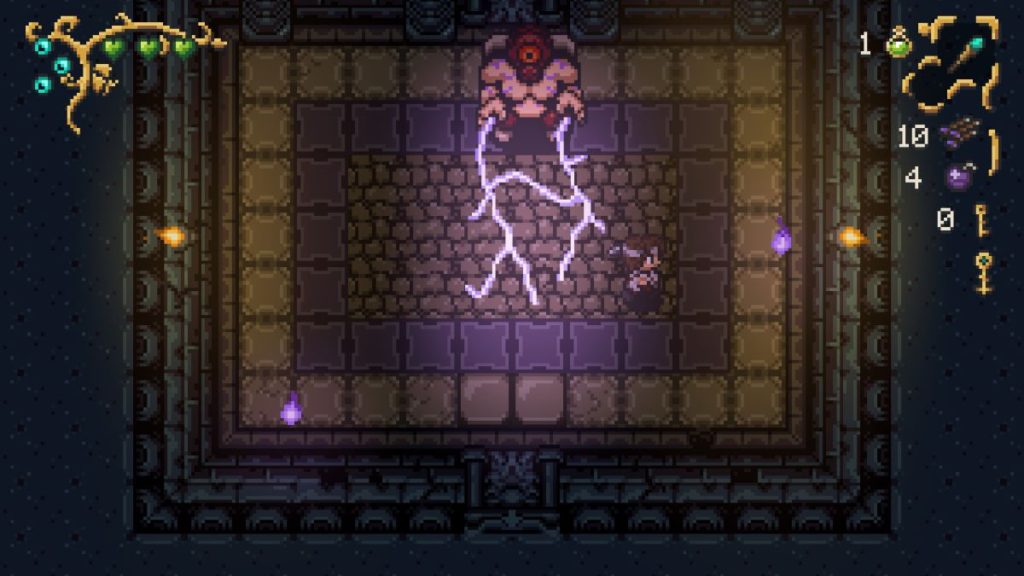
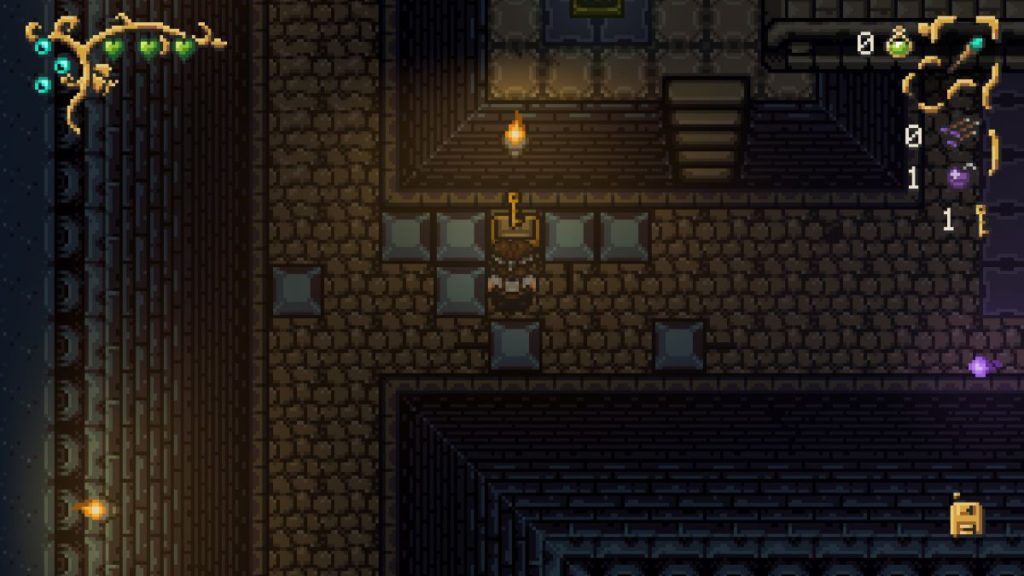
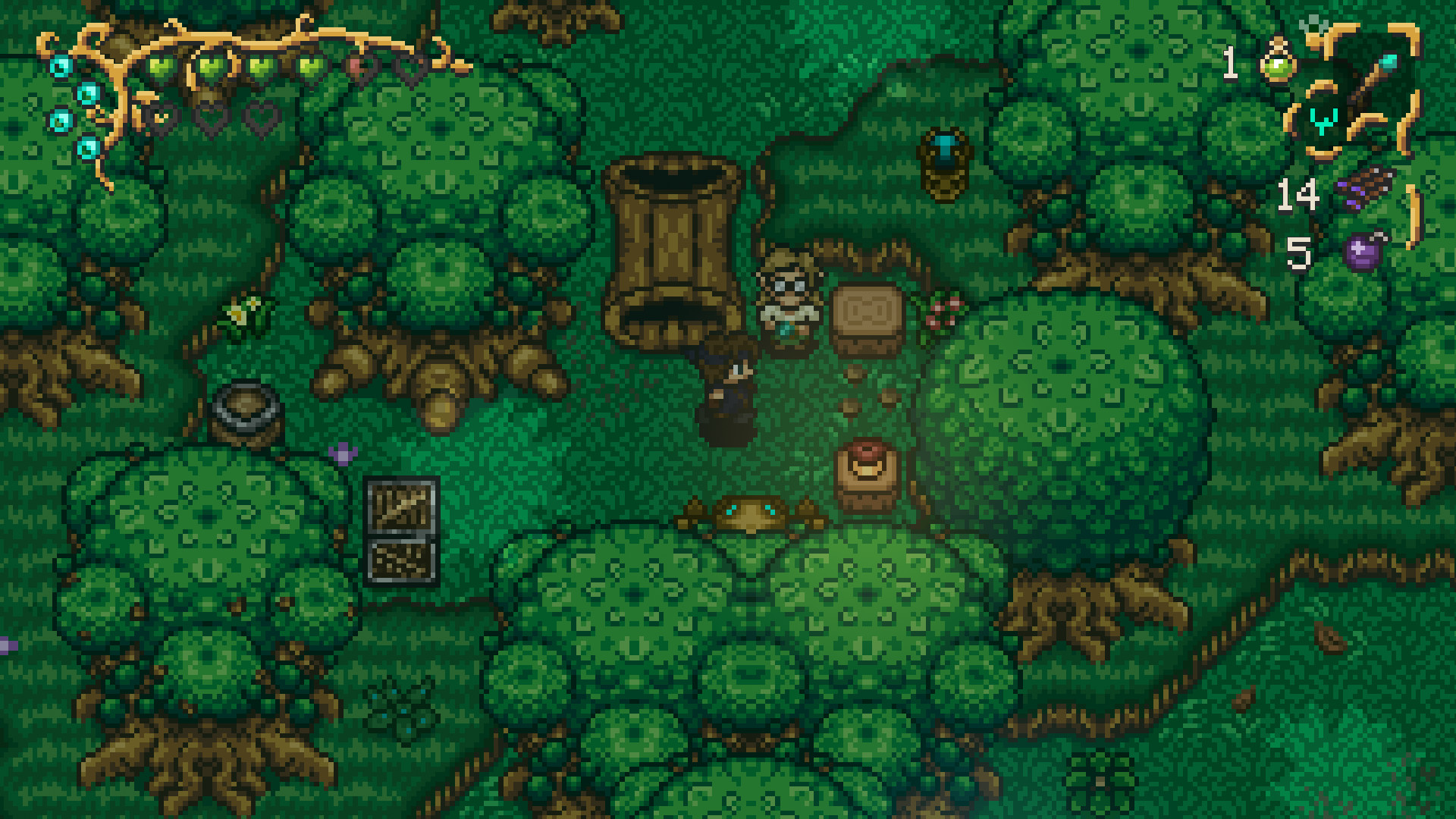
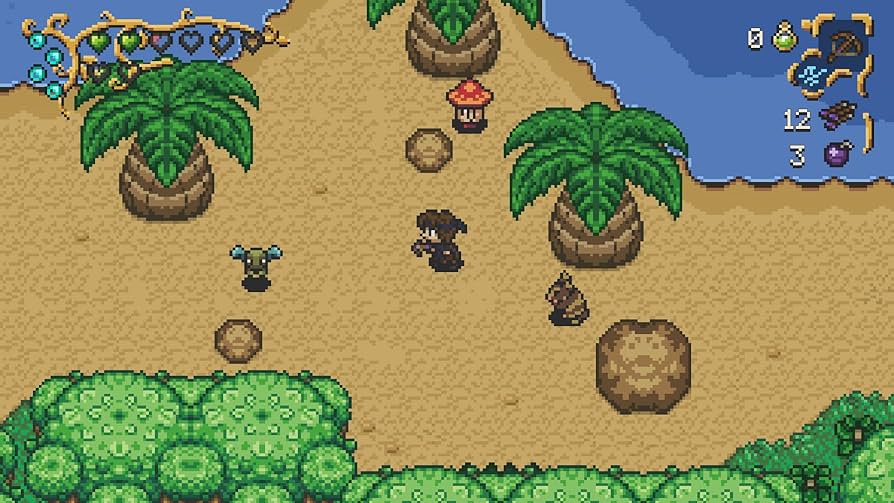
The first full week of 2021 has seen an influx of new Kickstarter projects underway, many of which have been successfully funded even at this early stage. Another project on the platform that I came across this week is another Metroidvania title to add to the explosion in popularity of the genre garnished within the last gaming generation. Ancient Tree, under development by a pixel artist from Singapore operating under the pseudonym Max Indie Game, is a traditional Metroidvania title boasting intense combat, a vast 2D open world to explore, complete with mysterious ruins and lush greenery (somewhat similar to the conceptual design of Shadow of the Colossus), and a foray of hidden combat abilities to unlock, making the player character stronger over time. Wanting to know more about this project, I got in touch with Max and asked a question about the game in its early stages of development. Here’s what Max Indie Game had to say about Ancient Tree.

What were the influences behind your game?

Legend of Zelda: Link’s Awakening, and Castlevania: Symphony of the Night.

What has the developmental process been like?

Seems as I work on this project solo, I do not have a solid process like a big company. I usually take notes or sketch down my idea in a sketchbook before I implement pixel art using Aseprite and Unity. Every time I’ve implemented something on Unity, I have tested it to catch bugs, fix them, and continue.

You mentioned on your Kickstarter page that your previous experience with the software was not video game-related. What made you want to go into gaming?

Ever since I was young, I’ve always loved to play video games. I have played many JRPG games up to now. I always had a dream to develop my own game someday during my school time.

How close are we to seeing the finished product?

Currently, the development for stage 1 is still in progress and is not nearly finished yet. There are about 7 stages in the game, and there’s still a way to go before it’s finished. Apart from that, I also have a day job and a family.

What has been the most exciting aspect of development?

Having fun with writing code, drawing pixel art, learning, and trying something new.

What has been the most challenging aspect of development?

Creating pixel art and animation. Before I start creating it in Aseprite, I will sketch down my idea first. As you can see, the process of creating assets requires time and patience, but it is worth it, and I’m happy with my outcome. Solving tricky bugs takes some time to research or think about a solution, but I feel accomplished when I’ve solved the issue.

You also mention on your page that you have ideas for a lot of new features to be implemented. Can you share anything about that?

Here are some ideas that I have in mind (although it is not a new concept or idea, as many games already have it). For example. storyline, inventory, Map, and hidden skill.

What platforms are you looking to bring the game to?

Currently, I plan to bring it to Steam and Nintendo Switch.

If you had the opportunity to develop a game with any company or any franchise, which would it be, and why?

Not considering any as of now, as currently I just work as a solo indie dev.

Do you have any advice for aspiring developers who may be reading this?

Never give up on your dream, one day we can make it.

Where on the Internet can people find you?

– Twitter: https://twitter.com/maxindiegame

– Reddit: https://www.reddit.com/user/maxindiegame

– Instagram: https://www.instagram.com/maxindiegame/

– Facebook: https://www.facebook.com/maxindiegame

I’d like to take the opportunity to thank Max for taking the time to talk about Ancient Tree and to give gamers a better idea of what to expect from the final build. Ancient Tree is currently on Kickstarter, so if anyone reading thinks they may want to back Max’s project, the link is below:

https://www.kickstarter.com/projects/724290214/ancient-tree

Until the project is successfully back, I hope you guys are looking forward to Ancient Tree, and that I hope you enjoyed learning about the game from Max as much as I did talking to him.

Game on,

Scouse Gamer 88

Airoheart

Q&A With Pixel Heart Studios

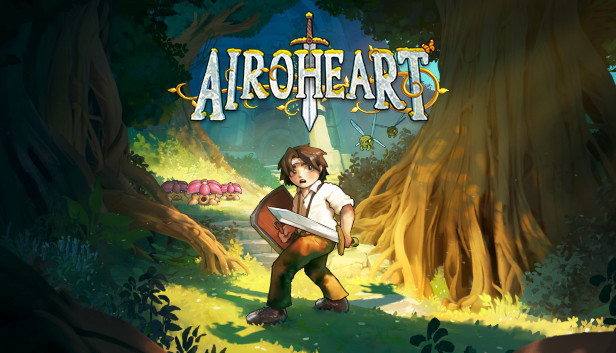
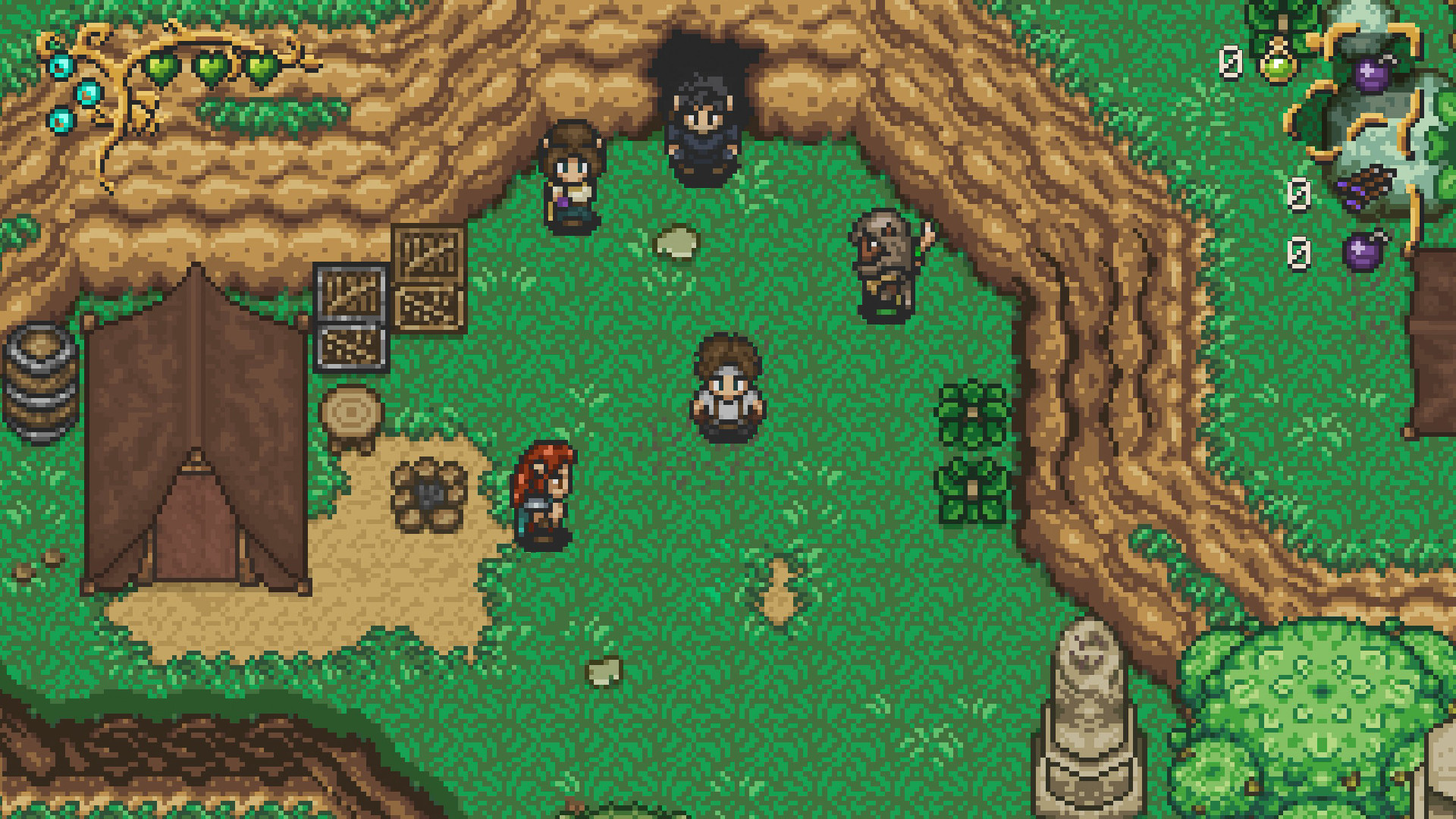
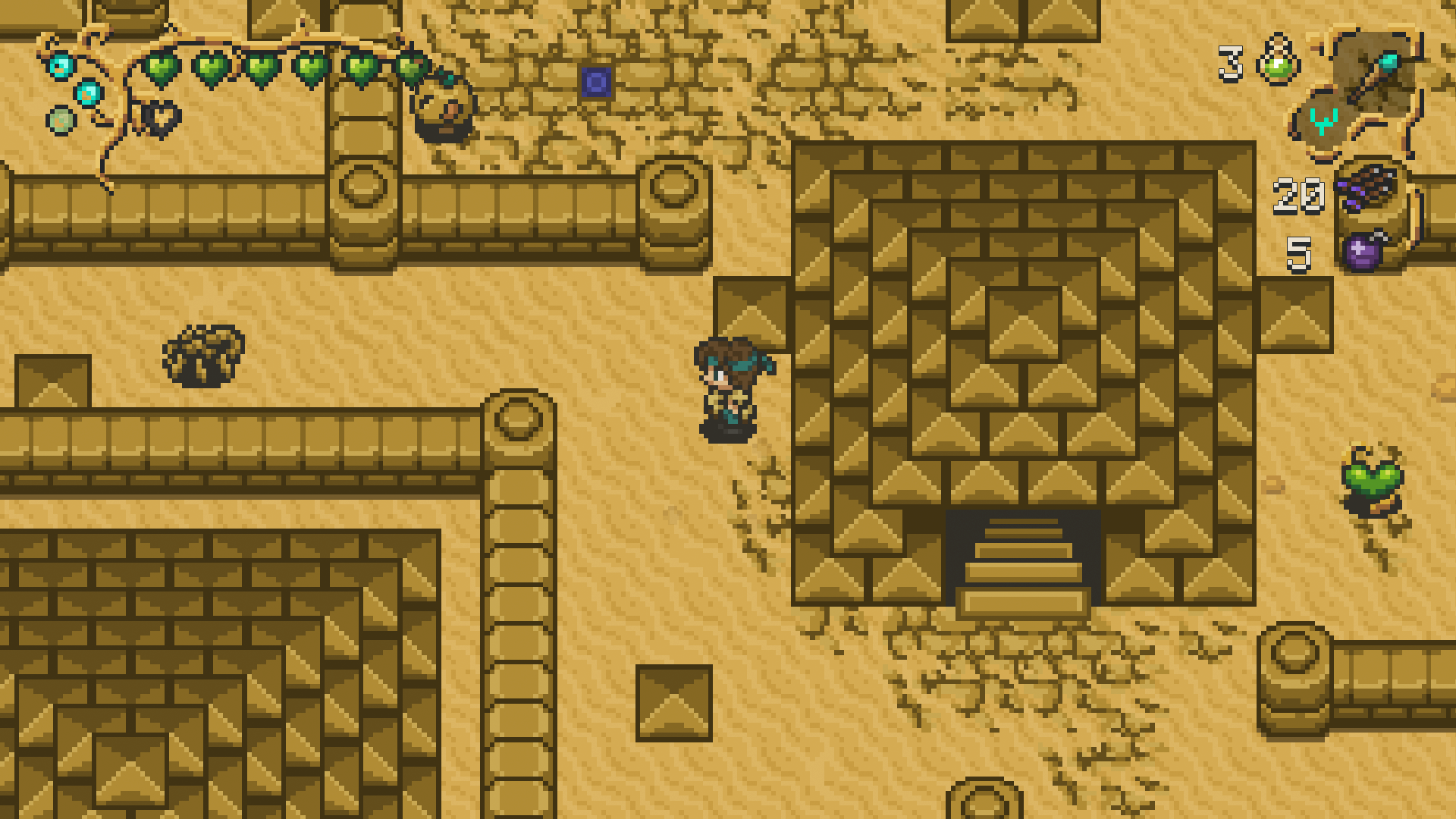
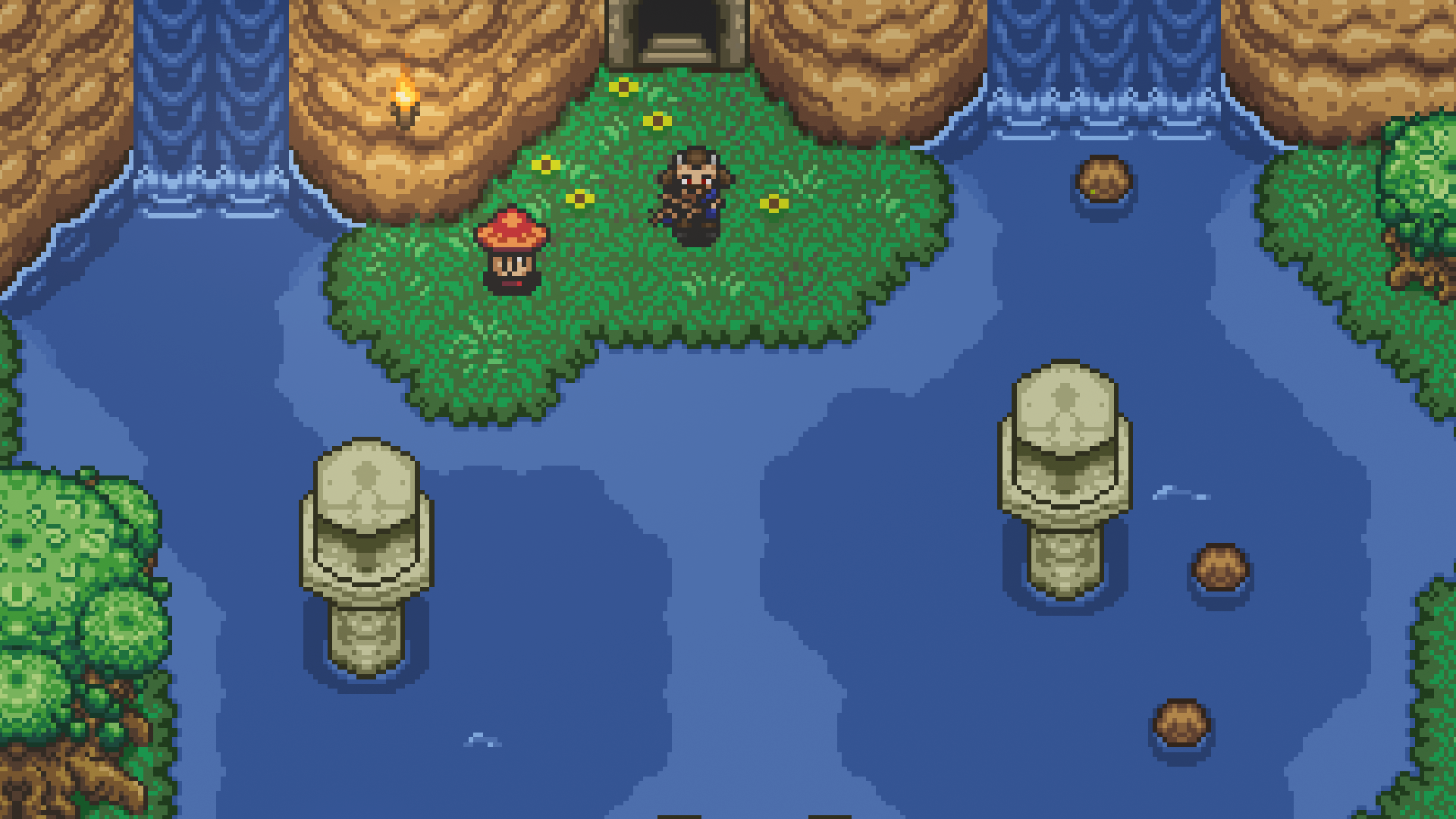
For my next foray into the discovery of new titles on crowdfunding platforms, I found another title in development, which was particularly significant to me as a Legend of Zelda fan. Airoheart, under development at Pixel Heart Studio operating out of Gold Coast, Australia, is a 16-BIT adventure RPG created as a clear love letter to the classic Super NES title, The Legend of Zelda: A Link To The Past, whilst at the same time taking influence from other classic RPG series, such as Final Fantasy.

The game boasts a massive open world, puzzle-solving, and combat. The project has been successfully funded on Kickstarter and is due for release very soon, much to my excitement. Eager for more knowledge of this excellent-looking title, I contacted the game’s lead designer, Samuel North, to answer a few questions I had regarding this game and what made Pixel Hearts want to create a game in the same vein as the beloved Nintendo classic. Here’s what Samuel North of Pixel Heart Studios had to say about Airoheart:

Airoheart 1

What were the influences behind your game?

Of course, the main influence of Airoheart is The Legend of Zelda: A Link to the Past. I was a big Nintendo player and was also inspired by the storytelling found in the Final Fantasy series. I always felt that’s where the Zelda franchise had fallen short. Yes, it had charming worlds and characters, but I never really connected to any of them on an emotional level as I did with many of Final Fantasy’s characters and stories.

I always (personally) preferred the gameplay in TLOZ… It’s open-world exploration, real-time combat, and puzzle-solving/platforming combinations. And, knowing how brilliant A Link to the Past was, especially its world, level designs, and progression. It was always in the back of my mind. “Why aren’t there more games like this?” “I wish there were more like this!” So, after finishing my College studies in Game Development. It wasn’t long before I knew it was the kind of game I had to make! I had the mindset of combining the richer storytelling from FF and bringing it into a new world that played somewhat like ALTTP.


Airoheart 2

What has the developmental process been like?

One huge learning experience… I had created several smaller projects in college, and all had been 3D games, so it was my first time doing 2D. I had to learn a new way of programming things. But with just myself working on the project at the start, I had to learn and do everything, from all of the pixel art graphics, HUD/UI, programming, and sound design.

It has been a lot of fun, though. And seeing how far we’ve grown as developers is very humbling. If you could see some of the pixel art assets I had created for the game, in the beginning, you’d be shocked. Quite bad! But it’s okay, it has been a long process of developing skills and just going back over things again and again, and making them better and better. While everyone can always be improving their skills, we’ve certainly hit our ‘groove’ now, so to speak, development is not slowing down!


How close are we to seeing the finished product?

Very close, it has come such a long way! I believe we are on the home stretch. I still wouldn’t want to release until everything is perfect, though. That’s something we all agree on.


What has been the most exciting aspect of development?

The world-building… Creating a new world, with new characters, writing stories, backgrounds, and lore. Just making the world come to life and feel fun to explore is really rewarding! We love seeing the characters we’ve created come to life and interacting together, having story scenes play out.


Airoheart 3

What has been the most challenging aspect of development?                 

Honestly, having fresh mechanic ideas, in particular for dungeon rooms, platforming, and puzzle creations. We’ve got all your typical dungeon standards… Your pressure plate traps, swinging ball and chains, fall pits, etc., things you see all the time. So, we want more mechanics that are less conventional. For example, at the moment, we are incorporating the rune/magic system into the room puzzles to a greater degree. We have a Rune that turns the player into a feather (the main purpose previously was for losing aggro from enemies). Now, if you turn into a feather above a grate, you can fall through it and land in the room below. Things we hope are new and interesting to players and encourage lateral thinking.


You mention on the Kickstarter page that the dream doesn’t end with Airoheart. Have any ideas for future games been considered this early on?

Absolutely… Airoheart is certainly a foundation that we can build on in the future, and an IP we want to expand. Its core gameplay is rooted in its storytelling, exploration, dungeons, platforming, and puzzle-solving, just like its inspirations. But all that can act as a base, in which for future titles we would love to add things like professions, crafting, survival, social affinity/reputation, house building, a much larger world and plot, the list could go on. This is a genre not seen too often, and it is one we would love to expand upon and even bring into the mainstream if we can. This can be done by sticking to it and building upon it more and more. Ideas for a second title’s story have formed. And also what we want it to look like. Not only visually but gameplay-wise too.


Airoheart 4

How well has the game been received so far?

Well, it’s exciting and very encouraging to see how many people also want another game of this genre. It’s a big nostalgia hit for a lot of people, including ourselves.


What platforms are you looking to bring the game to?

Initially, PC and Mac, but afterward all the main consoles, such as PlayStation, Xbox, and Switch. That will take more time and funding to develop.


Obviously, Airoheart is a heartfelt love letter to Legend of Zelda: A Link to the Past. What are your fondest memories of that game?

Simply exploring that world for the first time, spending hours upon hours discovering every little secret I could when I was young. There was nothing like it at the time.


Airoheart 5

Have there been any ideas at this stage of development that have since been scrapped or reworked?

Yes, I had initially planned to have a gathering and crafting system for multiple professions, such as alchemy, blacksmithing, and carpentry. I had also begun to incorporate a leveling system where the player could increase their strength or speed, among other attributes. After a lot of thought and discussion about the scope, time, and budget constraints. And also considering the overall game itself, we decided certain aspects such as these were not necessary and were just going to take up valuable time and possibly make the game more complicated than what was needed. For example, would leveling have been necessary for A Link to the Past? We didn’t think so. Rather, we decided to leave such things to a later and also bigger title.


If you had the opportunity to develop a game with any company or any franchise, which would it be, and why?

That’s a hard question, but probably Square-Enix back in the 1990s. There are so many beloved titles I would have loved to have had a part in.


Airoheart 6

Do you have any advice for aspiring developers who may be reading this?

Yes, follow your heart. Make the kind of game that you want to see out there. Not just those that make the most money, like multiplayer. It will help you get through a very long and challenging process. Develop self-discipline and time management skills. I’ve found these to be equally important as any programming or artistic skills.


Where on the Internet can people find you?

The best place to find us would be on our website at https://www.pixelheartstudio.com/, which has links to our FB and Kickstarter page too.


Do you have anything else to add?

Yes, I want to say a huge thank you to everyone who has been interested in or supported Airoheart! You don’t realize the world of difference it makes for small indie studios such as ourselves to hear your kind words and encouragement. Indies put their hearts on the line when they put their games out there for the world to see. Every single one of you is greatly appreciated, and we wouldn’t be here without you! Thank you. 

Airoheart 7

I’d also like to thank Samuel for taking the time to share with readers and me the details of this incredible-looking title and to wish him the best of luck with the game upon release. If you’re interested in helping Pixel Heart reach its stretch goals on Kickstarter, you can support it via the link below:

https://www.kickstarter.com/projects/pixelheartstudio/airoheart-a-16-bit-style-indie-adventure

In the meantime, I hope you guys enjoyed reading this article as much as I enjoyed writing it and talking with Samuel about this game. The Legend of Zelda series is my favorite gaming franchise of all time. A, nd I’m always excited to see new games made in the same vein.

Game on,

Scouse Gamer 88

Toy Story (PC, Super Nintendo, Game Boy & Mega Drive)

Toy Story

Developer(s) – Traveller’s Tales, Psygnosis & Tiertex Design Studios

Publisher(s) – Disney Interactive, Sega, Nintendo Australia, Capcom & Black Pearl Software

Producer(s) – Craig Annis & Steve Riding

Designer(s) – John burton & Andy Ingram

ELSPA – All Ages

Released to coincide with the hit Disney film of the same name, Toy Story was developed for several different systems and was released to critical and commercial success despite having been at the back end of the fourth generation, with the transition into the fifth generation looming around the corner. To me, this game is another one of the more impressive licensed titles released before they were further popularized during the seventh generation, and it still holds up as one of the most varied 2D side scrollers of the era. 

Graphics – 8/10

The graphical style is extremely similar to that of Donkey Kong Country. Implementing 2.5 graphical sprites provided to Traveller’s Tales by Disney themselves (albeit Traveller’s Tales has its own sprites on standby in the event of time constraints). Portraying all the central characters in the film, as well as several minor ones. It features a massively varied range of level designs, some of which add to locations found in the original movie. The game’s soundtrack also features a collection of pretty catchy soundtracks that sound like they would’ve fit flawlessly if they were again included in the film as well. As far as fourth-generation games go, this is one of the best-looking titles of that era, in my opinion. The visuals are both colorfully vibrant and wonderfully dark wherever needed. And the character sprites are wonderfully animated in addition. 

Gameplay – 8/10

For what is primarily a 2D side scroller, the gameplay in Toy Story is surprisingly varied for a game from this era. Not only does it feature side-scrolling sequences. But it also features light puzzle elements and car driving sequences. And even a first-person sequence very similar to Doom. But to experience all of these different styles of play, I would recommend playing the Mega Drive/Genesis version.

As this version was dubbed the lead version by Disney, it is the only port to feature all 18 levels created for it. The Super NES version is missing the first RC sequence towards the end, and the PC version only has 10 of the original 18 levels. The game also features situations that are unique to the franchise and that don’t appear in the actual film. Woody navigates his way through the interior of the claw machine. Whereas in the film, he and Buzz simply slip in among the toy aliens instantly. The designers of this game made something very unique to the original film. And it really shows in every respect. 

Controls – 10/10

Regardless of having a huge amount of different play styles, I was amazed to find that there were no problems with the controls after replaying Toy Story. I had to go over it again, as although I’d spent a great deal of time playing this when I was a kid, I realized that I’d forgotten just how good a game this was, going into it again with a much more subjective viewpoint. The only minor issue I have with the controls is that during the first-person sequence inside the claw machine, turning can be a bit wooden. But that’s just semantics. As it’s only for one level. It may have posed more of a problem if there were more sequences like it. But besides this, there are no other issues with the controls at all. 

Lifespan – 6/10

To complete the game will take about the average lifespan for a game of this kind, which is around an hour. I found myself not being able to give the game too much flak in this respect because it was, after all, perpetuating the source material of an 80-minute film; in fact, if the player explores enough, they can potentially make the game last slightly longer than the film.

My initial thought was that if the game could incorporate so many different play styles, the developers may have been able to make it last a lot longer than it does. But there are too many different factors to consider for me to criticize it too much in this respect. Such as the time frame they would have needed to work in order to get it out at the same period as the film. Regardless, for a game of its generation, it lasts a fair amount of time. 

Storyline – 7/10

The game is simply a retelling of the events of the film. Two anthropomorphic action figures, the cowboy Woody and space ranger Buzz Lightyear, become separated from their owner, Andy, and must find a way back before the family is due to move house. The game does well enough to portray these events in its own way without much of the classic dialogue of the film, and the soundtrack does particularly well to add to the game’s atmosphere, further aiding in the portrayal of the story. Especially in unique sequences not present in the original film.

Originality – 7/10

Especially as 2D side-scrolling was the most prevalent genre within the industry at the time, this game does extremely well to stand out among a vast majority of others with the sheer amount of different play styles it incorporates throughout. It was rare for a game of this genre within the fourth generation to offer so much variety in gameplay. Especially for a licensed game. This, back then, was much more of a niche interest among gamers than what it is now, which is particularly impressive indeed. 

Happii

Overall, Toy Story, to me, frankly remains one of the better 2D side scrollers of the fourth generation of gaming; certainly among the best of early Disney games. It offers players an unprecedented amount of variety for the time that it lasts and portrays the film in a very satisfying way, not only using the license but also celebrating it in an appropriate manner. 

Score

46/60

7.5/10 (Good)

WWF War Zone (Nintendo 64, PlayStation 1 & Game Boy)

WWF War Zone

Developer(s) – Iguana West & Porbe Entertainment

Publisher(s) – Acclaim Sports

Producer(s) – Mike Archer

Designer(s) – Tim Huntsman, Clark Westerman, Richard Raegan, Troy Leavitt, Jeff Robinson & James Daly

PEGI – 12 

Released in 1998, shortly after the beginning of the WWF Attitude era, WWF War Zone was the first 3D WWF game released after the transition from the fourth to fifth generations of gaming. It received critical acclaim upon release. Having appealed to wrestling fans and non-wrestling fans alike. Although the game, according to many games of the younger generation, in particular, hasn’t aged well, I beg to differ. In my opinion, it still holds up as one of the better wrestling titles of the fifth generation. It remains a pleasure to play through. 

Graphics – 7.5/10

Having been developed with various different techniques for all three ports, with respect to the graphics (as well as every other respect), the Nintendo 64 version is the best in terms of technical design, in my opinion. In terms of conceptual design, the game is limited to only one kind of stage. This would be rectified in later WWF/WWE games. But poses a small issue in terms of visual diversity.

However, all that being said, I remember being 9 years old at the time and being overwhelmed by the quality of the graphics. And being able to see 3D ring entrances from each of the wrestlers. As I alluded to before, although many gamers may not think that this game has aged well over the years, the fact of the matter is that this level of visual quality was considered cutting-edge at the time. And to me, it still holds up relatively well today, bar facial textures. 

Gameplay – 7/10

WWF War Zone has several different modes to choose from. This again relates to the fact that I would recommend the Nintendo 64 version over the PlayStation version. The Nintendo 64 version also includes an additional Royal Rumble mode. The main mode is the career mode. Players can either play as a custom-made character. Or a classic wrestler of their choice, to compete for the WWF title. Among the roster are Stone Cold Steve Austin, The Undertaker, Kane, Mankind, The Rock, and Triple H. Surprisingly, Bret Hart and The British Bulldog were also included in the game even though at the time of the game’s release, their contracts with the WWF were terminated following the infamous Montreal Screwjob of 1997. There are a plethora of different fighters to choose from, including a few unlockable ones. This makes each career playthrough a different challenge every time. 

Controls – 9/10

For the most part, the controls are perfectly fine. The different moves for each character, as well as the finishing moves. They are easy enough to learn how to do, and movement is fluid despite the fact that 3D gaming was in a somewhat preliminary stage at the time of release. The only issue I had with the control scheme was how climbing out of the steel cage works; it can be quite confusing at first, and the solution isn’t as straightforward as it perhaps should’ve been. Besides this, the control scheme presents no further issues. 

Lifespan – 7/10

Completing the career mode in WWF War Zone with one character can take about an hour and a half, depending on how well the player performs, but after that, there are, of course, additional gameplay modes that provide hours of entertainment for players. For an early 3D wrestling game, there is a great amount of variety that prolongs the game’s lifespan greatly. Previous WWE games had a decent amount of longevity owing to a lot of the same reasons. But in this game, it’s even more prevalent. 

Storyline –  N/A (10/10)

Of course, wrestling fans will take to this game much more effectively than those who never followed wrestling or still may not follow wrestling; familiarity with the WWE will be irrelevant to the gamer’s enjoyment of the game. The commentary provided by both Vince McMahon and Jim Ross, by today’s standards, is laughingly bad and clearly done with heavily edited sound clips, but to me and a lot of other gamers, that will provide an additional comedic value to the game. 

Originality – 7/10

Offering a 3D wrestling game with a new perspective and style of play made it stand out from any other wrestling game before; it’s a by-product of the era in which this game was developed, and as such, it offered a very new experience for players to indulge in at the time. Although the idea of which would be expanded on immediately with the sequel WWF Attitude, as well as countless other wrestling matches to come after. But this game served as more than an adequate starting point for what would come next.

Happii

In summary, WWF War Zone not only served as an appropriate basis for the standard of 3D wrestling games but is still an enjoyable experience that very much holds up to this day for me. It’s an entertaining title with classic wrestlers and hours of fun to be had. 

Score

47.5/60

7.5/10 (Good)

Untitled Goose Game (PC, Switch, PlayStation 4 & Xbox One)

Untitled Goose Game

Developer(s) – House House

Publisher(s) – Panic

Designer(s) – Stuart Gillespie-Cook, Nico Disseldorp, Michael McMaster & Jacob Strasser

PEGI – 3

Released by Melbourne-based developer House House back in 2019 on PC after much anticipation from gamers. Later ported to several home consoles, Untitled Goose Game is an adventure stealth game whereby players take control of a goose that must travel around a village. And relentlessly annoy as many of the villagers as possible in as many ways as possible. It was very well received by critics and gamers alike and maintains a perfect 10/10 score on Steam. Whilst I found flaws with the game whilst playing, I found it overall to be a delightfully challenging, yet uproariously funny experience at the same time. 

Graphics – 7/10

Set in an idyllic British village, the game makes use of cel-shaded visual design and a vibrant color palette perpetuated by lush, green landscapes and traditional village scenery and buildings such as gardens, pubs, and markets. The game’s soundtrack also flawlessly adds to the game’s atmosphere. Constantly changing depending on what situation the player finds themself in. That’s when they’re simply walking around when they’re about to sneak up on someone. Or when forced to run away from villagers. It’s always a pleasure to experience a game like this, whilst it may not look as visually original as others, it still presents variety in several different ways. And even more subtle kinds of ways. 

Gameplay – 7/10

The player takes control of a mischievous goose roaming around a peaceful village. The player must undertake specific tasks given to them via a to-do list. All with the sole purpose of causing as much chaos around the village as possible. For example, the first sequence of the game has the player having to torment an unsuspecting groundskeeper by stealing the keys to his garden gate, putting his rake in a nearby pool, and stealing various other items in his garden in order to create a picnic nearby.

Although the visuals aren’t particularly unique by today’s standards, the gameplay concept definitely is. The idea came from a very unlikely source; it came about when one of the staff at House House emailed the creative team a stock photograph of a goose, which led to a series of brainstorming sessions. For a seemingly finite concept that came virtually out of nowhere, it’s quite impressive to me how the development team was able to make as much of it as they did and create a game like this.

Controls – 10/10

Because there are an unprecedented number of commands to use in Untitled Goose Game, getting used to controls and the style of movement may take some time initially, but once mastered, it presents no problems. This is always impressive to think about when it comes to a new idea involving a new style of gameplay. I’ve come across a few indie games over the years that have failed to impress in terms of controls. Such as Octodad: Dadliest Catch and Aaru’s Awakening. But thankfully, there are no issues with this game’s control scheme. 

Lifespan – 4/10

The most disappointing aspect of this game is the short time it can be made to last. To complete the game 100% takes about 5 hours. And I think there was definitely room for expansion in this respect. Though I said I was impressed with the development team’s ability to come up with the overall concept while having little to no ideas to go on initially, there are certainly a great number of ways in which the initial concept could have been built for more objectives and side quests. And I, for one, would’ve been willing to wait a little bit longer to play it if it meant it could’ve been made to last longer. 

Storyline – 6/10

The game’s premise, as I described earlier, is also the game’s story. But what stops it from making the story nonexistent is a variety of different things. The soundtrack adds to the game’s atmosphere, as I pointed out before. But the goose’s journey is filled with hectic moments as well as drama and comedy. Playing this game made me burst out laughing on several occasions. But there is also a nice little reveal at the end, which really epitomizes what this game set out to do. And makes it feel like everything comes full circle in its own way.

Originality – 8/10

As I said, although the visual style and the conceptual design of the game aren’t particularly unique, what does make this game promptly stand out from the crowd is the concept of the gameplay itself. I love it when I come across a video game that seems basic at first glance. But ostensibly offers gamers an experience unlike any other without being overly complicated. And having a somewhat simplistic feel to it at the same time. There’s a simultaneous feel of tranquility and urgency to be had whilst playing this game, and it makes for a very enjoyable experience.

Happii

Overall, Untitled Goose Game is a very good title for the short time that it lasts. And it is certainly worth one playthrough at a minimum. It’s a simplistically designed game. It has its own unique charm to it that separates it even from some of the most ambitiously designed indie titles of the eighth generation of gaming. 

Score

42/60

7/10 (Fair)

Cat Quest (PC, PlayStation 4 & Nintendo Switch)

Cat Quest

Developer(s) – The Gentlebros

Publisher(s) – PQube

PEGI – 3

Released in 2017 by Singapore-based development studio The Gentle Bros, Cat Quest is an open-world RPG heavy on combat, spellcasting, stat upgrading, and quirky feline characters throughout. For me, having watched the trailers for this game and playing briefly at video games expos, this seemed a perfect fit for me. As I am both a lover of cats and a lover of RPGs, this game certainly delivers on both aspects. 

Graphics – 8.5/10

The game takes place in the vast land of Felingard, where its inhabitants are anthropomorphic cats that quite harmoniously coexist. Albeit there seems to be a small level of political intrigue between each faction of cats residing there. The seemingly hand-drawn world of Felingard is vibrantly designed. With lush green landscape, forests, and an outstretched sea, along with dangerous caves and dungeons thrown in for good measure. The game’s enemy designs are also particularly variable, ranging from dragons to stone golems and even including monsters modelled after cats. Such as the infamous Cathulu mini-boss. The game’s soundtrack, primarily composed in the key of C, is also very upbeat and carefree. Although it can take some dark twists, especially at the end of the story. 

Gameplay – 8.5/10

Cat Quest is a traditional real-time RPG with combat elements reminiscent of Dark Souls. Whereby dodging enemy attacks is made just as paramount as attacking with either melee weapons or spells. Players must level up their characters to effectively progress through the game. Areas are separated by recommended levels for players to be in order to undertake. However, more avant-garde players can choose to try to progress through more difficult areas at lower levels. The game is very much open-ended in that respect. But regardless, there are a lot of side quests to undertake throughout. Including additional bosses, hidden armour and weapons to find, and spell upgrades to implement. More areas of the game also become available when skills like swimming and flying are learned. In my opinion, once the flying ability is learned, that’s when the game truly begins. 

Controls – 10/10

The game’s control scheme is, to put it in the simplest way, easy to learn and hard to master. Skill is required to be able to play this game effectively. Especially if players decide to try their luck in more advanced areas at an early level. The player interface is also very well thought out. Enabling players to simultaneously attack, cast spells, and avoid enemy attacks. Everything flows naturally once players have the basic premise down, but more importantly, there are no faults with the controls. Which, for a game that challenges players in this manner, is needed. 

Lifespan – 7/10

To complete Cat Quest to 100% can take about 15 hours, depending on how many times the player gets their character killed. Which, for unseasoned players, may be more than the average. It’s a relatively decent amount of time for a game to last, but nothing compared to most RPGs, which, whilst it wasn’t a significant disappointment, made me think that there is definitely room for expansion in the end. Gentle bros would expand on it with the release of the sequel, Cat Quest II (along with expanding the concept in every other aspect). But for me, it needed to last a good few hours longer for it to be able to stand with the very best of RPGs like Final Fantasy and Mass Effect.

Storyline – 7/10

The game’s premise is simple enough; the player character must save Felingard from the evil cat sorcerer Drakoth. But as the player progresses through the game, they will find out that there is a lot more to it than they first realized. A level of doubt and moral ambiguity is later thrown in at a specific time within the game that will make the player question whether or not what they’re doing is right. And that Drakoth may even be sympathized with. Especially for a game that has cat-related puns everywhere in the dialogue, what comes to light will cause quite some shock. 

Originality – 7/10

Although it may not be one of the longer-lasting RPGs ever made, everything about this game, from the conceptual design to the combat system and the story, makes it an extremely memorable experience indeed. Of course, there have been anthropomorphic cats in video games before, but never has it been quite on this scale. This concept would again be expanded upon in the sequel to include dogs as well, but for cat lovers everywhere, this one comes highly recommended by me. 

Happii

To summarize, Cat Quest is an addictive, quirky, and challenging game to play, as well as a whole lot of fun. It has gruelling combat, a host of secrets to discover, and a story that will surprisingly have you on the edge of your seat. I can’t recommend it enough.

Score

49/60

8/10 (Very Good)

Momodora: Reverie Under the Moonlight (PC, PlayStation 4, Xbox One & Switch)

Momodora Reverie Under the Moonlight

Developer(s) – Bombservice

Publisher(s) – Playism 

PEGI – 7

Developed by Brazilian indie outlet Bombservice Games and released on multiple platforms since 2016, Reverie Under the Moonlight is the fourth title in the relatively obscure Momodora series of Metroidvanias. Since the release of the third and fourth titles on Steam, the series began to gain much more momentum after being confined to the itch.io platform, and it’s not hard to see why. I was taken aback by just how good this game is, and it has made me want to try out the rest of the series. Out of all the Metroidvania games I’ve played, this is one like no other. 

Graphics – 9/10

Making use of traditional 8-BIT graphics and inspired by the medium of Japanese anime, the game’s conceptual design is without a doubt its most wonderful and unique feature. It plays host to several unusual creatures scattered across the in-game world. It takes place over a contrast of beautiful and horrifying locations. But it’s the latter that takes precedent. The amount of wonderfully dark and atmospheric locations in this game certainly makes it one of the grittiest Metroidvania games I’ve ever played. Most definitely the scariest. Even scarier than any game in the Castlevania series by some distance. The game’s accompanying soundtrack also adds to the already wonderfully grim atmosphere of this title. Unlike most 8-BIT games, it makes no use of chiptune and relies heavily on traditional orchestral music. And the extremely effective use of realistic background sound effects, such as running water. 

Gameplay – 8/10

The fourth Momodora plays out like a standard Metroidvania experience, with players having to discover new abilities to access different areas throughout and uncover hidden secrets to enhance the strength of the player character Kaho. It’s also quite heavily combat-oriented, though combat options are slightly more limited compared to other games in the genre. The difficulty of the boss fights also ranges from easy to hard throughout. But the basic structure of each boss fight is very well handled.

And again, some make for very memorable moments within the entire genre. There are also two different endings to unlock depending on the actions of the player. Similar to Castlevania: Symphony of the Night. It starts as fairly challenging. But as the player gains new abilities, the difficulty decreases considerably. But better for it to play out like that than having it be too inaccessible. It’s an enjoyable gaming experience with a lot to uncover throughout.

Controls – 10/10

Especially as the developers had had extensive experience in developing this series before the fourth installment, there are no issues with the controls whatsoever. There’s not a great deal you could call unique about the game’s control scheme since it plays out typically of a Metroidvania game. But again, better to do that than take unnecessary risks. The shape-shifting mechanic was quite enjoyable for me, as Kaho gains the ability to turn into a cat to reach narrow passageways. I love cats, so it worked for me on a personal level. 

Lifespan – 4/10

The aspect in which the fourth Momodora game didn’t work so well for me, however, was how short the game lasts. To complete it, even to 100%, can be done within 4 hours. And for a Metroidvania game, that’s criminally short. Although the developers would have inevitably been operating on a budget whilst making this game, I’ve played and reviewed longer Metroidvanias made by other indie developers, with them having been their first title. And with graphics comparable to this on the technical level. A game as wonderfully unique as this one deserved to last considerably longer, in my opinion. 

Storyline – 8/10

The story of the fourth Momodora game involves a young priestess named Kaho hailing from the village of Lun. She has come to Karst City seeking a queen to request protection for her home village. But things take a dark turn for the worse as Kaho ventures across the world to discover what has happened to Karst City and its queen. Throughout the game, players will come across several tortured characters with much depth to them. This is another reason why this game deserved to last longer. If it did, there would’ve been far more time to further develop these individual characters and elaborate on their stories and fates.

Even the boss characters have layers to them, which could’ve been explored more. Although the game’s end boss is obviously the last trial the player must undertake, to me, the last boss isn’t even the most compelling villain. By far, that honor would go to Lubella, the witch of decay. The concept art for the game doesn’t really do her character justice. She’s portrayed as being a size proportionate to every other character. But in the game, she’s a giant with a lot of power. Which makes her much more menacing. She most definitely steals the show as the game’s best villain. 

Originality – 9/10

As I said before, the game’s conceptual design makes this title much different from any other Metroidvania game I’ve played. Even amongst the many other indie Metroidvanias I’ve played, such as the Ori games, the Alwa games, Dust: an Elysian Tail, and Cathedral. The series’ mythology has been expanded upon with the original trilogy before this. So this fourth title does make me want to explore the series in much more depth. But this is my first experience with this series, and I was taken aback by just how unique a game this was. 

Happii

Overall, Momodora: Reverie Under the Moonlight is certainly worth at least one playthrough. I was disappointed with how short a time it lasts, and I felt it could have easily been made to last far longer than it does, but for the time it does last, it’s an enjoyable game with a wonderfully morbid atmosphere and a lot of emotionally charged moments that players will not soon forget. 

Score

48/60

8/10 (Verdict)

Cathedral (PC & Nintendo Switch)

Cathedral

Developer(s) – Decemberborn Interactive

Publisher(s) – Decemberborn Interactive & Elden Pixels

Designers – Eric Lavesson & Mattias Andersen

PEGI – 3

Developed by Decemberborn Interactive based in Helsingborg and being the first publishing venture of Alwa creator Elden Pixels, Cathedral is a Metroidvania game featuring an extensive open world and offering players a level of challenge on the same scale as 8-bit classics such as Mega Man and Castlevania and taking inspiration from classic titles such as Ghouls ‘N’ Ghosts and Ghosts ‘N’ Goblins, along with modern games made of the same ilk. Most notably, Shovel Knight. From beginning to end, I became engrossed in this game. There’s a great deal that it has to offer players who are looking for a game that is not designed to hold their hands throughout, and looking for a solid, nostalgic experience reminiscent of the NES days. 

Graphics – 8/10

Incorporating the aforementioned 8-bit visual style synonymous with the third generation of gaming, the best thing in terms of visuals is undoubtedly the environmental design. There are a large number of different locations to visit and backtrack across throughout the game. Ranging from underwater temples, dark forests, icy castles, and of course, the titular cathedral. Which is to me, in many ways, is the star of the show. The game begins in the cathedral, and without spoiling the story’s specifics, it’s also where things come full circle. In addition, the game’s soundtrack is phenomenal. For me, up there with the works of Manami Matsumae, Jake Kaufman, Robert Kreese, and others. In particular, the theme song for the cathedral itself is catchy. But with a subtle melancholy to accompany it. 

Gameplay – 9/10

Aesthetically, the game plays out like a typical Metroidvania title. It relies on players uncovering each new area by gaining specific abilities and backtracking across the world map to uncover every secret and hidden item there is to find. It’s also very heavy on combat. The aspect in which this game does not play out like a typical Metroidvania title. It offers players a heightened level of challenge compared to most other games. Players need to adapt to each area, as many different types of enemies have different attack patterns that must be learned in order to survive. Weapons and armour upgrades are also for grabs as the game progresses, with enemies getting stronger with every new area. There are also several gruelling boss fights to contend with throughout. Each has its own very unique strategies required to beat them.

Controls – 10/10

I found there were no issues with the control system in this game as I was playing it. As with a game like this, there can’t be any issues with the controls. Otherwise, it becomes an unfair challenge. In my opinion, it was a problem throughout the NES days with games such as the original Mega Man and Castlevania games. But in Cathedral, the control scheme poses no issues. It’s a challenging game, but not to the point of being inaccessible. 

Lifespan – 8/10

To complete the game to 100%, it would take around 25 hours. It is slightly longer than the standard Metroidvania game. In addition to the main story, there are side quests obtained from the hub village. This involves collecting items scattered throughout the game’s world and finding additional weapons and armour upgrades. Whilst it’s certainly a concept that could be expanded upon if ever a sequel is made, it nevertheless offers gamers a satisfyingly long experience with plenty of reason to backtrack across the game’s vast open world. 

Storyline – 7/10

The game’s story involves an unnamed knight who must first find his way out of the titular cathedral. On his way, he joins up with a companion named Soul. Having escaped the cathedral, they intend to collect four orbs hidden throughout the land guarded by various monsters. With this, they resolve to enter the cathedral’s inner sanctum to defeat the demonic Ardur the World Eater. Whilst the basic premise of the story is relatively typical for a fantasy game (sometimes to the point of self-parody, as Soul occasionally offers comedic advice), it’s the subtle details that add to the game’s atmosphere, which make the story stand out. Most notable for me was during the boss fight in the sunken temple.

As the player descends into the boss’s lair, 8-bit harmonies can be heard, which are the singing of the siren-like queen of the depths. It’s beautiful and eerie at the same time, which made it, for me, the best boss fight in the game. There are plenty of other moments like it. Sometimes it may be a foreboding silence, other times, it may be something more detailed, but it all adds to the game’s atmosphere excellently. 

Originality – 7/10

As I mentioned, this game does not entirely play out like a typical game of the genre. Ever since the beginning of the eighth generation of gaming, one of the genres I’ve delved into above many others is Metroidvania. There have been ups and downs for me whilst I’ve been going through as many as what I have done (thankfully, there have mostly been ups). But this game is definitely one of the more standout experiences I’ve come across within the genre. It’s a wonderfully exciting, atmospheric, and challenging experience that is deserving of at least one playthrough. 

Happii

Overall, Cathedral took me by surprise with just how good a game it is. On the surface, it seemed quite a typical 8-bit game like most others that have been developed since indie development became as popular as it has over the last few years, but as I delved deeper into this game, there was a lot more to appreciate than I could have first imagined. It’s an excellent gaming experience, and I would highly recommend it to seasoned gamers looking for a legitimate challenge. 

Score

49/60

8/10 (Very Good)