Tag Archives: RPG

Lucah

Q&A With Me Less Than Three

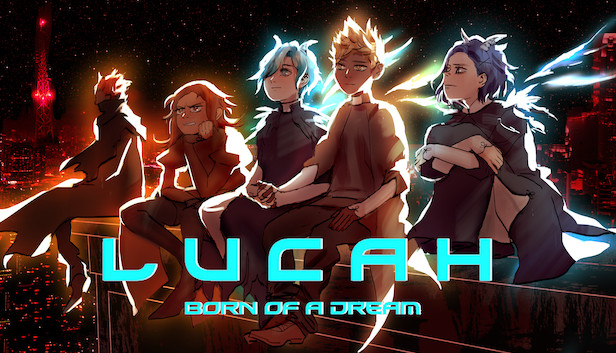
In my ongoing endeavor to discover as many different video gaming prospects as possible, this week I came across a wonderfully dark-looking game entitled Lucah. Lucah is an action RPG with a heavy emphasis on combat and exploration. And a sinister-looking conceptual design. The game itself is described on its Kickstarter page as “a nightmare action RPG about finding oneself”.

Presenting players with multiple combat options and learnable abilities, as well as giving players the additional option of combining these different skills. Giving the game even more variety, I was eager to interview the developer behind the nightmarish title, Me Less Than Three, operating out of Los Angeles, California. Programmer on the game, Colin Horgan, agreed to answer some questions I had about this unique-looking title. And here are his compelling answers:

What were the influences behind your game?

From a gameplay perspective, LUCAH started as a Nuclear Throne-style arena shooter. While I was developing it, though, I was getting more into melee-focused action games like Bloodborne, as well as style-focused brawlers like Devil May Cry and Bayonetta.

I combined this mechanical fascination with the dark, high-contrast style that I had been developing for the past couple of years. Like in my previous game Comforting Sounds

(https://melessthanthree.itch.io/comforting-sounds)

and IAMNOTAMACHINE

(https://melessthanthree.itch.io/iamnotamachine).

This is a style that sort of evolved naturally, just based on my ability. I’m more of a programmer by trade. But I wanted to use my own art in my games, so I started simple, but stylized.

As LUCAH slowly grew into a full game, I started putting a bunch of thematic and narrative ideas into it and kept what stuck. Including a lot of personal subjects I like to explore (nightmares, Catholicism, lyricism). Ultimately, it evolved into a gamified night terror. And I decided to weave the whole story into that context.


What has the developmental process been like?

Since I’m most comfortable with programming, most of my games start as mechanical prototypes. Taking a game idea and making it playable as soon as possible. From there, I’ll put a little bit of kinesthetic polish on the game, the details that make it “feel” a certain way. And allow the aesthetic style to evolve from that.

As LUCAH became a more methodical, tactical action game after the switch from projectile-focused to melee-focused, I tailored the look and pacing to fit a more horror-inspired game. An important step in this process was taking on my friend Nicolo Telesca as our composer. His glitchy and atmospheric soundscapes entered the game even before there were levels to score. So the shape of the game took form based on those sounds and songs.

Once the game felt like it had enough form to be played, I put various demos out. First, a combat-only demo. Then a demo with the first “dungeon”. And saw what resonated with people and what didn’t. The game went through a large visual overhaul at this time. Keeping the distinctive style but pushing it as far as it could go. With an emphasis on better communication for what is going on (attack signals, more contrast for enemies and backgrounds, and so on). At this point, we knew we had something special. And took this direction towards the eventual full game LUCAH will be.


How close are we to seeing the finished product?

All of LUCAH’s major systems are set, and the current demo is a good standard for what the full experience will feel like. However, we still need to fill out the rest of the story. Which I expect will be another 4-5 hours of content. At the current rate of development, my tentative estimate for LUCAH’s full release will be sometime next summer, so be on the lookout then!

What has been the most exciting aspect of development?

The most exciting aspect of development has been sharing my process with others through social media and seeing the excitement the game is already creating. Oftentimes, I would finish a new mechanic and create a GIF to show it off, and with that, I can see what developments excite people most and feed off that energy. I make sure to read every comment, response, and message we get about the game because even though LUCAH is a very intimate and personal experience, I want to do my best to ensure it’s an experience that resonates with as many people as possible!


What has been the most challenging aspect of development?

The most challenging aspect of LUCAH’s development by far has been solidifying the visual style. Because it’s so out there and hard to describe (is it wireframe? stylized pixel art? hand-drawn impressionism?). Making sure it communicates the appropriate moods and information has been a struggle. We are doing our best to make sure a new player can wrap their head around what’s happening on screen. And what these ever-shifting figures represent. But I don’t think we’re totally there yet, even if we’ve come far already. Still, as we develop the game, we’ll do our best to make LUCAH the most brilliant visual experience it can be.


How well has the game been received so far?

LUCAH has been received surprisingly well so far, especially for such a niche title! Besides some of the visual roadblocks I mentioned previously, most people who try LUCAH find something to love about it. Whether they’re absorbed into its abstract world or want to explore the various combat systems at play. It’s a game that resonates with both seasoned game players and new players alike, and that’s something I’m especially proud of.

With Lucah, there is a massive emphasis on dreams, nightmares, and the subconscious in general. Did any of the developers’ dreams serve as inspiration for the game? I used to struggle with night terrors and sleep paralysis. Often, because I became very good at psyching myself out with an overactive imagination. While I’ve become much better at handling nightmares and the anxieties that create them, it’s still fertile material for me to process and explore in LUCAH. Hopefully, once the game is done, those terrors will be a thing of the past!


What platforms are you looking to bring the game to?

Currently, we’re planning to launch LUCAH on Windows, macOS, and Linux, though I would also love to bring it to consoles. The game was built for a controller. So I think it’d fit right at home on the PS4, Xbox One, and Nintendo Switch. And I’ll pursue those consoles if that becomes a possibility.

Do you have any advice for aspiring developers who may be reading this?

The usual answer I give to these sorts of questions is to 1. exercise, and 2. read books. The broader answer here is to make sure you take care of yourself, both mentally and physically, as much as you are able, and be sure to have something non-game-related to enjoy. Not only will it allow your brain to rest from any development-related stress, but varied experiences and interests will help you be a better and more creative developer. Also, be sure to be creative whenever you’re able; it’s the only way to get better!

Where on the Internet can people find you?

I can be found on Twitter @melessthanthree.

You can also follow LUCAH’s development on Facebook –

http://gamejolt.com/games/lucah/184325

and Tumblr (https://lucahgame.tumblr.com/),

and download the free demo on either itch.io (https://melessthanthree.itch.io/lucah) or GameJolt (http://gamejolt.com/games/lucah/184325).


Do you have anything else to add?

At the time of this interview, LUCAH is currently on Kickstarter, and we still need some help to get funded and finish the game! Please check that out

(https://www.kickstarter.com/projects/1617962540/lucah-a-nightmare-action-rpg-about-finding-oneself)

and tell your friends who might also be interested in sharing or pledging. Also, please try the demo and let me know what you think. I love hearing about your experience playing LUCAH!

I would also like to take this opportunity to thank Colin for agreeing to this Q&A session and to wish him and Me Less Than Three Studios the best of luck with the game and with the Kickstarter campaign. As of the publishing of this article, there are 9 days left, so if you’re interested in playing the complete game, you can donate via the link in this article.

Game on,

Scouse Gamer 88
 

Earthlock: Festival of Magic (PC, PlayStation 4, Xbox One & Wii U)  

Earthlock Festival of Magic

Developer(s) – Snowcastle Games

Publisher(s) – Snowcastle Games & Soedesco

Director(s) – Bendik Stang & Fritz Olsen

Producer(s) – Erik Hoftun

PEGI – 12

A turn-based RPG reminiscent of classic Final Fantasy or Dragon Quest games, Earthlock is a game developed by Norwegian outlet Snowcastle Games after securing $250,000 in funding amidst a successful Kickstarter campaign. It was later published by Soedesco Entertainment. Currently, one of the most prominent publishers of indie games. Having marketed games like Tower of Guns and Teslagrad, to name but a few. Whilst not lasting anywhere near as long as games in the aforementioned two major RPG series, it retains a lot of the addictive gameplay and satisfaction to be had for developing player characters. As well as a fairly intriguing story set in a wonderfully outlandish world.

Graphics – 7.5/10

The conceptual design of this game speaks to me as a combination of Final Fantasy IX and Star Wars. In that, there is the element of futuristic steampunk technology, much like the classic Squaresoft game. And then there’s also the element of different alien species co-existing together. The character Amon and his uncle Benjo scavenge together at the start of the story. Reminiscent of how species exist together in the likes of Star Wars or Mass Effect. Specifically, the desert areas remind me of the planet Tatooine. Though it may not stand out greatly on a technical level, the conceptual design certainly makes up for that.

Gameplay – 8.5/10

Earthlock is a story-driven turn-based RPG. The objective of this is to recruit the main characters to the party. And engage in randomly prompted battles in order to level up each character to make them as strong as possible. In turn, advancing the main story. In addition, there are also side quests and causes to revisit previous areas. As there are places with stronger monsters, players need to become stronger over time in order to go back and explore. Though the gameplay formula has been replicated many times before, Earthlock still gives the player a lot to play for in the time that it lasts. It is also always addictive to level up characters and gain new abilities that can be used in combat to achieve more of an edge in battle.

Controls – 10/10

The controls for these games are always very straightforward. And Earthlock is no exception. Exploration and combat are extremely easy to get to grips with. And players will not experience any unnecessary complications while playing. Seeing games like this surfacing within the indie gaming community since the start of the eighth generation has been a breath of fresh air following the unnecessary and frustrating changes made to the combat system in the Final Fantasy games since Final Fantasy XII. And the controls are a massive part of this. Earthlock is a game that gets turn-based combat right in this respect.

Lifespan – 7/10

Earthlock can take, on average, around 20 hours to complete. But if players are more thorough. And want to do everything possible, it can be made to last around 30 hours. And although this falls short of the average lifespan of a typical turn-based RPG, it’s still more than a reasonably long time for a game to last. Especially one that was initially developed on a lower budget than the average mainstream game. To compare it to another. Although the game may not have the phenomenal conceptual design of Child of Light, it still lasts a lot longer than a game in the same genre developed by a mainstream company.

Storyline – 7/10

Taking place in the fictional setting of Umbra, the story follows a young man named Amon, a scavenging adventurer. They eventually get caught up in a huge conflict involving the Suvian Empire. The game’s plot is also quite reminiscent of that of both Final Fantasy IX and Star Wars. As many different characters from a multitude of different backgrounds form an extremely unlikely alliance to save their world from an impending threat. It’s always interesting to see these kinds of stories come together, and Earthlock, albeit to a smaller extent, tells this kind of story well.

Originality – 7/10

Though Earthlock draws a lot of inspiration from many different sources of fantasy and science fiction, as well as many classic series of RPGs, it still has a unique level of conceptual design that does well to make it stand out from a lot of games, most notably in its character and enemy designs. For example, in most Final Fantasy games, most, if not all, of the main party are made of humans, but in this game, almost every playable character is a member of an entirely different species, and it makes the game seem extremely diverse in that respect.

Happii

Overall, Earthlock was a very enjoyable game to play, and I would recommend it to any fan of the turn-based RPG formula. It has a massive abundance of gameplay and diversity in conceptual design, in addition to an intriguing story that does well to keep players gripped from start to finish.

Score

47/60

7.5/10 (Good)

Forged of Blood

Q&A With Igor Tanzil

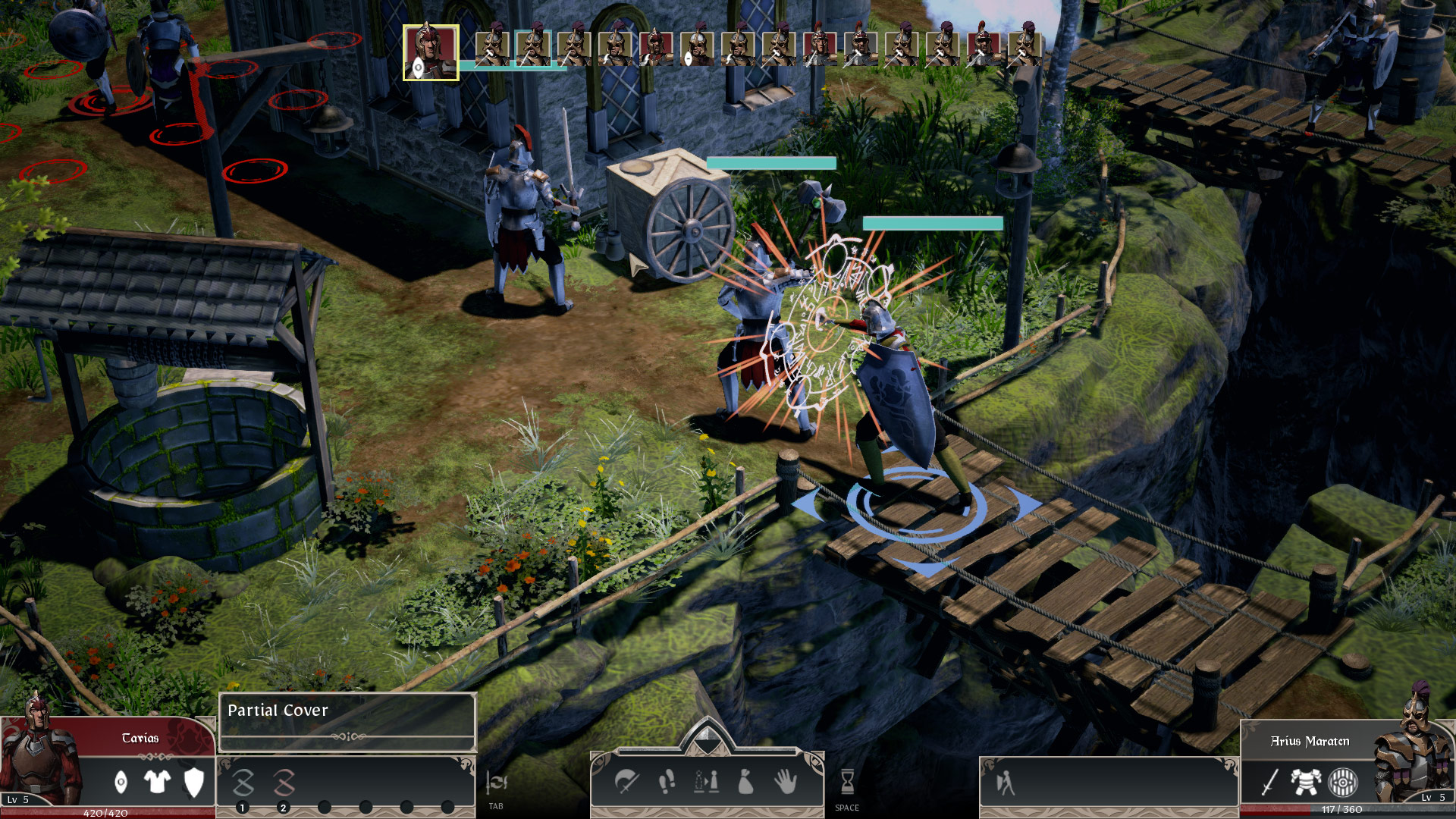
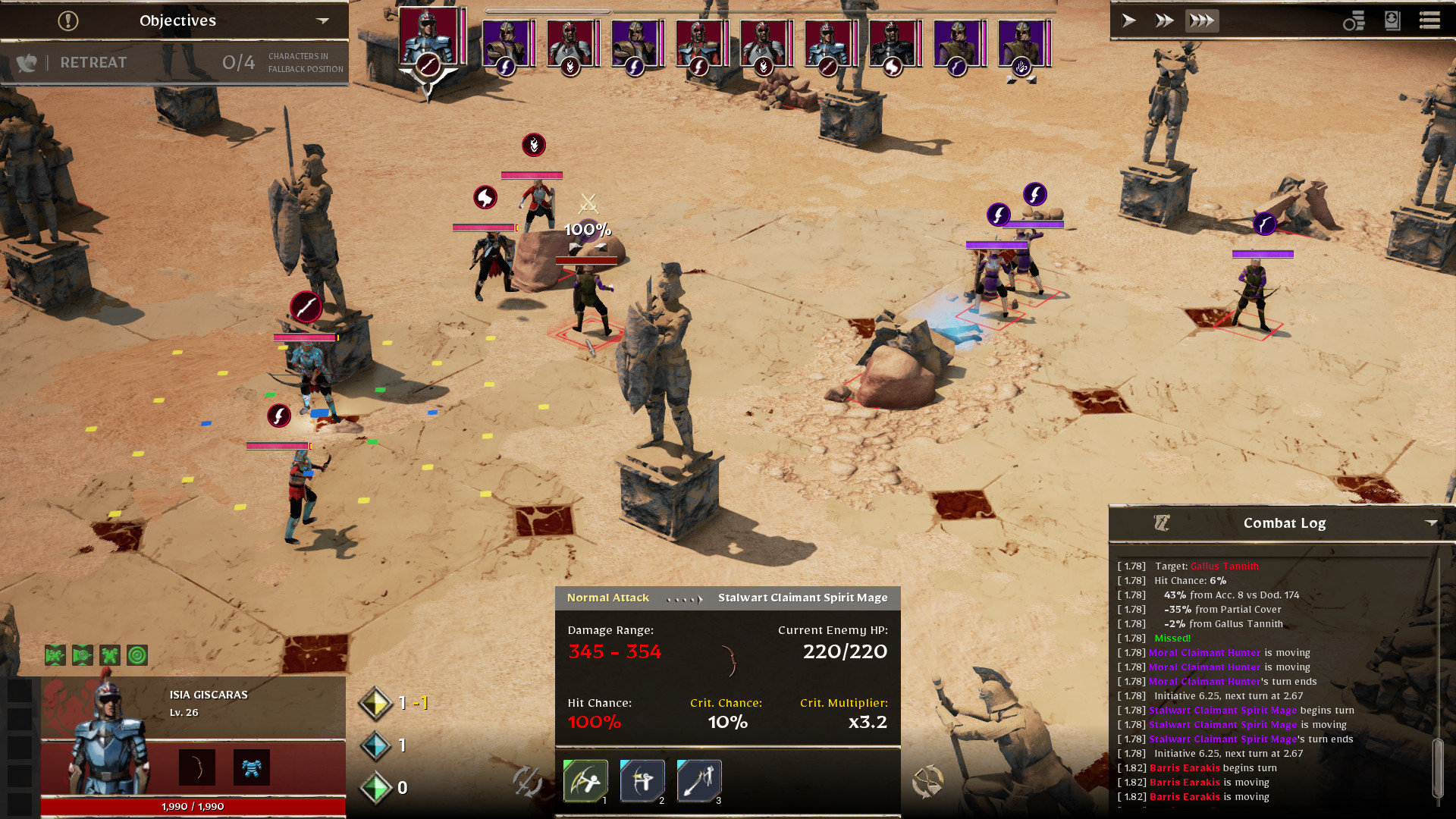
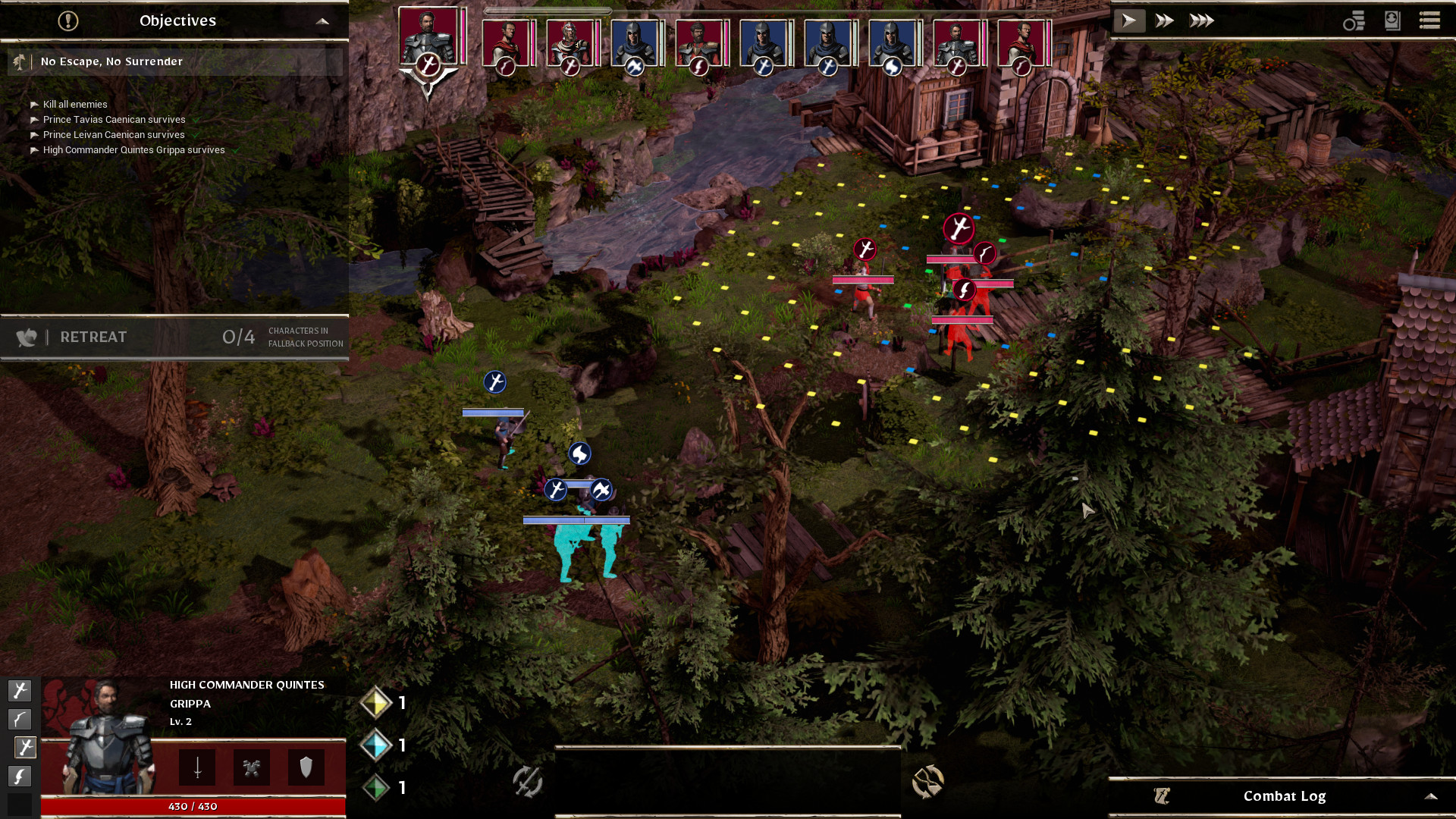
Following my trip to London for the EGX Rezzed conference, I was allowed to ask questions about yet another indie game for the blog. The subject of this particular session is a game called Forged of Blood. Set in a morally ambiguous fantasy world reminiscent of Gary Gygax’s Dungeons & Dragons series, Forged of Blood is a tactical RPG. Similar to the likes of Tactics Ogre & XCOM. Complete with a variety of different weapons and magic to do battle with. And a morality system similar to Fable or Mass Effect. I managed to send some further questions about the game to the creative director of Critical Forge Games, Igor Tanzil. And amidst the game’s ongoing Kickstarter campaign, these are the answers he gave;

Forged of Blood 1

What were the influences behind your game?

Forged of Blood is the love child of the different personalities and gaming preferences of the studio’s founders. Mechanically, it’s heavily influenced by the tabletop RPGs we’ve played. Along with the old-school TRPGS and RPGs that a lot of us grew up playing. Final Fantasy Tactics, Tactics Ogre, X-Com (both old and new). And of course, Dungeons and Dragons and Pathfinder, you name it, we’ve played it and loved it. And so we set out to make the game that took the best parts of all the games we’ve loved and merged them with modern graphics we can get with Unreal Engine 4. I’ll let Milo, our Game Designer, take the reins on the mechanical side below while I cover the world at large.

For the setting of the game, we wanted to set it in a hard fantasy world that is grounded in the reality of that world. That means coming up with a world and coming up with the rules that would govern that world. We asked ourselves, ok so how would small unit tactics make sense in our fantasy world? How did magic permeate society? And perhaps more importantly, what is possible and not possible with the magic in our world?

Cont…

My partners are huge Brandon Sanderson fans, and I loved the old Stargate SG-1 worlds and Roman cultures. So I kind of took all that in when I started with the world-building. What we end up with is Attiras: A world that is heavily inspired by Roman culture. And one where we have an older ruling species giving way to a new species before getting supplanted.

Attiras is something very near and dear to my heart. It is the world upon which I’ve imprinted my thoughts and feelings of morality. Growing up, I’ve always felt out of place, being a minority in my own country (Indonesia). And then growing up in two other countries, wherein I was just as much of an outcast there as I was in my own home.

So I wanted to explore the themes of race and the tensions that come with a ruling minority. And how a smaller population might come to power. Of course, at the end of the day, Forged of Blood is still a video game. And that means that a lot of these things might be relegated to the depths of our lore books. But my partners and I definitely felt that we needed to have a fully fleshed-out world for us to then create within. The challenge now falls to us to pick and highlight the stories within our world that are fun for a game. And make for a compelling story to drive the narrative forward.

What has the developmental process been like?

The short answer? A thrill ride.

The more realistic and complicated answer is that it has been. And continues to be a process that teaches, humbles, and excites us. As a brand new studio, the onus fell on us to remove as much doubt and risk from our future consumers as possible. And to that end, we’ve taken a very pragmatic approach to our development process. To us, that means making sure from the very beginning that we can make the things that we set out to make before committing to them.

And that led us to initially launch the studio with a small team of six to prototype and world-build the game we had in mind. During this time, we split the team into two, with the programmers testing and building upon a toolkit in Unreal Engine 4. And the rest of us are testing out the base mechanics on the tabletop before implementing it in-engine to test.

From there, we iterated repeatedly until we had something that we felt was fun to play before expanding the team to include the art side of the studio. We’ve since hit a few big milestones in just under a year. From our first fully rendered tactical map to implementing the strategic and tactical layers together. The progress we’ve made here at the studio has just been a wonder to behold.

Forged of Blood 2

What has been the most exciting aspect of development?

Oh boy, everyone will probably have a different answer to this question. I have two favorites. I think the first thing that got me excited for Forged of Blood was the worldbuilding. It was and continues to be a creative process unlike any other that I’ve done. Being given the freedom to create an entire world. And then working with the team to bring that world to life, and seeing how others interpreted the world. And the rules I’ve created have been just an absolute treat for me.

However, what I think is the most exciting aspect of the development for all of us has been seeing it all come together right before PAX. Our pre-alpha PAX build was the first time we saw it all start to come together. And being able to catch a glimpse of the game both on the Strategic Layer and Tactical Layer was a huge morale boost for everyone.

What has been the most challenging aspect of development?

The most challenging aspect of the development process so far is finding the balance between our dreams and ambitions and the limitations we have as a small studio. When we started the studio, we focused our efforts almost entirely on finding the right team. Luckily for us, we’ve all worked together on a larger project before. And it just came down to picking the right person for each role. That said, ours is still a very small team, and our budget dictated the production time we’d have to work on Forged of Blood. And that in turn dictates just how much we can do. It’s tough on all of us when we have to forego a good idea or limit the number of assets we can have. But finding a compromise is ultimately the only way forward.

Forged of Blood 3

How well has the game been received so far?

This is interesting to experience as a new indie studio. The hard truth is that for the most part, we are ignored. We’re the “nobodies” from a country that just isn’t known for video games. And we’re working on a very deep game with a rather small market segment. And that has seriously affected just how far word of our game has reached.

However, it has been extremely gratifying to experience the reaction of people who actually gave us a minute to hear our spiel and actually checked out the game. The people who stopped by our little booth at PAX East kept coming back. And they brought their friends time and time again. The more we engaged with people who found the idea of a Fantasy Tactical RPG interesting, the more they loved the project. And we’ve even gotten some fans who are helping us spread the word.

I think we’ve really hit the nail on the head in creating a game that appeals to our market. The fans we’ve made in the last few weeks are a testament to that. But we’re still hindered by a lot of the fatigue that comes from other failed Kickstarter projects and our studio’s relative anonymity. However, we knew that going in, and we’ve taken the steps mentioned before in removing as much risk from the consumer as we can. Even though it is a great expense for us.

What were the influences behind the combat system?

To quote Milo, our game designer:

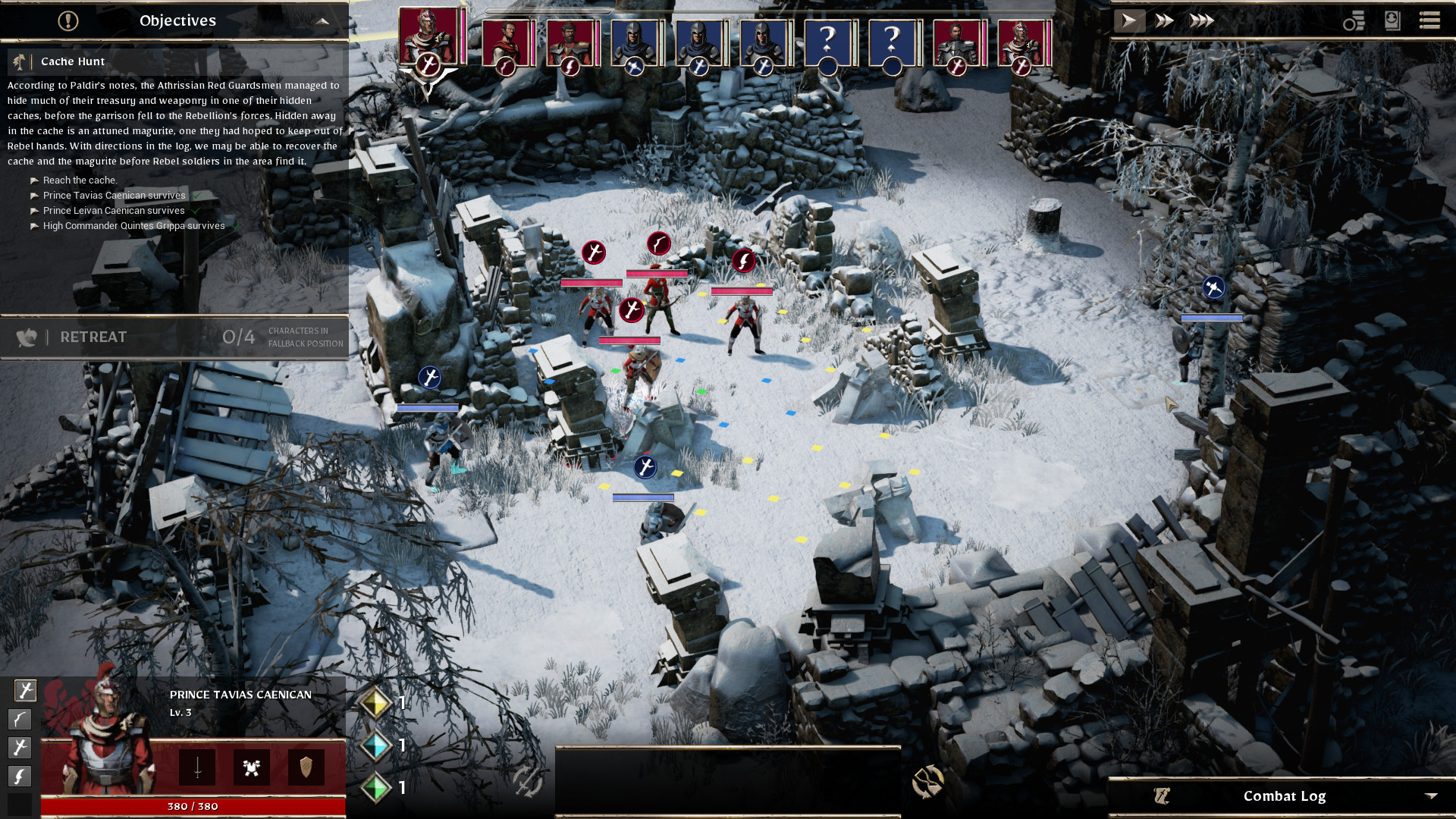
Before we began designing the game, we discussed what type of game we wanted to make. We wanted a game based on meaningful choices, dark/hard fantasy, and set in a believable world. This leads to decisions about spell crafting and Magurite to create a harder fantasy feel in which you draw the energy in from the environment before expelling it back out. Combining with the Magurite to provide a power source for the spells.

We also drew heavily from games we are all fans of. Such as X-Com, Dungeons and Dragons, Pathfinder, and other turn-based tactical and RPG games. Our Standard Action, Move Action, and Quick Action structure is quite similar to something you would see in Pathfinder or Dungeons and Dragons. We also wanted to provide as much freedom for the players as we could, which led us to have classless character builds that focus more on how the characters will play rather than what their roles will be.

What platforms are you looking to bring the game to?

While the PC is our primary platform, we will be looking into releasing it on other platforms once the PC version has been released. We have also had a lot of people asking for Linux and Mac from our fanbase. And that is certainly something that is feasible with Unreal Engine 4, but we’ll confirm everything once the game is further along.

Forged of Blood 4

Do you have any advice for aspiring developers who may be reading this?

The biggest advice we can give to aspiring devs right now is just: to make the game you can finish. It’s always great to shoot for the stars. In a way, that’s what we’re doing. But it’s even more important that you end production with a game that ships. For us, that means approaching the mechanics and art in a very iterative way that allows us to learn, execute, iterate, and streamline the different production threads in the studio. It also means being able to acquiesce to the very real limitations of time, money, and ability when approaching some of our more grandiose ideas for the game. We are ultimately judged on the work we show. And if the game never ships, we have nothing upon which to build.

Where on the Internet can people find you?

While we have a website and blog, we are also very active in a few gaming communities that I’ll include below. In fact, the majority of our fanbase comes from these gaming communities. Mostly gamers who are really into the sort of game we are developing, who are willing to hear us out and check out the game.

Game Website: http://forgedofblood.com/

Studio Website: http://criticalforge.com/

Kickstarter Campaign: https://www.kickstarter.com/projects/criticalforge/forged-of-blood

Neogaf Thread:

http://www.neogaf.com/forum/showthread.php?p=233027883#post233027883

RPGCodex Thread: http://www.rpgcodex.net/forums/index.php?threads/forged-of-blood-turn-based-tactical-rpg-kickstarter-live.111536/

Facebook: https://www.facebook.com/fobthegame

Twitter: https://twitter.com/ForgedOfBlood

Do you have anything else to add?

I think we’d like to take this time to just express our gratitude for the amount of love we’ve gotten from our fans so far. We’d also like to take the time to plead our case to the many skeptics out there.

Forged of Blood is an ambitious project for us. For anyone, really. But we’ve approached it every step of the way with the sort of pragmatism that we truly believe will result in a game many will enjoy. We’ve taken a huge risk in trying to alleviate the risks to the consumer. And we hope that you will judge us by the work we show. We’ve put everything we have into this game, and we will see it through. Though we are on Kickstarter for a reason. We need those funds to truly elevate the game to be what we know it can be. But no matter the outcome, Forged of Blood will be completed.

Thank you so much for this interview, and please never hesitate to reach out to us!

Forged of Blood 5

I would also like to take the time to thank Igor for providing such an in-depth insight into the game. And to wish him and the team the best of luck with the title and the Kickstarter campaign. Forged of Blood looks very much on par, if not better than, many of the other RTS games I saw at EGX Rezzed, and I would recommend any readers check out their Kickstarter page.

Oceanhorn: Monster of Uncharted Seas (PC, PlayStation 4, PlayStation Vita, Xbox One, & iOS Android)

Oceanhorn Monster of the Uncharted Seas

Developer(s) – Cornfox & Bros.

Publisher(s) – FDG Entertainment

Director – Heikki Repo

PEGI – 7

First released on iOS in 2013, subsequently brought to consoles last year, and featuring music composed by Squaresoft veterans Kenji Ito and my personal favorite video game composer Nobuo Uematsu, Oceanhorn borrows a great deal from some of the best franchises in gaming. Such as Legend of Zelda and Baldur’s Gate. It brings them together in one very satisfying and critically acclaimed gaming experience. Even after playing a few hours of Oceanhorn, I could tell that this is most definitely one of the greatest indie games I have ever played to date. And something I would recommend to any fan of adventure games or RPGs.

Graphics – 8.5/10

The game’s visuals are vibrant, colorful, and diverse, and though outdated compared to most mainstream releases, they are conceptually brilliant. Though in most aspects of this game, the most obvious influence had been The Legend of Zelda: Wind Waker, I found myself being able to identify a great deal of conceptual design deviating away from the latter in places such as house basements. They have a heavy steampunk feel to them, reminiscent of the game’s main antagonist. Dungeons throughout the game, again, much like the Legend of Zelda series, do extremely well to stand out amongst each other. And more than make up for the overworld areas, which can seem quite repetitive after a while.

Gameplay – 9/10

Oceanhorn is an isometric top-down adventure RPG, similar to Baldur’s Gate and Dark Alliance, but set in a much more open world than the latter. There is a heavy emphasis on exploration, combat, character development, and dungeon crawling; like Wind Waker, it also features travel by sea, along with combat elements thrown in during these sequences too. There is plenty to do in the game to keep players busy besides the main story, and the boss fights are challenging on quite a surprising level in my opinion; even the first boss was fairly difficult to contend with.

Controls – 10/10

I experienced no issues with the game’s controls whatsoever, as not only am I personally quite familiar with this particular gameplay formula, but there have been countless isometric RPGs to have come and gone over the last 20 years, and it was to be expected that no issues would arise. The best thing about the controls, however, is how well two different styles of an adventure game, i.e., Legend of Zelda and Baldur’s Gate, come together to form their own cohesive concept without presenting any issues with the controls.

Lifespan – 7.5/10

Overall, Oceanhorn can be made to last there about 16 to 20 hours, which for an indie adventure game is fairly impressive, especially considering that it started life as a smartphone game. I’ve found a lot of indie games to be short and sweet, such as Titan Souls and Xeodrifter, so a game like this to me was a welcome breath of fresh air, and something that can have a great deal of time invested into it for those willing to explore it, which I personally always admire in any game at all.

Storyline – 7.5/10

The story follows a silent protagonist, whose father leaves the paternal home to traverse the Islands of the Uncharted Seas to seek and kill a giant sea monster known as Oceanhorn. The player character subsequently sets out to destroy Oceanhorn himself and discover what became of his father. It seems simple enough, but throughout, the character goes through an unprecedented amount of development, discovering things such as love and hardship along the way. It’s one of many ways that this game can be compared to the Legend of Zelda. And whilst I believe the character of Link has been further developed in a single game than what is present in this, it’s still a very solid effort in terms of the overall story.

Originality – 6/10

Most players familiar with adventure video games will have very little difficulty pointing out what influenced this title, as they are blatantly obvious from start to finish in nigh-on every aspect of it. However, all these ideas come together to form something, which I can find myself describing as unforgettable, to say the least.

Happii

Overall, Oceanhorn, whilst it clearly borrows influence from other games, is, in my opinion, the best indie experience of 2016; it’s satisfying to play and beautiful to look at, with a stellar soundtrack, an enjoyable gameplay formula, and a pleasantly surprising level of depth in its story. It’s certainly worth playing through at least once.

Score

48.5/60

8/10 (Very Good)

Paper Mario Color Splash

Paper Mario: Color Splash (Wii U)

Developer(s) – Intelligent Systems

Publisher(s) – Nintendo

Directors(s) – Naohiko Aoyama & Taro Kudo

Producer – Kensuke Tanabe

PEGI – 3

As one of the last games internally developed by Nintendo for the Wii U, Paper Mario: Color Splash was released in late 2016. And ended up garnering mixed to positive reviews upon release. Fans of the series, however, were not so lukewarm to the game upon pre-release. Many of them complained about the departure from the formula of classic Mario RPGs, such as the original Paper Mario and The Thousand-Year Door for the GameCube. A Change.org petition was even started to have the game canceled before release. Which, to me, is far too harsh. Personally, I think this was the best game released that year. And the second-best game on the Wii U for several reasons.

Graphics – 9/10

One common complaint about the game during pre-release was how much overemphasis there was on the paper theme. This has been recurring since the fifth generation of gaming. Which, to me, is one of the most ridiculous criticisms I’ve ever heard anyone make about any video game. There’s nothing wrong with the paper theme, as it is generally something different from the rest of the Mario series. As opposed to the 2D side-scrolling or 3D platforming themes that came long before it.

Cont…

Color Splash is also set in a completely different place from what most Mario games are set in. This adds even more to the game’s unique look. Though the critics were right in saying that hardly any new characters are introduced. With everything else that has been undertaken with this game on a conceptual level, the series has been given a mostly fresh coat of paint, so to speak, with new locations, new items, and a handful of new characters. Along with a catchy new soundtrack was thrown in for good measure.

Gameplay – 9/10

Following on from the rest of the Mario RPG series, Color Splash introduces the feature of having to use cards to determine which attacks are used. And in what abundance the attacks are carried out. Cards are also used to heal and call temporary allies to Mario’s side, whilst unique cards are found throughout the game. Such as the lemon card and fire extinguisher card, they act similarly to how summons work in the Final Fantasy series. They are otherwise used to solve puzzles either inside or outside of combat.

Giving the gameplay a very exceptional twist compared to other RPGs. It’s actually quite reminiscent of Nintendo’s early history, as they started in 1889 as a playing card company. The cards with flowers on them especially speak of this. Since the playing cards they manufactured were for a game called Hanafuda, meaning Flower Cards. The only criticism I would have against the game’s style of play is that a lot of the time, it can seem quite easy to progress through with a lot of meager battles throughout; however, the game’s bosses provide more than enough challenge when confronted.

Controls – 10/10

Though the game introduces new elements to the Mario RPG series, the game poses no problems in terms of controls. In essence, it functions on the same basic gameplay structure as the likes of Super Mario RPG and the original Paper Mario. It also makes some of the best use of the Wii U’s GamePad I’ve ever seen. Players use the GamePad to cycle through and select from their list of cards in order to attack enemies. It’s also used to solve puzzles throughout the in-game world, mostly involving creating means of getting to otherwise unreachable areas.

Lifespan – 9/10

The game can easily be made to last 35-40 hours. Which for both a Super Mario game and a Wii U game, is exceptional. Whilst I don’t quite live up to the average lifespan of an RPG, as many can last over 100 hours, it will still provide players with hours upon hours of gameplay. In addition to the main quest, there is also a plethora of different side quests to complete. Such as collecting every card in the game and completing the rock, paper, and scissors challenges. And fulfilling the criteria listed on the lampposts of the main plaza.

Storyline – 6.5/10

Whilst the game does depart from many of the typical settings of a Mario game and introduces a handful of new characters, the plot is not so unique overall, unfortunately. Mario, Peach, and Toad receive a letter of a paper Toad drained of color sent to them from a region called Prism Island. They decide to investigate, only to find the main town deserted. They come across an anthropomorphic paint can named Huey. He explains that the fountain he was found in is powered by six stars called the Big Paint Stars that provide Prism Island with color. The party later discovers that Bowser is draining the island of color to enhance his own power. Mario and the company resolve to restore the Big Pain stars and thus put an end to Bowser’s plan.

At first, the plot seemed like a breath of fresh air compared to other Mario games, but about 5 hours in, they throw in the whole Peach gets kidnapped thing seemingly for the sake of it. As it happens, they also sneak in a fourth-wall joke about no one could have expected it to happen. This is part of the reason why I can’t punish the game too much for it. There are also references to older Mario games all over the place in some dialogue spoken by some of the more obscure characters. This keeps things relatively interesting. But overall, I found the story was about the only thing that I found to be wanting whilst playing this game.

Originality – 7/10

Aside from the plot of the game, the rest of it is unique compared to most other Super Mario games and does fairly well to stand out from the rest of the Mario RPG series, which is why I’m thankful that the Change.org petition fell through. TechRadar’s Nick Pino described it as “a frightening example of how quickly, and harshly, we judge games we know next to nothing about”, and I agree with him fully on this. If we were so quick to pre-judge every game before its release, some of the best titles may not have hit shelves at all. The game stands out for its unique take on turn-based RPG combat, as well as its exceptional art style.

Happii

Overall, Paper Mario Color Splash was my favorite game of 2016. It’s enjoyable to play, very long, with plenty of things to do in addition to the main game. And it stands out in a style of play that, to me, has not been explored enough in recent years. And for a game of this genre in this generation to feature the most iconic video game character of all time shows promise for the future of the genre.

Score

50.5/60

8/10 (Very Good)

Dishonored 2 (Xbox One, PlayStation 4, PC)

Dishonored 2

Developer(s) – Arkane Studios

Publisher(s) – Bethesda

Director – Harvey Smith

Designer – Dinga Bakaba

PEGI – 18

Developed primarily at Arkane Studio’s Lyon branch, and released in late 2016, Dishonored 2 was released later last year to critical acclaim. With players and reviewers citing major improvements made over the first game. Most of which concerned the game’s difficulty, many players opined that the last game seemed too easy. Personally, I agree that the sequel is better than the original game in almost every respect. And whilst the gameplay wasn’t structured as well as I believe a Dishonored game has the potential to be, it was more than a worthy sequel.

Graphics – 9/10

Taking place in a new city away from Dunwall, known as Karnaca, there are many new aspects of conceptual design added to expand upon the series’ mythology. As well as an overhaul of graphical quality. Making the game just as compelling and wonderful to look at as the first game. If not, more so. There are new machines to have to contend with besides the tallboys. And a new set of city streets and buildings to navigate through and discover new secrets and vantage points. The second game also seems even darker than the original, giving it more of a gritty feel, appropriate for the feel of the story. The setting of the Void is where this aspect of the game seems most prevalent. As the Outsider is also portrayed as a much darker character in himself.

Gameplay – 9.5/10

This time around, the player is given the option to select from two characters from the start of the game, both with their own unique set of abilities. There’s Corvo Attano, the protagonist of the original game and the empress’s royal protector. Or Emily Kaldwin, the empress of Dunwall. The game itself is also structured very similarly to the last. Taking place in a semi-open world and offering players the option to either take a stealthy approach or run rampant and kill every enemy standing in the way.

The game also presents the option of going through the duration of it without killing a single person. The best thing about this game is that the character choice not only offers a new dimension of gameplay. With so many new powers and options to experiment with. But it also gives it even more replay value than the first, warranting at least four different playthroughs. So even though it didn’t offer a completely open world. Which I think can be implemented very easily in a game like this. There is plenty of replayability to be had to make for a fairly long gaming experience.

Controls – 10/10

As with the previous game, there are no issues with its control scheme. Even though there are more options and abilities available. It’s actually quite impressive how the developers have managed to incorporate so many new features. Whilst at the same time keeping the fundamentals of the game to a perfect standard. Keeping a control scheme unique in a gameplay perspective that has also taken and maintained prominence throughout the industry for almost twenty years also makes it seem even more impressive in my opinion.

Lifespan – 7/10

Each individual playthrough of Dishonored 2 lasts about as long as it did in the first game, clocking in at around 20-25 hours. Which, for me, was mildly disappointing. A game like this can have a campaign that can be easily made to last longer. However, the game’s lifespan is in its potential replay value. Of which there is a great deal for those willing to delve deeper into the game. So, whilst it may not have the lifespan that a Dishonored game could have, it still has a great deal of longevity attached to it. And will make for hours upon hours of entertainment.

Storyline – 7/10

The sequel to Dishonored takes place fifteen years after the events of the original game. Whilst Emily Kaldwin has long since been installed as the rightful empress of the city of Dunwall, thanks to Corvo, the empire has prospered. But it has not been without challenges. A serial murderer known as the Crown Killer is murdering enemies of the state left, right, and center. And has led many in Dunwall to believe the Crown Killer is Emily herself. Whilst Corvo and Emily are attending a remembrance ceremony for Emily’s mother, Jessamine, a powerful witch named Delilah Copperspoon is introduced to Emily. And claims to be her older half-sister and rightful heir to the empire.

Whichever character the player chooses at this point manages to escape Dunwall. Whilst the other is subdued by Delilah, who usurps the throne. And the player character is tasked with putting an end to Delilah’s regime and rescuing either Corvo or Emily, depending on the character’s choice. Whilst I thought the game’s story was not as suspenseful as the last, since there is not as much of an elaborate twist to it, it still has the same level of political intrigue. And just as much emotional charge. Especially this time around, Corvo is given a voice as opposed to being confined to the role of the silent protagonist.

Originality – 7.5/10

Though the structure of Dishonored 2 remains relatively the same as its predecessor, the formula is kept fresh enough with the introduction of so many new features and abilities added. It’s most definitely evolutionary as opposed to revolutionary. Expanding on what was already good about the first game, except for the story. In my opinion, it does still leave room for both improvement and development in the event of a possible third game, but having played through both, I would welcome a third with open arms. The second game cemented the fact that both the concept and mythology behind the series are more than worth further expanding upon still.

Happii

Overall, Dishonored 2, whilst not being exactly the sequel I had hoped it would be, still presents massive improvement upon the first game. It’s enjoyable and lengthy with a decent story. And plenty of gameplay options to match. Well worth one playthrough at the bare least.

Score

50/60

8/10 (Very Good)

Ziggurat (PlayStation 4, Xbox One & PC)

Ziggurat

Developer(s) – Milkstone Studios

Publisher(s) – Milkstone Studios

PEGI – 12

First released on Steam Early Access back in 2014, and going on to see both digital and physical releases on multiple platforms, Ziggurat is a Roguelike first-person shooting dungeon crawler, somewhat reminiscent of Tower of Guns, with a heavy emphasis on combat and player character development. And above all, challenge. After having played Tower of Guns, I had fairly high expectations of how good this game would be. And how it would do the things it does. Overall, I was not disappointed.

Graphics – 8/10

The game takes place in a pseudo-medieval fantasy world bearing resemblance to game series such as Warcraft or Baldur’s Gate. The graphical quality of the title is stunning, especially for a game developed independently, but more importantly, it also does extremely well to break away from games that were clearly taken as an influence by incorporating a massive variety of unique creatures and boss characters. Such as Sir Arthur and Lady Audrey. Cutting-edge graphics can mean much less if there isn’t a variety in conceptual design. But this game has both.

Gameplay – 8/10

The basic premise of gameplay, along with the game’s story, is that an apprentice wizard must take on the challenge of the Ziggurat to graduate from his order. Players must undertake increasingly difficult tasks of ascending the floors of the Ziggurat, which are filled with dangerous monsters and challenging obstacles throughout. Players can take advantage of a massive choice of different weapons and spells. And perks that can be found across the game in order to survive for as long as possible, and to try and eventually graduate from the wizard’s order. Locations, enemies. Bosses, in Roguelike tradition, are procedurally generated. And thus, each playthrough provides a new set of challenges every time. Keeping the game insanely fresh and giving it virtually infinite replay value, which can make for hours upon hours of fun.

Controls – 10/10

Belonging to a genre that has dominated the video gaming market since the sixth generation, Ziggurat’s controls are perfect, providing no unnecessary complications, straightforward control mechanics, and incorporating all aspects of gameplay seamlessly. The fact that the player character moves faster than in most other first-person shooters also provides quite a lot of fluency for players who have mastered it after a while, as it can become quite satisfying to be able to effectively dodge a wide variety of simultaneous enemy attacks. By the same token, it can also provide an equal amount of challenge to newcomers, since it can be quite easy to rush through unexplored areas and accidentally fall for several given obstacles, such as lava pits.

Originality – 7/10

Though Ziggurat is not the first game of its kind to incorporate the basic premise of gameplay that it does, it stands out for a massive number of different reasons; the variety in gameplay combat options it provides, as well as its conceptual design and artistic direction in terms of visuals. Although it’s clearly not without its influences, it provides a marvelous gaming experience that greatly shines throughout the indie developer community, and it’s certainly worth playing again and again.

Happii

Overall, Ziggurat is a highly enjoyable game, filled with challenge, entertainment, and a staggering amount of replayability. It looks great, it plays out wonderfully. It stands out as one of the better gaming experiences on eighth-generation hardware.

Score

33/40

8/10 (Very Good)

Undertale (PC, PlayStation 4, PlayStation Vita, Xbox One & Switch)

Undertale

Developer(s) – Toby Fox

PEGI – 12

Developed by Toby Fox over a period spanning over 2 years following a successful Kickstarter campaign, Undertale was heavily inspired by the Super Mario RPG series. It combines turn-based RPG mechanics with real-time combat. It has a narrative deeply reminiscent of many more surreal games, including Anodyne and EarthBound. Though I have voiced my concerns about developers combining Turn-based combat with real-time combat in the past in reviews of games like Dragon Age: Origins and Final Fantasy XII, the way it’s handled in this game is much more adaptable and sensible than in most others. And it made for a very engaging experience.

Graphics – 7/10

At first glance, the visuals seem extremely basic in terms of graphical quality. But as the game progresses, players will start to notice subtle details throughout that really make it stand out. Such as reflections in pools of water, raindrops, snowflakes, and surprisingly effective use of shadow and lighting. The conceptual design, however, is where this game truly differentiates itself from others. It takes place in a wide variety of different locations. It has an insane amount of different character designs. My own personal experiences of witnessing many cosplayers dress up as characters from this game speak for themselves. And give testament to how much of a cult following this game has garnered since its release.

Gameplay – 8/10

The game focuses on a combat system highly resembling that of any classic Final Fantasy or Dragon Quest game. But it is in how players must evade enemy attacks that it becomes extremely enjoyable. The attack evasion system plays out like bullet hell games such as Galaxian or Gradius. With players having to evade an onslaught of objects on the screen. After being disappointed by a plethora of games that have tried and failed to combine turn-based and real-time combat, it was enormously refreshing to find a combat system that does this. And one that actually works well. It gives testament to Toby Fox’s ability as a game designer if he can succeed where many mainstream developers have failed spectacularly.

Controls – 10/10

Even with a very different control scheme from most other games of this kind to have been released over the last 25 years, the control scheme in Undertale presents players with no unnecessary complications or annoyances. Movement is straightforward, as are the combat mechanics. And like many RPGs before it, the developer didn’t try to fix what wasn’t broken, and the game is the best it could be in this respect.

Lifespan – 3/10

Lasting around 6 to 7 hours, Undertale falls way short of the standard lifespan of an average turn-based RPG. And this stands out as the worst thing about the game, in my opinion. If it had much less of a linear progression than it does, then potentially it could have been made to last far longer. Arguably, it can be put down to the fact that the developer worked on a budget. But there have been indie games made on a budget with virtually infinite replay value. Thus, even under the circumstances, the game still feels far too short for it ought to have been.

Storyline – 10/10

The story of Undertale follows a player-named human child who has fallen into a mysterious realm called the Underground. Where monsters were once equal to humans, but were banished following a war that broke out between them. The human sets out on a journey to find the king of the Underground, Asgore Dreemurr. And reach the barrier leading back to the surface world.

The game’s story was heavily inspired by Internet culture, as well as the concept of motherhood, further taking influence from Nintendo’s Mother series; the character Toriel, in particular, is perhaps the most prominent example of this. The story has a unique blend of comedy, tragedy, and moral ambiguity, as players are presented with choices of befriending, fleeing, or killing enemies, which in turn influence the direction in which the story goes. It certainly stands out as one of the better and more subtle narratives told in an indie game. It is worth experiencing at least once.

Originality – 10/10

Though the game takes inspiration from a variety of different sources, such as Internet culture and other game series. Even UK comedy shows such as Mr. Bean present players with a gaming experience largely unlike most others. I was overwhelmingly satisfied to witness how well combat was handled against many other RPGs released throughout the previous generation of gaming, and most other aspects of it also contributed to making this a truly unforgettable experience, like its story and subtle graphical details. It can be looked upon as one of the most remarkable achievements in gaming in general, made even more remarkable by the fact that it was all the work of one man with limited financial backing, but with an unlimited imagination.

Happii

Overall, Undertale is an engaging, subtle, and extraordinary video game that will have players amazed and immersed from beginning to end. Though my biggest concern stems from wishing that it could have been made to last a little longer, what there is in the way of story and gameplay makes for an experience unlike many others. And I recommend it to any fan of the RPG genre.

Score

48/60

8/10 (Very Good)

SteamWorld Heist (3DS, PC, PlayStation 4, PlayStation Vita, Wii U, Xbox One & iOS)

SteamWorld Heist

Developer(s) – Image & Form Games

Publisher(s) – Image & Form Games

PEGI – 7

The third game to be released in Image & Form’s SteamWorld universe, following SteamWorld Tower Defence and SteamWorld Dig, SteamWorld Heist takes the series in yet another bold new direction in terms of gameplay, concept, and story. Like the other two SteamWorld games before it, I found this game to be wonderfully varied. Excelling in conceptual design, and enjoyable to the last hour of gameplay. But due to the heightened longevity and replay value, this game has in comparison with SteamWorld Dig, it is most definitely the best game in the SteamWorld series to date.

Graphics – 9/10

Despite the fact that SteamWorld Heist still incorporates some elements from the first two games, the franchise has been taken to outer space in this installment, which provides a new dimension in terms of visuals, so to speak. The steampunk influence found in the two previous games is much more prevalent. But at the same time, the overall conceptual design seems completely different in a way that works flawlessly.

Character design is wonderfully diverse. And whilst it’s easy to come to the conclusion that individual levels seem like carbon copies of each other, it still does wonderfully well to deviate away from the deep caves and American West settings of the first two games. The soundtrack is also fantastic to listen to. The majority of which is composed by the band Steam Powered Giraffe. And has since encouraged me to listen to more of their work, which I’ve found extremely enjoyable in itself.

Gameplay – 8/10

Providing a complete departure from any other gameplay formula found in the SteamWorld series, SteamWorld Heist is a 2D side-scrolling turn-based RPG that plays out unlike any other game made in any similar vein. It is insanely addictive. As well as having a great sense of satisfaction to experience whilst playing, it involves devising as many clever strategies as possible to suit every enemy in every given situation in combat. Over the last few years, I have found a lot of games that have incorporated both turn-based and real-time combat that I have been greatly let down by. But in this game, it works better than most others. If not, any other.

Controls – 10/10

Another problem that seems to crop up with many RPGs that incorporate both turn-based and real-time combat is that the controls tend to suffer drastically. But in this game, the controls are perfect. No unnecessary complications arise, and overcoming the challenge of aiming as accurately as possible with short-range weapons. And managing to land a hit adds even more of a sense of satisfaction while playing.

Lifespan – 6/10

Despite the fact that I was ultimately left wanting more in terms of longevity out of this title. I was pleasantly surprised to see how long it can truly be made to last. When I’d collected all 45 stars in the first area, I was left thinking I’d completed the game at that point. Only to find that there was another stage to follow it up. And more stages in addition. Overall, including the DLC package, the game can be made to last at least 20 hours. Which, whilst much longer than many mainstream releases, falls short of the average lifespan of a turn-based RPG. It was still an improvement on the lifespan of SteamWorld Dig. And I can’t help but commend the developers for this.

Storyline – 7/10

A distant sequel to SteamWorld Dig, the cowbots are now living an existence of slavery and oppression following the destruction of the Earth. And civilization has become an eternal struggle for survival. The plot follows Captain Piper. He attempts to recruit a team of mercenaries for hire to embark on a space adventure throughout the universe. Whilst the main plot may sound simplistic in scope, the story is kept fresh throughout with the incorporation of character development in each of Piper’s mercenaries as the adventure goes on. And clever humor is thrown in for good measure.

Originality – 10/10

To put it simply, this game plays out not only like any other SteamWorld game before it. It incorporates a blend of turn-based and real-time combat that, for once, works flawlessly. It proves that indie developers can demonstrate as much initiative and excellence in gameplay innovation as any mainstream developer out there. I was extremely impressed with this title. And I’m very much looking forward to seeing what direction Image and Form take in the next installment within this wonderful gaming mythos.

Happii

In summation, SteamWorld Heist is a wonderfully addictive and satisfying gaming experience that I highly recommend. Despite the fact that I believe it could have been made to last much longer, what there is to do throughout is enjoyable to the very last hour. It certainly stands out to me as the best indie title of 2016 so far.

Score

50/60

8/10 (Very Good)

Wasteland (PC)

Wasteland

Developer(s) – Interplay Entertainment

Publisher(s) – Electronic Arts

Director – Brian Fargo

Producer – David Albert

Rating – N/A (Discretion is advised)

Making use of the GURPS system (Generic Universal RolePlaying System), a tabletop role-playing system developed by author Steve Jackson back in 1986, Wasteland was released two years later, back in 1988. It remains one of the most influential Western RPGs in gaming history. With director Brian Fargo going on to pioneer the Fallout series as a result. In comparison to the original Fallout, I believe this game to be the superior one of the two by some distance. And in every single respect.

Graphics – 8/10

From a technical standpoint, the game is no more advanced than an average NES game, making use of 8-bit visuals. Albeit with a much more varied color palette than Nintendo’s first home console. However, from a conceptual standpoint, the visuals were exceptional for the time. A post-apocalyptic setting had virtually been unheard of in gaming at the time. The game also has an exceptionally diverse enemy roster for the time being.

Gameplay – 7/10

In addition, the gameplay follows many of the same tropes featured in classic PC RPGs at the time. But as stated, it makes use of the GURPS system, playing out much more like tabletop RPGs. Which were exceptionally popular at the time. And have continued to remain prominent at expos and comic cons all over the world ever since. I was pleasantly surprised to find how short a time it took for me to get into this game in this respect, as since the entire concept was new to me, I didn’t think I’d have the slightest idea of where to begin. Like Fallout 4 to a certain extent. I wasn’t disappointed, however, and ended up having a lot of fun with it.

Controls – 8/10

The biggest gripe I have about Wasteland is the fact that its control scheme and basic mechanics can take a little bit of time to grow accustomed to. Especially if players may be new to this style of play. Old-school PC games relied heavily on similar mechanics, which were largely text-based, and therefore nothing like the games of today. But with perseverance, they can grow accustomed to it. And it is worth it to play through this game, in my opinion.

Lifespan – 10/10

RPGs since the late 90s were established as being capable of lasting at least 50 to 60 hours, 80 hours or more at a stretch. Although Wasteland only lasts around 12 hours, this was exceptionally long for any game to last at that time. Only games like the original Final Fantasy have the same level of replay value as this. The game, like the original Final Fantasy, was also designed to be played multiple times. Giving it even more replay value, and therefore. Making it even more enjoyable and varied.

Storyline – 7.5/10

The game’s story revolves around a group known as the Desert Raiders looking to bring order to a post-apocalyptic world following a global nuclear war in 1998. Whilst the story may sound very basic. Like the original Fallout game, for the time, it was much better than the average and typical story of the hero saving the damsel in distress, which had become synonymous with a lot of games at that time. Super Mario Bros and The Legend of Zelda, to name but a few.

Originality – 9/10

Released in a time when Japanese developers such as Squaresoft and Enix were the dominant forces in the RPG genre, and whilst they remain so to this day, this game eventually went on to establish the Western world as a prominent developer of RPGs, with not only Fallout but with The Elder Scrolls and Warcraft in addition. While it may be easy for younger gamers to simply write this off as a complicated mess of a game, the fact of the matter is that it is one of the most influential games in history, and it paved the way for the better games to come over the years.

Happii

Overall, Wasteland, despite the fact that it may not have aged particularly well, still largely holds up in terms of gameplay in my opinion. It’s a fun RPG, exceptionally long for the time, and will provide many hours of entertainment, as well as extensive replay value.

Score

49.5/60

8/10 (Very Good)