Tag Archives: Steam

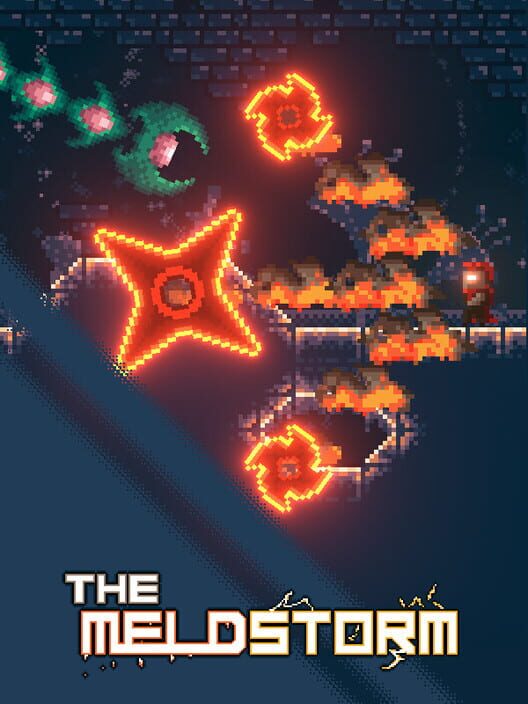
The Meldstorm

Q&A With Liam Dehaudt

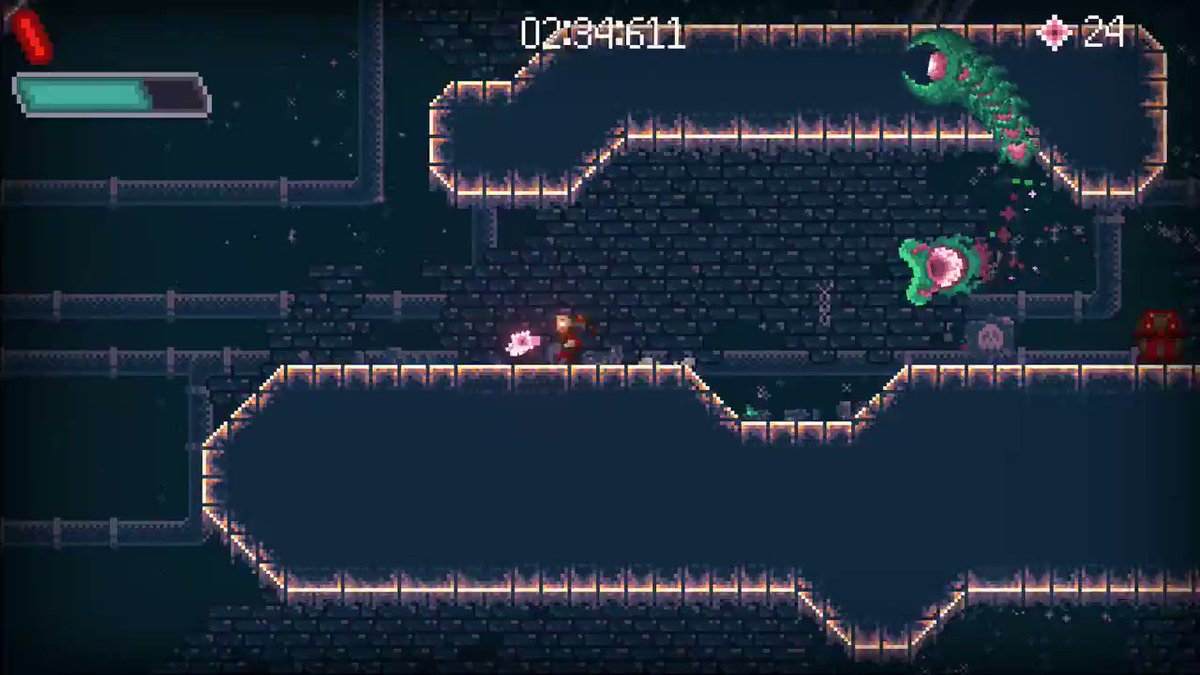
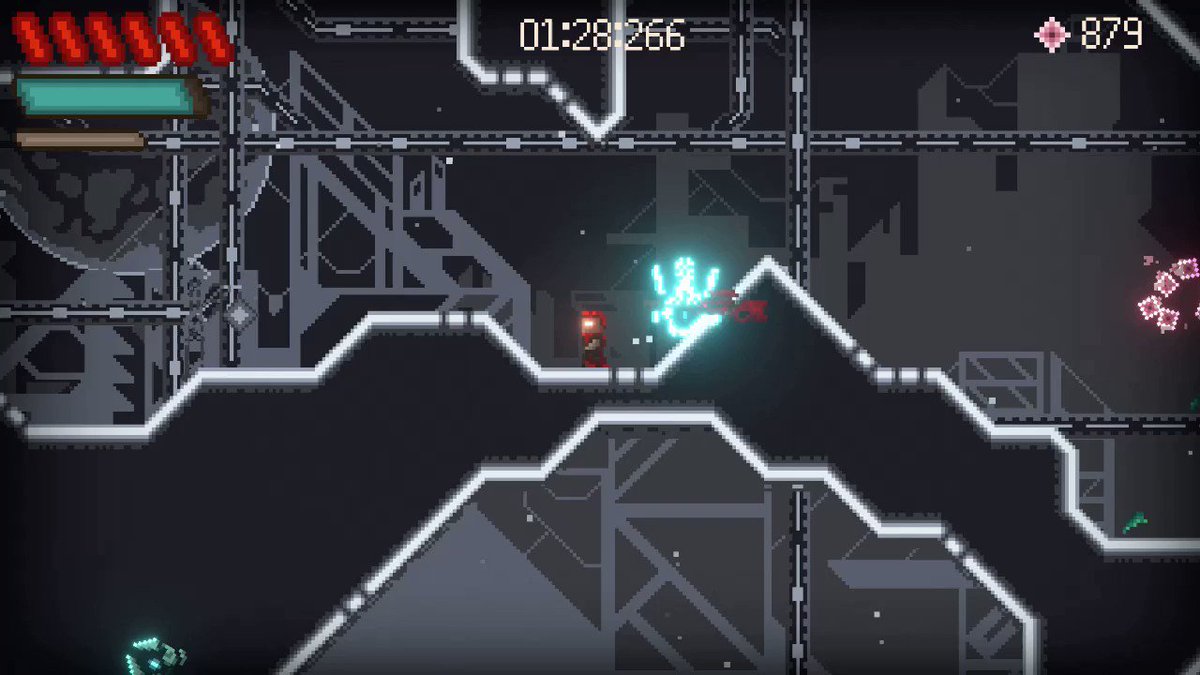
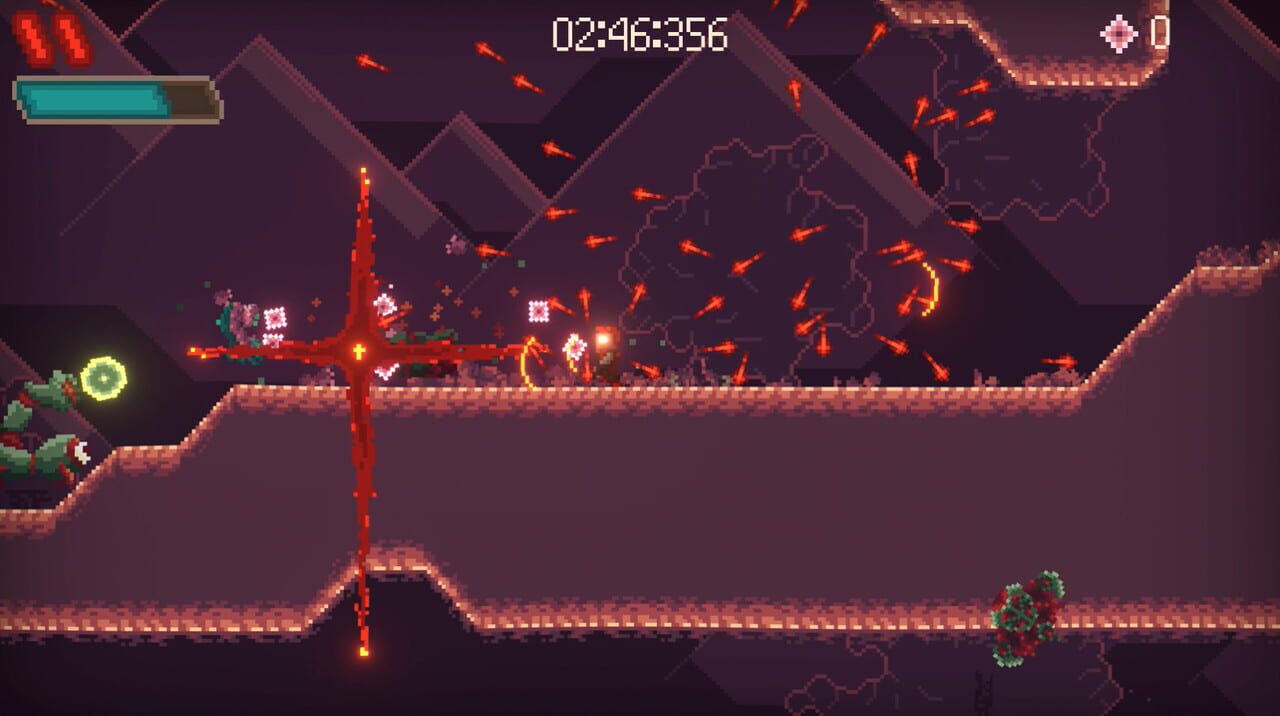
Whilst scouring the internet for new indie game prospects, I came across another title that caught my attention and was slated for release shortly. The Meldstorm is a 2D side-scrolling rogue-lite with item synergy elements. Players will be able to customize their weapons on the same level as games like Mothergunship and Fallout 4 with the game revolving around the player character (either a knight, rogue, or sorcerer, depending on the player’s choice), undertaking the deadly pillar trials: a series of tests requiring combat with an ungodly number of alien enemies and puzzles to solve. Wanting to know more about this game, I contacted its sole developer, Liam Dehaudt, and put forward to him a series of questions regarding how development has progressed and what players can expect to see when the game is fully released on Steam. Here’s what Liam had to say about The Meldstorm:
The Meldstorm 1

What were the influences behind your game? 

Risk of Rain influenced the item system, but I wanted more deliberate combat (fewer but more powerful enemies), so I borrowed a lot from Gungeon’s enemy feel, except as a platformer.

What has the developmental process been like?

It’s fun, it started as a hobby but became a bit more. I’ve worked on a few projects before, so this is like a test to put everything I’ve learned together. Of course, there are ups and downs, but that’s to be expected.

How close are we to seeing the finished product? 

I honestly don’t know. I would have a few months of development left, but since I just got a job, it’s most likely going to be a while longer. Let’s say late 2020 to early 2021, but that’s a super vague guess.
The Meldstorm 2

What has been the most exciting aspect of development? 

Programming is my jam, so making the big systems has to be my favorite part. I had a ton of fun making the mods interact with the weapons, and making a general system to create new weapons easily.

What has been the most challenging aspect of development? 

Marketing is tough and makes me want to pull my hair out sometimes. I’m quite new to it, so I’m learning a ton, but for now, I’m still pretty clueless.

What has been your favorite boss fight to have created so far?

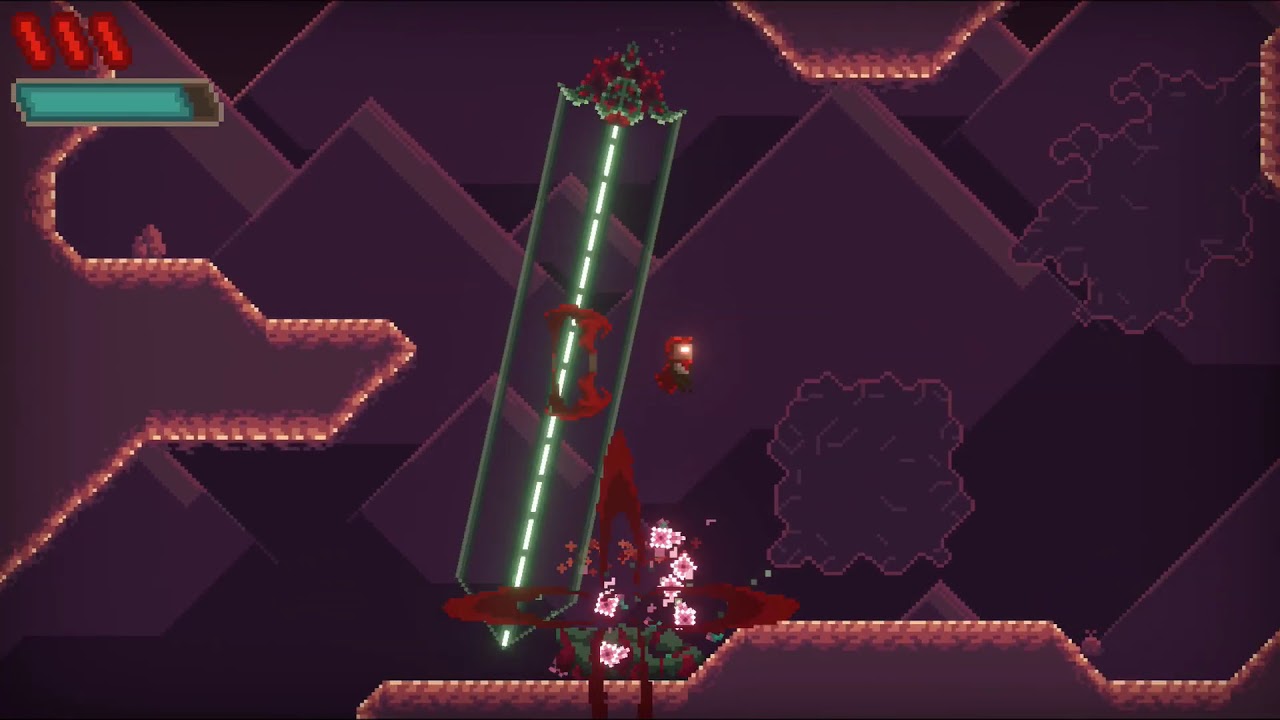
The final boss is cool and pretty different. I got some cool feedback from Reddit that helped me make him look a lot cooler, too. You get the first phase to learn his attacks, then he spices things up in the second.
The Meldstorm 3

How well has the game been received so far? 

People seem to like it. The few players I’ve had try it had fun. As mentioned prior, I am struggling with marketing, which I think is slowing me down a lot, but I think my current audience likes what I’m doing.

What platforms are you looking to bring the game to?

PC/Mac first, if the response is good, then I’ll consider everything else.

Do you have any advice for aspiring developers who may be reading this? 

Manage the scope of your game to something doable. Try to stand out. Aim for the top but expect not to get there. Reach out to people who are working on stuff you like.
The Meldstorm 4

Where on the Internet can people find you? 

I post all my work on Twitter; you can also DM me there if you want: 

https://twitter.com/TheMeldstorm

Also, if you like my game, wishlist The Meldstorm:

https://store.steampowered.com/app/1220300/The_Meldstorm/

Do you have anything else to add?

Have a nice day ^^

I also want to thank Liam for agreeing to this Q&A and hope you guys enjoyed reading more about The Meldstorm as much as I enjoyed drafting it up. The Meldstorm looks like a very promising game with virtually an infinite amount of replay value, and I’m certainly excited for what the final game will have to offer players compared to its current build. I will draft up a review of it upon release, but in the meantime, I wish Liam the best of luck with his debut title.

Game on,

Scouse Gamer 88
Axiom Verge (PC, PlayStation 4, PlayStation Vita, Xbox One, Wii U, Nintendo Switch)

Axiom Verge

Developer(s) – Thomas Happ Games

Publisher(s) – Thomas Happ Games

PEGI – 12

Developed solely by former Petroglyph Game engineer Thomas Happ and five years in the making, Axiom Verge was released back in 2015 to overwhelming critical acclaim from critics, garnering a plethora of favorable reviews and receiving a nomination for the best indie game award for 2015 at The Game Awards. I felt no different about this game. It is most definitely one of the better Metroidvania games that I have had the pleasure of playing, delivering in every aspect.

Graphics – 9/10

The game is set on a planet called Sudra and, in lieu of the Metroidvania tradition, features many varied and wonderfully designed environments with a lot of different enemies to contend with throughout. There is also a species of giant humanoid robots called the Rusalka. These are unlike most things I’ve ever seen in sci-fi. Most gamers will immediately be reminded of Super Metroid when looking at this game. As indeed I was.

But there are elements of the conceptual design that reminded me of other games, too. For example, the environments, which look almost alive with floors and walls moving and pulsating, reminded me a lot of Abadox for the NES. Although in the case of Axiom Verge, there’s even more attention to detail put in. The Rusalka also adds a certain eloquence to the conceptual design of this game. Reminding me in particular of the film Ghost in the Shell. 

Gameplay – 9/10

The game plays out ostensibly like a traditional Metroidvania game, with the player having to navigate through a 2D open world and constantly backtracking to reveal new areas or secrets hidden within the game. But what makes Axiom Verge as exciting to play as it is is its combat. The player is able to find a variety of different guns throughout and to strategize according to whatever enemies are in front of them. The world of Axiom Verge is reasonably big. So there is a lot of backtracking involved as players gain new abilities to access new areas. There is also a speedrun mode for more adept players who wish to complete the game in record time, which gives the game some additional replay value. 

But regardless of whether players may be veterans or entry-level, it’s a reasonable challenge, I thought. Not too hard to the point of being inaccessible, but not too easy either. More importantly, however, the game is extremely satisfying to immerse in. Backtracking to old locations is always fun, as the opportunity to experiment with new weapons constantly presents itself, and there’s a great deal of enjoyment to be had in this respect. The boss fights are also as intense as those of any Metroidvania game, again requiring players to strategize according to what weapons they may have, as well as enemy attack patterns. 

Controls – 9.5/10

The game’s control scheme also presents no problems for the most part. It essentially uses the blueprint of Super Metroid in its general gameplay and weapons system. As well as how ammo and health work. The one minor gripe I had with the controls, however, concerns how the address disruptor works. 

The address disruptor is a gun that either corrupts or de-corrupts enemies or certain walls. This is a tool that needs to be used in order to bypass certain areas of the game. The problem is that if a player removes a certain section of wall and not another, if the player fires again, it can reverse the process for the section of the wall that’s already been removed. Leaving the player having to slowly reverse the process again in order to traverse through walls. However, it’s something that’s easily rectified anyway, and I can’t fault the developer for trying something new. More important than my concern is that this is a game mechanic unlike many others seen in the Metroidvania genre. And it adds more to the game than it takes away. 

Lifespan – 7/10

On average, the game can be made to last around 15 to 20 hours. Which, for a Metroidvania game, is fairly impressive. A sequel is currently in development and is scheduled for release in the autumn of 2020. So here’s hoping that the lifespan is increased with the new game. Without giving the end away, I think there will be a great deal of scope to expand the lifespan for the sequel. But the first game lasts more than an adequate amount of time.

Storyline – 8/10

The story follows a scientist named Trace, who is running a lab experiment in New Mexico. Suddenly, something happens in the lab that causes an explosion. After which, Trace wakes up on the planet Sudra and finds himself embroiled in a one-man fight for survival. All while uncovering the wonders and mysteries behind the planet Sudra and helping the Rusalka defeat the entity known as Athetos. As the story progresses, it unfolds into something a lot deeper. Which makes for a story, which, like the visuals, is unlike a lot of things I’ve seen in sci-fi.

IGN gave this game a somewhat less favourable review than me, citing several problems they found with the game that I whole-heartedly found myself disagreeing with. One such criticism was that they thought the story was forgettable. But in my opinion, the story is anything but forgettable. The most prominent theme throughout the story involves moral ambiguity. The intentions and the character of the Rusalka most definitely come into question more than once and will make the player think whether what Trace is doing is right. Which once players play through it, it will make them anticipate the sequel even more. 

Originality – 8/10

Again, the originality of this game has been brought into question by many other reviewers, due to its obvious similarities to the likes of Super Metroid and Xeodrifter. The game clearly has its influences, and most fans of the genre will be able to identify them from the get-go. But, outweighing its similarities to other games are its differences. The conceptual design of this game really makes it stand out from other titles in the genre, and its soundtrack is exceptional, sounding even more otherworldly than Super Metroid in my opinion. Its story, as I said before, is also not as straightforward as Samus Aran striving to defeat Ridley. But rather than making the player question what happens at the end was for the greater good. Not just for Trace, but for the planet Sudra. 

The fact of the matter is that this game comes into its own with potentially massive mythology to be spawned from it with the introduction with even more games and scope for an even bigger plot to unfold along with it and in my experience, except games like Dust: An Elysian Tail and Ato, there haven’t been many Metroidvania games that have made me feel like what I felt after having played this one through to the end. 

Happii

Overall, Axiom Verge is definitely a must-have for fans of the Metroidvania genre. It’s also a must-have for any fan of science fiction. It’s a very enjoyable game with variety in combat and conceptual design, with an extremely memorable story and a lot of promise as a big gaming franchise for the future. 

Score

50.5/60

8/10 (Very Good)

Ori & The Blind Forest (PC, Xbox One & Switch)

Ori and the Blind Forest

Developer – Moon Studios

Publisher – Microsoft Studios

Director – Thomas Mahler

Producer – Gennadiy Korol

PEGI – 7

Created by a massive collaboration of developers worldwide over a period of four years, Ori & The Blind Forest is a Metroidvania game following the adventures of the game’s titular character, Ori, and companion Sein. As they set out to restore the forest of Nibel, which has come under threat, having lost the balance between the three elements. Waters, winds, and warmth. After having played this game almost 100%, I was enthralled with it from beginning to end. Everything from its art style and the soundtrack to its direction in terms of gameplay and story made for one of the most standout gaming experiences of the eighth generation. 

Graphics – 10/10

Similar to games like Cuphead and Child of Light, the game features entirely hand-drawn graphics. Though in this case influenced largely by the works of Hayao Miyazaki and Studio Ghibli. Locations within the game range from a mixture of light-filled and dark forest settings to vibrant, sunny glades, icy chasms, and fiery volcanic formations. No matter the specific location, however, everywhere in this game has a level of eloquence to it. In one way or another. And it all highlights the meticulous dedication the development team showed to bringing the project to life.

The accompanying soundtrack perfectly fits every location. As well as every situation the player finds themself within the game. Be that whilst peacefully traversing through sunlit greenery or whilst having to dash away from a volcanic eruption. But even during moments of both absolute tranquility and absolute calamity, the game still maintains that same level of eloquence throughout. In my case, so much so that I didn’t care how many times I died in moments of urgency. I thought it was worth attempting that many times just to soak up the game’s wonderful atmosphere.

Gameplay – 8/10

As a Metroidvania, the game follows most of the typical tropes you would expect to find in a game of the genre. Most notably, having to gain all manner of different abilities to access each area as the play progresses. However, Ori & The Blind Forest offers players a very interesting spin on things. With a unique combat system encouraging players to strategize in accordance with what enemies they’re up against. Combat can also be a means to access new or hidden locations throughout the game.

There is also an ability tree that players can use to upgrade pre-existing abilities or learn new ones by gaining experience in combat. Giving the game an RPG feel to it. The combat isn’t as intense as it is in other Metroidvania games like Castlevania: Symphony of the Night or Dust: An Elysian Tail. But it demands almost as much from gamers as enemies become stronger over time. And different abilities need to be used to overcome them. The game also demands a fair bit from players with respect to exploration. There are many challenging platformer obstacles to traverse and puzzles to be solved throughout. It challenges players, but not to the point of it becoming inaccessible. 

Controls – 10/10

As in many Metroidvania titles, the staggering variety in controls becomes more and more apparent as the player progresses through the game. With the different abilities to learn and incorporate throughout. At first, I thought that it might become a problem, as the same buttons are used for different abilities in varying respects. But all it is is a matter of getting used to strategizing. In accordance with whatever situation the players may find themself in. It reminded me a lot of Metroid Prime in that respect. Although that game was a first-person shooter, it doesn’t entirely feel like one in many respects. And I found it to be the same case with Ori & The Blind Forest. It’s a Metroidvania game. But there are certain instances in which it doesn’t feel like one in respect of its control scheme. Further adding to the game’s sense of uniqueness. 

Lifespan – 5/10

Completing the game to 100% can take around 12 hours. Which, to me, is undoubtedly this game’s biggest drawback. Although this game was undeniably a labor of love, and it shows in every little detail, it just seemed to be a criminally short amount of time for a game of this quality to last. It’s in this aspect that I hoped that this is where the sequel, Ori & The Will Of The Wisps, would come in. Similar to the transition between Onimusha and Onimusha 2. 

Storyline – 8/10

The game’s plot follows Ori, a guardian spirit that fell from the Spirit Tree of the forest of Nibel. Ori is later found by a forest inhabitant named Naru, who adopts Ori and raises her. Later, Naru dies of starvation, and Ori is left to fend for herself. She later becomes embroiled in a quest to restore the forest of Nibe. It begins to deteriorate since the forest has lost balance between the elements of water, wind, and warmth. Matters have also been worsened by the fact that the core of the Spirit Tree had been stolen by a demonic, shadowy owl named Kuro. Throughout, Ori has to traverse the forest to restore the three elements and the core of the Spirit Tree. Whilst coming under the threat of the forest’s many dangerous creatures and natural obstacles, whilst also avoiding the clutches of Kuro.

The game’s story, as well as its art direction, was also heavily inspired by the works of Hayao Miyazaki. It’s vivid and fantastical. And packed with emotional moments that will have players on the edge of their seats. But it also perpetuates a sense of moral ambiguity, especially towards the end. So much so that I found myself questioning who the real hero was and if the villain truly is a villain at heart. This works to separate it from the works of Studio Ghibli, as moral ambiguity isn’t that prominent a theme in the works of Hayao Miyazaki, Isao Takahata, and others who worked for the company, and it’s something new to complement a story that was heavily inspired by the two aforementioned film directors. 

Originality – 8/10

Whilst critiquing the control scheme, I mentioned that there are certain instances in which the controls make it feel like more than a conventional Metroidvania game. But this can be said for every other aspect of Ori & The Blind Forest, in addition. It’s largely unconventional in its gameplay, its scenery, its soundtrack, and its story. Ahead of playing it, I knew that I was in for something special with this title, but I wasn’t quite prepared for exactly how special it would turn out to be. Everything from its combat system to its environmental design to its themes of loss, tragedy, and moral ambiguity makes it stand out from most of every other game I’ve ever played. 

Happii

Overall, Ori & The Blind Forest is a must-have not only for Metroidvania fans but for gamers in general. It’s a title that has had every element handled with a degree of love and care that every standout game should have, and whilst it didn’t last as long as I thought it had the potential to, it’s certainly worth at least one playthrough at minimum. 

Score

49/60

8/10 (Very Good)

Platypus (PC, PSP, iOS, Windows Mobile & Xbox 360)

Platypus

Developer(s) – Squashy Software

Publisher(s) – Idigicon

Designer – Anthony Flack

First released back in 2002 and then later ported to a wide variety of different systems, Platypus is a scrolling bullet-hell shooter. It makes use of digitized sprites and scenery to create a claymation effect. Similar to games like ClayFighter. When I first picked this game up some time ago, I first got the impression that it was a particularly unassuming title. It was insanely cheap, and the box art looked quite substandard.

But when I started playing it, I was immediately enthralled with it. And largely taken aback by just how good it is. When I subsequently did my research on it, I later found out that not only did it spawn several ports to different consoles, but it also spawned ports to mobile phones. But it also got a sequel five years after the release of the original. Researching this game also made me understand what a labor of love is for many different reasons. 

Graphics – 8/10

To reiterate, the game adopts visuals inspired by claymation. Making it a particularly quirky-looking title. It’s vibrant and colorful, and it also has a decent amount of variety in both level and enemy design. I was also ready to argue that the game’s first two levels look somewhat similar to each other. But after finding out the process behind the making of this game, I knew that I would’ve been far too over-critical. The game’s designer, Anthony Flack, cited that at the time of the game’s development, there had been limited availability of plasticine in his home country of New Zealand.

Therefore, he used one lump of it to create every scenery element and individual sprite within the game. And photographed them one by one. And used photo editing software to color them in various colors. Personally, I’m amazed the visuals of this game were essentially the work of one man. And how well it panned out, given the outlandish creative process behind it. The soundtrack is also particularly impressive. Comprising remixes of tracks from old Commodore 64 games. It’s a pretty tokenistic thing for any Commodore fans playing the game who may spend time trying to figure out which game each track is taken from. 

Gameplay – 8/10

The game is also particularly fun to play. Albeit challenging. It plays out very similarly to the likes of Defender or Gradius. Players are able to grab a variety of different power-ups throughout in order to gain a foothold against hordes of oncoming enemies. But what makes this game different from the aforementioned examples is that the power-ups, throughout certain instances within the game (especially the boss fights), become more or less a necessity. Adding to the game’s sense of challenge. It’s difficult but not inaccessible. Although players may struggle at first, the general strategy is simple enough to exploit. The boss fights in each level are also pretty well done throughout. For example, I couldn’t help but wonder whether or not the first boss fight was inspired by the Forever Train from Star Fox 64. 

Controls – 10/10

As I always point out with games like Platypus, what cannot be tolerated in a game that relies heavily on individual skills to get through are problems with the control scheme. Massively, it negates the point of having a challenging title and makes it pretty much unplayable. I was very happy to discover in this game that there are no issues with the controls. Although this was to be expected since the formula has been tried and tested for many years throughout various generations of gaming, it’s always reassuring when a player dies in-game, it will be down to awareness of their surroundings whilst playing. 

Originality – 8/10

Although this wasn’t the first game to use digitized sprites or even claymation, Platypus is one of the games that makes players think that it’s far too distinctive to be unheard of on an unjustifiable scale. It blends classic side-scrolling shooting action with a quirky, colorful. And a unique art style, which certainly will have made it stand out within the circle of independent PC developers throughout the early 2000s. And it’s still an experience that remains quite distinctive today. 

Happii

Overall, Platypus is a fun, great-looking game with a great deal to offer in terms of replayability. It’s a game that I thought would most likely be another write-off from the word go. But it ended up being something far more special than that, and I wholeheartedly recommend it. 

Score

30/40

8/10 (Very Good)

Back to Bed (PC)

Back To Bed

Developer – Bedtime Digital

Publisher – Bedtime Digital

PEGI – 3

Released back in 2014 to relatively positive reviews, Back to Bed is a surreal isometric indie puzzle game sporting a unique approach to puzzle solving. And providing one stern challenge after another. My own opinion of the game was that, although I have some issues to address, I did have a fair bit of fun with this title. It stays fresh throughout. And although it doesn’t last particularly long, what there is to enjoy can be enjoyed thoroughly.

Graphics – 8/10

The game takes place within the dreams of a man named Bob. And as players can come to expect, the design of the game’s scenery is wonderfully abnormal. Each stage of the game takes place at different times of the day. And the player is surrounded by increasingly strange objects, enemies, and obstacles. In terms of conceptual design, it actually reminded me of Monty Python’s Flying Circus. Very much like Bedtime Digital’s follow-up release, Figment. Throughout, the game also creates a very interesting atmosphere not only in its scenery but also in the soundtrack. The game can generate a sense of comedy one minute. And then a feeling of horror the next. The opening title screen, in particular, feels quite harrowing. In terms of fitting in with the premise of the game, it can feel like the contrast between dreams and nightmares.

Gameplay – 7/10

The concept of the game is to guide a sleepwalking man through each stage of the game until he reaches the bed so he can go back to sleep. This is primarily done by placing objects within each stage to make the man turn in the desired direction. The man always turns clockwise when in contact with an object or wall. Therefore, the player must strategize accordingly.

Throughout the game, new elements are added to heighten the challenge of each stage. There is even a small element of combat involved, as enemies eventually come into the frame. And the player must work to subdue them before leading the man to his bed. As new elements are added to the game, it becomes even more enjoyable over time to be challenged in so many ways. If asked to compare it to any other games, I’d describe it as a mash-up between Lemmings and Road Not Taken.

Controls – 10/10

Overall, the game’s control scheme is relatively simplistic. And therefore, there are no issues to be had with the controls. However, some of the additional mechanics the developers incorporated into this game are also pretty impressive. For example, the player has the ability to traverse certain walls in order to reach otherwise unreachable areas or to collect objects.

Lifespan – 3/10

Disappointingly, the game can only take up to 4 hours to complete to 100%, which was a surprise to me. Given the amount of variety the game has throughout, I believe it could’ve easily been stretched to last twice as long. Though Figment would last around twice as long as Back to Bed, I thought the worst thing about this game was that it is far too short-lived. And really needed to last longer.

Storyline – 6/10

The majority of the game’s narrative lies within the basic premise. Which is that inside the subconscious of a man named Bob is a strange four-legged creature called Subob, who must guide a sleepwalking Bob throughout his dreams to the bed in each stage. The story is quite abstract in many respects, and certain elements of it are potentially open to interpretation depending on whichever way a player may look at it. This does give it an additional boost. Outside of gameplay, the narrative is portrayed quite well, too. With seemingly hand-drawn images depicting where the story goes with each stage of the game. It’s not the strongest example of storytelling to be found within a game. But it is quite enjoyable in its own right.

Originality – 7/10

Certainly, for a puzzle game, it is also a unique title with unique elements to be found in every respect. Ranging from its conceptual design to its gameplay mechanics to even its basic premise. Though I was able to do it eventually, I was relatively hard-pressed to compare it to even a few games that I have played over the years. But irrespective of that, it provides a type of gaming experience that’s not easy to come by.

Niiutral

Overall, I was relatively impressed with Back to Bed. Though I felt it should have been made to last significantly longer than it does, it kept me challenged and entertained throughout. The gameplay never becomes wearying or overly repetitive. And its visuals add a level of charm comparable to many other visually stunning games before it.

Score

41/60

6.5/10 (Above Average)

Alwa’s Awakening (PC, PlayStation 4, Xbox One, Nintendo Switch)

Alwas Awakening

Developer(s) – Elden Pixels

Director – Mikael Forslind

PEGI – 7

The debut title of Elden Pixels, and developed under the supervision of Zoink Games’ Mikael Forslind, Alwa’s Awakening is a throwback to the classic games of the NES era, including Zelda II: The Adventure of Link, Metroid, and Castlevania II: Simon’s Quest. An 8-bit Metroidvania game, it focuses heavily on exploration, combat, and acquiring a range of different abilities in order to progress from area to area. Playing this game felt like an absolute pleasure, as well as a fitting tribute to games of the late 80s. And I would recommend it to any fan of that era of gaming.

Graphics – 8/10

Conceptually, where this game stands out is the design of the enemies, as well as the boss battles. Though clearly influenced by many aspects of medieval mythology, including other fantasy franchises (elements of Dungeons & Dragons seemed most evident to me personally), the developers took these influences and formed their own cohesive concepts in terms of visual design. Which is quite difficult to do when dealing with medieval fantasy, making it seem all the more impressive. The soundtrack, recorded by Robert Kreese, is also nothing short of stellar. On par with, if not better than, many classic NES games.

Gameplay – 8/10

Alwa’s Awakening is a Metroidvania game focusing on adventure and exploration. But the developers also boasted a heightened level of challenge compared to many other classic NES games during development, promising an unforgettable throwback experience to suit both the seasoned and casual classes of gamers of that time. When Elden Pixels first announced this, I did get nervous that they would develop a game that was nigh on inaccessible. As I’ve found in many NES games, such as those in the original Mega Man series.

However, while playing through it, I found it offers a level of challenge that is stern, yet reasonable. A level of challenge on par with Shovel Knight, for example. It came as a relief to me. And I was able to enjoy the game with minimal frustration because of it. There are secrets to uncover along the way, and some of the most invigorating boss fights I’ve seen in a 2D game.

Controls – 10/10

Part of the reason why I found the game to be more accessible than many fully NES titles purposefully made to be hard was that the controls are also flawless. In many Mega Man games, I have experienced problems with the controls. And time and time again, it defeats the object of demanding skill from the player if the developers can’t program the game properly. In this game, however, no such issues exist; the controls are perfect, and any errors made will be down to player performance.

Lifespan – 6.5/10

The game can be made to last around 6 to 7 hours in total. Taking everything to do within it into account, which by NES standards at the time may have been outstanding. But in the current era, especially for a Metroidvania, it does fall somewhat short in this respect. It is the game’s biggest issue in my opinion. And I think it could have been made to last at least 12 to 13 hours, given more things to do within it. However, there is more than enough substance in gameplay for how long it lasts. This does emphasize quality over quantity.

Storyline – 7/10

The story of Alwa’s Awakening follows a girl called Zoe, who is playing video games one night. And after dozing off, she finds herself in the land of Alwa, where her favourite video game is set. And she is thrust into a quest to save the land for real. The plot itself may be quite straightforward, but there are certain aspects of it that do well to foster an air of mystery about the game, as was customary among NES titles in the console’s heyday. It’s a nice touch that the developers added that makes the game more enjoyable to play through overall.

Originality – 7/10

Taking everything into account, I was impressed with how many unique aspects there were within this game compared to other classic 2D titles. As someone who first started out playing video games on the NES, my first ever video game being Chip N’ Dale: Rescue Rangers, it was refreshing to take a step back from AAA mainstream titles. And play a game that not only hearkens back to the days of gaming simplicity. It also offers something different from any other NES title.

In summation, Alwa’s Awakening is a welcome addition to the ever-growing indie scene and a definitive joy to play. There’s great gameplay, atmospheric visuals, and an excellent soundtrack. And a level of challenge that will satisfy all classes of third-generation gamers.

Score

46.5/60

7.5/10 (Good)

Oh… Sir! The Insult Simulator (PC, Android & iOS)

Oh Sir The Insult Simulator

Developer(s) – Vile Monarch

Publisher(s) – Gambitious Digital Entertainment

Rating – N/A (Discretion advised)

Developed by Austrian indie outfit Vile Monarch, Oh… Sir! The Insult Simulator combines turn-based style combat with the layout of a fighting game to deliver a unique twist on both styles of play and quirky humor to match. Whilst not having a great amount of replayability for a fighting game, it can make for hours of entertainment, and for the relatively short time it took me to unlock everything, I enjoyed this title.

Graphics – 7/10

Rendered using 8-bit graphics, the developers were influenced most notably by the Monty Python troupe in both its character and stage designs. As a fan of Monty Python myself, it was fun identifying where the references were placed. Be that either the obvious ones, like the character of John P. Shufflebottom being an obvious caricature of John Cleese’s character from the world-famous dead parrot sketch, or obscure ones like the trumpets being blown by their rear end in the background of the afterlife stage. Reminiscent of a scene from Monty Python’s The Holy Grail. There are also references to other aspects of modern and classic thrown in for good measure, which enhance the game’s level of visual variety in terms of conceptual design.

Gameplay – 6/10

The object of the game is to string together the longest insults possible by picking from a selection of phrases and conjunctions in the best order to deal as much damage as possible to the enemy and deplete their health bar before they can deplete the player’s health bar. There are additional characters to unlock, as well as an additional stage. And then there’s also a multiplayer mode whereby people can compete online. For a fighting game, it doesn’t have a great deal of content. And I’m hoping that’s where the game’s upcoming sequel will come in. Oh… Sir! The Hollywood Roast. It’s not the most plentiful experience available, but well worth the price posted on Steam of £1.59. Stringing elaborate insults together feels satisfying, and it’s also rewarding to be able to identify an individual character’s weaknesses to deal extra damage.

Controls – 10/10

Issues with the controls are non-existent unless gamers have a problem with their mouse. It’s a simple point-and-click game typical of a vast majority of PC games and suffers from no problems in this respect.

Originality – 9/10

In terms of uniqueness, it stands out from any other fighting game ever made. It thrills me to see independent developers trying out new ideas never seen in gaming before, and making them work extremely well, like what has been accomplished with this title. The developers have promised a more plentiful experience with the next game. As well as it being much more open to modding like Civilization 5, perhaps. But the first game is definitely a standout starting point worthy of more attention than it has received so far.

Happii

Overall, Oh… Sir! The Insult Simulator, whilst having a fleeting single-player experience, makes up for that in its quality. It’s an entertaining, reasonably priced, and funny gaming experience, and I would recommend it to all fighting game fans out there.

Score

32/40

8/10 (Very Good)

https://store.steampowered.com/app/512250/OhSir_The_Insult_Simulator/

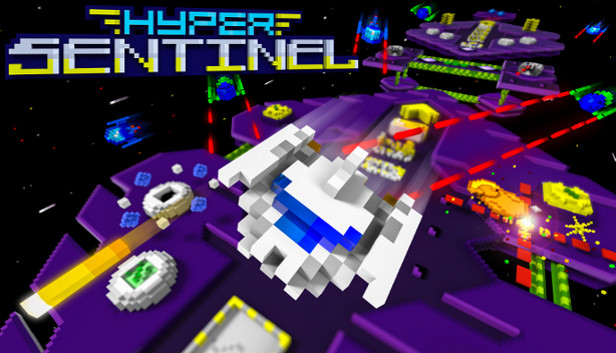
Hyper Sentinel

Q&A With Huey Games

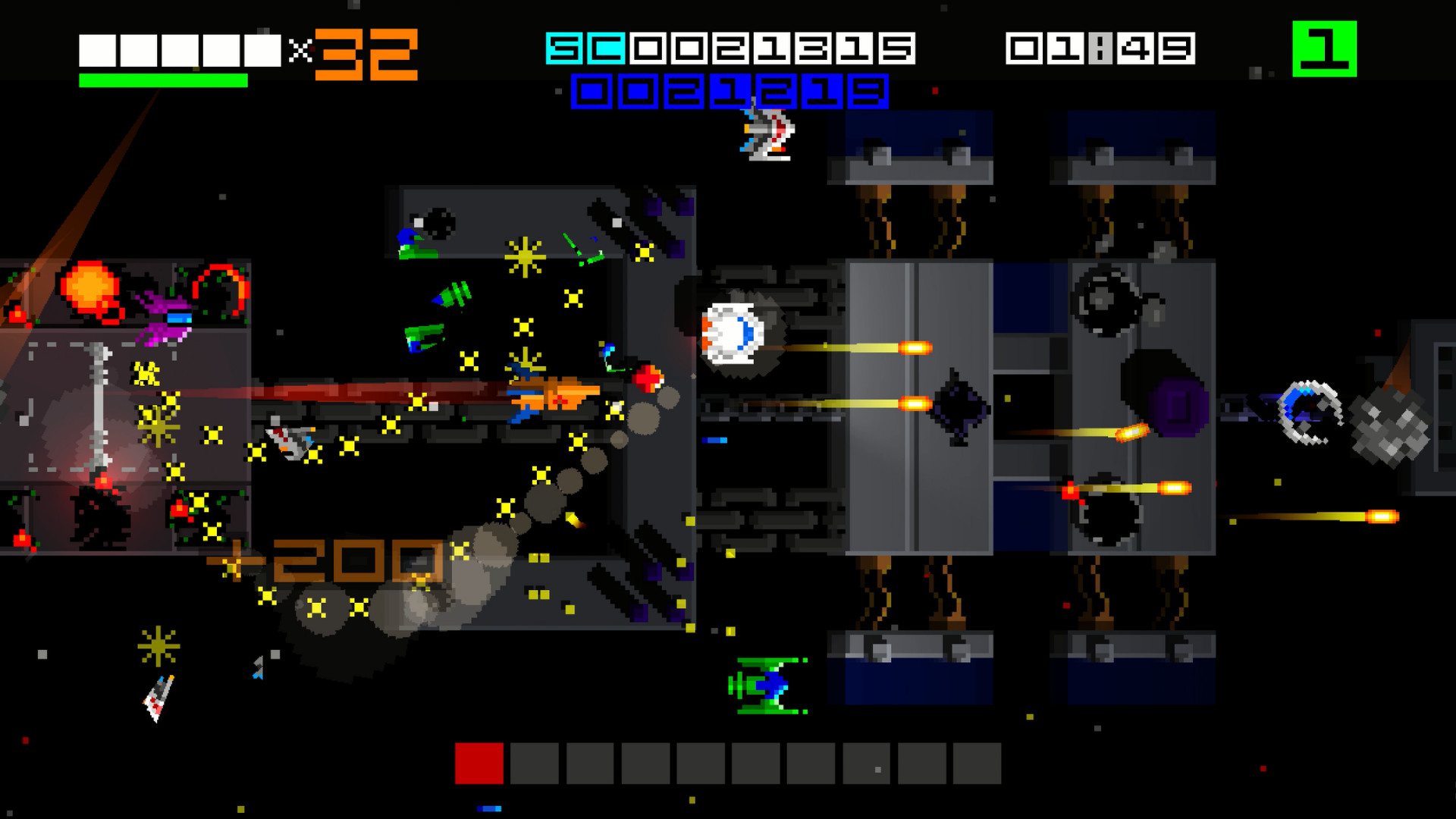
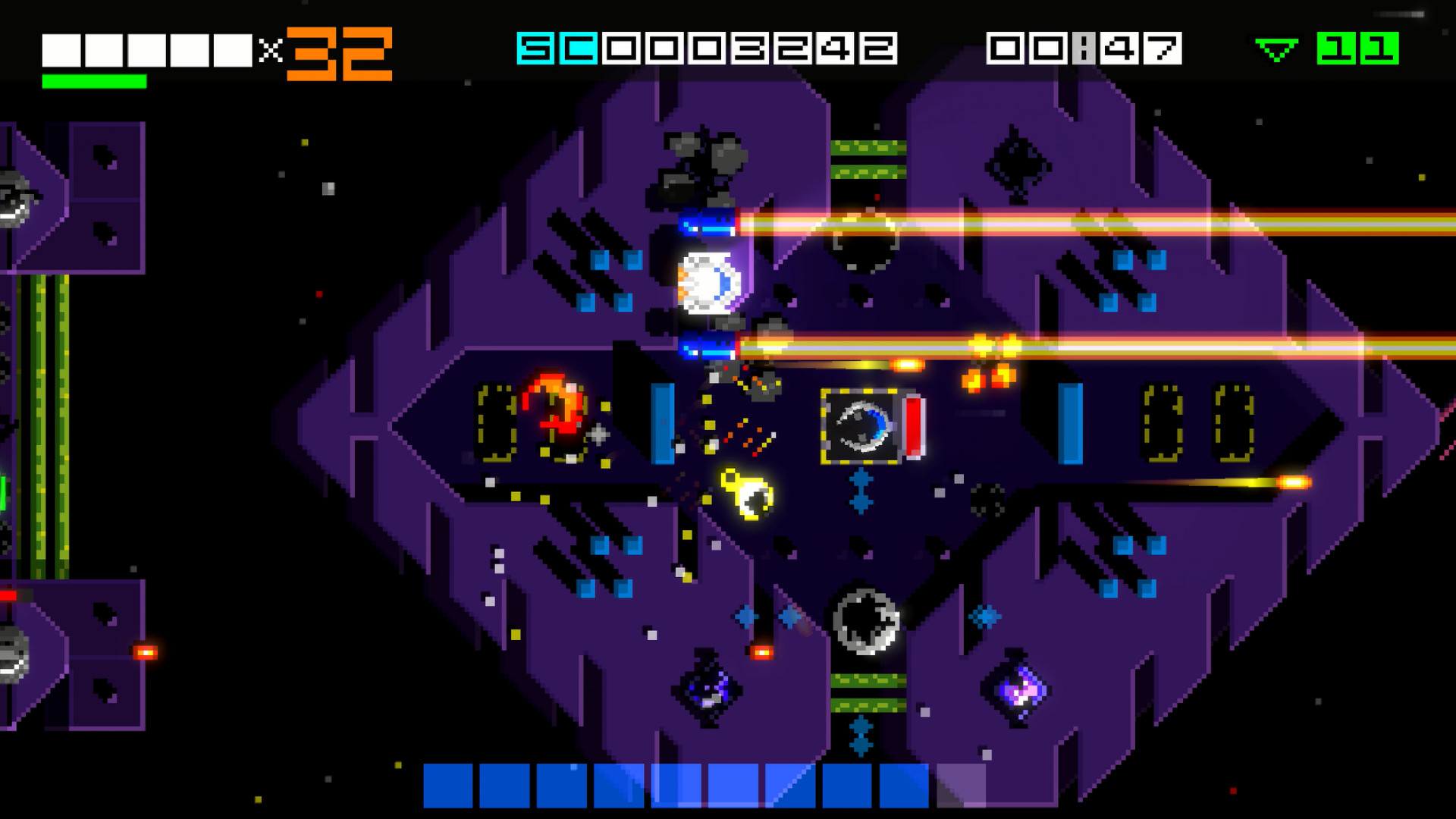
Following on from Play Manchester 2016, one game that has continued to impress gaming audiences since I first laid eyes on it is Hyper Sentinel; an arcade shoot ‘em up inspired by 2nd and 3rd generation classics such as Defender, Cybernoid, and Uridium. Showcased at many expos and being the subject of a recently successful Kickstarter campaign, the popularity of the game has been on the rise and is set for full release later this year on multiple platforms. Curious to find out more, I’ve conducted a Q&A with the game’s creative director and CEO of Huey Games, Robert Hewson. And the game’s principal developer, founder of Four5Six Pixel, Jonathan Port. Here’s what they had to say about Hyper Sentinel:


Hyper Sentinel 1

What were the influences behind your game?

Jon: The most obvious visual influence is from Uridium; the twist and flip maneuver has never really been used since. So I thought it would be fun to have that in. In terms of gameplay, major influences are Defender for its frantic action and speed, and Tornado Low Level (ZX Spectrum), where you could sweep back the plane wings to speed boost. I loved Cybernoid and its dramatic explosions, so there is some influence there.  More recently, Resogun, I like the way the enemies surround and suffocate you if you don’t keep on top.


What has the developmental process been like?

Jon: Development has gone very smoothly. I’ll often implement some features and then let Huey Games take a look. We’ll then go through a short iterative design cycle until the feature feels right. Using this process, some features make it in, and some get left out. It’s about making a game that feels consistent throughout.  To get such close design feedback from a publisher. But still having the freedom to create your own game has been an absolute pleasure.


Rob: It has been a genuine pleasure to work with Jon on the iterative process of enhancing and polishing the game. We seem to be on the same wavelength the whole time. I don’t think we’ve disagreed on any of the feedback we’ve given. And it is always a delight to get a new build and see all the little touches Jon has added.


How close are we to seeing the finished product?

Rob: We are on track for an early summer release now that Kickstarter has passed its funding goal. Of course, there is still a week left on the campaign. So we are hoping to hit a few more stretch goals too! You can check out the campaign at www.hypersentinel.com.


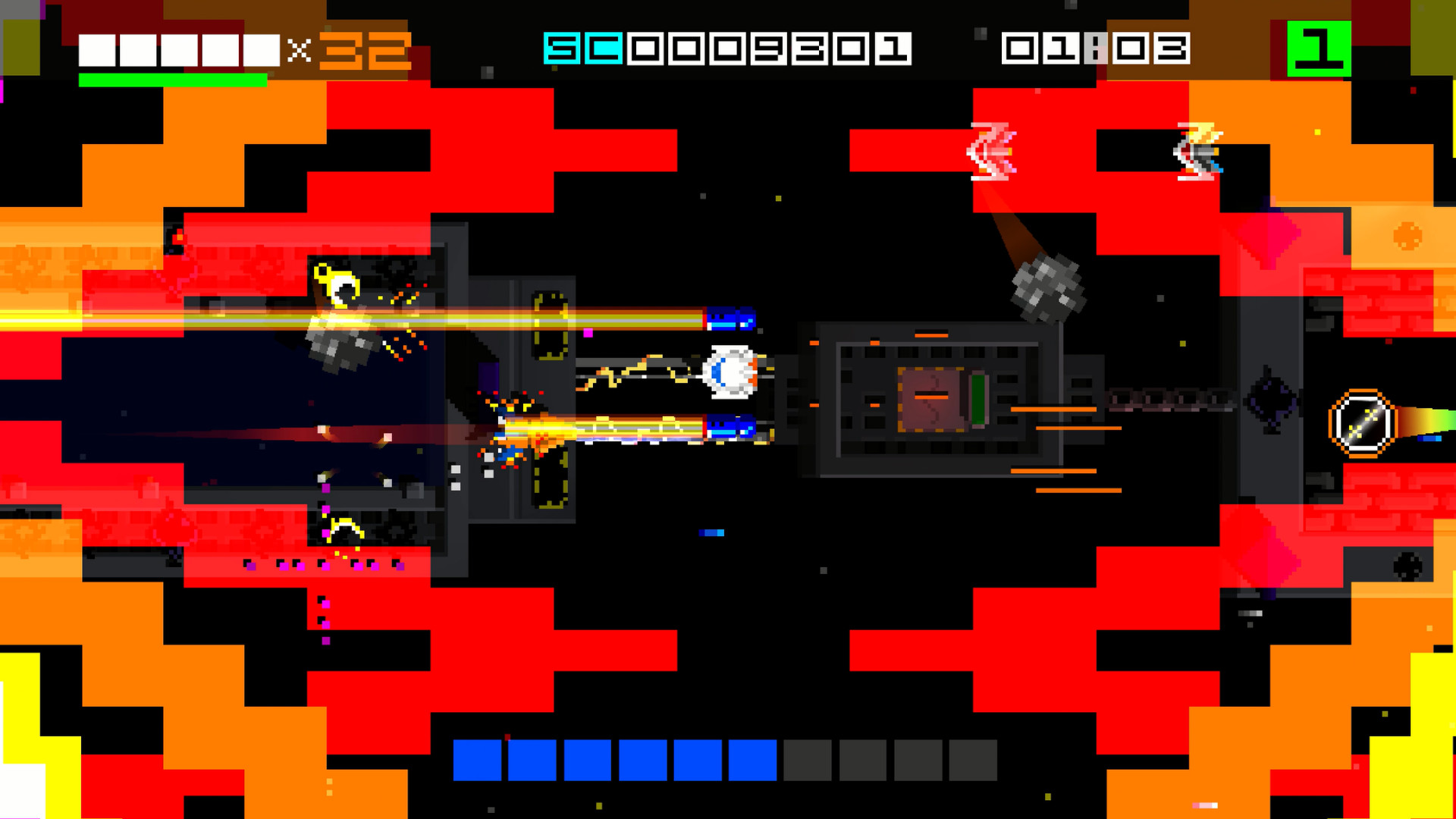
Hyper Sentinel 2

What has been the most exciting aspect of development?

Rob: I think there was a moment after we’d been through a few rounds of iterative improvement when the boost and the dodge abilities came together. And the compelling loop of the gameplay was suddenly brought to life. After that, tweaking the way the enemies behave, the way the power-ups spawn, and all those little details so that they work elegantly with those core mechanics, that is when we began to realize we’d found the fun, which is always the best moment!

Jon: Seeing people play your game at an expo and come away thrilled to have played it. When you are so close to the development of a game, you never really know until you stand away and just let people play it on their own. It’s a scary moment as you take your game to its first public showing. But to see people enjoying your own game is a special moment.


What has been the most challenging aspect of development?

Jon: Hyper Sentinel was originally developed on an Apple-centric platform. To get the game out to a wider audience, we needed to move the codebase to an engine that could target multiple platforms. The move to the Unity engine was the greatest technical undertaking. Most of the code has been rewritten entirely from scratch to get the best out of that environment. We could have gone down the route of a quick code port. But we decided early on that we should do this right to make the best game possible.


Has your father, Andrew, had any input into the game?

Rob: Not so much. He attended the first meeting with Jon and could instantly see the potential of the game, but he is taking more of a back seat these days. His wealth of experience is there to tap into when we need it. But that is mostly on the business side.


What impact has your father had on your career as a developer in general?

Rob: I don’t think he pushed me to pursue a career in the games industry. If anything, he was a sobering influence because he knew firsthand just how difficult it could be. However, no doubt that being surrounded by games from an early age. Climbing through the shelves in the Hewson warehouse, attending trade shows, collecting posters and stickers – it left its mark. I remember drawing the Hewson logo and dreaming up game ideas with my friends, so I caught the bug early. By the time I got into the industry, Dad had already left, and although I probably talked to him about it on occasion, he considered it a closed chapter in his life. Until I convinced him to write his book, that is.


Hyper Sentinel 3

How well has the game been received so far?

Rob: It has been exceptional. Everybody who plays the game seems to enjoy and appreciate it. One of the most exciting things to see is that it is not just older retro gaming fans who love it; we had loads of kids coming back time and again to play it at the shows we have attended, which is a pleasure to witness.


Jon: The greatest thrill is to see people genuinely excited to play the game. Hyper Sentinel is a high-score game at its heart, and it’s great to see people putting in so much time to stay on top of the score leaderboard! 


What platforms are you looking to bring the game to?

Rob: So far, we can confirm Steam, PS4, Xbox One, iOS, Android, and Amazon platforms. Hopefully, we can add even more to the list soon.


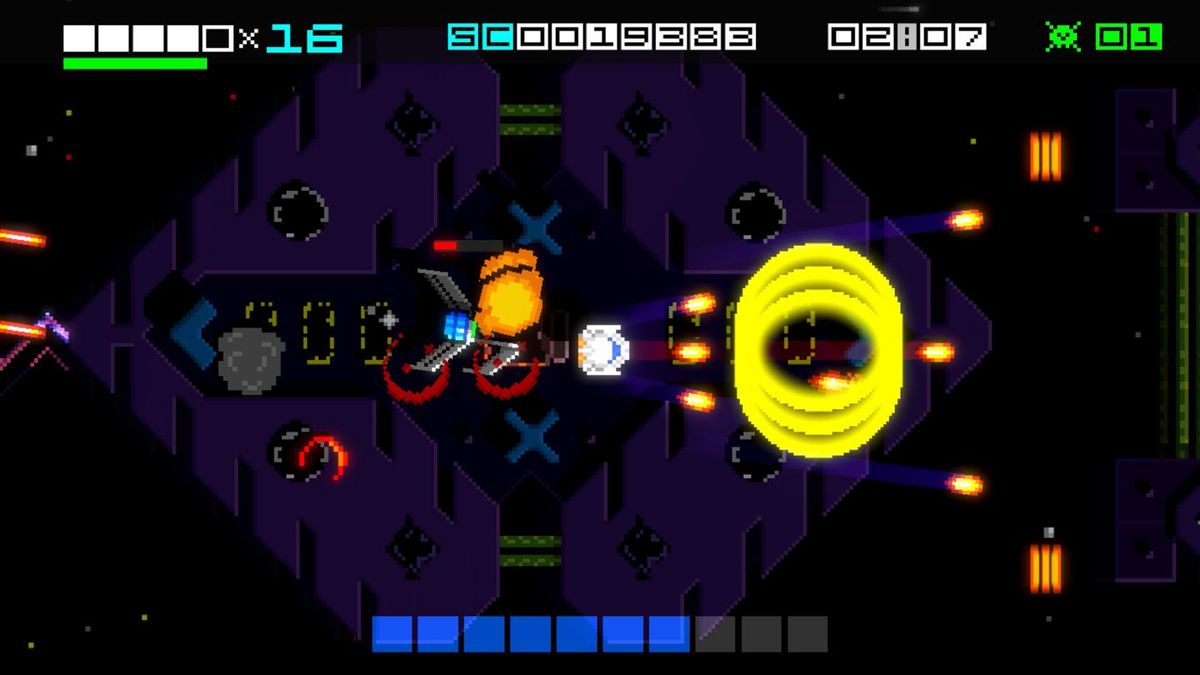
Hyper Sentinel 4

Do you have any advice for aspiring developers who may be reading this?

Rob: Figure out what the hook is for your game, the thing that makes it stand out from the crowd, and polish, polish, polish. Once you’ve finished polishing, polish some more. When you think you can’t polish any further, get some feedback, realize you were wrong, and carry on polishing.

Jon: Did Rob say polish? If there is one thing I have learned from Huey Games, it is that a great game doesn’t happen instantly; it’s a process of building over and over from a simple core concept. For aspiring indie developers, the most important thing is to finish your game, and that takes an awful lot of hard work and time. If you know you have a great game, just keep going until you get it into people’s hands. 


Where on the Internet can people find you?

Rob: The game has its website at www.hypersentinel.com (which currently goes directly to the Kickstarter while the campaign is live), and you can visit our company page at www.hueygames.com. 


Do you have anything else to add?

Rob: Thank you for having us and a massive thank you to everybody who has supported us along the way!


Hyper Sentinel 5

I would also like to take this opportunity to thank both Robert and Jonathan for agreeing to our Q&A session, to say congratulations on the successful Kickstarter campaign Hyper Sentinel has had, and to wish them the best of luck with the game upon release. From what I played at Manchester, Hyper Sentinel seems like a particularly enthralling game, a compelling homage to the 80s classics the developers drew inspiration from, and I can’t wait to play the finished article.

Oceanhorn: Monster of Uncharted Seas (PC, PlayStation 4, PlayStation Vita, Xbox One, & iOS Android)

Oceanhorn Monster of the Uncharted Seas

Developer(s) – Cornfox & Bros.

Publisher(s) – FDG Entertainment

Director – Heikki Repo

PEGI – 7

First released on iOS in 2013, subsequently brought to consoles last year, and featuring music composed by Squaresoft veterans Kenji Ito and my personal favorite video game composer Nobuo Uematsu, Oceanhorn borrows a great deal from some of the best franchises in gaming. Such as Legend of Zelda and Baldur’s Gate. It brings them together in one very satisfying and critically acclaimed gaming experience. Even after playing a few hours of Oceanhorn, I could tell that this is most definitely one of the greatest indie games I have ever played to date. And something I would recommend to any fan of adventure games or RPGs.

Graphics – 8.5/10

The game’s visuals are vibrant, colorful, and diverse, and though outdated compared to most mainstream releases, they are conceptually brilliant. Though in most aspects of this game, the most obvious influence had been The Legend of Zelda: Wind Waker, I found myself being able to identify a great deal of conceptual design deviating away from the latter in places such as house basements. They have a heavy steampunk feel to them, reminiscent of the game’s main antagonist. Dungeons throughout the game, again, much like the Legend of Zelda series, do extremely well to stand out amongst each other. And more than make up for the overworld areas, which can seem quite repetitive after a while.

Gameplay – 9/10

Oceanhorn is an isometric top-down adventure RPG, similar to Baldur’s Gate and Dark Alliance, but set in a much more open world than the latter. There is a heavy emphasis on exploration, combat, character development, and dungeon crawling; like Wind Waker, it also features travel by sea, along with combat elements thrown in during these sequences too. There is plenty to do in the game to keep players busy besides the main story, and the boss fights are challenging on quite a surprising level in my opinion; even the first boss was fairly difficult to contend with.

Controls – 10/10

I experienced no issues with the game’s controls whatsoever, as not only am I personally quite familiar with this particular gameplay formula, but there have been countless isometric RPGs to have come and gone over the last 20 years, and it was to be expected that no issues would arise. The best thing about the controls, however, is how well two different styles of an adventure game, i.e., Legend of Zelda and Baldur’s Gate, come together to form their own cohesive concept without presenting any issues with the controls.

Lifespan – 7.5/10

Overall, Oceanhorn can be made to last there about 16 to 20 hours, which for an indie adventure game is fairly impressive, especially considering that it started life as a smartphone game. I’ve found a lot of indie games to be short and sweet, such as Titan Souls and Xeodrifter, so a game like this to me was a welcome breath of fresh air, and something that can have a great deal of time invested into it for those willing to explore it, which I personally always admire in any game at all.

Storyline – 7.5/10

The story follows a silent protagonist, whose father leaves the paternal home to traverse the Islands of the Uncharted Seas to seek and kill a giant sea monster known as Oceanhorn. The player character subsequently sets out to destroy Oceanhorn himself and discover what became of his father. It seems simple enough, but throughout, the character goes through an unprecedented amount of development, discovering things such as love and hardship along the way. It’s one of many ways that this game can be compared to the Legend of Zelda. And whilst I believe the character of Link has been further developed in a single game than what is present in this, it’s still a very solid effort in terms of the overall story.

Originality – 6/10

Most players familiar with adventure video games will have very little difficulty pointing out what influenced this title, as they are blatantly obvious from start to finish in nigh-on every aspect of it. However, all these ideas come together to form something, which I can find myself describing as unforgettable, to say the least.

Happii

Overall, Oceanhorn, whilst it clearly borrows influence from other games, is, in my opinion, the best indie experience of 2016; it’s satisfying to play and beautiful to look at, with a stellar soundtrack, an enjoyable gameplay formula, and a pleasantly surprising level of depth in its story. It’s certainly worth playing through at least once.

Score

48.5/60

8/10 (Very Good)

Ziggurat (PlayStation 4, Xbox One & PC)

Ziggurat

Developer(s) – Milkstone Studios

Publisher(s) – Milkstone Studios

PEGI – 12

First released on Steam Early Access back in 2014, and going on to see both digital and physical releases on multiple platforms, Ziggurat is a Roguelike first-person shooting dungeon crawler, somewhat reminiscent of Tower of Guns, with a heavy emphasis on combat and player character development. And above all, challenge. After having played Tower of Guns, I had fairly high expectations of how good this game would be. And how it would do the things it does. Overall, I was not disappointed.

Graphics – 8/10

The game takes place in a pseudo-medieval fantasy world bearing resemblance to game series such as Warcraft or Baldur’s Gate. The graphical quality of the title is stunning, especially for a game developed independently, but more importantly, it also does extremely well to break away from games that were clearly taken as an influence by incorporating a massive variety of unique creatures and boss characters. Such as Sir Arthur and Lady Audrey. Cutting-edge graphics can mean much less if there isn’t a variety in conceptual design. But this game has both.

Gameplay – 8/10

The basic premise of gameplay, along with the game’s story, is that an apprentice wizard must take on the challenge of the Ziggurat to graduate from his order. Players must undertake increasingly difficult tasks of ascending the floors of the Ziggurat, which are filled with dangerous monsters and challenging obstacles throughout. Players can take advantage of a massive choice of different weapons and spells. And perks that can be found across the game in order to survive for as long as possible, and to try and eventually graduate from the wizard’s order. Locations, enemies. Bosses, in Roguelike tradition, are procedurally generated. And thus, each playthrough provides a new set of challenges every time. Keeping the game insanely fresh and giving it virtually infinite replay value, which can make for hours upon hours of fun.

Controls – 10/10

Belonging to a genre that has dominated the video gaming market since the sixth generation, Ziggurat’s controls are perfect, providing no unnecessary complications, straightforward control mechanics, and incorporating all aspects of gameplay seamlessly. The fact that the player character moves faster than in most other first-person shooters also provides quite a lot of fluency for players who have mastered it after a while, as it can become quite satisfying to be able to effectively dodge a wide variety of simultaneous enemy attacks. By the same token, it can also provide an equal amount of challenge to newcomers, since it can be quite easy to rush through unexplored areas and accidentally fall for several given obstacles, such as lava pits.

Originality – 7/10

Though Ziggurat is not the first game of its kind to incorporate the basic premise of gameplay that it does, it stands out for a massive number of different reasons; the variety in gameplay combat options it provides, as well as its conceptual design and artistic direction in terms of visuals. Although it’s clearly not without its influences, it provides a marvelous gaming experience that greatly shines throughout the indie developer community, and it’s certainly worth playing again and again.

Happii

Overall, Ziggurat is a highly enjoyable game, filled with challenge, entertainment, and a staggering amount of replayability. It looks great, it plays out wonderfully. It stands out as one of the better gaming experiences on eighth-generation hardware.

Score

33/40

8/10 (Very Good)